
Motorcycle enthusiasts are increasingly gravitating towards 7-inch fairings, characterized by their versatile applications across various motorcycle types. These fairings not only enhance the aesthetics of a bike but also serve functional purposes, offering wind protection and improved aerodynamics. For business owners, understanding the significance of 7-inch motorcycle fairings can be pivotal in catering to customer needs and driving sales. The following chapters delve into universal applications, the importance of quality in café racer designs, and prevailing market trends that show consumer preferences, providing a comprehensive overview for any business aiming to thrive in this niche.
7-Inch Front Headlight Fairings: A Universal Canvas for Style, Aerodynamics, and Rider Comfort

The allure of the 7-inch front headlight fairing lies in its elegance of restraint and power of impact. It is small enough to preserve the naked or minimally clad character of a bike, yet bold enough to transform the silhouette into something distinctly purposeful. This chapter treats the 7-inch universal fairing not merely as a protective shell but as a design instrument that harmonizes form and function. It is a versatile option that has become popular with riders who seek a balanced blend of retro mood and modern comfort, a synthesis that speaks to both the eye and the ride.
At its core, the universal 7-inch fairing is built to cradle a round headlight with a slightly sculpted windshield generating a seamless transition from headlight to rake to rider. The design assumes there is no bespoke, model-specific interface to the frame; instead, it relies on adaptable mounting strategies, standardized anchor points, and fabricators’ know-how to align the fairing with a broad spectrum of machines. This universality matters because it opens a door for customization without forcing a full, engine-enclosing fairing. Riders who crave cafe racer lines, retro cruiser personality, or a sport-touring stance can experiment with the look while maintaining the bike’s core character and ride cues. The effect is more than cosmetic; it is an orchestration of light, surface, and wind that shapes the rider’s perception as much as the wind itself.
Aesthetics are a central driver here, but they are inseparable from purpose. The 7-inch form factor tends to deliver a distinct visual bite—enough contour to define a bike’s face without overpowering its architectural line. The windshield, integrated into the fairing, often follows a shallow arc that channels air over the rider’s helmet and shoulders. The result is not merely a shield from weather and debris; it is a curated aerodynamic profile that reduces buffeting, especially for riders who spend longer miles on back roads or highways. The smooth surface and minimal seams are more than a design preference. They contribute to an easy-to-clean surface that remains legible after riding through rain, dust, or city grime. In practice, care and maintenance become part of the daily rhythm of owning a retro-inspired or cafe-minded build, where the fairing is as much a part of the bike’s personality as its exhaust note or seat rake.
From a materials perspective, the universal 7-inch fairing tends toward corrosion resistance and lightness without sacrificing rigidity. Aluminum is a frequent choice for its balance of strength, weight, and aesthetic appeal; stainless steel is another option when weather exposure is extreme or when a hardware-driven look is desired. These materials stand up to road salt, rain, and gravel better than cheaper plastics, while offering a sense of permanence that complements the aging patina some retro-styled bikes cultivate. The choice of material also influences the fairing’s acoustic footprint; a solid, well-supported shell resists flutter and vibration that could otherwise propagate through the headlight assembly and windshield at speed. And because these components sit in front of the rider, their integrity translates directly into riding confidence—someone who feels shielded and well-seated behind a sturdy, well-fitted fairing tends to ride with a steadier hand.
Beyond materials, the fairing’s optics deserve attention. The 7-inch diameter matches a classic round headlight standard, but the lens and housing are often upgraded to improve nighttime visibility. Many fairing designs feature wider, more generous light distribution from a smoked or clear lens and a tempered glass face. The practical benefit is straightforward: stronger radius of illumination that helps identify obstacles sooner and broadens the beam to cushion night-time cornering. This is particularly valuable for riders who navigate mixed-terrain routes or who commute through dimly lit streets. The combination of better illumination and the fairing’s own wind deflection produces a more composed riding experience, where the rider can focus on line choice rather than contending with wind pressure and shifting helmet turbulence.
Another advantage of the universal design is its adaptability to different riding scripts. Some riders approach their machines as daily commuters who still want a personality punch from their bike. Others compose more radical, purpose-built machines that lean into the cafe racer lineage, where the fairing acts as a stage set for the bike’s character and the rider’s posture. The fairing’s mounting strategy is thus critical: it must respect the bike’s geometry while offering a degree of adjustability. The typical installation path uses standardized studs or bolt points that align with the headlight’s central axis and the bike’s fork crown. The fitter’s job is then to fine-tune the fairing’s position so that the windshield angle, headlight orientation, and fairing face present a cohesive face to oncoming traffic and a comfortable wind profile for the rider. Minor adjustments—torqueing at specific points, small shims, or careful alignment checks—are part of the process, but the overall fit is designed to minimize intrusive modifications while maximizing a clean, integrated look.
If there is a broader lesson in fitment, it lies in respecting the bike’s architecture while embracing the fairing’s ability to unify disparate parts. The universal approach lets the rider map the fairing to a variety of platforms—from a nimble streetfighter-inspired construct to a more relaxed, long-legged sport-touring posture. The fairing’s silhouette often echoes cafe racer and retro cruiser cues: slim, confident lines that announce a rider’s intent with quiet assurance. The body language of the bike changes when the fairing is added; the machine appears more focused, more capable of bridging the gap between urban rides and open-road tempo. At the same time, the rider’s experience shifts. The wind becomes predictable, the helmet sits in a pocket of air designed by the fairing’s curvature, and the cockpit receives a sense of containment, as if the bike has found a clearer space in the rider’s field of awareness.
What makes this universal solution particularly compelling is its balance between affordability and impact. The market tends to reward options that offer a meaningful enhancement without forcing a total rework of a bike’s chassis or its electrical system. Universal 7-inch fairings typically arrive with thoughtfully designed mounting hardware and basic instructions, enabling a straightforward installation that does not require a full fairing kit or extensive fabrication work. For riders who are curious about the look but cautious about the effort, this balance is appealing. It invites a practical experiment: a weekend project that can be undone or revised as preferences evolve. The fairness of such an approach—moderate cost, meaningful impact, reversible changes—aligns with a broader consumer appetite for customization that respects the motorcycle’s original character while offering a personal signature.
There is also a market dynamic worth noting. The 7-inch fairing occupies a sweet spot in popularity, especially among riders who value visual impact without compromising the bike’s original identity. It is large enough to create a presence on the street, yet compact enough not to overwhelm the bike’s lines. This appeal translates into a robust secondary market for used and refurbished fairings, as builders and riders seek to swap, repaint, wrap, or rework shells to suit evolving tastes. The ability to repaint or wrap a fairing to match a custom paint job or to align with a particular color story adds another layer to the customization process. In practice, the fairing becomes a canvas—an opportunity to narrate a bike’s history through color, texture, and finish.
For riders looking to connect their build to a broader community of enthusiasts, there is value in understanding the fairing’s potential across different brands and model families. The universal design is robust enough to work with a wide range of configurations, yet it remains essential to check compatibility with fork clamps, instrument clusters, and the rider’s preferred mirror arrangement. In this context, a well-curated catalog can help a person anticipate common fitment challenges and steer them toward solutions that preserve both function and aesthetics. A practical example is the need to ensure that the fairing’s mounting points do not interfere with the headlights, turn signals, or brake lines, and that the chosen windshield angle aligns with rider height and seating position. The aim is for a visually cohesive front end and a comfortable, fatigue-free cockpit.
If you want a pathway to explore more of these options within a brand-aware ecosystem, consider exploring related options in the Honda fairings collection. This resource can guide decisions about what works well with a broad family of models that share certain chassis characteristics, ensuring the universal fairing you choose aligns with your bike’s geometry and aesthetic. See for yourself in the Honda fairings collection: https://www.summitfairings.com/collections/honda-fairings. While universality is a strong feature, it is the careful pairing of fairing, headlight, and wind deflector that ultimately yields a result that feels both historic and current.
From a rider’s perspective, comfort is a central measure of success. The 7-inch fairing’s wind shaping translates into reduced fatigue on longer rides and a quieting of wind noise around the helmet. Even as some riders prefer the raw, unshielded wind experience of a minimal setup, many find the reduced buffeting and steadier air flow to be a clear improvement for daytime comfort and nighttime visibility. In this sense, the universal fairing performs not simply as an accessory but as a rider-aid, with practical effects on posture, sightlines, and concentration. When the wind is well-managed, the rider can maintain a steady cadence and an attentive eye on the road ahead, which in turn enhances safety and enjoyment—critical factors for riders who use their bikes for daily commuting, weekend escapes, or a blend of both.
A final note on the environmental and practical realities of owning a universal fairing pertains to maintenance and longevity. The simpler, modular nature of these fairings often means fewer points of failure than more elaborate full-body fairings. Yet, any front-end accessory endures exposure to road salt, grit, and sun. Regular cleaning, inspection of fasteners, and periodic adjustments can extend the fairing’s life and preserve the rider’s investment. If you pursue color changes or protective wraps to refresh the look, consider how the surface will respond to heat and UV exposure over time. A well-cared-for fairing remains a faithful partner on a bike that wants to balance nostalgic charm with everyday practicality.
In sum, the 7-inch universal front headlight fairing represents a thoughtful middle ground in motorcycle customization. It respects the bike’s lineage while offering a contemporary craft that improves aerodynamics, lighting performance, and rider comfort. It is a beacon for riders who want a distinctive silhouette without committing to a full fairing, and it invites ongoing experimentation—an invitation to riders who measure the road not only by speed but by the clarity of their line and the ease of their passage. The universal fit, the material possibilities, and the integration with modern lighting all converge to make this fairing a durable, expressive, and widely adaptable option. As with any modification, the best result emerges from a careful assessment of the bike’s geometry, the rider’s posture, and the ride’s intended purpose, followed by a measured, thoughtful installation that respects both form and function. And if you’re seeking a pathway into a broader ecosystem of compatible options, the Honda fairings catalog offers a practical starting point, a bridge between universal appeal and brand-specific nuance. External reference: https://www.alibaba.com/product-detail/OEM-Service-Universal-7-inch-Motorcycle-headlight_1600539543554.html
7 Motorcycle Fairing: Quality Assurance in Cafe Racer Designs

The cafe racer aesthetic has always been a dialogue between speed and silhouette, a balance between raw performance and a distinctive, unmistakable look. In this conversation, the 7-inch front fairing plays a pivotal role. It is neither merely a decorative shell nor a simple protective cover; it is a complex integration of aerodynamics, materials science, and handmade customization that shapes how a bike slices through air and how its rider feels the ride. When we talk about the quality assurance of a 7-inch fairing designed for cafe racer profiles, we are really discussing the conditions under which performance and personality converge. The fairing’s ability to meet high standards of durability, weather resilience, and visual fidelity over time is what ultimately sustains the chapter of a build that seeks speed with style. This is not a tale of one-off parts but a narrative about reliable manufacturing ecosystems, rigorous material choices, and disciplined quality control that together deliver a piece that a rider can trust on long journeys as well as long nights under the garage lamp.
In the domain of seven-inch fairings, the decision to pursue cafe racer authenticity is inseparable from the awareness that external aesthetics and internal mechanics must cohabit without friction. The fairing is an interface—between rider and wind, between the bike’s engineered center of gravity and the rider’s own sense of balance, between the heritage of retro design and the demands of modern road conditions. The quality assurance behind such an object therefore must address not only the external finish, but also the material integrity, the precision of fit, and the repeatability of production that ensures every unit behaves like the next. In practical terms, this means a chain of decisions where the materials chosen, the manufacturing processes employed, and the testing regimes applied all align with a clear standard: the fairing should resist corrosion, maintain a smooth surface under weather exposure, fit a broad spectrum of seven-inch headlamps and mounting kits with minimal modification, and retain its visual language from the first assembly to years of use on varied road surfaces.
Material choices form the foundation of any credible quality assurance program for these fairings. A high-quality seven-inch cafe racer fairing is typically constructed from materials engineered for both lightness and resilience. Metals such as corrosion-resistant aluminum alloys and stainless steel provide robust structural frames or supports where strength-to-weight ratio matters most. When the fairing shell is more of a composite or thermoplastic design, engineers often optimize for stiffness and rigidity while controlling weight, ensuring the panel remains dimensionally stable even as temperatures swing from the cool damp of dawn to the heat of late afternoon. The aim is not to chase the lightest possible component, but to achieve a harmonious blend of weight savings and long-term durability. The visual surface must endure the ravages of UV exposure, rain, and the daily grind of road debris. In real terms, this translates to choosing materials that resist oxidation and surface wear, implementing protective coatings that keep gloss levels consistent, and selecting joining methods that withstand micro-movements over miles of riding. In a cafe racer context, where the rider’s eye is continually drawn to the fairing’s line and curvature, any deviation in contour or sheen becomes immediately perceptible. Consequently, the material choice is not just a technical detail—it is a promise to preserve the bike’s identity across seasons and miles.
What follows from this foundational choice is the manufacturing process itself, a choreography of design, tooling, molding, assembly, and inspection conducted within environments that emphasize precision and traceability. Modern producers in major industrial clusters typically deploy integrated production lines. In these facilities, the cycle from concept to finished part is streamlined: mold development and tooling are aligned with the exact geometry of the fairing; forming processes—whether stamping, injection, or composite layup—are calibrated for tight tolerances; surface treatment steps such as priming, painting, or protective coatings are synchronized with assembly. The outcome is not merely a fairing that looks right; it is a component whose flatness, edge radii, and seam alignments meet a repeatable specification. The advantage of integrated production is not only speed but also consistency. When a factory controls the entire workflow, small variances in material thickness, surface texture, or color shade are caught early and corrected. That is the essence of quality assurance: producing a part that performs the same under a spectrum of real-world conditions as it does under laboratory conditions, batch after batch, boatload after boatload.
In a cafe racer configuration, the fairing’s universality and compatibility become a central performance criterion. The 7-inch form factor is popular precisely because it represents a middle ground: large enough to deliver a visual statement and provide wind management, yet compact enough to maintain agile steering and nimble geometry. A quality fairing must be designed to mount cleanly on a broad range of motorcycles that use 7-inch round headlights, without requiring extensive frame modifications or soldering into the dash of the bike. It must accommodate standard mounting points, allow for a clean cable path for the headlight and indicators, and present a shore of mounting holes that reduces improvisation and on-road vibration. The best designs incorporate mounting features that tolerate small variances in the bike’s bodywork and fork geometry, enabling straightforward alignment during installation. When these attributes are realized, the rider experiences a sense of confidence that the fairing is integrated rather than forced, a subtle but crucial aspect of the overall riding experience.
Beyond the broad compatibility, the finished product must also deliver on the classic cafe racer promise of purposeful wind deflection. The fairing should reduce direct wind pressure on the chest and helmet, lowering fatigue on longer rides and quieting buffeting that could otherwise distort headlamp beam patterns or helmet acoustics. This demands not only a thoughtful silhouette but also a proven aerodynamic profile. Designers often analyze airflow patterns around the rider’s posture in a two-piece solution: a primary shell that shapes the front pressure field and a secondary, often taller windscreen or lip that works in concert to smooth the upper flow field. The integration challenge is to balance form and function so that the windscreen’s edge alignment minimizes turbulence without producing drag that would otherwise compromise efficiency at highway speeds. The quality assurance standard here is not merely to appear authentic; it is to endure the test of high-speed, crosswind, and fatigue testing that simulates years of exposure. In practice, this means performing both static tests and dynamic evaluations on representative test rigs that mimic real-world riding conditions. Surface finishes must resist micro-scratches that dull the reflective quality of the fairing’s paint and clear coat, while edge radii must stay within tight tolerances to prevent crack initiation from vibrations and small impacts.
One important dimension of quality assurance is the fairing’s ability to fit a modern rider’s expectations without demanding bespoke modifications. The universal fit concept is rooted in a broad, though not unlimited, range of common motorcycles that retain a near-standard geometry in the headlight area. A well-implemented universal fairing acknowledges that even among seemingly similar bikes there can be subtle differences in mount points, headset angles, and surrounding plastics. A reliable design will provide flexible mounting options or adjustable brackets to accommodate these differences. The installer experience is therefore an essential part of quality. A fairing that is easy to align, with precision-drilled holes that line up with minimal trial fitting, translates into less installation time, fewer frustration points, and a higher likelihood that the final product will stay in place under vibration and weather exposure. A sense of craftsmanship emerges when the package feels complete: the fairing, the mounting hardware, the weather seals, and any integrated windscreen all come together as a single, coherent system rather than a collection of parts. In the cafe racer world, such coherence is not optional; it is part of the design language that defines the entire build.
A crucial thread in the quality narrative is the supplier’s capacity to provide consistent, verifiable documentation. For buyers and builders alike, traceability matters. The best partners maintain clear records of material certifications, dimensional reports, and process controls with each batch. This documentation gives confidence that the fairing’s performance will not vary unpredictably from one shipment to the next. The documentation is complemented by warranties or after-sales support that acknowledges the reality of real-world usage. If a rider discovers a defect or a misalignment, a robust support framework ensures that remedy options are practical and timely. The reassurance that a piece of molded or machined artwork will be backed by a responsible manufacturer reassures buyers that the investment in a cafe racer aesthetic is backed by durability and service that aligns with the bike’s own longevity.
Quality assurance also extends to the surface aesthetic. Cafe racer culture prizes a faithful, often matte-to-satin finish that complements vintage lines. The surface treatment must retain color consistency and resistance to the elements. The finishing process includes prime coating, color matching, and topcoat layers that resist wear and UV degradation. The layer sequence must be designed so that the color does not fade or craze with time and exposure, a risk that is particularly acute on curved surfaces where moisture can settle in pockets if seals are imperfect. Even the edges and seams demand scrutiny; visible seams should be minimal, or skillfully integrated into the linework so that the eye remains drawn to the fairing’s profile rather than to rough joins. The tactile feel—a smooth, uniform surface that doesn’t catch on gloves or clothing—also contributes to the perception of quality. The best fairings in this category strike a balance between the crisp, glossy look and the subtle texture that hints at hand-finished craftsmanship, a nod to the custom spirit that underpins cafe racer culture.
The conversation around quality is not complete without acknowledging the role of customization. Cafe racer enthusiasts often seek to imprint a personal signature on the fairing through paintwork, decals, or surface textures. A quality system accommodates such personalization without compromising structural integrity. This means providing a dependable base with cleanly protected surfaces, compatible with paint and film applications, and offering accessory options for custom color schemes or branded decals that can be integrated without interfering with the fairing’s structural performance. The ability to support customization in a way that preserves warranty coverage and serviceability is a sign that the producer understands the culture as well as the engineering. When riders can achieve a unique look while maintaining performance and reliability, the cafe racer motif remains vibrant and enduring rather than ephemeral.
The quality story, of course, must connect back to the rider’s reality. In practice, this means emphasizing practical, on-the-ground criteria that builders and riders actually use to judge a fairing’s worth. How does it feel when you install it and ride with it? How does it survive a season of wet roads, mud, and gravel? Does the paint hold, do the fasteners stay in place, and does the edge line stay true after a few thousand miles of abrasion against wind and debris? These questions guide both the design and the production choices. They also remind us that quality assurance is not a single test or certification; it is a lifecycle of performance that begins with material selection and ends in a rider’s memory of a ride that felt precise, balanced, and true—an experience that only a well-made seven-inch cafe racer fairing can deliver.
In closing, the 7-inch cafe racer fairing is more than a visual cue. It is a compact integration of material science, manufacturing discipline, and aerodynamic sensibility, tempered by the maker’s craft and the rider’s expectations. Quality assurance in this space is a continuous discipline. It demands robust material choices that resist weather and fatigue, manufacturing processes that ensure precise geometry and repeatable results, and a design ethos that respects the rider’s need for compatibility, ease of installation, and opportunities for personal expression. When these elements align, the fairing becomes a trusted partner in the rider’s pursuit of speed with soul. For buyers who seek confidence in every mile, the path to quality is a holistic one—where suppliers demonstrate a complete production chain, where certifications and traceability underpin every batch, and where the final product embodies the cafe racer’s enduring promise of speed, style, and resilience. If a reader wants to explore a broader spectrum of compatible options and to see how this philosophy translates into real-world inventory, a visit to the Honda fairings collection offers a clear example of how uniformity and flexibility can coexist in a single family of products, illustrating how a well-curated range can meet diverse bikes while maintaining a consistent standard of quality. Honda fairings reflects the principle that a strong, integrated supply chain enhances reliability and supports customization without compromising performance. And to broaden the context beyond brands and lines, external insights into material selection and surface engineering can be found in industry resources that discuss the durability of metal and composite components under varied environmental conditions. External resource: https://www.alibaba.com
Shaped by the Wind: How 7-Inch Fairings Reframe Style, Speed, and Everyday Riding
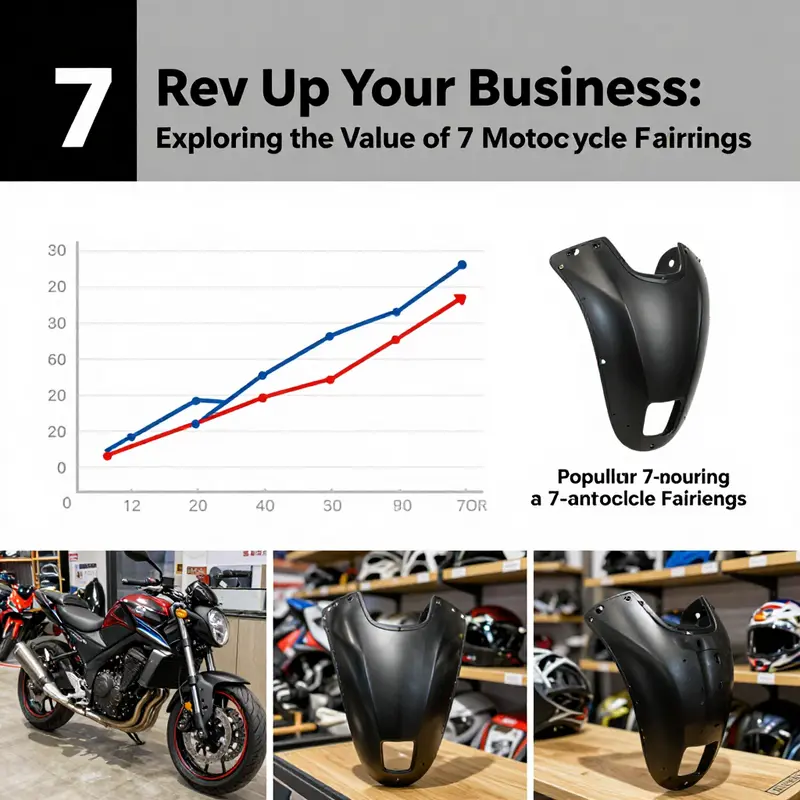
Riders learn to read the wind not just as a threat but as a collaborator in how a motorcycle behaves. The 7-inch front fairing sits at a compelling intersection where compact form meets meaningful function. It is large enough to influence airflow in a way that stabilizes a rider at highway speeds and enhances comfort on long days, yet modest enough to preserve the nimble, responsive feel that many riders love about mid-sized bikes. Across café racers, retro cruisers, sport-touring machines, and naked bikes, the 7-inch fairing has emerged as a versatile instrument—one that can sharpen performance while shaping a bike’s character. The evolution of this size reflects a broader shift in how riders value a blend of efficiency, aesthetics, and practicality. It is no longer simply a shield from rain and wind; it is the front line of a conversation between engineering and expression, a dialogue that happens every time a rider twists the throttle and looks toward the horizon.
What makes the 7-inch fairing especially compelling today is how it balances air management with a rider’s sense of identity. In aero terms, the fairing acts as a small but significant diffuser and deflector. Its curvature and mounting position influence the flow around the front wheel, the rider’s helmet, and the upper torso, reducing flutter and turbulent wake that can sap comfort at speed. That aerodynamic effect translates into practical benefits: smoother wind pressure on the chest, less fatigue over long distances, and a more stable line through gusty crosswinds. Motorcycles designed for sport-touring and daily commuting—the segments that increasingly rely on mid-size fairings—reap these advantages without the heavy compromises that come with larger, more aggressive fairings. In this sense, the 7-inch fairing serves as a nuanced tool rather than a blunt instrument of styling or protection, allowing riders to pursue performance goals while maintaining everyday usability.
At the same time, design language plays a decisive role in how riders perceive the fairing’s value. The 7-inch form presents a visually impactful silhouette that remains versatile enough to pair with a broad spectrum of headlight configurations, instrumentation layouts, and color stories. For some riders, this translates into a surface that can be finished as a clean, almost monochrome panel that emphasizes a bike’s lines. For others, it becomes a stage for character—a bold contrast against chrome, paint, or exposed metal that underscores a bike’s retro or modern vibe. The market has responded in kind by embracing fairings that offer a solid surface for weatherproofing and mounting hardware while still leaving room for personal touches like graphic work, color accents, or integrated lighting. In this way, the 7-inch fairing serves not only as an aerodynamic aid but also as a canvas for customization, a key driver of its enduring appeal.
From a consumer perspective, the willingness to invest in a mid-sized fairing reflects a practical calculus: you gain protective coverage and aerodynamic efficiency without sacrificing maneuverability or clearance. For riders who use their bikes for daily commutes, weekend rides, or long road trips, the 7-inch option often represents a sweet spot between protection and weight. It can shield the chest and shoulders from wind pressure while preserving a rider’s field of vision and shoulder mobility, both of which contribute to safer, more confident riding. In crowded urban environments, where mounting and dismounting can be frequent and parking spaces are tight, the lighter weight and simpler installation that characterize many 7-inch fairings also translate into time saved and less mechanical friction when making adjustments or swapping between bikes. This practicality, paired with a distinctive look, explains why the size has grown in popularity across diverse riding communities.
The market surrounding these fairings has begun to reflect broader shifts in rider expectations. Customization and personal expression have become central to the purchasing process. North American riders, in particular, show a strong preference for a product that balances aesthetic appeal with weather protection and practical safety features. This means fairings that can be finished in matte or gloss tones, that integrate simple but effective mounting systems, and that accommodate optional lighting or LED accents without complicating maintenance. Materials chosen for these panels have also evolved. Lightweight composites such as fiberglass and carbon fiber blends are increasingly common, offering a tactile feel of premium quality without imposing prohibitive costs. The choice of material affects not only weight and rigidity but also the ease with which a rider can tailor an exterior to their bike’s geometry and their own stylistic preference. As a result, the 7-inch fairing becomes a platform where engineering meets artistry, where a rider’s budget and vision converge with a machine’s capabilities to produce a riding experience that feels both rational and inspired.
The evolution of materials dovetails with ongoing progress in installation technology. Riders want solutions that minimize downtime and maximize ride time. Installation kits and mounting hardware have become more sophisticated, with attention to alignment tolerances, weather sealing, and vibration damping. Even the smallest gains in ease of installation can translate into a more enjoyable ownership experience, turning the fairing swap from a provisional modification into a reliable, repeatable upgrade. In this sense, the market’s attention to accessories—mounts, seals, gaskets, and hardware finishes—complements the fairing’s core performance role. The result is a package that lowers the barrier to customization while maintaining a clean, integrated look once installed. For riders who crave that sense of immediacy, the availability of user-friendly installation elements makes the 7-inch fairing not just an accessory but a practical upgrade path.
As technology continues to weave into motorcycle design, the 7-inch fairing is increasingly positioned as a hub for smart features. Innovations such as integrated LED lighting, subtle sun- or light-responsive elements, and even compact communication modules are becoming feasible within this mid-sized form. These integrations can enhance visibility, safety, and connectivity without demanding a redesign of the bike’s front end. The result is a product category that sits comfortably at the frontier of conventional mechanical design and digital convenience. Riders who want to consolidate their accessory upgrades into a single, cohesive unit find that the 7-inch fairing can carry more than just a windscreen and a decorative shell; it can support a modern, connected riding experience while preserving the tactile, mechanical joy of motorcycling.
The chapter’s underlying message is straightforward. The 7-inch fairing offers a practical, aesthetically flexible, and technologically adaptable solution that resonates with a broad audience. It is not a one-size-fits-all piece but a modular element whose value grows when it can be tailored to the rider’s intended use. For sport-touring riders seeking stable high-speed performance, for commuters who value weather protection, or for café racer enthusiasts who want a compact but expressive silhouette, this fairing size delivers a dynamic balance. The breadth of appeal helps explain why it has gained traction in markets around the world and why it remains a focal point in conversations about modern motorcycle customization and aftermarket design.
To those who want to see how a given fairing family fits a wider spectrum of bikes, there are practical examples in the broader catalogues that designers and riders consult. For a sense of how these pieces can align with a brand’s available models and styling directions, exploring the Honda fairings collection offers a useful reference point. This internal resource highlights how a mid-size fairing can be adapted across multiple chassis lines while maintaining a distinctive look and reliable mounting. The continuity between a base fairing and various model-specific configurations demonstrates how the 7-inch form can bridge generic performance goals with a real-world, model-specific fit. The link below helps readers connect the theoretical advantages of aerodynamics and materials with concrete, on-bike applications: Honda fairings collection.
The market’s forward momentum also rests on a clear understanding of consumer preferences. Affordability remains a significant driver, particularly for entry-level riders and those who are exploring customization as a form of personal expression rather than a full professional upgrade. Injection-molded plastic fairings offer a practical route to approachable price points without compromising essential quality. Yet there is a parallel appetite for premium feel and performance, which sustains demand for advanced materials like lightweight composites and engineered laminates. In practice, riders often seek a balance: a fairing that is easy to install, durable under daily use, and capable of accepting upgrades such as LEDs or small screen extensions that do not require invasive modifications. This dual demand for accessibility and upgrade potential shapes how manufacturers design and position 7-inch fairings within their product lineups.
Another dimension of consumer preference concerns the integration of smart features with a straightforward installation experience. The modern rider wants solutions that can accommodate new lighting concepts, simple weatherproofing, and even lightweight digital interfaces that can pair with helmets or bikes’ onboard systems. The 7-inch fairing, with its compact footprint, presents an ideal platform for these features because it offers a generous yet unobtrusive surface on which to mount LED arrays and display elements while keeping the overall weight and center of gravity in a favorable range. In this sense, the fairing becomes part of a broader ecosystem of rider-assist and connected features, rather than a stand-alone accessory. And as customers increasingly demand both weather protection and a professional finish, fairing manufacturers and aftermarket providers continue to refine finish quality, color stability, and surface durability to ensure that the look remains as lasting as the ride is enjoyable.
The global outlook for 7-inch fairings reflects the convergence of demand for practical performance with opportunities for customization and regional growth. Market data suggests that this size will continue to be favored as a standard option for sport-touring and commuting motorcycles alike. As production of motorcycles grows in emerging markets—particularly in regions where riders value reliable, cost-efficient upgrades—the 7-inch fairing stands out as a scalable solution that can be produced with consistent quality across different supply chains. This global expansion is not just about volume; it is about aligning design and manufacturing with riders’ evolving expectations for performance, aesthetics, and maintenance simplicity. The result is a market that rewards thoughtful engineering, user-centered installation experiences, and a nuanced approach to materials that preserves both price competitiveness and premium feel.
In the end, the 7-inch fairing embodies a practical philosophy about modern riding. It recognizes that riders want to manage wind and weather without surrendering the core riding experience—edge-of-seat speed, precise handling, and the personal expression that comes from choosing how a bike looks and feels. The trend toward aerodynamics, lightweight materials, and smart features suggests a future where fairings are not mere shells but active participants in the riding experience. They will continue to shape and be shaped by the bikes they adorn, contributing to a cycle of improvement that benefits riders everywhere. For those following market dynamics and design directions, this size remains a reliable proxy for how the industry translates performance goals into tangible products that riders can install, customize, and enjoy on every road they take. External references in market analyses consistently point to the same conclusion: innovation in fairing design is inseparable from the riding experience itself, and the 7-inch form is proving to be an especially adaptable and popular conduit for that innovation.
External resource for broader context on market dynamics: https://www.marketresearchfuture.com/reports/motorcycle-fairing-market-1698
Final thoughts
Ultimately, the integration of 7-inch motorcycle fairings into the market is not only a testament to their functionality but also a reflection of changing consumer aesthetics. Understanding the nuances of universal applications, quality assurance, and market dynamics is pivotal for business owners in this sector. By leveraging this knowledge, businesses can tailor their offerings to meet customer demands effectively, thus enhancing their competitive edge in the motorcycle accessories landscape.