
Introduction
Fairings are not just aesthetic overlays; they are strategic assets for bike brands, shops, and customization studios. For riders, fairings deliver wind protection, weather shielding, and brand identity. For businesses, they define margins, sourcing, and differentiation in crowded markets. This guide examines how fairings for motorcycle are designed, manufactured, and marketed, and how choices in types, materials, and customization influence performance, durability, and profitability. Chapter 1 outlines the spectrum of fairing configurations—full, quarter, low-profile, and bespoke pieces—and the design principles that align aerodynamics with rider comfort and merchandising goals. Chapter 2 delves into materials—ABS plastic, fiberglass, and carbon fiber—highlighting weight, cost, durability, and supply considerations that impact pricing, warranty, and aftermarket programs. Chapter 3 connects the performance benefits of fairings to real-world outcomes, including fuel efficiency, rider fatigue, and the growing demand for aftermarket customization; it also covers how to evaluate fitment, warranties, and the value proposition of OEM-style versus aftermarket kits. By integrating these perspectives, business owners can build a coherent strategy for sourcing, marketing, and selling fairings that meet diverse rider needs while protecting margins.
Tables of Contents
Chapter 1: Chapter 1: Fairing for Motorcycle: Types and Design Considerations
- Designing the Edge: Aerodynamics, Materials, and System Integration in Motorcycle Fairings
Chapter 2: Chapter 1: Fairing for Motorcycle: Types and Design Considerations
- Economic, Geopolitical, and Societal Implications of Motorcycle Fairing Design and Adoption: From Materials to Market and Meaning
Chapter 3: Chapter 2: Fairing for Motorcycle Materials: ABS, Fiberglass, and Carbon Fiber
- From Core Materials to Performance Frontiers: How ABS, Fiberglass, and Carbon Fiber Shape Modern Motorcycle Fairings
Chapter 1: Chapter 1: Fairing for Motorcycle: Types and Design Considerations
1. Designing the Edge: Aerodynamics, Materials, and System Integration in Motorcycle Fairings
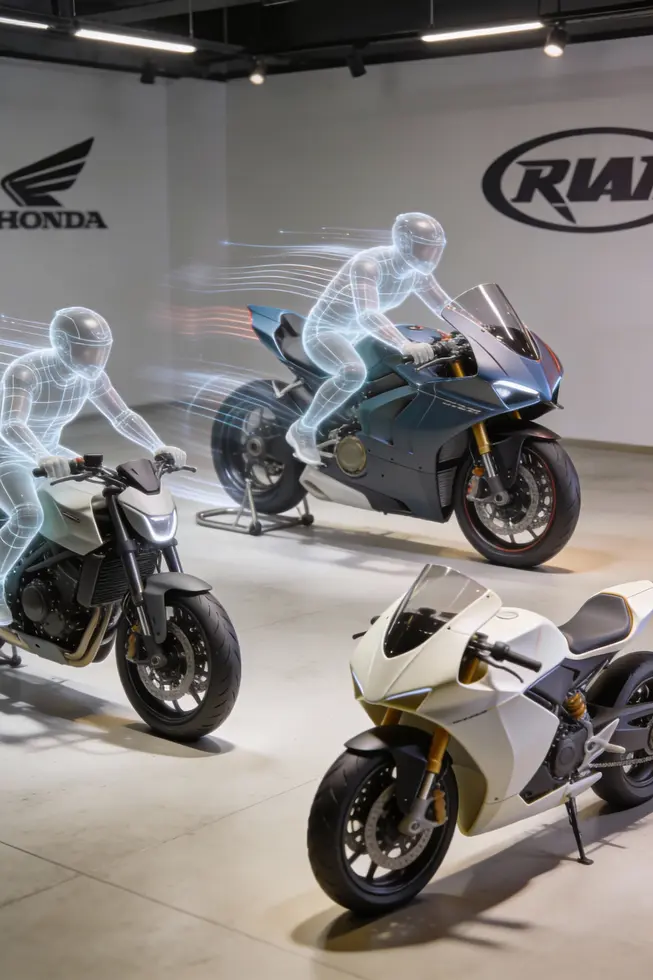
Designing a motorcycle fairing is a study in balancing forces, pressures, and practical constraints. It is less about a single feature and more about how a shell can guide air, shield the rider, manage heat, and coexist with the bike’s structure and electronics. In this subchapter we move beyond categorizing fairings by type and examine how aerodynamic intent, material choices, and system integration come together to produce a cohesive, functional whole. The aim is to illuminate the architectural thinking behind a fairing rather than merely listing its parts, because the most successful designs emerge from a disciplined conversation among form, function, and the realities of production. Aerodynamics sets the stage, but materials and integration determine whether a fairing can deliver performance day after day, across weather and road conditions, without sacrificing reliability or maintenance practicality.
A fairing is not a decorative skin slapped onto a motorcycle. It is a living interface between the vehicle and the wind, a boundary layer instrument that must respect the rider’s posture while shaping the flow that feeds engine cooling, sensors, and lighting. The primary objective remains clear: reduce drag and buffeting while maintaining rider comfort and keeping the machine cool, accessible, and repairable. Achieving this requires a deep comprehension of how air behaves around a moving motorcycle and how the rider interacts with that air. In practice, this means translating aerodynamic concepts into geometric decisions, selecting materials that meet stiffness and weight targets, and designing mounting systems that transfer loads without compromising the frame or the rider’s safety. The result is a fairing that not only looks purposeful but also behaves predictably at a wide range of speeds and in varied riding positions.
From an aerodynamic perspective, the race between wind and form begins at the nose. The sharpness of the leading edge, the curvature of the windscreen, and the way the air transitions around the cheeks and the shoulders all influence how early flow attaches to the surface and how soon it separates. Early separation creates wake and turbulence that increase drag and can set up buffeting behind the rider’s helmet. The goal is to keep the flow attached as far as possible, guiding it along smooth passages that minimize pressure drag and skin friction. The design challenge is not merely to reduce frontal area or to tuck the rider into a narrow silhouette. It is to manage the entire flow field, including the wake that trails from the rider and the bike, so that the downstream components, such as the radiator intakes and exhaust outlets, receive clean, organized air rather than stray eddies that waste energy and create hotspots.
A practical way to think about the forward flow is to imagine a continuous, evolving stream that starts at the nose, follows the contour of the windscreen, sweeps along the side fairings, and finally merges with the wake behind the rider and rear bodywork. Each segment of this stream has its own sensitivity to geometry, surface finish, and interaction with rider posture. The nose can be sculpted to reduce form drag without inducing excessive pressure at the visor edge, while the side fairings must enclose engine bays and radiators in a manner that reduces wake and guides air toward cooling cores. When these pieces are integrated, the flow becomes a purposeful collaboration of shapes that minimize disturbances and maximize stability, especially in crosswinds and at high speeds where buffeting can become intrusive and fatiguing.
To achieve this, designers rely on a combination of wind tunnel testing and computational fluid dynamics. Wind tunnels provide tangible measurements of drag, lift, side forces, and pressure distributions, along with visualization methods that reveal how air flows around features such as mirrors, intake ducts, and edge radii. CFD offers a complementary, often faster way to explore a wider design family and to predict how incremental changes will affect the pressure field and the overall drag coefficient. The real strength lies in an iterative loop where simulated improvements are then validated in the wind tunnel and in on road or track testing. This iterative mindset helps ensure that the fairing performs as intended not only in theory but in the chaotic reality of riding conditions where crosswinds, variable helmet lines, and rider movements all modulate the effective flow.
One element that often dictates broader design decisions is the rider posture. A sport position, with a forward lean and tucked elbows, reduces the frontal area and lowers the effective drag coefficient. Touring and endurance stances, by contrast, spread the rider higher and wider, increasing the effective frontal area but trading that increase for wind protection and comfort. A well designed fairing must accommodate this range, providing robust wind shielding for some riders while maintaining acceptable drag for others. The geometry must be forgiving enough to accommodate different rider heights and helmet sizes without forcing an extreme, fixed posture that would degrade comfort or safety. In effect, the fairing becomes a dynamic interface whose aerodynamics respond not only to speed but to how the rider sits and moves.
Alongside the core aerodynamic aim, integration considerations begin to shape the very skeleton of the fairing. The fairing must form a structural load path to the frame or to subframes that support other components. This means the joints, fasteners, and attachment points need to handle aerodynamic loads, road-induced vibrations, and occasional impacts from debris or minor crashes. The structural discipline is not isolated from aero work; stiff panels may carry more load and contribute to smoother flow, yet excessive stiffness can transmit more vibration to the rider or complicate maintenance. The integration challenge extends to cooling, where air must be directed not only around the rider but into radiators or oil coolers without causing unacceptable losses in pressure or routing conflicts with the engine, frame rails, or exhaust system. The fairing therefore becomes a carefully engineered conduit that channels air for engine cooling while also shaping the rider’s shield against the wind.
Materials used in fairings exert a strong influence on both aerodynamics and integration possibilities. Thermoplastics such as ABS offer a light, impact resistant platform suitable for mass production. They lend themselves to efficient tooling and rapid prototyping, while delivering repair options that fit typical through life maintenance schedules. Fiberglass presents a midweight alternative with good rigidity and cost effectiveness for standard or racing applications, though it generally carries a heavier mass and may require more careful handling during repairs. Carbon fiber, celebrated for its stiffness to weight ratio, offers the pinnacle of performance for the most demanding scenarios. Yet carbon fiber brings with it higher material costs, more complex manufacturing workflows, and more vigilant repair requirements. These material choices cascade into production decisions, such as whether to pursue large monolithic panels or modular, replaceable skins. In production contexts, the simplest approach may favor thermoplastics for everyday street use, while the top tier of performance machines might exploit carbon fiber or advanced composites in curated configurations.
Beyond the basic materials, the manufacturing process itself becomes an arena for optimization. Mass produced plastic fairings often rely on injection molding or thermoforming, enabling high repeatability and low part costs but requiring careful attention to tool design and material flow to avoid warping. Composite fairings may use hand layup, vacuum assisted resin transfer molding, or autoclave curing to achieve high stiffness and glossy finishes, albeit with longer lead times and higher capital investment. Sandwich constructions and core materials can boost stiffness without a heavy weight penalty, offering resilience against impacts and flex under load. The surface finish is another critical domain. A fairing that resists UV degradation, maintains a smooth, low-friction surface, and accepts durable paints and clear coats will perform more consistently over years of exposure to sun, rain, and road grit. Surface quality is not a mere aesthetic concern; it translates to lower skin friction drag and more predictable airflow behavior, especially at the high speeds typical of sport riding and racing.
The question of how best to join panels is both a practical and aerodynamic concern. The aim is to minimize gaps and discontinuities that can trap air and generate unwanted shear. Yet the reality of maintenance and crash safety requires design choices that allow serviceability and safe, predictable breaks in the event of a crash. This often leads to modular or detachable panel schemes, reinforced attachment points, and strategically placed seams that serve both aero continuity and ease of repair. At times it becomes necessary to prefer a slightly more complex attachment scheme if it yields a smoother overall flow around a critical region such as the windscreen edge or the transition between the nose and the side fairings. In all cases the designer seeks to avoid abrupt radii, chamfers, or abrupt terminations that would puncture the boundary layer and invite separation.
Where the fairing meets the bike’s life systems, integration takes on a practical, almost orchestral role. The mounting philosophy must consider structural load paths that connect the fairing to the frame without compromising the frame’s integrity or the ride’s dynamic behavior. Vibration and fatigue become daily concerns for attachment points, joints, and seals. The cooling system demands careful routing of radiators and oil coolers so that the intake flow remains efficient and does not choke the engine bay with recirculated air. Electrical and lighting integration must be serenely embedded within the fairing’s geometry so that headlights, indicators, and cockpit displays are not only protected but also aerodynamically tidy. Sensible harness routing and weather sealing reduce maintenance headaches and extend the life of sensitive electronics exposed to harsh riding conditions. Ergonomics and rider comfort tie back to wind protection and noise control. A well shaped windscreen, appropriate shoulder clearance, and thoughtfully tuned panel lines reduce wind noise and helmet buffeting, while smooth interior surfaces and restrained joint designs minimize the perception of drag and vibration for the rider’s senses.
From a design perspective, the art lies in the inevitable trade offs. Every move toward greater drag reduction can affect cooling performance, access for service, and the ease with which riders customize or repair their machines. A more aggressive shaping that promises substantial drag reductions may also complicate the routing of a steering damper, a sensor cluster, or a lightweight lighting integration. Conversely, a highly modular design that favors rapid panel replacement or customization can increase panel gaps and create small foils that perturb flow in unexpected ways. Achieving a balanced solution means embracing a holistic view of the vehicle, where aerodynamic targets are stated in terms of a drag reduction budget, a stability range across speeds, and a rider comfort metric that remains stable across different body sizes and postures. Only then can the final fairing feel not as a single object but as a coordinated system that harmonizes air, rider, and machine.
To connect this broader discussion to practical exemplars, consider how fairing types influence integration strategy. Full fairings, with their enclosed form, create simplified, cohesive flow but demand careful attention to heat pathways and entry points for cooling air. Half or sport fairings offer lighter weight and easier access but require greater attention to maintaining a clean external flow while still providing wind protection at the helmet level. Racing specific fairings, optimized for maximum drag reduction, must also consider fast and safe access during pit stops, as well as the possibility of breakaway features that minimize injury risk in a crash. Naked designs, by contrast, reveal a different philosophy: less wind shielding, but potentially reduced weight and greater freedom for mechanical access and cooling routes. Each approach carries a different set of aerodynamic consequences, yet all share a common thread: the integration of aerodynamic performance with the bike’s structural, thermal, and electrical systems.
Those pursuing a concise overview of fairing typologies can consult open references that survey the range of configurations and their typical applications. For readers seeking a compact taxonomy that aligns with the discussion here, a useful entry point is the overview of fairing types on a motorcycle, which situates full, half, and modular approaches within a practical decision framework. This contextual anchor helps readers understand how the aerodynamic and integration choices described here translate into real world outcomes across different riding scenarios.
Beyond the broad strokes of materials and integration, the conversation naturally extends into the domain of future directions and evolving performance criteria. Active or adaptive aerodynamics—surfaces that adjust in response to speed, yaw, or rider posture—offer the tantalizing prospect of maintaining optimal flow across a wider envelope of conditions. Embedded sensing within the fairing plastics and composites could reveal real time data on flow behavior, temperatures, and structural health, enabling more responsive design cycles and smarter maintenance. In parallel, advances in advanced composites and recyclable polymers may push the envelope on stiffness to weight while also reducing environmental impact. The digital twin concept promises to accelerate design iterations, allowing engineers to simulate a kit of aero features against evolving riding profiles and thermal loads before committing to tooling and manufacturing.
The subchapter closes not with a final decree but with a practical reflection on what makes a fairing successful in the field. It must endure. The shell should resist sun and road grit while maintaining a visually coherent identity for the bike. It must be serviceable, with predictable testing and inspection points that do not force lengthy downtime. It should accommodate the rider, offering wind protection and a quiet cockpit without locking the bike into an uncomfortable, fixed posture. And it must adapt to the constraints of production, balancing material costs, tooling time, and repairability with the aspirational performance goals that motivate riders and designers alike. In short, the edge of the fairing is not just a line drawn on a blueprint but a living hinge where air, rider, and machine meet and negotiate a shared path forward. The best designs emerge when aerodynamic intent, material discipline, and system integration are treated as a single, interwoven problem rather than a sequence of independent decisions.
As this exploration moves toward the next part of the chapter, the emphasis shifts from general principles to concrete patterns of design thinking that guide the selection of fairing geometries for specific riding contexts. The ideas discussed here—flow attachment, wake management, heat pathways, modularity, and serviceability—continue to inform decisions about which fairing family to choose for a given motorcycle class. The following sections will build on this foundation by examining how different riding priorities translate into concrete geometric strategies, and how designers validate those strategies through iterative testing and experiential feedback from riders. In the end, the goal remains consistent: to craft fairings that not only cut through air with efficiency but also support safe, comfortable, and reliable riding across a broad spectrum of conditions.
For readers seeking a concise, practical synthesis of fairing typologies tied to the broader design considerations outlined here, the linked overview of fairing types offers a compact reference that complements this in depth discussion and situates these design choices within the larger ecosystem of motorcycle aerodynamics and integration.
Chapter 2: Chapter 1: Fairing for Motorcycle: Types and Design Considerations
1. Economic, Geopolitical, and Societal Implications of Motorcycle Fairing Design and Adoption: From Materials to Market and Meaning
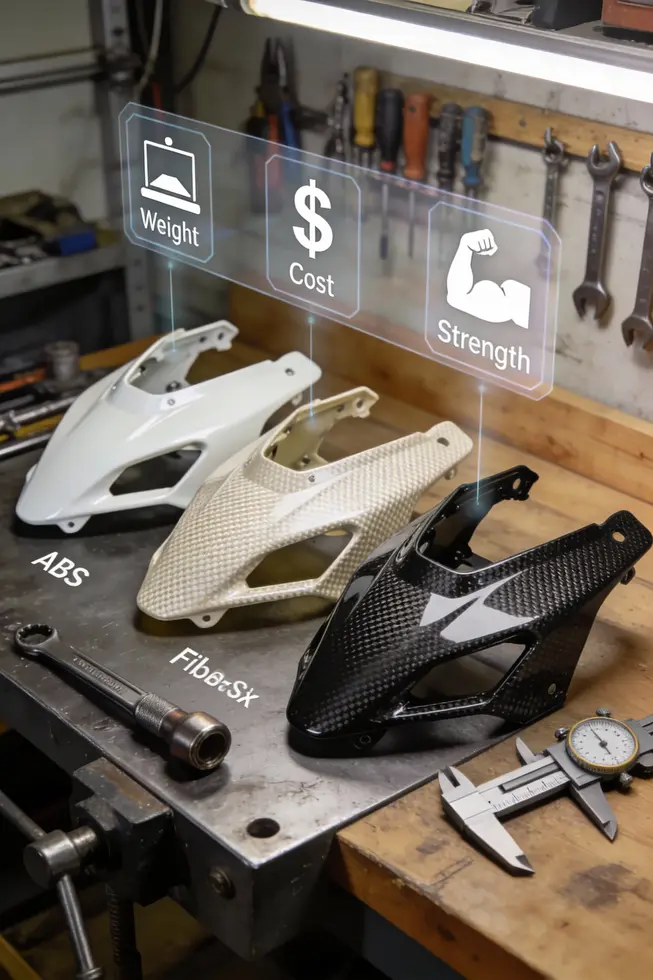
Fairings are not only aerodynamic shells; they encode economic choices, material science, and social practice. Designers balance drag reduction with cost and repairability. Carbon fiber offers strength and weight benefits but raises price and repair complexity, centralizing adoption to enthusiasts and racing contexts. ABS and fiberglass provide cheaper paths with easier manufacturing and replacement, broadening access for everyday riders. The material mix shapes resale value and the modularity of aftermarket upgrades. Global supply chains and trade policies influence what materials are practical in different regions, which in turn drives design decisions. Accessibility and inclusivity are important, with modular fairings and standardized mounting enabling gradual upgrades and maintenance by a wide range of shops. In sum fairing design integrates technical performance with market realities and social meanings.
Chapter 3: Chapter 2: Fairing for Motorcycle Materials: ABS, Fiberglass, and Carbon Fiber
1. From Core Materials to Performance Frontiers: How ABS, Fiberglass, and Carbon Fiber Shape Modern Motorcycle Fairings
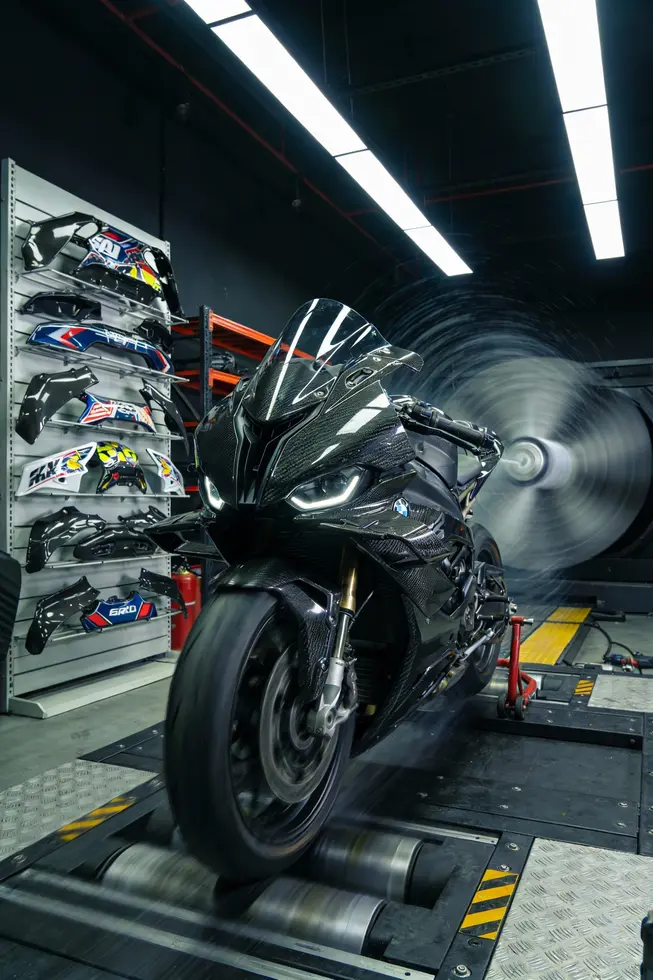
The fairing on a motorcycle is more than a shell that shields the rider from wind and weather. It is a carefully engineered interface between the rider, the bike’s mechanical frame, and the air that rushes past at speed. The choice of material—ABS, fiberglass, or carbon fiber—defines how that interface behaves in real riding conditions. Every design decision, from the way a panel is formed to how it resists impact and wear, reflects a balance among weight, stiffness, durability, cost, and the intended role of the motorcycle. In this subchapter we trace how these materials contribute to performance, how innovations in fabrication change what the fairing can do, and how riders and builders can navigate the tradeoffs when choosing or designing fairings for touring, sport, or racing applications. The discussion below moves beyond a catalog of properties and toward a cohesive vision of material performance realized through design intent, manufacturing method, and maintenance discipline. Along the way we situate the material choices within the practical realities of mounting systems, weather protection, rider comfort, and the ever-present demand for reliability under diverse riding conditions. For readers curious about how these material choices translate into variations in design philosophy, a concise look at the broader landscape of fairing types can be found in the section on types of fairings on a motorcycle. types of fairings on a motorcycle.
ABS plastic stands at the intersection of affordability, practicality, and broad applicability. It is the backbone of mass-produced fairings and OEM components because its ease of manufacture harmonizes with exacting fitment requirements and scalable production. ABS combines lightweight behavior with robust impact resistance, heat tolerance, and a forgiving plasticity that can absorb minor impacts without catastrophic failure. The result is a material that suits daily riders and entry-level machines where budget constraints and ease of replacement carry real value. ABS panels are readily molded in high volumes, and injection-molding technology ensures consistent dimensions and snap-fit interfaces with mounting hardware and weather seals. In practice, the advantages of ABS emerge most clearly in durability under the stresses of daily commuting and urban riding where the fairing endures curb scuffs, infrequent minor impacts, and the heat cycles from prolonged sun exposure. The material resists cracking more reliably than cheaper alternatives and readily accepts standard paints and clear coats, enabling OEM color consistency and simple touch-up or repair work. Yet the very traits that make ABS appealing—its general-purpose nature, pliability, and cost effectiveness—also constrain it. The aesthetics of ABS, while capable of clean, glossy finishes, typically do not reach the depth and richness associated with carbon fiber or genuine composite textures. This gap matters most to riders who prize the premium look as part of the bike’s identity or who seek a more aggressive aesthetic aligned with performance expectations. Nevertheless, for touring crews who value predictable maintenance intervals, predictable repair pathways, and a fairing system that can be refreshed or replaced with relative ease, ABS remains a reliable baseline.
Fiberglass fairings occupy a different design niche, one that emphasizes resilience and adaptability without the prohibitive cost of carbon fiber. Hand-laid fiberglass, often reinforced with robust polyester resins and roving, yields panels that balance toughness and workability. This approach suits bikes that require durable, modular, or custom-configured fairings that can be shaped to meet specific aero goals or rider preferences. The hand-laid nature of fiberglass contributes to a rugged, crash-tolerant shell. It tolerates reshaping and repair with accessible tools and processes, which makes it favored for custom builds, track-day readiness, and regional racing where the budget favors durability and reparability over ultra-lightweight performance. The material’s heavier mass compared with ABS or carbon fiber is a real consideration, particularly in handling and fuel efficiency calculations that become meaningful at higher speeds or extended riding ranges. UV exposure can pose challenges for fiberglass if protective gelcoat layers are not maintained, but high-quality fiberglass skins with gelcoat finishes can resist sun exposure well and maintain a respectable exterior over long service life. When properly executed, fiberglass composites deliver a compelling blend of stiffness, impact resistance, and the forgiving character that many riders value in the touring and sport-touring segments. The ultimate choice between ABS and fiberglass often aligns with the expected riding environment, the degree of customization desired, and the mechanical compatibility of the fairing with the bike’s frame and fairing mount system.
Carbon fiber represents the apex of performance-oriented fairing design. Its extraordinary strength-to-weight ratio and stiffness translate into immediate handling improvements, sharper throttle response, and more efficient aerodynamics at higher speeds. The ultra-light nature of carbon fiber reduces unsprung weight and contributes to quicker steering response and more precise feedback through the handlebars. For riders chasing competitive gains in track settings or riders who simply want the best possible on-board efficiency and a high-end aesthetic, carbon fiber provides a distinct advantage. However, the costs and tradeoffs are nontrivial. Carbon fiber panels command premium prices, and their robustness faces vulnerability to UV degradation if not properly protected with a clear coat or UV-stabilized resin system. In practice, carbon fiber is often deployed in performance-focused builds where weight savings, blend of stiffness, and finish quality justify the investment. The carbon weave also offers distinctive visual appeal, making fairings visually expressive as a signal of performance intent. Yet carbon fiber, with its rigidity and low elongation under load, can be less forgiving in the face of complex impacts. It demands careful design to distribute stress and meticulous repair practices when damage occurs. Repairing carbon fiber often requires specialized techniques, precise resin systems, and controlled curing conditions, which elevates maintenance considerations but yields a repair that preserves the original weight and stiffness characteristics.
These material families do not exist in isolation. Modern fairing design increasingly embraces multi-material strategies that exploit the best attributes of each material in concert. An inner structure might be built from a fiberglass substrate reinforced with ribbing to achieve stiffness, while outer shells are formed from ABS for cost efficiency and impact resistance. In higher-end builds, lightweight carbon fiber panels can be layered over tuned fiberglass cores to optimize stiffness and weight without a prohibitive price tag. The key is to align the material selection with the fairing’s aerodynamic role, the rider’s expectations for feedback and control, and the bike’s performance envelope. The trend toward multi-material systems also expands possibilities for integrating components such as air intake channels, cooling ducts, and windscreen mountings without sacrificing the overall mechanical integrity of the fairing assembly.
Beyond raw materials, the manufacture process itself shapes performance. ABS fairings often benefit from injection molding, which ensures tight tolerances and repeatable fitment. The injection-molding approach supports rapid production cycles and consistent access to replacement parts, a practical advantage for fleets, rental operations, or riders who want quick, affordable replacements after mishaps. The typical result is a lighter, reasonably rigid fairing with balanced stiffness that suits daily riding and long-distance comfort. For fiberglass, the emphasis is on controlled layups and resin systems that optimize durability and modal stability under vibration. Hand-laid fiberglass allows designers to tailor complexity in shapes, optimize load paths, and achieve fine edge finishes that can resist chipping and cracking during high-speed operation or track use. The process also supports custom work and prototyping where one-off shapes or small-production runs demand flexibility. Carbon fiber fairings rely on advanced layup techniques, resin transfer molding, or pre-impregnated prepregs to achieve high fiber volume and a uniform, highly organized weave. The result is exceptional stiffness and a dramatic reduction in weight, but at a cost that reflects the complexity of production, the need for skilled labor, and the sensitivity to UV exposure and impact.
Innovations continue to push the envelope in what these materials can do within a fairing. Injection-molded ABS that yields guaranteed fitment has matured to accommodate increasingly tight tolerances and integrated features such as internal air channels, mounting bosses, and complex geometries that previously demanded multi-part assemblies. For fiberglass, progress in advanced resins and resin systems enhances UV resistance and gelcoat durability, while improved hand-laid techniques improve consistency in high-speed regimes where delamination or fatigue could degrade performance. Carbon fiber progresses through improvements in resin systems, protective coatings, and optimized weave patterns to improve cooling efficiency and reduce micro-cracking risk under repeated stress. In the top-tier realm, hybrid laminates that combine carbon fiber with glass fiber or aramid materials deliver a nuanced balance of stiffness, impact tolerance, and cost, enabling fairings to meet a wider spectrum of rider needs.
The performance implications of these material choices extend beyond outright weight. Weight is a basic driver of handling, acceleration, and fuel economy, but the distribution of weight and the stiffness of the fairing structure influence stability in crosswinds and the overall aero feel. A lighter, stiffer fairing tends to improve steering response and midcorner stability, translating into sharper, more predictable feedback for the rider. However, stiffness must be carefully managed to avoid transmitting excessive vibration or local fatigue to mounting points and the rider’s body. ABS’s flexibility offers a forgiving ride quality when subjected to minor impacts and vibrations, but it may settle into a slightly softer feel over time. Fiberglass offers a more robust vibration profile with anti-sag characteristics, especially when built with internal ribbing and proper resin selection. Carbon fiber’s remarkable stiffness contributes to a controlled aero surface that resists flutter at high speeds, yet its rigidity requires precise shaping and mounting to prevent localized stress concentrations that could lead to micro-cracking or delamination in the event of an impact.
A critical dimension of material performance is durability under real-world conditions. Fairings encounter heat from the engine bay, sun exposure, rain, road debris, and occasional impacts. ABS handles heat cycling and impact quite well when designed with appropriate thickness and edge protection, and it tolerates a wide range of weather conditions. Fiberglass, with gelcoat finishes and well-chosen resins, provides excellent UV resistance and abrasion resistance, making it suitable for riders who ride in varied climates and expect longevity with regular maintenance. Carbon fiber, while highly resistant to impact relative to its weight, demands attention to UV protection and surface maintenance. UV exposure can degrade the resin and the clear coats that shield the weave, so protective finishes and careful storage are essential for preserving the material’s appearance and structural integrity. These durability considerations are not merely cosmetic. They affect long-term maintenance costs, the ease of repair, and the bike’s resale value, especially when the fairing’s outer appearance is a major part of perceived condition and overall value.
In terms of maintenance and repair, each material invites a distinct workflow. ABS panels respond well to repainting and minor cosmetic repairs, with standard plastic repair methods enabling color matching and surface restoration using common tools and coatings. The repair economy for ABS is a practical strength, particularly for riders who want to perform most maintenance themselves or rely on shop fleets that stock OEM-like replacement panels. Fiberglass repairs are robust but often require more careful handling of resin systems, curing conditions, and edge finishing after patching. The presence of fiberglass can simplify some repair tasks since the material tolerates reshaping and reinforcement but may require more effort to restore beyond cosmetic fixes when the core structure is involved. Carbon fiber repair represents a specialized domain. Damaged carbon fiber panels require careful assessment to determine whether the damage is superficial or structural. Repairs often involve resin infusion or patching combined with additional reinforcement and curing, demanding precise workmanship. In addition, carbon fiber repairs must preserve the original stiffness-to-weight character, which is not simply about filling a dent but about maintaining the integrity of the laminate and ensuring that newly repaired sections bond correctly with surrounding plies. For riders who want to retain performance characteristics, professional repair may be the most prudent path when carbon fiber is involved.
The evolution of fairing materials and their manufacturing processes also expands the design space for riders who seek customization. Finishes become a meaningful element of performance aesthetics. Gloss, matte, metallic, and pearl finishes are all achievable across ABS, fiberglass, and carbon fiber platforms, but the durability and cost implications vary. A glossy finish can enhance aerodynamics perception and enhance color depth, but it demands careful preparation and robust clear coats to withstand UV exposure and micro-scratches. Matte finishes can hide subtle blemishes while presenting a modern look, though they require different preparation and coating techniques to maintain texture and uniformity. Metallic and pearl accents add visual depth but require precise pigment control and clear coats to retain their optical depth under sunlight. The compatibility of the finish with the base material, the chosen topcoat, and the bike’s overall color scheme is a key design decision that influences how the fairing ages and how easy it is to refresh it in the future. This interplay between material science and aesthetic choices highlights how material selection is inseparable from the rider’s vision of how the bike should feel, look, and perform on the road.
In practice, the ultimate decision about which material to choose rests on aligning the fairing’s role with the rider’s priorities and the bike’s performance envelope. ABS favors practical, cost-conscious everyday riding and OEM compatibility, enabling straightforward maintenance and replacement. Fiberglass offers a flexible middle ground with strong durability and customization potential, supporting both track-ready configurations and personalized styling. Carbon fiber delivers peak performance, weight savings, and a premium look, but requires greater investment, care, and specialized repair capabilities. For many riders, the ideal approach involves a thoughtfully engineered blend: an outer ABS skin for manufacturing efficiency and weather resistance, backed by a fiberglass or carbon core for stiffness and strength in regions that demand it. This multi-material strategy leverages the best of each world, delivering a fairing system that can be tuned to the exact balance of weight, rigidity, and price a rider seeks.
Finally, the broader context of fairing design invites ongoing attention to integration with other motorcycle systems. Fairings do not exist in isolation; they interact with the windscreen, instrument cluster, riders’ seating position, and the bike’s datum for aerodynamics. The height and width of the fairing, the shape of the nose, the curvature along the sides, and the placement of air intakes and ducts all influence throttle feel, airflow around the rider, and the vehicle’s cooling efficiency. The mounting system acts as the structural hinge between fairing and frame, affecting vibration transmission, serviceability, and the ease of component replacement after an impact. The choice of material thus reverberates through every layer of the bike’s performance. In this sense, material selection is a design language—a statement about how a rider intends to experience speed, stability, and control. It is a gesture toward the rider’s ambitions, whether those ambitions lie in tranquil highway comfort, aggressive sport riding, or relentless track performance. For those who want a broader understanding of fairing design philosophy and the spectrum of options available, the discussion on fairing types provides a complementary perspective that illuminates how different configurations adapt these same materials to diverse purposes. types of fairings on a motorcycle.
In sum, ABS, fiberglass, and carbon fiber each bring a unique set of advantages and constraints to motorcycle fairings. The modern approach acknowledges that a one-size-fits-all solution rarely satisfies riders who span a spectrum of riding styles and priorities. The most effective fairing ecosystems employ a rational combination of materials, informed by manufacturing capabilities, repair ecosystems, and a rider’s practical needs. As the industry continues to innovate—whether through smarter resin chemistry, more efficient manufacturing processes, or new hybrid laminates—the fairing remains a dynamic interface where performance, protection, and style converge at the speed of wind.
Final thoughts
In the motorcycle fairing ecosystem, design choices, material selection, and customization options drive both rider satisfaction and business outcomes. By aligning fairing type with target markets—whether OEM styling for factory lines, durable ABS for daily riders, or high-end carbon fiber for performance models—businesses can optimize sourcing, pricing, and warranties. Understanding the trade-offs among weight, cost, and durability enables smarter inventory management and more compelling value propositions for customers. The integration of aerodynamic design with aftermarket customization creates growth opportunities across channels, from dealer networks to independent shops, reinforcing that well-chosen fairings are more than shells—they are performance levers and revenue streams.
Ready to elevate your ride? Summit Fairings delivers premium, custom-fit fairings that blend style and durability. Whether you’re chasing speed or turning heads, we’ve got your bike covered. Don’t wait—transform your machine today. Click, customize, and ride with confidence. Your perfect fairing is just a few clicks away. Act now!
About us
We are one of the leading motorcycle fairing export sites, with over 3,000 styles across almost all motorcycle models. Buy from summitfairings.com, and pay 10-40% less than the prices on other sites. If you have any questions, we promise we will have your answer within six hours.