
Universal motorcycle batwing fairings have become a staple in enhancing the aesthetics and aerodynamics of various motorcycle models. Designed to provide superior wind protection and style, these fairings not only improve rider comfort during long trips but also contribute to greater stability at high speeds. This article explores three critical aspects: the design and benefits of batwing fairings, current market trends and their economic implications, and insights into installation and compatibility across motorcycle models. As motorcycle enthusiasts increasingly seek personalization, understanding these elements becomes vital for business owners looking to tap into this market.
Winged Modernity: The Universal Batwing Fairing as a Convergence of Aesthetics, Aerodynamics, and Custom Culture
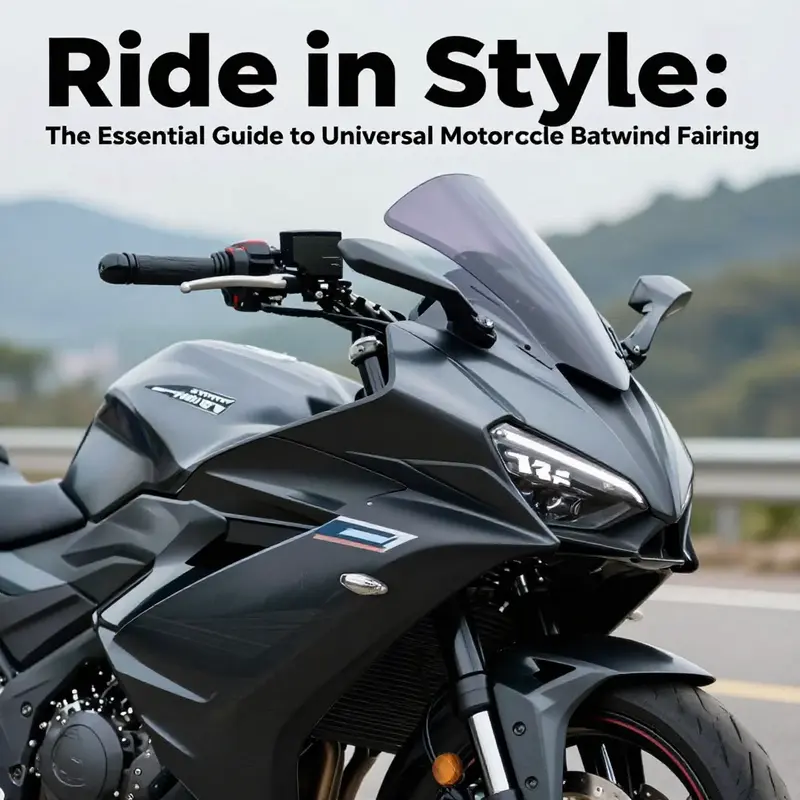
A motorcycle is more than a machine; it is a silhouette in motion, a sculpture carved from metal and wind. The universal batwing fairing embodies this idea by turning the bike’s front end into a deliberate, articulated statement. Its winged profile is instantly recognizable, evoking a sense of motion even when the bike is at rest. Yet behind that iconic outline lies a careful balance of function and form. The batwing shape is not merely about looking classic or heroic. It is about shaping the air around the rider, guiding it in a way that reduces resistance, minimizes turbulence, and lowers fatigue on long journeys. For riders who spend hours at a time listening to the hum of the road rather than the whine of a motor, that reduction in wind pressure translates into a more comfortable, more controlled ride. The batwing, in this sense, is both shield and stylistic manifesto, a feature that crowns the motorcycle’s ergonomics while reinforcing its narrative of timeless design.
The design philosophy behind universal batwing fairings rests on a straightforward premise: to deliver broad wind protection and stable handling without locking the rider into a single model or a narrow set of mounting points. OEM fairings built for specific models often rely on precise fitments that force riders to accept a certain look or a particular mounting geometry. A universal version seeks to liberate the rider from those constraints. It uses adjustable mounting brackets, modular installation kits, and adaptable hardware to spread its fit across a wide range of bikes. This adaptability does not erase the need for careful alignment or due diligence in measurement; rather, it makes those steps part of a streamlined upgrade path. A rider upgrading from stock plastics or a bare headlamp cowl can enjoy a noticeable leap in comfort without replacing the entire front-end assembly.
Material choices are central to the batwing’s dual mandate of durability and lightness. The most common construction involves hard-coated polycarbonate, a material chosen for its combination of strength, impact resistance, and optical clarity. The hard coating adds scratch resistance, preserving a fairing’s appearance against road grit and weathering where exposed surfaces would otherwise degrade quickly. Polycarbonate’s inherent resilience also means the fairing remains comparatively light, an important factor since weight distribution at the front of the bike directly influences steering feel and front-end feedback. While ABS plastic often powers a wide swath of aftermarket fairings for its affordability, the premium polycarbonate variants provide superior clarity on any integrated windshields and better resistance to environmental stress cracking over time. In the universal context, these materials support a long service life, ensuring that the fairing maintains its shape through temperature cycling, sun exposure, and the occasional off-bike adventure in a parking lot mishap or a commute that throws a sharp breeze its way.
When riders step into the world of universal batwing fairings, they encounter a design vocabulary that blends retro-inspired silhouette with contemporary manufacturing. The batwing itself is a curved, asymmetrical sweep that frames the rider and disengages the wind from striking the chest directly. The result is a deflected airstream that travels over and around the rider rather than colliding head-on with the torso. This deflection reduces the buildup of pressure on the chest and shoulders, a factor that can amplify fatigue on long highway miles. The difference is not just measured in comfort but in control: with less buffeting and a steadier wind pattern across the helmet, the rider maintains steadier posture and clearer vision through the day. The visual drama of the shape also contributes to the bike’s overall stance. A batwing fairing does not simply shield; it frames the bike’s line, emphasizing the machine’s length and the rider’s silhouette against the horizon. In a culture where customization is a form of self-expression, the batwing becomes a canvas upon which riders can add flavor through tint, finish, and accessory touches.
One of the most compelling practical advantages of a universal batwing is its adjustable fitment system. Rather than requiring a precise model-year pairing, universal installations rely on a set of brackets that can be tuned to align with a broad spectrum of fork crowns, triple clamps, and fairing mounts. The hardware kit will typically include a range of spacers, fasteners, and shims designed to negotiate minor variances in handlebars height, rake, and steering stem geometry. The result is a fairing that can adapt to different frames with less invasive modifications. For riders who own a classic, a vintage-inspired chassis, or a modern touring platform, this flexibility lowers the barrier to upgrading while preserving the bike’s original geometry. In practice, this means a rider can install a batwing on a touring bike without committing to a factory replacement from a single manufacturer, while still achieving a unified look and a functional shield against the wind.
Beyond the core shape and structure, the universal batwing fairing often offers a modular ecosystem of accessories. Wind deflectors, for instance, are a common option that can tune airflow further. A 5-inch low-profile wind deflector can be paired with the main fairing to redirect the air in a way that opens up additional wind management for the upper torso. These deflectors contribute to a smoother, more controlled ride by guiding the air to glide past the rider’s shoulders with minimized turbulence. Vent options may also be integrated within the fairing, or accessible as add-on components, to manage internal heat and moisture buildup behind the screen. The inclusion of vents can become a practical feature on hotter days or in conditions that encourage humidity to linger behind a sealed face shield.
The windshields themselves are a crucial consideration for comfort and visibility. Universal batwings are frequently designed to accommodate shields in the range of 10 to 12 inches in height. This sizing is chosen to offer effective protection while staying well below eye level, preserving a clear line of sight and reducing helmet buffeting that can occur when the wind is directed straight into the rider’s face. The positioning of the windshield is a subtle but telling detail; the goal is to maintain a direct view of the road while softening the air flow that would otherwise cause fatigue or instability in crosswinds. For many riders, the aesthetic value of a tall, bold shield is balanced by the practical need to avoid glare and field of vision disruption in varying light conditions. The universal approach makes it easier to swap between different heights and shapes, depending on weather, riding style, and comfort preferences, without a total reinvestment in a bespoke front end.
The design conversation also touches on the practical realities of installation. A universal fairing is not a one-size-fits-all to the degree that a factory part might be, but it does come with a well-thought-out installation pathway. Manufacturers typically publish detailed fitting guides that walk riders through alignment checks, mounting point selection, and iterative adjustments. These guides emphasize how to balance fitment with the bike’s structural integrity, ensuring that mounting bolts are tightened to appropriate torque specifications and that the fairing’s weight distribution does not introduce unintended load conditions on the fork crowns or steering stem. The installation ethos centers on achieving a clean, symmetrical look while preserving the bike’s existing integrity. The end result is a riding experience that feels coherent and deliberate, as if the bike always had this fairing as part of its original design—despite the fact that it has been added later as a versatile upgrade.
The value proposition of universal batwing fairings extends beyond raw performance. They speak to a broader cultural thread—the desire to customize, personalize, and participate in a shared conversation about what a motorcycle should look like and how it should perform. The aftermarket horizon is lively, with fairing choices offered in a spectrum of dimensions and finishes to suit different aesthetics. For riders who crave a classic silhouette paired with modern protection, the batwing offers a bridge between the past and present. The aesthetics sit comfortably with the machine’s lines, echoing the nostalgia of retro styling while delivering contemporary wind protection, improved stability, and modern materials. A well-chosen universal fairing can transform a bike’s personality, enabling a rider to create a traveling companion that feels not only efficient and comfortable but also expressive.
Economically, the market for universal batwing fairings reflects steady demand and a willingness among enthusiasts to invest in components that deliver a noticeable upgrade in comfort and control without forcing a complete bike rebuild. The relative accessibility of universal fitment means riders who value customization can experiment with different sizes, profiles, and finishes without being locked into model-specific configurations. This flexibility matters in communities built around long-distance riding, vintage restoration, and everyday commuting where riders want protection from wind, rain, and road debris without compromising maneuverability or price point. As the research indicates, the appeal lies in a combination of timeless shape, dependable protection, and the possibility of personal expression through modest alterations—such as tint choices, surface textures, and the subtle manipulation of wind deflectors and shield heights. In this way, universal batwings sit at the intersection of craft, comfort, and affordability, confirming their place in a modern rider’s toolbox.
The cultural frame surrounding these accessories is also important. Motorcycle customization culture values components that are versatile, durable, and capable of evolving with a rider’s changing needs. A universal batwing allows a rider to adapt the same fairing to multiple bikes over time, enabling shared use among friends, or the ability to migrate a shield from a touring setup to a sportier or retro-styled chassis with relative ease. The design ethos respects a rider’s evolving preferences, whether that means simply widening the wind protection for a northern climate or refining the look for a show-worthy build. In this sense, the universal batwing is not merely a product; it is a set of assumptions about how a rider engages with their machine—with the wind as both a challenge to be managed and a canvas on which to leave an imprint of personal taste.
To anchor this discussion in the broader landscape of fairing design, the universal batwing integrates information on dimensions, finishes, and fitment versatility that are evident across major online marketplaces. The marketplace evidence shows a spectrum of sizes and configurations, along with finishes that range from clear and smoked to more opaque options. The availability of installation accessories and after-market wind management solutions speaks to a mature ecosystem designed to support a range of riding needs—from early upgrades to more intricate touring configurations. A key takeaway is the balance between practicality and style: the fairing provides a protective envelope for the rider while offering a bold silhouette that communicates a rider’s approach to riding—one that values both comfort and character.
In reflecting on the universal batwing’s place within a rider’s toolkit, it is useful to imagine the fairing not as a singular product but as a flexible standard. The standard is defined by its adaptable mounting, modular add-ons, and a broad range of shapes and finishes. The result is a family resemblance across many bikes rather than a single, rigid blueprint. This flexibility does not erode the principle of good design; it amplifies it. The fairing remains true to its core function—deflecting wind, reducing fatigue, and stabilizing the ride—while expanding the rider’s ability to tailor the look and feel to their own preferences. When a rider steps back to assess the bike after installation, what they often see is a coherent line that ties the bike’s overall stance to a carefully curated street presence. The universal batwing becomes more than an accessory; it becomes part of the bike’s ongoing story, a hinge between the machine’s heritage and the rider’s evolving experiences on the road.
For readers exploring the design and implementation of universal batwing fairings, a practical touchstone is to examine how these components interact with the bike’s geometry and rider posture. Measuring the distance from the fork crown to the rider’s shoulder, assessing the cockpit height, and previewing the clearance around turn signals and gauges all translate into more precise fitment. The goal is to achieve a balanced ensemble where the fairing’s wind-deflecting profile aligns with the rider’s field of view, ensuring that the protection does not intrude on visibility or handling. When correctly matched to the bike, the batwing’s silhouette can look as though it was always part of the chassis, reinforcing the idea that good aftermarket design does not shout; it harmonizes.
Internal link for further exploration of compatible front-end components can be found here: Honda fairings collection. This resource provides insights into how fairings integrate with common mounting conventions and the ways in which different chassis configurations can influence the overall look and performance of a batwing installation. While the link highlights a specific subset of bikes, the underlying principles—modular fitment, adjustable mounting, and the balance of protection and style—remain relevant for universal batwing applications across a wide range of models.
In sum, the universal motorcycle batwing fairing embodies a design philosophy that treats the wind not as an adversary but as a variable to be managed. It combines the elegance of a retro silhouette with the utility of modern materials and engineering. It invites riders to upgrade with intention, to tune the wind, and to reimagine the front end of a motorcycle as a canvas for personal expression. The result is a riding experience that feels both timeless and modern—a reminder that, even as technology advances, there is enduring value in a well-proportioned fairing that honors the road, protects the rider, and sits gracefully in the line of a bike’s defining profile.
External reference: https://www.aliexpress.com/w/wholesale-batwing-motorcycle-fairings.html
Wings of Adaptation: The Universal Batwing Fairing as a Bridge Between Heritage Aesthetics and Modern Aerodynamics
On the open road, a motorcycle’s silhouette does more than announce its presence. The fairing that sits at the front acts as a partner in a continuous conversation between rider, machine, and the air that sweeps past. The universal batwing fairing, in particular, embodies a philosophy that blends heritage-inspired styling with practical engineering. It is not merely a cosmetic addon or a one-size-fits-all shell; it is a modular platform designed to adapt across a spectrum of models, climates, and riding ambitions. This adaptability speaks to a broader truth about modern motorcycling: riders want a look that feels timeless, while demanding the comfort and performance that long-range miles require. The universal batwing fairing has emerged as a focal point of that demand, a kind of aerodynamic Swiss Army knife that can be tuned to fit a variety of bikes without sacrificing the signature presence that the batwing silhouette conveys.
To understand its appeal, one must start with the design language at the heart of the batwing. The name itself evokes wings that cradle the rider and sculpt the airflow in a way that reduces the exposure of the chest and arms to wind pressure. In practice, this design translates to a broader front envelope that captures air earlier and channels it away from critical contact zones, thereby diminishing fatigue over hours of riding. The core benefit is not just comfort; it is stability. When wind loads are managed more effectively, the bike requires less rider compensation at highway speeds, enabling smoother lane keeping and more confident handling through gusts and crosswinds. The universal approach to this fairing’s geometry rests on a core premise: a single form should be able to blend with many chassis philosophies, from the low-slung classic look to the more upright, touring-oriented posture. Engineers and designers pursue a balance between a recognizable silhouette and the flexible mounting reality of aftermarket installation. The result is a shape that retains its identity while offering a broad compatibility envelope.
The manufacturing mindset behind these fairings is equally telling. ABS plastic has become a cornerstone material in the aftermarket because it offers a favorable mix of light weight, durability, and cost efficiency. ABS can be molded with high precision, producing the large, sweeping curves that define a batwing, while maintaining enough rigidity to resist deformation at speed or during minor impacts. Yet the conversation about materials does not stop there. For riders seeking a more premium or bespoke result, there are fairings that employ reinforced composites or fiberglass, with surfaces prepped for different finishing options. The spectrum—from economical, paint-ready shells to more robust, sculpted assemblies—reflects a market that recognizes diverse budgets and intentions. Finish choices typically include gloss, matte, or textured surfaces, and many makers offer color-matching services to align with a bike’s existing paint job. In the hands of a skilled painter, a universal fairing can disappear as a separate component and become, instead, an integral facet of the bike’s overall visual narrative.
One of the most compelling aspects of the universal batwing fairing is its emphasis on adaptability in fitment. A truly universal design does not pretend to be perfectly compatible with every bolt pattern or chassis variant out of the box; rather, it embraces a philosophy of modularity. Mounting points, bracket families, and the relative position of the windscreen are all engineered to accommodate a wide array of mounting schemes. This means riders must pay attention to installation guides, which outline correct alignment, required hardware, and, crucially, any optional adapters that may be necessary for unusual frame geometries or older bikes. The installation journey is not merely a mechanical task. It is a careful calibration where the rider, the windscreen, and the fairing’s internal volume are tuned to coax the most favorable aerodynamics from the assembly. A well-executed installation reduces buffeting, ensures an even air gap against the rider’s torso, and optimizes the deflection angle of the airflow so that the wind does not bite back at the rider’s helmet at speed.
Aesthetics play an equal role in the universal fairing narrative. The batwing form signals a particular cultural memory of motorcycles—an ethos of bold lines, broad shoulders, and a front that seems to “lean into” the road. The universal version preserves this iconic geometry while offering customization that respects individual taste. Riders can choose finishes and textures that either echo vintage hues or push toward contemporary tones, enabling a seamless blend with others parts of the bike, such as the instrument cluster, the seat, and the exhaust hardware. The fairing then becomes a stage upon which riders stage their personal narrative. It is as much about what the bike communicates at a stoplight as it is about what it does when the engine is purring at speed. This interplay between form and function is at the heart of why the universal batwing fairing has gained traction in a market that increasingly prizes cohesion between aesthetics and performance.
Behind the surface-level appeal lies a broader ecosystem supporting universal batwing fairings. The aftermarket for motorcycle fairings has matured into a sophisticated supply chain that connects manufacturers, retailers, and riders across different regions. The universal concept has particular strength here. Because the goal is broad compatibility rather than perfect one-to-one conformity with a single model year, distributors can stock fewer SKUs while offering a spectrum of configurations. This efficiency translates into tangible consumer benefits: lower upfront costs for stock, faster lead times for orders, and a more forgiving path for riders who are upgrading aging bikes or retrofitting older frames with modern aerodynamics. Yet this efficiency also raises questions about fit precision and warranty coverage. A universal product can require more careful measurement on the buyer’s part, and some vendors pair their shells with detailed installation guides and a robust set of mounting accessories to minimize the risk of misfit. The consumer becomes a co-creator in the upgrade process, selecting brackets and shields that match a unique set of frame dimensions and riding goals. The dynamic is a practical reminder that universal does not mean effortless; it means flexible, scalable, and capable of delivering a high degree of value across a wide spectrum of bikes.
As market participants think about value, they also think about the longer arc of customization culture that has carried motorcycle aesthetics into the present era. Riders are drawn to the batwing not only for the protection it provides but for the statement it makes. It signals, in a single glance, a rider’s commitment to a certain lineage of engineering and design. It also serves as a platform for personal expression. The batwing’s broad surface invites expressive detailing—strakes, decals, subtle textures, or even color-matched panels that harmonize with the paintwork. In a marketplace where people increasingly curate parts the same way they curate outfits, the universal batwing fairing is less a single purchase and more a foundation for a coordinated wardrobe of accessories. It pairs with wind deflectors, interior shell linings, and instrument shrouds that can be swapped or upgraded as tastes shift or budgets allow. The practical dimension—wind protection—remains essential, but the cultural dimension—storytelling through design—adds a layer of value that extends beyond the bike’s top-line specifications.
The economic implications of universal batwing fairings are multifaceted. On one axis, the universality of the design promises scale. A single tooling design can be leveraged to serve multiple model families across different markets, unlocking volume efficiencies that can lower unit costs over time. On another axis, the market recognizes a distinctive selling point: the ability to evoke the aesthetic drama of a classic touring motorcycle without the need to invest in a bespoke, model-specific fairing. This is particularly relevant in segments where riders seek to refresh older machines with contemporary performance cues while preserving the bike’s original character. In such contexts, the perceived value of a universal fairing rises, and with it, willingness to spend on a component that promises both improved aerodynamics and a new veneer of identity.
The consumer is not passive in this ecosystem. A typical buyer weighs several factors that fall along a spectrum from function to form. At the functional end lies wind protection, compatibility with rider complements (gloves, jackets, shields), and the fairing’s contribution to a smoother, quieter ride. The performance narrative includes the fairing’s relationship to the bike’s aerodynamics, including how it may affect drag, downforce, and stability at highway speeds. While a universal design cannot guarantee perfect match with every bike, the practical outcomes—reduced buffeting, more consistent air pressure on the chest, and a calmer helmet experience—are measurable in the rider’s daily miles and comfort level.
On the form side, riders look for a fairing that respects the bike’s silhouette while injecting a sense of modernity. The universality here does not demand compromise; rather, it invites a curated balance: a shape that resonates with the bike’s lines, a finish that holds up under sun and rain, and a mounting system that looks and feels integrated rather than jury-rigged. The result is a product category that acts as a bridge between the nostalgia of the road-going cruiser and the realities of today’s touring demands. In this sense, universal batwing fairings are not an end in themselves; they are a means to elevate the rider’s entire experience—from the first turn of the key to the last mile before sunset.
A subtle but important consequence of this trend is the way it reframes aftermarkets’ role in the broader motorcycle ecosystem. For many riders, the fairing is a first major upgrade that opens the door to a series of complementary enhancements: better-sealing windshields, vented panels that improve climate comfort, and even integrated display options that offer information at a glance without forcing the rider to lean into the cockpit. Some riders pair their fairing with upgraded audio or navigation setups, turning the front end into a small, resilient command center for a long ride. The fairing becomes more than a shield; it becomes a customizable hub that can host an array of accessories. This is why the universal approach matters so much. It keeps doors open for future upgrades without requiring a wholesale, model-specific replacement each time something new comes along.
Market signals from recent years reinforce this narrative without needing to anchor to a single model lineup. While direct data on universal models remains scarce, a broader pattern emerges when one looks at how major touring-oriented platforms are evolving. Even as manufacturers push forward with integrated digital displays and lightweight, efficient propulsion systems, the front-end shell remains a critical interface for the rider. The fairing must reconcile multiple goals: protect and insulate, look intentional and authentic, and offer a practical path to customization that does not demand extensive fabrication. In this context, the universal batwing fairing stands out as a pragmatic solution that respects the past while embracing the future. It is a symbol of how the market learns to balance tradition with the needs and aspirations of a diverse, increasingly global rider community.
To round out this perspective, it is helpful to consider how a rider might approach purchasing a universal batwing fairing. The decision hinges on a blend of model compatibility, installation confidence, and the desire for a coherent aesthetic. A careful buyer will review the fairing’s mounting patterns and the availability of adapters that clarify fit across common chassis configurations. They will also examine the finish options and the ease with which they can be integrated with existing paint and trim. The cost of installation, including hardware and possible professional fitting, is not trivial, but the perceived value of wind protection, reduced fatigue, and enhanced visual impact often makes the investment worthwhile for those who ride long distances, frequently ride into adverse weather, or simply want to transform the posture and presence of their machine.
From a cultural standpoint, the universal batwing fairing underscores a broader shift in how people approach their bikes as expressions of identity. Rather than owning a single, model-shaped look, riders are curating a modular aesthetic language that can be refreshed and reinterpreted as tastes and needs evolve. In this sense, the fairing is a catalyst for ongoing dialogue between rider, bike, and road. It invites experimentation with shapes, finishes, and configurations that honor the vehicle’s lineage while making space for personal narrative. The dynamic is part craft, part science, and part storytelling—an invitation to expect more from the front end of a motorcycle than protection alone. This is the heart of its enduring appeal: a practical component that also serves as a canvas for the rider’s evolving relationship with the road.
For readers who are curious about how universal fairing concepts manifest in real-world product lines and market offerings, there are avenues to explore variations and installations that illuminate the path from concept to road-ready configuration. One useful entry point is the broader catalog of fairings available from established retailers and manufacturers, which offers a window into how universal-fit designs are presented, tested, and packaged for the consumer. These collections demonstrate how different styling cues—such as edge thickness, panel segmentation, and windscreen geometry—translate across bikes with varied rake, wheelbase, and seat height. They also reveal how retailers balance standardization with customization, enabling riders to pick a base shell and then tailor it with add-ons like vents, deflectors, and trim pieces to suit their climate and riding posture. As riders navigate this landscape, they gradually come to appreciate the elegance of a universal approach that respects both the rider’s taste and the bike’s character, without forcing a compromise on either side.
For a sense of how universal fairing concepts are presented in the market, see the Yamaha fairings collection. Yamaha fairings offers a point of reference for how a broad range of bikes can be accommodated within a shared design language, while still allowing for model-specific details in the surrounding bodywork and cockpit. This example underscores a broader industry trend: the shift toward flexible hardware that can be adapted to multiple platforms, enabling riders to achieve a coherent look without sacrificing performance. As a reader moves from this overview toward specific fitments and installation approaches, the underlying principle remains clear—the universal batwing fairing is a pragmatic response to a rider’s dual desire for authenticity and capability. The market has embraced that duality, and the result is a thriving ecosystem where form and function reinforce one another rather than compete for attention.
Ultimately, the universal batwing fairing embodies a balancing act. It reconciles the desire for a distinctive, heritage-inspired front end with the realities of modern aerodynamics, electronics, and aftermarket ecosystems. It is a reminder that in the world of motorcycles, the front end is not merely a shield but a stage for engineering ingenuity and personal expression. The rider’s journey—from choosing a fairing to fitting it to a bike, from selecting a finish to integrating new cockpit features—reflects a broader narrative about how riders seek enduring value in a rapidly evolving market. In that sense, the universal batwing fairing is not a single product, but a flexible philosophy—a way of thinking about how a bike meets the road and how a rider meets the road on a machine that looks as bold as it feels to ride.
External resource: https://www.harley-davidson.com/uk/en/models/street-glide/2026.html
Sizing the Wave: Installation, Compatibility, and the Universal Batwing Fairing Across Diverse Motorcycles
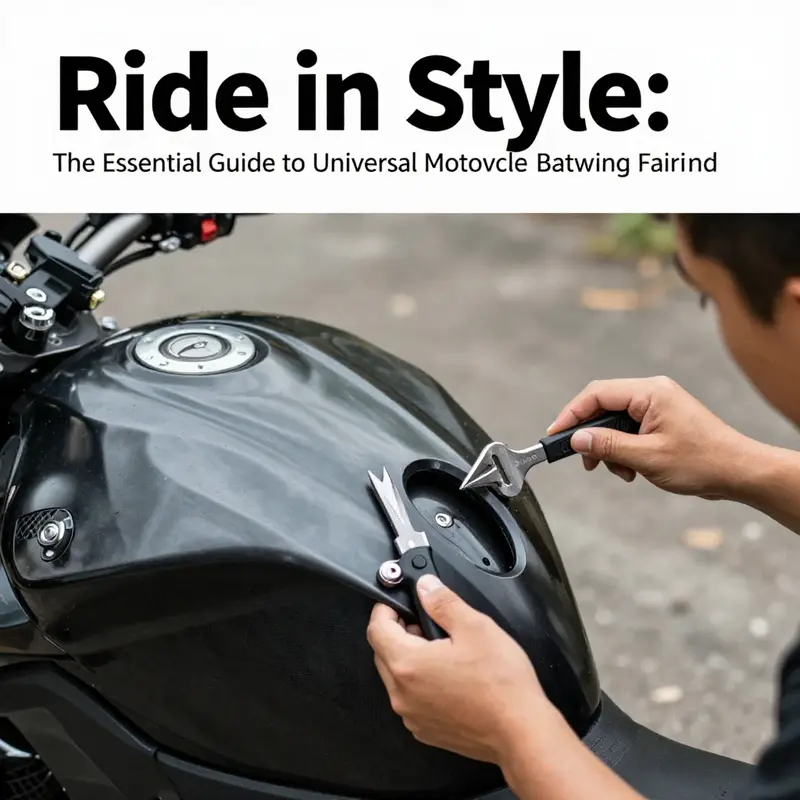
A universal batwing fairing arrives on a workshop bench with a straightforward premise and a complex set of practical challenges. It promises a blend of aesthetic drama and functional wind protection that suits a wide range of motorcycles, especially those with retro or classic lines. The fairing’s silhouette—broad, curved, and sweepingly minimal at the edges—speaks to a philosophy of airflow control rather than brute force. The idea is to create a wind shield that redirects oncoming air away from the rider, reducing fatigue and smoothing ride quality at highway speeds, while maintaining a look that many riders associate with a timeless motorcycle identity. The design aligns with a growing desire for customization that respects both form and function, offering a way to tailor a bike’s stance without crafting a bespoke, model-specific fairing from scratch. In that sense, the universal batwing is a bridge between the personal expression of the rider and the mechanical realities of riding comfort. It sits at the intersection of appearance, aerodynamics, and practicality, inviting a thoughtful approach to fitment that respects the bike’s geometry and the rider’s expectations for protection, airflow, and balance on the road.
Material selection forms the backbone of this entire conversation. The prevailing choice for universal batwings is a tough, lightweight ABS plastic that carries a resin-friendly finish and holds color well through years of exposure to sun, rain, and road debris. ABS is known for its impact resistance and shape retention, which matters when a fairing is exposed to gusts and vibrations. The material also tends to be forgiving in modification scenarios. When riders embark on a universal fitment, they often anticipate a certain amount of adjustment, trimming, or reinforcement to align the fairing with the bike’s chassis. The surface finish—gloss, satin, or matte—goes beyond aesthetics; it interacts with glare, headlamp reflections, and the rider’s line of sight. A well-chosen finish can complement the bike’s existing palette, making the overall look feel cohesive rather than improvised. The hardware that accompanies these kits—mounting brackets, bolts, spacers, and fasteners—must be compatible with different frame geometries and triple-tree arrangements. In many setups, the kit includes windshield hardware and adjustable brackets to accommodate a spectrum of mounting points. The result is a fairing that looks right at home on a variety of machines, yet remains sensitive to each model’s distinct proportions. This tension between universality and fit precision is what distinguishes a high-quality universal kit from a throwaway accessory that merely sits on the bike without truly integrating with it.
A universal approach to fairing design emphasizes adaptability, and that adaptability begins with measurement. A rider starting from a universal kit must approach fitment as a careful, measured process rather than a quick mounting exercise. The first step is to map the bike’s mounting envelope: where the upper fairing points can anchor to the inner firewall, where the lower brackets can meet the lower fork area, and whether there is any interference with the instrument cluster, the fuel tank, or the rider’s knees when seated in the riding posture they intend to adopt. Because frame geometry varies from model to model, the distance between mounting points, the angles at which the brackets sit, and even the fairing’s centerline alignment can differ substantially. A universal kit is designed to accommodate these variations, but it does so by providing a range of adjustability rather than a single fixed position. The installer must verify the exact dimensions in the mounting guide and compare them against the bike’s documented measurements. The process often includes a test fit that does not yet commit to permanent modifications. This test-fit phase is crucial because it reveals potential clashes with cables, hoses, or the battery area, and it reveals whether the fairing’s lower edge will clear the engine case and exhaust routing when the rider sits upright and when they lean into a corner. In practice, the job may require the use of aftermarket brackets or, in some cases, a light amount of fabrication—drilling, trimming, or shimming—to achieve a clean, secure, and visually balanced result. This is where the lure of “universal” blurs into the reality of “model-aware compatibility.” A well-done universal fairing does not pretend to vanish the bike’s specific geometry; instead, it respects it, using adjustable hardware and thoughtful geometry to harmonize the fairing with the bike’s lines, presentational language, and riding posture.
The installation story for a universal batwing is rarely a single act but a sequence of small, deliberate steps. The fairing’s upper mounting points often ride close to the rider’s line of sight and the top triple-tree area, so the installer must be mindful of the fairing’s vertical position relative to the rider’s eye line and helmet. A slight tilt can transform wind behavior at speed, not just the look of the bike. The windshield itself is a coordinated piece of the system. In many universal kits, the windshield includes a mounting plate or a set of standoffs that allow for height and angle adjustment. The rider may discover that the stock windshield height needs to be altered to maintain an effective airflow pattern and to prevent lift at speed, or to reduce turbulence that can echo around the rider’s helmet. In all these steps, the weather of the road—the wind, the rain, and the temperature gradient—becomes part of the testing process. A kit that feels perfectly balanced in a dry, calm environment might reveal a need for small tweaks once the bike is ridden through gusts or over undulating pavement. The installer’s patience during this phase pays dividends in a stable ride and a fairing that behaves as if it were always meant to be there.
The question of compatibility widens when considering how universal fairings interact with a bike’s controls and instrumentation. The fairing’s lower edge must avoid contact with the instrument cluster, the switchgear, and the brake and clutch reservoirs. The fairing should not obscure gauges or indicators that a rider uses to monitor speed, temperature, or fuel status. It should also leave enough room for hands to reach the handlebars without the fairing impinging on grip range during aggressive steering. The cable routing beneath the fairing deserves careful attention: a universal unit may shift the path of electrical wires, throttle cables, and clutch or brake lines, and that rearrangement should be performed with care to avoid pinching or chafing. Many universal kits respond to this challenge with clear routing channels, pre-cut grommets, and gaskets designed to seal the junction between the fairing and the bike’s bodywork. The aim is to minimize the risk of water intrusion and to maintain the mechanical integrity of nearby components. When these details come together, the bike reads as if the fairing had always been a planned part of the design, rather than a later addition chosen for style alone.
From a rider’s perspective, the payoff of a well-mounted universal batwing extends beyond aesthetics. The wind management is central to comfort, particularly on longer rides where rider fatigue can become a factor after hours on the highway. A properly aligned fairing helps maintain a steady, laminar flow across the rider’s torso, reducing the amount of buffeting that can travel up from the front wheel and across the chest and head. This results in a more stable riding posture, less helmet movement, and a more relaxed neck and shoulder alignment. The calmer air environment not only improves comfort but can also contribute to better visibility and situational awareness. In addition, a fairing that shields the rider from direct wind reduces glare from sunlight reflecting off the visor and face shield, which can contribute to a crisper, more focused ride. The overall effect is a bike that feels heavier in the sense of stability but lighter in the sense of fatigue after a day on the road—an important distinction that riders often notice after switching from stock to a well-fitted universal fairing.
Beyond personal comfort, the universal batwing is also a pragmatic piece of the bike’s system. It interacts with the bike’s aerodynamics, affecting drag and the distribution of wind pressure across the rider and the engine compartment. A fairing that is too bulky or ill-aligned can introduce turbulence, increasing drag and creating a buffet of wind around the rider’s upper body. Conversely, a fairing designed with careful consideration of the bike’s existing silhouette can contribute to a smoother airflow, reducing the need for aggressive wind management from other components like the windshield or fairing lower edges. The physics of air flow behind a fairing are influenced by the fairing’s curvature, the angle of incidence relative to the bike’s forward motion, and the distance between mounting points. These factors determine not only the ride quality but also how the bike handles at higher speeds, where stability and steering feel become more nuanced. The universal kit’s flexibility is its strength here, enabling a rider to tailor the interaction between bike and fairing to achieve a balance that suits their riding style and environment.
In parallel with the mechanical considerations, there is a cultural and economic layer to the universal batwing phenomenon. Consumers are motivated by a blend of self-expression and practical enhancement. The market data reflects a steady demand for components that can transform the look and feel of a motorcycle while contributing to increased comfort on long trips. Enthusiasts often see a universal fairing as a starting point—an invitation to personalize, rather than a final, fixed solution. The fairing’s universal nature means it can be installed on a broad spectrum of bikes, which, in turn, lowers the cost barrier for riders who want to experiment with the silhouette of their rides without committing to a model-specific fairing. This aligns with a broader social interest in customization as a form of personal storytelling—rider identity expressed through the careful curation of parts and finishes that harmonize with the bike’s historic or modern character. The result is a marketplace where quality, compatibility, and aesthetics intertwine, encouraging a culture in which riders are both curious evaluators and patient builders of their own riding experiences.
For those seeking a deeper understanding of actual fitment guides and model-specific alignment considerations, one practical approach is to compare the universal option with OEM hardware that is designed for particular models. OEM batwing fairings, when available, typically come with precise tooling, mounting patterns, and instructions that assume the bike’s frame geometry and electrical routing are well known to the installer. The advantages of OEM parts are a tighter integration and often a more factory-like appearance, with fewer compromises in fitment. But the universal route offers a different kind of value: it preserves the freedom to switch bikes or adapt to different models without purchasing new factory components for every project. The installer’s challenge, then, is to manage that freedom with discipline—planning measurement, confirming interference points, and choosing the mounting approach that achieves both security and aesthetics. In the end, fitment is not simply about whether the fairing attaches; it is about whether it integrates with the bike’s personality and the rider’s habits. The best universal batwings do not merely cover; they participate in the rider’s relationship with the road.
As the narrative of install and compatibility unfolds, one practical takeaway emerges clearly: always consult the fitment guide supplied with the kit and cross-check dimensions against the bike’s documented geometry. If a particular model does not match perfectly, a careful selection of brackets, spacers, or even light modifications to the mounting points can yield a clean, secure, and balanced appearance. In many cases, a universal kit will come with adjustable hardware designed to handle a spectrum of angles and heights, but the success of the project hinges on a careful, methodical process rather than a rush to completion. The rider who treats fitment as a structured, measured activity is rewarded with a fairing that not only looks appropriate but feels intimately attuned to the bike’s engineering and the rider’s line of sight. For those who want a broader sense of how a universal fairing might sit on a range of bikes, a practical way to explore is to browse the fairing category for motorcycles that share similar lines and proportions, then compare how the fairing’s curves echo those lines in ways that enhance rather than obscure key features. This approach helps keep the installation grounded in the bike’s existing character, rather than letting the accessory overwhelm the machine’s original rhythm.
When the installation is complete, the rider has a new interface with the bike—a fairing that shapes the space between rider and road. The wind protection, if properly tuned, creates a cocoon that can extend riding seasons and comfort across weather variations. The fairing’s air-cutting profile can help reduce the perception of wind at the rider’s chest and shoulders, which translates into fewer micro-adjustments during long stretches. This experience is not just about the absence of wind; it is about a more predictable, steadier on-ramp and highway ride where the rider feels a sense of control and calm. The visual line created by the batwing adds a sense of motion and purpose to the bike, emphasizing its stance rather than simply its silhouette. The finishing touches—the color match, the hardware finish, the glare-avoidant reflective properties—matter because every detail contributes to a coherent visual story. In a way, the universal batwing becomes a translator between the rider’s pragmatism and the bike’s form, helping to articulate a riding persona without erasing the bike’s original character.
From a broader perspective, the existence and persistence of universal batwing fairings illuminate how communities of riders shape and sustain a culture of customization. The appeal is not simply cosmetic; it is about the satisfaction that comes from achieving a tailored look while maintaining or even improving a bike’s performance characteristics. The ongoing attention to fitment guides, to the subtle balance of weight, leverage, and airflow, to the finish and hardware selections, all contribute to a shared knowledge base that riders can rely on when pursuing new builds or upgrades. The market responds with adaptable products, installation guides, and customer support that recognize the diversity of bikes and riding styles. The result is a dynamic ecosystem in which universal components like batwings serve as catalysts for experimentation, personal expression, and mechanical learning. This is not about chasing a trend but about cultivating a practical, repeatable process of customization that respects the physics of airflow and the artistry of bike design. The universal batwing sits at the center of that process, a versatile element that invites riders to imagine how a single component can harmonize with many different machines while preserving a rider’s sense of identity and comfort on the road.
To connect this discussion with practical resources, consider exploring model-specific guidance within the broader fairing catalogs that accompany universal offerings. A well-curated collection often includes pages that help riders compare compatibility across different models, along with fitment guides, caution notes, and installation tips. These resources empower riders to approach the project with clarity and confidence, and they encourage a thoughtful, proactive approach to maintenance and aftercare. When riders are ready to proceed, they can reference the kit’s documentation for precise mounting patterns and required clearances, while remaining mindful of the bike’s unique geometry. The end result is not simply a visual modification but a calibrated integration that enhances comfort, stability, and style in equal measure. For riders seeking further context on model-specific fitment considerations and accessory ecosystems that complement universal options, a practical path is to explore a curated set of related articles and product pages that emphasize compatibility, installation, and performance. This approach reinforces the idea that universal fairings, properly chosen and correctly fitted, can deliver a coherent riding experience across a spectrum of motorcycles, while still leaving room for personal experimentation and expression. In that light, the universal batwing is less a one-size-fits-all solution and more a flexible starting point for a rider-led transformation that respects the machine’s original lines and the rider’s evolving needs.
A final note centers on the importance of verifying fitment before committing to a purchase or driller’s work. Even small misalignments can cascade into performance or safety concerns if mounting points clash with critical components or if airflow patterns are disrupted in unpredictable ways. The rider’s confidence comes from a thorough, patient approach to measuring, testing, and adjusting. The experience of riding with a well-fitted universal batwing can affirm a philosophy: that good design honors the integrity of the machine, supports rider comfort, and elevates the riding experience without erasing the motorcycle’s heritage or character. In this sense, installation and compatibility are not merely technical steps; they are the practical expression of a rider’s intention to respect the bike as a living, evolving partner on the road. The universal batwing, when chosen with care and installed with attention to the bike’s geometry, can fulfill its promise: a balanced, protective, and visually compelling extension of the motorcycle that suits a broad range of models and rider intentions.
For riders who want to explore more targeted guidance or model-specific considerations in the context of a universal approach, a helpful path is to consult a curated resource hub that gathers fitment insights, installation tips, and compatibility notes. This approach allows riders to compare how similar bikes respond to universal fairings, recognize potential fitment pitfalls, and learn practical strategies for achieving a clean, secure installation. The journey toward a successful universal batwing installation is incremental and collaborative, benefiting from the experiences of others who have navigated the same process. In that spirit, the chapter above has sketched a path through measurement, alignment, and refinement, highlighting how universal components can harmonize with diverse motorcycles while delivering both form and function. The result is not just a new cosmetic element but a functional upgrade that enhances rider comfort and the machine’s presence on the road. As the road ahead beckons, riders can approach a universal batwing installation with confidence, knowing that thoughtful fitment, careful testing, and a respect for the bike’s architecture will yield a ride that feels both anchored and buoyant—the signature effect of a well-integrated fairing across models.
Internal link: https://www.summitfairings.com/collections/honda-fairings
External resource for further reference: https://www.h-d.com/warranty
Final thoughts
Universal motorcycle batwing fairings serve as more than just an aesthetic upgrade; they provide essential functional benefits, including improved aerodynamics and wind protection. Understanding their design, the current market landscape, and installation compatibility can position business owners to better serve the growing community of motorcycle enthusiasts. As customization trends continue to evolve, integrating batwing fairings into your offerings could drive demand and enhance customer satisfaction.