
As motorcycle enthusiasts seek to personalize their rides, universal motorcycle lower fairings have gained traction as a popular aftermarket accessory. These fairings not only augment the aesthetic appeal of motorcycles but also contribute to their aerodynamics and functionality. This comprehensive overview highlights the design and compatibility of these fairings, explores the materials and construction methods used, and addresses market trends and considerations that business owners must understand when selecting universal motorcycle fairings. Each chapter targets critical aspects of the market, providing vital insights that can inform purchase decisions and enhance customer satisfaction.
Balancing Versatility and Precision: The Design Logic and Real-World Fit of Universal Lower Fairings

A universal lower fairing is not a mere sheet of plastic slapped onto a bike. It is a carefully engineered interface between many variables: the rider’s aesthetic goals, the bike’s geometry, the rider’s tolerance for modification, and the harsh realities of wind, weather, and heat management. The promise is straightforward—one component can harmonize with a wide family of machines, delivering cleaner lines, improved aerodynamics, and practical features without the higher price tag and longer lead times that come with model-specific parts. Yet that promise bears closer scrutiny. In practice, universal lower fairings are a compromise that hinges on design choices, manufacturing tolerances, and the rider’s willingness to measure, modify, and optimize. The core of this topic rests on two intertwined ideas: how the part is designed to be versatile, and how well it actually fits in the real world when installed on different frames, engines, and substructures within a brand’s touring or sport-touring lineup.
From a design standpoint, the most successful universal lower fairings begin with what engineers often call a “variable geometry” approach. The shape is intentionally broad, but not reckless. The designers craft a silhouette that clears exhaust routing, suspension travel, and the lowest points of the engine case while leaving headroom for a range of frame widths and engine placements. The result is a fairing that can be wedged, clamped, bolted, or slid into position using adjustable mounting points. In many kits, this modularity is implemented with a grid of predrilled holes, elongated slots, or attachable brackets that can be shifted along a few millimeters in several directions. The combination of adjustable points and modular brackets is what converts an otherwise static panel into a flexible solution capable of accommodating a spectrum of models that share similar design language in their lower bodywork.
Material choice sits at the heart of this flexibility. The most common compositions are durable polymers—often a balance between a heat-resistant ABS-like blend and reinforced composites such as fiberglass in certain builds. These materials offer a good stiffness-to-weight ratio, meaningful resistance to rain, UV light, and road salts, and a finish that accepts paint or powder coat. The downside is that polymers can flex a little under load or heat, which is why designers layer the engineering with reinforcement ribs, additional mounting bosses, or even separate inner skins to preserve a clean exterior surface while maintaining rigidity. Paint finishes, clear coats, and powder coatings become important not just for aesthetics but for durability. A well-wrought universal lower will provide a paint-ready surface, often with primer included, and a uniform texture that accepts color matching across a range of bikes without appearing mismatched or jarred by a visible seam line.
Practical features are not cosmetic afterthoughts. Some universal kits incorporate integrated vents or channels that guide air toward the engine bay, radiator housings, or electrical enclosures. In hot climates or on engines with compact routing, these vents can contribute to cooling efficiency and component longevity, especially when cooling air has a natural path dictated by the fairing’s geometry. The same venting principles must be balanced against the need to keep out rain, mud, and grit. A clever design uses vented panels that can be closed or opened depending on temperature, riding mode, or weather. Storage options may also appear in touring-oriented universal kits in the form of a small glove compartment lid, an under-panel pocket, or a shallow bin integrated into the fairing’s interior. These details matter because the perceived value of a universal kit often hinges on whether it offers any practical, rider-focused function beyond aesthetics.
The broader logic of compatibility is where universal concepts often encounter their most persistent friction. The term universal implies broad compatibility, but the catalog of constraints clarifies that no lower fairing is truly universal in the sense of fitting every model from every maker. The functional universality is bounded by a specific manufacturer’s family of machines—often within a distinct lineup that shares frame geometry, body line language, and engine placement enough to enable a single panel to align across several models. For many universal lower fairings designed for touring and sport-touring categories, the target subset might include models within a family that ranges across years and minor mid-cycle updates. Designers emphasize this nuance in the product notes and compatibility charts, warning that precise fitment requires careful model-year verification. The takeaway is subtle but important: universal in this context signals broad compatibility across related frames, not an across-the-board fit for every motorcycle ever built.
That nuance translates into a practical discipline for riders. Before committing to a universal lower, a rider should conduct a quiet, almost ritual check: measure the bike’s lower silhouette, compare frame geometry, and understand where the lower edges would sit in relation to critical components like the exhaust, engine cases, and lower radiator lines. Even with adjustable mounting points, the alignment remains sensitive. Slippage or misalignment can lead to rubbing, awkward gaps, or an appearance that betrays the part’s lack of tailor-made fit. This is not a condemnation of universals but a reminder that measurements, chart checks, and, in some cases, light modifications are part of the installation journey. In practice, many riders find success by focusing on a narrow window of years within a model family, where the frame profiles remain closest to the reference design used to shape the universal kit. By narrowing the field in this way, they can achieve a more coherent look, a more predictable air flow pattern, and a more reliable mounting system.
Aesthetics, too, deserve a nuanced approach. Universal lower fairings are most effective when their lines echo the bike’s existing sculptural language. A clean, continuous edge that mirrors the bike’s beltline or side panels can produce a visual unity that is remarkably convincing. Color-matching matters as much as silhouette matching. A well-finished unit can be finished to the same gloss level and hue as the bike’s original paint, which reduces the risk of a “bolt-on” look that shouts out as an aftermarket add-on. In some instances, riders opt for aftermarket color-matched finishes or textured surfaces that resemble factory detailing, which helps the fairing blend rather than clash with the bike’s stance. The aesthetic integration is not merely cosmetic; it impacts the perceived quality and, indeed, the resale value of the machine.
From a mechanical perspective, the installation narrative matters almost as much as the design narrative. Universal lowers come with mounting hardware intended to span a range of bikes, but the reality is that certain bikes will demand additional brackets, spacer kits, or even minor trimming of the fairing’s edges to accommodate exhaust routing, frame rails, or wiring conduits. The process can be straightforward on some installations and technically involved on others. The rider must decide whether to pursue a quick, bolt-on solution or to invest in a more exacting adaptation that preserves ground clearance, protects the underside from debris, and reduces the risk of vibration-induced rattles. In this light, the term “universal” can be reframed as “highly adaptable” rather than “one-size-fits-all.” The adaptation often yields a satisfying compromise: a fitment that is solid, visually cohesive, and sufficiently durable for everyday riding as well as spirited weekend runs.
The layering of compatibility with a broad design envelope also invites a conversation about safety and performance. Aerodynamic efficiency, for instance, is partly a product of how cleanly the fairing seals against the bike’s midsection and how well it guides airflow around the engine and rider’s legs. A universal fairing that compromises seal or introduces large gaps might not realize the hoped-for drag reduction or wind buffering. Similarly, the installation must not impinge on the rider’s control inputs, the steering lock, or the kickstand’s operation. The lower edge must avoid contact with the tire in suspension travel or with the exhaust system when the bike dives under braking. In practice, the best universal kits are those that anticipate these clearances and provide adjustable or shimmable mounting zones that let the installer fine-tune the alignment without requiring a full rework of the bike’s undercarriage.
The sourcing story for universal lower fairings offers its own layer of nuance. Because production runs for universal lines are designed to fit a spectrum of models, the quality of manufacturing—surface finish, edge radii, mounting boss accuracy, and the precision of the vent openings—varies more widely than with model-specific parts. A rider who buys a universal unit should scrutinize the included hardware, the presence of pre-drilled mounting points, the completeness of the kit (brackets, spacers, grommets, weatherstripping), and the quality of the internal surfaces that will be in contact with the bike’s frame or fork tubes. Reviews from other riders can reveal whether gaps tended to accumulate, whether the paint finished evenly, and whether the mounting hardware holds up over time without loosening. In this context, the decision hinges not only on the fear of a poor visual outcome but on the practical fear of a misalignment that could lead to mechanical interference or, in the worst case, a roadside repair scenario.
The narrative around universal lower fairings also intersects with the economics of customization. For riders who crave a broader set of color options, finish textures, or storage features without spending heavily on a bespoke solution, a universal kit can present a compelling compromise. It enables rapid styling changes, easier color updates, and the opportunity to experiment with airflow changes before committing to a more precise, model-specific path. The decision to invest in a universal kit often comes down to a balance between cost, tolerance for modification, and the rider’s willingness to handle potential refinements. In that balance, a universal lower fairing can serve as a bridge—providing an affordable pathway to a refreshed aesthetic and a potential aerodynamic improvement while preserving the option to upgrade to a factory-sent or custom-fit solution later if the bike’s line and the rider’s goals evolve.
For riders curious about concrete experimentation with universals, it can be helpful to see how related communities discuss compatibility. Observers emphasize the importance of verifying compatibility charts that accompany any universal kit, and they note that the most satisfying outcomes tend to come from an iterative process: test fit, measure gaps, adjust mounting positions, and, if necessary, swap or trim components to ensure an exact and safe fit. The hidden costs are rarely significant in monetary terms, but the time and care required to achieve a seamless look and a dependable mount can be considerable. This is not a flaw in universal design; it is the acknowledgment that fitment quality grows with attention to detail and a methodical approach to installation. In the end, the value proposition remains intact: universal lowers offer a practical, flexible option that broadens the palette of styling and aerodynamics without locking riders into a single model path. When approached with a disciplined plan and moderate expectations, they can deliver a result that looks cohesive, rides confident, and ages gracefully under weathering and road use.
For riders who want a tangible stepping stone toward a more exact, tailor-made appearance, there is a simple strategic choice. Start with a universal lower that prioritizes a clean silhouette, reinforced mounting options, and a finish that can be matched to the bike’s existing paint. Then, use the installation phase as a diagnostic period: observe how the fairing interacts with airflow, listening for any rubbing or contact, and assessing whether the line of the lower panel aligns with nearby bodywork. If alignment is consistently close but not perfect, there is now a clear path to a more precise, model-specific solution that maintains the same aesthetic, but with a fit that is engineered to the minute. This progression—from universal to specialized—reflects a practical philosophy for riders who value both economy and quality of fit. It also respects the broader truth that good design, even when marketed as universal, thrives on precision, thoughtful engineering, and the humility to accept necessary adaptations as part of the journey toward a seamless riding experience.
In closing, universal lower fairings embody a useful paradox: they promise broad applicability, yet their true strength rests on targeted, model-aware adaptation. The most effective designs maximize adjustability without sacrificing rigidity; they offer vents and channels that support cooling without inviting water intrusion; they provide finishes that respond to color-matching challenges without introducing visible seams that betray the part’s generic origin. The rider is invited to balance these design virtues with practical fitment realities—measuring, verifying compatibility, and embracing modifications when needed. When these steps are respected, universals can deliver not merely a stylistic upgrade but a tangible improvement in how a motorcycle meets the rider’s expectations for performance, durability, and personal expression. For curious readers seeking a concrete path to explore options beyond the traditional, consider exploring a dedicated collection of fairings that emphasizes compatible, tested fit across a family of bikes, with clear notes on model-year alignment and mounting requirements. A practical starting point in this exploration is to browse a curated selection that focuses on compatible fairing shapes and mounting methods, such as the Yamaha fairings collection, which illustrates how a single design language can support diverse bikes while maintaining alignment discipline and finish quality. Yamaha fairings collection During the evaluation, riders should also consult official fitment guidance from manufacturers when assessing a broader, brand-wide compatibility framework. These references remind readers that even a universal design relies on a constellation of precise tolerances and documented model-year specifics to deliver a reliable, long-lasting appearance and performance. External resources that summarize these fitment guidelines provide further context for making informed decisions about universal lower fairings, including broader considerations about safety, airflow management, and finish durability. External reference: https://www.harley-davidson.com/en_US/support/fitment.html
The Skin and Skeleton of Universality: Materials, Methods, and the Craft of Universal Motorcycle Lower Fairings

The universal lower fairing sits at a crossroads of mass production and adaptable tailoring. It must shield the rider from wind, debris, and weather while fitting a spectrum of frames that differ in geometry, mounting points, and stance. It must do so without the precision of a model-specific part, yet with enough rigidity to feel integral rather than bolt-on. The following discussion surveys the materials and construction methods that make universal fairings practical, affordable, and capable across a range of motorcycles.
Universal fairings bridge many models, requiring materials and methods that maximize compatibility without sacrificing strength or finish. The mounting system often relies on adjustable brackets, slotted holes, and flexible bends that can hug a variety of frames. This flexibility is not a free pass for neglecting rigidity; rather, it is a design constraint that steers material selection toward solutions that can be adjusted after molding or lay-up without collapsing under wind load at highway speeds. The choice of resin, fabric, layup technique, and joinery influences the surface behavior, heat resistance, and long-term durability of the finished piece.
At the heart of many universal fairings is a family of polymers that balance stiffness, impact resistance, weight, and cost. ABS plastic is a common starting point, offering good impact performance and moldability for high-volume production. ABS is friendly to surface finishes, responds well to paint and clear coats, and supports post-mold finishing such as priming or wrap-ready prep. In practice, ABS forms the backbone of many mass-produced shells because it is predictable to manufacture.
Polycarbonate offers a step up in toughness and heat resistance, with improved impact performance at the cost of higher material price and potential for more pronounced scratching or UV sensitivity depending on the finish. For riders who value longevity and cosmetic resilience, polycarbonate can be the preferred option, especially where the fairing must endure years of use with minimal cosmetic compromise. In higher-end or performance-focused universal kits, carbon fiber layers may be used for skins or reinforcements. Carbon fiber provides an exceptional stiffness-to-weight ratio, but price and specialized manufacturing can limit adoption to premium sectors. Carbon-fiber skins are often applied via hand lay-up or vacuum bagging, sometimes with prepregs and epoxy resins for a rigid yet light composite shell.
These material choices go beyond raw strength. They influence how the fairing behaves under load, how well it resists weathering, and how the surface accepts finishing. ABS is forgiving for primers and paints, while polycarbonate adds toughness at the cost of greater finishing care. Carbon fiber emphasizes stiffness and weight savings but requires stringent quality control to avoid delamination and finish defects. The material choice also interacts with the chosen construction method, creating a chain from design intent to the finished part.
Construction methods reveal how universal fairings balance economy with performance. Injection molding remains the primary method for ABS and polycarbonate shells, delivering high-volume output with consistent wall thickness and repeatable tolerances. When the design calls for curved geometries, complex corners, or integrated mounting features beyond simple molded shells, manufacturers may integrate assembled panels or bonded joints to form a cohesive skin.
For carbon fiber options, production often shifts to hand lay-up or vacuum bagging, with epoxy resin and sometimes prepregs. This route yields exceptional stiffness and lightness, at the expense of cost and process speed. It remains a niche in the universal space, chosen when weight savings and structural rigidity are prioritized over price.
In recent practice, specialized techniques have emerged. For electric motorcycles, unidirectional prepreg S-glass fibers in epoxy resin offer a middle ground between traditional carbon and standard plastics, balancing weight, stiffness, and cost while accommodating unique thermal and vibration profiles of electric powertrains. The broader takeaway is that construction methods must align with performance targets, rider expectations, and the realities of mass production, even when the product is designed to fit many bikes rather than one.
Quality assurance and safety standards matter. Even a universal component should meet safety and reliability expectations, with certifications such as CE and ISO guiding material selection, testing, and processes. While universal fairings operate in a more forgiving space than model-specific OEM parts, standardization helps ensure predictable performance across installations and over time.
From the rider’s perspective, fit and finish define perceived value. Adjustable mounting points and forgiving geometry support installation across varied chassis, while a well-prepared surface—whether primed, painted, or wrapped—contributes to uniform aesthetics and durable appearance. The base material’s compatibility with paints and coatings ultimately determines how easily a rider can personalize the look while preserving long-term durability.
In closing, the universal lower fairing is a blend of engineering pragmatism and craft. ABS, polycarbonate, and carbon fiber appear as options in a design space that rewards compatibility without surrendering essential performance. Injection molding, hand lay-up, and vacuum bagging illustrate the spectrum of manufacturing choices, while the emergence of composites for electric platforms hints at a future where universal parts evolve with propulsion trends. The universal fairing thus embodies a philosophy: the ability to harmonize a common part with many machines, while still offering the texture of a tailored and purposeful rider experience.
Rethinking Universality: Market Trends, Material Innovation, and the Real-World Fit of Motorcycle Lower Fairings
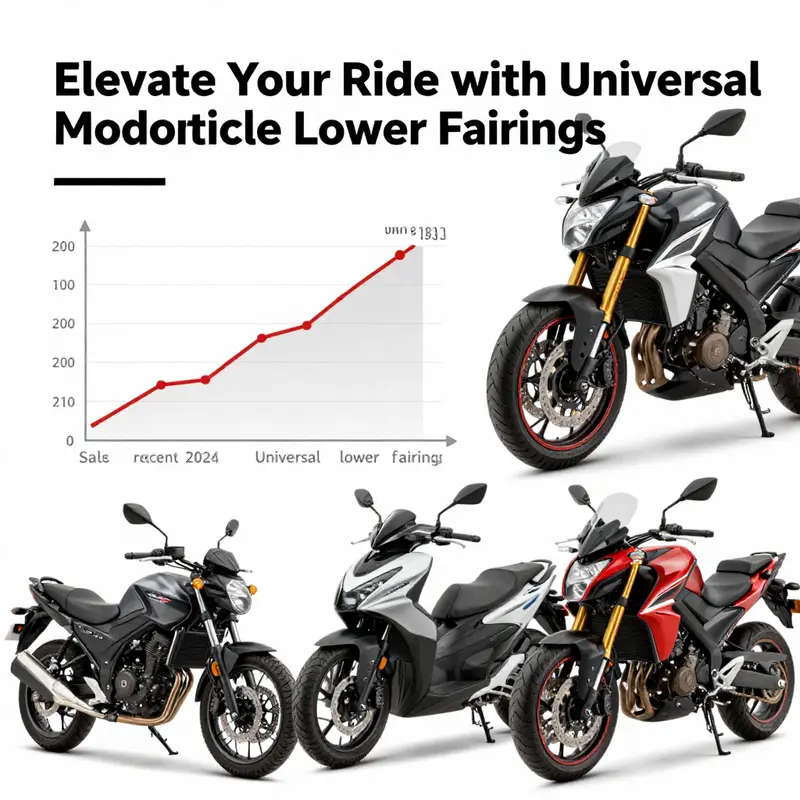
Across the aftermarket landscape, universal motorcycle lower fairings are often presented as a simple, budget-friendly route to personal expression and visual impact. Yet beneath the marketing language lies a more nuanced truth: the idea of a truly universal fit is, in practice, elusive. Motorcycles are crafted with a remarkable range of design philosophies, from engine layouts and frame geometries to exhaust routing and rider ergonomics. The result is a spectrum of fitment personalities that rarely converge into a single, flawless solution. What seems universal on a product page may require careful measurement, patient modification, and a willingness to trade some degree of precision for broad compatibility. This tension between broad compatibility and precise integration lies at the heart of current market trends and informs every practical buying decision a rider makes when contemplating lower fairings for their machine.
The market has shifted in meaningful ways as riders seek more than mere aesthetics. They want lower fairings that align with real-world usage—that is, fairings that reduce drag and shield components without forcing compromises on access to maintenance, cooling, or mounting points. The core trend moving through the industry is a pivot from talk of absolute universality toward a language of high adaptability and precise matching. Manufacturers now articulate compatibility in terms of targeted platforms and well-documented fitment matrices rather than a blanket claim of cross-model universality. For riders, this translates into a more predictable installation experience and a product that sits closer to the body lines, channeling air more efficiently while preserving the silhouette the rider cares about.
Material science also mirrors this shift. Traditional ABS remains common for its balance of cost, rigidity, and weather resistance, but a growing portion of fairing providers are embracing advanced composites. Carbon fiber reinforced polymers offer an exceptional strength-to-weight ratio, translating into better performance in both handling and fuel economy when the fairing sides are not overshadowed by bulk. These high-performance materials, while pricier, are increasingly presented as options that deliver real aerodynamic and aesthetic dividends without demanding a total overhaul of the motorcycle’s existing architecture. The accessibility of 3D printing further accelerates innovation by enabling rapid prototyping and conversion for limited-production or highly customized requests. The result is a capability to tailor inlet ducts, venting channels, and mounting contours with a level of precision unheard of even a decade ago.
The functional dimension of modern lower fairings has evolved in parallel with material advances. The next generation of kits integrates more thoughtful features that go beyond appearance. Internal channels can guide air to critical engine bays, reducing heat soak and stabilizing intake temperatures, while designed grooves and vent placements manage boundary-layer effects to minimize drag-induced turbulence. Some designs predefine hollow sections for light or sensor housings, enabling a clean installation path for aftermarket fog lights, cameras, or other devices that riders frequently add to their touring or sport-oriented rigs. This functional integration matters because it allows riders to ride with confidence that their upgrade contributes to efficiency without inviting maintenance headaches or wiring chaos.
Sustainability has become a clearer criterion in both consumer expectations and factory thinking. Environmental awareness now informs material choice, production methods, and end-of-life considerations. Recycled or bio-based resins are finding their way into mainstream lower fairing lines, offering a greener option for riders who want to reduce the environmental footprint of their upgrades without sacrificing performance. While the eco-narrative can’t be the sole driver of choice, it has moved from a niche concern to a recognized criterion that intersects with durability, weather resistance, and color longevity. For riders weighing this factor, the calculus includes not only the immediate cost but the long-term lifecycle impacts of the materials chosen and the potential for reclaiming or reprocessing the parts at the end of their service life.
Against this backdrop, the most prudent approach to selecting a universal lower fairing begins with a disciplined set of criteria that reflect real-world usage. The number-one rule remains precise model compatibility. The industry speaks in terms of fitment lists that accompany each product and in installation notes that delineate which frames, engine configurations, or mounting points align with a given fairing. Even when a kit claims broad compatibility, it is essential to read the fine print, cross-check the product’s compatible years, ride-height considerations, and the intended mounting surface versus the bike’s actual geometry. In practice, “universal” often means a carefully engineered broad-range solution rather than a literal one-size-fits-all piece. The rider’s task is to evaluate whether the claimed adaptability aligns with their specific bike’s make, model, and year and to anticipate any necessary adjustments.
Material choices, as previously noted, feed directly into the second-tier question: how the product will weather the elements and how it will perform over time. The urban rider who faces rain, road salt, and heat from summer highways benefits from materials that resist cracking, UV degradation, and chemical exposure. A high-quality fairing will show resilience to repeated temperature cycles, resisting warping and color fading after multiple seasons. For riders in more extreme climates, or for those who ride aggressively at the track, the stiffness-to-weight considerations of the chosen material will influence not only longevity but noise and vibration characteristics at highway speeds. Carbon fiber or composite variants can deliver a performance edge here, but the potential trade-off in cost requires diligent budgeting and a clear expectation about maintenance and repainting requirements. All these factors converge on the advice that cost alone cannot be the sole predictor of value; the composite’s long-term behavior under real-world strain is the decisive variable.
Another axis of consideration centers on the installation experience itself. The ideal lower fairing should leverage existing mounting points and require minimal drilling or modifications. Quick-fit or plug-and-play designs are highly valued because they reduce the risk of misalignment, which can undermine both aesthetics and aerodynamics. At the same time, a fairing that invites some targeted customization—like small, precise notch removals or light reshaping of edges to accommodate atypical exhaust routes—can still deliver a near-seamless look if the rider is prepared to undertake careful, measured work. The willingness to engage in minor modifications often separates the well-satisfied buyer from the disappointed one. A fairing that promises a straightforward installation but demands extensive chassis drilling or delicate trimming is more likely to become a source of frustration than a source of pride.
The contemporary market also emphasizes the reliability of the supplier and the clarity of the post-purchase support. Riders weighing a universal option should inspect the vendor’s return policy, warranty terms, and the availability of replacement hardware or installation guidance. The best providers present a transparent compatibility matrix, a well-documented installation sequence, and clear dashboards of common install pitfalls. A robust after-sales pathway reduces the perceived risk of a non-OEM upgrade and helps ensure that the owner’s investment remains protected through use and potential resale. The long game here is straightforward: a product that honors accurate fitment, durable materials, and smooth service experiences tends to deliver higher total value over the life of the motorcycle than a cheaper, less transparent option.
Following the thread of practicality, riders must also weigh the broader ecosystem around universal lower fairings. The rise of dedicated accessory collections—whether they target a broad family of sport-tairs, touring configurations, or a general sport-tair aesthetic—reflects a cultural shift toward platform-aware customization rather than indiscriminate alteration. For those who want a cohesive look, a platform-supported kit can offer subtlety and continuity that general-purpose items rarely achieve. Yet even among these more targeted offerings, true universality remains a misnomer. A rider who takes the time to study platform-specific catalog entries will often discover a family of parts that share mounting philosophies and aerodynamic goals, delivering a more polished integration than a single, catchall piece could ever promise.
From a consumer education perspective, the takeaway centers on measurement discipline and information literacy. Before committing to a purchase, it is prudent to assemble a precise set of measurements: the wheelbase, the width of the lower frame, mounting hole spacings, and clearance around the exhaust and steering components. A well-prepared buyer can translate the dimensions of their motorcycle into a small set of compatibility checks, then compare those checks to the product’s official fitment documentation. If any discrepancy hints at a potential misfit, the prudent step is to seek clarification from the seller or to consider a platform-specific alternative rather than buying with an assumption of universal compatibility. In this sense, the modern rider accepts that universal is not a universal guarantee, but a carefully curated spectrum of fitment options that aim for the best possible alignment with real-world motorcycles.
The purchasing journey is also shaped by the channels through which riders source these fairings. Online marketplaces offer broad catalogs and competitive pricing, but they also present significant variability in quality and accuracy. The best practice is to triangulate information from multiple sources: the product description, user-generated installation notes, and visual references that show how the fairing aligns with a bike in real life. Reviews become less about aesthetics and more about interface quality—how closely the piece sits to the bike, whether it rattles under vibration, and whether the color and texture respond well to weathering. These qualitative signals often tell more about the product’s practical performance than any glossy marketing photo. The rider who integrates feedback from experienced enthusiasts, measured expectations, and a careful evaluation of fit tests the boundaries of what a universal solution can realistically deliver.
In this evolving landscape, the most informed choice emerges from a balanced synthesis of three pillars: precise compatibility, material performance, and installation practicality. The rider’s priority may tilt toward one pillar, but the most satisfying outcomes arise when all three align. A fairing that matches a bike within a known compatibility window, built from durable materials with proven weather resistance, and designed for a straightforward installation will tend to remain a reliable upgrade rather than a recurring source of compromise. As a practical matter, this means starting from a reality check about what “universal” can realistically accomplish and then moving toward solutions that optimize the fit for a defined cluster of models rather than a mythically broad audience.
For readers who want a pragmatic anchor point while navigating the marketplace, a useful step is to consult platform-specific collections that align with common design languages and mounting philosophies. Such collections illustrate the trajectory from broad compatibility toward targeted adaptability. They also demonstrate how engineers address the realities of different model families without abandoning the shared aims of aerodynamics, protection, and rider aesthetics. The conversation around universality thus shifts from chasing a mythical all-encompassing solution to pursuing a high-adaptability approach that honors the unique geometry of each motorcycle class while offering practical, install-friendly pathways for a wide audience of riders.
To place these ideas in a concrete, actionable frame, consider the broader implications of fitment philosophy when evaluating lower fairings. A good rule of thumb is to prioritize detailed compatibility lists and install guides over broad promises. Look for designs that minimize modification requirements and maximize alignment with factory mounting points. Weigh the materials not just by their stiffness or weight, but by their resilience to heat, moisture, and UV exposure. Finally, gauge the value proposition by factoring not only the sticker price but the anticipated maintenance, the ease of color matching, and the likelihood of achieving a seamless, integrated look that complements the motorcycle’s lines rather than interrupting them. In short, the journey from universal claim to real-world fit is not a journey away from customization but a journey toward more purposeful, enduring customization that respects both the machine and the rider.
For riders who want to explore more about practice-ready options that emphasize high adaptability and precise fit, a helpful reference is the Honda fairings collection, which showcases how platforms are organized around compatibility and installation clarity while still offering room for personal expression. See the following resource for context and examples of how platform-focused curation can streamline decision making: Honda fairings collection.
External reading and further perspectives can deepen understanding of the broader materials and engineering trends shaping lower fairings today. For those seeking a concise, authoritative overview of contemporary aftermarket options and considerations, a recent buyer-focused resource provides practical insights into fit, color, and finish expectations in real-world environments: https://www.amazon.com/dp/B0C5QXJZ6Y
Final thoughts
Universal motorcycle lower fairings serve as a strategic investment for those looking to enhance not only the appearance of their bikes but also their overall functionality. As we have explored, the intricacies of design and compatibility, alongside the choice of materials and construction methods, play a vital role in the effectiveness of these aftermarket additions. By staying informed about market trends and customer preferences, business owners can make educated inventory decisions that cater to the evolving demands of motorcycle enthusiasts. Embracing these fairings equates to tapping into a growing segment of the motorcycle market eager for customization and performance improvements.