
Motorcycle customization has become a substantial market segment, with riders seeking unique aesthetics and improved performance. Unpainted motorcycle fairings, crafted primarily from Acrylonitrile Butadiene Styrene (ABS) plastic, are at the forefront of this trend, allowing customization while offering cost-effective solutions for bike enthusiasts. This article delves into the various aspects of unpainted motorcycle fairings, including types and materials, benefits, installation processes, market trends, and a comparative analysis against painted fairings. Each chapter reveals critical insights for business owners aiming to tap into this lucrative niche, enhancing both their product offerings and profit margins.
Unpainted Motorcycle Fairings: Material Truths, Fit, and Personalization
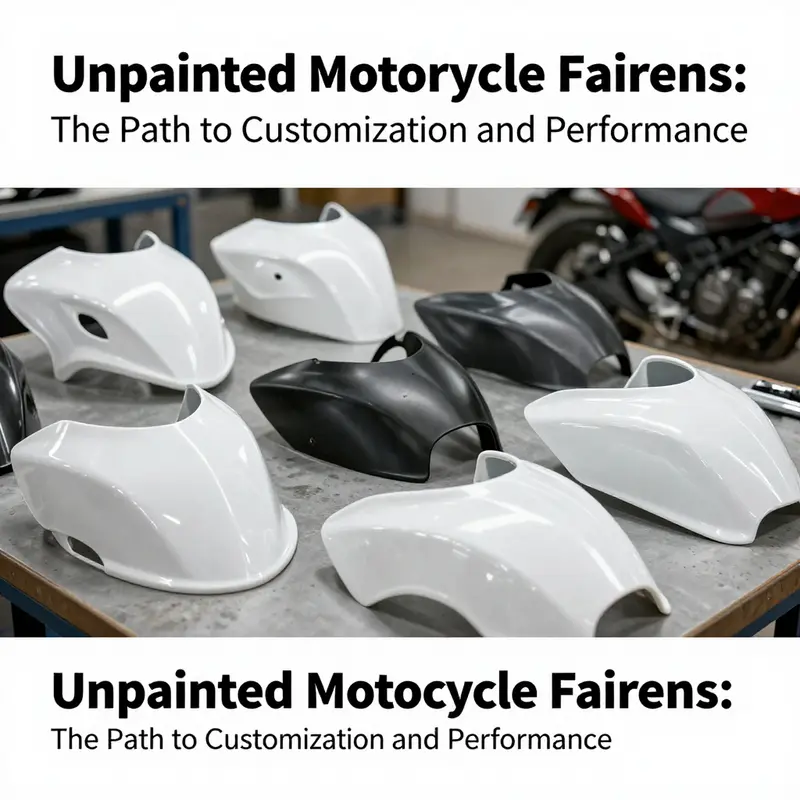
Unpainted motorcycle fairings sit at the intersection of design intent and practical engineering, shaping how riders transform a machine’s look without committing to a painted finish. These kits are typically crafted from ABS and other thermoplastics and are engineered to integrate with OEM mounting points while allowing room for customization. The appeal lies in a cost-effective canvas that preserves the bike’s geometry and offers a broad palette of finishing options.
ABS, Acrylonitrile Butadiene Styrene, provides a pragmatic balance of strength, formability, and heat resistance. It is molded by precise injection processes to yield consistent geometry, ensuring reliable fit on a wide range of models. The surface takes paint, decals, or clear coatings well, making it easier to achieve a high-quality finish after installation.
Beyond ABS, some unpainted kits use composites like fiberglass or carbon fiber for stiffness or texture, but ABS remains the dominant choice for mass-produced fairings due to its cost and predictable performance. Unpainted surfaces are a platform for priming, base coats, and topcoats, as well as for clear laminates or powder coats that preserve the underlying geometry and wind-sculpting curves.
Types of unpainted fairings span full body shells, front or half fairings, decor pieces, universal headlight guards, and raw blanks. Each type emphasizes fit and mounting accuracy, and each invites a different level of customization—from race replica aesthetics to subtle, color-forward styling without altering the bike’s basic wind profile. The advantages include lower material cost, a ready-made canvas for personal graphics, and flexibility in choosing a finishing approach. Drawbacks include the need for careful surface preparation, color matching, and regular maintenance of the unpainted surface to protect against UV exposure and road debris.
Whether you are building a race-ready machine or a streetfighter that reflects your personality, unpainted fairings offer a pragmatic pathway to customization without sacrificing fit or performance. Always verify model-specific fitment data and consider heat management, radiator clearance, and mounting hardware when planning a conversion.
Bare Shell, Bold Ambition: The Performance, Durability, and Custom Potential of Unpainted Motorcycle Fairings
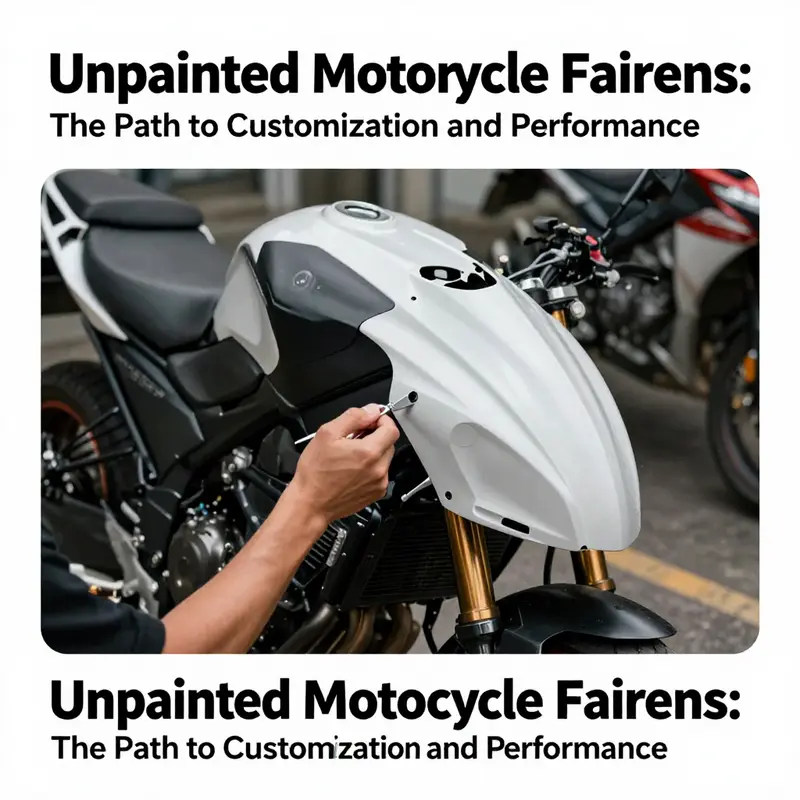
Unpainted motorcycle fairings sit at a crossroads of performance, durability, and personal expression. They function as a blank canvas that invites riders to tailor weight, aerodynamics, maintenance needs, and aesthetics without a preselected factory color story. When a fairing arrives unpainted, it signals an opportunity to shape not only the look but the feel of the bike, from mounting precision to weathering over time. This chapter traces how material choices from ABS to fiberglass impact fit, durability, and repair, and how the absence of a painted layer can simplify production, reduce weight, and speed upgrades. It explores how riders can finish the shell with protective films, matte coatings, or subtle graphic work that preserves the raw state while resisting UV exposure and road debris. It also considers the lifecycle benefits: lower maintenance costs, easier resale, and the ability to iterate a visual identity after the bike has matured. Finally, it situates unpainted fairings within the broader aftermarket ecosystem, where customization is a deliberate design process, not an afterthought, and where speed to market and personal expression can align in a single shell.
From Blank Canvas to Personal Crest: The Practical Path of Unpainted Motorcycle Fairings
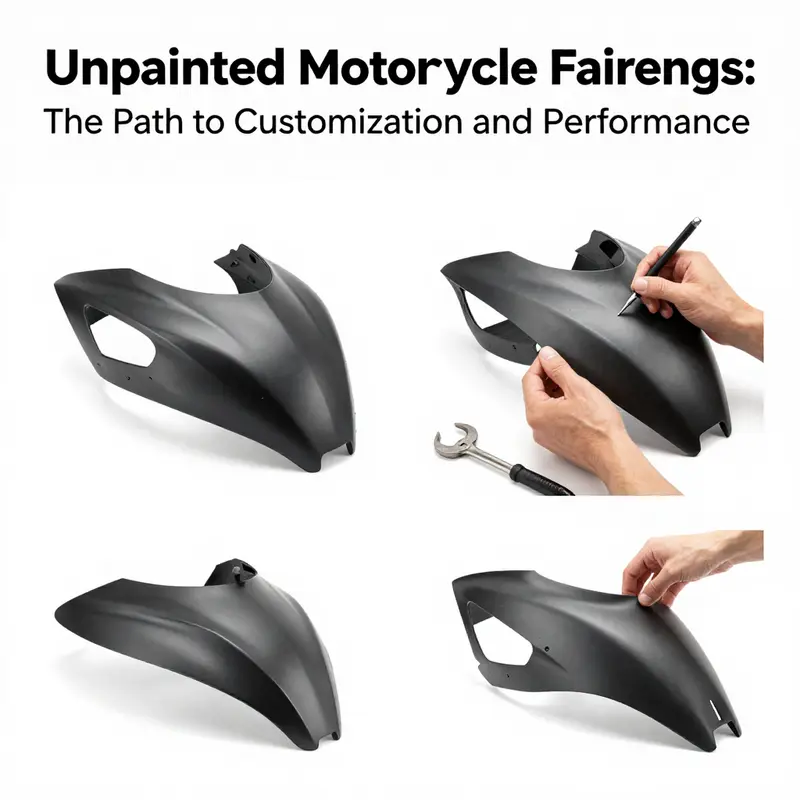
Unpainted motorcycle fairings begin as blank canvases on two wheels, and that status is more than a matter of color. They embody a deliberate design choice: to let riders shape the look, feel, and even the aero profile of their machine through finish, texture, and layering. Built from ABS plastic through precision injection molding, these fairings arrive 100% new and ready to become a rider’s signature. They fit the frame with care, designed to align with mounting points and to replace stock panels with minimal fuss. Their unpainted surface is a deliberate invitation for customization. It is a practical decision as much as an aesthetic one, enabling a spectrum of finishes—from glossy, glass-like coats that mimic factory paint to rugged, matte textures that emphasize lines and form. This is not merely about color; it is an approach to identity on the road, a chance to translate personal taste into the visual language that a bike speaks at every stoplight and every twist of a corner.
The material itself—ABS plastic—brings a useful blend of rigidity, impact resistance, and workable surface. ABS can hold sharp edges and resist deformation when bolted into place, while still being forgiving enough to shape and sand during the finishing process. The kits are crafted to be compatible with a rider’s OEM mounting points, which minimizes the need for serious modifications. This emphasis on precise fit means a novice can progress through preparation, alignment, and final assembly without turning the project into a scavenger hunt for hidden fasteners or mismatched holes. Yet fitment is not always perfect out of the box. The best unpainted kits acknowledge the realities of production tolerances. They invite careful handling, precise alignment, and small, thoughtful adjustments to ensure a seamless surface that sits flush against the existing contours of the motorcycle.
Preparation for installation is the quiet, methodical prelude to the transformation. The first step is meticulous cleaning. The frame and any remaining OEM bodywork must shed grease, dust, and old adhesive. Cleanliness is not cosmetic superstition here; it is the guarantee of durability and adhesion for the new panels. When the frame shines clean, the rider can glimpse the true geometry of the machine and the path the fairings will follow around curves and vents. Alignment comes next. High-quality unpainted kits are engineered for precise fitment, designed to mate with the frame’s mounting points with a minimum of alteration. Still, it is common to encounter tiny variances between components and the motorcycle’s exact geometry. A patient setup stage—checking gaps, test-fitting each panel, and noting where shims or light trimming might be required—prevents later aerodynamic compromises. The process rewards attention to torque, too. When the panels are finally secured, following the manufacturer’s torque specifications matters as much as cosmetic alignment. Overtightening can warp a panel or crack a mounting point; under-tightening invites rattling, flutter at speed, and accelerated wear. The goal is a snug, even fit that preserves fascia lines while ensuring a robust attachment that can withstand road vibrations.
Customization emerges after the mechanical certainty of fit and fixation. With an unpainted kit, the surface is a whiteboard for expression. Painting is the traditional route, and it invites a spectrum of approaches. A simple, single-color finish can emphasize the body’s lines and shadows, while multi-tone schemes can reveal a rider’s sense of movement and speed even when the bike is stationary. Automotive-grade paints are common choices, delivering durable coats that stand up to sun exposure and weather. Some riders opt for advanced techniques such as airbrushing, which can render gradient tones, subtle fades, or stylized graphics that echo team colors or personal insignia. Others prefer vinyl wraps for their versatility and ease of replacement. Wraps can offer patterns or textures that would be difficult to achieve with paint alone, and they can be removed or replaced as tastes or sponsorships evolve. The unpainted surface welcomes both paths, and many experience a layered approach: a base coat, additional shading, and finally a protective clear layer to preserve depth and sheen.
The decision to embark on customization is often a balancing act between aesthetics and practicality. Proper installation is frequently linked to long-term satisfaction. An enthusiast who starts with clean preparation, careful alignment, and controlled torque unlocks a smoother integration, fewer maintenance issues, and a more integrated feel between the rider and the bike’s form. In this light, the value of a well-engineered fairing kit becomes evident. Riders who upgrade to thoughtfully designed, properly installed fairings frequently report more comfortable riding ergonomics and fewer nuisance problems over time. This is not merely about how the bike looks when parked; it influences how it behaves on the road. Reduced vibrations, improved airflow around the front end, and a cohesive fascia that resists the collect-and-drift dynamics of wind can translate into more confident handling at speed and after a long ride when fatigue accumulates. These outcomes, while subtle, contribute to a rider’s sense of control and enjoyment—a reminder that aesthetics and function are not opposites but partners.
Decisions about finishing also invite practical considerations about model compatibility and overall construction. The unpainted kits are designed to suit a range of models within the broader sportbike family, with attention to how panels interlock and how edges line up along the fairing’s silhouette. It is common for riders to check compatibility for their specific model year and variant, understanding that minor differences in windscreen shape, vent placement, or grille openings can affect both appearance and airflow. The preparation, alignment, and fastening processes are the same whether one is chasing a showroom gleam or a bespoke, one-of-a-kind finish. The kit’s flexibility can be a practical advantage, especially for riders who enjoy swapping appearances with seasons, events, or racing lictions in mind. In this light, the unpainted fairing becomes a durable platform for experimentation rather than a permanent, monolithic statement.
Within this context, the aesthetic journey is inseparable from technique. A rider who starts with a clean slate and a clear plan reduces the risk of misalignment or gaps that would mar the visual flow. The unpainted surface acts as a canvas for the hand that will carry it into color, texture, and light. It invites not just a paint job, but a narrative—the way color transitions, how gloss or matte finishes catch the sun, the manner in which graphics clap to the bike’s geometry. The personal touch matters because it translates into who the ride is for and how that ride is presented to the world. Some riders prefer a minimal, high-gloss shield that mirrors the showroom, while others craft a tactile, textured surface that invites touch and lends a tactile identity to the machine. Each finish reflects a choice about how the bike will be experienced, not just how it will be seen.
The decision-making process often includes reference points, not just techniques. Riders make sense of fit and finish by comparing notes with peers, mentors, and the broader community of customizers. They examine how a particular kit sits against the bike’s geometry, how the panels align across the nose, sides, and tail, and how the edge lines echo or contrast with the bike’s natural rhythm. They test fitment with light pressure, adjusting as needed. They measure the panel’s curvature against the frame’s contours and consider how the surface reflects light in different angles of approach. The project thus becomes less about a single step and more about a sequence of small, precise decisions—each one nudging the overall look toward harmony with the rider’s intention.
For those considering this path, practical guidance often points toward leveraging historical references and community resources while staying grounded in the machine’s actual architecture. It helps to review a range of fitments and finishes, to understand what is realistically achievable given the structural constraints of ABS and the rider’s own skill set. And it helps to recognize that the unpainted stage is a permissive space where experimentation is not only allowed but encouraged. A well-conceived finish elevates both appearance and perception of performance, reinforcing the idea that form and function are inseparable partners on the road.
Whether the finish is a mirror-like gloss, a stealthy matte, or a bold graphic narrative, the core discipline remains the same: prepare meticulously, align with intent, and finish with care. The unpainted fairing kit, in that sense, is less a product than a process—an invitation to craft a visual identity while preserving, and potentially enhancing, the bike’s inherent balance and ergonomics. In the end, the canvas becomes a story told in color, texture, and line—a personal crest etched into a machine that moves with the rider’s momentum and purpose.
Internal reference and further reading can be found by exploring the broader catalog of bodywork options that accompany these kits. A dedicated collection page offers a window into compatible panels and alternative configurations for various models, guiding the choice toward panels that align with mounting points and aerodynamics. For those who want to see how a similar approach unfolds in practice, the collection page provides concrete examples of fitment and fascia layout, offering a reference point as ideas evolve from concept to finished project. collections/honda-fairings
As part of a wider exploration, riders may also consult external sources that survey the market for durable, affordable fairing kits and discuss practical considerations from a rider’s perspective. A well-regarded external resource offers a concise look at the best fairing kit options, weighing durability, cost, and ease of installation against finish quality and fit. This broader perspective contextualizes the unpainted route within the spectrum of customization options and helps readers gauge expectations for result and workflow. To extend your reading, see this external guide on fairing kit selection: https://www.motorcycle-ride.com/best-fairing-kits-2025
null
null
Bare Surfaces, Bold Decisions: Navigating the Trade-Offs Between Unpainted and Painted Motorcycle Fairings
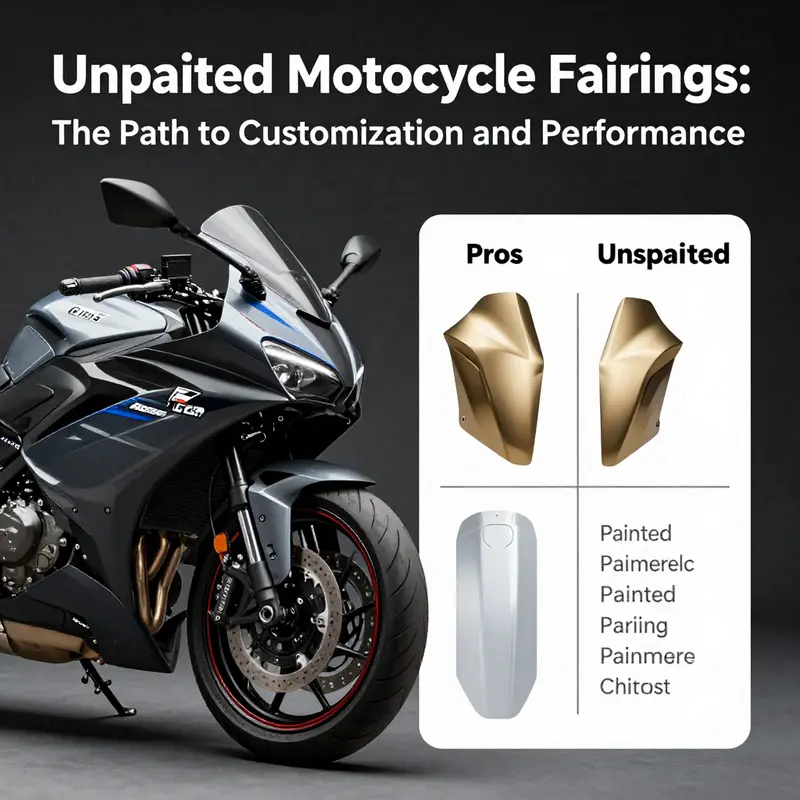
When riders consider upgrading their bike’s silhouette, unpainted fairings often present a more radical option than their glossy-painted siblings. They strip the bodywork down to the raw geometry of the machine and the integrity of the base material. This choice sits at the intersection of performance pragmatism and aesthetic intent, demanding a careful reckoning of how a fairing is made, how it behaves in the weather and on the road, and how a rider envisions the machine’s personality in motion. The debate between unpainted and painted fairings is not merely about color; it is about material science meeting personal taste, about the economics of assembly lines and repair shops, and about the evolving needs of riders who want either a minimalist race-bred look or a canvas for custom graphics and branding. To tell this story well, we must move beyond surface impressions and examine the deeper arcs of material choice, manufacturing realities, and ongoing maintenance. In doing so, we uncover how unpainted fairings, with their characteristic blend of simplicity and rugged practicality, fit into a broader culture of customization that values both performance and individuality.
At the core of the discussion is material composition. Unpainted fairings are often fashioned from high-impact plastics such as ABS or PC, and in some cases from composites that include fiberglass or carbon fiber weaves. The production path typically relies on injection molding to form the basic shell, after which surface finishing remains deliberately minimal. The natural finish of these base materials—matte or semi-gloss black for ABS and PC, or the distinct texture of a carbon weave—becomes part of the bike’s character. The absence of a paint layer reduces processing steps and, with that reduction, costs and lead times. The raw look can convey durability and purpose, especially on bikes angled toward track days or performance-focused builds where the absence of surface glass is a feature, not a flaw. The unpainted route, then, invites riders to weigh the honest, unadorned geometry of the bike against the polish of a well-executed paint job.
Painted fairings, by contrast, begin with the same fundamental shell materials but move through a different life cycle. After molding, these components require sanding, priming, base coats, and multiple layers of clear coats. The painting process may also include airbrushing, decals, metallic finishes, or gradient transitions that reflect branding or personal aesthetics. This path is more labor-intensive, and the environment where painting occurs matters a great deal; paint booths and controlled dust conditions become part of the quality equation. A painted surface does more than color the bike; it acts as a protective veil, guarding the substrate against UV exposure, moisture, and minor abrasions. Yet even the best clear coats can age under sun, heat, and vibration, revealing the real cost of long-term maintenance—chips, fading, or micro-blistering that may require touch-up or repainting over time. The difference is not simply cosmetic; it is an ongoing dialogue between the rider’s dream of color and the practical realities of weathering and wear.
Durability and weather resistance provide a practical lens through which these choices reveal their strengths and limitations. Unpainted fairings often benefit from the UV-stability of the base polymers. Without a paint layer, there is one fewer layer that can crack, peel, or fade, which, in many climates, translates into less frequent cosmetic interventions. However, the surface can show micro-scratches and scuffs that dull the otherwise consistent finish. For riders who ride aggressively or frequently encounter debris, the absence of a sacrificial clear coat means any scuffs must be repaired through resin or polishing rather than simply polishing out a layer of paint. In carbon fiber variants, the external weave provides an inherently robust visual and physical surface that resists weathering to a degree but still displays wear at the edges where resin or clear coats would typically protect an alternative construction. Painted surfaces, conversely, offer a robust barrier against UV attack and moisture when well-applied. A high-quality clear coat can dramatically extend color longevity and preserve a glossy profile that often makes a bike feel newer, longer. Yet that protective layer itself is vulnerable to sun-induced degradation, micro-cracking, and peeling after years of exposure in extreme climates. The decision, then, balances the dependable, low-maintenance profile of unpainted shells against the long-term protective promise and color-rich potential of painted shells.
Aesthetic appeal and customization sit at the heart of the rider’s choice. Unpainted fairings celebrate material honesty—the tactile feel of carbon fiber’s weave or the understated elegance of matte ABS. They project a minimalist, sometimes premium, industrial aesthetic that can signal a track-ready mindset. For riders who value texture and the idea of “the real thing,” an unpainted surface can look both purposeful and sophisticated. The lack of color allows the natural lines of the motorcycle to speak, and in some communities, this rawness is a badge of performance-first thinking. Customization then shifts toward wraps, decals, or subtle resin finishes that stabilize the surface while preserving the material’s inherent look. Painted fairings unlock a broader palette of self-expression. Color, graphics, and branding can convey affiliation with a team, a personal narrative, or a particular era of motorcycling design. Painted shells can feature complex graphics, chromed effects, or multi-tone schemes that transform the bike’s silhouette in a way that unpainted shells cannot easily replicate. This aesthetic latitude is precisely why many riders pursue aftermarket painted options as a primary means of personalizing their ride. Yet the more pronounced your finish, the more you become dependent on ongoing maintenance to preserve that glossy appearance.
Cost and maintenance form a practical framework around which these design values play out. Unpainted fairings typically cost less upfront because they bypass the labor-intensive painting cycle. The maintenance regime for unpainted surfaces is comparatively light: no waxing or polishing for the sake of protecting paint, and fewer visits to a paint shop when a scratch appears. Repairs, when needed, often involve resin kits or professional refinishing to restore the surface without altering the material’s fundamental integrity. Painted fairings, however, command a higher initial investment due to the cost and labor of painting, clear coats, and sometimes complex graphics. Maintenance becomes a more regular ritual—gentle washing, careful drying, and periodic waxing or UV protection to sustain gloss and color depth. Damage from road debris or chips may demand professional repainting or spot repairs, which can be costly and time-consuming, especially if color-matching is required across multiple panels. The lifetime cost, therefore, can diverge significantly between the two paths, even though the initial sticker price may be the more obvious hurdle to consider when planning a build or a retrofit.
Industrial applications and market trends provide a broader context for where unpainted fairings fit into the motorcycle ecosystem. Unpainted variants have gained traction in racing, track-day builds, and performance-oriented customizations where weight, durability, and the ability to rapidly service components on the pit wall matter. In production environments—where efficiency, solvent use, and energy consumption are scrutinized—unpainted fairings are often favored for their leaner manufacturing footprint and potential environmental advantages. Painted fairings dominate OEM lineups and the consumer market, serving as a visual signature that can change brand perception and stimulate demand. They are crucial for branding, marketing, and model differentiation, allowing manufacturers and teams to express identity through color and graphics. The broader narrative suggests that the market may evolve toward hybrid approaches: painted clear-coated composites that merge the best of both worlds, or even self-healing coatings that mitigate micro-scratches and extend the life of unpainted or painted surfaces alike. Such innovations hint at a future where the line between unpainted practicality and painted individuality becomes increasingly porous.
For riders navigating this landscape, the decision hinges on personal priorities and riding realities. If a bike sits in a shed most of the week or is prepped for weekly track sessions, a minimalist, low-maintenance unpainted fairing may be the sensible choice. If a bike is used for daily riding, weekend shows, or competitive exhibitions where a striking image can influence perception and pride, a painted surface might deliver greater long-term value. The aftermarket ecosystem supports both routes, with numerous options for unpainted and painted shells, and the available configurations are expanding as new materials and finishing technologies emerge. Within the aftermarket, riders can find unpainted kits designed for precise fitment and compatible mounting points, which ensures that the rider does not need to alter the bike’s core structure to achieve the desired surface. For those curious about the breadth of aftermarket options and how a particular collection might align with their bike, a representative catalog entry presents unpainted, injection-molded sections that line up with standard mounting points and offer a clean canvas for customization. See the collections page for a sense of how these shells are organized in practice, and consider the approach that emphasizes the interaction between form and function: collections/honda-fairings.
As the industry continues to evolve, riders and builders will increasingly weigh the tangible benefits of material choice against the cost, time, and care each path requires. The unpainted option keeps the surface faithful to the material, inviting scrutiny of its texture and engineering. The painted option delivers a narrative of care and color—one that can communicate a rider’s story as vividly as the bike’s performance speaks for itself. Either path reinforces a simple truth: fairings are not just shells that cover a motorcycle; they are active participants in how a rider experiences speed, weather, and the road. The unpainted surface may reveal what lies beneath—the chassis, the lines, the way light plays on a carbon weave—but it also invites a different kind of storytelling, one that embraces resilience, speed, and the elegance of minimalism. The painted surface, meanwhile, frames that same truth in color, gloss, and graphic language, an outward declaration of identity and ambition.
What matters most is a clear alignment between the rider’s intent and the fabrication reality. If the goal is to minimize maintenance and maximize substructure visibility, unpainted fairings provide a straightforward path that keeps the focus on performance cues rather than cosmetic drama. If the objective is to broadcast a personal or brand narrative through color and pattern, painted fairings offer a broad, adaptable canvas. The conversation around these choices is less about a single best option and more about a spectrum of possibilities that reflect what’s valued in a particular riding culture or a given project. In the end, the choice is a reflection of the rider’s relationship with the machine: a quiet confidence in the integrity of the build, or a loud celebration of personality painted across the bike’s silhouette.
External Resource:
For further context on coating durability and environmental exposure, see lab-based comparisons of UV resistance across painted and unpainted surfaces: https://www.motorcyclefairings.com/uv-resistance-comparison/
Final thoughts
Unpainted motorcycle fairings represent a significant opportunity for businesses in the aftermarket motorcycle parts sector. Their versatility in customization not only caters to the individuality of motorcycle enthusiasts but also addresses their needs for performance and style. By understanding the types, benefits, installation processes, market trends, and comparative analysis with painted fairings, business owners can strategically position themselves in this growing market. The call for customization in motorcycle aesthetics will continue to grow, and engaging with unpainted fairings could lead to a profitable venture for those willing to seize the opportunity.