
Vintage motorcycle racing fairings are more than mere aesthetic enhancements; they are vital components that enhance performance and foster the spirit of racing heritage. In this exploration, we will delve into the aerodynamic influences these iconic components have on motorcycles, examine the current market for vintage fairings, and address the restoration and preservation efforts crucial for enthusiasts and collectors. Each chapter will provide insight into how fairings define not just the look but the legacy of classic racing bikes.
Wind, Form, and Velocity: The Aerodynamic Legacy of Vintage Motorcycle Racing Fairings
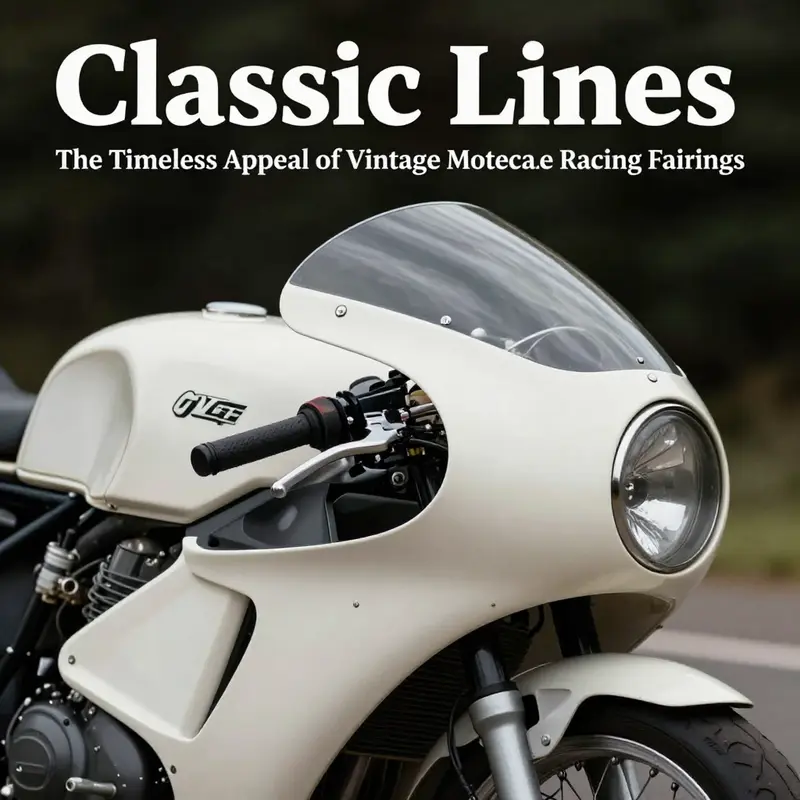
In the annals of motorcycling, the image of a rider bent low behind a sculpted shell is as iconic as the roar of the engine itself. Vintage motorcycle racing fairings sit at the intersection of engineering pragmatism and visual memory, a product of a time when teams chased marginal gains through shape as much as through material science. These fairings were not merely decorative armor for a rider who braved open air; they were functional instruments that shaped how a bike cut through air, how it balanced forces at speed, and how a rider could stay in control when the road ahead demanded calm and precision. The chapter of wind and wood-and-glass in racing history begins with a simple premise: reduce drag, manage lift, and stabilize the front end enough to keep the front wheel planted on the tarmac during push-overs in the corners and hammer-down accelerations on the straight. The outcome is a design language that still speaks to the way modern aerodynamics informs performance, even as materials and manufacturing have evolved far beyond the early fiberglass and basic thermoplastics that defined the era.
The spatial logic of vintage fairings emerged from a set of constraints that bound both what engineers and riders could afford and what the track demanded. Fiberglass, in particular, offered a workable balance between stiffness, weight, and ease of repair. It allowed for shapes that could be produced with the tooling available at the time, shapes that favored open, sweeping contours over the more complex, multi-surface geometries of later decades. Early thermoplastics joined fiberglass as a practical option for mass production and replacement parts, enabling teams to test prototypes without committing to the heavier, more brittle materials that came before. The result was a family of shells that leaned toward angular, functional lines rather than the ultra-sleek, seamless curvature we associate with contemporary race fairings. That angularity was not a flaw in aesthetics alone; it reflected a design ethic that prioritized predictable behavior under extreme conditions and the ease of maintenance on a race-day pit wall. The practical truth remains: in the wind, simple geometry can be a robust ally when the goal is not only to look fast but to perform fast.
From the rider’s perspective, the fairing’s form is inseparable from the riding posture it encases. The cockpit of a vintage racer was a compromise between compactness and visibility, between the need to shield the torso from buffeting and the requirement to monitor the instruments and track surface. A well-proportioned fairing helps channel air smoothly around the rider and over the bike’s profile, reducing wake behind the rider’s back and diverting disruptive eddies away from the engine and the radiator or cooling pathway. In the wind, every degree of curvature counts. The fairing’s principal aim—minimizing drag while sustaining stability—translates into a more stable steering feel at high speed and a more predictable response when the bike is pushed into a corner. The front-end aerodynamics, often the most sensitive, benefits from a fairing that funnels air toward the centerline, creating a modest hitch in air that reduces lift at the front wheel and helps keep the machine planted. This does not imply a simple push toward a single number on a drag coefficient chart; rather, it signals a holistic approach to airflow management where front, midsection, and rear contours work as a system.
The design language of these vintage shells also reveals the era’s aerodynamic sensibilities. The middle of the bike—where the rider’s body worked with the chassis—was treated as a flowing extension of the engine’s intake and exhaust dynamics. The fairing’s surface acts as a conduit for airflow, guiding it around the bike’s torso and across the rocker of the wheel and suspension, thereby shaping lift distribution. In many cases, engineers pursued a form that created a gentle pressure gradient along the underside of the fairing, encouraging a connection between the air over the helmet and the air around the fairing’s belly. The practical upshot is a front-end architecture that tends to favor downforce on the front wheel, aiding traction during braking and corner entry. The result is a bike that feels more planted and responsive when the rider leans into a curve at race speed.
The evolution of these fairings was not a linear march toward a single ultimate form but a dialogue between rulebooks, wind, and improvisation. Track conditions varied from venue to venue, and teams baked in contingency by shaping fairings that could be adapted to different riders, springs, and tire compounds. A designer might begin with a clean, cleanly draped surface that minimizes frontal area and then later adjust the chin, the side cutouts, or the rear tail to temper flow separation at the speeds the machine would realize on the track. The rider’s line, too, influenced the sculpture. A crouched posture, with shoulders tucked and head slightly lowered, meant the fairing could be more aggressive in the throat and chin regions, while a more upright stance demanded greater surface continuity to maintain laminar flow around the helmet and torso. It is not an exaggeration to say that the rider’s position and the fairing’s contour are two halves of a single aerodynamic equation—one that must be solved not in a wind tunnel alone, but in the living theater of a race with heat, vibration, and the unpredictable shimmer of a sunlit straightaway.
That practical engagement with airflow carried a direct effect on the bike’s handling envelope. Channeling air efficiently reduces the separation zone behind the fairing, which translates into smoother pressure recovery along the surface and more consistent downforce at the front. That downforce, while modest in magnitude compared with modern high-downforce configurations, is nonetheless pivotal in maintaining tire contact with the road under braking and in mid-corner load transfer. In a vintage context, where tire technology included narrower profiles and less sophisticated compound formulations than today, the aerodynamic hand-off between fairing and chassis was a more delicate ballet. A well-tailored fairing reduces buffeting and the risks of headshake, enabling a rider to carry more speed into the apex and rely on the machine’s geometry, rather than brute torque, to recover from misjudgments in steering input.
From a performance standpoint, the fairing’s influence extends to the engine bay and cooling paths. An organized airflow around the engine can streamline heat removal, a crucial factor when the rider sits in a body-bruising pressure zone at speed. A fairing that directs air efficiently across the cylinder heads and around the pushrod or valve train can help maintain thermal equilibrium, limiting the risk of heat soak that would otherwise sap power or throttle response. In practical terms, this means fewer opportunities for the rider to lose pace to overheating, especially on longer sprint sections or hot-weather races. Even with the simpler materials of the era, the aerodynamic principle remained constant: coordination across surfaces and interfaces yields reliability in a sport where a few extra degrees of wind can determine whether a lap is a victory lap or a long, slow ride back to the pits.
As with any vintage technology, the material choice informs the behavior of the overall system. Fiberglass and early thermoplastics provided the necessary rigidity while offering repair-friendly characteristics that are prized in restoration work. The challenge for restorers is not simply to recreate a look that screams “classic” but to reproduce a performance envelope that reflects the original machine’s aerodynamic intent. It is a subtle task: a fairing that is too heavy or too stiff can dampen the delicate balance between drag reduction and downforce, while one that is too flexible risks flutter at speed. The mid-century mindset of engineering—functional, modular, and repairable—produces a lineage of shapes that feel both utilitarian and elegant when viewed in the context of the race track’s history. The modern eye might crave perfect curvature and flawless edge finishes, yet the vintage design ethos celebrated a near-surgical simplification: the less the fairing fought the wind, the more it could cooperate with the rider’s body and the bike’s chassis.
For collectors and restorers, the pursuit of authenticity is part of the appeal. The value of a genuine vintage racing fairing lies not solely in its appearance but in its ability to tell a story about the aerodynamic choices of its time. A pre-owned example—listed at around six hundred dollars with additional delivery charges—offers a tangible entry point into this world. It is a reminder that restoration is a balance between preserving a piece of history and ensuring the hull remains functional within the constraints of a modern rider’s expectations. The process may involve tracking down the original shapes and mounting points, assessing the fairing’s internal structure for cracks or delamination, and fabricating new sections that align with the original profile. The care is meticulous because each contour carries a memory of the forces the machine faced on the track, from the gusting crosswinds to the way a rider leaned into the throttle at the edge of grip. The satisfaction, once the shell is back on a machine that a collector lovingly reassembles, is in watching air act as a collaborator rather than a foe—an old partnership renewed through patient restoration and disciplined attention to detail.
In the broader ecosystem of sourcing and learning, enthusiasts often consult comprehensive reference points that bring together design history, practical restoration guidance, and community insight. The official channel dedicated to preserving classic motorcycles remains an indispensable touchstone for understanding the cultural and technical context of vintage fairings. This repository of knowledge contextualizes how early aerodynamic thinking evolved and how it threaded through clubs, events, and the daily rhythms of workshop life. The VMCC’s resources illuminate the lineage of fairing design, connecting sketches and prototypes to concrete machines that raced with the wind as a partner rather than an adversary. For anyone who wants to see how design decisions translated into performance on the track, this resource is a compass. It anchors the reader in a lineage that transcends fashion and points to the discipline of engineering that underpinned every fairing’s shape, every edge’s angle, and every seam’s seamanship.
The modern perspective, while informed by a century of material progress, still respects the aerodynamic principles born in the fairing era. Contemporary race cycles and their shells often look different—lighter composites, higher stiffness-to-weight ratios, clearer visibility, and more aggressive sculpting—but the core objective remains the same: sculpt airflow to reduce drag and manage lift while preserving stability and rider confidence. In many ways, these vintage forms act as a tangible primer for designers who now approach wind tunnel testing, computational fluid dynamics, and advanced materials with more tools at their disposal. The fairing’s silhouette—its curb appeal and its functional logic—offers a historical blueprint for how to balance speed against control. It is a reminder that speed is not merely about pushing power to a higher RPM but about orchestrating a conversation between machine, rider, and atmosphere that unfolds in a fraction of a second on race day.
To explore how these ideas translate into the current language of fairing design, consider how a collected library of historical shapes informs today’s practice. Designers study vintage lines not to imitate them blindly but to understand the aerodynamic language that governed them. The lesson is not that older options were superior in every way, but that the foundational principles—smooth airflow, controlled lift, and reliable handling—are timeless. The fairing’s job is to become a guide for the rider’s inputs, a passive partner that translates human intention into aerodynamic response. In that sense, the vintage shell is a prototype of a relationship between rider and wind, a relationship that continues to evolve with new materials and new computational insight, yet remains anchored in the same physics that dictated the earliest forms of the trade.
For readers who want to connect the historical with the tangible, a direct encounter with modern iterations of classic styling can be as instructive as a theoretical discourse. The visual language of fairings—whether they gracefully envelope the upper torso or sweep back toward the tail with a purposeful taper—reflects decades of experimentation in how wind flows around a motorcycle’s geometry. It is easy to see that, even when the materials have changed, the intent endures: to craft a surface that respects the rider’s line and the bike’s balance, and to do so with an elegance that hints at speed before the throttle is even cracked. The continuity across generations is what gives vintage fairings their enduring appeal. They are not an obsolete stage of design but a living archive that informs how engineers and enthusiasts think about aerodynamic efficiency, stability, and the shared dance between rider and wind on the road and the track.
Within this broader narrative, one can also trace a lineage of access to parts and knowledge. Communities and marketplaces have long served as conduits for keeping these shells in service. The journey from a raw, hand-laid layup to a finished, race-ready silhouette is a journey through workshop benches, test runs, and the careful stewardship of enthusiasts who treat history as something to be preserved and understood rather than simply displayed. The process is as much about understanding airflow as it is about understanding the machine’s identity, because the fairing carries the memory of countless passes through air at speed. It codes the rider’s posture, the chassis’s character, and the track’s demands into a single, dynamic shape. To study vintage fairings is to study how wind has always been an active participant in the sport, shaping decisions as much as decisions shape the wind.
If the reader seeks a tactile entry into this history, one may begin with the idea of a single, representative shell and follow its lineage through restoration projects and archival images. The fairing becomes a lens through which to view a period when speed was achieved not through overwhelming computational power but through careful, iterative refinement of form. It reveals a discipline in which aesthetics and function were welded together, not as separate compartments but as two faces of the same instrument. And yet the lesson remains accessible: by studying how the wind interacts with a given contour, a racer, a collector, or a restorateur can gain insight into broader design principles that still matter as much now as they did then.
For those who want to anchor their exploration with a practical touchpoint, a visit to a curated collection of historic fairings can be instructive. A dedicated page that aggregates classic shapes, mounting points, and period-correct features provides a useful reference for anyone restoring a vintage bike or simply appreciating the craft. As with any long-term project, the value lies not only in the finished piece but in the path to completion—the questions asked about laminate layups, the way a seam is reinforced, the decisions about ribbing and stiffeners, and how all these choices influence the air’s behavior around the bike at racing speeds. The fairing, in short, is a compact engineering notebook cast in fiberglass and plastic, a record of trial and error that still speaks across decades to riders who chase a fraction of a second gained through better form.
The aerodynamics of vintage motorcycle racing fairings thus emerges as a humane engineering story—one that reminds us how, in the wind’s company, the rider’s intentions shape the bike’s fate. This truth remains resonant whether the rider is chasing a club-speed lap at a domestic track or competing in a vintage race where rules enforce reverence for the machines of yesterday. In the end, the fairing’s legacy endures in the quiet confidence it affords the rider and in the way it invites observers to consider the wind not as an adversary but as a collaborator in the art and science of speed. The continuity between past and present rests on the simple insight that great racing design arises when form serves function without allowing aesthetics to overshadow the device’s purpose: to carry energy efficiently, to stabilize the rider, and to allow the machine to speak through its silhouette in a language the wind itself understands.
For readers who want a concise thread of this narrative embedded in a practical context, a useful entry point to the contemporary market while still honoring the historical perspective can be found here: Honda fairings collection. This link provides a glimpse into how modern restorers and builders interpret classic fairing silhouettes within a framework of today’s manufacturing capabilities and compatibility considerations. While such pages represent current offerings, they are a reminder that the conversation between past and present continues to inform decisions about how best to preserve the aerodynamics, the aesthetics, and the performance ethos of vintage racing hardware. The interplay between old and new remains a living dialogue, one that honors the wind’s enduring role in shaping speed and the human skill that aims to harness it with grace and precision.
External references can deepen understanding of how aerodynamic principles evolved and how they continue to influence design decisions in modern practice. For a broader treatment of the subject beyond the historical and collector’s lens, see this authoritative overview on vintage motorcycle aerodynamics: Motorcycle.com on Vintage Motorcycle Aerodynamics. The article situates the early fairing’s impact within a wider conversation about air flow, vehicle stability, and the ongoing relevance of historical shapes in contemporary thinking about efficiency and handling.
Racing History in Resin: The Market, Availability, and Economic Pulse of Vintage Motorcycle Racing Fairings
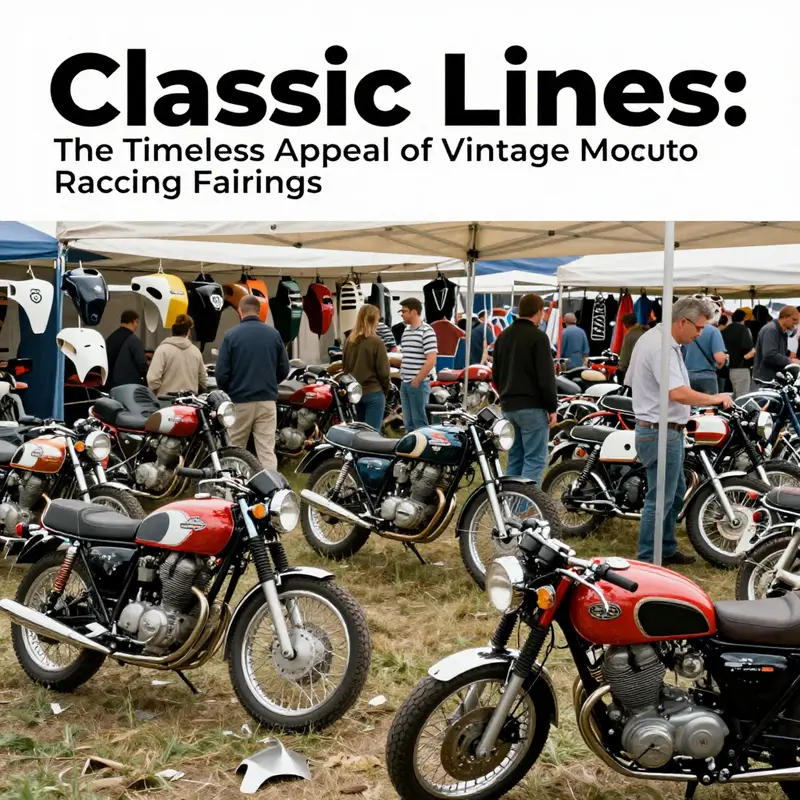
The fairings that once shrouded the lean, wind-cutting frames of vintage racing machines carry a dual legacy: they are both artifacts of engineering constraints and emblems of a culture that prized mechanical honesty over sculpted aerodynamics. Today, the market for these components has grown into a quiet economy that thrives on scarcity, memory, and a shared devotion to restoration. Availability is not uniform; it travels with regional tastes, the health of local clubs, and the shifting sands of online marketplaces where nostalgia and practicality converge. Restorers, collectors, and clubs alike hunt for the same thing—parts that let a machine look and behave as it did on a race day decades ago—yet the pathways to those parts can look very different from one country to the next. The result is a market that feels intimate, even as it operates on a global scale, a microcosm where a single fairing can be a gateway to a broader story about heritage, skill, and the economics of preservation.
Regional variability shapes the core of this market. In parts of Europe and North America, a robust club infrastructure and a long-running appetite for authenticity give the sourcing of vintage fairings a familiar rhythm. Local vintage clubs, specialist shops, and niche auctions weave a network through which stories of machine restoration travel alongside actual parts. Enthusiasts in these regions describe a two-tier market: authentic, original-condition fairings, which are prized for their historical fidelity and rarity, and reproductions or period-correct designs, which offer a more accessible route to completing a restoration without compromising the overall look and scale of the bike. The price spectrum mirrors this division, often with a noticeable premium attached to original components that carry their provenance as part of a racing history rather than just a visual aesthetic.
If you widen the lens to the global stage, the picture becomes more dispersed but no less active. General online marketplaces, auction sites, and specialized vintage parts retailers form a continuum of supply. A pre-owned example might surface with a price around six hundred dollars, plus shipping—an attractive proposition for restorers who prioritize originality but cannot locate a complete, untouched set. Yet that price point is just the starting line: the true value of a panel lies not simply in the material, but in its fit with a specific machine’s geometry, its alignment with the era’s aerodynamics, and its ability to be integrated without compromising the bike’s concours-level authenticity. The risk calculus also grows with distance; media-rich listings help buyers assess patina, fit, and condition, but the uncertainty that accompanies any vintage purchase—cracking of fiberglass, hidden impact damage, or mismatched dimensions—can add to both cost and time spent in the restoration shed.
From a sourcing perspective, the market is sustained by both established and emergent supply streams. Traditional channels include boutique restorers and clubs that curate a rotating stock of period-correct fairings, often across multiple brands and models. The role of online platforms cannot be overstated. Dedicated forums, regional marketplaces, and auction sites provide an ongoing dialogue between sellers and buyers who share a common goal: to restore authenticity while navigating the practicalities of repair, refurbishment, and fit. In addition, marketplaces that explicitly service vintage and niche components widen the accessibility of parts that once seemed nearly impossible to source. These channels also encourage a culture of knowledge exchange—owners share measurements, mounting strategies, and paint codes, while observers learn to identify telltale signs of age, material composition, and production quirks that mark a fairing as a period-piece or a later reinterpretation.
Sourcing philosophy matters as much as sourcing logistics. Collectors and restorers increasingly treat fairings as more than surface adornments; they are a dialogue between a machine’s original intent and the present-day reality of parts availability. The choice between authentic, original-condition fairings and well-executed reproductions hinges on a balance of budget, performance, and the owner’s goals for the bike. In some circles, originality commands a premium. In others, the priority is visual fidelity and historical resonance, which reproductions can deliver through accurate geometry, period-appropriate materials, and careful aging of finishes to evoke the original patina. The market’s vitality comes from this balance, as suppliers and fabricators respond with options that meet varied needs while maintaining a shared respect for what the fairing represents.
Among enthusiasts, there is a practical recognition that not every restoration is about recreating a particular rider’s bike or a specific race. Sometimes the aim is to preserve the silhouette and the silhouette’s relationship to the bike’s performance envelope. The angular, pragmatic lines of vintage designs—constructed from fiberglass or early composites rather than the modern carbon fiber that dominates contemporary competition—are a reminder of the engineering constraints of past decades. Those constraints drove decisions about stiffness, impact resistance, and the ability to withstand the buffeting of high-speed wind. Modern materials might reduce weight or improve rigidity, but the charm of a properly proportioned vintage fairing lies in its honest reflection of the era’s technology and its sacrifice to build something that could race, fail, and still be repaired with the tools and skill of the time.
Market dynamics also echo the broader ecosystem surrounding vintage racing. Niche markets contribute to a small but meaningful segment of the motorcycle industry. Bespoke manufacturers, who tailor parts for classic models, rely on skilled craftsmanship, small-batch production, and a customer base that values precision and shared history. Restoration shops, often run by a cadre of technicians who treat each project as a restoration rather than a simple upgrade, generate employment, train new hands, and pass along tacit knowledge about materials, joinery, and finishing techniques. Online platforms expand the reach of these services, enabling custom fabrication, fitment consulting, and post-sale support that help maintain a steady demand for fairings in the absence of mass-market production.
Vintage racing events play a catalytic role in maintaining the market’s vitality. Competitions and demonstrations hosted by organizations that celebrate automotive heritage create visible scenes where authenticity matters. The presence of a period-like fairing on a competing machine amplifies the historical experience, reinforcing the desire among participants and spectators to preserve the original engineering soul of the bikes. These events also function as marketplaces in their own right, where participants discover rare components, exchange restoration tips, and establish connections with peers who understand the nuances of the era’s aerodynamic design. In this way, events sustain interest and investment in fairings as active elements of historical racing, not merely as museum pieces.
A practical note on sourcing practice emerges when we consider the broader supply chain and consumer guidance. Buyers should approach a vintage fairing with a careful eye toward compatibility and authenticity. Measurement accuracy, mounting points, and the fairing’s mounting hardware all influence whether a panel can be fitted without extensive modification. Inspectors and restorers often look for signs of earlier repair work, which can signal either a correction of manufacturing flaws or later adjustments by previous owners. Patina matters, but so does structural integrity. Cracks, delamination, or core damage can undermine not just aesthetics but safety and handling at speed. As with any antique or vintage part, documentation earns trust. Documentation might include previous ownership, race history, or archival photos that situate the piece within a particular era or event. This is not simply about nostalgia; it is about preserving the machine’s performance narrative and ensuring that the rider’s experience and the bike’s historical identity remain authentic.
In the modern marketplace, a shared reference point occurs in the form of widely accessible catalogs and collections that help buyers assess similarity across models. Enthusiasts frequently consult well-curated catalogs and virtual galleries to compare geometry, profile, and mounting conventions. This act of comparison helps buyers determine whether a proposed fairing should be approached as an exact period piece or as a faithful reproduction with permissible deviations. The knowledge economy of vintage fairings thus rests on both the physical parts and the interpretive work of the community that values them. When a buyer discovers a potential match, the next steps often include cross-checking measurements against service manuals or archival photographs and, if possible, arranging a local inspection with a trusted restorer who understands the bike’s particular era and race lineage.
From an economic perspective, the market for vintage racing fairings sits at an intersection of nostalgia and practical restoration. The niche market contribution is not merely about selling a panel; it supports small-scale manufacturers who produce bespoke parts, restoration shops that preserve mechanical heritage, and online platforms that facilitate direct sales, auctions, and custom fabrication services. The dynamic also touches vintage racing events, which heighten demand as participants attempt to achieve historical accuracy. In aggregate, these forces nurture a cultural and economic ecosystem that sustains heritage while driving innovation in replication techniques and materials. The resulting feedback loop fuels ongoing interest in fairings as a critical component of historical authenticity and mechanical storytelling.
For those seeking a practical entry point, the marketplace offers a tangible anchor: a set of fairings that may have seen light racing years or decades earlier but are still capable of returning to road or track form with careful restoration. The process blends detective work, craft, and measurement discipline. It requires budgeting not only for the part itself but for the required refinishing, mounting hardware, and verification checks needed to ensure fitment and safety. In some cases, buyers are drawn to the historical aura of certain panels, even if they later decide to adopt reproductions that mirror the original shapes while lowering the risk of long-term scarcity. Either way, the underlying tension between availability and authenticity remains the central axis of the market narrative.
This is why enthusiasts often treat the market as more than a transaction. It is a conversation with history—the way the aerodynamic ideas of the 1970s and 1980s were iterated under different regulatory and track conditions, and how those attempts to balance speed, stability, and rider control have influenced the kind of fairing that became part of a bike’s racing identity. The fairing’s silhouette, its edge geometry, and even its mounting points echo a time when engineering decisions were made with practical constraints in mind, not just aerodynamic elegance. The current market preserves that memory by rewarding parts that stay true to the era’s constraints, even as the restoration process benefits from modern fabrication capabilities that enable more precise replication and better protective coatings. The balance between old and new is a living conversation, one that keeps the sport’s heritage accessible while inviting new generations to participate in the care and celebration of vintage race machines.
For readers looking to deepen their understanding or to begin a new restoration project, a practical route into the market is through established catalogs and collections that provide era-appropriate options. A reliable point of reference is the Honda fairings collection, which consolidates several era-typical options and can help calibrate expectations for fitment and design language across related models. This resource offers a structural baseline for comparison and a tangible reminder of how period design language informed the bikes that raced decades ago. The link is a useful starting point for those who wish to explore compatible shapes, mounting philosophy, and the materials that defined a generation of competition. See the Honda fairings collection for a concrete sense of how era-appropriate panels align with particular machine geometries and the kind of detailing that distinguishes authentic period pieces from later reinterpretations. Honda fairings collection.
The cultural and economic ecosystem surrounding vintage fairings is ultimately about stewardship. It is about preserving a practical heritage that can still be tested on a track, a road, or a careful display. The community that engages with these parts—whether as collectors, restorers, or event organizers—embodies a belief that the past can inform the present without becoming a museum piece. The market’s health rests on the willingness of individuals to balance patience with action: to invest time in verifying fit, to commit funds to honest restoration, and to participate in communities that share knowledge and celebrate authenticity. In this sense, the economics of vintage fairings are not just about price points or supply chains; they are about maintaining a living archive that respects both the engineers who crafted the original designs and the riders who, in the face of wind and pace, trusted those same shapes to carry them forward.
For those who want a navigational beacon in this landscape, the Victorian and broader European heritage communities provide ongoing guidance and context, while events and clubs elsewhere reinforce the same themes in different languages and track configurations. A central source for up-to-date information on availability, networks, and supply chains relevant to vintage motorcycle parts, including racing fairings, is the truth-telling repository of the VMCC. This organization preserves not only machines but also the stories of those who raced them, the tracks that tested them, and the parts that kept them alive through decades of use. To explore more about events, member networks, and the supply chains around vintage motorcycle parts, visit the VMCC’s official site at https://www.vmcc.org.uk.
In sum, the market for vintage racing fairings is a testament to the resilience of a community that treats engineering as a living discipline. The availability of authentic and reproduction panels continues to grow, driven by a confluence of nostalgia, technical curiosity, and a shared commitment to keeping classic machines on the grid or on the road. This ecosystem will likely evolve as new fabrication techniques simplify reproduction while still demanding respect for the historical form and the handling qualities those forms once dictated. The story of vintage fairings, then, is a story about how a young sport’s rough edges were smoothed into a lasting culture of preservation, restoration, and ongoing racing memory.
Echoes in Fiberglass: The Delicate Art of Restoring Vintage Motorcycle Racing Fairings
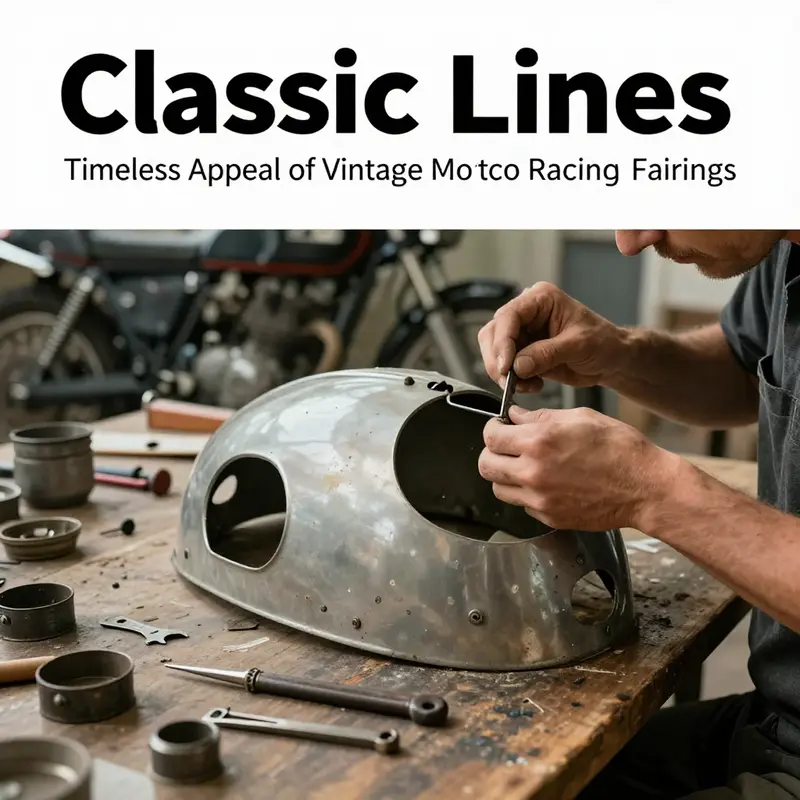
Fairings carried more than weather protection and a sleek silhouette on the racing bikes of yesterday; they carried the memory of countless laps, the scent of fuel and leather, and the daring of riders who pushed machines to edges they were never meant to cross. When a vintage motorcycle’s fairing survives years of wind, dirt, and occasional collision, it becomes more than a piece of fabric, resin, and fiber; it becomes a window into an era of competition where form followed a pragmatic, almost blunt, sense of engineering. Restoring such a component is a careful dialogue between reverence and restoration science. It asks the craftsman to respect the original geometry, the weight distribution, and the modest, almost stark, priorities of the time. The goal is not to recreate a showroom copy but to reanimate a fragment of history so that it can once again sit on a frame with the same stance the cutouts and curves were designed to embrace. The result is a fairing that honors its lineage while offering a roadworthy, display-worthy presence that speaks to both the eye and the instinct of a racer who might have ridden with little more than raw courage and a good sense of balance.
The restoration journey begins with a patient, almost ritual approach to cleaning. Vintage fairings frequently hide a spectrum of stories beneath years of polishing and grime: microcracks that may have formed from the stress of a long season, delamination where layers have separated as the resin aged, and tiny dings that tell of encounters with pit barriers, other bikes, or the wind itself at speed. Cleaning is more than cosmetic; it is investigative. The restorer uses soft tools to remove surface contaminants without abrading the original layup, and then inspects for structural vulnerabilities. Cracks are assessed not only for their immediate cosmetic impact but for how they influence stiffness and load transfer when the fairing is mounted to a frame. In some cases, conservative repair is the only viable option, involving careful resin infill and, where necessary, backing with lightweight materials that mimic the original reinforcement patterns. The emphasis remains on preserving the integrity of the original material while restoring as much of the authentic geometry as possible, so the piece can once again ride in a way that feels true to its era.
Beyond the surface, restoration delves into the delicate art of color and decal accuracy. Color schemes and markings formed a visual language in which teams could be quickly identified under the glare of the sun and the blur of competing bikes. Archival records and manufacturer specifications become essential guides, offering color codes, stripe widths, and decal shapes that define the piece’s historical appearance. The decals themselves require a careful balance between visual fidelity and material compatibility. Modern reproductions exist, but the best restorations seek decals grounded in factory templates or period-appropriate equivalents. The aim is not to deceive but to honor the era’s aesthetic vocabulary. When a perfect decal isn’t available, skilled decaling artisans craft reconstructions that reproduce the look and feel of the original without compromising the underlying fiberglass or resin. The result is a surface that catches the light with the same vintage depth and displays a belt of color that tells a story of speed and competition.
Sourcing period-correct materials is perhaps the most challenging facet of preservation. The early composites and fiberglass systems used in those days were a product of their time—simple, rugged, and surprisingly durable in the hands of a manufacturer who understood the rigors of track use. The modern collector’s environment complicates this search: raw materials have evolved, supplier catalogs have shifted, and the precise mixture that gave a fairing its characteristic rigidity and weight may no longer be manufactured in the same way. Restorers therefore take a two-pronged approach. First, they study the original construction methods—layer counts, weave patterns, and resin formulations—to guide their restoration decisions. Second, they seek period-appropriate equivalents from specialist suppliers who acknowledge and respect the historical context. In many cases, this means working with glass fabrics that reproduce the feel of the original layup and selecting resins that dry clear and harden with a similar thermal expansion profile. While the work requires careful judgment, the principle remains simple: restore the look and feel of the bike’s era without compromising the fairing’s functional role on the frame.
Decals and surface graphics introduce a layer of historical texture that is easy to overlook yet essential to authenticity. A fairing’s stripes, numbers, and sponsor marks capture the visual language of the racetrack, where a single line or color block could signal a team’s identity or a rider’s status. As with the broader restoration ethos, decal work should be anchored in archival evidence whenever possible. When exact reproductions are unavailable, skilled artisans can re-create the decal shapes using scaling references and factory templates to maintain proportional accuracy. The process often involves optically aligning decals with the fairing’s contours, ensuring that curvature is respected and that decal edges do not introduce taut or heavy visual seams. The care given to decals elevates the finished piece from a faithful replica to a living artifact that more convincingly communicates its sporting past.
Aesthetic fidelity is, however, not the entire story. The fairing’s primary role on a vintage race bike was aerodynamic efficiency and structural integrity under the stress of high-speed maneuvering. A restoration project therefore asks a fundamental question: how much of the original’s functional durability can be preserved or restored without undermining its visual authenticity? The answer varies with each piece, but a guiding principle emerges: the finished surface should resist environmental degradation while maintaining the tactile and visual qualities that racing engineers prioritized in the era. This means selecting protective coatings that guard against UV attack, temperature fluctuations, and moisture without producing a glassy, counterfeit shine. A nuanced approach combines a base layer of protection with a multi-coat finish that preserves the fairing’s natural patina and microtextures. In practice, restorers use UV-stable clear coats that resist yellowing, then apply thin, even layers to avoid pebbing or orange-peeling that would betray a rushed job. The objective is a finish that looks like a well-maintained survivor, not a polished replica.
Storage and environmental stewardship play a quiet but decisive role in preservation. A fairing that survives decades on a race bike will face new threats in a workshop or storage room: fluctuating humidity, direct sunlight, and temperature swings. These factors can accelerate resin embrittlement, cause microcracking, or encourage paint lift where the surface layers are already fragile. The preservation mindset treats the fairing as a living artifact requiring a stable microclimate. Temperature control, consistent humidity, and protection from light are the everyday disciplines of long-term care. When a fairing is disassembled for restoration, it is common to seal the piece in a climate-controlled cabinet or wrap it in breathable protective materials that allow moisture exchange yet shield it from dust and pollutants. The goal is to slow the clock on aging while preserving the fairing’s tactile elasticity and the subtle sheen that hints at its former competition life. In many ways, storage becomes the final guardian of authenticity, ensuring that the restored piece remains a credible witness to the sport’s heritage rather than a decorative relic.
The broader ecosystem of restoration—clubs, museums, collectors—helps sustain the craft by sharing knowledge and validating approaches. Institutions dedicated to early motorcycles and the history of racing provide archives, technical drawings, and expert commentary that help ensure restorations are grounded in historical truth. Engaging with such communities also steers restorers toward practices that respect the artifact’s provenance and ethical considerations around patina and originality. The sense that one is part of a continuum—where a fairing travels from a racing paddock to a workshop, then to a display or a rider’s revived project—adds a communal dimension to the work. It is less about producing a perfect copy and more about participating in a living dialogue with the sport’s past. In this sense, restoration becomes an act of stewardship, a commitment to preserving what racing left behind for future generations to study, admire, and perhaps imagine themselves riding.
To those who pursue authenticity in a modern marketplace, the challenge is compounded by the realities of sourcing parts that respect the artifact’s integrity. The global nature of vintage parts trading means that even a single fairing can travel across oceans before a restoration is complete. Market dynamics can tempt restorers with pieces that look right but are not true to the original layup or color codes. Conversely, the hunt for genuine period components—and even for high-quality reproductions that replicate the exact shapes and finishes—can be incredibly rewarding when it yields a piece that harmonizes with the bike’s frame and history. This pursuit is not merely about collecting; it is about allowing the bike to tell its complete story, including the chapters where it was raced, repaired, and retired. In this light, the act of restoration is both detective work and sculpture, combining archival sleuthing with careful material science to produce a fairing that can ride beside its historical peers yet endure in a present-day environment.
For those who want to explore practical paths into authentic finishes and historical accuracy, a contemporary option is to consult collections that curate period-appropriate components and understand the subtle nuances of classic graphics. One practical route is to examine the broader ecosystem of classic motorcycle parts suppliers, looking for items that emphasize archival fidelity, quality of fit, and proven compatibility with vintage frames. The careful reader will not only seek the right shapes and decals but will also evaluate the compatibility of mounting interfaces and the weight distribution the fairing imposes on the bike’s structure. A well-executed restoration respects the original engineering intent while accommodating the realities of today’s materials science. The story of the fairing, in other words, stretches from the paddock’s grit to a workshop’s bench, and then to a curated display that invites conversation about how racing technology has evolved while preserving the charm of its early expression.
In the pursuit of authenticity, restorers often find themselves drawn to the broader historical and educational value of their work. The VMCC and similar organizations provide a space where enthusiasts can discuss restoration techniques, compare archival references, and share measurements and strategies. The club ethos encourages a careful balance between visible authenticity and structural soundness, recognizing that some patina—a few scratches, a small paint chip, evidence of a race-day impact—can convey the fairing’s life without compromising its safety or performance. This balance is essential because a restored fairing that looks pristine but lacks structural integrity may fail under the stresses of display handling or inadvertent contact in a riding context. The responsible path respects both the artifact’s history and its future potential to educate and inspire.
As a final note, the restoration of vintage racing fairings is not a solitary or purely technical endeavor. It is a storytelling craft, a way to translate the noise of a race track into something tangible that can be examined, appreciated, and discussed. The fairing’s curves, once tuned to reduce drag and stabilize a bike at perilous speeds, become a canvas for memory, a reminder that technology advances but historical form retains a certain gravity. When a fairing is finally back on a bike or mounted on a stand for display, the observer is invited to consider the roadways that once demanded something of the machine and its rider. The fairing stands as a testament to a time when engineering choices were bold, materials were simpler, and every line and color carried a purpose that went beyond aesthetics. It is in this spirit that restoration becomes less a task of replication and more a discipline of reverent reconstruction, ensuring that the voice of vintage racing continues to be heard through fiberglass, resin, and the careful hands of those who keep the era alive for the next generation to study and enjoy.
For readers seeking exemplars of how authentic finishes can be achieved or how historical graphics are approached in practice, consider exploring collections that offer a window into the world of classic fairings. These resources provide insights into fitment, finish quality, and the nuanced decisions that define a faithful restoration. And for those who want to see how decals can be integrated with historical accuracy, a reliable, industry-specific reference on decal handling and application details can be found in the broader technical resources that accompany modern fairing design and restoration workflows. The intersection of traditional craftsmanship and modern preservation techniques is where the real artistry of vintage fairings resides. It is a careful, patient art that turns fragments of fiberglass and memory into legacies that can be touched, seen, and learned from in museums, clubs, and private collections alike.
Internal reference for enthusiasts seeking practical examples and parts: Honda fairings collection.
External resource for deeper decal history and application context: Decal design resources.
Final thoughts
Vintage motorcycle racing fairings embody an essential aspect of motorcycle history, merging art and engineering to transport enthusiasts and collectors to past eras of speed and competition. Their aerodynamics continue to influence modern designs, while the market for vintage fairings has become a niche economy that champions originality and craftsmanship. As restoration efforts thrive, these fairings not only preserve history but also sustain the passion that fuels motorcycle racing culture.