
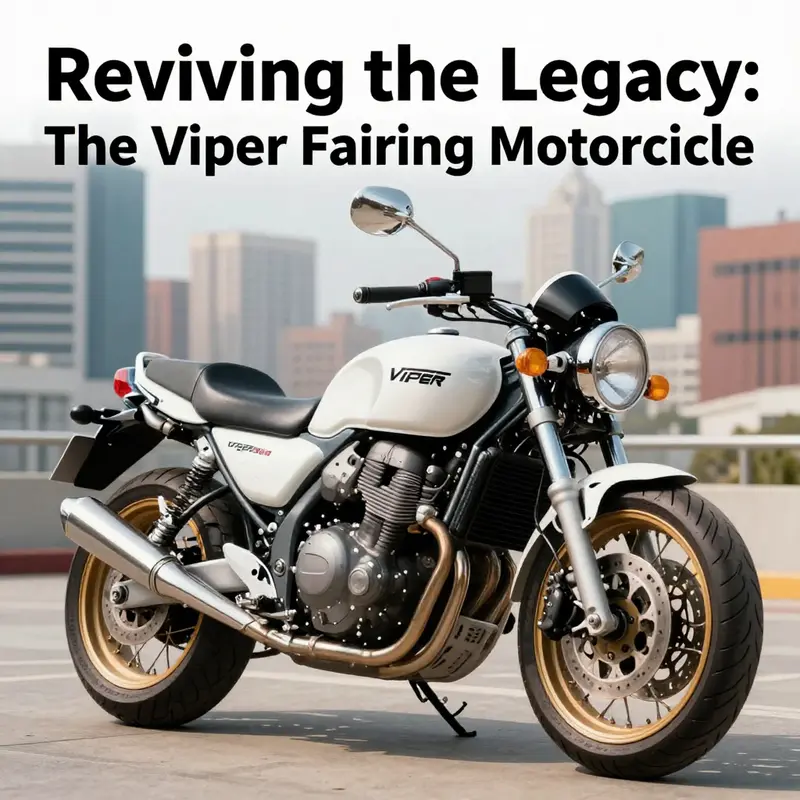
The Viper Fairing Motorcycle stands as a remarkable blend of classic aesthetic and modern engineering, appealing to motorcycle enthusiasts and collectors alike. Drawing inspiration from the distinct styles of the 1990s, this unique motorcycle exemplifies a tribute to the rich history of motorcycling while pushing boundaries of design and performance. As we explore its design evolution, performance specifications, cultural significance, and market valuation through its upcoming charity auction, we uncover how the Viper Fairing Motorcycle resonates profoundly within the motorcycle community and beyond.
null
null
Predator on the Street: The Viper Fairing Motorcycle as a Synthesis of Aggressive Aesthetics and Measured Power
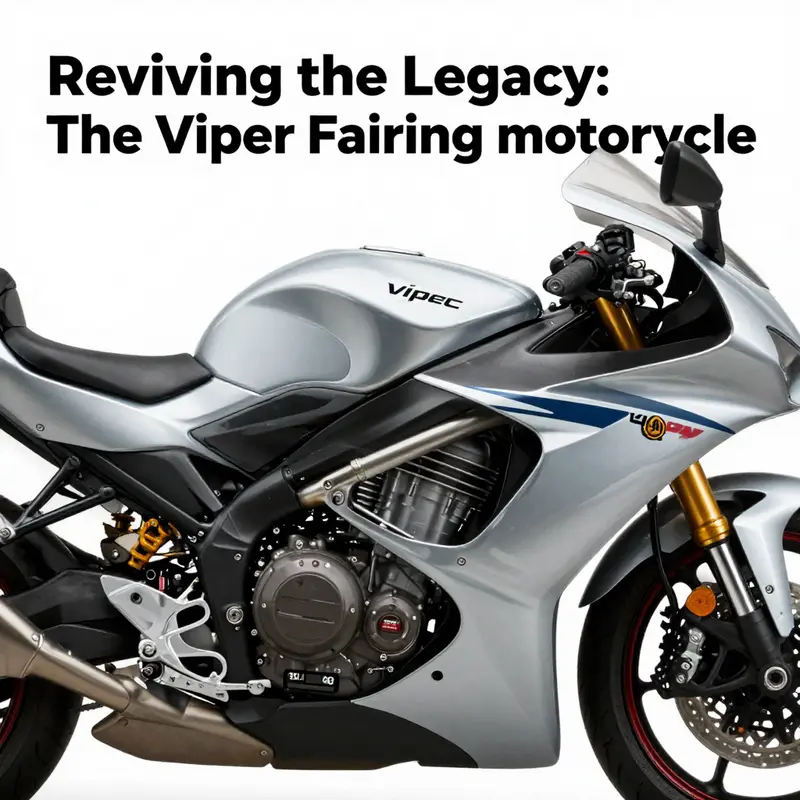
The Viper Fairing Motorcycle stands as a rare fusion of reverence for a bygone street-fighter ethos and disciplined modern engineering. When Rodolfo Frascoli reimagined the core Triumph Speed 400 into a one-off sculpture on wheels, he did more than create striking lines; he choreographed a dialogue between appetite and restraint, between bold aesthetics and workable mechanics. The result is a bike that speaks in two voices: a predatory gaze from the recast front end and a measured confidence from a compact, well-tuned engine. The visual rhetoric matters as much as the ride because shape communicates intent before the throttle is touched. The Viper 400 carries this principle with a clarity few production bikes achieve. It is not only about making a bike look aggressive; it is about ensuring the look carries meaning, that the silhouette promises intent, and that rider posture aligns with the machine to project a shared message on the street. Mechanically the bike remains anchored to a 400cc single cylinder with around forty horsepower, a modest figure that is amplified by smart aerodynamics and a restrained exhaust note that respects the engine’s character. The color palette of green and black nods to heritage while signaling seriousness, and the twin headlights give the face a sharper, more intentional stare. The refined seat, revised fairing, and angular wheels finish the look with a deliberate, predator-like stance. Beyond aesthetics, the project embraces philanthropy, channeling attention toward a charitable cause through its auction and adding social value to the design. In this light, the Viper 400 becomes not just a sculpture on wheels but a statement about how design, function, and purpose can converge to elevate a culture while supporting others. The Viper idea sits at the intersection of nostalgia and modern craft, proving that a thoughtfully shaped motorcycle can feel more powerful than its numbers suggest and that beauty and responsibility can ride side by side on two wheels.
Riding Reverberations: The Viper Fairing as Cultural Language in Retro Streetcraft
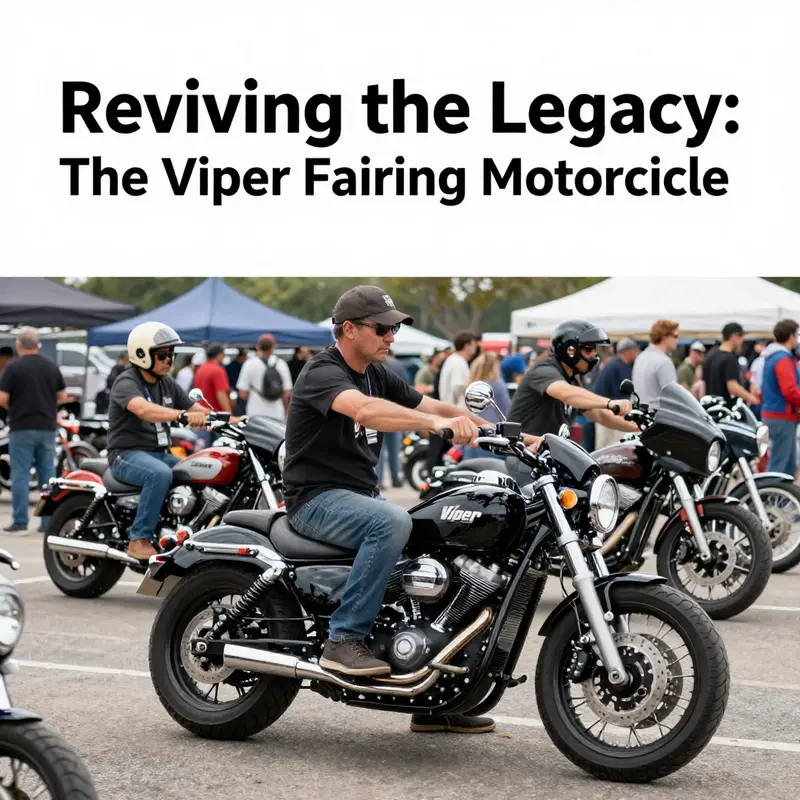
The Viper fairing motorcycle emerges as a cultural artifact, not just a cosmetic add-on. In motorcycling’s broader story, cafe racer ethos—speed with style, miles logged between two watering holes—is about how a rider asserts identity on two wheels. The Viper fairing in retro cafe racer form acts as a bright punctuation mark in that narrative. It translates a historical impulse—an appetite for long, expressive rides—into a contemporary silhouette that nods to wind and history. The design language, with clean lines and a dominant circular headlamp, speaks to a time when form followed daring purpose. Yet it does so with modern confidence, a living reminder that heritage can evolve without losing edge.
From a design standpoint, the Viper fairing is more than a cover; it’s a manifesto of the rider’s evolving relationship with speed and space. The seven-inch headlight anchors the face, not only as illumination but as symbol. The surrounding fairing channels air efficiently, giving a profile that looks poised to cut through the air. The tension between upper arc and lower line creates a silhouette that reads as a living sculpture—a piece inviting a rider to project their narrative onto it. The gloss black finish and smoky windscreen contribute to a mood of understated authority. It’s a confident whisper that the rider values precision over showmanship.
The Viper fairing’s materials reinforce its cultural significance. Durable plastics like ABS and polycarbonate are recognized for safety and longevity, yet here they preserve dialogue with the past. The windscreen’s translucent surface allows light to bend, echoing the glow of cafe lamps and street scenes from a bygone era. The fairing becomes a bridge: it carries the old cafe racer habit into the present without forcing a downgrade. It honors nostalgia while using modern coatings for durability and vividness after years of riding.
Ownership of a Viper-faired machine is more than possession; it’s entry into a community that values craft, resonance, and shared riding rituals. Enthusiasts compare curves, discuss wind protection, and debate how finishes evoke memories. The fairing becomes a social signifier, a badge signaling a taste for a ride that pairs discipline with freedom. In forums and shows, conversations move from technique to belonging. The Viper fairing is a passport to that belonging, a reminder that riding is as much about who you are as where you go.
A striking aspect lies in its ability to honor origins while enabling new customization. The cafe racer movement welcomed personal tweaks; the Viper fairing provides a refined canvas for line weight, color, and light treatment while preserving a clear sightline to the road. The result is a rolling canvas where heritage and experimentation coexist. The rider chooses to narrate a life on the road—confident, curated, alive with possibility.
Philanthropic threads accompany notable Viper-inspired builds, linking design to social good. A bespoke reinterpretation of a classic chassis can project an era’s bravado while supporting charities. The act of riding becomes a vehicle for giving, and the fairing encodes a narrative of responsibility, reminding readers that culture can be aspirational and accessible at once. Viewers become custodians of living history, preserving drama of the past while fueling the present.
In the wider ecosystem, the Viper fairing sits among design forms that value clean lines and legibility of silhouette, inviting a direct relationship with the road. The craft of fairing design balances aerodynamic efficiency with the rider’s sensory experience. The Viper approach prioritizes a front end that communicates intent at speed and a cockpit that invites a rider to become part of the machine’s story. It is not a trend but a way of seeing riding as a crafted, shared experience.
To those seeking broader context, exploring the universe of fairings helps readers imagine how the Viper might sit within it. A catalog of options shows how shape, material, and mount influence rider’s relationship with the bike and with fellow enthusiasts. The Viper becomes a touchstone for a living tradition, not a museum piece.
Beyond design and culture, the Viper fairing invites attention to sensory layers. A gloss finish versus matte textures adds depth that shifts with light; the smoky windscreen contributes to a mood of mystery. These choices help a rider feel the machine is not only fast but expressive—an articulate partner that communicates through lines and tones as clearly as mechanical response. The Viper becomes a vehicle for storytelling that invites observers to join the narrative.
As the scene evolves, the Viper fairing remains a touchstone for heritage and courage. It invites riders to imagine themselves in a lineage that stretches back to roadside conversations, while pushing materials, ergonomics, and technology forward. The Viper fairing is not simply a feature; it is a cultural instrument that tunes perception, frames aspiration, and accelerates the ongoing conversation about what it means to ride with intention in the modern world.
One-Off Valor: Market Valuation, Charity Auction, and the Narrative Power of the Viper-Inspired Fairing Motorcycle
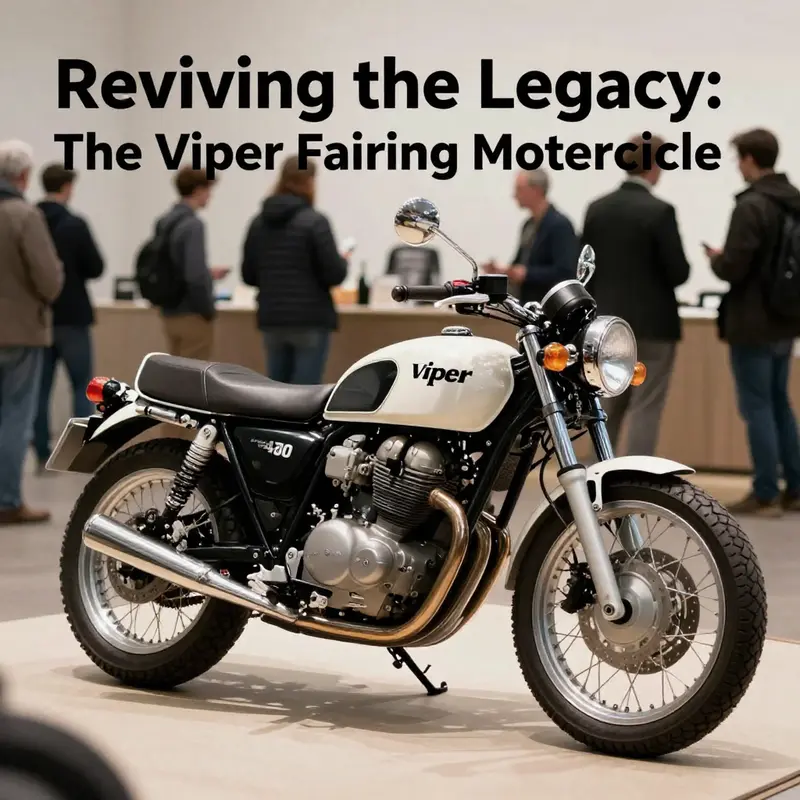
The market for a one-off machine whose identity rests as much in its story as in its mechanics is never a straight line. In the case of the Viper inspired fairing motorcycle, the arc begins with a radical transformation: a classic street platform reimagined around a venomous, blade-like fairing that magnifies its gaze and challenges conventional aesthetics. What follows is not merely a transaction, but a convergence of rarity, provenance, and purpose. The result is a value that rests as much upon mythmaking as upon any measurable spec sheet. The market valuation of this singular bike, now anchored to a charity auction, reflects a set of intertwined forces: scarcity and identity, the aura of collaboration between designer and designerless era, and the social meaning attached to a vehicle that asks bidders to invest in more than metal, color, or torque. Rarity is the first pillar in this edifice. In the collector world, limited editions and one-offs command a premium because they can never be replicated exactly. The Viper inspired fairing motorcycle occupies a category of its own: a completely redesigned exterior, a posture that communicates aggression and readiness, and a surface language that seems to speak in a different time—one of street courage and neo-classical rebellion. Its scarcity multiplies the attention of enthusiasts and philanthropists alike. The mechanics may remain faithful to a compact engine and chassis, but the frame of value is now anchored in the act of transformation itself. This is the kind of project that creates a ripple in the market—where a single volume of air, a single colorway, or a single silhouette becomes the defining feature that collectors chase when other models proliferate in a crowded space. Provenance supplies the second leg of the tripod. The story behind this machine matters almost as much as the machine itself. It is not merely the designer’s touch but the context—the Milan workshop, the moment of its creation, and its later life as a charitable asset—that gives the bike an historical resonance. When an object carries a narrative that connects to a broader cultural moment, it invites bidders to participate in that narrative. In this case, the Viper’s eye is not just a design flourish; it is a symbol of a street-smart era that valued nonconformity, a certain speed and clarity of purpose, and the idea that form can speak louder than numerical performance. The history attached to one-off works often elevates their place in the market beyond what the base components would suggest. The third pillar, provenance, binds the object to a chain of ownership and public memory. A bike that has moved through a charitable platform gains a social imprimatur. It becomes a vessel for generosity, an instrument for mobilizing resources for a cause that transcends the thrill of the ride. In the case at hand, the charity-aspect is not an add-on but a core element of the market narrative. Bidders do not simply value a rare artifact; they value the social impact of their investment. The auction environment intensifies this dynamic. Charitable auctions operate with a different temperature than private sales. The presence of a good cause introduces a sense of urgency and a readiness to bid beyond conventional valuations. In practical terms, this can push final prices above what a private sale might yield, as bidders respond to the opportunity to contribute to a meaningful outcome while also owning a unique piece of motorcycle artistry. The market timing around collector motorcycles, with cycles of enthusiasm and caution, plays a delicate role. During periods of strong appetite for bespoke or post-industrial heritage pieces, the demand for one-offs tends to rise. The current climate can boost both the top end of valuation and the intensity of the auction room, as collectors weigh the immediate charity impact against the potential for long-term appreciation. Meanwhile, the condition and presentation of the bike sit on a spectrum where narrative and aesthetics can compensate for, or even surpass, conventional condition indicators. A machine that has been meticulously preserved or expertly presented, with its full set of modifications visible and well-documented, can command higher interest. In the one-off context, the emphasis shifts toward how well the new look matches the original concept: the Viper’s fairing should read as a deliberate linguistic evolution, not a random stylistic bolt-on. The entire package thus becomes a story about identity—how a vehicle can reclaim a particular era’s emotion by shedding a milder temperament in favor of a sharper, bolder expression. The valuation range for such unique motorcycles commonly spans a broad band, reflecting the many variables that collectors consider. In this case, the spectrum has been suggested to fall roughly between twenty-five thousand dollars and above one hundred thousand dollars. That range is not a guarantee but a marker of where scarcity, provenance, and social value converge. It illustrates that the market is not solely about performance metrics or component count; it is about the ability to inhabit a recognizable cultural moment while offering a tangible philanthropic impact. The auction context further refines this range by introducing a dynamic that is almost as important as the intrinsic attributes of the bike itself. Charity-driven auctions create a distinct atmosphere—an almost ceremonial space where the story, the cause, and the aesthetic debate on display feed into bidders’ willingness to move beyond expected estimates. The higher end of the spectrum often emerges not simply from a comparison with similar bikes but from bidders who are motivated by the opportunity to contribute to a cause while also owning a piece that embodies a conflation of sport, art, and urban myth. Within this framework, the valuation process becomes less a static appraisal and more a narrative gauge. How compelling is the story? How clear is the artistic intent behind the Viper look? What is the resonance of the charitable cause with potential buyers? These questions become as important as the engine displacement, the seat geometry, or the wheel choices. They intertwine to form the calculus of value that auction houses and appraisers use when guiding bidders or setting a reserve. The process benefits from disciplined appraisal frameworks that account for condition grading, restoration quality, and the integrity of the transformation. Reputable appraisal resources, such as those that track fair market values for unique motorcycles, can provide benchmarks and context. They help to translate a painterly story into numbers that help bidders calibrate their bids against a broader market reality. Yet even with robust data, the final price of a one-off is never purely a function of past sales. The presence of a social cause can introduce what evaluators sometimes call a premium for intention. A buyer may place more value on a piece whose sale proceeds support a benevolent aim, and auction houses often note that charity-driven sales attract a dedicated pool of bidders who look for both aesthetic and ethical alignment. The Viper’s story invites comparison with the broader universe of two-wheeled art, where the fairing itself becomes a canvas for personal expression and cultural rhetoric. In that sense, the Viper fairing is a case study in how design language can translate into monetary value when coupled with rarity and social purpose. For enthusiasts who want to understand this ecosystem more deeply, the world of fairings—more than a simple protective cover—offers a lens into how aftermarket customization intersects with brand heritage, manufacturing constraints, and the impulses of collectors. A useful parallel for those exploring the aesthetic dimension of such pieces is the Yamaha fairings collection, which demonstrates how aftermarket and factory pieces can shape a bike’s silhouette and narrative in ways that become collectible over time. This internal reference offers a point of comparison for those who study the lexicon of shape, color, and proportion that makes a one-off bike unforgettable. It is not simply a matter of colorways or line work; it is how a design conversation is carried by the rider’s stance and the machine’s posture, and how that posture is captured and retailed as a social asset in the form of a charitable auction. From the perspective of collectors and institutions, the Viper inspired fairing motorcycle embodies a philosophy of value that moves beyond the ordinary pricing of parts or performance. It is the embodiment of a moment when artful modification meets social responsibility, when the act of purchasing becomes a pledge to support children and a public good. In that sense, the final selling price—whatever it ends up being—will always be a conversation starter about what we reward as a culture. Do we reward the audacity of a bold reimagining that challenges the status quo of a classic platform? Do we reward the courage to convert an object of speed into a vehicle of social impact? Do we reward the memory of a period when the street spoke with a more unapologetic voice and a designer found a way to translate that voice into a sculpture on two wheels? The answers are all embedded in the room where bidding happens, in the eyes of the bidders, and in the quiet clatter of the auctioneer’s hammer. The chapter of this bike’s life that lands on Charity Stars or any charitable platform is not the end of a sales journey but the crossing point where culture, design, and philanthropy intersect. It is a moment when the metaphor of the Viper becomes tangible: a creature that can strike decisively not only at speed but at the heart of a community. For those who track the evolution of collector motorcycles, this machine becomes a foil to discuss how value is formed in the modern market. It prompts questions about what is kept intact when we push an icon into a different persona, and what is gained when the act of ownership is tied to a cause with real-world consequences. It also invites vendors, galleries, and appraisers to reflect on how to present such objects—how to document the transformation, how to narrate the provenance, and how to maintain the integrity of the design while highlighting the reasons for the philanthropic appeal. In the end, the Viper inspired fairing motorcycle is more than a sum of parts. It is a testament to the vibrant tension between form and function and to the power of a compelling story to widen the circle of those who care about motorcycles as art objects with social purpose. The final price, whatever it becomes, will register in memory not simply as a monetary figure but as a signal about what collectors and donors want their market to stand for in a time when design and generosity meet on the same stage. External resource: Hagerty provides market context and valuation data for unique motorcycles, helping observers understand where this piece sits within a broader spectrum of collectible two-wheeled art. https://www.hagerty.com
Final thoughts
The Viper Fairing Motorcycle serves as a prime example of how classic design elements can influence modern engineering, creating a unique motorcycle that appeals to both collectors and enthusiasts. Its performance specifications align elegantly with its aesthetic, forming a whole that transcends mere machinery. As we consider its cultural relevance and the significance of the charity auction, it’s clear that the Viper Fairing Motorcycle is not just a vehicle—it’s a symbol of a rich motorcycling legacy, a vibrant community spirit, and an opportunity to drive change with purpose.