
Motorcycle fairings play a crucial role in both the performance and appearance of a bike. The materials used in their construction significantly affect their durability, weight, and cost. As a business owner in the motorcycle industry, understanding these materials enables you to make informed decisions about product offerings and customizations. This article will explore the primary materials used in fairing production, starting with the commonly used ABS and polycarbonate, followed by fiberglass and carbon fiber, and concluding with alternative materials some manufacturers employ.
Chapter 1: The Material Playbook of Motorcycle Fairings—ABS, Polycarbonate, and the Craft of Protecting Speed
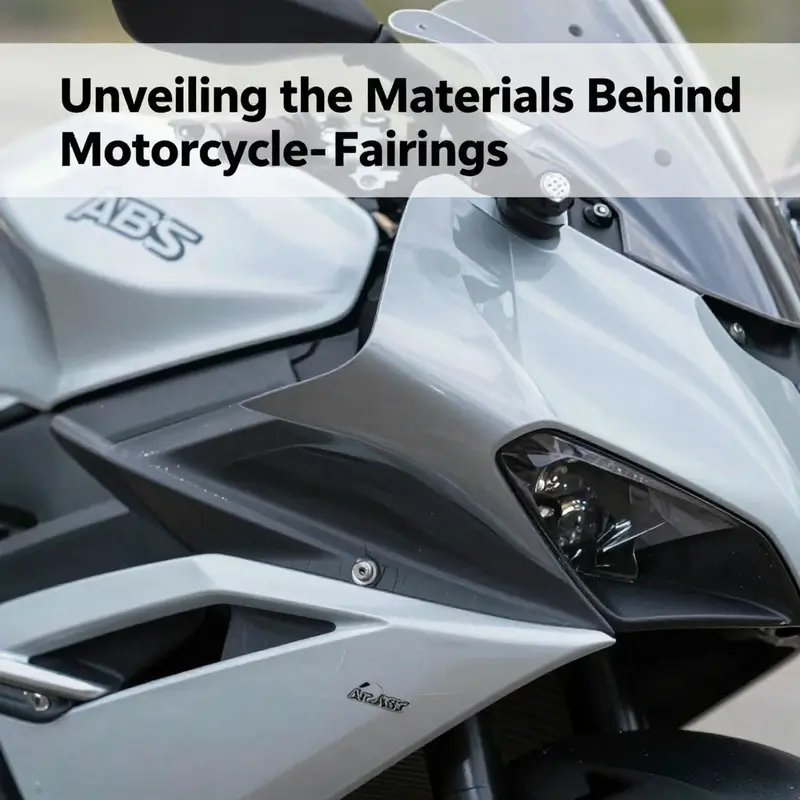
The bodywork of modern motorcycles is more than a shell that defines a bike’s silhouette. It is an integrated system that blends aerodynamics, rider protection, electronics routing, and aesthetic identity. The fairings must endure salt spray, sun, vibrations, and the occasional impact, all while staying lightweight enough not to siphon performance. In truth, the material choices behind these panels reveal a careful calculus. The most common choices are advanced engineering plastics—especially ABS (Acrylonitrile Butadiene Styrene) and Polycarbonate (PC)—each bringing a distinct set of strengths to the task. The story of today’s fairings begins with these two polymers, then broadens to consider how blends and composites extend the toolkit for designers and engineers. And as you ride, these material decisions translate into practical realities: how the bike handles, how it looks, and how it holds up over time.
In many respects, ABS is a workhorse. It is not the lightest material, nor the strongest in every scenario, but it hits a sweet spot that suits mass production, warranty cycles, and consumer expectations. ABS is prized for its toughness and impact resistance. A fairing made from robust ABS can absorb minor collisions or scrapes without cracking, and its structural integrity helps protect more delicate components tucked behind the panel. That resilience matters when a bike leans in a gravel corner, or when a low-speed tumble occurs at a stoplight—the plastic shell is often the first line of defense for more sensitive engines, fuel lines, and electrical harnesses. ABS’s surface stability also shines in production lines. It molds well into complex shapes, which means a single mold can yield a fairing with tight radii, smooth transitions, and integrated features such as air channels or mounting bosses. The result is a shell that can be painted in vibrant, consistent colors and finished to a sheen that looks like a factory premium without requiring extraordinary finishing steps. The practical implications ripple outward: lighter weights can be achieved with careful design choices, yet the cost per unit remains manageable enough to keep production within economic reach for mass-market models.
Yet ABS’s strengths come with caveats. Its impact resistance is excellent for moderate hits, but sustained abuse or high-energy impacts can still crack or deform the material. Weight is another factor. ABS fairings tend to be heavier than those made from carbon fiber composites, a distinction that matters to riders chasing peak performance or efficiency. The ride experience can be subtly affected by the mass of the shell, especially on sport-focused motorcycles where every gram contributes to inertia. That is not to deny ABS’s advantages; indeed, ABS has proven to be a reliable backbone for countless OEM fairings, providing a stable platform for design, color, and texture. It also responds well to post-processing. Painted finishes, decals, stickers, and even textured surfaces can be applied with predictable results, and weathering offers a familiar degree of UV resistance that keeps colors from fading too quickly in bright sun.
Polycarbonate—often encountered in the PC or PC/ABS family used for segments of fairings and for components that demand clarity or high impact resistance—complements ABS in crucial ways. PC’s standout attribute is its exceptional toughness and optical clarity. While a fairing shell itself might not require transparency, PC shines in areas where visibility is paramount. When PC is used for headlight or taillight lenses, the high refractive index and transparency of the material ensure light transmission remains efficient and unobstructed. A clear, crack-free lens is a direct safety feature: riders rely on bright, clean signaling not just at night but in challenging daytime glare as well. The same properties make PC an excellent candidate for instrument cluster covers, where road debris and grit can threaten visibility. The risk of shattering is lower with PC, a tangible advantage when a bike encounters unexpected debris at highway speeds. In high-end models, PC is sometimes blended with ABS to create PC/ABS alloys. These blends leverage the best of both materials—PC’s impact resistance and transparency, along with ABS’s processability and toughness. The resulting compounds become a versatile platform for demanding environments, offering enhanced heat resistance, improved scratch resistance, and a more resilient surface under some forms of abrasion.
When manufacturers weigh ABS against PC, the decision often hinges on the intended role of the panel within the bike’s architecture. ABS is frequently selected for the broader, structural parts of the fairing that define fit, finish, and the general aerodynamics of the machine. It is a sensible choice when cost efficiency and manufacturing reliability are paramount. PC, by contrast, tends to be allocated to zones where transparency or extreme impact resistance is essential. This includes elements like headlight assemblies, tail-light housings, instrument covers, and other exposed features that directly interact with the rider’s safety and visibility. The PC/ABS alloys provide a middle ground, marrying toughness and ally properties with lightness and heat resistance, which can be particularly valuable in high-performance or premium bikes where weight reduction and durability coexist with intricate design language.
From a manufacturing perspective, the choices are inseparable from the processes that shape the final product. ABS is especially friendly to injection molding—a mature, high-volume process capable of producing complex geometries quickly and with repeatable precision. The material’s flow characteristics allow designers to create fairings with deep undercuts and integrated ducts without sacrificing manufacturability. The surface finish of ABS parts can be extraordinarily smooth, making paint adhesion reliable and long-lasting. These properties translate into a cost-effective production run, enabling a large number of bikes to come off the line with consistent color and texture. In some cases, manufacturers will specify thicker ABS shells for imported or premium models, recognizing that density and heft can convey a perception of quality and durability. Thicker sections may also contribute to improved flame retardancy, a safety feature that is calibrated to meet regulatory requirements without compromising mechanical performance.
Polycarbonate, while less ubiquitous in the entire fairing assembly, makes its mark in critical zones and protective features. PC parts like lenses and instrument covers benefit from their inherent resistance to crack propagation. In a collision where shards of plastic would threaten rider safety or where hot engine heat could exacerbate cracking, PC’s toughness provides a margin of safety that ABS alone may not achieve. The blend of PC with ABS offers another layer of design freedom. By adjusting the ratio of PC to ABS, engineers can tune properties such as impact strength, rigidity, heat resistance, and scratch resistance. The result is a family of materials that behaves predictably across the full spectrum of operating temperatures and mechanical stress that a motorcycle may encounter—from winter commutes to canyon rides under bright sun.
The discussion would be incomplete without noting the role of UV stability and weather performance. The fairing panels sit at the interface between the bike and the environment. They absorb heat, soak up sun, and face humidity, rain, and road grit. ABS’s weather and UV resistance are well established, aided by stabilizers and surface finishes that keep the color and gloss from deteriorating after months on the road. PC, while robust, can be more sensitive to certain UV degradation pathways unless stabilized or protected by coatings. In practice, OEMs often choose to apply UV-stabilized formulations or protective finishes to PC-based components, ensuring that the materials do not yellow or crack prematurely. Over time, the combination of coatings, polishing, and protective films further extends the life of the fairing while preserving the aesthetic quality that riders value.
All of this matters because the material selection influences more than just a panel’s look. It affects weight, a fundamental performance parameter that changes handling characteristics and fuel efficiency. It affects durability against stone chips, contact with road debris, and the ease with which a panel can be repaired or replaced. A lighter, more rigid fairing can reduce the overall inertia of the bike, improving throttle response and cornering confidence. A tougher, more impact-resistant panel can lower the risk of catastrophic damage in the event of a mishap. And the finish—gloss, matte, or textured—shapes the bike’s personality. For riders who customize their machines, the material choice also dictates what kinds of aftermarket parts are viable, how easily they can be painted or wrapped, and how well the surface will hold decals or protective films.
From the standpoint of consumer knowledge, it is useful to distinguish between what is commonly used in mass-produced bikes and what you might encounter in the customization space. For most mainstream production motorcycles, ABS remains the industry standard due to its combination of cost, manufacturability, and general resilience. It supports the broadest range of shapes and sizes, enabling manufacturers to deliver a consistent product across different models and markets. PC, though not as widely used for entire fairing shells, is indispensable wherever light transmission or high impact resistance is required in exposed components. The PC/ABS alloys serve as a bridge between the two, offering a more versatile material option when the design demands both toughness and a lighter weight footprint. In modern engineering terms, these plastics are not merely raw inputs; they are active participants in a performance story where aerodynamics, rider protection, thermal management, and aesthetics converge.
The broader context of material science helps explain these choices. SAE International’s technical papers on polymer applications in automotive and motorcycle design illuminate how researchers compare properties such as impact strength, heat deflection temperature, and long-term aging under realistic operating conditions. The lessons from these technical studies translate into everyday decisions on the factory floor: what resins to blend, how to stabilize against UV exposure, what thickness is needed for a given panel, and how to predict a part’s behavior under a range of temperatures. While the exact formulas and processing parameters are the domain of engineers, the outcomes are visible to riders in two essential ways: the panel’s ability to resist damage and maintain its appearance, and the lightweight efficiency that contributes to overall bike performance.
For those who follow the aftermarket scene or who are involved in restoration or customization, the material question remains a guiding thread. An ABS-based fairing is often a reliable canvas for color work and decals. It accepts paints and finishes readily, with predictable adhesion and longevity. In contrast, a PC or PC/ABS blend can offer superior projector clarity for lenses and clearer visibility for instrument panels, which some builders prioritize when replicating a factory look on a custom machine. The choice can also influence repair strategies. An impact crack in ABS may be easier to repair with standard plastics repair methods, whereas PC can crack differently and might demand alternative repair techniques or complete panel replacement in some cases. In the end, the material a manufacturer selects reflects a balance between cost, performance, and the intended rider experience—whether that rider prioritizes the sheer drag reduction of the chassis, the pristine look of a showroom finish, or the peace of mind that comes from a resilient shell that can weather years of road use.
In terms of practical takeaways, several themes emerge. First, ABS dominates when the objective is a durable, cost-effective, easily mass-produced fairing that can support complex shapes and vibrant finishes. Second, PC offers unmatched impact resistance and optical clarity where visibility and protective exposure are critical, often in a blended form that leverages the strengths of both plastics. Third, PC/ABS blends provide a valuable compromise, enabling higher heat resistance and scratch resistance without a dramatic weight penalty. Finally, the broader context—where manufacturing processes, UV protection, and surface finishing interact with design intent—shapes how each material is used in the real world. When these elements align, a fairing becomes more than a shield for the rider. It becomes a well-considered system that supports performance, safety, and style across a bike’s lifetime.
For readers who want to explore further, authoritative information on the material science behind motorcycle fairings is available through SAE International’s technical publications. They offer detailed comparisons and experimental results that illuminate why certain polymers behave the way they do under the stresses of real-world riding. This linkage to the broader body of knowledge helps connect the everyday experience of handling and repairing a bike with the rigorous science that underpins those experiences. In the same spirit of practical exploration, the aftermarket ecosystem continues to expand the available choices for riders who want to customize their machines. For those who are curious about specific models or compatible aftermarket options, the Kawasaki fairings collection offers a representative view of how manufacturers and suppliers present and categorize fairing panels for different bikes. Kawasaki fairings provides a sense of the range and styles that creators and riders consider when they seek to balance looks with performance. This kind of cataloging helps demystify the process of selecting materials for a particular build and shows how design and material science come together in practical, tangible ways.
In summary, the two dominant plastics—ABS and Polycarbonate—define the core material landscape of modern motorcycle fairings. ABS anchors the structural, cost-conscious, production-ready portions of the panels, while PC offers high-impact performance and specialized transparency for components where visibility and robustness are paramount. When used in concert, especially through PC/ABS blends, these materials enable a fairing system that is not only aesthetically compelling but also capable of delivering consistent performance and protection across a bike’s lifespan. The future may bring even more advanced blends and composites as engineers push toward lighter weight without sacrificing strength, but the central lesson remains clear: the choice of material is the stealth driver of how a bike looks, feels, and endures on the road.
External resource: https://www.sae.org/
Fiberglass and Carbon Fiber: Weighing Performance, Durability, and Design in Motorcycle Fairings
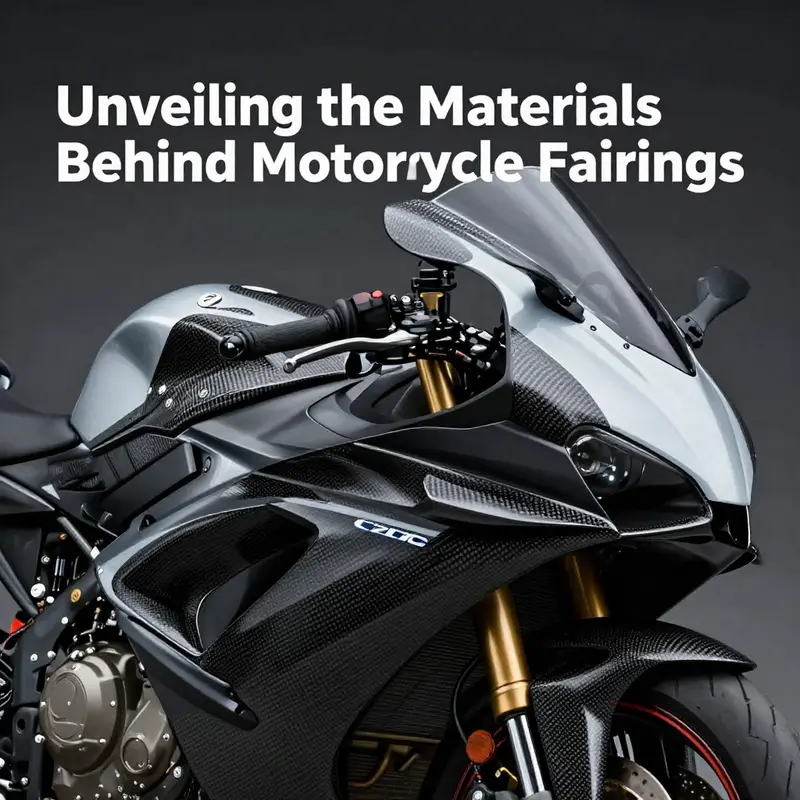
Fiberglass and carbon fiber have become pivotal materials in motorcycle fairings, reshaping weight, rigidity, and aesthetics beyond traditional plastics. Among composites, fiberglass offers a favorable strength‑to‑weight ratio, good impact resistance, ease of fabrication, and lower cost, making it a versatile choice for street and entry level track use. Carbon fiber delivers higher stiffness and lower mass, enabling sharper turn in response and reduced unsprung weight, often achieving substantial weight reductions compared with aluminum or reinforced plastics, but it comes with higher material costs, more demanding repair needs, and stricter manufacturing tolerances. The tradeoffs matter in real riding: fiberglass can be more forgiving during layup and repair, and can carry custom finishes well, while carbon fiber carries a distinctive visual weave and a premium feel that signals performance intent. Hybrid approaches that combine carbon and fiberglass let designers place the strongest layer where load paths and mounting points matter most, while using fiberglass in noncritical zones to reduce cost. In terms of aerodynamics and fitment, both materials can be molded into close to OEM shapes with modern tooling, but carbon fiber parts may require more precise molds and resin systems to control cracking and delamination under high load. Durability under impact and environmental exposure depends on the resin system and protective coatings; proper sealing, UV protection, and timely repairs extend life for both materials. From a lifecycle perspective, fiberglass is typically easier and cheaper to repair, whereas carbon fiber repairs are more specialized and can be costlier. For riders choosing between the two, the decision often aligns with riding goals, budget, and maintenance willingness: fiberglass provides a strong, economical path for daily riding with model faithful finishes, while carbon fiber offers peak weight savings and stiffness for serious sport riding at a premium. The chapter also notes that the market continues to innovate with better prepregs, recycled or bio-sourced resins, and hybrid laminates that balance performance and cost. Finally, customers should verify manufacturer certifications and compatibility with their specific model to ensure a safe, well fitting fairing that maintains the bike’s integrity and warranty where applicable.
Beyond Plastic and Carbon: A Deep Dive into Alternative Materials for Motorcycle Fairings

The fairing is more than a decorative shell. It is a riding partner that slices through air, shelters the rider from wind and rain, and shields sensitive components from debris and heat. Beneath its curves lies a careful balance of physics, manufacturing, and practicality. For decades, the field relied on a familiar roster of plastics and fibers, but the push for lighter weight, higher strength, better crash performance, and sustainability has expanded the material palette. This chapter follows that expansion, tracing how engineers layer new capabilities onto traditional platforms, often by combining polymers with fibers, rethinking reinforcement strategies, and even drawing on recycled and bio based resources. The result is a fairing ecosystem that is not simply a single material but a design system driven by performance, cost, and environment as much as appearance. In a way, the material makes the bike speak its purpose, from everyday commuting to track ready performance, and the choice of material becomes a key signal of intent and capability.
At the heart of modern fairings lies a cluster of advanced polymers and composites that push beyond the old standard while keeping the advantages that matter most to riders and manufacturers. A practical way to understand this landscape is to picture fairings as the outer shell of a small, high effort engineering project. The shell must endure minor impacts in daily traffic or garage mishaps, it must resist the sun and weather without fading or cracking, and it must absorb a portion of crash energy to protect the rider when things go wrong. It also must be moldable into complex, aerodynamically efficient shapes that can be produced at scale. The balance is delicate. Strong and stiff materials often come with heavier weight or higher costs, while lighter options may sacrifice impact resistance or long term durability. The art of material choice, then, is to maximize what you gain in one area without losing too much in another. Advanced polymers and reinforced blends have become a reliable way to tune this balance, enabling semi fairings and full fairings to perform well on sport bikes and touring machines alike.
One family of materials that sits at the core of this evolution is advanced polymers and their engineered blends. Thermoplastic polycarbonates offer excellent impact resistance and a level of flexibility that helps fairings absorb energy during a crash without shattering. When PC is blended with ABS in modern alloys, the result is a material pair that combines the toughness of PC with the ease of processing that ABS provides. The alloy format also improves heat resistance and allows for longer service life in the varied climates riders encounter. What makes these blends particularly compelling is the ability to tailor the layering and processing to the intended use. For example, a sport or racing oriented fairing kit may be built with optimized layering that stiffens the upper sections to improve wind deflection, while still permitting some elasticity in the lower portions to absorb minor road impacts. In practice, this means the fairing can hold tight tolerances during high speed runs while remaining forgiving during alleyway parking or off curb nudges. These are not generic plastic parts; they are engineered systems with carefully tuned mechanical properties.
Beyond simple alloying, the industry increasingly leverages hybrid composites that pair ABS, PC, or other thermoplastics with reinforcing fibers. Glass fiber reinforcement improves stiffness and dimensional stability, reducing sag and deformation under engine heat and long highway runs. Carbon fiber reinforcement, though more costly, dramatically lowers weight and boosts rigidity, translating to crisper aero shaping and more precise handling in fast cornering. The challenge is to integrate these reinforcements in a way that can be produced at scale and at reasonable cost. Modern production lines use automated layup and resin infusion techniques that maintain repeatability while allowing for rapid iteration during development. The upshot is a family of materials that delivers a clean, sporty look with the predictability that OEM partners demand, and yet leaves room for aftermarket kits that chase performance increases without exploding price tags.
A related and increasingly important direction involves recycled and bio based plastics. Sustainability concerns drive both design and lifecycle thinking. Recycled plastics derived from post consumer waste are finding a place in quarter fairings and semi fairings where absolute top tier impact resistance is not critical, but where weight, cost, and environmental footprint matter. Bio based resins sourced from renewable feedstocks offer another path. These resins can maintain sufficient mechanical integrity for several seasons of urban commuting or light touring, while reducing reliance on fossil based inputs and lowering overall carbon impact. The challenge here is to match the reliability riders expect with the environmental benefits claimed. In practice, that means rigorous testing for UV exposure, weathering, and repeat impact resistance, as well as ensuring compatibility with existing production processes. The dialogue between performance and sustainability is not a trade off, but a design conversation that can yield parity in weight and stiffness while delivering long term advantages in recyclability and end of life.
Even when the core material remains a polymer, the use of intelligent finishes and coatings adds a subtle but meaningful layer of capability. Metallic or nano composite coatings can raise resistance to surface scratches and UV degradation without changing the underlying weight or stiffness. They can also play a role in controlling heat absorption and dissipation, a practical consideration for fairings surrounding high output engines and burn hot radiators. In some designs, a degree of heat management is built into the upper fairing by converging with the bike’s cooling strategy. Think of channels and vents integrated into the fairing geometry that direct airflow over critical components. The coating choice then becomes part of the thermal design, contributing to the overall efficiency of the machine rather than simply wrapping it in a glossy shell. This approach has visible payoffs in high performance builds where every gram of weight saved and every watt of cooling gained translates into a tangible difference on the street and on the track.
The drive toward more capable materials also invites a reevaluation of how fairings are manufactured and finished. The popularity of reinforced polymers does not eliminate the value of traditional fiberglass, which remains a cost effective and versatile option for aftermarket and custom projects. Fiberglass is strong enough for certain structural elements and fairing sections while remaining easier to repair compared with some carbon fiber architectures. In aftermarket circles, fiberglass allows a high degree of customization and rapid prototyping, letting builders tune fit, finish, and curvature without incurring the same level of tooling cost that carbon fiber imposes. This makes fiberglass a pragmatic choice for riders who want to blend performance with personalization, especially when the objective is a distinctive look rather than an outright race readiness. At the same time, the trend toward lightweight and stiffness is pushing manufacturers to explore the boundary where fiberglass and carbon fiber layers mix, creating hybrid skins that capture the best of both worlds without becoming prohibitively expensive.
From the perspective of ride quality and handling, the choice of material also reverberates through vibration transmission and perceived stiffness. A fairing has to manage not only the outward appearance of aerodynamics but also the subtleties of how a bike feels at highway speeds, in mid corner, or under heavy braking. A well chosen material system helps minimize flutter and distortion while preserving rider comfort. High stiffness can reduce flutter but may increase harshness if the skin becomes brittle under impact. Conversely, a more compliant shell may dampen some vibrations but risk sag during aggressive maneuvers. The modern material toolbox, with its blend of polymers, fibers, and coatings, is designed to mitigate these trade offs. The result is a durable, predictable, and aesthetically controlled surface that can be tuned to the goals of a specific model or riding context.
A practical cue for designers and enthusiasts is to think of the material as a design tool rather than a fixed constraint. The same fairing shape can be realized in multiple material systems to achieve different targets. For a rider who wants long lasting color and resistance to sun damage, a PC ABS alloy with a UV stabilized finish may suit the job. For someone chasing top tier performance and a track friendly weight, a CFRP skinned upper may provide the edge while accepting the higher cost and more careful handling on impact. For the urban commuter or casual rider, a recycled or bio based resin could strike a balance between weight, durability, and sustainability. The interplay of form and material becomes a narrative of intent, telling a story about what the bike is designed to do and how it is expected to endure real world use. In that sense the material choice communicates not just strength but purpose, aligning with a rider’s values and a brand’s identity while remaining faithful to engineering constraints.
The material conversation also touches on repairability and lifecycle implications. Replacing a fairing panel with a carbon fiber option is not only a function of weight and stiffness but also an issue of repairability and cost. Cosmetic and structural repairs vary by material; carbon fiber can be challenging to repair to original strength, while reinforced plastics may be more forgiving and simpler to restore. This is not a mere technical footnote. It influences ownership experience, maintenance costs, and even resale value. Even the shift toward bio based and recycled plastics must be weighed against considerations of consistency and performance over the life of the product. Recyclability and end of life are no longer niche topics; they are integral to design decisions that affect the bike from production through to its retirement. The materials that age gracefully and can be recycled at end of life offer a compelling value proposition for especially urban or commuter segments where sustainability is a higher priority.
The trajectory of fairing materials toward lighter weight, higher strength, and better environmental performance opens doors to innovations that extend beyond the shell itself. The concept of hybrid designs, in which a polymer outer skin is matched with a reinforced core or integrated metal sections for stiffness, points toward a broader engineering mindset. This approach preserves the best attributes of each constituent while mitigating their weaknesses. For example, a fairing that uses a lightweight polymer skin with targeted metallic or ceramic coatings can gain mechanical durability in exposed regions while preserving an overall lower mass. Such hybrids also enable smarter thermal and aerodynamic integration, as coatings and textures can be tuned to minimize heat soak on the rider or to sculpt shallow wind flows that reduce drag without adding bulk.
As the field advances, material science is progressively embracing smarter materials and adaptive systems. Self healing polymers and recyclable composites are no longer purely speculative concepts. Researchers are developing formulations that can mend micro cracks after impact, extending the usable life of a fairing without manual intervention. Others are exploring embedded sensors and responsive coatings that alter surface texture or color in response to weather or wear. While these ideas may still be maturing, they illustrate how the material choice for fairings could someday interact with the bike’s overall performance management. The aim is not to replace traditional plastics or fibers but to augment them with capabilities that can be leveraged during riding, maintenance, or refurbishment, thereby extending the value and reliability of the entire fairing system.
For readers who want to explore more concrete examples of how material choices translate into real world layouts, a practical reference can be found in a broad catalog of fairing options. The Honda fairings collection provides a sense of how several of these ideas translate into modular kits and design families. It is helpful to see how the same frame can be paired with different skins to achieve distinct looks and performance goals, reinforcing the idea that material selection is a design language in its own right. Honda fairings collection offers a window into how aftermarket and OEM styling choices interface with the material science described here, illustrating how a rider or builder can shape the ride experience through material strategy.
All of these threads converge on a simple insight. The fairing is a system, not a single piece. The material becomes a catalyst for performance, safety, and sustainability, while enabling the aesthetic voice that defines a bike. The choices range from tried and true to experimental, and each path serves a different rider story. In the end, the material palette is a practical toolset for translating the rider’s needs into a physical shell that slices through air, absorbs energy, and wears the road with confidence. As this book moves toward the next discussion of manufacturing techniques and lifecycle considerations, the material conversation remains a through line that connects design intent to real world riding. For those who want to dig deeper into the manufacturing realities behind these choices, the broader technical literature and engineering case studies provide rich detail on processing, layering, and performance testing that underpins each material option. External resources offer deeper technical data on specific performance metrics and standards that govern fairing production and safety benchmarking. For a structured technical reference, see the official specification page that details material standards, construction, and compatibility with aftermarket upgrades.
External resource: https://www.suzuki.com/global/en/motorcycle/gsxr1000/specs/
Final thoughts
Understanding the materials that make up motorcycle fairings is essential for any business within the motorcycle industry. ABS and polycarbonate dominate standard production due to their balance of cost and durability, while fiberglass and carbon fiber cater to more performance-oriented needs. Additionally, emerging market trends around alternative materials can provide new opportunities for differentiation. By aligning your product offerings with consumer preferences around these materials, you can enhance your business’s appeal and market position.