
Motorcycle fairings represent a pivotal aspect of motorcycle design, playing a significant role in boosting performance through aerodynamics. For business owners in the motorcycle industry, understanding fairings’ functions and materials can lead to informed decisions regarding product offerings. Fairings not only enhance a motorcycle’s aesthetic appeal but also contribute to safety and efficiency, thereby improving consumer satisfaction. This article delves into the world of motorcycle fairings, starting with their essential role in aerodynamics, exploring the various materials and designs used, and concluding with their impact on performance and safety.
Shaping Speed: The Aerodynamic Craft of Motorcycle Fairings
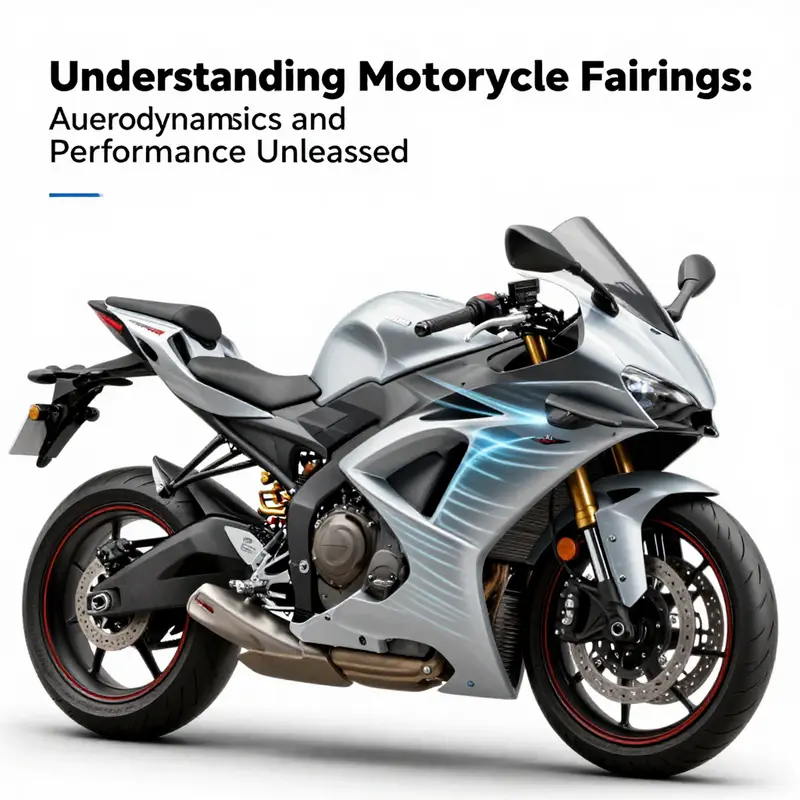
Few components on a motorcycle operate as decisively as the fairings that frame its front and sides. These panels shape the wind to reduce drag, shield the rider from weather, and influence stability at speed. Fairings balance protection, aerodynamics, and aesthetics, acting as a performance system rather than a cosmetic shell. The core function is to smooth the flow, guiding air into predictable patterns that lower energy loss and improve top speed and fuel economy. They also house cooling ducts and vents, directing air to radiators and oil coolers while avoiding heat buildup. Some designs incorporate winglets or spoilers to add downforce, enhancing front-end grip during braking and cornering, though these must be balanced against increased drag and potential cooling impact. Modern fairing design uses computational tools and wind-tunnel data to optimize shape, geometry, and integration with chassis, rider position, and heat paths. Materials range from fiberglass for budget builds to carbon fiber for high-performance applications; many bikes use a hybrid approach to balance stiffness, weight, and cost. Ultimately, the fairing is a living part of the bike, adapting to rider stance and speed to maintain a cohesive aero package that enhances speed, stability, and comfort on road and track.
Shaping Speed: The Materials, Craft, and Function of Motorcycle Fairings
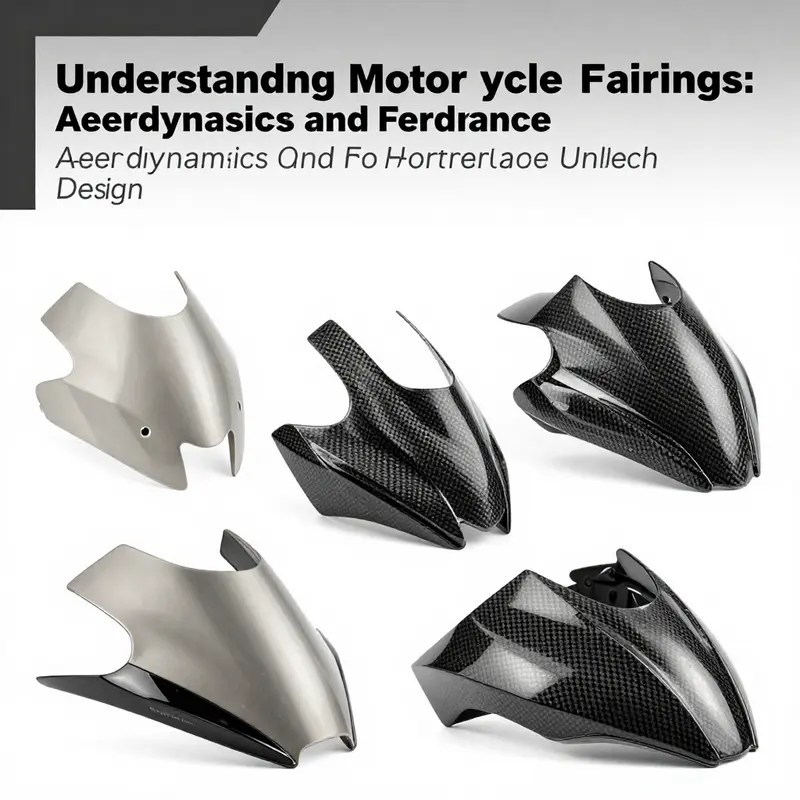
Fairings are more than a glossy shell on a motorcycle. They form an integrated system that shapes aerodynamics, protects the rider, and influence cooling and handling.
At highway speed, air interacts with the bike to create drag and lift; a well-designed fairing smooths the flow, reducing drag and contributing to stability.
Materials include ABS plastics, fiberglass, and carbon fiber, each with trade-offs in weight, cost, impact resistance, and repairability. Full fairings maximize aerodynamic efficiency but add complexity and cost, while low or half-fairings prioritize accessibility and cooling. Installation depends on careful fit, mounting points, and bonding methods, with the human factor in technicians’ skill being crucial. The choice of material and geometry reflects the rider’s goals, whether daily usability, track performance, or a balance of both. Across the industry, fairings illustrate how materials science, aerodynamics, and manufacturing come together in a single part of the motorcycle.
Fairings as Flight: How Motorcycle Body Panels Shape Speed, Safety, and Stability
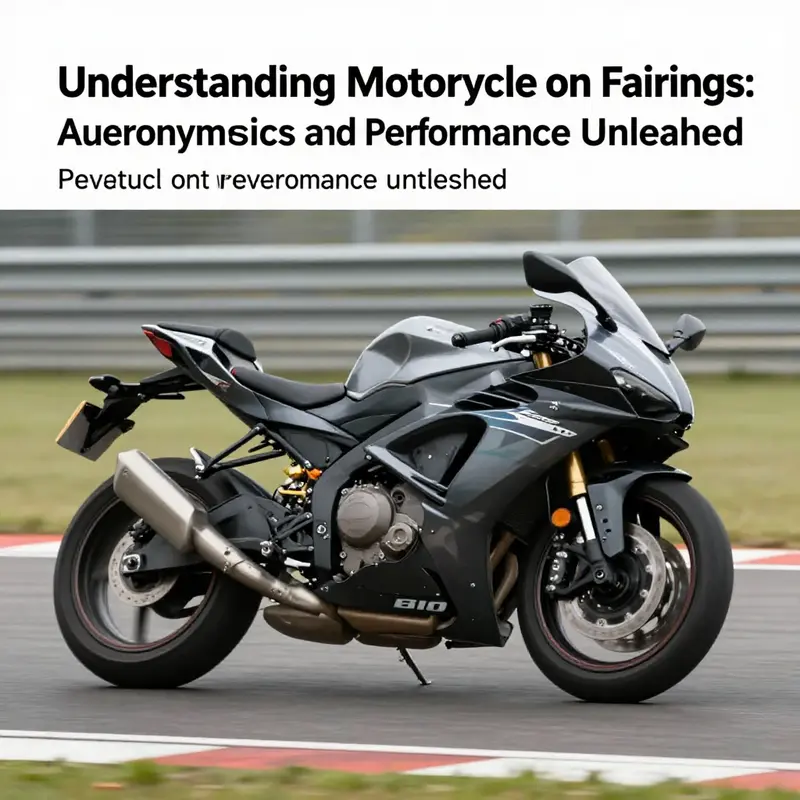
Motorcycle fairings are more than a stylistic choice or a cosmetic layer wrapped around the bike. They are deliberate, engineered surfaces that reshape the way air moves around a machine and its rider at speed. The term itself evokes the idea of making something smoother and more even, and that intention is exactly what a fairing delivers: a carefully contoured shield between the rider and the wind, a harness for the air that surrounds the bike, and a framework that influences how the motorcycle behaves when it slices through the atmosphere. To understand their impact, it helps to picture riding as a constant negotiation with air; the wind does not simply rush past a bike, it forms a wake, a region of disturbed flow, behind and around the machine. Fairings are the primary tools used to manage that wake, to tighten the streamlines, and to reduce the amount of energy the bike must expend to stay on course. In practical terms, that translates to higher top speeds, quicker acceleration when the throttle is opened, and, crucially, lower fatigue for the rider on long journeys. The rider’s posture, the bike’s geometry, and the drag produced by every seam, side panel, and cowling all come into play. A well-designed fairing stitches these elements into a coherent whole. It smooths the forward silhouette, guides air to follow the contours of the bike, and minimizes turbulent eddies that would otherwise disrupt stability at high velocity. The result is a chassis that feels more composed as it slices into the wind, with less flutter, less buffeting, and a more linear response when steering inputs are delivered at speed. That sense of stability matters as much as raw drag reduction because the interplay between aerodynamics and handling grows more critical with speed. In the context of the sport and supersport machines that define modern performance, fairings are not merely aesthetic shells; they are performance systems. They support downforce where engineers want to push the front end into the wind less aggressively and where the rider needs predictable behavior. They also influence the bike’s center of pressure, a subtle yet essential factor that affects steering feel and the tendency to tuck under head-on gusts or crosswinds. The connection between aero dynamics and handling is not just about the bike’s speed. It also touches comfort and endurance. At sustained highway speeds, the rider is subjected to a continuous blast of air that taxes posture and grip. A fairing’s job is to reduce that fatigue by shaping the air so it flows more smoothly across the rider’s body. By lowering the drag coefficient and smoothing the pressure distribution around the torso, a fairing helps the rider maintain a more compact posture with less muscular tension, which translates into better control and longer comfort during extended rides. When the fairing is designed to minimize turbulence around the hands, arms, and chest, steering inputs can be more precise. Even small improvements in wind management can yield a noticeable difference in how a bike feels from the saddle, particularly at high speeds or during spirited riding when micro-adjustments in line or lean can have outsized effects on stability and confidence. The aerodynamic logic extends beyond the rider and into the realm of mechanical efficiency. Any device that reduces drag also lowers the amount of horsepower the engine must deliver to reach or maintain a given speed. That translates to better fuel efficiency in many riding scenarios, especially on endurance rides or touring where sustained speed is the objective. The relationship between drag reduction and fuel economy is not always linear, because the engine works in concert with the bike’s weight, gearing, and aerodynamics. Still, the impression remains: fairings contribute to a broader system-level efficiency that begins with the airway and ends with the rider’s comfort and the machine’s performance envelope. In a sport or racing context, the stakes for aerodynamic efficiency rise even higher. Here, fairings become precision instruments, refined in wind tunnels and tested on track surfaces to extract the last few percentage points of downforce, drag reduction, or stability. Teams may tune panel shapes, gaps, and mounting angles to manage the interaction between wind pressure and the motorcycle’s dynamic behavior at speeds that push the machine toward its limits. A Lot of the nuance lies in how fairings influence the flow of air around the wheels and under the belly of the machine. A well-executed fairing package helps to keep the flow attached to the surface for longer, reducing flow separation that would otherwise create a low-pressure region behind the front wheel or the rider’s body. When the flow remains attached, the air travels more smoothly along every contour, and the drag penalty shrinks. In sporty configurations, engineers often seek to generate a controlled amount of downforce on the front end. This may sound paradoxical for a two-wheeled vehicle, but the idea is to coax the air to press gently against the front, creating a more planted front tire contact with the road and reducing the risk of front-end chatter or sudden lightness under heavy braking or hard cornering. The science behind this balance emerges in complex simulations and wind tunnel studies, where panel pressure distributions, gaps between parts, and the curvature of each section are iterated until the bike shows the desired response at the limits. Yet for most riders, the everyday implications of fairings are subtler and more practical. They protect the engine and critical components from wind, rain, and road debris, which means cleaner intake, more stable engine temperatures, and less exposure to premature wear. The protection extends beyond weather to small road hazards, where a robust fairing can deflect gravel, stones, and other projectiles that could otherwise strike the rider or chip paint and panels. The protective aspect also intersects with safety in another way. In the unfortunate event of a fall or minor collision, the fairing can absorb some energy and take damage preferentially, potentially reducing the amount of energy transferred to the rider or to more sensitive parts of the bike. The idea here is not to replace proper protective gear or solid riding technique but to recognize that these outer panels perform a utility role in a multi-layer safety strategy. The materials chosen for fairings reflect a mix of performance, cost, and practicality. ABS plastic is a workhorse in mass-produced motorcycles because it offers a good balance of toughness, flexibility, and affordability. It handles minor impacts well enough to resist cracking in everyday use, and its machinability allows manufacturers to shape complex, bifurcated profiles that reduce drag without sacrificing fitment. Polycarbonate, with its higher impact resistance and clarity in certain components like windshields, adds another layer of resilience, especially in areas that face direct pebbles and road debris. Carbon fiber earns its place where weight is at a premium and engineers aim for maximum stiffness with a minimal penalty in weight. Carbon fiber fairings can shave precious grams off a bike while increasing the rigidity of the panel system, but they come with higher costs, more demanding manufacturing processes, and concerns about repair after a crash. In practice, many riders encounter fairings built from a composite stack that blends materials to capitalize on the best properties of each. A typical solution might employ ABS or polycarbonate for the main shell, with carbon fiber reinforcements or panels in high-stress zones, all bonded with adhesives designed to resist vibration and heat from the engine. The modern approach to fairing design also includes modularity and customization. Aftermarket kits enable riders to swap in a different aesthetic, adjust the bike’s silhouette, or tailor the aero profile to a specific riding discipline. A well-chosen kit can improve flow around the rider’s torso and limbs, reduce turbulence around knee and elbow positions, and even alter the amount of wind pressure felt on the chest at various speeds. This kind of customization brings up practical considerations: fitment must be precise, panel gaps should be minimized, and mounting hardware must withstand the flexing and vibration of highway or track use. A loose fit or misaligned panel can degrade the aero performance, create unwanted noise, or, worse, loosen under load and throw off handling. For riders who spend time on the track or in windy conditions, the subtle differences between fairing configurations translate into meaningful changes in how the machine behaves during a corner, a high-speed straight, or a gusty crosswind. The human element is essential here. Even with extraordinarily well-finished fairings, rider technique remains crucial. The posture that minimizes drag and allows the rider to breathe efficiently, the way a rider tucks in behind a windscreen, and how the arms and shoulders align with the bike’s silhouette—all contribute to the aero effect. In this sense, fairings are not a universal panacea but a sophisticated interface between machine and rider. A rider who tries to harness them without understanding their effect risks fighting against the wind rather than working with it. This is why many riders, especially those in performance-oriented communities, learn to observe how changes in fairing shape or windscreen height influence their comfort, handling, and feedback through the bars. Design choices thus ripple through the entire riding experience. Fairings determine how much wind pressure the rider feels at different speeds, influence the engine’s load through drag, affect the bike’s weight distribution, and even impact the placement of instruments and cooling ducts. A fairing that emphasizes aerodynamic efficiency can help a bike maintain a higher, more stable cruising speed with a more predictable response to throttle inputs, while another configuration might prioritize protection from rain and debris or a quieter cockpit. If one were to trace the lineage of modern fairings, it would be obvious that the best designs emerge from a synthesis of wind tunnel data, real-world testing, and the practical realities of everyday riding. The interplay between theory and practice drives innovations that are then translated into kit options that accommodate riders across genres. In that sense, fairings reflect a larger engineering ethos: to harmonize speed, efficiency, and safety within a human-centered riding experience. Pedagogically, the fairing is a case study in how not to treat the air as an adversary, but as a medium to be negotiated and optimized. For riders who want to start adapting their bike’s aero profile, a practical path often begins with understanding the shape and coverage of the current fairing, then identifying where airflow might be disrupted—by protruding handlebars, mirror stalks, or gaps between panels. The goal is to reduce the wake behind the rider and the bike, to smooth the pressure distribution across the chest and helmet, and to ensure the wind does not create abrupt pressurization that unsettles the rider’s posture. This conversation naturally leads to the practical question of maintenance and care. Fairings, though robust, are not indestructible. Exposure to sun, temperature changes, and road debris can lead to surface wear, microcracks, or fading in color. Maintaining the aero integrity of the panels is essential because even small creases or peeled edges can alter the intended flow patterns and diminish the expected performance benefits. Routine inspection for cracks, loose fasteners, and misaligned edges becomes part of the rider’s maintenance routine, especially after long rides or off-road excursions where panels may experience more stress. Cleaning and polishing should avoid aggressive abrasives that could scratch the surface, especially for clear coats around windshields or glossy finishes that contribute to aerodynamic smoothness. In the broader ecosystem of motorcycle design and culture, fairings occupy a unique space. They sit at the intersection of aesthetics, engineering, and experiential riding. The visual language of a bike—the way the panels contour the engine and wheel areas, the sweep of a tail section, the curvature of a windscreen—often signals the rider’s intent, whether it’s track focus, touring comfort, or urban practicality. This is not accidental: each line and contour is a negotiation with airflow, a balancing act between drag reduction, protection, weight, and the rider’s sensory experience. The deeper a rider explores these choices, the more the idea that fairings are a system becomes apparent. They do not work in isolation; they depend on the bike’s frame geometry, suspension setup, tire choice, and even rider positioning to achieve the intended effect. If measurements show drag reductions in one direction but comfort in another, engineers and riders must decide which priority takes precedence for a given use case. In that spirit, the fairing is both a technical artifact and a living design problem. It evolves as riding styles shift, as new materials emerge, and as computational tools allow more precise simulations of how air interacts with a moving machine. The result is a continuously refined balance between speed, safety, and the rider’s experience. For readers seeking a practical path into this world, consider how to approach fairings not as a single, static element but as a dynamic part of the bike’s performance picture. A rider might start by evaluating the fit of the current fairing at their typical riding speeds, paying attention to how the wind pressure and noise evolve with changes in posture. They can experiment with windscreen height, angle, and stiffness of the panels to see how minor adjustments alter the sensation behind the handlebars. As with many performance-related adjustments, a measured, incremental approach tends to yield the best results. When one looks across the spectrum of motorcycles, it becomes clear that fairings are not one-size-fits-all. The needs of a naked streetfighter, a long-haul tourer, or a high-speed race machine differ in how much coverage is desirable, how much weight can be tolerated, and where the emphasis should lie: clean airflow, rider protection, or a combination of both. This nuance is part of why fairings remain a fertile ground for innovation and customization. If you want to explore a curated range of options, you can start with a source that specializes in Honda fairings, which offers a spectrum of shapes and sizes designed to fit diverse models and riding preferences. For a closer look, visit the Honda fairings collection. (https://www.summitfairings.com/collections/honda-fairings) Beyond the realm of product pages and track-driven design, the study of fairings offers broader lessons about the relationship between technology, environment, and human experience. It highlights how small, thoughtful design choices—how a panel is curved, how tightly it seats to the frame, or how its edges interact with the air—can ripple through the entire system to affect performance on the road. It also reminds us that safety is multifaceted: wind protection, debris shielding, and designed energy absorption in the event of a mishap all contribute to the rider’s wellbeing, but none should be considered a substitute for skill, caution, and proper protective gear. In this light, fairings are an exemplar of how engineering translates into practice. They encode the aspirations of riders who chase speed and precision while insisting that safety and comfort remain non-negotiables on every ride. For those who want to dive deeper into the phenomena at play, a robust external resource offers a technical, engineering-focused exploration of fairings, their specifications, and their industrial applications. External resource: https://www.gy-motorcycle.com/fairings-specifications-performance-industrial-applications
Final thoughts
Motorcycle fairings are not merely aesthetic elements; they are critical components that significantly influence a bike’s performance, safety, and efficiency. For business owners in the motorcycle industry, understanding the engineering behind fairings allows for better product offerings that meet consumer needs. By investing in high-quality fairings, businesses can enhance the riding experience, leading to increased customer satisfaction and loyalty. Fairings represent a combination of art and science, ultimately playing a vital role in shaping the future of motorcycle design and technology.