
The front fairing of a motorcycle is more than just a stylish accessory; it plays a pivotal role in performance, comfort, and aesthetics. In commercial and enthusiast markets alike, understanding the value of this component is essential for business owners aiming to innovate or augment product offerings. The chapters ahead will dissect the aerodynamic benefits, protection, comfort, and the variety of design and material choices available, presenting an all-encompassing look at how this single component can transform a motorcycle’s performance and rider experience.
Veiling Velocity: How the Front Fairing Shapes Speed, Stability, and Rider Comfort

The front fairing of a motorcycle is more than a decorative shell; it is a carefully shaped surface that splits and guides the air around the bike. It reduces drag, influences stability at speed, and helps protect rider and components from wind, rain, and debris. By managing flow around the rider’s posture and the engine bay, the fairing plays a central role in top speed, braking stability, and long‑distance comfort. The design balances aerodynamic efficiency with protection, visibility for lights and instruments, and the bike’s overall character. Materials such as plastic, fiberglass, and carbon fiber offer tradeoffs in weight, rigidity, and durability, while mounting systems and seals determine how well the fairing stays attached at highway speeds. Sport bikes tend toward sharp, focused profiles, while touring models emphasize broader coverage and comfort; in each case, the goal is to shield the rider from wind and weather without creating excessive weight or heat buildup. As electronics grow in prominence, the front end must accommodate sensors and added lighting without compromising airflow, making internal channels and carefully positioned voids important for maintaining a clean exterior profile. In everyday riding, the aerodynamic efficiency translates into quieter air around the helmet, reduced fatigue on long trips, and a more confident feel when riding through crosswinds or gusty conditions. Finally, maintenance, durability, and the ability to replace damaged panels without extensive disassembly are practical concerns that shape fairing choices for riders and garages alike.
Riding the Wind: The Front Fairing as Engineered Shield, Studio of Air, and Partner in Comfort
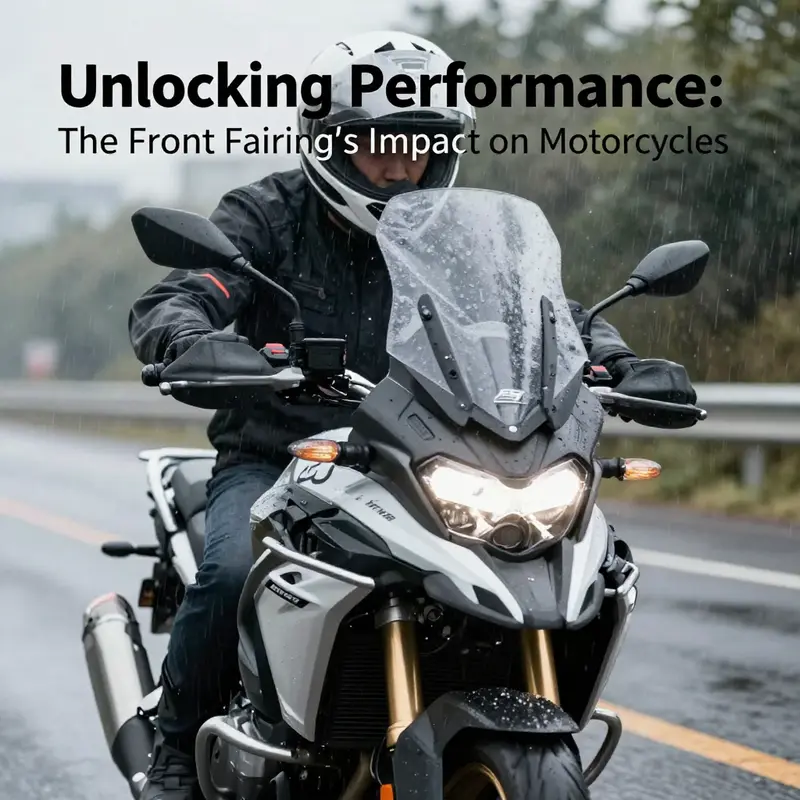
The front fairing on a motorcycle is more than a face for the machine. It is an engineered interface where architecture meets atmosphere, where the rider’s comfort and the bike’s performance hinge on how well air is coaxed around a sculpted shell. In many eyes, the fairing is a visual signature—the bike’s mouth and brow that set the tone for speed, aggression, or serenity. But looking beyond appearances reveals a tightly pressed set of roles: to slice wind, shield the rider, and hold together an integrated system of lights, gauges, and controls that would otherwise scatter into a tangle of cables and wires. The essence of the front fairing lies in its dual duty as both aerodynamic smoothness and protective barrier, a combination that quietly upgrades safety and endurance at highway speeds while shaping the overall riding experience in ways that are felt, not always consciously recognized, by the rider who sits behind it.
Aerodynamics is the first and most obvious language the fairing speaks. On a moving motorcycle, air must be redirected from the rider’s torso and shoulders and guided to flow over and away from the chassis. A well-designed fairing accomplishes this with a careful balance of curvature, edge geometry, and the placement of vents and blisters that manage how air reattaches or detaches from the rider’s form. The goal is to reduce drag, but drag is only part of the conversation. The same shaping that lowers resistance also shapes the downwash behind the rider, the wake that tends to buffet a helmet and shoulders. In practice, that means a fairing that shepherds air with minimal turbulence, leaving the rider freer to focus on line, pace, and the feel of the road rather than the constant fight against wind pressure and noise.
When air is more smoothly guided, the rider experiences several tangible benefits. Reduced wind pressure translates into less fatigue on long rides. Fewer fluctuations in air density around the rider’s torso and helmet mean steadier g-forces on the head and neck, which translates to better concentration and more consistent visual focus. Noise is not eliminated, but it is likely muffled by the way air is directed around the rider’s profile. A quieter cabin, even a helmeted one, makes it easier to hear critical sounds—tires singing on the pavement, the cadence of the engine, and the subtle harmonies of the bike’s mechanical pulse. This is not only about comfort; it is about safety. When a rider is less overwhelmed by wind noise and buffeting, their attention remains more finely tuned to the traffic environment, which can reduce reaction times in demanding situations.
The functional design of a front fairing also centers on protection. The rider’s face, eyes, and lungs are exposed to the elements with minimal fairing in the most exposed configurations, but the modern full or semi-faired motorcycle provides a shield that can make a daylong ride practical in a wider range of weather. The windscreen or windscreen-plus-fairing combination acts as the first line of defense against wind pressure, rain spray, and debris. At highway speeds, even small particles—gravel kicked up by tires, tiny stones, road dust, or insects—can sting, distort vision, or cause discomfort. A properly shaped fairing reduces the likelihood that those impacts are felt directly, by either deflecting the debris or guiding it away from the rider’s path.
Beyond weather, the fairing contributes to safety by shaping visibility. It frames the rider’s field of vision and influences how well eyes can settle on the road ahead. In rain or dusty conditions, the fairing’s role becomes even more critical: the windscreen helps direct splashes and spray away from the rider’s eyes and helps keep the instrument cluster readable. To the extent that the fairing houses the headlight and other lighting components, it also plays a part in ensuring that the bike is seen by others and that the rider can see the road clearly in low-light conditions. The integration of lighting into the fairing—headlights, turn signals, and sometimes a mounted instrument cluster—further ties the aesthetic of the bike to its function. A streamlined form conceals complexity behind its surface, giving the rider a clean view and reducing glare that can arise from protruding components.
The materials used in front fairings are chosen for a balance of stiffness, weight, and impact resistance. Traditional plastic composites like high-grade polypropene and ABS offer a blend of lightness and toughness that suits mass production. Fiberglass provides a stiffer, potentially more customizable shell, while carbon fiber offers maximum stiffness with a premium weight advantage. Each material pattern brings a different feel when the bike is pressed into a corner or parked after a ride. The choice of material also affects durability in the face of small impacts, such as a stone strike at speed or a bike-to-bike detour through a tight urban corridor. In practice, riders rarely measure these traits directly, but they experience them through the quick return on impact energy and the way the shell resists cracking or deforming after a minor mishap. The honest truth is that a well-built fairing behaves like a shield in the right moment and as a calm, styled surface during the calm moments of cruising. The exterior finish also matters; UV resistance, fade characteristics, and the ability to keep a glossy or matte aesthetic contribute to the bike’s long-term personality.
The front fairing’s integration with the rest of the bike is perhaps its most subtle virtue. It is not a standalone shell but a component in a larger ecosystem. The fairing must cradle the headlight and signals in a way that makes changing bulbs or cleaning lenses straightforward, yet it also must allow service access to the instrument cluster or the speedometer without forcing the rider into awkward disassembly. On many bikes, the fairing is a living part of a working system: air intakes feed into cooling ducts, the windscreen interacts with the rider’s line of sight, and the shaping around the headlight creates a signature silhouette, which, though aesthetic, is born from an aerodynamic calculus. The result is a cohesive façade that communicates the machine’s intent—speed, privacy from the wind, or weather protection—while remaining a practical interface for the rider.
A look at the posture of the ride reveals how the fairing negotiates rider position and that the design must accommodate a range of rider physiques. A fairing tuned for a sport rider may hug tighter around the torso and neck, guiding air toward the helmet with a narrow, angular profile that reduces drag but can increase wind noise if the rider sits upright. Touring-oriented fairings tend to embrace a wider, more inclusive air path, bending the flow to envelop shoulders and arms and to create a calmer wind boundary around the rider. In both cases, the objective is similar: to minimize the harsh ram pressure and to ease the burden of wind on the rider so endurance and comfort can extend the journey. This is why, even though the fairing is often a handful of curves and panels to the untrained eye, it represents a careful negotiation of rider height, seating position, and the bike’s intended use. A correct fit yields a cockpit where breathing becomes easier, conversation with the engine becomes more natural, and the road’s long arcs feel less like a test of stamina and more like a shared dialogue with the machine.
The front fairing does not exist in isolation from other protective and efficiency-enhancing features. In many designs, it coordinates with a windscreen that can be adjusted for angle and height, with vents that can redirect air toward the rider’s chest or back to modulate temperature and comfort. Some modern configurations include specifically shaped air curtains, which keep warm air against the rider in cool weather while preserving a comfortable, clear path for air to flow over the shoulders. The fairing’s lower edges often take on a sculpted approach to manage the air’s momentum beneath the bike, helping to reduce lift and to keep the front end planted in cornering and braking scenarios. The sum of these elements is a front end that is not just a shield but a dynamic partner in how the machine meets the wind, the road, and the rider’s needs.
This partnership is also kinetic in the sense that fairing design evolves with advancing knowledge of aerodynamics, computational modeling, and rider feedback. Modern design processes simulate airflow around the motorcycle and then compare those simulations with real-world measurements of drag, lift, and buffeting. Those simulations feed into iterative refinements of the shell: tweaking the curvature of a chin spoiler, smoothing a shoulder contour, or adjusting a headlight nacelle so that the integrated light distribution remains effective without creating unwanted disturbances in the airflow. For the rider, this process translates into smoother acceleration, steadier high-speed stability, and a sense that the bike is listening to the wind rather than fighting against it. It is a quiet form of engineering artistry that blends the science of flow with the craft of shell making and finishing.
Maintenance and customization are practical chapters in the fairing’s life. Like any shell in a moving machine, the fairing endures vibrations, impacts, and UV exposure. The cleaning routine is straightforward, yet the outcomes are not trivial: a well-kept surface maintains its aerodynamic profile, keeps the illumination channels clear, and preserves the aesthetic appeal that first drew a rider to the bike. Aftermarket and OEM replacements are abundant in the market, reflecting a broader truth: many riders seek to tune their machines for a particular season, riding style, or terrain. In such cases, the choice of fairing—whether a compact, sport-minded shell or a full-coverage touring assembly—can be as much about the rider’s sense of continuity with the machine as about any incremental gain in speed or protection. When riders replace or upgrade, they often weigh weight, rigidity, and the way a new shell behaves in the wind. A lighter fairing can improve steering feel and response but may sacrifice some impact resistance. A stiffer shell can smooth out vibrations and reduce rattles but might demand more precise mounting and alignment. Each decision writes its own small chapter in the bike’s ongoing life story.
The front fairing’s contribution to safety and comfort is therefore both practical and perceptual. It changes the rider’s relationship with speed by shaping the air into a predictable, readable pattern. It protects eyes and skin from the elements and adds a sense of confidence that comes from a rider who feels shielded from the worst the road can throw. It also embodies the philosophy of how form and function can converge in a single component to deliver a riding experience that is not merely about getting from point A to point B, but about how gracefully, efficiently, and safely that journey unfolds. For riders seeking a tactile reminder of the wind’s power, a fairing is a gateway to feel the road’s heartbeat without becoming its casualty. For those chasing long-distance endurance, it is a quiet ally that preserves stamina and focus while the miles accumulate. In either case, the front fairing is an essential actor in the drama of speed, safety, and comfort, a component that invites riders to lean into wind rather than fear it.
For those who want to explore the world of fairings more deeply, a practical entry point is the broader catalog of fairing options that exists in the market. The available ranges reflect a spectrum of design philosophy—from compact, streamlined shells that favor outright speed to broader, more protective configurations that prioritize rider wellness over sheer aerodynamics. This spectrum also reflects an underlying truth about riding: the bike is a collaboration between metal, plastic, electronics, road texture, and the body that sits in the saddle. The front fairing is where that collaboration first becomes tangible, where the rider’s weather, wind, and visibility converge with the bike’s powertrain and chassis geometry to determine how a journey feels before the fast corners even begin.
A note on the social texture of riding: fairings influence not just the physics of wind but the etiquette of riding in a community. A bike with a calm, well-behaved wind profile contributes to safer lane discipline and better inter-rider communication, since riders rely on predictable behavior to anticipate each other’s lines. Conversely, a misfit fairing, or one that traps turbulent air behind the rider, can discourage smooth traffic interactions. In that sense, the front fairing is as much about social navigation as physical navigation, shaping how a rider enters, holds, and exits a line through traffic with a clearer sense of balance between speed and safety. The goal is not to win a race against wind alone but to win a ride’s emotional and practical test by combining protection, efficiency, and confidence in a single, elegant structure.
In the end, the front fairing wears many hats at once. It is a shield against weather and debris, a tool for reducing wind resistance, a home for lights and instruments, and a dress that gives the bike its character. It invites riders to lean into the wind, to trust the motorcycle’s wings as they carve through air. It is a testament to how a single component can carry a complex responsibility, harmonizing engineering judgment with the rider’s comfort and safety. As technologies advance—lighter materials, smarter airflow management, adaptive shields, and more integrated electronics—the essential idea remains: the front fairing exists to make the ride smoother, safer, and more enjoyable. It is not merely an accessory; it is a critical contributor to what makes a motorcycle feel alive on the road. For riders who want to connect more deeply with their machine, contemplating the front fairing is a way to understand how form and function converge to weave wind, motion, and human control into one cohesive experience.
To explore a practical example of how this concept translates into real choices, consider the catalog of fairings available for one segment of bikes. For those curious about brand-agnostic approaches that emphasize compatibility, the Honda fairings collection offers a range of shapes and configurations that illustrate the core ideas discussed here—how a fairing shapes air flow, integrates lighting, and provides protection without obscuring visibility. You can review a representative selection in the collection that mirrors the balance between performance and practicality that is central to fairing design. (Internal reference: Honda fairings collection.)
External resources can also deepen understanding of the aerodynamic principles at play. For a foundational look at how air interacts with curved surfaces and how wings and shells manipulate flow, a well-known resource on airfoil theory and flow behavior offers foundational intuition about why a front fairing matters on a motorcycle. This broad aerodynamics context helps connect the micro-geometry of bike shells with the broader science of wind and motion and why certain shapes feel more stable and predictable at speed. External links provide a broader lens for appreciating the design decisions that give riders smoother experiences, safer performance, and longer, more comfortable journeys on two wheels.
Integrated with everything from the rider’s posture to the bike’s light and sensor layout, the front fairing stands as a small but pivotal testament to how thoughtful engineering can translate wind into a safer, more enjoyable ride. It is, in many ways, the unsung steward of speed and endurance—a guardian of comfort that lets a rider focus on the arc of the road rather than the weather beating against their face. When a rider understands that the fairing is not just a shell but a working partner in aerodynamics, protection, and integration, the journey on a motorcycle reveals itself as a refined conversation between rider, bike, and wind. It becomes clear that the front fairing is not merely a feature to admire; it is the quiet backbone of safe, comfortable, and confident riding across miles and moods.
Internal link note: For a practical reference to a brand-agnostic catalog of fairings and their integration with the motorcycle’s design language, see the Honda fairings collection. (Internal link: Honda fairings collection.)
External resource: For a broader scientific grounding on airfoil theory and flow behavior that helps illuminate why fairings are shaped the way they are, explore https://www.grc.nasa.gov/www/k-12/airplane/foil.html
Contours of Performance: Designing and Material Choices for the Motorcycle Front Fairing
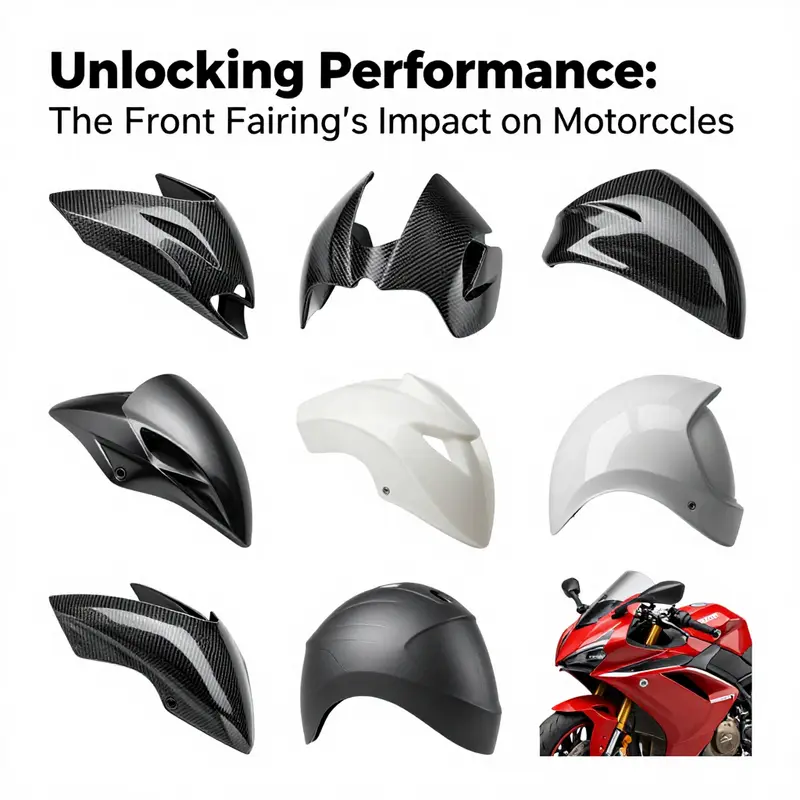
The front fairing of a motorcycle is more than a decorative shield. It is a purpose-built piece of engineering that governs how air meets the machine and how a rider experiences ride quality. From the moment a cyclist leans into a straightaway or dips into a sweeping bend, the shape and composition of the front fairing influence efficiency, stability, comfort, and even visual identity. When we examine why this component matters, the story unfolds in two interwoven strands: design and material choice. Together, they determine how a bike slices through wind, how resilient the shell remains under road debris and weather, and how easily a rider can access the machine’s essentials for continuous performance in real-world conditions. The front fairing does not operate in isolation; it interacts with the bike’s headlamp, indicators, windscreen, and instrument cluster, while also framing the radiator and cooling pathways. This integration matters because the fairing’s silhouette shapes the laminar and turbulent layers that ride along the bike’s surface, and even small changes in contour can ripple into noticeable differences in feel at high speed or in crosswinds. The discussion that follows draws a through-line from aerodynamic theory to the tactile realities of everyday riding, underscoring how thoughtful design and savvy material selection deliver a coherent, safer, and more enjoyable experience.
Aerodynamics is the first language of the front fairing. A well-designed shell tames the wind so that air travels smoothly over the bike’s profile rather than slamming into it in chaotic bursts. The objective is to minimize drag while controlling lift and buffeting, the latter being that unsettling vibration of air against the rider’s helmet and chest. A fairing that achieves this balance reduces the power required to maintain velocity, which translates into better fuel efficiency and improved engine longevity. But aerodynamics is not a single pursuit; it is a balancing act in which riders’ comfort and the bike’s handling at varying speeds must be preserved. The shape must not only cut cleanly through air at highway speed but also accommodate the rider’s posture, the distribution of weight as fuel level shifts, and the need for quick, reliable direction changes without inducing unsettling gusts of wind on the shoulders and head.
In practice, the fairing’s design often begins with a clean, continuous line that channels air along the bike’s sides toward the tail. The windscreen, a visible and critical element of this system, plays a crucial role in lensing air and protecting the rider. A well-situated windscreen reduces drag by guiding air upward and away from the cockpit while still offering visibility through pristine clarity. Materials like acrylics have become common for their optical clarity and impact resistance, which matters when debris or hail may threaten the rider’s view. The value of a clear, well-formed windscreen extends beyond aesthetics; it contributes to rider confidence, especially in rain or low-light conditions where field of vision is critical. When the windscreen is integrated with the headlight housing and the turn signals, the overall front end becomes a cohesive unit rather than a patchwork of separate parts. The eye is drawn to a silhouette that signals purpose—silence in the air, strength in the shell, and a promise of dependable performance.
The integration of components within the front fairing is more than an arrangement; it is a design language. A fairing that envelopes the headlight and sometimes the instrument cluster creates a unified front that communicates a bike’s intent—speed, sport, or endurance. The housing must be robust enough to resist minor impacts while also offering access points for maintenance. Mounting points, fasteners, and air inlets must be precisely located to avoid interference with steering, suspension travel, and brake lines. The result is a front end that looks seamless but is, in truth, the product of careful spatial reasoning and rigorous tolerance control. And when a bike is used for long-distance touring, the fairing’s geometry shifts slightly toward rider comfort and wind protection. Here, the design may widen at the shoulders, extend the lower edge to shelter the legs from gusts, and tune the airfoil shape to minimize lift rather than maximize sheer speed alone. The ride quality that emerges from this attention to contour is not happenstance; it is the payoff of deliberate, iterative shaping that tests how air behaves around the bike in a range of conditions.
Materials are the second pillar of the front fairing’s enduring performance. The shell most riders encounter is typically a plastic or composite panel, a choice driven by weight, cost, formability, and resistance to environmental factors. Traditional engineering plastics—such as durable thermoplastics—offer advantages in weight and impact resistance while supporting complex geometries through molding processes. These materials are relatively forgiving in manufacture and provide a favorable stiffness-to-weight ratio, essential when the goal is to keep the overall weight of the bike down while maintaining structural integrity. For riders seeking heightened performance or a premium aesthetic, carbon fiber and other composites can be used in strengthening layers or in the entire shell. Carbon fiber, with its high stiffness-to-weight ratio, offers the potential for a sharper, crisper front end. It can enhance the perception of speed and precision and is often paired with a multi-layered design to balance rigidity with necessary give in the event of a second- or third-tier impact. However, the cost and manufacturing complexity of carbon fiber mean that it is typically reserved for higher-end applications or specific sections of the fairing rather than entire shells on mass-market bikes.
A material choice influences more than weight. It affects durability, repair options, and resistance to environmental exposure. The shells face sun, rain, road salt, and road debris, so UV resistance and chemical stability are critical. UV stabilization helps prevent the surface from becoming brittle or discolored with time, preserving both appearance and function. For the windscreen, clarity and impact resistance are paramount. Acrylic, often called PMMA, is prized for high light transmission and sharp optical clarity, with strong resistance to impacts compared to ordinary glass. Yet, PMMA can be susceptible to scratching, so surface coatings or protective films are common considerations in design. Polycarbonate is another option—more impact resistant than acrylic but with a tendency toward yellowing if not properly stabilized. Each material choice thus represents a trade-off: the rider may gain lightness and high optical clarity from acrylic, while durability in harsher conditions might push toward polycarbonate or laminated composite windscreens. The fairing’s outer shell may combine materials as well, with a rigid core of composite or reinforced plastic and a softer outer layer to absorb minor blows and reduce the risk of crack propagation.
From a manufacturing perspective, the way a fairing is formed and assembled helps determine its final performance envelope. Injection-molded plastics allow for rapid production with tight tolerances and consistent wall thickness, which translates into predictable aerodynamic behavior and a smooth surface finish that reduces drag. Thermoforming is another widely used process, enabling large, curved panels that can be tailored to fit awkward or highly specialized shapes. For high-performance or limited-edition builds, layup and curing of carbon fiber composites offer the potential for exceptional stiffness with light weight, though at a significantly higher cost and longer production cycle. The structural integration is equally essential. The fairing cannot stand alone; it is anchored to the chassis at several points, with cutouts for the radiator, air intakes, and sometimes the instrument cluster. This means the design must anticipate thermal movement, vibration, and ease of maintenance. A fairing that clamps down tightly without allowing for slight flex under high-speed load eliminates rattles and ensures consistent alignment of headlamps and indicators. The ultimate objective is to achieve a shell that is not only aerodynamic and protective but also robust enough to survive the daily rigors of riding, cleaning, and storage.
Weight is a decisive factor, particularly on sport and touring motorcycles where every gram affects steering feel, braking response, and overall energy efficiency. A lighter fairing reduces gyroscopic loading and improves maneuverability. Yet lightness should not come at the expense of impact resistance or structural integrity. Engineers often pursue a staged approach: a sturdy inner structure supports the external shell, which may itself be engineered to shed weight where it does not compromise safety or function. In practice, this can mean a laminated approach in which a carbon-fiber or glass-fiber front skin is bonded to a foam core or a rigid plastic substrate, providing both rigidity and resilience. The interaction between material choices and the bike’s overall balance demands careful assessment through wind tunnel testing or computational fluid dynamics simulations. Such testing helps reveal how different hull shapes behave at various speeds and in crosswinds, guiding designers toward a front end that remains predictable in gusty conditions while avoiding excessive weight that could dampen steering responsiveness.
Beyond performance, the front fairing contributes to the bike’s character and market appeal. A bike’s front face can signal its intended use and establish a visual language that viewers immediately recognize. The lines, the curvature, and the way the surface plays with light all contribute to perceptions of speed and precision before the rider even twists the throttle. In this sense, the fairing becomes a storytelling device, conveying the ride’s purpose through shape as much as through mechanical specification. The aesthetic dimension must be balanced with practicality: curves that look right in a brochure must also resist micro-vibrations that could mar finishes or create glare on sunny days. The finish choices—paint, clear coats, and sometimes decals—must adhere to the same durability demands as the shell itself, resisting fading, staining, and cracking with exposure to heat and weather. The result is a front end that feels as confident in a showroom as it does on a long, wind-swept highway.
Maintenance and accessibility are practical realities that accompany any strong design. A fairing must allow routine maintenance without requiring disassembly that could prolong downtime. Accessible fasteners and removable panels enable riders or technicians to service the radiator, electrical wiring, or instrument cluster without undue difficulty. When a repair is needed, the chosen materials influence repair options. Plastic shells can often be repaired with adhesive bonding or patching, while carbon-fiber components may require more specialized repair techniques. In some circumstances, part replacement remains the most economical and reliable option, underscoring the importance of modular design where individual segments can be swapped with minimal downtime. In all cases, designers must anticipate wear and tear from road conditions, including temperature fluctuations, stone impacts, and the sometimes aggressive treatment of mud and rain during off-road or mixed-terrain riding. The front fairing thus embodies a practical philosophy: build something light enough to perform with grace, sturdy enough to survive, and adaptable enough to accommodate evolving rider needs and advances in materials science.
As the conversation about front fairings broadens, two realities stand out. First, the purpose of the shell is not merely to look good; it is to manage air, shield the rider, and integrate essential systems in a way that respects the machine’s dynamics. Second, material choices determine whether that purpose stays intact over time or becomes a liability under weather, collision, or fatigue. This is why ongoing research and development in polymer science, composite materials, and protective coatings continually inform how fairings are designed and manufactured. The field evolves as lightweight composites become more affordable and as protective coatings improve scratch resistance and UV stability. The downstream effect is a smoother ownership experience for riders and a more efficient, stable ride across more conditions. The front fairing thus serves as a bridge between aerodynamic theory and everyday practicality, a crucial intersection where form meets function in the most literal sense.
For readers seeking a practical window into how these choices play out in real-world configurations, the broader ecosystem of spare parts and aftermarket options illustrates the trade-offs designers must weigh. A clean, well-fitted fairing is easier to maintain, reduces air resistance during a ride, and helps the rider feel connected to the machine’s purpose. Yet customization—whether to upgrade wind protection, alter the silhouette for a more aggressive stance, or select a particular finish—demands a careful appraisal of how changes will affect aerodynamics, weight distribution, and visibility. A subtle curvature adjustment can influence how air reattaches around the headlamp and mirrors, while a different plastic blend may alter how the shell tolerates sun exposure or how easily it scars from road debris. In short, design and material choices for the front fairing are a continuous negotiation among airflow, rider experience, and practical durability. They are not isolated decisions but rather a coordinated set of moves that shape a bike’s performance envelope and its day-to-day reliability.
To explore related perspectives on how fairings interact with other model-specific components, readers can examine broader collections of fairing options that emphasize the continuation of design language across different bike families. For example, a reference point for understanding how a fairing transitions from sport to touring intent can be found in the Yamaha fairings collection, which demonstrates how a single shell family can be adapted for varied riding goals and climates while preserving a consistent aerodynamic DNA. This kind of cross-pollination underscores a central idea: the front fairing is a living component that evolves with performance needs, rider comfort expectations, and advances in materials science. Through this lens, the front fairing emerges not as a static shell but as a dynamic interface where engineering choices and aesthetic ambitions converge to shape the feel of a ride. The journey from concept to street hinges on balancing weight and stiffness, clarity of visibility, and resilience against the elements, all while presenting a front that communicates the rider’s intent and the machine’s capability with quiet confidence.
External resource for deeper technical insights into fairing materials and design standards can be found in the International Journal of Automotive Engineering, which offers peer-reviewed analyses on automotive and motorcycle component development. This resource complements the practical discussion by grounding material choices and performance expectations in established engineering research. To connect with practical aftermarket references, readers may also explore the Yamaha fairings collection, which provides a sense of how aftermarket components align with OEM-inspired design language and how material strategies translate into real-world replacements and customizations.
Final thoughts
The front fairing is an essential component that significantly influences a motorcycle’s performance, rider comfort, and visual appeal. By understanding its aerodynamic benefits, protective characteristics, and the variety of designs and materials available, business owners can better serve their customers and enhance their offerings in the motorcycle industry. Consider the front fairing not just as an accessory but as a vital feature that drives both sales and customer satisfaction.