
The motorcycle customization market continually evolves, and wrapping motorcycle fairings stands out as a popular trend among riders. This modification not only allows for aesthetic transformation but also protects the bike’s original finish from a range of environmental damages. Each chapter delves into essential aspects of fairing wraps, covering material selection, crucial surface preparation, effective application techniques, and the durability and removability of wraps. Business owners can leverage this knowledge to cater to the growing demand for motorcycle customization and protection, showcasing how premium wraps can redefine a rider’s experience.
Material Alchemy: Mastering the Choice of Wraps for Motorcycle Fairings
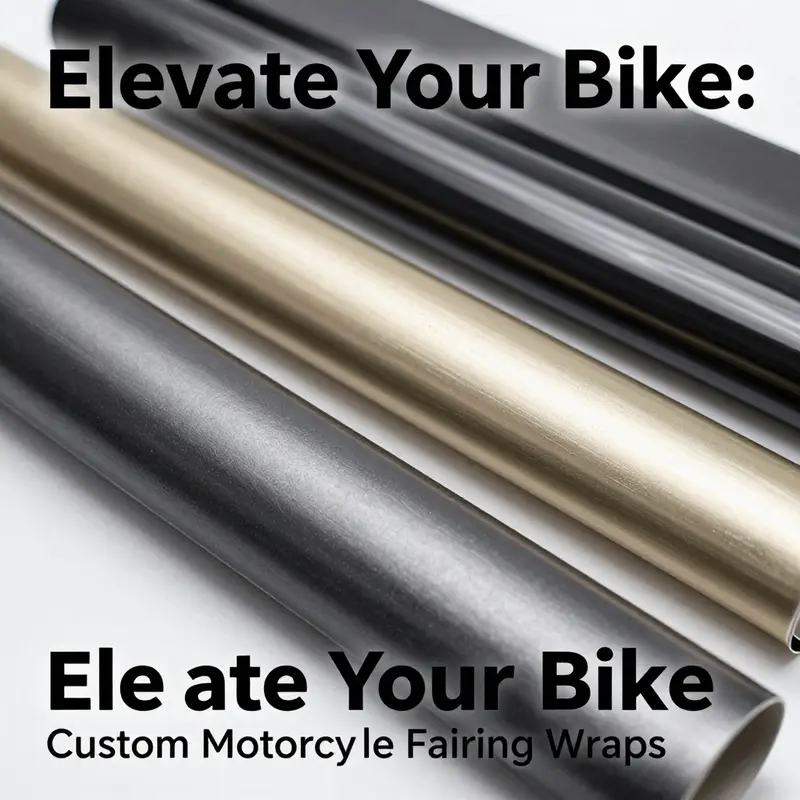
Choosing the right material for wrapping motorcycle fairings is more than a matter of color and texture; it is a foundational decision that determines how a bike will look, endure the road, and age over time. The surface that riders see and touch every time they swing a leg over the bike is a canvas, but the ink and shield underneath come from the material you choose. The material acts as both armor and showcase, resisting UV rays, moisture, and the heat of sun and engine while preserving the appearance through thousands of miles of wind and weather. When the rider stops admiring the color, the wrap has done its quiet work in protecting the original paint, hiding minor scratches, and giving the machine a distinct, personal signature. To understand how best to select this material, it helps to think of wraps in three interwoven roles: durability, aesthetics, and practicality in maintenance and removal. These roles are not mutually exclusive; a well-chosen wrap delivers all three in varying degrees depending on the rider’s climate, riding style, and how aggressively the fairings are exposed to road debris and fuel splashes. The conversation about material choice begins with the kinds of film most often used in professional and enthusiast projects, and then moves into how those films respond to the real world: heat cycles from the engine and sun, sudden downpours, long highway runs at high speed, and the need for a finish that remains visually striking after a year on the bike. In the studio and on the street, premium-grade cast vinyl and laminated films stand out as the two most reliable workflows for fairings. Cast vinyl, with its enhanced stretch and better long-term elasticity, is celebrated for draping over complex curves and multi-part surfaces. Laminated films, when topped with a protective layer, offer added scratch resistance and environmental shielding that helps preserve color depth and texture through weathering and washing. These materials are not just about color or gloss; they are about how the film behaves when it must bend, twist, and conform to the contours of a sculpted fairing while staying securely adhered. The importance of material choice is magnified by the unique geometry of motorcycle fairings, which feature tight radii, abrupt transitions, and a mix of flat panels and three-dimensional forms. A skin that can stretch, retract, and flatten without wrinkling under heat is a practical necessity. Cast vinyl stands out here because its chemistry allows it to elongate with minimal thinning or distortion, making it easier to achieve a clean, continuous wrap across a fairing assembly. Laminated films bring a protective layer that can resist micro-scratches from road grit and the occasional contact with branches, tumbleweeds, or debris kicked up by other riders. There is a subtle but important distinction between these materials: longevity and conformability. Cast vinyl’s long-term performance shines when the wrap must endure heat build-ups near radiators and engine bays, along with direct UV exposure from sunlit rides. Laminated films score high marks for protection against scuffs and environmental assaults, helping the finish maintain its color fidelity and smoothness over time. While these characteristics are widely acknowledged in the professional customization scene, the practical decisions riders face often come down to climate, riding habits, and maintenance philosophy. A rider in a hot, sun-drenched region who daily commutes on a sport-touring bike may prioritize UV resistance and scratch protection more than a casual rider in a milder climate. The extra investment in premium materials makes sense in terms of lifespan and appearance, because the cumulative cost of frequent replacements or touch-ups can exceed the price of a higher-grade wrap. In this sense, material choice becomes an investment in resistance and resilience; it is not merely about the way a bike looks in the showroom or a showroom-like Instagram shot, but about how it survives months of exposure to the elements without fading, cracking, or delaminating. It is also important to acknowledge that not all wraps are created equal in terms of adhesive performance and surface compatibility. The best-rated wraps use adhesives formulated to adhere to a range of substrates, from ABS-derived plastics to fiberglass and composite skins that many modern fairings employ. The adhesive system must hold through temperature cycles, rapid air changes from speed, and the occasional mechanical stress when a rider leans into a corner or the bike is tucked into a fairing rack after a long ride. The top coats and protective layers on laminated films are designed to resist micro-scratches and provide a uniform gloss or satin finish that holds its tonal depth across the color spectrum. In practice, this combination of cast vinyl or laminated film offers a balance: a film that stretches to meet a curve, and a protective layer that fights against the small, everyday abrasions that accumulate over thousands of miles. The decision process, however, does not end with the film itself. Surface preparation plays a crucial role in how a chosen material performs. A clean, degreased surface is the foundation for any wrap; residues from wax, silicone, or cleaners can act like a map of micro-mirages that cause adhesion problems. The recommended approach emphasizes meticulous cleaning with isopropyl alcohol, which dissolves oils and allows the adhesive to bond directly to the surface. This step is not optional; it is the hinge upon which the entire installation rests. From there, the surface should be checked for flatness and any residual contaminants, including fine dust or paint imperfections that might compromise uniform adhesion or cause air entrapment during application. The reality of installing wraps on fairings is that labor, knowledge, and technique matter almost as much as material choice. While high-quality vinyl wraps are designed for professional installation due to the complexity of curves, radii, and seams, there is a growing number of DIY kits that empower ambitious riders to experiment with their own machines. The general method—cutting the wrap to fit, applying heat to soften the film for conformability, and squeegeeing out air bubbles—remains consistent across skill levels, but the outcomes vary with experience. The heat must be controlled: too little and the film won’t conform; too much and the material can warp or lose its adhesion. Squeegeeing must be thorough but gentle to avoid introducing micro-layers of air or dust that would show as blemishes under the topcoat. Experienced installers tend to use a combination of heat, tension, and precise trimming to ensure the wrap follows every contour without creating tension points that could lead to edge lifting around complex gaps or at seam junctions. The result, when done well, is a seamless skin that sits on the fairing like a second, color-drawn shell, a shield that preserves the original paint underneath and adds a new dimension of personality on the surface. The durability of wrap materials is, in the end, a question of how faithfully the rider adheres to maintenance practices. Even the most robust films require routine checks and gentle care. Washing with mild soap and water and avoiding aggressive solvents is a prudent practice. Abrasive cleaning tools, stiff brushes, or harsh chemical cleaners can erode the protective top coat and reduce gloss and color depth over time. A seasoned rider will often patrol for edge lifting, micro-wrinkles, or exposed adhesive at corners and along seams, especially after long trips or high-speed runs in adverse weather. If initial adhesion holds, it is not unusual for a well-applied wrap to last five to seven years or more in favorable climates and with careful maintenance. This lifespan, however, is not universal; it depends on climate, riding style, exposure to road grit, and how aggressively the rider cleans and polishes the surface. When a wrap finally reaches the end of its life, the removal process should be straightforward and non-destructive if performed with proper technique. A high-quality adhesive is designed to peel away cleanly, leaving the underlying paint intact. But removal is not risk-free; heating the film evenly and carefully lifting at the edge is essential to minimize potential lift of the original paint or primer beneath. The more aggressive the sun exposure and heat cycles, the greater the chance that some edges might require touch-up after removal. This is why, for many riders, the removal and rewrap of a fairing is a routine strategy in keeping a bike looking fresh without the permanent commitment of new paint. The material decision also interacts with the model and the condition of the surface to be wrapped. Fairings come in a mix of substrates, from ABS to fiberglass and composite panels. Cast vinyl’s stretchability makes it particularly well-suited to these mixed surfaces, as it can accommodate abrupt changes in curvature without tearing or forming unsightly air pockets. Laminated films with protective layers can provide a buffer against surface micro-movements and minor impact marks, preserving the color and texture even if the fairing experiences small dings or scratches. In the end, the rider’s priorities shape the choice. A sport-styled rider seeking a high-gloss, photo-ready finish may lean toward a cast vinyl that can be shaped with minimal distortion and a high-fidelity color match. A daily commuter who wants long-term resistance to UV and weathering might favor a laminated film with a more robust top coat to maintain a consistent appearance through rain, heat, and wash regimes. A café racer whose aesthetic calls for a particular texture or depth of color may opt for a finish that captures a matte or satin look, while still delivering reliable adhesion and a durable protective layer. The engineering behind these choices is not purely cosmetic. The film’s depth and surface texture interact with the bike’s paint and any protective films or coatings already installed. For riders who want to preserve or restore the OEM paint later, a removable wrap is a pragmatic option that allows easy reversion to stock appearance without the commitment of repainting. When considering the material, riders should also think about the model’s intended lifecycle and the total cost of ownership. Although the initial cost of premium-grade cast vinyl or laminated film may be higher than cheaper alternatives, the long-term return—reduced risk of damage to original paint, extended color retention, and easier and cleaner removal—often justifies the investment. For those who enjoy exploring different looks, the reversibility of wraps offers the most compelling value: a way to refresh the bike’s persona without committing to a permanent color change or a factory paint job. For riders who want to explore a more model-specific approach, it can be helpful to consult model-specific collections that showcase what is available for various fairings. If you are aiming to align a wrap with a particular line of fairings from a specific model family, you may browse the Honda fairings collection, which presents a curated range of panels that can serve as a reference point for fitment and curvature. This resource can support a broader conversation about how material choice interacts with panel geometry and the practical limits of wrap installation on certain shapes. Honda fairings collection offers a lens into how different panels respond to the same material and what a rider might expect when applying a wrap across a multi-part fairing assembly. While the internal reference is helpful, the core decision remains the material’s performance under real-world conditions. A rider who reads a comprehensive guide on wrap vinyl—such as the updated synthesis of material types, adhesives, and application tips—will gain a deeper understanding of why premium-grade cast vinyl and laminated films are favored by professional installers. These resources emphasize that it is not enough to select a wrap by color and gloss; one must assess stretch characteristics, dimensional stability, edge lift resistance, and maintenance requirements. The interplay between the material and the protective strategies the rider adopts—clean daily maintenance, periodic professional checks, and mindful storage—will ultimately determine how well the wrap ages and how gracefully it can be refreshed when a new look is desired. In practical terms, this means setting realistic expectations based on climate and riding style. A rider in an area with intense sun and salty air should anticipate more frequent inspections and perhaps a higher investment in a thick, UV-stable, laminated film to maintain the finish. A rider who frequently rides through rain and wind might opt for a material with excellent water resistance and stable adhesion to prevent edge lifting caused by moisture ingress. The conversation about material choice also invites a careful look at environmental concerns and lifecycle considerations. High-quality wraps designed for automotive and motorcycle use must meet standards for chemical resistance, weathering, and recyclability, while offering a practical way to extend the aesthetic life of a bike without the environmental cost of repainting. While no single film is universally perfect, the combination of cast vinyl or laminated film with a well-prepared surface provides a reliable pathway to achieving both looks and protection that riders can rely on over several seasons. The narrative of material choice for motorcycle fairings is ultimately a story of balance. It is a balance between the desire for expressive color, texture, and finish, and the practical demands of durability, maintenance, and longevity. It is a balance between the flexibility required to cover complex curves and the rigidity needed to maintain adhesion over time. It is a balance between the transient thrill of a new look and the lasting comfort of knowing the original paint is guarded and reversible if one wish to return to stock. For the reader seeking further reading on wrap materials and installation techniques, a detailed external resource offers a thorough overview of the subject, including material types, adhesion properties, and maintenance tips: https://www.vincemotorcycles.com/motorcycle-wrap-vinyl-guide. This guide complements the practical considerations discussed here and can help riders translate the principles of material science into a successful wrap project. In sum, material choice for motorcycle fairing wraps is not a single decision but a structured approach to selecting a film that can bend, breathe, and endure with a rider’s machine. Cast vinyl and laminated films remain the keystones of a dependable wrap strategy. They provide the degree of conformability, color fidelity, and environmental resistance that modern riders require, while leaving room for personal expression. The right choice depends on climate, riding habits, and the rider’s willingness to invest in proper preparation, careful installation, and attentive maintenance. With thoughtful selection, the wrap becomes more than a cosmetic upgrade; it becomes a resilient layer of protection that preserves the bike’s value and the rider’s sense of identity on the road.
null
null
Molding the Ride: Precision Techniques for Durable Motorcycle Fairing Wraps
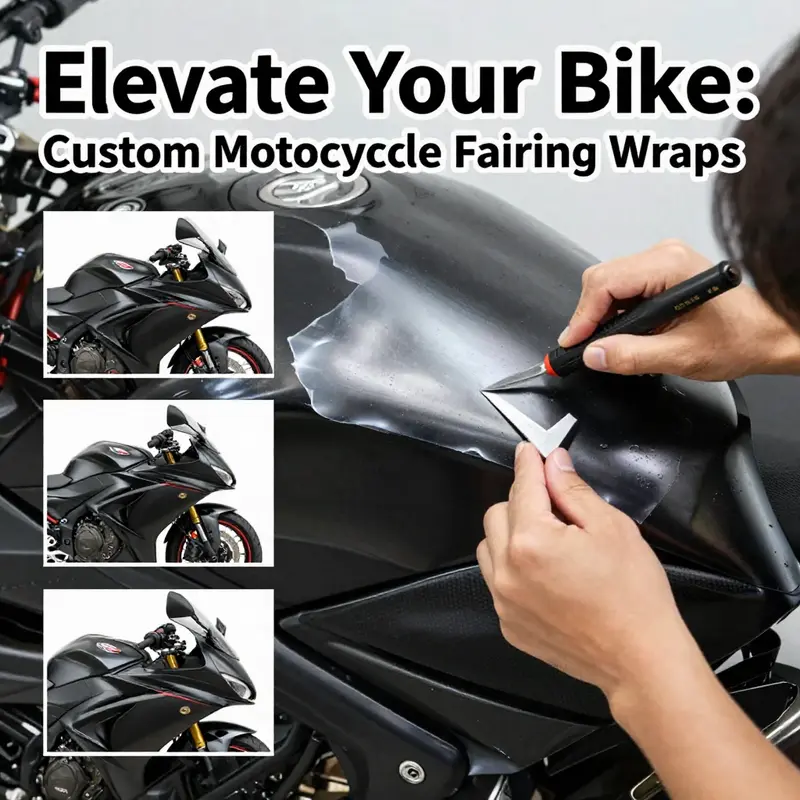
Wrapping motorcycle fairings is both an art and a science, a discipline where the surface becomes a canvas and the surface’s contours dictate the method, not the other way around. When a rider chooses a wrap, they are selecting a reversible upgrade that protects original paint, offers UV resistance, and opens a pathway to personal expression. The following discussion treats wrapping as a cohesive practice, not a checklist, inviting the reader to feel how the material responds to heat, pressure, and time. The journey from a clean fairing to a finished, durable wrap begins with a calm assessment of purpose: is the goal a quick color change, a protective shield against highway debris, or a long-term deployment of a sophisticated graphic? Whichever route is chosen, the principles remain the same. A successful wrap depends on meticulous preparation, a thoughtful material choice, and techniques that honor the fairing’s lines while respecting the adhesive’s behavior under a rider’s daily rhythms. This chapter threads these ideas into a single, continuous narrative that respects the chapter’s place in a broader conversation about wrapping as a practical, stylish alternative to painting. It also points the reader toward useful references for model-specific guidance while emphasizing fundamentals that apply across brands and body styles.
Preparation is the quiet heartbeat of any wrap. It begins with surface cleaning, a ritual of removing every trace of grease, wax, dust, and silicone that could undermine adhesion. Isopropyl alcohol serves as the solvent of choice, a solvent that evaporates cleanly and leaves the surface ready for bonding without leaving residue. The fairing should be wiped with a microfiber cloth, and a second dry pass ensures no lint remains that could trap air beneath the film. The cleanliness is not a cosmetic step alone; it is the first line of defense against microbubbles that can later develop into cosmetically visible defects or, in worst-case scenarios, lead to premature delamination. Once the surface is pristine, the rider can choose between calendered vinyl and cast vinyl, two materials that differ in behavior and fit for particular shapes.
Calendered vinyl offers a forgiving entry into wrapping for beginners. It is more rigid and easier to handle on flatter panels, such as side covers or the tail cowlings where the contours are gentle. For those starting out, calendered film provides a reasonable learning curve, a tangible sense of how heat and pressure interact with a composite surface, and a lower risk of sudden tearing near edges during the learning phase. Cast vinyl, by contrast, is the material of choice as confidence grows and the shapes become more complex. Cast film stretches more evenly and conforms to tight radii, which makes it particularly well suited to full fairings or curves around a fuel tank neck, where accuracy matters and the margin for error is smaller. Cast vinyl may demand more precise cutting and careful edge management, but its conformity often yields a cleaner seam line and longer-term durability under dynamic riding conditions. The decision between calendered and cast is not merely a cost differential; it is a strategic choice about how the wrapper approaches the bike’s geometry and the rider’s long-term expectations of gloss retention, resistance to impact, and ease of removal when the time comes for a refresh.
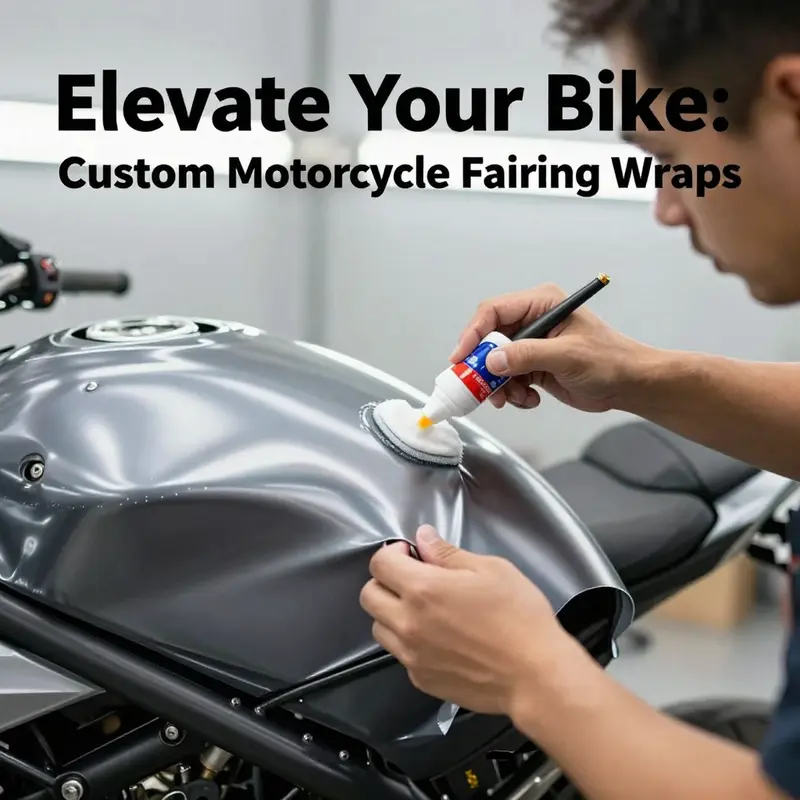
With material in hand and the surface prepared, the application begins in earnest. A heat gun becomes an indispensable tool as soon as the wrap meets a curve. Heat softens the vinyl, increasing its pliability and allowing the film to settle into complex shapes without stretching and tearing. The process is akin to leather being formed over a saddle, where warmth enables the material to take on the contour with a natural drape. The goal is not to overheat but to encourage a controlled relaxation so that the film wraps around edges and transitions smoothly into recessed areas. In practice, this means applying heat in short bursts, testing the film’s response, and guiding it with a soft squeegee rather than forcing it into place with brute force. When wrapping around the neck area of a fuel tank or along tight fender edges, temperature becomes a conversation between film and bike, a dialogue in which the surface tension of the vinyl yields to the rider’s intent for a clean, uninterrupted surface.
Seam placement is a silent craft that distinguishes a professional wrap from a careless job. The seam should disappear into non-visible zones whenever possible. Behind the fairing’s undercarriage, where the eye rarely lingers, lies the practical logic of seam location. Running a seam along an edge or into a shallow groove can be an invitation for micro-movement and subtle daylighting as the film ages with ambient heat. By placing seams in less conspicuous areas, the installer preserves the wrap’s clean visual language and minimizes the risk that a seam becomes a focal point for scrutiny. The squeegee, used with deliberate, even strokes, pushes from the center outward, expelling air and water vapor that might otherwise trap as bubbles. Small air pockets are not a fatal flaw; they can be coaxed out given time and correct technique, but attention at this stage dramatically reduces the likelihood of persistent blemishes that undermine the wrap’s uniform reflectivity.
Bubbling is the enemy of a flawless finish, yet it is also a teachable moment. Early bubbles often indicate either insufficient heat, inadequate pressure, or extraneous materials on the surface. The remedy is simple and precise: rewarm the affected area, work out the bubble with the edge of the squeegee, and re-press from the center outward. The center-outwards rule helps restrain the vinyl’s natural tendency to stretch unevenly, which would otherwise yield a ripple or a visible crease along a curved seam. For more complicated panels, such as the fuel tank’s neck where transitions from vertical to horizontal planes are abrupt, a careful blend of heat, tension, and vigilant smoothing ensures that the wrap respects the geometry rather than fighting against it. The result is a finish that reads as a single, continuous surface rather than a mosaic of panels sewn together.
After the wrap has taken shape across the fairing, curing enters as the patient sibling of the installation. The curing window varies with material and environment, but the principle is consistent: allow the film to bond fully to the surface and reach maximum adhesion before subjecting the bike to riding conditions. A common recommendation is a curing period of 24 to 48 hours before exposure to riding stresses or frequent washing. This period allows the adhesive to set thoroughly and reduces the risk of premature edge lifting, which can occur when the film is touched or flexed before full cure. The rider should keep the bike in a stable environment during this interval, avoiding direct sun or abrasive contact that could disrupt the developing bond. When cured correctly, the wrap forms a durable shield that can resist minor impacts, resist UV degradation, and preserve the underlying paint from wear, while still offering the flexibility to be peeled away without damage should a future color refresh be desired.
The choice of project scale matters as well. For a sport-touring rider who wants long-range protection and a striking appearance across multiple panels, a full-fairing wrap with cast vinyl is often the preferred approach. For café racers or daily commuters experimenting with a bold, short-term aesthetic, a partial wrap on the side panels or tail area may be more practical, cost-effective, and easier to manage in case of future changes. The rider’s longer-term goals—whether to preserve resale value, keep original paint pristine, or pursue a high-gloss, showroom finish—will influence decisions about color, gloss level, and the specific substrate used. A well-executed wrap can convincingly mimic the depth of paint while offering a reversible upgrade that protects the bike’s original artistry. It is a balance between form and function, where the vision for the rider’s machine is realized through careful technique, not merely through harsh pressure or hurried steps.
Maintenance follows the installation and curing, extending the wrap’s life through simple daily care. Regular cleaning with mild soap and water, using a soft cloth, preserves the protective film’s sheen and resists the buildup of grime that can degrade the vinyl’s clarity over time. Avoid abrasive cleaners, solvents, and high-pressure washing directly on seams, which can loosen adhesive or initiate edge lifting. Should edge lifting occur, it is not a catastrophic failure but a signal that the bond needs attention; mid-term remediation might involve receding the edge with heat and re-pressing to ensure a secure seal. Maintenance is also a consideration in planning future changes: a vinyl wrap remains removable and reversible, which is a crucial advantage for riders who intend to refresh the look without repainting the fairings. This reversibility emphasizes the practical, cost-effective nature of modern wraps, particularly when compared with the permanent commitment of a new paint job.
Beyond the technical steps and stewardship of the finish, there is an overarching narrative about how wraps align with rider lifestyles. For many, a wrap becomes a statement of character—an expression that travels with the bike and accommodates the rhythm of riding seasons, track days, and daily commutes alike. Real-world riders will tell you that some of the most lasting wraps are those that were treated as collaborative projects: a willingness to learn the material, to adjust technique when a curve proves unusually stubborn, and to invest the time necessary to achieve even tension across expansive panel areas. Even when professional installation is the norm for more complex full-fairing jobs, the knowledge of how the technique works—how heat, pressure, seam placement, and cure time intertwine—lets riders communicate more effectively with installers and contribute to a better result.
As a practical reference, one can explore model-agnostic guidance that emphasizes the core principles described here while also offering model-specific notes on fairing geometry. The world of motorcycles is vast, and while the wrap itself is a universal medium, the shapes and materials of each bike make the nuance of technique a central concern. For readers who want to connect theory with concrete options, a linked pathway to model-specific resources can provide valuable context. The Honda fairings collection, for instance, serves as a gateway to exploring panel shapes, mounting interfaces, and typical contours that riders will encounter when planning a wrap project. The collection page can be a practical resource for visualizing how different panels meet and separate, and it helps align expectations with the realities of fairing geometry. Honda fairings collection is a useful starting point for appreciating how wrapping strategies adapt to the bike’s silhouette while maintaining a cohesive appearance across multiple components.
Finally, it is worth acknowledging that the field continues to evolve as new vinyl formulations, adhesives, and finishing techniques emerge. The best practices of today build on careful surface preparation, the judicious choice of calendered versus cast vinyl, precise heat management, thoughtful seam placement, and patient curing. The result is a wrap that not only looks compelling but behaves predictably under the stresses of riding. The chapter’s guidance remains applicable across brands and models, underscoring the universal truth that wrap quality is less about the scale of the project and more about the care embedded in each step—from the moment the bike’s surface gleams after a thorough clean to the quiet moment when a rider wipes away the last smudges of installer’s residue and steps back to admire a seamless, glossy profile that travels as smoothly as the machine itself.
External resources can supplement this narrative with deeper technical insights. For riders seeking a broader technical frame or model-specific standards, an authoritative guide on fairing materials and applications is available online. This external resource provides a detailed examination of material composition, film behavior under heat, and practical standards that help ensure a high-quality outcome across diverse fairing geometries. https://www.motorcyclewrappingguide.com/understanding-fairing-kawasaki-ninja-blue-composition-standards-and-applications
For ongoing exploration and to see how different riders approach the same challenges, readers can also explore broader catalogs and tutorials that illustrate the process in action across various models and styles. A useful entry point is a catalog that aggregates options for different manufacturers, enabling a comparison of panel layouts and available wrap-ready surfaces. This resource complements the principles discussed here and encourages readers to envision the wrap as a unifying design language rather than a collection of isolated panels. The journey from rough prep to finished gloss is not merely a sequence of steps; it is a dialogue between rider, surface, and film that culminates in a protected, personalized machine that travels with confidence and style.
null

null
Final thoughts
Wrapping motorcycle fairings presents a unique opportunity for customization and protection. By understanding the significance of material choice, meticulous surface preparation, effective application techniques, and wrap durability, business owners can confidently offer this service. It not only enhances a rider’s aesthetic but also maintains the integrity of the original finish. As the demand for stylish and practical customizations grows, equipping yourself with this knowledge will set your business apart in the competitive motorcycle market.