
As the motorcycle industry evolves, so does the significance of performance accessories like 12k motorcycle fairings. Tailored for superior aerodynamics, lightweight properties, and enhanced aesthetics, these fairings are quickly becoming a staple among motorcycle enthusiasts and business owners alike. Understanding the material composition, performance benefits, economic implications, and market trends surrounding these fairings is crucial for those looking to make informed decisions. Each chapter dives into facets that reveal why investing in quality fairings can reshape not only the riding experience but also the strategic direction of your business.
Weaving Strength and Speed: The Material Story Behind 12K Motorcycle Fairings
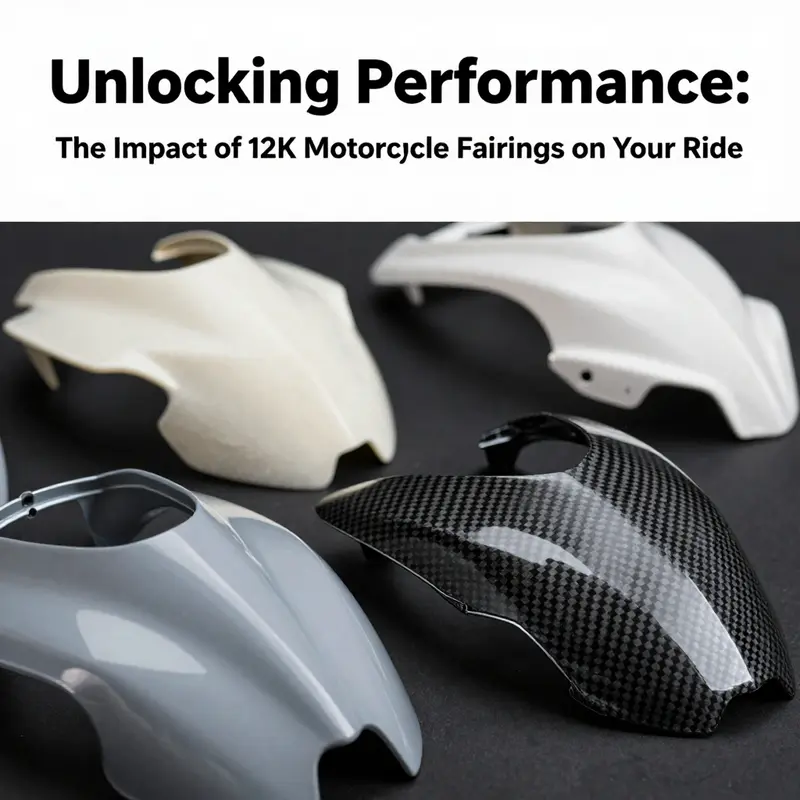
The story of 12K motorcycle fairings begins with a simple but powerful idea: take a material that is inherently light, stiff, and capable of enduring the rigors of high-speed riding, and weave it into a geometry that slices the wind with minimal resistance. The term 12K is more than just a number; it is a shorthand for a deliberate choice about performance, aesthetics, and engineering discipline. In the world of motorcycle aerodynamics, the fairing is both shield and surface, a structure that must endure the buffeting of air while presenting a clean, efficient profile to the rider and the machine beneath. To understand why 12K carbon fiber has become a prevalent option in this field, one must look beyond the glossy finish and into the fiber’s fundamental makeup and the processes that bring it to life. The material composition of 12K fairings forms the bedrock of their behavior at speed, their fatigue life under vibration, and their capacity to transmit rider feedback with an almost tangible clarity. At its core, the 12K designation refers to the number of filaments in a tow—the bundle of carbon fibers that make up the fabric. A 12K tow contains roughly twelve thousand filaments, a bundle dense enough to provide substantial stiffness and strength when arranged in the right weave and cured under controlled conditions. That count matters because it sets the baseline for what the finished panel can bear in terms of load transfer, impact resistance, and deflection under aerodynamic loads. High-performance motorcycle fairings rely on a favorable balance of stiffness and weight. Too stiff a panel, and one risks transmitting all sorts of vibration back to the rider; too flexible, and the panel may succumb to flutter or flexural fatigue when the bike pushes into the upper ranges of speed or when the wind gusts unpredictably at the track or highway. In this balancing act, 12K carbon fiber offers a meaningful advantage because the tightly packed filaments can be oriented and layered to create panels that resist bending in critical directions while remaining light enough not to compromise agility. This is particularly important for fairings, where the skin doubles as a load-bearing shell and a shield against the forces that arise from airflow, engine heat, and rider input. The efficiency of a fairing is not simply about thinness or lightness; it is about a harmonized system in which the material, the layup, and the cure cycle all contribute to predictable performance across a broad range of speeds and road conditions. If you examine the visual texture of 12K carbon fiber, you will see a weave with a distinct character. When these fibers are laid up in a composite, the resulting fabric shows a grid of filaments that, under a clear coat, can reveal a depth that many riders associate with a race-ready aesthetic. The density of the 12K tow influences not just the color and gloss of the surface, but also how resin migrates through the fabric during the curing process. Resin content is not merely a filler; it is a critical component that determines impact resistance, environmental durability, and the panel’s thermal response under sunlit heat. The resin system, chosen with care, interacts with the 12K fibers to form a matrix that can resist micro-cracking and maintain stiffness over thousands of cycles of temperature fluctuations. The choice between a pre-preg (pre-impregnated) process versus a dry-carbon approach is not merely about convenience; it is a strategic decision about uniformity, repeatability, and end-use conditions. In a pre-preg system, the carbon fibers arrive already saturated with resin, and the entire stack is laid into a mold where heat and pressure are applied, often in an autoclave. The autoclave cycle pressurizes and heats the laminate to promote resin flow and complete cure, creating a consolidated sheet that is less prone to voids and delamination. This route tends to deliver high precision in thickness control and a glossy, uniform surface that is highly desirable for fairings intended for street use or show-racing alike. It is here that the 12K carbon fiber proves its worth: the mechanical integrity achieved through such controlled curing translates into fairings that resist cracking in impact, maintain geometrical fidelity in the face of aerodynamic loads, and deliver a tactile sensation of strength when a rider rubs a gloved hand along the surface. Yet the world of carbon fiber is not confined to the pristine environment of the autoclave. There is also a philosophy of lighter, leaner manufacturing—so-called dry carbon—that emphasizes the fiber fabric itself and minimizes the resin contribution. Dry carbon has become a talking point in premium fairings, offering the allure of single-msource clarity and speed-friendly weight. In practice, 12K carbon can be used in both approaches, with the structural requirements of the panel and the intended use guiding the choice. For riders who push their machines on track days, the difference between a 12K pre-preg part and a dry-carbon variant can be measured in the subtle weight reduction, the crispness of edge definition, and the perceived stiffness of the panel at cornering loads. The merits of 12K are complemented by the advances in surface engineering that accompany modern fairings. A well-applied clear coat can amplify gloss depth, emphasize the weave’s unique texture, and add a layer of protection against UV exposure and micro-scratches. The clear coat is not merely cosmetic; it acts as a sacrificial shield that can absorb or deflect minor abrasions, preserving the carbon’s structural core beneath. The interplay between aesthetic intent and mechanical performance becomes obvious when one considers racing or sport-oriented fairings. The rider’s perception of the bike’s response to wind and road input is partly physical and partly psychological; a panel that feels rigid and precise under high-speed acceleration reinforces the rider’s sense of confidence, which in turn influences throttle application, body positioning, and overall control. The structural fidelity of a 12K carbon fiber fairing helps to keep the rider in a more connected position with the bike, allowing subtle corrections to be transmitted with clarity through the handlebars and seat. Engineering teams and custom builders often weigh the trade-offs between 12K and lighter weaves such as 3K or 6K in the quest for the right stiffness-to-weight ratio and the desired surface finish. The 12K arrangement, with its larger tow and more noticeable fiber strands, tends to produce a distinctive pattern that some riders and builders find engaging as a visual signature. In contexts where the finish will be highly visible, such as exposed bodywork or aftermarket packages, the 12K weave can become a defining aesthetic element that communicates performance intent at a glance. An important practical dimension of 12K fairings is how they are integrated with the rest of a motorcycle’s bodywork and chassis. The fairing does not exist in isolation; it works in tandem with the frame, the cooling ducts, the windscreen, and the rider’s cockpit geometry. Rigid, well-made 12K panels resist warp and hold their line under aerodynamic load, which helps maintain consistent airflow across the engine and radiator surfaces. This consistency reduces unwanted vortices that can affect cooling efficiency and drag coefficients. The performance benefits are not universally static; they depend on precise fitment and careful alignment with adjacent components such as the upper cowl and lower belly panels. In a well-planned build, the carbon fiber fairings are designed to work as a system. The layup schedule, the orientation of fiber plies, and the thickness at various sections of the panel all influence how the panel behaves at different yaw angles and speeds. A panel that is optimized for straight-line stability may differ from one tuned for high-speed cornering where stiffness in the nose section matters more. The aesthetic that accompanies 12K carbon fiber is not merely a surface-level appeal. The pattern’s geometry, the depth of the weave, and the clarity of the resin layer contribute to a perceived quality that many riders associate with a higher level of engineering discipline. This perception can influence purchasing decisions, not only for race teams but for enthusiasts who crave an instrument of personal expression as much as a functional component. As a consumer considers the value proposition of 12K fairings, a number of practical questions arise. How does the additional stiffness translate into real-world handling? How resilient is the panel under seasonal temperature changes, and what are the long-term maintenance implications from exposure to sun, moisture, and road salt? How does the manufacturing process align with the rider’s desire for repairability and repair routes after typical road hazards? These are not purely abstract concerns. They shape the total cost of ownership, the ease with which a rider can source replacement panels, and the likelihood that a given set of fairings will retain a usable finish after a few seasons of riding. In the broader ecosystem of motorcycle customization and performance optimization, 12K carbon fiber fairings occupy a space where engineering credibility and aesthetic intent converge. The market for these components reflects a layered demand: track-day enthusiasts seek the lightest, stiffest shells to reduce weight transfer and improve aerodynamics; sport riders desire a showroom-worthy finish that remains robust under daily use; and many riders simply want a distinctive look that communicates a commitment to quality. The decision to adopt 12K carbon fiber for fairings often aligns with broader goals such as improving weight distribution, reducing drag, and achieving a cohesive visual language across the bike’s bodywork. Riders who pursue that language will often explore the full ecosystem of carbon components, including huggers, chain guards, and chin fairings, all designed to complement the primary panels while maintaining an overall balance between performance and durability. Those who intend to browse through compatible options can explore broader collections that showcase related components for different models and years, ensuring a cohesive appearance and engineering congruence across the entire bodywork. For a broader view of compatible options, see the Honda fairings collection. Honda fairings collection. This resource helps connect the concept of 12K fairings to the practical task of selecting panels that fit a given platform while offering insights into how different lines approach fitment, finish, and compatibility with other aerodynamic pieces. As the discussion moves toward practical procurement and assembly, it is worth acknowledging the literature that supports the technical assertions about 12K carbon fiber. The material’s high specific strength and stiffness are well documented, and industry sources describe the process controls necessary to achieve consistent laminate quality. The combination of fiber architecture, resin system, and curing parameters governs the end result: a panel that is lightweight, strong, and capable of resisting the dynamic challenges of high-speed riding. In essence, the 12K carbon fiber fairing embodies a careful synthesis of materials science and practical engineering. It is not a single decision but a series of choices—fiber tow size, weave tension, resin content, cure pressure, and cosmetic finishing—that determine whether a panel will perform reliably for years of riding or succumb to micro-delamination and surface wear under repeated exposure to heat and moisture. The learning in this area continues to evolve as new resin chemistries, curing technologies, and coating solutions become available. The ongoing development reflects a broader industry trend toward optimizing performance while preserving rider feel and aesthetic integrity. For those interested in the deeper technicalities of 12K carbon fiber, there are detailed technical resources that explain resin transfer and prepreg systems, including how the resin-to-fiber ratio affects impact resistance and surface quality. External reference: https://www.haqt.com/products/12k-dry-carbon-fiber-motorcycle-body-front-fairing
The Shape of Speed: 12k Motorcycle Fairings, Aerodynamics, and Rider Experience
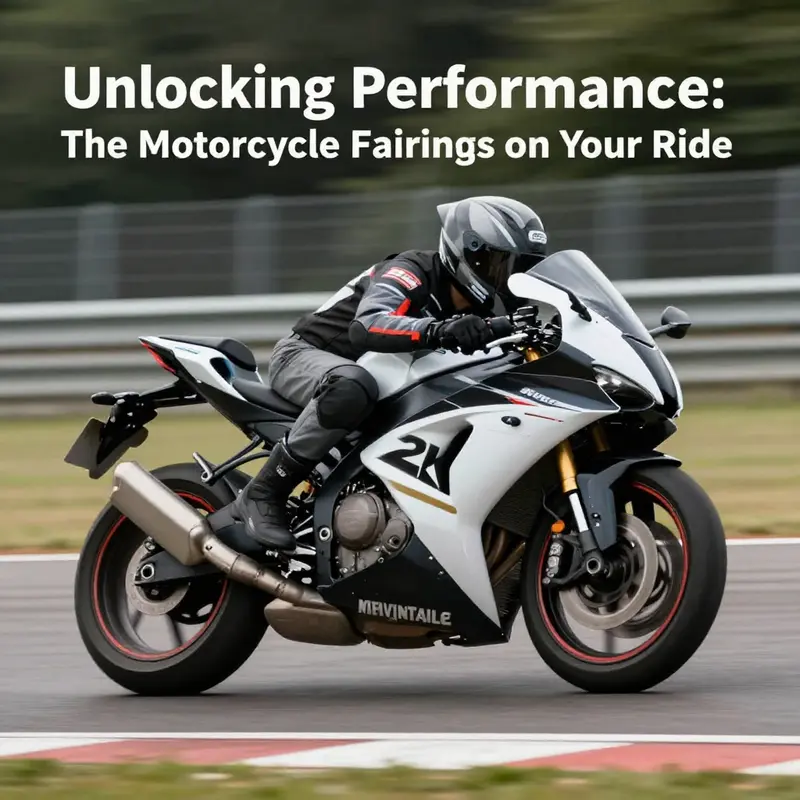
The rider’s experience at speed is shaped by how air interacts with the bike. A 12k carbon fairing is not just a shell but a designed flow surface. It aims to minimize drag, guide air around the rider, and keep the engine cooler on the track or open road. The 12k designation refers to the carbon fiber tow count in the laminate, balancing weight, stiffness, and impact resistance. A stiffer, lighter shell helps preserve the intended airflow channels and the rider’s perceived geometry at the bar.
Full fairings offer the greatest wind control and protection, while half or modular configurations can reduce weight and improve service access. In practice, designers often tailor a hybrid approach that leverages the best of both worlds for a given motorcycle and riding style. The result is a system that translates aerodynamic theory into tangible benefits: crisper turn-in, steadier high-speed stability, and a cooler, more comfortable rider.
Beyond physics, the fairing becomes a canvas for personal expression. Riders select weave patterns, finishes, and textures to signal intent or align with a brand or aesthetic. Catalogs and fitment data help buyers compare options, but the ultimate test is feel: the surface should disappear at speed, leaving the rider with a sense of connection and control. External references and ongoing developments in fairing kits provide broader context without dictating every choice; at the end of the day, the goal remains the same: a coherent balance of aero efficiency, protection, and identity.
Carbon, Cost, and Craft: The Economic Anatomy of Ultra-Premium Motorcycle Fairings

The language of motorcycle performance has long been spoken in horsepower, torque, and rider ergonomics. Yet a quieter dialect underpins a rider’s experience: the language of fairings. These sculpted shells, which slice through the air and cradle the rider, carry more than aesthetic appeal. They embody decisions about materials, manufacturing discipline, aerodynamic nuance, and long horizons of market demand. When a fairing enters the realm of extreme pricing—think numbers that ventures into the six-figure realm for a few rare pieces—it is not merely a cost calculation. It is a complex negotiation among engineering ambition, artisanal craft, supply-chain risk, and the enduring human appetite for performance, exclusivity, and storytelling through form. In this chapter, we trace the economic anatomy of ultra-premium motorcycle fairings, where carbon fiber and clever electronics intersect with bespoke service models, and where a single component can become a flagship statement for a brand or métier without shouting from the rooftops.
To begin with, the most conspicuous driver of value is material and process choice. Carbon fiber, often paired with advanced resins and precision tooling, remains the primary pathway to a fairing with lightness, stiffness, and a surface finish that can rival aviation components. The raw material itself commands a premium, and so does the downstream choreography: layup schedules that require meticulous planning, controlled environments that minimize microcracking, and autoclave curing that depends on exact temperature and pressure curves. Each of these steps adds cost, but more importantly, adds predictability. In high-performance applications, predictability translates into repeatability of performance metrics—drag coefficients that remain stable across multiple climate cycles, impact resistance profiles that protect the rider, and a finish that ages gracefully under the sun and the wind.
But material choice is only part of the story. The fairing is a product of engineering intent that marries aerodynamics with rider safety and system integration. In the most expensive segments, fairings are not just shells; they are active components in a vehicle’s sensing infrastructure. Designers imagine, test, and refine shapes that manage boundary layers, minimize pressure drag, and create stable pressure distributions around complex rider poses. These efforts demand computational fluid dynamics, wind-tunnel validation, and iterative prototyping—an investment far beyond what mass-market components require. When a design pushes the envelope—perhaps rethinking air channels for cooling, integrating lightweight LED arrays into the surface, or accommodating head-up display visors—the development cycle lengthens and the cost-to-performance ratio shifts upward. The result is a premium product that offers tangible aerodynamic comfort and measurable efficiency, alongside the intangible thrill of seeing a form evolve to match the rider’s aspirations.
The economics of customization also loom large. Ultra-premium fairings often arrive with bespoke options—from surface finishes, pigment engineering, to integrated electronics layouts. Each bespoke decision multiplies production steps: tooling adjustments, proprietary fixtures, and quality-control checks tailored to a one-off order or limited run. In consumer electronics or automotive subsegments, customization can be commoditized through modular subassemblies. In this space, however, customization is frequently labor-intensive, demanding skilled artisans who can interpret a customer brief into precise curvatures, radii, and pocket geometries. The labor cost is not merely the time spent on a shop floor but the accumulation of expertise accumulated over years of practice—an asset that cannot be easily replicated by automation alone. The upshot is a pricing envelope that scales with time, skill, and the degree to which the customer values a unique silhouette and the story it tells.
The role of technology in justifying price cannot be overstated. High-end fairings increasingly embed a spectrum of smart features—lightweight LED ecosystems, integrated sensors, or micro-interfaces that maintain a minimal electrical footprint while delivering enhanced rider feedback. The convergence of digitization and composite fabrication opens doors to features once considered science fiction in motorcycle design. Imagine a fairing that communicates with the bike’s onboard systems to modulate aerodynamic behavior based on speed, angle of attack, or even ambient weather. Or a surface that projects diagnostic information, enhancing the rider’s situational awareness without a surge of instrument clutter. Each of these envisioned features requires robust hardware, reliable software, and a framework for ongoing support—elements that compound the total cost but also expand the product’s lifecycle value. In markets where riders prize technological storytelling as much as raw performance, such features become strong drivers of willingness to pay.
From a market perspective, the existence of ultra-premium fairings reflects a broader psychology of craftsmanship and exclusivity. The expansion of the motorcycle fairing market, projected to grow at a robust pace over the coming years, suggests that more riders are seeking not just a protective shell but an embodiment of their personal ideals. Yet, this growth is not uniform across the entire market. It remains a small, highly discerning segment where a few buyers—often with deep pockets and a taste for bespoke engineering—drive demand. For manufacturers, this creates a dual strategy. On one hand, there is a necessity to innovate and invest in capabilities that can sustain premium lines—materials science, precision manufacturing, and a brand narrative that can justify premium pricing. On the other hand, there is a broader market whose need is for modular, affordable, and reliable components that can be produced at scale. The tension between these two lanes—premium flagship offerings and modular mass-market components—shapes corporate roadmaps, supply-chain partnerships, and investment priorities.
It is instructive to consider the risk-reward calculus from the producer’s perspective. A twelve-thousand-dollar fairing is not a typical breakout product. It sits in a niche where the customer’s willingness to pay hinges on a unique combination of performance, aesthetics, and the social signaling value of ownership. The premium is often reinforced by exceptional after-sales service: bespoke fitting sessions, extended warranties tailored to the material system, and a long-term commitment to honor the integrity of the component through replacements and repairs. When a client commits to such a product, the supplier earns more than a single sale; they gain a long-tail relationship anchored in trust and the assurance that the product will remain relevant as technology evolves. This dynamic can transform a one-off purchase into a durable revenue stream if the supplier has structured aftercare, updates, and recertification processes that preserve the component’s integrity over time.
The consumer side of the equation reveals a nuanced calculus about value and resale. Ultra-premium fairings tend to preserve value not solely because of material quality but because they symbolize a convergence of craftsmanship and performance philosophy. Yet this value is often context-specific. The resale market for such components can be limited by compatibility constraints, the lifecycle stage of the bike, and the availability of supporting services. A buyer who seeks a used premium fairing must evaluate not only cosmetic wear but also the chain of custody: is the underlying carbon layup still pristine, has the adhesive system maintained its integrity, and can the integration ecosystem be maintained without access to exclusive tooling? The risk-and-reward profile here is asymmetric. High-end components may retain a premium for a certain window, but as with all bespoke or limited-run items, the pool of potential buyers narrows with time. For a designer-end consumer, the experience value—the impression of owning something rare and exquisitely engineered—can overshadow the pragmatic calculation of future liquidity.
The manufacturing ecosystem behind ultra-premium fairings reveals parallels with other high-performance, low-volume domains. Suppliers push the limits of composite tooling, resin chemistry, and surface finishing to coax a flawless exterior that remains durable in real-world riding conditions. The supply chain for such components requires stable access to premium raw materials and highly skilled labor pools. It also benefits from structured collaborations with research institutions or private labs that can validate performance claims through reproducible tests. In this context, a premium fairing becomes not only a product but a platform for ongoing innovation and learning. The investor or allocator in this space often contends with long lead times, cautious demand forecasting, and a strategic focus on protecting intellectual property while seeking collaborative breakthroughs that can be scaled across a family of products without diluting the brand’s prestige.
Integral to this discussion is the interplay between sustainability and luxury. Contemporary consumer sentiment increasingly weighs the environmental footprint of high-performance components. Carbon fiber production, energy-intensive curing processes, and end-of-life disposal challenges are part of a broader conversation about responsibility and stewardship. This is not a contradiction to premium engineering; it is a call to align material science, manufacturing methods, and lifecycle thinking. Some manufacturers respond by exploring recycled or bio-based resin systems, optimizing layup patterns to minimize waste, and designing for disassembly so components can be refurbished or repurposed. The most forward-thinking premium lines treat sustainability not as a constraint but as a dimension of value, passing along the benefits to customers who view responsible stewardship as part of the premium experience. In the end, the highest price point for a fairing is justified not only by performance or aesthetics but by the story of care woven into its creation and maintenance.
Within the wider ecosystem, brand storytelling plays a central role. A successful ultra-premium line communicates through its design language, its tactile finishing, and the clarity of its engineering claims. The narrative invites the rider to imagine a future where every ride confirms a choice—against compromise, against the easy path, toward a vision of riding as craft. This storytelling is reinforced by service design: a seamless fitting experience, precise compatibility with the bike’s geometry, and a transparent path for customization decisions that respects both the customer’s time and budget. The consilience of design philosophy, material science, and customer experience is what elevates a fairing from a mere component to a cultural artifact within the riding community.
For readers seeking practical touchpoints on how premium components are curated and offered within real markets, the landscape is illuminated by the way suppliers frame selection, trade-offs, and aftercare. A well-curated catalog often balances standard colorways and finishes with a pipeline of bespoke options, enabling a degree of personalization without overwhelming production logistics. This balance is a delicate one: it requires disciplined configuration management, clear pricing bands, and a robust feedback loop with customers to identify which features matter most when the price escalates. The ultimate aim is to create a premium experience that feels exclusive but still accessible in essence—the ability to claim a unique identity on the road while enjoying reliable performance, strong protection, and a harmonious interface with the rest of the motorcycle’s systems.
As part of the broader discourse on high-end fairings, it is helpful to glance at how practitioners communicate value beyond price. The finest examples are those that reduce the rider’s cognitive load: intuitive fitting, predictable performance, and a surface that communicates quality at a glance. The tactile feel of a flawless carbon surface, the quiet confidence of a snug fit around the fairing’s fasteners, and the sense that each edge has been carefully rounded to minimize wind noise—all these details accumulate into a perception of value that justifies significant investment. This is not nostalgia masquerading as premium; it is a forward-looking promise that the rider is connected to a lineage of mastery and a future of iterative refinement. When buyers attest to a “once-in-a-bike’s-lifetime” fitment, they are often referring to an experience that blends engineering rigor with artistic intuition, a combination capable of sustaining demand in a high-stakes, high-cost market segment.
The internal ecosystem supporting such premium offerings—design studios, fabrication labs, and control rooms where digital twins harvest insights from simulated tests—forms a living ecosystem. It is in these spaces that the economics of fairings become tangible: costs are allocated across both product development and aftercare, while returns accrue through improved rider satisfaction, reputation, and the potential to scale refinements across a limited portfolio. In the end, ultra-premium fairings articulate a proposition that is less about merely reducing drag and more about enabling a rider’s personal narrative—one where performance, aesthetics, and responsibility are not mutually exclusive but symbiotic.
For readers who want to explore the spectrum of options while staying rooted in credible sources of inspiration, there is value in exploring established catalogs that emphasize high-quality, performance-oriented components. For an accessible reference to a broader range of genuine, purpose-built options that align with the premium end of the market, consider exploring the Honda fairings collection offered by reputable aftermarket and OEM-integrated suppliers. This exemplar demonstrates how a well-curated range can balance tradition with innovation while preserving a link to the practical realities of fitment and maintenance. Honda fairings at Summit Fairings
In closing, the economics of ultra-premium motorcycle fairings hinge on a triad: material excellence, disciplined engineering, and a premium service proposition that deepens customer relationships. The price tag, stretching into the higher echelons of the market, reflects not only the tangible attributes of carbon fiber, refined finishing, and integration potential but also the intangible gains of exclusivity, storytelling, and enduring craftsmanship. As the market evolves, these products will continue to attract a small but highly motivated cohort of riders who value performance as a holistic experience—where every gram of weight, every curve of a surface, and every line of code contributes to a singular journey on two wheels. The chapter of premium fairings is not a solitary anecdote about cost; it is a case study in how innovation, artistry, and consumer aspiration converge to redefine what a motorcycle’s face can convey to the world.
External resource for further reading: https://www.grandviewresearch.com/industry-analysis/motorcycle-fairing-market
null
null
Final thoughts
The significance of 12k motorcycle fairings extends beyond mere aesthetics; they represent a blend of performance, strategic business advantages, and market potential. By understanding the intricate material compositions and their performance enhancements, business owners can make informed proposals that resonate with passionate riders. Additionally, grasping the economic implications and staying attuned to market trends ensures a competitive edge in this dynamic industry. Investing in quality fairings transforms not only the motorcycle’s performance but also aligns with broader business objectives. It’s a robust opportunity waiting to be harnessed.