
3-wheel motorcycles are increasingly favored for their unique blend of style and functionality. A key component of these vehicles is the fairing, which not only enhances visual appeal but also impacts performance and safety. In this exploration of 3-wheel motorcycle fairings, we delve into three pivotal areas: the materials and design principles that ensure durability and aesthetics, the aerodynamic features and their significance in performance, and the regulatory standards that manufacturers must meet. Business owners will find valuable insights on how these elements come together to offer both consumer satisfaction and compliance in a competitive market.
Beyond the Sweep: Material Intelligence and Integrated Design in 3-Wheel Fairings
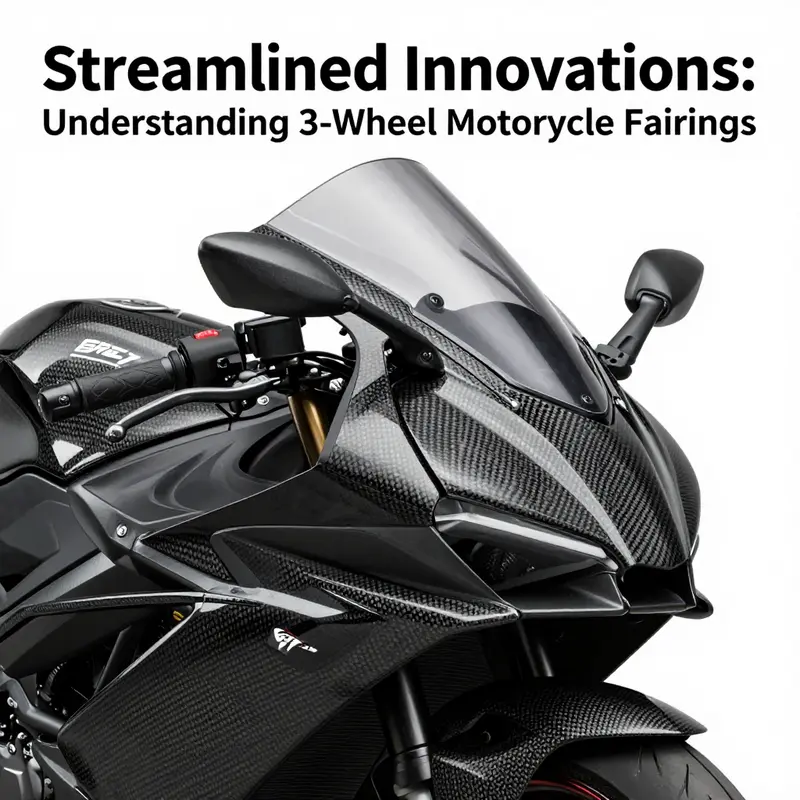
The fairing is often the first thing you notice on a three-wheel motorcycle, but its impact runs far deeper than looks. In a vehicle that relies on stability, wind management, and rider comfort to unlock its potential, the fairing functions as a core system component. It sets the tone for how the bike interacts with air, weather, and road. It shapes the rider’s experience from the moment the engine wakes to the moment the trip ends. To appreciate its role fully, one must understand how material science and architectural design converge in the three-wheel context, where weight, stiffness, and aerodynamics must all harmonize with the unique dynamics of a vehicle that balances on three points rather than two. The result is a living interface between man and machine, a shell that protects, guides, and communicates with the environment as surely as the chassis does.
Material selection is the starting point of this integration. In most three-wheel platforms, the bulk of the exterior shell is molded from ABS, a thermoplastic renowned for its balance of toughness, formability, and resilience. ABS combines a robust impact resistance with good dimensional stability, which is essential when creating a seamless, aerodynamically efficient shape. The material’s workability is not merely a comfort to the factory floor; it translates into a broader design language. Complex, sweeping contours that minimize drag can be realized without resorting to exotic processes or prohibitive tooling costs. ABS surfaces also respond well to post-mold coatings and texturing, enabling designers to achieve the matte, satin, or gloss finishes that help the fairing resist glare and wear while maintaining a pristine appearance through countless miles of exposure to sun, rain, and road grime.
Yet ABS is not the exclusive domain of every three-wheeler. For high-performance or niche builds, other plastics enter the conversation. Polycarbonate brings exceptional impact strength to the table, a valuable attribute when riders demand heightened protection in the event of a collision or a rough, debris-filled environment. PC, however, has a higher optical sensitivity and cost, which makes it a choice for models where visibility through the material—whether for a clear or lightly tinted panel—is prioritized, and where the risk profile justifies the premium. PETG offers a middle ground: good formability, decent strength, and easier processing for lower-volume production or prototype runs. It’s a practical option when the emphasis is on rapid iteration and consistent results across varied geometries. Each material carries a distinct set of trade-offs, and the final choice is a reflection not only of the target market but also of the logistical realities behind production, serviceability, and long-term maintenance.
Manufacturing processes map closely to these material choices. ABS parts are typically produced through injection molding for high-volume applications, where tight tolerances and consistent wall thickness are essential. The precision injection process allows designers to preserve delicate aerodynamic features—sharp edges, thin lips, and subtle micro-refinements—that optimize flow and reduce vortices. For more bespoke or small-batch scenarios, thermoforming or vacuum forming provides a viable alternative. These methods enable large, expansive panels with a smoother, uniform surface. The trade-off is that more complex, multi-curved geometries may require more labor-intensive tooling or additional bonding steps to achieve the same level of rigidity and aerodynamics envisioned in the initial concept.
Design-wise, the fairing is more than a single sheet. It is often a composite architecture that coordinates with windshields, air intakes, vent ducts, and mirror mounts. This integration is particularly important on three-wheel platforms where the rider’s field of view and the bike’s stability envelope are tightly coupled. A well-integrated windscreen can dramatically reduce fatigue on long rides by deflecting the brunt of wind pressure away from the rider’s chest and helmet. The fairing’s front contour shapes the pressure field ahead of the rider, guiding air smoothly over the surface and around the seating area. Internal channels may siphon off heat or channel cooling airflow toward components that demand it, adding a layer of thermal management that is often invisible to the naked eye but essential for reliability in varying climates. When the design calls for lighting and signaling, the fairing becomes a home for LED modules and reflectors, engineered into the shell so that illumination remains evenly distributed while preserving the sleek massing of the exterior. These decisions are not cosmetic; they directly affect road visibility, electrical reliability, and the bike’s overall energy budget.
Another realm where design and materials intersect is in structural rigidity. A three-wheeled configuration can present unique vibration modes and torsional demands because the contact footprint with the ground differs from two-wheeled motorcycles. To address this, designers employ internal ribs, webs, and sometimes double-wall constructions that add stiffness where the panel would otherwise flex under gusts or road imperfections. The result is a fairing that maintains its profile at speed, resisting flutter and resonance that could undermine aerodynamics or cause distress over time. The internal lattice may be invisible to riders but is critical in preserving alignment between the fairing and the underlying chassis. The choice of wall thickness is a careful balancing act: thick walls add stiffness but increase weight and cost; thin walls save mass and expense but demand greater precision in mold design and quality control. In three-wheel applications, where stability margins can be narrower at certain speeds or on particular curves, the integrity of the fairing’s structure can translate into measurable differences in steering feel, wind handling, and fatigue levels for both rider and passenger.
Surface treatment and finishing complete the material story. A fairing in service faces a broad spectrum of conditions: ultraviolet exposure, rainwater with mineral content, temperature swings, and grit from road travel. The surface must resist yellowing, chalking, and micro-scratches that degrade both appearance and performance. Manufacturers apply protective coatings such as UV-stabilized clear coats or anti-scratch layers to preserve gloss and color. Matte textures or specialty coatings are often chosen to minimize glare, reduce the appearance of defects, and hide minor abrasions that accumulate during daily use. Color-matching across panels remains a design challenge, especially when a bike’s fairings must harmonize with a windshield, seat, and body panels that may be sourced from different production lines or suppliers. Achieving a cohesive finish requires precise color formulation, controlled aging tests, and a disciplined process for repainting or re-finishing after maintenance or accidental damage.
The environmental footprint of fairing materials is a practical concern that grows in importance as manufacturers extend the lifecycle of their products. Lightweight plastics contribute to reduced fuel consumption by lowering the curb weight; however, the end-of-life story for these components matters as well. Recyclability, reprocessability, and the ability to repair or remanufacture fairings influence decisions about resins, fillers, and bonding agents. The trend toward modular assembly—where fairings can be replaced or upgraded without dismantling the entire body—also informs material choices. This modular mindset aligns with a service industry that emphasizes shorter downtime and easier on-site customization, a capability increasingly important for riders who customize their three-wheel machines for touring, sport riding, or urban commuting.
Quality and safety considerations extend beyond the material and form. The fairing must comply with a spectrum of regulatory and market standards that vary by region and application. Formal manufacturing controls—ranging from raw material testing and in-process inspection to final component testing—are standard practice in legitimate production environments. ISO quality management systems provide a framework for consistent processes, while product-specific standards may demand particular fire-retardant properties, bond strength, or impact resistance for critical sections of the shell. Certification marks such as regional ECE or other regional approvals might surface on the finished product or its documentation, ensuring that the fairing does not introduce hazards or interoperability issues with lighting, sensors, or braking systems. In practice, these certifications translate into traceability, procedural audits, and rigorous testing protocols that help guarantee reliability across a global supply chain. In turn, riders gain confidence that the aftermarket and OEM fairings they invest in will perform consistently, even after exposure to long journeys, harsh climates, or routine maintenance scenarios.
For riders and builders who want to personalize their machines, the material and design conversation extends into customization ecosystems. Aftermarket suppliers offer a broad palette of panels, textures, and finishes to match a given model’s lines or to reimagine the bike’s character entirely. This customization culture has its own material challenges: ensuring compatibility with existing mounting points, confirming that the new panels retain aerodynamic integrity, and validating the fitment with windshields and mirrors. An illustrative approach in this context is the way the community tends to structure offerings around model families, with compatible lines that preserve the original’s silhouette while allowing for stylistic shifts. It is here that a catalog such as a Honda fairings collection can serve as a navigational anchor for builders seeking cohesive aesthetics and proven fitment, while still pushing the envelope on color, texture, or added features. For riders who value both performance and appearance, the ability to swap panels without a full disassembly reduces downtime and opens pathways to experimentation with minimal risk. The practicalities of installation—fasteners, gaskets, bonding agents, and gasket thickness—become as important as the panels themselves, and the entire experience hinges on a reliable intersection of engineering precision and creative expression. A well-designed fairing system must accommodate inevitable micro-movements between panel edges and mounting points, maintaining a smooth exterior without gaps that would compromise aerodynamics or wind noise suppression.
The broader ecosystem around fairings includes the dialogues of weight management and lifecycle economics. Each gram saved in the outer shell reduces inertia and strain on the drivetrain and suspension, especially when a three-wheeler is loaded for touring or carrying a passenger for extended periods. Yet every weight-minded decision must be balanced against durability and impact resistance. A thinner panel might cut a few grams but could demand a more robust internal ribbing or a more resilient bonding regime to maintain stiffness and shape through temperature shifts and road vibrations. In practice, the design team must weigh performance targets against manufacturing realities and serviceability. A fairing is an ongoing system, not a static shell. It must respond to evolving rider expectations, regulatory landscapes, and advances in materials science. The ideal solution is a carefully engineered blend of material science, precise manufacturing, and adaptive design philosophy that keeps the three-wheel rider safe, comfortable, and visually compelling on every mile of the journey.
Internal links within the broader content ecosystem can aid readers who want to explore related configurations and model families. For example, a broad range of aftermarket options exist within dedicated collections that organize fairings by manufacturer family and model through a structured catalog. Riders and builders can explore such options to identify compatible panels that preserve correct fitment with windshields and mirrors while offering unique styling cues. A practical entry point for those delving into customization is a designated collection page that aggregates compatible fairings, ensuring that fitment guarantees are aligned with the buyer’s vehicle. This approach minimizes guesswork and helps maintain the integrity of aerodynamics and mounting interfaces across the lifecycle of the build.
From the perspective of design intent, the fairing’s material strategy is inseparable from the riding experience. The shell must be strong yet light, streamlined yet capable of housing essential systems, and visually cohesive with the vehicle’s overall silhouette. It must endure years of exposure and daily use without sacrificing function or form. It must accommodate the rider’s needs for weather protection, comfort, and visibility, as well as the machine’s requirements for stability and efficient power delivery. The chapter’s examination of material choices and integrated design aims to illuminate how these functional decisions ripple through every mile traveled, affecting energy efficiency, ride quality, maintenance intervals, and even resale value.
In the end, the 3-wheel fairing is a narrative of material intelligence meeting architectural thinking. ABS underpins the practical, everyday reliability that riders depend on. Polycarbonate or PETG extend the design envelope for specialized builds where impact resistance, clarity, or rapid prototyping matter most. The manufacturing methods—whether injection molding or forming processes—translate design intent into tangible geometry, while internal reinforcements and coatings preserve structural integrity and aesthetics across weather and time. All of this sits atop a foundation of regulatory conformity and a serviceable ecosystem that supports customization without compromising safety or performance. For riders, this translates into a riding experience that feels inevitable, as if the fairing itself is a natural extension of the bike’s chassis and the rider’s expectations. It is a reminder that good design does not merely cover what is seen; it orchestrates how the machine breathes, how it cuts through wind, and how it remains loyal to the rider’s ambitions after thousands of miles.
As readers explore the broader landscape, they may encounter a spectrum of model-specific variations, but the underlying principles remain constant. The fairing’s job is to weave together aerodynamic efficiency, structural resilience, and aesthetic coherence into a single, practical package. This is where the material choices and the manufacturing decisions described above converge into a coherent system—one that supports the three-wheel platform’s distinctive balance, comfort, and confidence. A well-executed fairing design respects the rider’s intent and the machine’s physics, translating sophisticated engineering into a seamless, dependable riding experience. For those curious about how the world of fairings is organized, and how the supply chains, materials science, and design processes interact to bring these shells to life, the journey through this chapter reveals that every panel is a translation of engineering into motion, a translation that keeps the rider protected, the bike efficient, and the road ahead inviting.
For readers seeking further reading on the broader materials and design principles shaping motorcycle fairings, a comprehensive resource explains material options and manufacturing processes in accessible terms. A good starting point for understanding ABS, PC, and PETG applications, along with real-world design examples, can be found in industry articles that detail how these materials behave in automotive and motorcycle applications. Additionally, readers who want to explore model-specific customization options and fitment considerations can consult a curated catalog of aftermarket fairings that groups compatible panels by manufacturer families, helping ensure that aesthetic goals align with structural and aerodynamic realities. For those who prefer to explore model lineups and legitimate fitment guidance, an internal reference point to a respected catalog can be a practical shortcut to identifying compatible pieces while preserving the vehicle’s original geometry and performance characteristics. This approach preserves the delicate balance between personal expression and engineering integrity that defines modern three-wheel fairings.
External reading: Motorcycle Fairings Explained. https://www.motorcycle.com/motorcycle-fairings-explained/
Internal resource for model-family compatibility and fitment considerations can be found in curated catalog pages dedicated to specific manufacturer lineups. For instance, a dedicated catalog of Honda fairings offers a structured pathway to explore panels that align with the bike’s original geometry, integrating smoothly with windshields, vents, and mirrors while supporting the rider’s visual and tactile preferences. Honda fairings collection provides a practical gateway to understanding how aftermarket panels can maintain, and even enhance, the machine’s aerodynamic envelope and aesthetic coherence without compromising safety or performance.
With the material and design principles laid out, riders and builders can approach fairing projects with a deeper sense of how the outer shell is more than a cosmetic cover. It is a carefully engineered interface where form meets function, where every curve serves a purpose, and where material choices ripple through weight, stiffness, heat management, and long-term durability. The three-wheel silhouette thus becomes a canvas and a chassis at once, inviting a dialogue between rider expectations, engineering realities, and the evolving capabilities of plastics technology. The result is a riding experience that feels grounded in sound science and empowered by thoughtful design, a fusion that makes the fairing not just an accessory, but a live, evolving partner on the road.
Streamlined Front Fairings for 3-Wheel Motorcycles: Aerodynamics and Performance
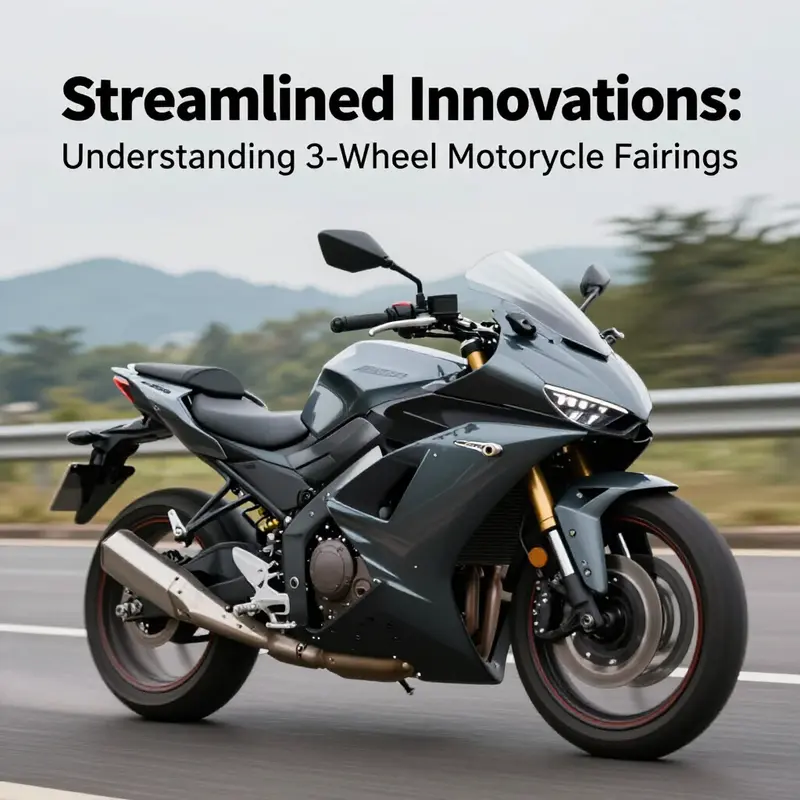
The front fairing on a three-wheel motorcycle is a critical aerodynamic element that sets the tone for efficiency, stability, and rider comfort. By shaping the incoming airstream, the fairing reduces drag, controls the wake, and helps shield the rider from buffeting at highway speeds. In three-wheel configurations, where the front bodywork directly interfaces with crosswinds and the rear geometry, even modest contour refinements can yield meaningful gains in performance and ride quality.
Material choice for front fairings typically emphasizes high-strength composites such as fiberglass or carbon fiber, offering a favorable stiffness-to-weight ratio and durability. A smooth exterior surface and careful seam management minimize microscopic roughness that could trigger premature flow separation. Precision in molding, finishing, and assembly preserves the intended aerodynamic envelope from prototype to production, ensuring that the wind tunnel expectations translate to real-world riding conditions.
The integration with windshields, vents, and cockpit geometry requires a holistic approach. The front shape must blend with the windshield to avoid buffeting while maintaining clear visibility and adequate cooling. Efficient pathways for cooling air and well-placed vents can improve engine performance without compromising smooth airflow. In short, the front fairing on a three-wheel motorcycle is not a cosmetic add-on; it is an engineered primary interface with air that influences drag, stability, cooling, and rider comfort across the ride spectrum from urban commuting to long-distance touring.
Regulatory Winds: The Safety and Compliance Odyssey of Three-Wheel Motorcycle Fairings
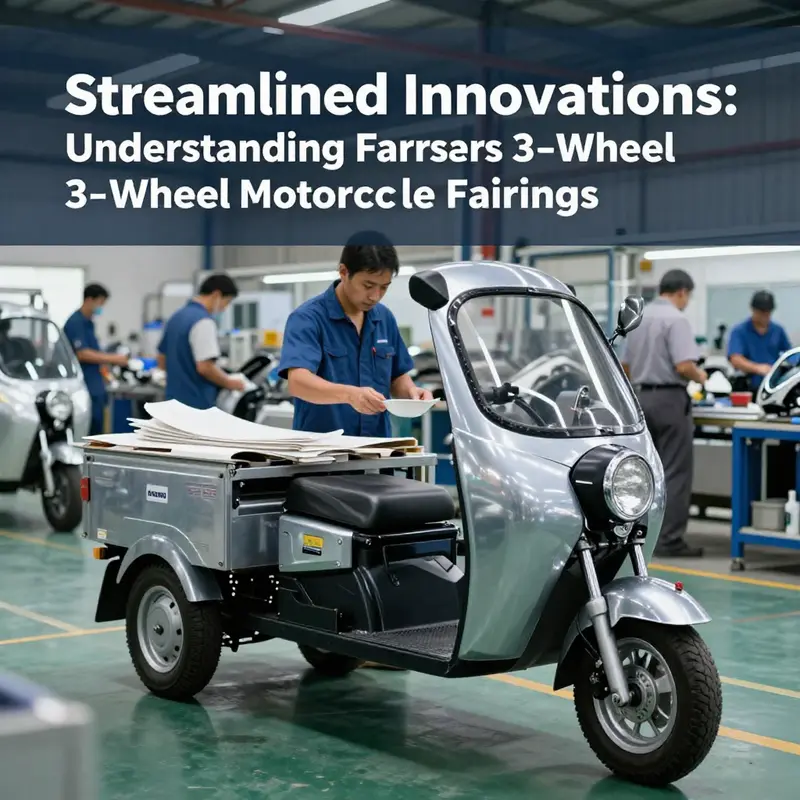
The fairing is more than a protective shell; it is a tested path to safety, aerodynamics, and compliant performance on a three-wheel chassis. In many markets, the fairing must contribute to crashworthiness, visibility, and stability while complying with a web of standards that touch materials, joints, and environmental durability.
In three-wheel designs, regulatory focus extends from the rider’s line of sight to the vehicle’s center of gravity, requiring that windshields, glazing, and surface finishes withstand impact and aging without introducing hazards or blind spots. Material choices—ABS, polycarbonate, and fiberglass composites—are weighed not only for weight and cost but also for how they respond to UV exposure, temperature cycles, and friction with rain and salt.
Engineers validate performance through wind tunnel and CFD studies linked to real-world testing for crosswinds, lean angles, and gusts. Regulators often require that fairings do not create dangerous moments or unpredictable steering inputs under simulated adverse conditions. Environmental aging tests, weathering cycles, and adhesion and seal performance ensure panels stay attached and clear under years of service.
A design or production decision will touch conformity of production, documentation, and traceability. SKD and CKD practices influence how components are documented, how tests are performed, and how the final product is assessed by authorities in different markets. Certification plans become living documents that evolve with new rules and market needs.
Leading markets harmonize with global schemes such as ISO quality management principles and regional approvals. Manufacturers must show a coherent link between material qualifications, test evidence, and the installation of fairings with the vehicle’s lighting, controls, and safety systems. The goal is a single, auditable narrative: the fairing improves aerodynamics and protection while staying verifiably safe across climates, velocities, and road conditions.
For practitioners, practical guidance centers on starting compliance thinking early. From concept reviews to supplier qualification to test planning, regulatory alignment should be part of the design brief, not an afterthought. The result is a product that not only performs at speed but travels across borders with demonstrable safety and reliability.
External references and country-specific rules exist to support this framework, but the core message remains: a three-wheel fairing must be a robust, certifiable part of the vehicle system that helps riders stay visible, protected, and in control, wherever they ride.
Final thoughts
The significance of 3-wheel motorcycle fairings cannot be overstated for both consumers and manufacturers. Understanding the optimal materials and design principles leads to enhanced durability and aesthetics. Aerodynamics directly influences performance, ensuring that motorcycles not only look good but function effectively on the road. Finally, adherence to regulatory standards is crucial for compliance and market acceptance. By harnessing these insights, business owners can better position themselves in the competitive landscape of motorcycle sales and service while delivering products that meet consumer expectations.