
Quality motorcycle fairings are essential for enhancing both the performance and visual appeal of motorcycles. Crafted from advanced materials and produced through state-of-the-art manufacturing processes, these components can significantly influence factors such as aerodynamics, weight distribution, and durability. This article will explore the materials and manufacturing processes behind the best quality motorcycle fairings, highlight key regions and suppliers renowned for their craftsmanship, and discuss the impact of these components on overall motorcycle performance and aesthetics. Additionally, we will look forward to the innovations and sustainability trends shaping the future of motorcycle fairings, providing a comprehensive overview for business owners looking to make informed sourcing decisions.
From Fiber to Flight: How Materials and Manufacturing Shape the Best Quality Motorcycle Fairings
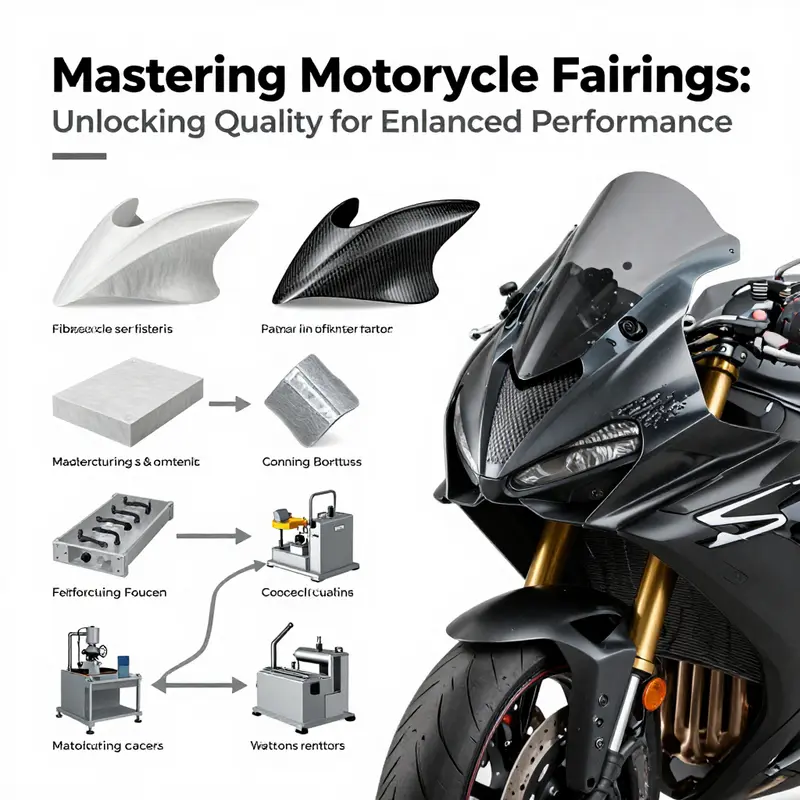
The best quality motorcycle fairings emerge from deliberate choices made long before a single piece leaves the mold. They are born at the intersection of material science, precision engineering, and disciplined manufacturing. In high-performance riding, the fairings do more than cloak a motorcycle; they manage airflow, protect the rider, and contribute to stability and efficiency at speed. The top tier uses a carefully chosen stack of materials and a manufacturing choreography that minimizes weight without compromising strength, all while delivering a finish that resists the sun, rain, and the rigors of daily riding. The shaping of these components begins in regions that host mature supply chains and specialized skill sets. In particular, Zhejiang’s Rui’an and the larger manufacturing clusters in Guangdong stand out as hubs where advanced composite processing, rigorous quality control, and scalable production converge. This regional orchestration helps firms balance performance demands with the realities of mass production, ensuring that premium parts remain accessible in meaningful volumes for performance-oriented riders and OEMs alike.
At the core of any fairing’s performance story is material selection. Fiberglass, carbon fiber, and high-grade polymers such as polycarbonate and ABS blends each offer distinct advantages. Fiberglass provides a robust, stiff structure at a moderate cost and serves as a reliable base for many durable aftermarket and OEM applications. It is often laid up in methods that prioritize layering guides and resin distribution, resulting in predictable strength that translates to reliable impact resistance and fatigue performance. Carbon fiber, with its exceptional strength-to-weight ratio, can noticeably improve handling and fuel efficiency when used strategically in load-bearing sections or in lightweight skin constructions. The allure of carbon fiber is not merely aesthetic; it enhances torsional rigidity and reduces parasitic weight, contributing to a more responsive ride. Yet carbon fiber comes with a premium price, and its value must be weighed against the riding profile, endurance needs, and maintenance expectations of the rider.
ABS and polycarbonate blends occupy another important role. These polymers excel in impact resistance, durability, and cost efficiency, making them the go-to choice for mass-produced fairings and affordable aftermarket options. A well-engineered ABS/polycarbonate skin can absorb energy from bumps and minor impacts while maintaining shape integrity. This balance of toughness and pliability is especially valuable for riders who put mileage on long tours or frequently navigate urban environments where occasional mishaps are more likely. The material choice therefore anchors the fairing’s weight, rigidity, and surface finish—factors that influence both aerodynamics and aesthetics. Material science also informs surface behavior under UV exposure, temperature cycling, and chemical attack from road grime or cleaners. Premium formulations often incorporate UV stabilizers and protective coatings to keep color, gloss, and plastic integrity from fading or embrittling after hundreds of hours in sunlight.
The manufacturing journey amplifies these material decisions. For fiberglass and carbon fiber constructions, hands and machines work in concert. Hand-laying and specialized laying patterns allow technicians to place plies with precision, aligning fibers for optimal stiffness where it matters most. Vacuum bagging compacts the layup, removing excess resin and minimizing voids that could compromise strength. Resin transfer molding, or RTM, takes this a step further by injecting resin into a pre-formed fiber network under controlled pressure. RTM and similar tooling-aware processes produce consistent thickness, improved dimensional accuracy, and more uniform surface finishes—a critical factor when aerodynamic performance hinges on tight tolerances and smooth laminar flow around the bodywork. These methods demand skilled labor, high-quality tooling, and careful cure cycles. The result is a light, stiff shell whose layers work as a single, integrated system rather than a loose assembly of disparate parts.
In contrast, injection-molded ABS or polycarbonate skins belong to a different production philosophy. High-pressure molding excels at repeatability, allowing the mass production of OEM and aftermarket components with tight tolerances and rapid cycle times. The factory floor here thrives on automation, CNC-driven routing, and precision surface finishing that yields consistent fit and a gloss that riders expect for a factory-new appearance. These processes also enable sophisticated edge geometry and compatibility with mounting points, which is essential when a fairing must align with dozens of subcomponents across different models and years. Regardless of the path—hand layup with composites or injection molding—the finish quality, from seam alignment to paintable surfaces, is a direct reflection of process control. The best producers invest in post-make finishing steps: precise sanding sequences, priming, clear-coat application, and controlled curing environments that prevent micro-cracking or color inconsistency.
Quality standards anchor the entire operation. International frameworks such as ISO provide a structure to quantify material provenance, process reliability, and product integrity. Some highly capable suppliers extend beyond standard ISO checks with testing data on specific material compositions, resin systems, laminate configurations, and finished part tolerances. They track impact resistance, environmental aging, and UV stability, documenting how a given fairing behaves under temperature swings, sun exposure, and load during simulated high-speed scenarios. In practice, this means a rider benefits from a fairing whose performance is demonstrable through data rather than promise. The fit must be precise, the surface must hold color and gloss, and the component should stay dimensions-true after aging. The strongest programs couple rigorous internal testing with third-party audits and traceability throughout the supply chain, ensuring that every batch of material can be traced back to its resin recipe, fiber source, and cure history.
Beyond the technical, the regional ecology matters. The Rui’an area in Zhejiang represents a mature ecosystem for technically complex fairings, where reinforced materials and complex geometries meet stringent tolerances. Nearshore Guangdong clusters bring the advantage of vertically integrated facilities that can sustain higher volumes without compromising build integrity, supported by proximity to major export ports for faster delivery to global markets. This combination enables suppliers to offer both high-performance composites and consistently finished, paint-ready skins at scale. For procurement teams, this means a realistic path to marrying performance with availability, especially when the design calls for multi-material skins or specialized surface treatments that would be cost-prohibitive in smaller runs.
In pursuing top-tier results, buyers must look for evidence beyond glossy brochures. They should request real-world data on material composition, specific durability testing results, and evidence of compliance with ISO or SAE standards. A robust supplier program will share material data sheets, process control charts, and outcome measurements from impact tests and accelerated aging tests. It is equally important to assess fitment and finish through tangible samples that demonstrate proper alignment with mounting points, seam quality, and surface flatness. The most capable suppliers also provide benchmarking data—comparisons of different layup sequences, resin systems, or molding methods—so engineers can understand how a change in material stack or process affects weight, stiffness, or thermal performance under rider load. And while the engineering is central, riders will ultimately feel the difference in the ride. A well-tailored fairing can lower drag coefficient, reduce rider fatigue through reduced buffeting, and contribute to a stable ride at highway speeds.
When evaluating options, a strategic approach yields the best long-term value. Conducting supplier audits, requesting multi-batch samples, and performing independent durability checks creates a chain of evidence that a given fairing will behave as claimed under real-world conditions. It is also prudent to demand clear data on compatibility across model years and submodels, since even small changes in mounting geometry can result in fit issues. A capable supplier will also discuss serviceability, including repair options after impact and the availability of replacement components, which matters for riders who push their machines toward the edge where fairings can take the brunt of a mishap. In every case, the best outcomes arise when material science, process discipline, and clear documentation align with the rider’s needs and the motorcycle’s design language.
For readers who want to explore practical, model-aligned options from established channels, consider visiting the Honda fairings collection to observe how a comprehensive catalog presents fitment notes, colorways, and mounting compatibility across years and configurations. The following internal link provides a concrete example of how a supplier organizes compatible parts and communicates technical specifics: Honda fairings collection. This example underscores the importance of transparent data and standardized interfaces in achieving reliable fit and finish across different bike families.
As the market continues to evolve, the most durable and high-performing fairings will emerge not from a single breakthrough material, but from how materials, processes, and quality systems are orchestrated. The best quality fairings reflect a philosophy: design for performance, validate with data, and produce with repeatable precision. In regions where manufacturing ecosystems specialize in composites and scale, riders gain access to components that balance lightness, strength, and longevity. Those who approach sourcing with a disciplined, evidence-backed mindset will find fairings that meet rigorous standards while still delivering the aesthetic and tactile satisfaction that riders value. For detailed sourcing insights into leading Chinese manufacturers, see the Motorcycle Fairing Supplier Guide: Source from Top Chinese Manufacturers. This external resource provides broader context on how suppliers document composition, testing, and certifications that support a high-quality fairing program.
Precision, Pace, and Polymer: How Zhejiang and Guangdong Define the Best Quality Motorcycle Fairings
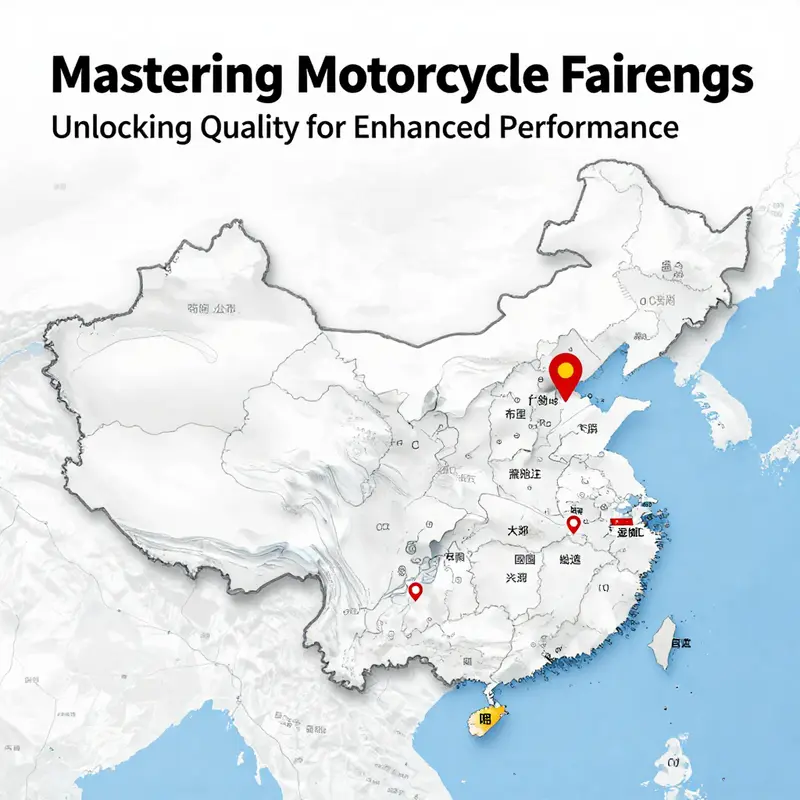
In the world of motorcycle fairings, quality emerges where chemistry, tooling, and process discipline converge. Two Chinese regions—Zhejiang and Guangdong—stand out not as rivals but as complementary forces that together set the standard for high-grade shells. Zhejiang, with Ruian as a focal point, emphasizes precision tooling, wind tunnel driven geometry, and controlled layup processes that deliver tight tolerances and repeatable finishes. Guangdong, anchored by the Pearl River Delta, complements this with scale, vertical integration, and an ecosystem that moves from design to finished part with speed while preserving performance and appearance. The result is a family of fairings that combine aerodynamic efficiency, surface integrity, and durable materials that withstand UV exposure and road grit across thousands of kilometers. Buyers benefit when they can see a transparent material disclosure, test results, and traceable production history that validates consistency across batches. In short, Zhejiang’s engineering discipline and Guangdong’s manufacturing fluency form a mature model for world-class motorcycle fairings.
From Regional Hubs to Global Track Performance: The Shape of the Best-Quality Motorcycle Fairings
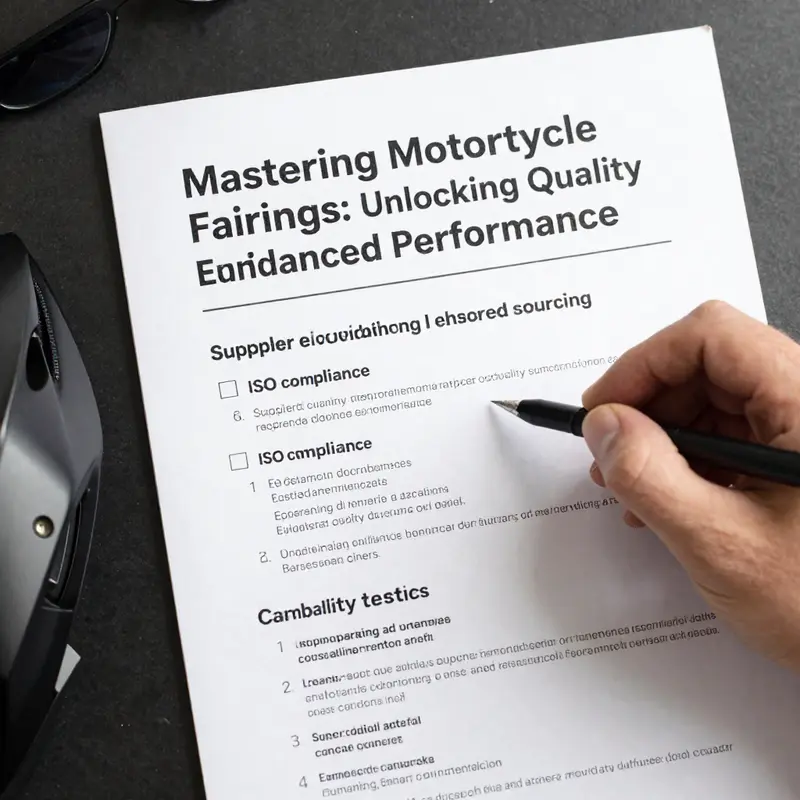
The best-quality motorcycle fairings are not the product of a single mold, but the outcome of a deliberate synthesis between regional manufacturing strengths, material science, and rigorous process control. When a rider slices through air at high speed, the fairing on display is also a record of decisions made long before the first tool touches resin. It begins with places where polymer processing, precision engineering, and integrated supply chains converge, and it ends in a part that resists UV exposure, withstands impact, and maintains dimensional stability under demanding riding conditions. To understand why some fairings stand out, it helps to map the landscape of where they are made and how those regional advantages translate into real-world performance.
In one cluster, the emphasis is on high-volume manufacture paired with sophistication in engineering. Mature injection-molding ecosystems and robust export channels enable consistent build integrity across large runs, driven by tight process controls and scalable automation. Fairings from this hub often feature UV-stable coatings and reinforced thermoplastics designed to stay smooth and color-stable after sun exposure and daily abrasion. The result is a line of parts that can be integrated quickly into multiple frame configurations, delivering reliable fitment when speed to market matters as much as price. For buyers, this means lower risk on mass-market programs and faster fulfillment for distributors who must sustain broad aftermarket coverage.
A different regional emphasis centers on precision engineering and advanced composites. In this hub, complexity drives value. Engineers bring experience with fiberglass and carbon-fiber reinforcements, and layup schedules are paired with resin chemistry to yield panels that combine lightness with torsional stiffness. The tolerances achieved—often sub-tenths of a millimeter—enable aerodynamic performance that shows up in smoother flow, improved stability, and reduced buffeting at higher speeds. In-house mold development accelerates prototyping cycles; a concept can move from CAD to a tested part within days, with first-pass yields close to perfection on critical surfaces. The practical payoff is a family of fairings that withstand sport riding or touring without excessive weight while offering aggressive lines riders seek.
Export-focused clusters round out the landscape by handling compliance, labeling, and logistics for international distributors. The value lies not only in the finished part but in regulatory readiness. By integrating CE- or RoHS-like considerations and coordinating air or sea freight with multilingual documentation, these suppliers shorten time-to-market cycles and reduce distribution friction. The result is a robust pipeline that supports multi-country networks where on-time delivery and traceability matter as much as the product’s surface finish.
Across these regional strengths, a common thread runs through every high-quality part: a deliberate, data-driven approach to supplier evaluation. The most discerning buyers do not rely on price alone; they require evidence of material integrity, rigorous testing, and traceable quality histories. Materials matter as much as the process by which they are formed. Real-world testing—beyond routine factory checks—establishes how a material will endure long UV exposure, temperature cycling, and the impacts of gravel and collisions. Buyers request test reports such as UV exposure tests simulating thousands of hours of sun and spectroscopic analyses that confirm resin content and fiber distribution. In the best cases, the information is part of an ongoing performance dossier: a live view into how a supplier maintains material quality as production scales or as new designs are introduced.
A pivotal question is whether the supplier can consistently hit tight tolerances while maintaining throughput. Sub-0.1 mm tolerances are routinely cited in elite operations, with the understanding that precision demands controlled variables from humidity to resin infusion. Prototyping timelines matter: a window of two weeks or less from concept to a tangible, testable part accelerates development and reduces design drift. The literature and industry practice converge on a benchmark: a proven track record of low defect rates across multiple batches, ideally under 0.5%, with stable performance across runs. Combined with responsive communication—prompt inquiries and clear milestones—the supplier becomes more than a vendor; they become a partner in engineering a product that balances form, function, and reliability.
The strongest suppliers are those that couple in-house capabilities with credible third-party verification. A well-rounded evaluation system requests certified quality management frameworks, material test results, and documented manufacturing performance. Verified factory audits and digital traceability yield higher customer retention: transparency reduces risk, and accountability across the supply chain translates to steadier supply and consistent quality on the line and in the aftermarket. In the context of fairings, where performance translates to rider confidence and product longevity, transparency is essential.
Within this framework, a few supplier profiles consistently emerge as exemplars in published field data. They are defined not by a single achievement but by a pattern: strong performance in composites, precise molding and layup control, adherence to delivery schedules, and the ability to scale without compromise. They show high first-pass yields, on-time delivery, and support for a range of applications from performance-oriented setups to standardized mass-market lines. Their success is as much operational as technical: aligning engineering intent with manufacturing reality, staying ahead of demand while preserving surface integrity.
For sourcing teams, the implications are practical. When OEM-grade performance is required for demanding applications, prioritize suppliers with proven composite expertise and a track record of precision. For broad aftermarket programs that demand scale without sacrificing surface finish, choose partners with strong process control, robust QC systems, and efficient export logistics. For long-term collaborations, emphasize collaborative development—on-site audits, controlled sample evaluation, and a transparent KPI-driven performance dashboard that tracks quality, delivery, and responsiveness over time.
In practice, the recommended action is to triangulate supplier capability with real-world outcomes. Start with a vetted supplier base that shows formal certifications, documented testing, and controlled processes. Validate through small pilot runs or sample batches, ensuring the parts meet fitment and surface expectations before larger commitments. Maintain a performance scoreboard that captures defect rates, delivery reliability, and response times, and use it to drive continuous improvement with partners. This approach aligns with the broader principle that the strongest fairing suppliers marry engineering excellence with disciplined operations and a culture of accountability.
External resource: https://www.alibaba.com/showcase/motorcycle-fairing-supplier-guide
The road to the best fairings is paved not only with innovative materials and aerodynamics but with a rigorous, data-driven approach to sourcing and supplier management. When buyers tighten the loop between design intent and manufacturing discipline, they unlock fairings that perform consistently on the highway as they do in the showroom, reflecting the care taken by regional hubs around the world to craft speed itself.
Between Aerodynamics and Art: The Quiet Power of High‑Quality Motorcycle Fairings
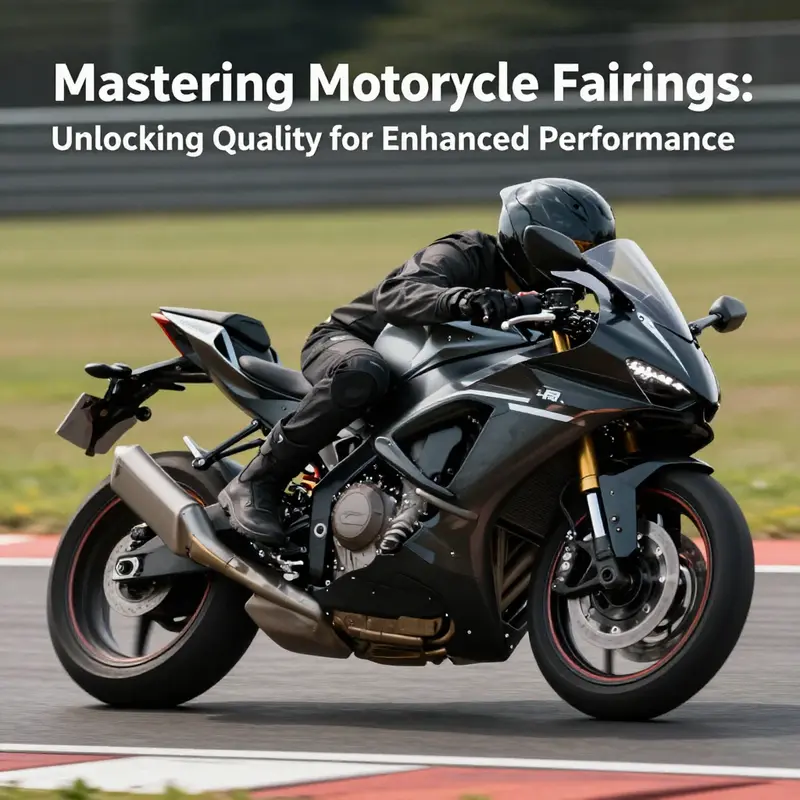
Motorcycle fairings are not mere shells that cover an engine bay; they are the aerodynamic lungs and the visual signature of a machine. The craft behind high‑quality fairings sits at a careful intersection of physics, materials science, and design language. When a rider grips the throttle, the air around the bike becomes a demanding collaborator, whispering in through the joints and edges. The difference between a fairing that simply fits and one that improves stability, reduces fatigue, and elevates form can be as subtle as a fraction of a second saved in lane shifts or as decisive as a change in silence at speed. In this sense, the best fairings embody a blend of engineering precision and aesthetic intent that translates into real, measurable performance and an eye-catching silhouette that communicates purpose even when the machine is at rest.
Where these parts originate matters as much as how they perform. The strongest fairings often emerge from specialized manufacturing hubs in China, where advanced polymer processing, precision engineering, and mature supply chains converge. Among these, Zhejiang Province—Rui’an in particular—stands out as a premier region for producing technically complex fairings that demand tight tolerances and the resilience to endure demanding riding conditions. In these facilities, reinforced materials such as fiberglass and carbon fiber composites are laid into carefully crafted molds, cured under controlled temperatures, and finished with surfaces that resist UV degradation and the inevitable wear from road debris and weather. The result is a skin that can hold a line at high speed, maintain its shape under gusting crosswinds, and still look sharp after thousands of miles of touring or spirited riding. The attention to resin systems, weave integrity, and edge precision in this region speaks to a standard that riders can feel in the bike’s behavior and hear in the absence of rattles or flutter at speed.
Yet quality and scale do not always ride together in one package. For riders who demand both, Guangdong Province—anchored by hubs in Guangzhou and Foshan—offers vertically integrated factories that can produce fairings in large volumes without compromising the build integrity that performance machines require. Proximity to major export ports, such as Nansha and Shekou, translates into swifter delivery times to global markets. This logistical efficiency is not just a matter of convenience; it becomes a competitive advantage because it allows manufacturers to maintain tighter quality control loops, implement rapid sampling, and respond to evolving design requirements with shorter lead times. Across these Chinese regions, suppliers increasingly align their processes with internationally recognized quality systems—ISO, SAE, and equivalent benchmarks—that set the bar for material specification, process control, and traceability. For procurement teams, the value lies not only in a final part but in the data trail that shows which resins, reinforcements, and finishing techniques were used, how they were tested, and how repeatable the results are across manufacturing lots.
Identifying top‑tier suppliers, then, becomes a disciplined exercise in data and process visibility. A robust supplier profile reveals real‑world data on material composition, including resin types, fiber content, and lamination architecture, along with durability testing results under simulated road‑like conditions. It should also demonstrate compliance with ISO or SAE standards and include documented procedures for quality control, incoming material checks, in‑process inspections, and final part verification. A strategic approach centers on supplier audits, sample evaluations, and performance benchmarking. Audits examine the factory floor, the calibration of tools, and the control of environmental conditions that influence curing and layup. Sample evaluations test dimensional accuracy, edge smoothness, and the fidelity of surface finishes under UV exposure and weathering. Benchmarking pits the supplier against defined targets for impact resistance, tensile strength, and weight, ensuring the parts meet the demands of modern sport and touring bikes where efficiency and reliability matter for long rides and high‑speed stability.
From the rider’s seat, the aerodynamics of a full fairing differ strikingly from a half fairing or a lower panel. Full fairings enclose the bike’s front end, shaping the primary flow of air to reduce drag, stabilize the machine at high speeds, and lower rider fatigue by guiding a smoother, more consistent slipstream along the chassis. This translates into marginal gains in fuel efficiency, improved top‑end performance, and steadier handling in crosswinds. Half fairings, while offering less wind protection, reveal the engine’s profile and mechanics, inviting a more intimate connection with the bike’s mechanical soul while preserving meaningful aerodynamic benefits. Lower fairings, tucked beneath the engine and frame, manage underbody flow, diminish turbulence, and shield critical components from debris and weather—contributing to overall efficiency without directly shielding the rider from wind.
The aesthetic dimension of high‑quality fairings cannot be overstated. Premium designs feature sculpted lines that trace the bike’s stance, integrated LED signatures that emphasize form and function, and finishes that elevate a machine into a wearable sculpture. When these design cues harmonize with aggressive ergonomics and precise handling, the result is not just a look but a statement—an artifact that communicates velocity, precision, and care. The best fairings become part of the riding experience, shaping how a machine feels in the hands and how it presents itself to onlookers as it glides through space.
Industry voices emphasize this balance: a truly great motorcycle does not merely go fast; it looks good doing it. This sentiment underscores why riders invest in fairings that meet rigorous performance criteria while delivering an aesthetic that reinforces a rider’s identity. Practically, this means owners should test ride with fairings at a range of speeds to fully appreciate how the geometry, stiffness, and surface finish influence real‑world performance and comfort. The synergy between material quality, engineering precision, and design language defines the pinnacle of motorcycle excellence, where every curve, edge, and attachment point has a purpose, a texture, and a story collected in engineering data, not just in the eye.
From a logistics and procurement perspective, the path to quality fairings also involves practical steps that go beyond the lab. Buyers should seek information about warranty coverage, post‑sales service, and the availability of repair parts—especially for riders who demand long‑distance reliability. The best suppliers provide transparent material data sheets, traceable batch records, and clear repair strategies that keep a bike’s aerodynamics intact after a mishap or routine maintenance. This transparency supports the long lifecycle of a fairing, where performance and aesthetics endure alongside the rider’s evolving needs.
For those exploring sources aligned with these standards, a measured approach is essential. While the global market offers a spectrum of options, the strongest candidates are those that marry technical sophistication with scalable production and a proven track record. A practical way to understand the breadth of options is to view curated collections that emphasize compatibility, fitment accuracy, and design variety. For example, a comprehensive catalog such as the Honda fairings collection demonstrates how a single platform can accommodate multiple model generations while preserving the integrity of the original lines and ensuring reliable mounting interfaces. This kind of resource helps buyers compare profiles, assess fitment cues, and gauge the level of detail that goes into each part—factors that matter when replacing or upgrading a complete fairing package. You can explore such a collection here: Honda fairings collection at Summit Fairings.
The conversation about fairings often circles back to the idea that form and function do not compete; they collaborate. When the best materials, precise manufacturing, and thoughtful design converge, the result is a bodywork system that enhances performance through cleaner aerodynamics, protects crucial components, and elevates the bike’s visual language to a new standard. The rider benefits from improved stability, reduced fatigue, and a vehicle that simply feels more purposeful at speed. The manufacturer benefits from measurable quality control, a reproducible process, and a product line that can scale with demand while maintaining the look and the feel that define a premium riding experience.
External resource for further reading: Top 10 Best Motorcycle Bike Picks For Style And Performance (2025) offers additional perspective on how aesthetics and performance co‑here in rider preferences and market expectations. https://www.bikeradar.com/uk/motorcycles/features/top-10-best-motorcycle-picks-for-style-and-performance/
Riding Tomorrow: Innovations, Sustainability, and the Evolution of the Best Quality Motorcycle Fairings
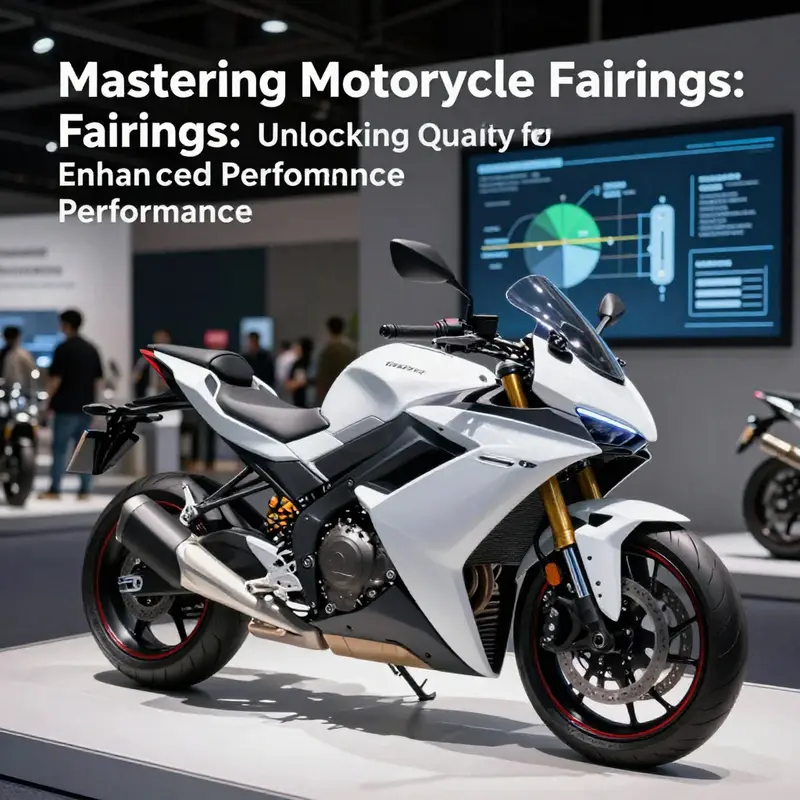
The fairing of a modern motorcycle has evolved from a simple shield to a carefully engineered, aerodynamically optimized system. In the quest for the best quality fairings, designers and manufacturers are increasingly treating the bodywork as an active contributor to handling, ride comfort, and efficiency—not merely as a cosmetic shell. The push toward lighter, stronger, and smarter components is shaping a trajectory where material science, process engineering, and sustainability converge to redefine what “top quality” means in the fairing industry. The core idea is straightforward: lighter weight with higher stiffness and superior impact resistance yields faster, more efficient machines that are better suited to both everyday riding and demanding performance contexts. As a result, the industry is turning to advanced composites and hybrid solutions that deliver comparable strength while easing production costs, a crucial factor when scale must meet high-performance tolerances.
Carbon fiber remains a premium reference point for strength-to-weight benefits, yet it is not the sole path forward. A wave of next-generation composites is entering the conversation, offering similar performance benefits at reduced cost and ecological footprint. Bio-based resins, in particular, are capturing attention for their potential to lower the environmental impact of resin matrices without sacrificing mechanical integrity. Recycling streams for carbon fiber, while technically challenging, are also maturing, enabling fairings that can be designed for circular lifecycles. The trend toward sustainability does not stop at materials; it extends to the entire manufacturing ecosystem. More manufacturers are examining how to minimize waste, reduce energy intensity, and implement closed-loop practices that recover and reuse scrap. The outcome is a portfolio of fairings that are not only lighter and stronger but also designed with end-of-life considerations in mind. In short, the best quality fairings of tomorrow will be defined by material choices that honor performance while reflecting a principled commitment to responsibility across the lifecycle of the product.
The shift toward smarter, more integrated systems is another defining trend. Modern fairings are increasingly planned with embedded sensing and data capabilities that can illuminate how a fairing behaves in real-world conditions. Rudimentary aerodynamics might now be augmented by sensors that monitor airflow separation, surface temperature, and structural strain in real time. This suite of data enables engineers to fine-tune shapes and channels to optimize drag reduction and stability at various speeds and riding conditions. The prospect of adaptive aerodynamics—where shape or internal air-flow pathways adjust in response to speed or cornering load—offers tantalizing possibilities for efficiency gains and rider confidence. While fully adaptive morphing systems remain a frontier, the trajectory points toward smarter, sensor-enabled components that deliver measurable performance benefits without compromising safety or reliability.
Even as the technology advances, sustainability remains a central guidepost. The broader industry is embracing lower-emission production methods and more durable designs that resist the wear and weathering of touring and sport riding. A durable, weather-resistant fairing reduces the frequency of replacements and the waste associated with quick turnover, a logic that resonates with riders who seek long-term value from premium components. In practice, this means investing in surface chemistry that resists UV degradation, selecting resin systems and fiber architectures that retain stiffness and gloss over time, and designing joints and finishes that withstand the rigors of road salt, rain, and gravel. Manufacturers are also exploring more efficient finishing processes, lighter and smarter mold tooling, and strategies that shorten lead times without sacrificing dimensional accuracy. The overarching aim is clear: fairings should perform consistently across years of use, reducing the environmental footprint that accompanies frequent repaints, repairs, and part-to-part substitutions.
A practical lens on these trends highlights where quality and sourcing intersect. The fairest way to ensure that high-performance standards translate into reliable products is to anchor development in verifiable data. Real-world materials data, durability testing results, and alignment with international standards such as ISO and SAE form a robust framework for evaluating potential suppliers. This approach supports not only performance benchmarking but also supply-chain resilience. In regions where advanced polymer processing and precision engineering are mature, such as certain hubs in China, suppliers leverage established capabilities to deliver complex fairings that meet tight tolerances and offer consistent UV stability. The regional story matters: proximity to export infrastructure and integrated manufacturing ecosystems—in places where Zhejiang’s coastal hubs and Guangdong’s large-scale factories converge with efficient logistics—helps ensure that high-quality fairings can reach global markets with reliable timing and predictable quality. For buyers and engineers, the emphasis remains on data-driven assessments that reveal true material content, performance under stress, and compliance with standardized testing regimes.
The conversation about future fairings cannot ignore the reality of qualification and selection practices. A rigorous procurement mindset, which includes supplier audits, sample evaluations, and performance benchmarking, remains indispensable. Buyers should look for transparency around material composition, documented durability testing, and traceability across production lots. Such evidence-based decision-making aligns with the demands of performance-oriented riders while safeguarding the quality that fairings must deliver across the lifecycle. The outcome is a market where genuine superiority is verifiable rather than assumed, and where manufacturers compete not only on aesthetics but on demonstrable benefits in strength, weight, and longevity. In this context, the ultimate measure of quality is how well a fairing integrates with the rest of the motorcycle system—impact resistance synchronized with the chassis, aerodynamics harmonized with the engine’s cooling needs, and color and finish resilient against weather and abrasion.
For riders exploring aftermarket options and designers seeking a tangible sense of current trends, examining real-world product lines helps illustrate what high-quality fairings look like today. A closer look at the broader ecosystem reveals how existing offerings balance performance and durability while underscoring the ongoing evolution toward smarter, greener solutions. In this spirit, a practical point of reference available to readers is the Honda fairings collection, which showcases a range of designs that emphasize integration, fit, and durability across multiple model lines. This example also underscores how aftermarket ecosystems are evolving in step with factory innovations, translating advanced materials and refined manufacturing processes into accessible, high-quality components for enthusiasts and professionals alike. Honda fairings collection provides a window into how current designs reflect both traditional craftsmanship and modern engineering ethos, bridging past expectations with future capabilities.
Ultimately, the chapter on future trends in best quality motorcycle fairings points to a cohesive vision. Materials are becoming smarter and more sustainable, production practices are tightening environmental footprints, and data-driven validation anchors quality across supply chains. Embedded sensing, adaptive thinking about airflow, and lifecycle-minded design coalesce to redefine what riders should expect from the fairing as a system. The convergence of these advances will not erase the value of proven, durable construction; it will, instead, broaden the toolkit available to engineers seeking to optimize every gram of weight, every watt of drag reduction, and every mile of comfort and control. As research and industry practice continue to inform each other, riders will experience fairings that perform with greater consistency, endure harsher riding conditions, and illustrate a forward path toward sustainable, high-performance two-wheeled travel. For readers seeking a broader penetration into the science and engineering behind these developments, an authoritative external discussion provides deeper context on material science and sustainable design in motorcycle components: https://www.sciencedirect.com/science/article/pii/S258913702400015X. The chapter thus closes with an invitation to look beyond immediate aesthetics and into a future where quality, efficiency, and responsibility are inseparably linked in every curve and line of the fairing.
Final thoughts
Navigating the landscape of motorcycle fairings requires an understanding of the materials and processes that create the best components available. By focusing on reputable regions like Zhejiang and Guangdong, business owners can find high-quality suppliers who blend performance with aesthetics while adhering to international standards. As the industry evolves with trends toward sustainability and innovation, the importance of selecting the right fairings will only grow. Investing in premium motorcycle fairings not only enhances the performance and appearance of motorcycles but also ensures that businesses align with future trends in manufacturing. Choose wisely to lead in the competitive motorcycle market.