
BMW motorcycle fairings are more than just aesthetic upgrades; they are vital components that enhance performance, provide protection, and improve comfort for riders. With the rise of aftermarket options tailored for specific models like the 2023 BMW F900XR and the 2015-2017 BMW S1000RR, business owners need to understand the benefits these enhancements can offer. This exploration will reveal the importance of fairing materials and design innovations, along with compatibility and installation insights, helping businesses guide their customers toward better riding experiences while boosting their own market offerings.
null
null
Material Alchemy and Aerodynamic Craft: Innovations in BMW Motorcycle Fairings
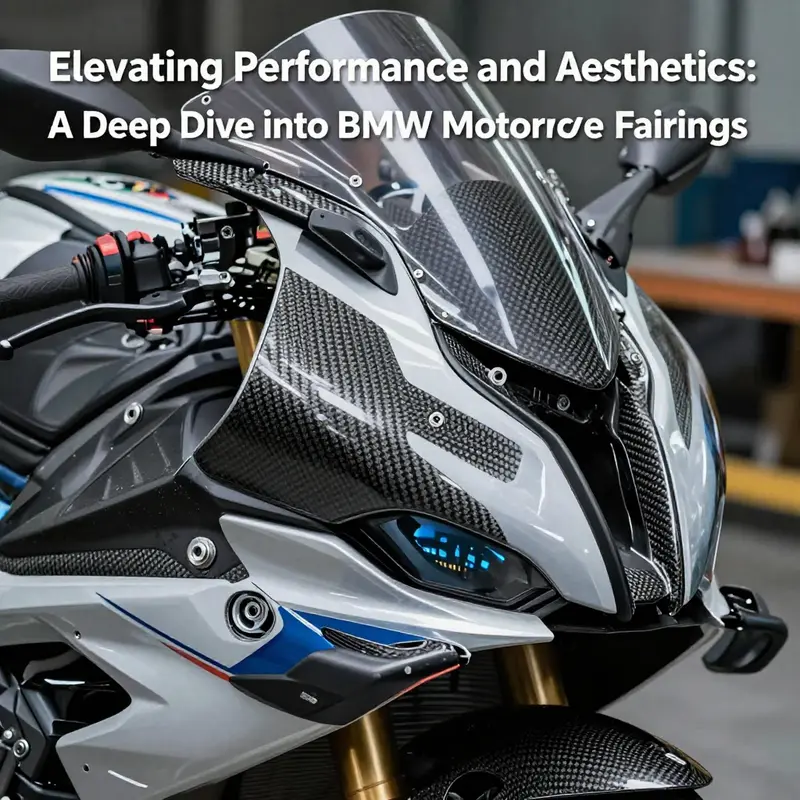
BMW motorcycle fairings are more than shells that caress a machine’s silhouette. They are purpose-built interfaces where aerodynamics, structural integrity, heat management, and rider comfort converge. In this chapter, we travel through the material choices, the design innovations, and the practical realities that shape BMW’s approach to fairing design. The result is a narrative that connects the engineering rigor behind the windward surfaces to the tactile experience of riding a machine whose bodywork is as much a performance system as a styling statement. Rather than a collection of parts, BMW’s fairings emerge as an integrated response to the demands of speed, stability, and long-haul comfort, crafted from a palette of materials chosen for their specific strengths and assembled with an eye toward maintenance, modularity, and future evolution. In the broader context of motorcycle bodywork, BMW’s strategy reflects a philosophy where form serves function without sacrificing aesthetic coherence, and where every contour has a reason rooted in physics, materials science, and rider psychology.
At the heart of any fairing lies its primary function: to shape the flow of air around the rider and machine, reducing drag and guiding high-pressure air away from sensitive components. But the BMW approach to fairing design expands that core aim. It treats the bodywork as a dynamic interface that must sustain performance across riding styles—from the highest-speed highway runs to the precise, controlled movements of a canyon sprint, and even the long-range steadiness demanded by touring riders. The fairing becomes a cockpit envelope, a heat-management conduit, and a visual statement that communicates the manufacturer’s engineering intent. In practical terms this means a carefully chosen material set that can withstand the rigors of exposure to engine heat, radiant sun, and the inevitable road debris, all while allowing for precise molding, repeatable production, and the possibility of aftermarket customization that does not compromise safety or performance. The fairing’s success is measured not by its beauty alone but by its ability to maintain stability and rider confidence as speed, gusts, and road surfaces change.
A first and enduring consideration is material selection. ABS plastic sits at the core of many standard fairings thanks to its impact resistance, ease of molding, and cost efficiency. ABS shapes allow for complex curves that accommodate the rider’s line of sight and wind protection needs while remaining affordable for mass production. The plastic’s ductility makes it forgiving in manufacturing deviations and repairable in field situations—an important attribute for touring riders who value practicality as much as performance. Yet ABS is rarely the sole material in a modern BMW fairing. For aspirational performance, carbon fiber and carbon fiber-reinforced plastic (CFRP) enter the conversation. They bring a landmark strength-to-weight advantage. In high-end applications, CFRP achieves a stiffness-to-weight ratio that translates to crisper handling and a more responsive balance feel. The visual appeal of CFRP—its weave, its matte or high-gloss finish—also conveys performance credentials that resonate with riders who see their machine as an extension of themselves. Carbon fiber parts are not merely decorative; they are functional components that reduce unsprung mass and lower the overall inertia of the bike through corners and at speed. The BMW Motorrad Concept RR, referenced in official communications, showcases how integrated CFRP panels can contribute to both the aerodynamic profile and the distinctive, almost futuristic look that defines BMW’s most ambitious bodywork projects. This dual role of CFRP—structural efficiency and aesthetic aspiration—highlights why carbon fiber has become a hallmark of premium BMW fairings.
Aluminum, with its superior thermal conductivity and strength-to-weight characteristics, plays a supporting but essential role in critical regions of the fairing. Where heat dissipation is paramount—near radiators and exhaust outlets—aluminum features in brackets, ducts, or frame-attachment points to manage heat without adding excessive weight. Aluminum’s rigidity helps maintain the integrity of fasteners and mounting points, ensuring that the aerodynamic surface remains precisely aligned with the motorcycle’s chassis even under aggressive riding. The balance between aluminum’s weight and its heat-dissipation properties helps to keep engine bay temperatures stable, a factor that indirectly influences throttle response and overall engine efficiency. In certain customization contexts, aluminum components provide the stable backbone for aftermarket fairing modifications, giving riders a dependable base structure that resists flexing when panels are removed and reinstalled for race days or service intervals.
Fiberglass and fiberglass-reinforced plastic (FRP) occupy a more nuanced space. They are often deployed in aftermarket or cost-conscious scenarios where molding versatility and durability are valued highly. FRP can replicate the smooth curves of OEM panels and offer robust resistance to impact while keeping costs reasonable for enthusiasts who want to refresh a ride without venturing into the higher price of carbon fiber. The moldability of fiberglass makes it a practical choice for custom or limited-run bodywork, where aerodynamics and fit must be tailored to a specific chassis while preserving the visual language BMW riders expect. Although not as light as CFRP, FRP panels still contribute to the overall weight management strategy when used strategically, keeping the final package within a performance envelope that riders can feel in steering precision and wind response.
These material choices do not exist in isolation. They are orchestrated within a design system that values aerodynamics not merely as a drag-reduction trick but as a way to tune the bike’s dynamic behavior. The concept of an aerodynamically optimized fairing includes careful attention to cross-sectional shapes, chine lines, and the way the surface interacts with the boundary layer—the thin layer of air immediately adjacent to the fairing. Subtle features such as vent paths, intakes, and exit ducts are not afterthoughts; they are critical to controlling pressure differentials around the rider and engine. In BMW’s exploration of advanced bodywork, this attention to airflow is sometimes paired with innovative features that mitigate buffeting and back-torque at high speed, while also shaping downforce distributions to stabilize the bike at the edge of its performance envelope. The BMW Motorrad Concept RR offers a striking illustration of this philosophy: a fairing that integrates winglet-like elements to generate a controlled amount of downforce, enhancing stability at speed without imposing a heavy aerodynamic penalty on weight or steering effort. While such winglets may push the boundary between progressive concept and production reality, they exemplify how aerodynamics can be embedded directly into the bodywork to improve handling, rider confidence, and even tire wear profiles across a range of speeds and road conditions.
The pursuit of modularity and serviceability is another thread that runs through BMW’s fairing design language. A modern BMW fairing is not a single, monolithic shell but a system composed of panels, fasteners, and mounting hardware that can be disassembled with relative ease for maintenance, upgrades, or color-change aesthetics. This modularity is not merely about convenience; it supports performance-driven customization. Riders who want to swap to a more aggressive look or to experiment with different airflow characteristics can do so without compromising the core chassis alignment. The design approach emphasizes repeatable attachment points, standardized fastener patterns, and panel geometries that preserve fit and finish after repeated removal and reinstallation. By focusing on modularity, BMW enables owners to pursue performance and appearance upgrades with the confidence that their modifications can be swapped in and out without creating misalignment or air leakage that would degrade aerodynamics.
In the aftermarket ecosystem, a spectrum of materials and fabrication options expands the possibilities for fairing customization. Carbon fiber remains the aspirational benchmark, offering both cosmetic appeal and functional performance gains. For riders seeking a balance of strength and weight, carbon fiber components can be tuned to concentrate extra stiffness where it matters most—near mounting points, air-intake ducts, and edges where the risk of crack initiation increases under stress. In other cases, chrome-plated finishes and nylon composites appear as alternative surfaces that offer an eye-catching appearance or particular tactile sensations, such as a cooler touch or a gloss that plays with light along the bike’s curves. These aftermarket adaptations highlight how BMW’s core design principles—lightweight performance, durability, and refined aesthetics—accommodate a broad spectrum of rider preferences without compromising the integrity of the original design intent.
The conversation about modern fairings would be incomplete without acknowledging the practical realities of maintenance and fit. BMW’s engineering ethos recognizes that riders demand both performance and reliability in equal measure. A fairing that seals to the frame with tight tolerances typically contributes to a more stable air barrier, reducing flutter and improving wind protection. But tight tolerances must be coupled with practical access. Modern fairings are engineered so that panels can be removed for radiator cleaning, inspection of the airbox, or service of electrical harnesses that run behind the instrument cluster. The challenge lies in achieving a seamless appearance after service while preserving the aerodynamic performance. The answer lies in precise machined attachment points, carefully designed gaskets, and clips that are robust enough to withstand repeated usage without becoming lax. In this balance, BMW’s approach champions not only weight savings and high-speed stability but also a level of operational ease that matters to riders who ride hard and service sparingly yet expect reliability when the road demands it.
This thread of design thinking also speaks to how fairings influence the rider experience. The wind envelope around a motorcycle has a direct effect on fatigue, concentration, and overall comfort. A well-designed fairing reduces turbulence around the rider’s chest and helmet, which minimizes neck strain during long rides and helps maintain visibility and control. The shaping of the upper and lower fairing sections interacts with the rider’s posture, providing wind protection that supports a natural and confident riding stance. In BMW models, this translates into a calmer airflow that reduces gust-driven buffeting when a rider sharpens a line through a corner at high speed or rides into crosswinds on a fast highway. The rider’s sense of connection with the bike—its weight, balance, and the way the wind is deflected—becomes a measurable source of feedback about the effectiveness of the fairing’s engineering. In other words, the fairing does not just shield the rider from wind; it becomes an active partner in the riding experience, shaping how the vehicle performs at the limits and how it feels when the rider settles into a steady pace on a long stretch of road.
If we step back to consider the broader scope of BMW’s fairing strategy, we see a design language that harmonizes three core ambitions: performance through aerodynamics, durability through material selection, and personality through visual language. The aerodynamic ambition is not solely about achieving the lowest possible drag coefficient; it is about distributing pressure and shaping flow in a way that stabilizes the chassis, preserves steering precision, and maintains rider comfort across a wide range of speeds and conditions. The durability ambition drives a material strategy that gracefully blends stiffness with lightness, while ensuring that the panels can resist impact and weather exposure for years of use. The visual language—clearly BMW—translates that technical excellence into an instantly recognizable silhouette. The interplay of lines, the precision of joints, and the way panels catch light all contribute to a perception of a machine that is engineered with purpose. This is why fairing design deserves sustained attention in any discussion about BMW motorcycles; it is where engineering, aesthetics, and riding psychology meet in a single, coherent composition.
For readers curious about the practicalities of pursuing such innovation within the aftermarket ecosystem, the story of fairing upgrades tends to revolve around the balance between weight, stiffness, and surface quality. Carbon fiber inserts and plates can shave weight and improve torsional rigidity in targeted areas, but they require careful integration so that non-mitted forces do not induce micro-movements that could affect alignment or generate noise. The manufacturing approach matters here: precise layups, controlled resin content, and meticulous curing processes translate into panels that hold their shape under heat and vibration. On the other hand, more accessible materials such as FRP or composite blends can deliver reliable performance with quicker turnaround times and at lower costs, making the aesthetic and aerodynamic improvements available to a broader community of riders. Each choice carries trade-offs, and the most successful fairing systems acknowledge these trade-offs while delivering a cohesive, well-integrated result that respects the limits of the chassis and the rider’s expectations.
In this context, the future of BMW fairings may well hinge on a blend of incremental improvements and bold, concept-driven features. Active or semi-active aerodynamic elements could become more commonplace as materials science and embedded electronics mature. The idea of adaptive wing surfaces or computationally guided air channels that respond to speed, yaw, and rider input is not purely speculative; it is a natural extension of the modular, measurement-driven approach that BMW has long embodied. Even if production realities call for restrained implementations, the underlying design philosophy remains forward-looking: fairings that adapt to the rider’s intent, preserve stability at the limit, and maintain a sense of motion even when the bike is standing still. In parallel, the continued refinement of CFRP and advanced thermoset composites will likely yield panels with improved damage tolerance, UV resistance, and surface finish, expanding the long-term viability of carbon-based bodywork across more BMW models.
From a rider’s perspective, this evolution translates into tangible benefits. The weight savings afforded by advanced composites directly influence the bike’s steering response, accelerating and braking energy, and non-linear handling characteristics in mid-corner transitions. The improved rigidity of well-placed panels translates into steadier wind management, which in turn reduces rider fatigue and enhances focus on line choice and throttle modulation. The modular design supports personalization without compromising the core performance envelope; a rider can change the fairing’s aesthetic or airflow characteristics as needs or tastes shift, all while maintaining compatibility with essential mounting points and service access. The narrative of BMW fairings, therefore, is not only about the current state of the art. It is about a philosophy that treats each panel as a living part of a broader system—one thatmust perform at the highest levels when sprinting down a canyon or cruising on a long highway and yet remain approachable for owners who enjoy fiddling with fit, color, and airflow through the life of their bike.
The practical realities of sourcing and upgrading fairings also shape the way riders think about performance. While some riders pursue genuine OEM or first-party components for the assurance of fit and race-ready durability, others explore aftermarket options for expressive finishes, weight tuning, or slight aerodynamic tweaks. In all cases, the underlying principle remains consistent: any modification should respect the original design intent, preserve the bike’s core balance, and not undermine safety. The most successful upgrades harness materials and methods that align with the chassis geometry, ensuring that the added weight or altered aero characteristics do not shift the bike’s overall weight distribution in a way that would degrade handling or rider feedback. As a result, even aftermarket elements that promise dramatic visual transformations tend to be favored when they offer predictable performance, robust attachment systems, and a science-backed approach to airflow management.
Within this landscape of materials and design, the role of visual craft cannot be overlooked. The surface finish of a fairing—the way pigment, clear coats, and carbon fiber veneers interact with light—contributes to perceived performance and brand identity. A high-quality surface reduces glare and highlights the fairing’s precise geometry, inviting the rider to engage with the bike on an intuitive level. This interplay of optics and engineering reinforces a rider’s sense of control and confidence. For BMW, the aesthetic is not an afterthought but a direct expression of the engineering discipline that goes into every line and plane. The result is a design language that signals precision and performance even before the bike is powered up, a visual predicate for what the rider will feel when the bike moves from standstill to velocity.
The chapter’s arc returns to the central truth: fairings are a convergence point for science and art. They are the surface through which air becomes a controllable force, but they are also the medium through which a brand’s identity is communicated. BMW’s fairings embody a careful choreography of weight, rigidity, and surface quality that supports a dynamic riding experience while preserving the visual integrity that enthusiasts recognize. The design choices—whether selecting CFRP for the lightest possible shell or using aluminum to anchor high-heat zones—are not arbitrary; they are deliberate responses to the real-world demands of speed, stability, and rider well-being. As we look ahead, the evolving language of fairing design promises to push the envelope further—without compromising the lightweight, modular, and visually cohesive ethos that defines BMW’s approach to motorcycle bodywork.
For readers who want to situate BMW’s innovations within a broader context, consider how other brands approach fairing development and how those approaches intersect with BMW’s priorities. The shared ground across brands is the recognition that wind, heat, weight, and rider comfort are not separate problems but parts of a single system. A carbon fiber panel that saves weight and raises stiffness may also demand a different mounting topology or cooling duct geometry. A winglet-inspired feature may improve high-speed stability but challenge serviceability or ensure a local stiffness barrier around a mounting point. These interdependencies reveal that fairing design is not a single engineering challenge but a portfolio of decisions that must be balanced against each other. The best outcomes arise when designers and engineers view the fairing as a holistic system rather than a collection of individual parts. And within BMW’s discourse, this holistic view is expressed through a disciplined attention to material choice, aerodynamic intent, modularity, and a rider-centric sense of performance that remains faithful to the brand’s design language.
As you read this, a practical thread runs through the discussion: if you are contemplating fairing upgrades, you should evaluate the impact on weight, stiffness, and serviceability, while also considering how any aero mods will influence riding dynamics at different speeds and in varying weather conditions. The goal is not to maximize a single metric but to optimize the overall experience. The fairing should protect and shield the rider, direct air efficiently, tolerate the heat of the engine bay, and still present a coherent silhouette that speaks to the rider’s sense of identity and connection with the machine. In BMW’s ongoing exploration of materials and design, that balance is not a fixed target; it is a moving target that evolves as new composites, manufacturing techniques, and aerodynamic insights emerge. The result is a bodywork language that remains recognizable to enthusiasts while continually pushing the boundaries of what is possible on the road and, increasingly, on the cutting edge of motorcycle performance.
For readers who wish to explore related topics beyond BMW, the broader world of fairings offers a wealth of ideas about how other manufacturers solve similar problems. In that vein, you can browse related content that dives into the Yamaha fairings collection, which highlights how different design constraints lead to different material strategies, surface treatments, and mounting philosophies. This cross-brand perspective helps illustrate the universal challenges and opportunities that define modern motorcycle bodywork while underscoring the uniqueBMW approach to an aerodynamic, lightweight, and modular fairing system. To see that related collection, visit: Yamaha fairings collection.
External reference for further reading on BMW’s latest fairing concepts and aero features can be found in the official press resources for the BMW Motorrad Concept RR, which detail the materials, architecture, and aerodynamic features that push the envelope of motorcycle bodywork. This external source offers deeper technical insights into how integrated winglet concepts and CFRP panels are advancing the design language of performance motorcycles. For a direct look, see the official announcement here: https://www.bmw-motorrad.com/en/news/2025/05/bmw-motorrad-concept-rr.html
Fitment as Form: Navigating Compatibility, Installation, and the Quiet Engineering of BMW Motorcycle Fairings
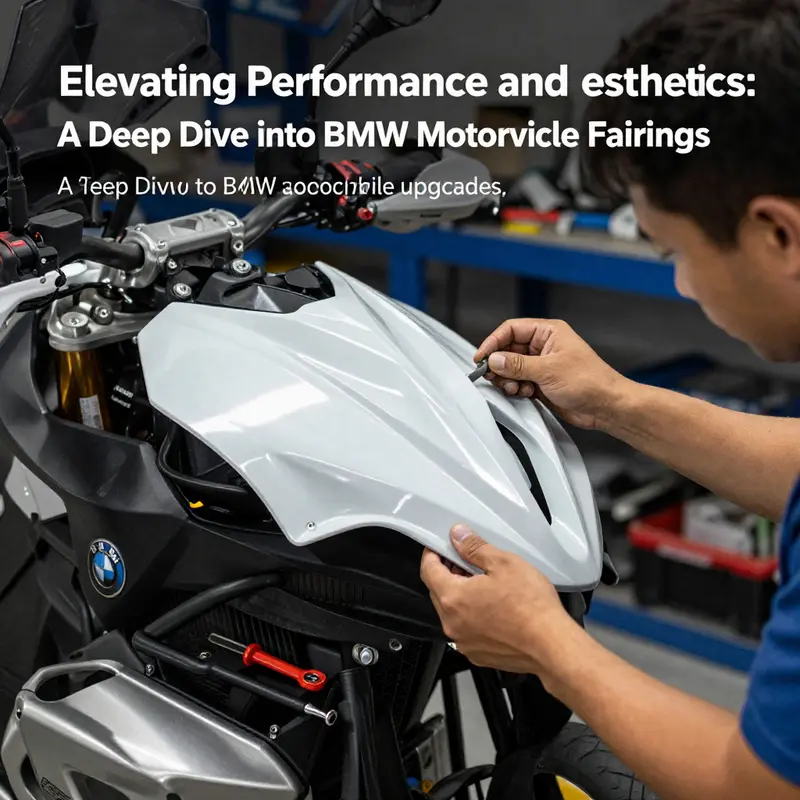
The fairing on a motorcycle is often the first thing a rider notices, but its true value lies in the careful balance between aerodynamics, protection, and rider comfort. On BMW machines, fairings are more than decorative shells; they are engineered assemblies that integrate with a complex web of mounts, electrical harnesses, radiator intakes, and instrumentation. To understand why BMW fairings behave as they do—and why fitment matters as much as aesthetics—requires a close look at how compatibility is determined, how installation is performed, and what happens when the balance shifts. This is not a narrative about a single obsessive upgrade; it is a meditation on how form and function converge in a system where every fastener, gasket, and panel location has a purpose that reaches beyond the surface appeal of a new look. The core idea is straightforward: the right fairing enhances performance and rider experience, while the wrong one can compromise airflow, introduce stress, or degrade the ride. The path from showroom precision to street-ready practicality is navigated through attention to model-specific fit, careful assembly, and the smart, safety-conscious choices that guide both OEM and approved aftermarket options.
Compatibility is the first and most consequential hurdle. In the BMW landscape, fairings are not interchangeable across the entire product line, and the reasons are technical as much as they are visual. Each model family is tuned to a particular frame geometry, weight distribution, and cockpit layout. The displacement and engine configuration steer a fairing’s aerodynamics and heat management, while the bodywork’s mounting points align with a defined set of brackets and fastener holes. Even within a given model family, there can be distinct variants such as standard, touring, or adventure configurations. Those variants are more than cosmetic differences; they reflect different ergonomic geometries and protective envelopes around the chassis. The upshot is that a fairing designed for one variant may not mate cleanly with another, and attempting a cross-variant swap can produce misalignment, gaps that trap air rather than channel it smoothly, or stress points that the original design would never permit.
Within this framework of dimensional accuracy and integrated design, the role of compatibility becomes especially evident when considering model year evolution. BMW, like many manufacturers, recalibrates aerodynamics, improves rider protection, and updates electrical routing with each generation. A panel that performed flawlessly a few years earlier might encounter new mounting bosses or revised access points for sensors, wires, or cooling lines. The lesson here is practical: always confirm model year compatibility before purchase. The modern practice in OEM programs and approved aftermarket channels is to annotate fitment by year, variant, and the precise frame geometry. When these constraints are acknowledged and respected, the outcome is a clean, integrated appearance and predictable performance. But if the fitment checks are skipped or glossed over, it is easy to encounter conflicts that cascade into alignment problems, compromised airflow, or even electrical issues that ripple through the bike’s systems at speed.
The specifics of fitment are not abstract. They hinge on the physical realities of mounting points, panel curvature, and the way panels interlock with adjacent pieces. A primary factor is the alignment of pre-drilled holes and mounting brackets that anchor the fairing to the frame. Those holes, which may seem trivial, are the skeleton in the process: misalignment can force a panel to sit askew, creating an uneven line along the bodywork, complicating the installation of other panels, and even affecting the way the fairing seals against the engine bay. Rubber gaskets and seals play a vital, often underappreciated role here. They absorb micro-movements and temperature swings, provide vibration damping, and help maintain airtight or shielded interfaces around critical components. When seals are misplaced or crushed during installation, they can permit air leakage, water intrusion, or heat transfer that undermines durability and performance. This is why the installation manual is more than a set of instructions; it is a map of how the fairing system breathes and holds together under varying riding conditions.
The installation process itself is a study in conservative, methodical assembly. Factory-fitted fairings typically employ a combination of bolts, clips, and gasketed joints that align with predrilled points on the frame and subframes. Rushing through the torque sequence or neglecting to verify the alignment of adjacent panels can trigger a domino effect: a small misalignment at one corner can create tension across the entire upper cowling, leading to stress areas or cracking over time. Warnings about over-tightening are not mere cautions; they reflect the reality that plastics and composites, while strong, can crack or distort under excessive clamping force. Conversely, under-tightening invites unwanted movement at speed, especially in high-performance scenarios where wind pressure on the fairing is substantial. The balance here is delicate: the installer must follow the manufacturer’s torque specifications and step-by-step assembly order, ensuring each fastener engages its corresponding seat with neither excessive preload nor slack.
The subtlety of installation extends to the interfaces between the fairing and other major assemblies. For instance, panels that accommodate instrument clusters, headlights, or windscreen mechanisms have to align precisely with openings and clearance zones. A misaligned panel can impede a visor or windscreen in its travel range, or interfere with a dash or display module that requires a clear line of sight and unimpeded airflow. In many cases, the installation path also includes routing of electrical harnesses, electronics modules, and sensor plugs. The goal is to maintain clean, unobtrusive harness routing that avoids sharp bends, pinch points, or contact with hot surfaces. An airtight or water-resistant seal depends on these carefully routed cables and gaskets, especially in models designed to tackle varied climates and weather conditions. This is where the distinction between a merely cosmetic add-on and a functional, durable protective system becomes evident. When the installation respects harness routing, the riding experience stays quiet, composed, and predictable even at highway speeds or on long, exposed highway sections.
Aftermarket options add a layer of complexity, but also opportunity. The market for aftermarket fairings is robust, reflecting riders’ desires to balance weight, aerodynamics, and style. Yet not all aftermarket alternatives meet the same standards of safety and integration. In the regulatory environment that governs on-road use, any aftermarket fairing kit must meet applicable safety standards, including recognized European or U.S. requirements. The practical implication is that aftermarket fairings should be certified or backed by reputable brands that provide tested, documented fitment data. The consequence of neglecting this step is not simply a less-than-ideal look; it can be a safety concern if the fairing pieces interfere with critical systems or fail under wind load at speed. Reputable aftermarket options typically accompany exploded diagrams and installation guidelines that mirror the thoroughness of OEM documentation, allowing a buyer to anticipate fitment with the same clarity as factory components. In this light, purchasing decisions become a matter of strategy: weigh the weight advantages, the stiffness and impact resistance of materials, the alignment with frame geometry, and the reliability of mounting points. A well-chosen aftermarket fairing can reduce overall weight and improve airflow without compromising structural integrity. A less careful choice, however, can introduce new stresses or gaps that degrade the aerodynamic profile or the rider’s sense of connection with the motorcycle itself.
The practical path toward confident, repeatable fitment begins with a clear plan: identify the model family and variant you own, verify the exact year, and consult official references before moving forward. The BMW Motorrad ecosystem provides a structured approach to this challenge. The company’s official parts catalog is designed to help riders verify fitment by model, year, and configuration. It includes model-specific part numbers, exploded diagrams, and assembly steps that empower owners and technicians to assess compatibility and perform installations with a high degree of confidence. This resource is regularly updated to reflect new parts and revised mounting arrangements, making it a reliable baseline when shopping for fairings online or assembling a kit in a workshop. In parallel, the aftermarket sector offers additional graphical and technical documentation that can deepen understanding. However, the reliability of such content depends on the credibility of the source and the rigor of the accompanying installation instructions. The central thread indeed remains resilience: fitment is not a back-pocket afterthought but a core dimension of how a BMW motorcycle behaves, under all weather and road conditions, with or without a fairing.
One tangible way to appreciate fitment complexity is to reflect on the relationship between panel curvature and mounting geometry. Fairings are not flat skins that simply cover a bike’s bones; they are curved skins that respond to the contours of the frame and the rider’s position. The curvature interacts with airflow in a way that the rider feels in the hands and torso as a smoother ride, less buffeting, and more controlled draft at speed. When curvature and mounting geometry align, the rider experiences a more predictable machine with even cooling airflow and reduced heat buildup around the engine bay. When misalignment occurs, small gaps can become portals for turbulent air, increasing rider fatigue and reducing efficiency. The synergy between curvature and mounts is a detail that separate a well-integrated fairing from a merely decorative shell. In this sense, the artistry of fairing design is inseparable from the physics of wind and the ergonomics of rider position.
To further illuminate the practical implications of fit and installation, consider a scenario in which a rider opts for lower, lighter panels to create a more aggressive silhouette. In a sport-oriented configuration, mass distribution and airflow management become more sensitive to panel placement and weight. Heavier panels can alter the front-end geometry and affect steering feel, especially at moderate to high speeds. Lighter, purpose-built panels can improve agility and reduce gyroscopic inertia, but they also demand tighter tolerances and more precise alignment to avoid panel gaps that disrupt the aerodynamics and the overall silhouette. These considerations underscore why many riders prefer components designed specifically for their model and variant, verified by the vendor’s compatibility statements and, ideally, by the OEM catalog that provides clear references. Riding a machine with a well-meshed pair of fairings and frame is a reminder that performance is the product of careful design choices and disciplined installation, not simply a visual upgrade.
Despite the focus on fit and method, the conversation about BMW fairings should always loop back to rider safety and the integrity of the motorcycle’s systems. The protective and aerodynamic functions of a fairing are intimately tied to its seals, mounting stiffness, and the way it interacts with the bike’s ventilation circuit and electronics. A fairing that is too loose can become a hazard in high winds; panels that vibrate or rattle can mask audible warnings or distract the rider. Proper seal and gasket placement help maintain weather resistance and keep electrical connections secure in the presence of moisture and temperature fluctuations. The stakes are real: a slight misstep in the installation sequence can ripple through the ride, from increasing drag to interrupting a sensor’s data stream or causing a misalignment in lighting fixtures. In short, the installation is not a cosmetic ritual; it is a careful choreography that preserves performance, safety, and the pure riding experience that the design intends.
The path to informed choices and confident installations also depends on connecting with reliable information and the correct support channels. The official BMW network—through the Motorrad dealer and the Parts Catalog—provides the most authoritative baseline to verify fitment. For those who pursue aftermarket avenues with an emphasis on performance or aesthetics, it is prudent to cross-check any claim of compatibility with the official catalog and, when possible, to obtain a detailed exploded diagram that clarifies how panels align with visible and hidden mounting points. This approach minimizes guesswork and ensures a smoother, safer ride after installation. It also helps protect the investment by reducing the chance of incompatibilities that could lead to costly rework or compromised warranty protections.
As a final reflection, consider the broader context of BMW fairings within the motorcycling ecosystem. Fairings are components that reflect a brand’s philosophy about balance—between sport and comfort, between raw speed and measured efficiency, between engineering precision and human experience. The adept rider can appreciate the meticulous care that goes into ensuring that every panel, every clip, and every seam performs its part. The mechanics of fitment—model-year specificity, variant geometry, mounting geometry, and the delicate art of gasket placement—are the quiet engineers behind the more visible pleasures of a well-behaved motorcycle. In the end, the best outcomes come from a disciplined approach: verify, prepare, and install with respect for the design intent; rely on official references to confirm fitment; and when venturing into aftermarket territory, choose options that promise compatibility and long-term resilience. The result is not merely a nicer look, but a more confident ride—one where the fairing serves as a responsive shield, a precise aerodynamic surface, and a comfortable cocoon for the rider’s journey.
Internal link reference: For a broader look at fairings as a category and to see how other brands handle mounting interfaces, explore the Kawasaki fairings collection. Kawasaki fairings.
External reference: For official, model-specific parts and diagrams, see the BMW Motorrad Parts Catalog. https://www.bmw-motorrad.com/en/owners/partspage.html
Final thoughts
BMW motorcycle fairings represent a significant advancement not just in aesthetics, but in rider safety and performance. By understanding aftermarket options, innovative materials, and the critical nature of compatibility, business owners can better serve their customers. As demand grows for these enhancements, leveraging knowledge about fairing technologies can create a competitive edge. Embracing these elements into business practices helps in not only selling products but also in crafting unforgettable riding experiences tailored to individual motorcycle enthusiasts.