
The realm of custom motorcycle fairings in the UK captures the essence of personalization and innovation, where artistry meets engineering. With a rich backdrop of local artisans and brands, motorcycle enthusiasts find themselves immersed in bespoke solutions tailored to their unique preferences. This thriving creative ecosystem not only caters to aesthetics but also emphasizes aerodynamic performance and impeccable fit, ensuring that riders experience the height of functionality and style. Throughout this exploration, we will delve into the intricacies of the British motorcycle culture that shapes these custom fairings, the diverse material choices that influence quality and performance, and effective strategies for navigating the supplier landscape. Together, these chapters will illuminate the importance of custom motorcycle fairings as both an art form and a necessity for modern riders.
From Form to Flow: The Creative Ecosystem of Custom Motorcycle Fairings in the UK
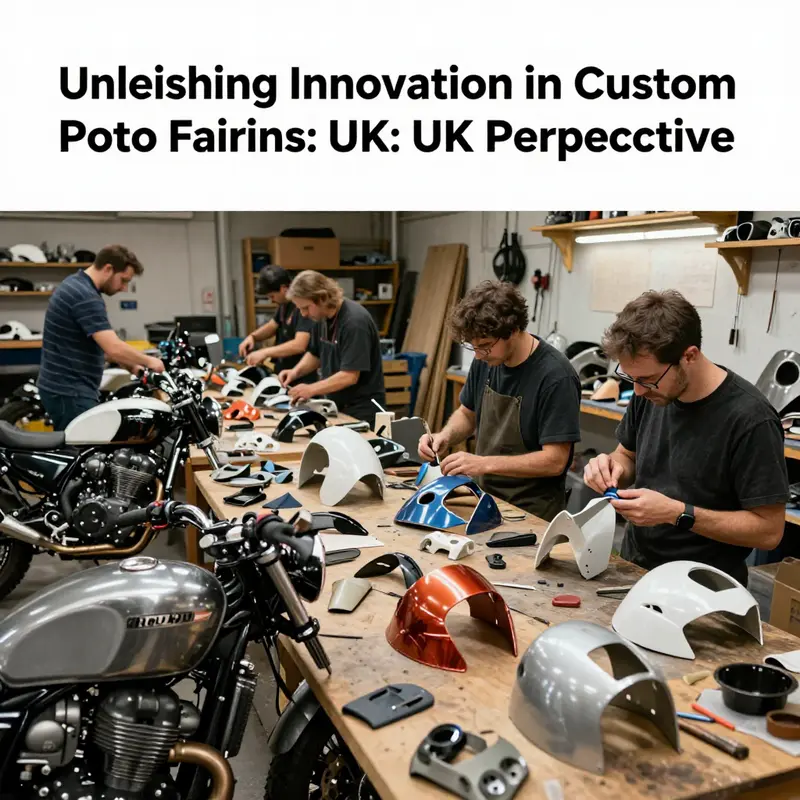
The UK’s custom motorcycle fairing scene is a living ecosystem where craft, engineering, and rider imagination meet. It is a space where studios and workshops across cities and towns transform sketches into moulds, and then into lightweight shells that follow the contours of a bike with precision. Riders arrive with a wish list that blends aesthetic identity with practical performance: wind management that respects posture, channels that feed cooling air to essential components, and mounting schemes that keep the machine safe and serviceable. The result is a dynamic conversation between a rider seeking a unique silhouette and a maker who translates that silhouette into a practical, aerodynamically coherent surface. This conversation does not happen in a vacuum; it grows out of a culture of racing, craftsmanship, and hands-on problem solving that has long shaped the country’s engineering ethos. The ecosystem is accessible by design. Orders can be placed online through studio portals, and direct communication with designers helps keep vision aligned with feasibility. The chorus of voices—engineers, artists, riders, and fabricators—creates a marketplace where every project is an opportunity to extend a bike’s personality while preserving its essential character on the road or on the track.
The backbone of this ecosystem rests on specialized workshops that treat fairing design as a disciplined craft. Each studio operates as a hub of ideas, turning initial conversations into 2D sketches, then into 3D CAD models, and finally into physical prototypes in materials chosen for balance and performance. Material choice matters as much as line work. ABS plastics offer a light, impact-resistant option that suits daily riders and occasional track days. Fibreglass composites bring additional stiffness and flexibility for more ambitious shapes and smoother finishes without excessive weight. Carbon fibre represents a premium path, delivering strength and the thinnest possible profile, but it also demands meticulous production control and a higher investment. The process often fuses traditional handwork with modern technology: careful hand layups, CNC machining, vacuum forming, and precision alignment checks. The aim is not merely a glossy shell but a functional system that respects the bike’s aerodynamics. The lines of the fairing, the way air is directed around the rider, and the interaction with engine cooling pathways all contribute to a design that feels inevitable once mounted on the machine.
Choosing between half-fairings and full fairings carries real implications once the vehicle is rolling. Half-fairings offer a lean, agile appearance with lighter handling and simpler maintenance, which can be appealing for everyday riding or spirited back-road sessions. Full fairings, by contrast, envelop more of the bike and deliver enhanced wind protection and greater aerodynamic stability at higher speeds. The design decisions sit squarely at the intersection of purpose and posture. Track-focused builds demand optimized airflow and precision that reduces drag while preserving the clearance needed for aggressive cornering. For highway miles, the priority shifts toward rider comfort and fatigue reduction, with integrated wind deflectors and ergonomically tuned contours that channel air in a way that smooths the ride on long journeys. In both cases, the fairing becomes part of a broader system, a framework that must harmonize with the frame, subframes, exhaust routing, and even the rider’s seating and handlebars. This intimate coupling of form and function is a hallmark of the UK’s customization culture, turning personal expression into measurable performance gains and everyday usability.
Technology threads its way into the craft, enriching both safety and aesthetics. Lighting has evolved from a decorative flourish to a practical feature that improves visibility and rider awareness. Integrated LED elements—subtle daytime accents or more pronounced signals—are embedded with attention to heat, vibration, and power. Modular attachment points have become standard in many studios, enabling riders to adjust configurations for a tour, a daily commute, or a weekend track day without sacrificing structural integrity. This trend toward modularity mirrors a broader industry movement designed to offer flexibility without lengthy downtime. The design language goes beyond surface decoration; it contends with how the panel surfaces route air to the engine radiator, how the rider’s helmet interacts with the wind, and how the entire assembly performs at speed. The result is a set of multi-piece assemblies that can be assembled on site, delivering a clean look and predictable performance while still allowing for evolving tastes and needs. The collaboration between form and function is thus a living dialogue that balances daring styling with the pragmatic realities of riding physics, fluid airflow, and rider feedback.
Sustainability is increasingly central to the practice. Studio leaders articulate a commitment to eco-conscious production that does not sacrifice performance. Recyclable materials, resin systems with lower volatile content, and manufacturing processes designed to minimize waste are common considerations. The goal is fairings that endure UV exposure, resist wear from gravel and road grime, maintain gloss, and require minimal rework over years of use. Durability becomes an environmental virtue when it reduces the frequency of replacement parts and the energy footprint of repairs. Responsible practice extends to the product lifecycle: selecting materials that can be reclaimed, allowing for remoulding or repurposing when a bike moves into a new phase, and communicating transparently about sourcing and processing. This ethical thread runs through the workshop floor and informs every decision about structure, finish, and long-term care. In practice, riders experience a combination of handcraftsmanship and thoughtful material science, where beauty coexists with resilience.
For riders considering a commissioning journey, the path through the UK fairing ecosystem emphasizes collaboration and trust. A capable studio begins by listening to the rider’s objectives—whether a more aggressive stance for track days, a smoother silhouette for daily riding, or a balance of both. Examining a studio’s portfolio helps set expectations for how a particular maker translates concept into three-dimensional realization. The next step involves a rigorous model assessment: how mounting points line up with the bike’s frame, whether there is adequate clearance around the steering head and radiator, and how the new shell integrates with exhaust routing and undertray design. A transparent quotation follows, outlining material choices, build scope, and delivery timelines. Throughout the process, continuous communication is essential. Many studios provide visual progress updates, enabling riders to see the evolving form before moulds are finalised. The scale of the market—from boutique one-off shops to larger, more established workshops—offers a range of options, from complete full-kit fabrication to targeted component replacements. The through-line in every project remains constant: the fairing must wrap the machine elegantly, align with the rider’s stance for control and comfort, and finish with a surface that withstands real-world riding while reflecting the rider’s identity and taste.
Great fitment is the product of meticulous measurement, validated templates, and real-world testing on a rolling chassis when possible. The most dependable projects emphasize accuracy, avoiding misalignment that would disrupt comfort or performance. In this sense, the discipline mirrors the broader engineering culture that underpins the country’s manufacturing strengths: precision is not just a technical virtue but a driver of reliability and confidence for both rider and maker. When fit and finish are correct, the fairing feels like a natural extension of the bike, not a separate shell slapped on for show. The rider senses this harmony in the first lean through a corner and in the first high-speed straight, where the air flows smoothly around the bike rather than tearing at the rider’s shoulders or the cockpit. Such outcomes confirm that customization in this space is about more than style. It is a performance upgrade realized through careful engineering, thoughtful ergonomics, and a shared commitment to quality.
Community threads through the ecosystem as well. Local clubs and informal gatherings create arenas in which prototypes can be tested, ideas challenged, and practical wisdom shared. Riders become co-developers, offering feedback on fit, air handling, and comfort from real-life experiences rather than laboratory tests alone. This peer-to-peer dynamic accelerates innovation and keeps the work grounded in rider needs. It also nurtures mentorship within the craft, enabling newcomers to learn the ropes from seasoned fabricators and designers who have accumulated years of trial and improvement. The social dimension is not peripheral but central; it sustains a talent pipeline and anchors the craft in the everyday rhythms of riding life, from commuter routes to weekend track days. The ecosystem thrives because it treats customization as a craft that grows with its practitioners and their communities.
For readers seeking a practical sense of where to begin, the UK ecosystem offers a spectrum of entry points and conversations. It invites riders to weigh material choices, curvature profiles, durability, and how a fairing project aligns with broader bike goals. It invites a dialogue about how performance translates into real riding experience, whether through lighter weight and reduced drag, or through preserved retro aesthetics and tactile surfaces. It invites enthusiasts to explore portfolios, question supply chains, and consider how sustainability and artisanal skill can coexist with cutting edge design. In this sense, custom fairings in the UK should be seen as a dynamic test bed where technique, taste, and functional riding needs converge, and where every completed project adds a new paragraph to a story being written by riders, makers, and the machines they share.
External resource: https://www.motorcyclefairings.co.uk
Britain’s Cafe Racer Ethos and the Modern UK Fairing Craft

The UKs custom fairing scene is rooted in the cafe racer ethos, a post war memory that fused speed, economy, and rider’s involvement.
In practice, fairings are not just shells but instruments of balance, wind management, and tactile feedback. The goal is to tuck the rider and reduce drag while preserving steering precision. Over the decades the language has shifted from oversized enclosures to slim, sculpted shapes that echo the rider’s posture and the bike’s geometry. The fuel tank narrows, the seat becomes compact, and the edge lines are kept clean to communicate efficiency rather than ornament. Modern builders still respect this heritage while welcoming advanced materials such as carbon fiber, ABS, and GRP, chosen for weight, stiffness, and durability. The result is a shell that protects and connects, a component that disappears into the rider’s world when the lines are right. Within studios across Britain, collaboration, craftsmanship, and testing drive outcomes from faithful period recreations to modern aero-efficient visions. The path to a completed fairing begins with a clear brief, careful model fitting, and a plan for integration with radiators, wiring, and instrumentation, followed by prototypes, wind tuning, and patient refinements. The cafe racer spirit remains a guiding standard: a rider-centric approach that values control, confidence, and speed, achieved through thoughtful form, precise joinery, and responsible manufacturing. Today’s British builders continue this dialogue between past and present, delivering bespoke fairings that feel like an extension of the rider and the machine, ready for road and show alike.
Weighing the Elements: How Materials Define Quality and Speed in UK Custom Motorcycle Fairings
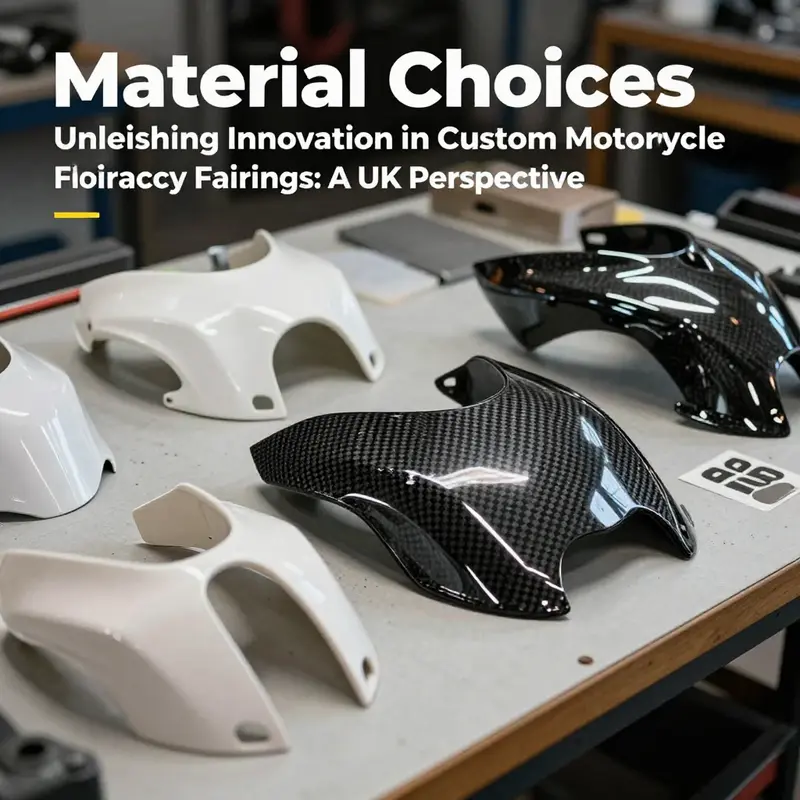
In the United Kingdom, the material choices behind custom motorcycle fairings sit at a careful crossroads of craft, performance, and practicality. Builders and riders alike recognize that the shell wrapped around a bike is more than a decorative layer; it is a working surface that influences aerodynamics, protection, and the feel of the machine when leaned into a bend. The quest is not merely to sculpt something that looks distinctive, but to shape a body that can endure wind loads, vibrations, and the damp realities of UK roads while conveying a sense of identity. This is why material selection carries weight in conversations about custom fairings, especially when the work is done by skilled, often small-batch studios that pride themselves on both artistry and function. The balance between aesthetics and performance begins with the choice of resin, fiber, or polymer, and it ripples through every subsequent decision — from weight and stiffness to finish and repairability.
Fiberglass, with its approachable price point and forgiving process, remains a mainstay for many builders operating in the UK. It delivers a solid strength-to-weight ratio that makes it a sensible baseline for a wide range of projects. For enthusiasts who want a personalized silhouette and a robust shell without pushing the budget, fiberglass offers a dependable path. It accepts aggressive shaping, and it lends itself to a palette of finishes, textures, and color depths that can be tailored to individual visions. The material also makes iterative modification practical; riders often opt for adjustments after a ride or a track day, and fiberglass can be reshaped, repaired, or touched up with relative ease. The outcome can be tactile and unique, a true badge of craftsmanship rather than a factory uniformity. Yet even as fiberglass remains economical and versatile, it is the starting point rather than the end of the story. The UK’s climate, road conditions, and the expectations of performance-minded riders push builders to explore lighter, stiffer options when the project warrants them.
Carbon fiber occupies a different tier in the material spectrum, offering a compelling mix of strength, stiffness, and a distinct, high-grade aesthetic that many custom projects seek. The advantages are tangible: a notable reduction in weight translates to quicker acceleration, more agile handling, and more precise feedback through the chassis at speed. In high-performance builds, carbon fiber contributes to a more efficient aerodynamic profile because a lighter shell can be shaped with confidence into smooth, integrated curves that respond predictably to the rider’s intent. The premium feel is not merely visual; it is tactile, with a finish that shimmers under light and carries an aura of meticulous engineering. However, carbon fiber does not come cheap, and its cost reflects the complexity of layups, tooling, and the need for specialized equipment and curing environments. For many riders, the question is never simply “is this carbon fiber worth it?” but rather “what level of performance am I chasing, and what is the acceptable premium for that gain?” In the UK, where local workshops often emphasize quick turnarounds and tight customization windows, carbon fiber projects tend to be reserved for builds where weight savings and rigidity offer a clear, measurable benefit. The result is a carefully considered tiering of materials that matches the rider’s goals with the project’s economics, making carbon fiber a valued but selective option in the broader fairing landscape.
Advanced polymers, including thermoplastic composites and nano-reinforced matrices, are increasingly prominent as a practical bridge between fiberglass and carbon fiber. These newer materials combine impact resistance with repairability in ways that suit the realities of street use and weekend track days alike. Thermoplastics can be melted and reformed, enabling on-the-fly tweaks or rapid repair after a slight mishap, which is appealing to riders who log heavy miles or who want to keep a build flexible as it evolves. The nano-reinforcements or advanced matrix systems contribute improved stiffness and fatigue resistance, helping maintain a stable aerodynamic surface under load while keeping the overall weight manageable. The allure of these materials lies partly in their adaptability; their processing routes can be tailored to smaller production runs and one-off commissions, aligning with the artisanal character of UK-based studios where craftsmanship and customization go hand in hand. In practice, a fairing constructed from a smart polymer blend can deliver a smooth, glass-like finish after painting and clear coating, while remaining easier to repair than some more traditional composites. This makes advanced polymers a compelling option for riders who want a modern, resilient shell that can evolve with changes in design direction or riding style.
Sourcing locally within the UK adds another layer of value to the material decision. When builders access materials close to home, lead times shorten, and the ability to implement refinements mid-project improves dramatically. Local sourcing also supports the regional craft economy, enabling skilled technicians to pass on techniques and knowledge through direct collaboration. Materials sourced from nearby suppliers can incorporate aerospace-grade standards that align with stringent safety and performance requirements for road-legal use. This proximity matters not only for speed but for accountability: it is easier to verify material certificates, validate supplier traceability, and ensure consistency across a build’s entire lamination schedule. The synergy between local supply and artisanal execution underpins a narrative that is as much about culture as it is about chemistry. UK studios often pair a deep understanding of material behavior with a keen eye for the final finish, balancing form and function in a way that resonates with riders who value both performance and individuality.
The final finish is inseparable from the material itself. Carbon fiber shells, when treated with the right prep work and a high-quality clear coat, can exhibit a mirror-like gloss that accentuates the woven pattern and the depth of the surface. Fiberglass, by contrast, accepts a broader range of texturing, from a rugged, matte appearance to a high-gloss, ceramic-like finish that enhances color depth and depth perception in the light. The material choice thus directly shapes the rider’s visual language, complementing the paint, decals, and airbrushed details that contribute to a bike’s overall personality. Yet appearance does not override function: a mishandled finish can crack under impact or degrade under UV exposure, underscoring the need for robust surface protection and attention to environmental conditions in the UK, where weather can be both harsh and variable. The interplay of finish, texture, and color is part of the craft, and it speaks to a broader ethos in which a fairing is treated as a custom instrument rather than a decorative shell.
From an aerodynamic standpoint, the material selection also informs how a fairing behaves at speed. A lighter, stiffer shell tends to maintain definition at high velocity, helping to preserve a clean aerodynamic profile and predictable boundary-layer behavior. But this does not automatically trump durability or ease of repair. A well-chosen composite system can deliver a refined balance: enough stiffness to hold its shape against gusts and crosswinds, enough toughness to survive the occasional curb strike, and enough resilience to be repaired without turning a once-bespoke piece into a casualty of a small incident. The rider’s intent—whether to chase lap times, enjoy spirited rides on winding back roads, or showcase a unique silhouette at local gatherings—will tilt the decision toward one material family or another. In the UK, where the racing culture has seeded a robust appetite for high-performance customization, builders often design around this practical reality. The result is a fairing that serves as a bridge between tradition and modern engineering, a tangible expression of how a skilled workshop interprets speed, style, and responsibility.
Sustainability is increasingly integrated into the material conversation as workshops explore recycled composites and bio-resins that align with environmental goals without compromising quality. This reflects a growing awareness that performance and responsibility can go hand in hand. The move toward sustainable practices does not simply imply greener raw materials; it also encompasses manufacturing approaches, waste reduction, and the lifecycle of the finished shell, including repairability and potential end-of-life reuse. For builders and riders who value durability as part of the long-term ownership experience, such choices matter just as much as the initial weight savings or the prestige of a carbon weave. The conversation about material choices is thus evolving in parallel with the broader shift toward responsible craftsmanship, a trend that resonates with UK audiences where local pride and global standards intersect.
Quality control and safety remain non-negotiable. Regardless of the material chosen, a fairing must meet rigorous standards for impact resistance, flame retardancy, and compatibility with the bike’s mounting points and accessories. The manufacturing process — from layup schedules and cure cycles to inspection and post-cure finishing — must be transparent and traceable. Builders who work on bespoke commissions often emphasize documentation and ongoing communication with clients, ensuring that the final shell not only looks right but also performs reliably in real-world conditions. The skill involved in marrying a chosen material with a particular bike layout, rider weight, and riding objective is where the art of custom fairing design truly shows itself. It is this synthesis of science and craft that marks the difference between a shell that merely covers the machine and a tailored component that enhances the rider’s connection to the machine.
In the end, the material that forms a UK-based custom fairing is a decision about value as much as about capability. Weight, stiffness, impact resistance, and repairability all factor into a nuanced negotiation, guided by the rider’s goals and the builder’s ethos. A budget-conscious project may lean into fiberglass, offering a strong baseline with room for personalization, while a performance-focused build may justify the premium of carbon fiber or advanced polymers for a more refined ride experience. Across the landscape, local studios blend technical knowledge with a strong sense of design, underscoring how the UK’s unique brand of craftsmanship continues to push the boundaries of what a fairing can be. The narrative is not only about materials in isolation but about the ways those materials enable a rider to express speed and identity without compromising safety or longevity. It is about the relationship between form and function, the dialogue between aesthetics and aerodynamics, and the shared commitment to quality that characterizes the best UK custom fairing projects. In this sense, material choice becomes a narrative device — one that tells a rider’s story through the geometry of the shell, the sheen of the finish, and the quiet assurance that comes from a shell built to endure.
Threads of Chrome, Carbon, and Craft: Navigating the UK Market for Custom Motorcycle Fairings
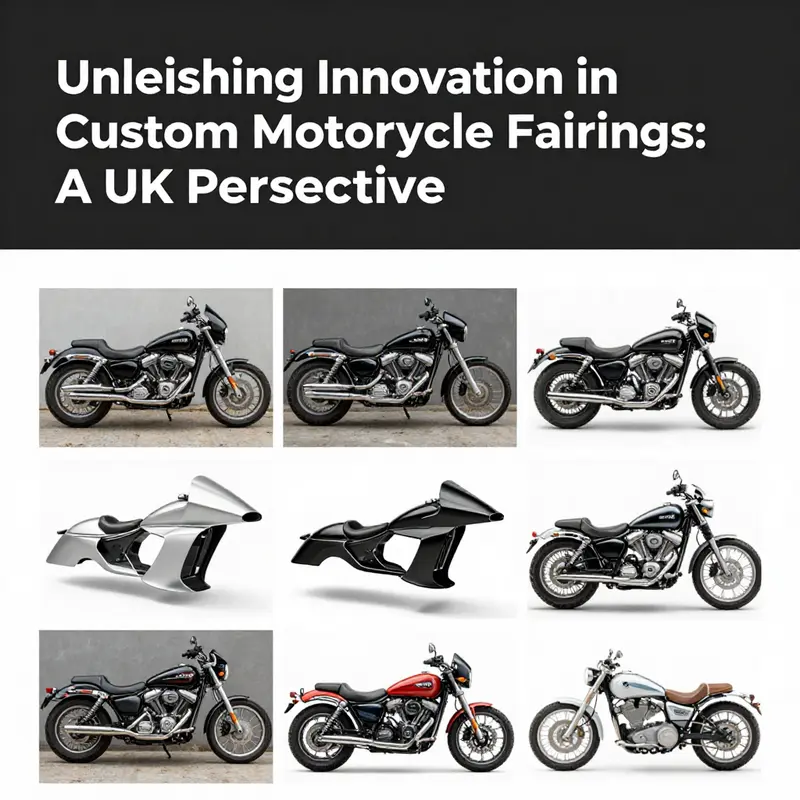
The United Kingdom hosts a dynamic crossover where heritage racing culture blends with modern engineering and artisan craftsmanship. When riders seek not just to modify a bike but to redefine its silhouette, a new kind of marketplace emerges around custom motorcycle fairings. In this space, aesthetic ambition sits shoulder to shoulder with aerodynamic refinement, durability, and precise fitment. The result is a diverse ecosystem that includes established original equipment manufacturer (OEM) pathways, specialized aftermarket studios, and a growing cadre of independent artisans who treat each fairing as a bespoke project rather than a quick SKU. This fusion of tradition and innovation has given rise to a market where a rider can move from concept to carbon and back again with a sequence that feels almost seamless, provided the choices are informed by a clear sense of what matters most: fit, function, and personal expression.
The market’s structure mirrors the riding landscape itself. On one side, OEM-oriented supply channels continue to provide brand-aligned components that offer a factory-guaranteed fit, but more and more riders seek the added value of personalization. On the other, a flourishing spectrum of aftermarket brands and design studios focuses on customization—offering everything from color and surface finish to complete fairings crafted for specific models and riding styles. This is not a one-size-fits-all world. The UK’s compatibility matrix is broad: sport-oriented superbikes, retro-styled machines, and modern touring platforms each invite a distinct approach to shaping the fairing’s lines, weight distribution, and airflow. The result is a marketplace that rewards studios with a deep understanding of both performance physics and aesthetic language, while rewarding riders with a degree of tailoring that would have felt unattainable a generation ago.
A critical driver of this ecosystem is the balance between appearance and protection. Riders want fairings that look the part—sharper edges, cleaner profiles, and surfaces that catch the eye in sunlit urban streets or on race tracks—yet they also demand guardrails against rock strikes, bugs, and weather. That dual demand pushes suppliers toward materials and processes that deliver both beauty and resilience. ABS plastics offer a reliable baseline for strength and formability, while carbon fiber delivers stiffness and weight savings for riders chasing marginal gains in handling and speed. GRP fiberglass remains a flexible option for custom pieces that must be produced quickly or at variable scales, without sacrificing surface quality. The skilled studio knows how to tailor these materials to a given model’s mounting points and geometry, ensuring that every bolt hole aligns, every edge sits flush, and every surface is primed for paint and clear coat that endure the road’s punishment. In practice, this means a collaboration that isn’t merely about drawing a pretty shape but about engineering a snug, safe, and aerodynamic envelope around a motorcycle’s silhouette.
The customer journey in this market is both linear and exploratory. A rider begins with a concept—perhaps a homage to a bike’s original lines, perhaps a bold reinterpretation that signals a new riding philosophy. Next comes a design dialogue with a studio that can translate sketches into 3D concepts, then into mold or laminate processes that produce a working fairing set. This sequence hinges on transparent communication about fitment for a specific model, the intended riding style, and the expected operating conditions. Riders increasingly expect portfolios that demonstrate real-world takes on particular bikes, with images and notes about mounting points, weight distribution, and paint finish. The best studios publish detailed specs and maintain clear channels for revisions, so the process remains collaborative rather than confrontational. And because the UK market accommodates riders who want to move quickly—from concept to track day or weekend café runs—lead times, cost, and after-sales service become as important as the final look.
Material choice, finish, and surface care are not afterthoughts in the UK’s custom fairing scene. The fabric of a fairing is judged not just by its first impression but by its resistance to daily wear and tear. A glossy black or metallic finish can elevate a bike’s presence, yet it must survive fuel spills, stone chips, and ultraviolet exposure. This is where the discipline of prep, primer, base coats, and clear coats intersects with that of structural integrity. A premium finish requires meticulous surface preparation, proper bonding to the underlying motorcycle’s framework, and a clear commitment to color-matching that respects the bike’s original tone while allowing for personalized shading and gloss depth. Aesthetics are enhanced by integration—the fairing’s lines should flow with the bike’s existing geometry rather than fighting against it. The contemporary UK studio often treats the fairing as part of a wider design language, weaving in trim pieces or protective accents that echo the bike’s identity while adding a layer of functional sophistication. In practice, this means that design language, material selection, and finishing are tightly coupled norms in the preparation phase, and that the finished piece should be as heat- and impact-resistant as it is visually compelling.
Beyond the visual and tactile aspects, the market is increasingly oriented toward integration and protection. Innovative features are evolving from mere cosmetic upgrades into multi-functional components. Some parts are designed to offer additional front-end protection in the event of a tip-over or low-speed collision, while maintaining a clean, streamlined appearance that preserves the bike’s established character. The trend toward multi-functionality reflects riders’ desire for peace of mind without sacrificing the aesthetics that drew them to customization in the first place. This philosophy aligns with a broader market shift toward parts that can be replaced or updated with minimal disruption, enabling ongoing refinement as a rider’s needs and tastes evolve.
The suppliers who populate the UK market span a broad spectrum. There are large retailers that provide a curated assortment of brand-specific parts with warranties and installation support, ensuring a straightforward path for riders who want a reliable, predictable upgrade. There are also smaller, nimble aftermarket studios and regional artisans that specialize in unique silhouettes, bespoke finishes, and model-specific fitment. The strength of this environment lies in its ability to support riders across the spectrum—from those seeking a faithful reproduction of stock lines to those pursuing one-off designs that respond to a personal narrative or performance goal. The presence of a robust community network—forums, showrooms, and gallery-like portfolios—helps riders gauge the capabilities of studios before committing, allowing them to compare how different builders approach model compatibility, materials, and finishing techniques.
In terms of model scope, the UK ecosystem covers a wide range of popular sport and touring motorcycles, as well as retro and classic-styled platforms. While the ideal studio will demonstrate the ability to work with specific bikes in the rider’s lineup, it is also common to see designers who can tailor fairings for widely used frames that share a family lineage. This capability translates into a practical advantage for riders who own multiple bikes or who rotate between track-focused builds and daily commuting machines. When evaluating potential partners, riders often request not only finished examples but also evidence of the production process—mold integrity, mold maintenance practices, and the ability to reproduce a design consistently across multiple units. Certification of production qualifications and material standards provides additional assurance about safety and durability, especially given the weight-bearing and aerodynamic responsibilities these panels carry at speed.
The industry’s forward motion is shaped by how easily riders can access information, view portfolios, and initiate conversations with studios. Increasingly, potential buyers turn to online platforms to view galleries of past work, gather technical details, and solicit quotations. What matters most in this context is not just the price tag but the credibility of the builder’s claims regarding fitment accuracy, the range of materials offered, and the after-sales support that follows installation. A reliable studio will publish clear specifications about each material option, any required prep steps for installation, and maintenance guidance that helps riders sustain the finish and structural integrity over years of riding. The best outcomes come from a cooperative relationship in which the rider’s design vision meets a builder’s technical discipline, producing a final product that feels both authentic to the bike’s lineage and fresh in its execution.
The journey toward selecting a UK-based custom fairing partner is aided by tangible signals in portfolios: a consistent attention to mounting geometry, clean edge finishes, and a demonstrated capacity to maintain alignment across repeated builds. Prospective buyers should look for evidence of model-specific fit, including how the design addresses the bike’s cooling requirements, radiator shielding, and steering geometry. They should also assess the ease with which damaged panels can be replaced without compromising the bike’s overall look or aerodynamics. For some riders, the ability to request a partial or full rework—perhaps updating a visual theme while preserving critical structural elements—can be a decisive factor in choosing a studio. In all cases, the aim is to achieve a cohesive integration that respects the bike’s architecture, honors the rider’s aesthetic ambitions, and delivers predictable, repeatable performance gains.
For readers seeking a concrete point of reference in this evolving field, one practical route is to explore model-focused collections that illustrate how studios approach specific bike families. A useful entry point is the Honda fairings catalog, which showcases how a studio translates a model’s silhouette into a complete, integrated set. This kind of portfolio provides a tangible sense of what is possible when design, engineering, and finish work in concert to produce a factory-grade appearance with custom cues. Accessing a dedicated collection helps riders gauge whether a given studio’s capabilities align with their own model and design preferences. See the Honda fairings collection for a representative sense of how model-specific fitment, molding accuracy, and finish quality come together in practice. Honda fairings collection
The UK market’s vitality is sustained by a feedback loop that links consumer preferences, studio capabilities, and ongoing innovation. Riders push for speed, protection, and personal storytelling, while studios respond by refining processes, expanding material options, and testing new alignment strategies that minimize drag and maximize stability. This dynamic is reinforced by the broader automotive design sensibilities that permeate British engineering culture—where precision, repeatability, and finish quality are non-negotiable. The result is a marketplace where a well-communicated vision, backed by a studio’s demonstrated competence, can translate into a product that not only changes the bike’s look but also elevates its on-road or on-track behavior. In this sense, the fairing becomes a collaborative instrument, a vehicle through which rider intent and technical craft converge to redefine what a motorcycle can be on the road and at speed.
External resource: for a broader perspective on design-to-installation service models in the UK custom fairings scene, explore independent studios that provide end-to-end design, fabrication, and installation capabilities at a specialized level. https://www.motocult.co.uk/custom-motorcycle-fairings
Final thoughts
Custom motorcycle fairings in the UK embody a dynamic interplay of creativity, performance, and community spirit. As the market continues to evolve, the influence of British motorcycle culture drives innovation in both design and functionality. The importance of material quality can’t be overstated, as it plays a crucial role in the performance and safety of fairings. By understanding the landscape of suppliers and emerging trends, motorcycle enthusiasts can make informed choices that reflect their style and enhance their riding experience. The world of custom motorcycle fairings is not just about aesthetics; it’s about expressing individuality while ensuring that every ride meets the highest standards of performance and safety.