
With the rise of custom motorcycles and the demand for cleaner aesthetics, hidden radio antennas for motorcycle fairings are becoming a top choice for riders. Among motorcycle enthusiasts, nothing detracts from a well-designed bike like a protruding whip antenna. This article delves into specialized solutions for Harley-Davidson motorcycles, versatile universal options for a range of brands, and easy installation methods to equip your ride with superior audio performance while maintaining a sleek look. Each chapter will guide you through the available options, ensuring that your motorcycle can achieve both functionality and style without compromise.
Under the Fairing: Hidden Antennas that Preserve Aesthetics and Signal Strength on Harley-Davidson Touring Machines

Riders who keep their bikes in motion understand a fundamental tension: the desire for a clean, cohesive look and the need for reliable reception from their radios. The fairing, a sculpted shield against wind and weather, presents both a canvas and a constraint. It is a place where form and function must kiss rather than argue. In this space, hidden antennas emerge not as mere afterthoughts but as deliberate design decisions that honor the bike’s silhouette while safeguarding the signal that keeps riders connected to weather updates, traffic reports, and their favorite stations. The appeal of a concealed antenna rests on two pillars: aesthetics and performance. Aesthetically, a fairing that houses a discreet antenna avoids the visual clamor of a whip or mast. The lines stay uninterrupted, the paint and panels appear uninterrupted, and the rider’s sense of velocity remains uninterrupted too. Performance-wise, the challenge is to coax the radio’s reception to match or exceed what a conventional whip would deliver. This is not a retrofitted compromise but a symbiotic pairing of engineering and design. The Harley-Davidson touring segment, with its distinctive, touring-focused fairings and optional Tour-Pak luggage, illustrates this balance vividly. When a rider selects a hidden antenna system designed for installation inside the fairing, they are opting for a seamless integration that respects the bike’s engineering heritage while embracing modern materials and signal processing. The result is a solution that carries the signal as confidently as a visible whip, yet remains invisible to the eye. The journey from concept to reception begins with a careful understanding of the radio landscape. AM and FM bands weave through the air in complex ways, subject to multipath reflections, urban clutter, and the inherent losses of distance. Weather-band signals, while less talked about, add another layer of demand on the antenna system because they require stable reception in a variety of conditions that a rider may encounter. A hidden solution must satisfy the same electrical principles as a visible antenna while contending with the constraints of a metal shell, fiberglass or plastic fairing, and the dynamic environment of a moving motorcycle. Consequently, the design philosophy shifts from “get the signal in” to “get the signal in cleanly and consistently, without betraying the bike’s form.” This philosophy guides the different approaches manufacturers and aftermarket designers pursue to integrate antennas within the fairing. First, there are solutions tailored to the Harley-Davidson touring family that aim to replicate the performance of a factory whip while eliminating its visual footprint. These systems acknowledge the specific radio architecture that Harley designers have tuned to. They seek to preserve the audio clarity, station stability, and overall reception quality riders expect from the factory setup, while simultaneously removing the visible antenna from view. For riders who prize authenticity and OEM-level performance, this alignment between the radio’s native tuning and the hidden antenna’s impedance, radiation pattern, and ground-plane requirements matters as much as the aesthetic payoff. The riding experience, after all, hinges on certainty: the certainty that a pressed button on the dashboard will deliver a clear channel, the same channel that’s been tuned by the factory engineer and dialed into memory for the convenience of the rider who values both speed and sound. In practice, this means that the hidden solution must integrate with the existing antenna jack or radio input without demanding invasive wiring changes or reconfiguration of the bike’s electrical system. A plug-and-play approach, when feasible, becomes a meaningful asset. It reduces the installation risk, limits potential interference with other electrical modules, and preserves the factory feel that many riders seek when they opt for a discreet, integrated look. A true plug-and-play hidden antenna respects the radio’s impedance, uses high-quality coax with proper shielding, and seals the mounting area against moisture and vibration. The goal is to deliver a signal that behaves the same way it did when the whip was protruding into the wind, only now it behaves as if the wind never existed. The rider may notice that the reception curve remains smooth as they traverse long stretches of highway or slip through urban canyons. When the radio display flickers or the station stumbles into a brief static spell, it is often a cue that the antenna’s alignment, ground-plane relationships, or routing within the fairing could benefit from a small adjustment. In high-quality hidden-antennal architectures, the engineers articulate the system around three core considerations: the fairing’s material properties, the internal geometry of the radio’s input, and the installation’s environmental resilience. The fairing is typically constructed of fiberglass, composite plastics, or a combination of materials that provide a lightweight yet rigid structure. Each material interacts with radio waves in distinct ways. Fiberglass, for example, can act as a passive ground plane in some orientations, while certain plastics contribute less to the ground plane and thus require the antenna to be positioned with a more deliberate reference to the radio’s circuitry. The internal geometry of the fairing—ribs, channels, and voids—also influences how the antenna radiates. An embedded antenna must be oriented, shielded, and connected so that it avoids dead zones within the cockpit or behind the rider’s line of sight. Designers often simulate the environment using software that models electromagnetic behavior at radio frequencies. These simulations help predict how a hidden antenna will fare under different riding positions, speeds, and frame torsion. The objective is to ensure that the final installation preserves the radio’s fidelity and the rider’s sense of immersion in the soundscape of the road. In parallel, the market has witnessed a set of enhancement options that expand the hidden-antenna toolkit beyond OEM-aligned, factory-style implementations. One approach centers on a universal amplified AM/FM antenna that can be mounted under the fairing or in an unobtrusive spot on a dashboard or fairing base. The amplifier aspect serves to boost weak signals in challenging environments—areas with heavy urban density, long tunnel corridors, or rural valleys where signal strength can fluctuate rapidly. The amplified architecture provides a higher dynamic range, enabling the radio to maintain a stable audio stream even as the vehicle speeds vary or as the rider negotiates terrain where signal flux is common. The “universal” label reflects a design philosophy aimed at broad compatibility across a wide swath of makes and models. While the underlying electronics are tuned for a decent impedance match and broad-band reception, the installation remains within the realm of the bike’s normal infrastructure. This universality is not about a one-size-fits-all antenna; it is about a modular concept that can route through different fairing geometries without requiring radical modifications. The third path in this family of solutions embraces a more plug-and-play ethos. Some systems are engineered to mount inside fiberglass or plastic fairings and connect directly to a standard AM/FM antenna jack. This approach reduces the number of custom tasks the rider must perform and minimizes the risk of miswiring. With a simple, straightforward installation, the rider can achieve an unobtrusive mounting that hides the entire antenna from sight while preserving signal quality. What makes this approach compelling, beyond the convenience of installation, is the sense of integrity it provides. The cable routing remains clean, clipped along existing channels, and protected from abrasion and moisture. The connectors use weather-sealed housings to withstand the realities of road exposure, and the entire assembly sits snugly within the fairing’s interior, away from heat sources that could degrade insulation or coax shielding. The design mindset here is to totalize the rider’s experience: no visible hardware to remind onlookers that a radio sits within a shield, no compromises in signal clarity, and no changes to the bike’s external silhouette that would disrupt the rider’s visual narrative. TheHarley-Davidson touring family, known for its long-haul ergonomics and generous fairing real estate, becomes a natural proving ground for these hidden solutions. When well-executed, the concealed antenna harmonizes with the bike’s lines and dimensions. It respects the fairing’s contours, aligns with the radio’s sensitivity profile, and honors the rider’s preference for minimalism. Models that are designed to work with a Tour-Pak, for instance, reveal an additional layer of practicality: with the luggage system in place, there is less need to reposition an external antenna to avoid interference with the storage module. In these configurations, a hidden option eliminates the compromises that sometimes accompany external antennas. The rider gains a coherent aesthetic where nothing distracts from the bike’s sculptural elegance, and the radio continues to deliver the listening experience that complements the riding atmosphere. Yet aesthetics aside, the hidden antennas must satisfy a broader market of riders who seek flexibility. Some riders want a solution that remains effective across different riding contexts—the city commute, the rural highway, and the weekend trip that pushes the bike into new terrain. For such riders, the universal amplifier option offers a measure of resilience. It recognizes that signal strength is not something a rider can rely on from place to place. It provides an augmentation tool that helps the radio recover from interference or fragmentation and keeps the listening experience consistent. The plug-and-play, fairing-integrated option, meanwhile, speaks to those who prize simplicity and reliability. It minimizes the risk of installation fatigue and reduces the potential for misconnection that could otherwise affect performance. Both tracks share a commitment to reliability, enduring performance, and compatibility with the radio’s original design intent. They also share one overarching truth: the value of a hidden antenna is not merely the absence of visual clutter. It is the assurance that the rider can stay focused on the ride rather than be distracted by the apparatus responsible for the soundtrack of the journey. The conversation surrounding these systems thus blends electrical engineering with design philosophy. It invites riders to consider not only the signal’s strength but also how the physical system communicates with the bike’s structure and the rider’s perception of the machine. The best outcomes emerge when engineers and riders talk the same language—one that bridges coaxial cables, impedance matching, and the art of a seamless silhouette. As with any integration project, installation quality matters. A hidden antenna does not magically shield a bike from weather or vibration. It must be installed with attention to clearance, routing, and sealing. It should be mounted in a way that avoids sharp bends in the coaxial cable, minimizes strain on connectors, and maintains an interior space that remains technically accessible for inspection and maintenance. Riders who enjoy tinkering will appreciate the transparency of the approach: the system should be accessible enough to service without requiring disassembly of major fairing components. The goal is to preserve the integrity of the original build while providing modern performance. From a rider’s perspective, the decision between a Harley-focused, fairing-integrated solution and a universal option often boils down to the trade-offs between OEM fidelity and cross-model adaptability. Those who prefer pristine alignment with the factory aesthetic may gravitate toward a solution that has been tuned for Harley’s native radio architecture, with the advantage of a quiet installation and a performance profile that mirrors the OE experience. Others who ride multiple brands or who want a flexible, upgrade-friendly platform may favor a universal system that can be adapted to different fairing shapes and radio inputs without reworking the bike’s core electrical framework. In both cases, the dialogue about hidden antennas is a narrative about balance. It is about balancing the bike’s artful exterior with the practical needs of dependable radio reception. It is about balancing ease of installation with long-term reliability. It is about balancing the rider’s desire for a clean fairing with the radio’s need for a solid ground plane, proper shielding, and an impedance match that treats the radio and antenna as two halves of a single, coherent system. The chapter’s aggregated message, drawn from the practical materials available for Harley-Davidson touring bikes and similar platforms, is that there exist credible paths to hidden antennas that deliver comparable or superior performance to traditional whip solutions while preserving the bike’s visual language. For riders who care deeply about the look of their machine, a hidden antenna is not merely a functional device; it is a design choice that honors the bike’s heritage and the rider’s sense of identity on the road. And as the road unfolds, so too does the sense of compatibility—the sense that the bike and its radio belong to a single, integrated conversation rather than a juxtaposition of separate components. For those who want to explore the practicalities further, the official documentation on mounting options, compatibility, and warranty terms from the original manufacturer offers a repository of guidance and reassurance. In practice, hidden antenna systems provide a high-stakes blend of engineering, aesthetics, and experience. They require careful attention to the fairing material, the radio’s input characteristics, and the environmental realities of riding. They reward riders who value a clean silhouette without compromising audio fidelity. They invite a broader conversation about how motorcycles can embody both tradition and innovation, how form and function can coexist within the same leading edge of design. By embracing these hidden solutions, riders of touring motorcycles can protect the bike’s iconic lines while ensuring the soundtrack of their journeys remains robust, clear, and immersive. They become, in essence, ambassadors of a philosophy that prioritizes elegance, reliability, and the practicalities of the road—an ethos that continues to shape how modern motorcycles are designed, built, and experienced. For readers who want a direct reference to practical compatibility and official specifications, a review of the manufacturer’s parts catalog and radio integration guides can provide concrete guidance. This ensures riders make informed choices aligned with their bike’s model year and radio configuration, preserving both aesthetics and performance as the ride continues. External resource for reference and compatibility can be found here: https://www.harley-davidson.com/us/en/shop/parts.html
Hidden Radio Antenna for Motorcycle Fairing: Universal Amplified Options and the Quiet Quest for Clean Aesthetics

As riders increasingly demand a clean silhouette that mirrors the precision of their bikes, the hunt for hidden radio antennas inside fairings has moved from curiosity to reliability. The modern approach to motorcycle audio is less about broadcasting a statement with a visible whip and more about preserving the machine’s lines while preserving signal quality. A hidden antenna, when paired with a well-designed amplifier, can deliver reception that rivals, and in some cases surpasses, traditional external antennas. This shift is not simply about cosmetics; it is about coherence between the bike’s form and its function. The fairing, a complex envelope of plastic or fiberglass, is more than a shield against wind and debris. It is a potential host for an antenna that can operate unobtrusively, shielded from the worst vibrations and the most aggressive highway air. The idea rests on two interlocking principles. First, the antenna must be physically tucked away in a location where it remains shielded from direct exposure to the elements and to the constant churn of road noise. Second, the signal path must be preserved by a compact amplifier and a carefully routed coax that minimizes loss and detuning. When these two elements come together, the resulting system offers a seamless listening experience that respects the rider’s visual priorities and travel realities.
Universal amplified options have matured to fit a broad spectrum of motorcycles, including touring models that carry substantial fairings and integrated electrical systems. These solutions often come as ready-to-install kits that claim an almost guaranteed fit across makes and models. The core feature is a built-in amplifier that lifts weak signals in urban canyons, rural byways, and even on congested highways where signal multipath can degrade reception. The amplifier is typically powered by a standard 12-volt supply on the bike, synchronized with the existing radio power circuit so that there is no separate battery management to worry about. The result is a more reliable AM, FM, and weather band experience even when the bike is moving at speed or when the interior audio environment is unusually noisy. The kits emphasize a simple installation path: peel-and-stick mounting options, or a minimal set of fasteners that can secure the unit inside the fairing wall, behind a panel, or along an inner ledge that tends to be structurally stable. The argument for these universal solutions starts from practical rider needs. A hidden antenna should not demand a dramatic rework of the bike’s electrical system; it should respect the bike’s original architecture while offering a straightforward upgrade path.
The texture of the installation matters as much as the hardware. Adhesive-backed enclosures or slim enclosures that tuck into the fairing interior can be positioned to stay clear of critical airflow paths and heat sources. The coaxial feed line is shielded and routed along existing harness channels where possible, to minimize risk from vibration and to avoid interference with ignition wires, fuel injection sensors, or motor control modules. This careful routing is important, because even a well-designed amplifier can be compromised by a poorly shielded cable or by a lead that hugs a high-current path. Signal integrity hinges on maintaining a clean ground plane within the fairing, avoiding metal junctions that could detune the antenna, and ensuring that the amplifier’s impedance remains matched to the antenna and the radio. In practice, riders should look for kits that provide explicit guidance on power connection points, fuse ratings, and weatherproof connections. A robust kit will include a fused, 12-volt lead with a clean shutoff mechanism, so that any electrical fault does not threaten other systems or the bike’s battery.
For riders who favor a more tailored approach, there are options designed around specific fairing geometries and radio interfaces. Some solutions are described as plug-and-play, with an inline connector that fits directly into an existing AM/FM antenna jack. Others are built to nest within a fairing’s hollow cavity, nearly disappearing behind a molded panel or within a textured wall. The all-important goal across these options is to maximize signal collection without creating a visual focal point. In a field where aesthetics matter as much as the soundtrack, the absence of a protruding antenna is a virtue that resonates with owners who want their bikes to speak in a single voice—the machine’s engineering and design.
A separate category worth noting is the brand-tuned hidden antenna that aligns with a given radio system’s native characteristics. These solutions are often marketed as tailored for specific touring configurations or particular electrical ecosystems. They are engineered to preserve reference performance against a known baseline, offering comparable reception to the factory whip and, in many cases, superior performance to brief, shorter rebels in the antenna world. The premise is to harmonize the antenna’s radiation pattern with the bike’s fairing geometry and the radio’s input stage, so that you gain reliable reception without the risk of detuning caused by a poor ground plane. While universal amplifiers are the mainstay for mixed fleets, brand-aligned options deliver a sense of cohesion for riders who prioritize OE-like integration.
The practical implication of all these approaches is straightforward: hidden antennas should deliver dependable reception across the same spectral bands riders rely on, while preserving the bike’s profile. A well-executed installation will reduce the risk of mechanical damage from wind shear and gravel spray, and it will also reduce the likelihood that a dynamic ride will unseat or misalign the antenna. The peace of mind that comes with a robust hidden solution is not just about listening during the ride; it is about the distribution of electrical noise and how it interacts with the radio’s front end and the vehicle’s power system. A properly designed amplifier can help overcome weak signals before the audio chain begins to distort, and the right mounting strategy can keep the system resilient against temperature cycles, humidity, and road salt.
To illustrate how these options translate into real-world choices, consider a rider who values a clean profile but still wants robust reception across AM, FM, and a weather-band broadcast. A universal amplified kit, when installed under the fairing wall or tucked into a recessed cavity, can deliver consistent gains in signal strength without requiring a pile of wiring to pass through the bike’s core harness. The kit’s adhesive base or its small mounting bracket can be secured to a relatively flat surface on the inside of the fairing or along a non-structural panel, preserving the bike’s form while keeping the coax shielded from exposure. The included mounting hardware and cable clamps are designed to withstand vibration and temperature changes, which are standard on long rides. In cases where a particular fairing provides a limited interior space, the amplifier can be positioned near a radio jack and connected with a short, well-shielded lead that minimizes the chance of interference. The advantage is twofold: better reception and less conspicuous hardware.
For riders with more intricate fairings or those who desire a non-invasive installation that preserves the OEM look, the plug-and-play varieties offer a compelling path. These designs minimize the risk of coax detuning by exploiting a direct-to-radio interface, using a coax with precision connectors that mate with a standard AM/FM antenna jack. The installation requires fewer steps than a full custom mount, but it still returns a performance advantage by introducing a properly matched amplifier stage and a stable power feed. The trade-off is usually the need for a modest power source and a neatly organized cable run that stays out of sight behind the panel. The result is an invisible antenna with an audio signal that feels immediate and clear at common listening volumes.
The historical context helps explain why these hidden solutions have gained momentum. In the early days of motorcycling, external whip antennas were the standard because they were easy to install and could be replaced if damaged. As fairings grew more sophisticated and the ride quality improved, riders began to see the appeal of invisibility—an aura of design purity where electronics disappear behind the sculpted surface. Advances in materials science and RF engineering have translated those aspirations into practical devices. The amplification stage has become compact enough to live inside a fairing cavity, while the coax has become more resistant to moisture, heat, and flex. Today, a hidden antenna is not a compromise; it is a carefully engineered element that respects both the bike’s silhouette and the radio’s needs.
When assessing universal amplified options, it is helpful to set expectations against the everyday realities of riding. City commutes, long-distance touring, and weekend canyon rides each present different signal challenges. In urban canyons, tall buildings and moving vehicles create multipath and shadowing that can erode signal quality. A hidden amplifier helps to compensate for those conditions by boosting the received signal strength before it is transmitted to the receiver. On open highways, the radio’s front end and the antenna’s impedance matching become more critical as the distance from broadcasting towers increases. A well-matched system maintains a stable RF environment, minimizing the risk of squeal or whine at higher volumes and preserving the radio’s ability to tune between stations with ease. Weather bands add another layer of complexity; they require a stable signal to interpret the data correctly, especially when transmission conditions are variable. A hidden, amplified solution can help preserve clarity when the weather band is active, reducing the likelihood of dropouts during a rainstorm or on a breezy coastal ride.
Riders who want to connect the concept to real-world upgrade paths can start with a flexible approach: evaluate the fairing’s interior space, confirm power availability, and assess how much of the panel can be used for mounting without compromising structure or cooling paths. The feasibility of a hidden antenna often hinges on three variables: space, power, and routing. Space determines whether the unit can be tucked away without pressing on cables or hardware that would rattle or wear. Power confirms that the 12-volt circuit can handle the amplifier without drawing more current than the bike’s electrical system can safely provide. Routing ensures the coax remains shielded and intact through heat cycles and vibrations. A robust kit usually provides explicit specifications for these variables, including a suggested mounting surface, a recommended fuse rating, and a recommended coax length for typical fairing geometries.
It is worth noting that some riders who already have aftermarket fairings or custom shells may seek a solution that is as close to a factory integration as possible. In those cases, a brand-aligned hidden antenna might be the most natural option because the geometry, shielding, and electrical interface are tuned to the same design language as the bike’s original electronics. The aim is seamless compatibility: the radio reads like it did from the showroom floor, but the antenna is hidden away, maintaining the bike’s visual coherence. For others, a universal amplifier system that is deliberately model-agnostic provides the flexibility to equip multiple bikes or to upgrade a whole fleet of riders with a consistent performance baseline.
To help readers connect the concept to practical research and community-tested results, consider exploring fairing compatibility resources that focus on a broad range of models. Riders investing in fairing aesthetics can begin with a look at the Honda fairings collection, which showcases how interior and exterior components can be harmonized with upgraded electronics. This reference can help frame expectations about interior space, cable routing options, and how to plan for a hidden amplification installation in a way that respects the bike’s design philosophy. See the Honda fairings collection for context on how a well-designed fairing can serve as a supportive platform for discreet upgrades. Honda fairings collection.
Ultimately, the choice between a universal amplified option and a model- or brand-specific hidden antenna comes down to the rider’s goals. If the priority is to maintain a consistent aesthetic across a diverse set of bikes, a universal amplifier is the pragmatic choice. If the priority is to preserve an OE-like integration on a particular platform, a brand-tuned hidden solution may offer subtle advantages in RF performance and compatibility with radio presets. Either way, the evolution of hidden antennas is a testament to how far modern motorcycle electronics have come: the goal is no longer to shout through a visible antenna, but to listen with clarity through a form that remains inherently rider-focused.
For readers seeking a concise external reference to the practical concept of hidden antennas, an official resource on the subject offers deeper technical context and installation guidance. This resource provides a grounded perspective on how 12-volt amplified hidden antennas are designed to function within the constraints of a motorcycle’s electrical and mechanical environment. External resource: https://www.harley-davidson.com/uk/en_GB/products/accessories/electronics/harley-davidson-hidden-am-fm-wb-antenna.html.
In a landscape where form and function are increasingly intertwined, the hidden antenna represents a convergence of RF engineering, materials science, and design aesthetics. The rider’s experience is not simply about better signal; it is about maintaining a sense of continuity between the bike’s lines and its electronics. The universal amplified options provide a versatile, pragmatic path forward for riders who want dependable reception across a broad array of models with minimal installation friction. Brand-tuned solutions offer a route for those who want the most seamless integration with a specific fairing and radio system. Either approach embodies a shift in how riders think about upgrades: not as a visible add-on, but as an integrated enhancement that respects the bike’s original spirit while expanding its capabilities.
If you are charting a course toward a hidden solution, begin by defining your priorities—clean aesthetics, signal consistency, or model-specific compatibility. Then weigh the installation footprint against the potential gains in reception. The beauty of these options lies in their adaptability: the same underlying RF principles can be realized through different configurations, each tailored to the bike’s unique geometry and the rider’s daily rhythms. As manufacturing techniques and materials continue to evolve, hidden antennas inside fairings are likely to become even more compact, more efficient, and more forgiving of the rough realities of motorcycling. The future looks quiet, in the best possible way, as the rider experiences a clearer signal while the bike maintains its sleek, uninterrupted profile.
Hidden Radio Antenna in the Motorcycle Fairing: Quiet Sophistication, Uncluttered Lines, and Reliable Reception
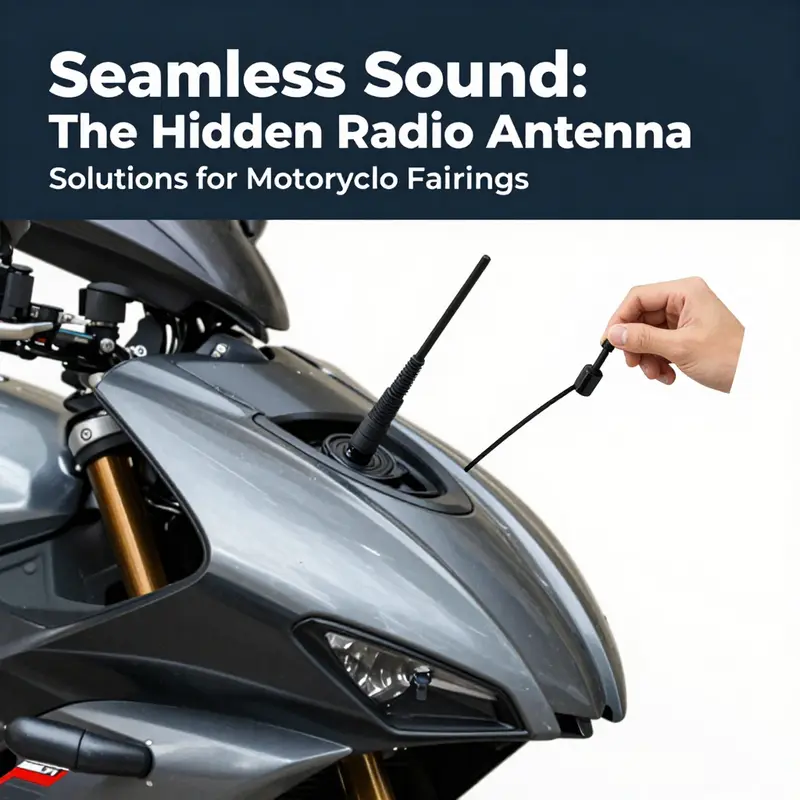
Riding a motorcycle with a clean, uninterrupted silhouette is as much a statement of craft as it is of speed. The fairing, with its curves and contours, acts as a canvas for a modern rider’s electronics as much as for its own aerodynamic performance. The allure of a hidden radio antenna is not merely about aesthetics; it is a deliberate design choice that marries form and function. By concealing the antenna within the fairing, builders and riders remove a visible mount—an external whip that might catch wind, snag on branches, or simply disrupt the lines of a custom paint job. Yet concealment does not mean compromise. The challenge is to place a discreet element in a location that preserves or even enhances reception, especially on a platform already configured with high-end audio and lighting upgrades. In this sense, the hidden antenna becomes a quiet enabler of a more cohesive, integrated riding experience where technology serves the rider without shouting its presence.
A hidden antenna project begins with a clear understanding of what riders expect from their radio system. If the goal is to maintain reception quality that rivals the original equipment, the concealment must be engineered to respect the radio’s impedance and the signal path from head unit to the antenna. A well-tuned, covert design can deliver performance that matches the OE whip and, in some cases, exceeds the reception of shorter alternatives that are popular for their compactness but fall short in range and clarity. For riders with touring setups that include detachable luggage and extended fairings, the aesthetic demands are even higher. The fairing is not just a shell; it is a data conduit, housing modules, amplifiers, and connectors. When the antenna is placed inside, the layout must consider the fairing’s geometry, the glass or composite materials, and the way sound, vibration, and weather influence signal integrity. The result is a solution that remains invisible to the eye but unmistakably present in signal integrity and reliability.
From a product-development perspective, there are three broad pathways to achieving a truly hidden solution. The first pathway targets a model-specific, factory-titted option designed for a well-known touring platform that ships with detachable luggage. This approach emphasizes seamless integration, with tuning that has been optimized for that frame and its typical radio configuration. The second pathway is a universal under-fairing amplifier that can be mounted discreetly on a variety of chassis. It relies on a flexible design that adapts to different makes and models, leveraging a single, robust impedance-matching strategy to keep the signal strong as it travels to the head unit. The third pathway is a plug-and-play fairing-mounted solution that sits inside the fairing itself and connects to a standard AM/FM input jack. This option emphasizes ease of installation, often requiring no cutting or splicing and providing a straightforward route for DIY enthusiasts, while still offering the reliability and weather protection riders demand for long-term use.
When we zoom in on the first approach—the model-optimized, factory-inspired concealment—the value lies in tuning that speaks the language of the bike’s original electrical ecosystem. It is designed to be a seamless companion to other enhancements that owners routinely install, such as upgraded lighting and audio systems. In practice, this means an antenna that fits within the fairing’s internal cavities and clears any reinforcements or mounts that might otherwise interfere with the signal. The result is a clean aesthetic that does not compromise performance. The kit typically includes mounting hardware and wiring that align with the bike’s internal routing, reducing the chance of chafing or pinched cables in the crannies of a crowded fairing. The expertise here is not just in making the antenna disappear; it is in ensuring that, once installed, it behaves as if it were part of the original design, with a signal path calibrated for the radio’s frequency range and resistance to common in-motorcycle interference.
For riders who crave ultimate flexibility, the universal under-fairing amplifier offers a compelling proposition. This approach emphasizes adaptability across brands and models, extending the hidden antenna concept beyond a single platform. The under-fairing location benefits from proximity to the radio equipment, which can help with impedance matching and reduce losses that sometimes occur when routing a signal through longer harness paths. The amplifier, being positioned near the source of power and signal, can help to compensate for inevitable caveats—such as the additional length that the coax or wiring must travel within a tight fairing. The practical upshot is a solution that preserves the sleek exterior while enabling consistent performance with a variety of head units, speakers, and digital audio interfaces. In addition, because the design is less tied to a particular frame, it often proves attractive to riders who switch between bikes or who invest in multiple fairing configurations for different riding seasons or styles.
The plug-and-play fairing-embedded option brings a different discipline to the conversation. Its philosophy is straightforward: if the head unit has a standard AM/FM connection, then the antenna should snap into place with minimal or no alteration to the electrical system. This path emphasizes a simple, predictable installation workflow, relying on plug-and-play connections and weather-resistant housings. The perceived risk is minimized because there is no need to splice power lines or reroute significant portions of the bike’s harness. The installation can usually be completed by a patient DIY rider in a weekend, with the fairing open for a few hours and carefully routed cables tucked away to prevent chafing or heat build-up. Yet even in this simplest approach, attention to shielding, moisture ingress, and physical protection remains essential. The fairing’s climate presents unique challenges—temperature swings, vibration, and exposure to rain or road spray—so the design must endure the test of real-world riding conditions, not just laboratory tests.
Compatibility is a careful conversation about how the hidden antenna will coexist with other aftermarket upgrades. A fairing often hosts more than just radios and tuners. It may accommodate edge lighting, custom speaker enclosures, or amplified audio kits that require additional power and data lines. In practice, riders who fit a hidden antenna alongside lighting and audio upgrades should plan for a Power Extension Harness or an equivalent accessory. This accessory preserves clean power distribution and avoids electrical conflicts, ensuring that the radio remains stable when the lighting kits or audio amplifiers demand sudden peaks in current. It is a small but important detail that preserves reliability and reduces the likelihood of interference or voltage dips that could degrade audio or radio clarity. The goal is a harmonious system where concealment and performance reinforce one another rather than compete for space behind the fairing’s rigid panels.
The installation narrative, while technically focused, is also deeply practical. The plug-and-play approach highlights a straightforward path: locate the available internal cavity, align the antenna within the fairing’s contours, and route the connector toward the radio jack. With a careful, methodical approach—no cutting or splicing required—riders can achieve a clean finish. The under-fairing amplifier route invites a slightly more involved plan, where the installer must decide the optimal mounting point to minimize coil length, reduce potential rFI/EMI interactions, and maintain a tidy cable layout. The model-optimized design, meanwhile, may demand attention to the specific interface with the bike’s detachable luggage system and the way the fairing’s inner geometry shapes antenna routing. In all cases, the installation is a study in restraint: every cable tucked away, every connector protected by weatherproof grommets, every junction sealed to preserve the fairing’s integrity against moisture and salt spray in coastal or winter environments. The beauty is in the discipline—results that feel inevitable once the work is complete, as if the bike had always carried a hidden antenna, designed to disappear into the sculpture of metal and plastic.
The conversation about materials matters, too. Fiberglass and certain plastics can interact with radio waves in distinct ways. The designer’s job is to choose locations that maximize signal capture while avoiding attenuation produced by certain layups or inner reinforcements. In some fairings, the internal geometry creates natural corridors for the signal, guiding it toward the radio without the need for aggressive shaping. In others, sections of the interior may reflect or scatter the signal, requiring careful placement and shielding. The engineer’s toolkit includes not just the antenna itself but a mix of adhesives, sealants, and protective coatings designed to keep the unit dry and shielded from the bike’s vibration and weather exposure. The rider benefits when the installation remains invisible, but the engineering is quietly working behind the scenes to preserve audio fidelity, station stability, and a sense of connection to the road. This is the essence of the hidden approach: it preserves the ride’s mood and the chrome or matte finish of the fairing while sustaining a reliable channel to the world beyond the weather and wind.
For riders who think in terms of ecosystems—where a fairing contains LED accents, a high-fidelity audio system, and a weatherproof radio—the hidden antenna is a unifying thread. It harmonizes power, signal, and aesthetics. When a rider steps back and looks at the bike, the lines remain uninterrupted; the antenna remains invisible; the radio’s voice remains clear at highway speeds where wind noise and engine rumble threaten clarity. The argument for concealment extends beyond vanity. With a properly matched, well-sealed design, wind resistance remains almost unaffected, sensor housings stay aligned, and the entire electronic ensemble breathes in cadence with the motorcycle’s chassis. The result is a more cohesive, resilient electrical system, one that respects the rider’s intent for a clean, deliberate look without compromising the reliability of music, news, or navigation when the road stretches ahead.
In the broader ecosystem of riding, the concept translates beyond a single brand or model. A universal, under-fairing solution can bridge the diversity of aftermarket upgrades that riders often pursue. Whether the rider aims to add a high-output amplifier, a new set of speakers, or a more advanced navigation setup, the hidden antenna becomes a foundational piece that keeps the audio chain intact. It is the quiet enabler that helps maintain a consistent reception as the motorcycle’s electrical load varies with increased accessory consumption. The plug-and-play option, with its emphasis on straightforward installation, also lowers the barrier for newcomers who want to personalize their ride without diving into a complex rewiring project. The three pathways are not mutually exclusive; they are complementary approaches to the same core objective: to maintain a clear, dependable link to radio signals while preserving the fairing’s silhouette and the rider’s sense of immersion in the ride.
To connect this idea with the wider world of customization, consider the possibility of visiting a collection that highlights fairing options from various manufacturers. For riders exploring a broader canvas, the right fairing choice can set the stage for a hidden antenna to deliver its best performance. Think of a range of fairing designs that accommodate internal routing, offering spacious compartments for the antenna module and ample room to run cables with minimal bends. The goal is a synergy between fairing design and antenna engineering, where aesthetics do not force compromises in signal quality and where even the most advanced audio system remains clear and stable across the entire speed envelope. For riders who want to see practical examples of suitable fairings and upgrades, a look into specific fairing collections can be a valuable starting point. The visual and functional diversity across those fairings illustrates how a concealed antenna can be integrated without sacrificing the distinctive character of each platform. The hidden approach thus becomes more than a technical feature; it is a design philosophy that supports a rider’s vision of a cohesive machine.
For readers who want a concrete starting point within a broader ecosystem, consider exploring a niche collector’s catalog that focuses on motorcycles with a broad range of fairings and compatible accessories. A curated selection of fairings from a major aftermarket supplier demonstrates how internal routing and modular hardware can harmonize with a concealed antenna. In practice, this means choosing a fairing that provides ample internal real estate and robust mounting points, as well as a wiring plan that avoids thermal hotspots and sharp bends. The end result is not simply a hidden antenna; it is a carefully integrated system in which every component supports the others, creating a stage where the rider experiences a clear signal, immersive audio, and a visually clean profile that respects the bike’s lines. The philosopher’s stone here is integration: the hidden antenna does not demand a compromise in appearance or function; it fulfills both goals in equal measure, like a well-tuned instrument at the heart of a symphony on wheels.
As you plan a project around a hidden antenna, it helps to keep a few practical reminders in mind. First, confirm the compatibility of the antenna with your radio head unit and the fairing’s internal space. Second, confirm that any upgrade to lighting or audio includes the necessary wiring or a harness to handle power distribution without creating noise or voltage sag. Third, ensure weather sealing around any entry point where cables pass through the fairing wall to prevent ingress during rain or washing. Fourth, when in doubt, consult a qualified installer who can verify that the antenna’s placement provides optimal reception without sacrificing the fairing’s structural or aesthetic integrity. These steps may seem incremental, but they add up to a robust and enduring setup that stays true to the rider’s intentions and the bike’s design language.
In closing this exploration of hidden solutions, it is worth recalling that the reward is not only functional but also perceptual. A hidden antenna preserves the visual integrity of a bike’s fairing while delivering dependable radio reception and a clean, integrated user experience. It supports the rider’s ability to stay connected—to music, to traffic updates, to navigation prompts, and to the shared conversations that accompany long days on the road. In a market where riders increasingly seek systems that blend performance with a refined, cohesive appearance, the hidden antenna inside the fairing stands out as a quiet revolution. It demonstrates how thoughtful engineering can respect both the art of motorcycle design and the science of signal transmission, turning a necessary component into a seamless, almost invisible partner in the ride. The road ahead invites further exploration of how different fairing geometries, materials, and mounting philosophies can expand the possibilities for hidden antennas, continuing a tradition of integration that modern riders have come to expect without sacrificing the thrill of the open road.
For riders who want to delve deeper into related exterior integration topics, you can explore related content on a relevant parts hub that curates a variety of fairing options, including those that support hidden components and streamlined cable routing. This broader resource can help you compare fairing designs and understand how internal routing and weatherproofing practices translate into real-world performance. A practical starting point is to consider Yamaha fairings as a reference for how manufacturers and aftermarket suppliers approach fairing geometry, internal channels, and mounting compatibility. The visual and functional diversity across those fairings illustrates how a hidden antenna can be embedded while preserving the bike’s character. Yamaha fairings give a concrete sense of how internal space can be leveraged to tuck away electronics without compromising form or flow. In this broader frame of reference, hidden antennas become a natural extension of thoughtful fairing design rather than a separate add-on.
To further broaden the technical horizon, an entry-level external resource provides a rigorous treatment of the underlying physics and engineering principles that govern antenna behavior. This external reference helps readers connect the practical installation details with the foundational theory, enriching the appreciation of how a concealed antenna can maintain signal integrity under real-world riding conditions. External resource: https://www.antenna-theory.com/
Final thoughts
Incorporating a hidden radio antenna into your motorcycle fairing offers benefits that extend beyond aesthetics. By choosing specialized solutions for Harley-Davidson models or adaptable universal options, riders can enjoy quality audio performance without unsightly external components. Moreover, with advancements in design, these antennas can be installed with ease, meaning less time in the garage and more time on the road. Ultimately, the decision to upgrade to a hidden radio antenna is a step towards elevating both the visual appeal and functionality of your motorcycle.