
Motorcycle enthusiasts seeking improved audio quality during rides are increasingly turning to motorcycle fairing amplifiers. These specialized audio devices are meticulously crafted for installation within the limited spaces of motorcycle fairings, ensuring optimal sound performance despite challenging environmental conditions. In our exploration, we will delve into the design and functionality of these amplifiers in the first chapter, providing you with insights into how they work and their importance for riders. Moving forward, the second chapter will unpack the technical specifications of these amplifiers, focusing on their efficiency and performance, essential for long-lasting use in inclement weather. Finally, we’ll analyze current market trends and user preferences in motorcycle fairing amplifier selection, helping business owners understand what to prioritize when stocking these high-demand products.
Inside the Fairing: Engineering Sound, Heat, and Precision in Motorcycle Amplifier Design
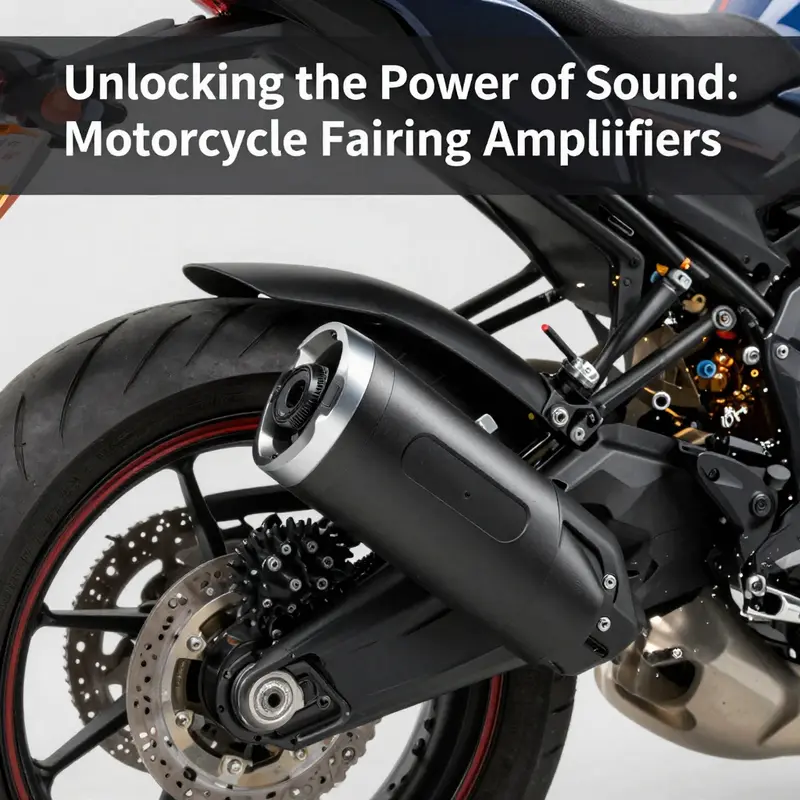
The fairing of a motorcycle is more than a shield against wind and weather; it is a compact acoustic chamber and a finely tuned enclosure that challenges any audio system to perform at its best. In this space, where air moves slowly and every gram of heat must be managed, the amplifier becomes a core component not only of sound quality but of overall reliability. Designers treat the fairing as a sealed, heat-producing micro-ecosystem where electrical efficiency and thermal management play as much a role as signal fidelity. The intent is to transform a head-unit’s modest output into a robust, immersive listening experience that remains stable at highway speeds, in heavy rain, and over rough road surfaces. The path from a raw electrical signal to crisp, dynamic sound thus winds through a landscape of mechanical constraints, thermal physics, and clever electronics. The outcome is a purpose-built device that lives inside the fairing’s tight confines, harmonizing compact size with concert-hall clarity on the open road.
Functionally, the core job of a motorcycle fairing amplifier is straightforward: take the audio signal from the bike’s head unit and drive the speakers with sufficient power to overcome wind noise, helmet acoustics, and weather-induced attenuation. But the real work happens in translating a goal of loudness into a dependable, distortion-free performance. Riders do not want their music to crackle, clip, or disappear when the wind rises or a passing truck roars by. The amplifier must deliver clean power into the loudspeaker load across a broad frequency range while maintaining stability under a spectrum of temperatures and voltages. This demands more than brute force; it requires intelligent engineering—controls that regulate current, guard against shorts, and politely reduce output when conditions threaten to push the system into thermal or electrical limits.
In the design of these devices, efficiency is the first virtue. A high-efficiency topology minimizes power wasted as heat, which is particularly important when the cabinet space is small and the air flow is limited. When one component in a closed fairing consumes watts without shedding them, the heat load compounds quickly, and the result can be audible as hiss, thermal compression, or, in worst cases, protective shutdown. To address this, modern fairing amplifiers employ switching electronics that convert and regulate power with very little wasted energy. The result is not only more usable headroom but also cooler operation over long rides. Engineers express this as a compelling balance of output, damping, and thermal headroom achieved with topologies that minimize switching losses while keeping the device compact and light enough not to impact handling.
Thermal management is the heartbeat of the enclosure’s reliability. The fairing, effectively a cave around the amplifier, often lacks the generous airflow of an automotive dash or a home audio rack. Here, thermal strategies become a science. One-piece cast aluminum chassis is a common architectural choice, because the metal itself acts as a massive heat sink with a high surface area and excellent thermal conductivity. The chassis is designed to pull heat away from the power electronics and spread it across a broad surface, where fins or an extended boundary work with the outer skin to radiate heat into the surrounding air. The result is a robust, passive cooling path that does not rely on fans—an essential attribute in rain, spray, or when riding through heavy traffic with the wind at your back. In addition to the metal’s heft, engineers couple it with well-placed thermal vias, copper heat paths, and carefully arranged internal supports to ensure heat does not bottleneck at a single point. The purpose is not merely to keep temperature within a safe limit; it is to maintain a stable operating point even as ambient temperatures swing from cool dawns to tropical afternoons.
The enclosure and heat sink strategy dovetails with the requirement for weather resistance. A fairing amplifier must tolerate water spray, dust intrusion, and the inevitable vibrations of long-distance riding. Accordingly, the device often wears an IP-rated outer shell, sealing gaskets around connectors, and rugged connectors that resist corrosion and wear. The packaging is as much about reliability as it is about aesthetics—the unit must remain functional after months of exposure to road grime, sun, and rain. Engineers design these components to pass splash and dust tests while keeping ingress paths minimal. The result is an amplifier that can stay inside the fairing for years with little degradation in performance, even if riders do not service it regularly.
All of these considerations must be reconciled with real-world form factors. A fairing amplifier has to be small enough to tuck behind a panel or in a side pocket yet powerful enough to drive the speakers to a convincing level. To achieve this, manufacturers offer multiple configurations, including mono and stereo options, as well as bridged modes that allow fewer channels to deliver higher power into specific drivers. The choice of channel count is guided by the speaker arrangement of the fairing system and the rider’s desired listening experience. The design must anticipate a range of speaker impedances and sensitivities, and the electronics should present a stable load to the head unit across these variations. As a result, the amplifier is sometimes seen as a modular part of a broader audio kit, with a family of variants that share a common architecture while offering different power ratings and channel counts. A rider who wants a simpler upgrade may opt for a single-channel solution aimed at a single, dedicated speaker, while someone seeking a more immersive, stereo field will explore two-channel configurations that preserve imaging and stage depth across the fairing’s interior.
The performance gains from such an upgrade are tangible. The stock audio path is often designed for an economy of space and power, not for high-fidelity playback on a moving motorcycle. When a purpose-built fairing amplifier is introduced, the result is a noticeable uptick in dynamic range, lower audible distortion, and more consistent loudness as speed and wind conditions change. The bass can become more tactile without becoming muddy; midrange clarity improves so vocals and guitars carry more presence; high frequencies remain extended without harshness. These outcomes are achieved not by brute force but by precisely balancing power delivery with speaker impedance, filter design, and circuit protection. The result is a more engaging listening experience that remains stable across the entire riding envelope.
A subtle, but crucial, element of the design is the integration with the bike’s existing electrical ecosystem. The fairing amplifier shares the same 12-volt system as the rest of the motorcycle, which means it must cope with voltage dips, spikes, and transient loads when a rider uses accessories like heated gear or lighting. To prevent popup outages or distortion, designers implement robust protection schemes. Thermal protection clamps output to safe limits if the temperature rises too quickly. Short-circuit protection detects abnormal loads and gracefully protects the amplifier and the rest of the audio chain. Undervoltage protection ensures that a sudden draw from the battery does not waste energy or degrade performance. These safeguards work behind the scenes, allowing riders to enjoy a stable, high-quality sound without worrying about the electrical temperament of the bike.
From a user’s perspective, the installation experience is a key part of the value proposition. A well-engineered fairing amplifier slides into the available space with minimum alteration to the fairing’s structure and with connectors that snap into the pre-routed harnesses. The packaging often includes weatherproof connectors and a compact preamplified input path that accepts the bike’s head unit signal with modest impedance. The goal is a near plug-and-play experience, where a rider can upgrade audio with little or no modification to the vehicle’s original wiring or panels. In practice this means thorough documentation, simple mounting footprints, and an emphasis on routing that avoids heat sources, vibration hotspots, or areas prone to impact. Consumers value not only the sonic improvement but also the convenience of a clean, integrated installation that preserves the fairing’s aesthetics and structural integrity.
Material choice extends beyond the chassis. The interior labyrinth of the amplifier may incorporate stiffeners, shields, and vibration-damping measures to ensure longevity under a spectrum of road conditions. The physical layout aims to minimize the path between the power electronics and the loudspeaker, while still allowing enough separation to prevent interference. The practice of careful layout planning is essential because the harsh environment inside a fairing—where the engine’s heat, exhaust, and road vibration interact—can create subtle, cumulative effects on performance if not properly managed. The result is a compact, rugged unit that remains quiet in operation, with minimal electromagnetic interference that could otherwise color the audio output.
Choosing a fairing amplifier involves weighing several practical criteria. Power output is not the sole determinant; the rider must consider the fairing’s volume, the impedance of the speakers, and the listening environment. A compact, high-efficiency amplifier can outperform a larger, less efficient unit by maintaining headroom without overheating. The form factor must fit behind the panel, within brackets or pockets, while leaving room for wires and heat dissipation paths. The presence of weatherproofing is non-negotiable for touring riders who ride in rain or across dusty terrain. The equipment should exhibit a degree of ruggedness that mirrors the bike’s overall engineering—machined housings, corrosion-resistant terminals, and gaskets that maintain seal integrity after years of exposure.
To illustrate the broader ecosystem around fairing audio, it helps to think of the fairing as an integrated system rather than as a single module. The amplifier, speakers, and head unit each contribute to a chain of acoustic discipline: the head unit provides a clean signal with appropriate dynamic range; the amplifier raises the voltage to match the speaker load; and the speakers convert electrical energy into audible motion with their own mechanical and electrical quirks. The design challenge is to ensure that each link in this chain acts within a narrow window of performance, so that the combination yields a coherent soundstage rather than a collection of isolated sounds. The size and shape of the fairing influence the acoustic response; the location of vents, pockets, and stiffeners shapes resonance modes; and the mounting method dictates how the device handles the mechanical energy of riding. In this sense, the amplifier becomes a mediator between the art of sound production and the pragmatics of motorcycle engineering.
The user experience extends beyond sonic performance. Given the subject’s touring potential, one might consider the long-term reliability of an installed system. A well-designed amplifier exhibits minimal degradation across heat cycles, vibrations, and weather exposure. Maintenance is typically straightforward: verify connections, inspect seals for signs of wear, and ensure that routing remains free of kinks or rubbing against the chassis. A clean, well-assembled installation reduces the risk of moisture intrusion and electrical noise. It also enhances the rider’s sense of confidence, knowing that the audio system will respond consistently to the rider’s preferences no matter the terrain or weather conditions. These characteristics—efficiency, thermal resilience, compactness, protection, and ease of installation—define the practical value of a fairing amplifier and explain why it is a common upgrade for riders who seek an authentic, stage-like listening experience during long journeys or spirited rides alike.
For riders who think about brand ecosystems or model-specific accessories, the fairing remains a popular focus. The inner volumes of various fairings across brands present distinct opportunities and constraints. One recurring theme is how these devices accommodate change across models and years. The core considerations—airflow, space, heat, weather exposure, and electrical stability—remain constant even as the fairing geometry evolves. The best solutions are those that respect the unique character of each bike while delivering a consistent cross-model performance. This is where modularity and adjustable configurations come into play: a single amplifier could be designed to operate effectively across multiple models with configurable input sensitivity, crossovers, and output channels. The rider gains flexibility without sacrificing reliability or the clean integration that makes the upgrade feel like a natural extension of the bike’s original design.
In sum, the motorcycle fairing amplifier is not a cosmetic add-on; it is a carefully engineered device that must perform in a micro-environment where acoustics, heat, and weather intersect with motion and vibration. Its power is the power of precision: to deliver musical authority without drawing attention to itself through heat, wear, or noise. It must be both silent in its operation and loud enough to overcome the wind’s intrusion, yet careful not to overwhelm the rider’s senses or drain the battery. The design language that achieves this balance—efficient power conversion, robust thermal management, compact and rugged packaging, and thoughtful integration with the fairing and electrical system—defines modern motorcycle audio upgrades. A rider who chooses such a device is choosing to expand the perception of the machine: to hear the road less as a mechanical obstacle and more as a living environment where sound, performance, and weather meet in a shared space.
To illustrate the practical path riders can take, consider the small but meaningful act of selecting compatible fairing components. Even within a single brand’s model family, the fairing’s interior geometry and mounting options can vary, demanding careful compatibility checks with any aftermarket amplifier. This is where the concept of an integrated kit—an amplifier plus a pre-configured harness and wiring plan—becomes appealing. It reduces the guesswork and ensures that the amplifier’s inputs, outputs, and grounds align with the bike’s electrical system while preserving the fairing’s contours and protection. When such a kit is correctly matched to the fairing’s geometry, the installation becomes not a modification but a seamless extension of the machine’s design philosophy. Riders who pursue authenticity often value kits that emphasize plug-and-play compatibility and clean, pre-wired integration, aligning with the bike’s aesthetics and preserving the lines that define the fairing’s profile.
For readers curious about model-specific compatibility, one useful cue is to examine how aftermarket options are positioned for different bike families. The vast landscape of fairing shapes—from sportbikes with tight, aerodynamic enclosures to touring machines with broader, more sunken panels—demands that audio upgrades respect the fairing’s acoustic and structural characteristics. In practice, this means choosing a device whose mounting footprint, connector arrangement, and thermal design align with the space available in the chosen fairing. The best solutions are those that feel purpose-built rather than retrofitted, delivering consistent performance across a rider’s repertoire of routes and climates. In this sense, the fairing amplifier becomes not just a device but a design philosophy—an approach that treats every ride as a unique acoustic canvas, shaped by the rider, the machine, and the road.
A practical reminder for enthusiasts is that the journey to great sound is iterative. You start with a clear understanding of the listening goals: the types of music you enjoy, the typical riding environments you encounter, and the degree of weather exposure your bike endures. Then you select a compact, efficient amplifier with a robust thermal design and weather-sealed circuitry. Finally, you confirm compatibility with your fairing and speaker system, and consider a kit that provides a clean, pre-wired installation path. In this approach, the amplifier becomes a bridge between the rider’s aesthetic priorities and the mechanical realities of the bike’s interior space. It is an engineering solution that respects both the craft of audio design and the demands of motorcycle riding. By embracing the fairing as a critical domain for sound, heat, and protection, the rider gains not only louder and clearer music but a more confident and cohesive experience on every journey.
For readers who might be exploring model-specific fitment options, one accessible route is to consider the broad landscape of fairing designs and how they relate to audio upgrades. Among the various families of fairings, some configurations provide ready-made cavities and mounting platforms that simplify the installation of a compact amplifier. This kind of fitment consideration helps ensure the upgrade preserves the bike’s ergonomics and aesthetics, which are themselves a form of performance. With a thoughtfully chosen amplifier and a careful approach to installation, riders can achieve a result that respects the motorcycle’s original intent while expanding its sensory impact. The result is a more immersive riding experience that remains faithful to the machine’s character and the rider’s preferences.
In short, the design and functionality of motorcycle fairing amplifiers embody a synthesis of electrical engineering, thermal science, mechanical packaging, and human-centered usability. They are not merely devices that make music louder; they are components that enable riders to hear more of the journey while maintaining reliability in the wild conditions that road riding entails. The best examples demonstrate a careful balancing act: high efficiency to curb heat, robust heat dissipation to protect performance, compact form factors that respect the fairing’s geometry, and rugged protection that matches the bike’s weatherproofing. When these elements align, the fairing amplifier becomes a quiet partner in the rider’s adventure—a device that disappears into the fairing while lifting the rider’s sense of presence on the road. For those considering a visit into the realm of fairing audio upgrades, the Yamaha fairings collection can be a useful starting point to visualize how modern fairings accommodate such installations while maintaining a clean silhouette and protected interiors. Yamaha fairings illustrate how hardware can be tucked away behind panels without compromising access or serviceability. This example underscores the broader point: the most successful upgrades respect the fairing as a living space that demands restraint, precision, and thoughtful engineering, rather than a simple shell to be filled with louder electronics.
Inside the Fairing: Efficiency, Heat, and Performance in Motorcycle Amplifier Design
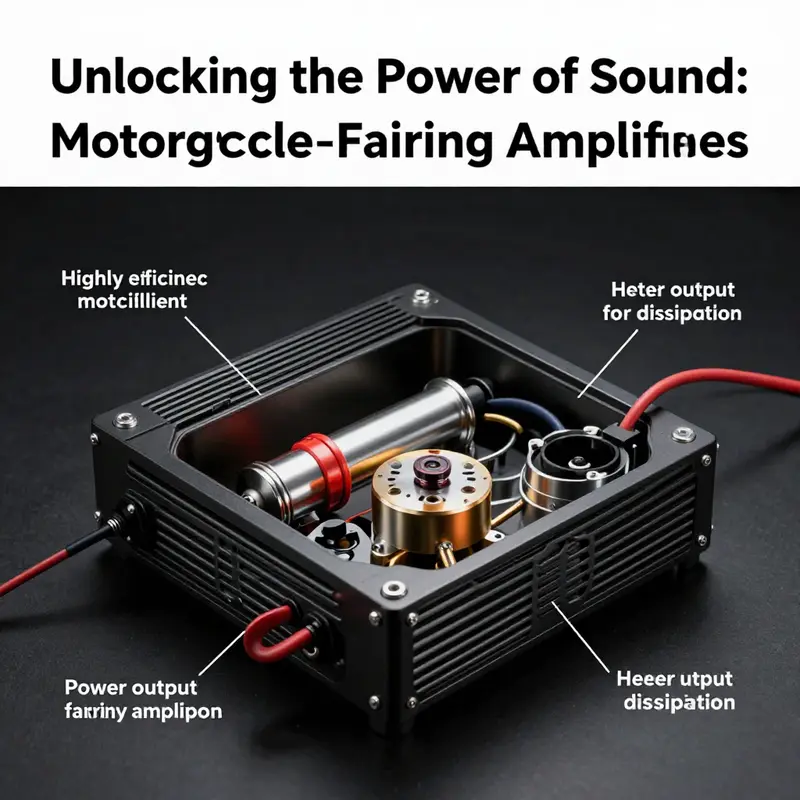
Inside the Fairing: Efficiency, Heat, and Performance in Motorcycle Amplifier Design explores the hidden driver of motorcycle audio—the amplifier tucked into the tight, weathered space behind the windscreen. The chapter moves from glossy specs to a coherent story about translating electrical efficiency into reliable, high-fidelity sound in an enclosure where heat, moisture, dust, and vibration test every component. The central pillar is efficient Class D design, which minimizes waste heat and enables a compact form factor that can be surface-mounted or tucked into structural ribs. The chassis doubles as a heat sink, while careful layout keeps high-current power paths away from the delicate audio signal. Weather sealing and corrosion resistance are essential, with IP-rated enclosures and robust connector systems designed to resist rain, spray, and road grit without compromising cooling. EMI mitigation is treated as a core requirement, not an afterthought, with thoughtful grounding, shielding, and cable routing to preserve signal integrity in a noisy electrical environment. Real-world performance is described in terms of continuous power, signal-to-noise ratio, THD, and frequency response, but the narrative emphasizes listening experience: clarity of dialogue, punchy transients, and balanced bass that remains musical at practical helmet-level listening volumes. The chapter also covers mechanical integration: compact form factors, lightweight materials, vibration-friendly mounting, and routes for wires that minimize resonances and ensure weatherproof connections. Finally, it looks to the future, noting how DSP, remote control, and smarter dynamic range management could tailor sound to helmet acoustics and riding conditions while preserving reliability. This is not a celebration of raw power but a craft of reliable, invisible audio engineering that keeps the rider immersed without distraction.
Riding the Pulse: Efficiency, Durability, and Seamless Integration in Motorcycle Fairing Amplifier Selection

The sound of a ride has always been more than music; it is a companion to the wind, a reflex to throttle, and a statement about the rider’s priorities. In the modern motorcycle, the fairing is not merely a shield against weather and wind but a tightly engineered space that doubles as a listening room, a heat sink, and a mounting plane for electronics. Inside these compact enclosures, every watt of power must be earned, every gram of weight accounted for, and every connection designed to survive a journey that may involve rain, mud, dust, and changing temperatures. The market for fairing amplifiers has grown as riders seek to elevate the riding experience—seeking clarity, depth, and spatial immersion while maintaining reliability across varied riding conditions. What looks like a simple add-on on the surface is, in practice, a carefully balanced system design problem. It requires an artist’s ear for sound, an engineer’s eye for heat and space, and a rider’s sense for durability in the most exposed environments.
Across the board, the central triad guiding most user decisions in motorcycle fairing amplifier selection is efficiency, durability, and integrated design. Efficiency matters because space inside a fairing is at a premium. The less heat a device generates, the less cooling it demands, and the less bulk or airflow it needs to stay within safe temperatures during long rides. Riders are increasingly opting for amplifier architectures that convert a large share of electrical power into audible output with minimal wasted heat. This preference aligns with a broader shift toward Class D amplification, a class of devices noted for high conversion efficiency and compact footprints. In the constrained confines of a fairing cavity, even small gains in efficiency translate into meaningful improvements in reliability and the ability to run the unit for hours without the system entering thermal throttling or needing aggressive cooling strategies. The result is a quieter, cooler, and more stable ride, with more power available for the audible image rather than for cooling that image.
Durability is the second cornerstone. Weatherproofing has evolved from a buzzword into a practical design requirement. Riders confront rain, spray from wet roads, dust kicked up by wheels or off-road terrains, and dramatic temperature swings that stress electronics. The expected life of a fairing amplifier now hinges on seals,Ingress protection, and the ability to tolerate condensation and thermal expansion without compromising performance. A robust enclosure, often with a single-piece aluminum or composite body, can serve as both a shield and a heat sink. The enclosure design matters as much as the electronic internals: a well-chosen housing reduces the risk of moisture infiltration, prevents corrosion of connectors, and keeps critical connections reliable in rough conditions. The durability narrative extends to seals around ingress ports, the ruggedness of mounting hardware, and the resilience of external harnesses that must resist vibration, rain, and road grime without losing signal integrity. The rider’s expectation has moved from “if it can survive a ride” to “it will survive the entire lifetime of this bike under real-world conditions.”
Integrated design rounds out the triad, creating a holistic system rather than a collection of parts. Integration here means more than simply placing a box in a fairing; it implies a harmonized package where amplifier, speakers, and harnesses are designed to work as a matched system. From a product development perspective, integration reduces installation complexity, which in turn reduces the likelihood of errors during the electrical and mechanical fitment process. For riders, integrated design manifests as plug-and-play reliability: a harness that routes cleanly along fairing contours, a mounting plate that aligns with existing attachment points, and preconfigured settings or presets that adapt to common fairing geometries. In practice, integration means less time spent on modifications and more time enjoying clear, stable sound that remains faithful to the source material across the entire speed range and weather spectrum. The net effect is a more predictable performance, which aligns with riders’ preference for a “set-and-forget” approach to their audio system when they are already managing many other facets of the bike’s maintenance and control.
As the market moves toward this triad, the predominant technological path is clear: high-efficiency amplification built into compact, weather-sealed enclosures that can be mounted in the most space-starved corners of a bike’s frame or within the fairing walls themselves. The Class D family, with its reputation for efficiency and compactness, has become the mainstream choice for most riders who prioritize heat management and reliability in a space-constrained environment. These amplifiers operate by rapidly switching current on and off, then filtering the result to reproduce the audio signal. The result is less heat per watt and the opportunity to use smaller heatsinks, thinner chassis, and shorter wiring runs without sacrificing loudness. For riders who ride in varied climates—from cool mornings to hot late afternoons—this translates into a quieter amplifier that remains stable through long sessions under the sun and can tolerate temperature swings without performance drift. In contrast, the so-called warmer tones that some audio enthusiasts crave often require different approaches: more headroom, higher thermal budgets, or even dedicated cooling in some installations. But for the vast majority of riders, the pragmatic advantages of efficiency, reduced heat, and straightforward installation steer the decision toward Class D in most installations where space is a premium and reliability is non-negotiable.
Weather protection has moved from an afterthought to a baseline expectation. IP ratings are not mere marketing terms; they signal the practical boundary conditions under which a rider will rely on the system. An amplifier built to withstand the rain must protect not only against water ingress but also against humidity-induced corrosion on connectors, thermal cycling that could loosen seals, and dust that could abrade contact surfaces. A sealed, gasketed design helps to maintain signal integrity in wet or dusty environments, and ruggedized connectors further reduce the risk of intermittent faults that can ruin a ride. In many installations, the fairing serves dual roles as both acoustic chamber and protective barrier. A compact, well-sealed amplifier can live in a light-tight pocket behind a vented panel, with careful routing that avoids heat pockets or direct exposure to streams of water spray when the bike is washed. The design ethos here is to create a coexistence: you get the fidelity and the reliability without forcing the rider to choose between sound quality and weather resistance.
The rise of integrated kits—where amplifier, speakers, and harnesses are pre-matched and pre-wired for a given fairing model—has reinforced the benefits of seamless design. When a package is built to fit a specific fairing profile, the installation becomes a matter of aligning bolt holes, plugging in connectors, and routing wires along designed channels. This approach minimizes the chance of misalignment or impedance mismatches that can degrade audio performance. It also reduces the chance of tripping over cables during maintenance or cleaning, which can lead to fault conditions over time. The idea is to shift the user experience from “assemble-this-bundle” to “install-this-package,” with that package thoughtfully engineered to integrate within the bike’s existing architecture. It is this level of integration that resonates with riders who want a sound system that complements rather than competes with the machine’s engineering and aesthetic, a harmony that allows the listening experience to emerge from the bike rather than from a tangle of mismatched parts.
An important practical implication of these trends is the emphasis on system matching. The best amplifier for a given fairing is not necessarily the one with the highest total wattage or the widest tonal range. The critical factor is how the amplifier’s output stage, impedance, and protection circuitry align with the selected speakers and the bike’s electrical system. A misalignment—such as an amplifier delivering more power than a speaker can safely handle or a load that creates impedance dips at certain frequencies—can yield clipping, distortion, and, in extreme cases, damage to the drive circuitry or the speakers themselves. The contemporary consumer is increasingly aware of this, moving away from a single-entity “more power is better” mindset toward a more holistic view of how well the entire system behaves under real-world riding conditions. As a result, many riders seek bundled solutions that include matched impedance, prescribed crossovers, and protective features like overcurrent protection and thermal monitoring, all designed to preserve audio integrity under varying engine RPM, ambient temperature, and battery state.
This market movement has tangible consequences for installation culture and rider expectations. Space constraints are not merely a nuisance; they redefine what is technically feasible and economically sensible. The small, tight spaces within a fairing demand components with low profile bodies, efficient heat dissipation, and robust mechanical mounting that can withstand vibration without loosening. Weight matters, not only for performance metrics but for the bike’s own dynamics and handling. A heavy amplifier, perched in an awkward location, can alter the weight distribution and accentuate vibrations, reducing both comfort and longevity. Therefore, the ideal amplifier often becomes a balance of weight, heat, and stiffness of the mounting system—a balance that is typically achieved through a combination of high-strength materials, precisely engineered enclosures, and thoughtfully routed harness sets. This philosophy aligns with how riders approach many other upgrades: the goal is to preserve the bike’s original character while extending its capabilities in a way that feels authentic and dependable.
Riders’ willingness to pay for reliability and integrated performance also shapes the market’s pricing structure. The spectrum ranges from entry-level, budget-friendly options to higher-end, fully integrated kits. In the broader consumer psychology of aftermarket gear, many buyers are attracted by the promise of a turnkey upgrade: a complete kit designed to fit a given bike model, with clear instructions and a warranty that covers the entire setup. This approach reduces decision fatigue and the risk of incompatibilities, a common concern when mixing components from different brands or generations. Even when the price of a full kit sits at a few hundred dollars, the perceived value lies in reliability, ease of installation, and the confidence that the system will harmonize with the bike’s fairing geometry and electrical system for years of service. It is not merely about sound quality in isolation; it is about the confidence to ride farther and longer with a consistent, dependable audio experience.
Looking at the ecosystem more broadly, the product development narrative reflects a race toward harmonized offerings that reduce friction for the rider. Fairing shapes, mounting points, and electrical harnessing constraints are increasingly treated as elements of a design challenge rather than as afterthought constraints. In this context, a rider might explore options that are capable of integrating with equivalent fairing structures across a family of bikes or within a given generation’s design language. This is where a well-curated catalog, such as a Honda fairings collection, can become a practical resource for planning upgrades. By examining how a particular fairing’s geometry accommodates a compact amplifier, a rider can anticipate how a kit will fit and how airflow around the enclosure will behave. For riders exploring fairing configurations on specific models, the Honda fairings catalog provides compatible options. The aim is to reduce the guesswork and make the upgrade feel like a natural extension of the bike’s character, rather than an intrusive modification that requires extensive customization. See for yourself how the structural language of a fairing might accommodate an integrated audio package that respects both form and function.
As manufacturers refine the balance of efficiency, durability, and integration, the long-term trajectory points toward even more sophisticated approaches to power management, thermal design, and environmental resilience. We can anticipate advances in materials with better thermal conductivity, more advanced gasket technologies, and new connector families engineered to resist corrosion and vibration. The result will likely be a set of amplifier solutions that remain unobtrusive in appearance while delivering reliable, high-fidelity sound across a broader range of operating conditions. The rider benefits from a more stable listening environment—sound that remains consistent when the throttle is opened, when the bike is at highway speed, and when weather shifts from drizzle to downpour. At the same time, the design language will continue to honor the bike’s architecture, ensuring the upgrade feels like a natural extension of the vehicle rather than a clumsy add-on that detracts from the ride’s overall quality. In this evolving landscape, education and clear matching recommendations become as important as the hardware itself, guiding riders to choices that maximize both enjoyment and longevity.
For readers who want to explore further how an integrated fairing audio package can fit within a particular bike’s geometry, consider examining a curated catalog that focuses on compatible fairings. The catalog approach helps riders imagine how an amplifier, when paired with the right enclosure and mounting system, can integrate with the bike’s lines and colorway, producing a cohesive aesthetic as well as a coherent acoustic field. As they plan their upgrade, riders often weigh the intangible benefits of reliability and ease against the upfront cost, recognizing that a well-matched system can preserve the bike’s resale value and provide enduring satisfaction on long trips as well as daily commutes. The narrative of this market is not only about the sound itself but about the confidence that the system will endure the road’s demands year after year, season after season.
In the end, the market trends and rider preferences we observe around motorcycle fairing amplifiers are not about chasing the loudest possible output in a vacuum. They are about delivering a balanced, integrated, and weather-resilient sonic experience that respects the bike’s engineering and the rider’s time. The decision process now includes a thoughtful appraisal of power, heat, enclosure integrity, and installation practicality, all tethered to a desire for a system that works quietly in the background, letting the rider focus on the road and the ride. As new materials, smarter heat management, and smarter harnessing emerge, this space will continue to evolve toward even tighter integration and broader reliability, enabling riders to push their machines—and their music—to new horizons without compromise.
External resource for further technical context: https://en.wikipedia.org/wiki/Class-D_amplifier
Final thoughts
The motorcycle fairing amplifier represents a convergence of innovative design and high demand in audio technology for motorcycling enthusiasts. As riders become more selective about their audio experiences, understanding the unique features and specifications of these amplifiers is crucial for any business owner looking to meet their needs. By staying informed about market trends and user preferences, you can stock the right products that enhance rider experiences and ultimately drive sales. Investing in quality motorcycle fairing amplifiers will not only benefit your business but also contribute to the unforgettable journeys of your customers.