
Motorcycle fairings play a pivotal role in enhancing performance and aesthetics by covering key components of a bike. Designed for aerodynamics and protection, they shield the engine and frame from external elements. For business owners, understanding the intricacies of motorcycle fairings—from the materials used to sourcing strategies and supplier evaluation—is essential for excelling in the competitive aftermarket landscape. Every chapter of this article will offer valuable insights, ensuring a comprehensive grasp of motorcycle fairings and their market relevance.
null

null
Durable Skins for Speed: The Materials Behind Motorcycle Fairings
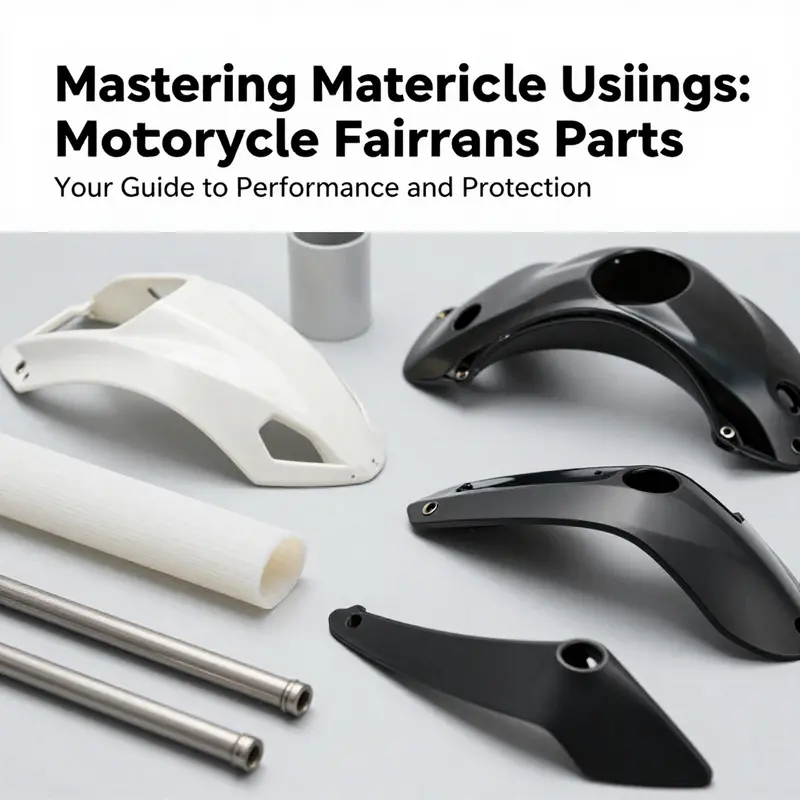
Behind every sleek line and wind-sculpted curve, a quiet story of resilience unfolds. Motorcycle fairings are not mere cosmetic shells; they are the frontline shields that guard the engine, radiators, and electrical nerves of a bike. They must withstand the grit of the road, sudden impacts from stray debris, and the relentless assault of weather, all while staying light enough not to dull handling. The choice of materials is the first grammar of this story—a careful balance of toughness, heat tolerance, and finish that translates into safer rides and longer intervals between repairs. In the broad world of fairings, material science determines how well a shell can protect, how it deforms under stress, and how faithfully it can be repaired after a scratch or a dent. The result is not just a durable shell, but a component that contributes to the rider’s confidence and the bike’s performance envelope over the long haul.
Acrylonitrile butadiene styrene, or ABS, sits at the center of most OEM and aftermarket fairings. This polymer’s practical strength comes from a well-tuned blend of three monomers that, together, deliver impact resistance, flexibility, and processability. ABS can absorb energy from small impacts without shattering, which reduces the likelihood of crack propagation that would compromise aerodynamics and airflow. It also forgives imperfect landings and road tumbles with a resilience that makes field repairs feasible for riders who value longevity over the next-season look. When exposed to engine heat and ultraviolet light, standard ABS can fade or lose gloss unless stabilized, so manufacturers routinely incorporate UV stabilizers and heat-resistant additives to extend service life under harsh conditions. The beauty of ABS is its balance: a durable, repairable shell that accepts paint and finish readily while keeping weight down.
But the conversation doesn’t end with a single polymer. Many producers push ABS beyond its baseline by introducing reinforced formulations. Advanced ABS blends integrate reinforcing fillers or interlayers that raise stiffness and resist deformation at higher temperatures. These refinements improve panel rigidity, helping to preserve aerodynamic contours that are crucial for high-speed stability. In practice, reinforced ABS may be combined with glass fiber or mineral fillers to achieve a targeted balance of rigidity and impact tolerance. The tradeoffs are nuanced: more stiffness can mean a stiffer, sometimes less forgiving surface, which may require more careful finishing and mounting tolerances. Still, when engineered correctly, reinforced ABS contributes to a shell that remains dimensionally stable across a wide range of ambient temperatures and long-use cycles. It also holds color better and resists the micro-scratches that accumulate on highways, preserving both appearance and performance.
In some applications—especially where weight reduction or precise stiffness is essential—designers look to alternatives or supplements to ABS. Polycarbonate offers exceptional clarity and heat tolerance in areas where transparency or near-clear aesthetics are desirable. It can enable windscreen sections that blend with the fairing’s silhouette, but it comes with processing complexities and cost considerations. Fiberglass-reinforced composites provide a lightweight, high-stiffness option, albeit with greater handling considerations during manufacturing and a potential tradeoff in repairability. These materials find homes in more specialized builds or urban-focused designs where the rider demands a distinct look or a tailored ergonomic profile. For most full fairings, however, the default remains ABS and reinforced ABS because of its reliable balance of form, function, and repairability. The continuous thread across all these material choices is compatibility with paint systems, adhesion to primers, and long-term surface integrity under sun and rain alike.
Manufacturing precision plays a pivotal role in translating material choices into durable parts. Modern fairings begin life in highly controlled injection-molding environments where computer-controlled presses maintain consistent wall thickness, minimizing stress concentrations that might invite cracks. After molding, surfaces endure a sequence of finishing steps—primer, base color, clear coat, and protective hardening layers designed to resist chipping and UV attack. The most durable finishes rely not only on the base resin but on surface chemistry and topcoat compatibility. Each layer must bond evenly, resist moisture intrusion, and maintain gloss under outdoor exposure. The production line also contends with essential tolerances: mold wear, material flow, and junctions where panels join must be engineered so that the final assembly remains gap-free and aerodynamically coherent. In the end, the apparent simplicity of a smooth fairing surface hides a meticulous choreography of materials science and process control that keeps every panel performing year after year.
Another layer of realism enters the conversation when considering the global supply chain that brings these parts to market. The contemporary market for wholesale or OEM-compatible fairings benefits from a deeply integrated manufacturing ecosystem. Regions with well-developed molding, painting, and logistics networks can deliver consistent quality at scale and do so with impressive speed. Turnaround times can be significantly shorter in highly integrated regions, with estimates suggesting up to a 45 percent acceleration over more fragmented production models. For retailers and workshop networks, that speed translates into shorter lead times for model-specific shapes and finish options and more reliable fulfillment with fewer delays. The shipping arrangements, including Delivered Duty Paid terms in many markets, simplify cross-border purchases and reduce the administrative burden on distributors who must manage multiple regulatory regimes. All of this matters because durability is not just a material attribute; it is a product of how reliably that material can be molded, finished, and delivered when needed.
With speed and scale come questions of quality and long-term durability. Savvy buyers evaluate suppliers not only on resin quality but on the broader ecosystem—certifications, material traceability, testing data, production capacity, and responsiveness to demand fluctuations. A durable fairing is the result of consistency across batches, not a single great run. Color matching across batches, adhesion integrity between layers, and uniform surface hardness all contribute to a reliable product that resists weathering and maintains its aesthetic appeal. The strongest supplier relationships tend to emerge from ongoing collaboration: shared quality targets, transparent defect rates, and joint planning for color shifts or subtle design changes that a rider may request over years of service.
For practitioners planning repairs, refurbishments, or custom builds, the material story offers practical guidance. ABS’s repairability means chips and scratches can often be addressed with standard automotive paints and a careful blend of color manuals. When a heavier impact occurs, the priority is to assess whether the damage remains within the resin’s ability to absorb energy without exposing underlying structural components. In many cases, a damaged panel can be repaired or replaced with a like-for-like section from a compatible catalog, preserving both fit and finish. The emphasis is not solely on a pristine new look; it is on predictable performance and maintainable upkeep that lets riders enjoy the bike without worrying about mounting a compromised shell back onto the frame.
Across the broader ecosystem, a catalog of shapes, finishes, and interfaces helps shops plan builds and repairs without guesswork. For a reference collection of common fairing shapes and finishes, see the catalog. This resource streamlines decisions about how a given panel will join with adjacent parts and how color matches will persist through a few seasons of exposure. In practice, the most durable outcomes arise from aligning material choice with intended riding conditions, performance goals, and maintenance plans. The synergy among formulation, processing, and logistics defines how well a fairing withstands sun, rain, and road grit, while still delivering the aesthetic that draws riders back to the road.
External resources provide additional technical context to this discussion. For a deeper dive into market-ready plastics and the material choices behind motorcycle bodywork, one external reference offers detailed examples and specifications: https://www.alibaba.com/product-detail/HONDA-CBR250RR-motorcycle-bodywork-parts_1600497825337.html
From Molds to Market: Navigating Trends and Strategies in Motorcycle Fairing Sourcing
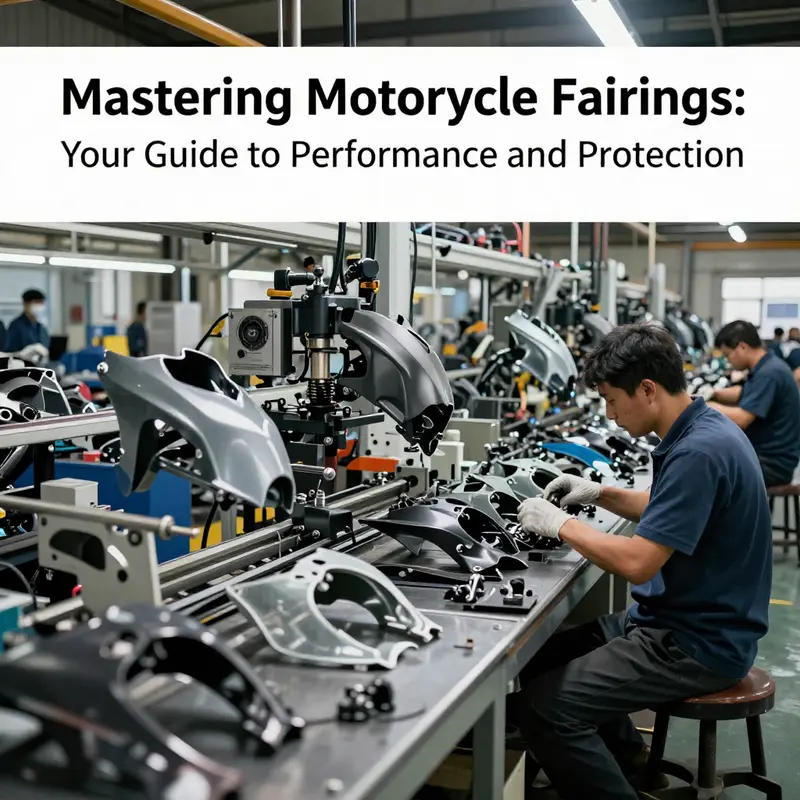
Fairings are more than protective shells. They shape aerodynamics, shield the engine and frame from the elements, and frame a motorcycle’s visual identity. For procurement professionals, fairing parts embody a complex blend of resin chemistry, mold precision, coating durability, and finish uniformity. Choices in sourcing reverberate through a business—from factory throughput and defect rates to dealer fulfillment cycles and after-sales support. The chapter that follows traces the currents of this market, illustrating how changes in manufacturing ecosystems, logistics, and quality assurance reshape the way buyers approach fairing parts across OEM and aftermarket channels. The goal is not merely to obtain parts; it is to secure reliable fit, consistent aesthetics, and predictable delivery within a cost envelope that supports growth in a global distribution network.
Across the manufacturing map, Guangdong Province has matured into a dense ecosystem where multiple steps in the fairing supply chain are co-located. In cities like Guangzhou and Foshan, hundreds of factories specialize in polymer injection molding, UV-resistant coating, and automated painting. This vertical integration minimizes handoffs, reduces variability, and accelerates problem resolution. The net effect is shorter lead times and more dependable output. For buyers, this translates into a measurable advantage: the ability to move large OEM orders or fast-turn custom builds with confidence. In practice, the integrated corridor can deliver timelines that are up to forty-five percent faster than more fragmented regions, enabling a smoother path from design briefs to on-shelf availability. The same hub often supports end-to-end services, including packaging, labeling, and last-mile preparation, which helps streamline international shipments and align with global compliance requirements.
Yet speed is only one pillar. Sourcing today demands a balanced focus on performance, not just price. Buyers now measure suppliers by a trio of indicators that speak directly to execution risk and product reliability. The on-time delivery rate serves as a barometer of operations stability and logistics orchestration. A benchmark above 97 percent signals a coordinated cadence across procurement, manufacturing, and shipping teams. The reorder rate, often cited as a real-world gauge of product-market fit, surpassing 30 percent, indicates that a product line resonates with customers and dealers and that service levels sustain repeat business. Finally, response time matters just as much as the end product. When suppliers respond within six to eight hours to design changes, quality issues, or logistics tweaks, they reduce friction and keep projects moving on schedule. In a world where customization is increasingly demanded, these indicators become the backbone of a resilient supply chain. As manufacturers in coastal provinces and inland hubs alike lift their digital capabilities—tracking tolerances, material lot, and process parameters—their ability to adjust manufacturing windows and perform rapid prototyping improves in tandem with demand volatility.
Customization also reflects a broader trend toward authenticity and model-specific geometry. The market has seen a clear shift toward high-performance customization that respects original fitment while enabling distinctive aesthetics. This is not a simple replica process. It requires precision engineering, robust prototyping, and careful metrology to ensure mounting points, clearance, and fastener alignments remain exact across years and variations. Suppliers are increasingly integrating digital design tools with CNC machining and real-time measurement data to validate fitment long before parts leave the factory floor. In this environment, a buyer’s ability to articulate tolerances, surface finish standards, and coating durability translates directly into faster line stoppage avoidance and lower post-sale returns.
Quality and authenticity emerge as cornerstones of trust in the sourcing relationship. Modern buyers insist on traceability, technical certifications, and documented processes that demonstrate consistent performance from batch to batch. In the wake of heightened expectations, many suppliers maintain bonded warehouses near major ports to consolidate orders and reduce export-import risk. Such hubs enable efficient consolidation, faster customs clearance, and confident Delivered Duty Paid (DDP) shipments to global markets. The result is a procurement dynamic in which risk is managed through visibility, standardized testing, and proactive quality assurance rather than through price alone. For distributors and retailers, this translates into a flatter risk profile, fewer disruptions in peak seasons, and steadier cash flow.
To navigate this evolving landscape, buyers increasingly adopt a hybrid strategy that blends the virtues of traditional relationship-building with the rigor of data-driven procurement. Personal engagement—factory visits, technical discussions, and hands-on inspection—remains valuable for assessing process controls, cleanliness, and environmental compliance. Yet digital tools extend that understanding far beyond the production line. Production dashboards, KPI trackers, and risk analytics provide a window into capacity utilization, yield trends, and supplier responsiveness across weeks and quarters. The fusion of these practices yields a more accurate forecast of lead times, more resilient supplier calendars, and a clearer map of potential bottlenecks. In this synthesis, the craft of sourcing becomes a collaborative discipline, with manufacturers and buyers aligned on tooling changes, color campaigns, and volume planning so that design iterations move in step with production realities.
For those who want a practical reference that conveys how parts are organized and how suppliers categorize offerings, an online catalog can be instructive. A dedicated category page, such as a well-curated Yamaha fairings collection, offers a concrete example of how OEM-compatible parts are grouped by mounting points, finish options, and compatibility with common model-year ranges. While the catalog is only one lens on the market, it helps shorten decision cycles for buyers evaluating fit and finish across options. It showcases standardized interfaces, consistent surface preparation, and repeatable paint quality—attributes that correlate with fewer post-purchase complaints and smoother aftermarket support. Importantly, the catalog path also hints at supply chain discipline: parts that share mounting geometry and finish processes tend to move more predictably through production, packaging, and shipping, which in turn reduces total landed cost and improves dealer satisfaction. See the Yamaha fairings collection for a practical example of how a supplier routes product families and communicates compatibility across a broad spectrum of riders.
The trajectory of motorcycle fairing sourcing points toward a future in which collaboration, reliability, and agility become the baseline. Buyers who invest in rigorous supplier evaluation—covering certifications, long-term capacity, and responsiveness—will be better positioned to meet fluctuating demand and to execute color and trim campaigns without compromising delivery performance. The synergy between regional manufacturing ecosystems, digital tools, and transparent logistics is what enables a credible, scalable fairing supply chain. In this environment, success is measured not only by the ability to secure a low price but by the capacity to consistently deliver the right part, at the right time, with the right finish, to a global network of dealers and customers.
External resource: For deeper strategic guidance on navigating overseas suppliers and mitigating risk, see this external synthesis: Strategic Sourcing of OEM Motorcycle Fairings: Top Chinese Suppliers 2025
null

null
Choosing the Right Manufacturer: A Practical Guide to Evaluating Motorcycle Fairing Suppliers
Selecting a supplier for motorcycle fairings is a decision that affects product quality, lead times, and brand reputation. The right partner supplies consistent parts, adapts to design changes, and protects your supply chain from disruption. To make that choice, apply a structured evaluation that balances technical criteria with practical business concerns. This chapter describes a cohesive approach that combines material inspection, production capability, research strength, service quality, and financial soundness into a single purchasing framework.
Start with the single most important consideration: material and build quality. Fairings are both cosmetic and structural; they must resist impact, UV exposure, and repeated vibration. Inspect sample parts for uniform surface finish, consistent color, and absence of defects like bubbles, warpage, or micro-cracks. Material choice is a key indicator. High-grade ABS or composite polymers show denser, darker interior edges and a rigid feel during flex tests. Lower-grade plastics appear thinner and lighter and often reveal uneven pigmentation under close light. Request documented test results. Reputable suppliers maintain quality records and third-party inspections that verify tensile strength, colorfastness, and UV resistance. Certifications such as ISO and laboratory reports from recognized testing bodies provide evidence that quality is systematic rather than accidental.
Beyond raw material, look for consistent finishing processes. Injection molding quality affects part tolerance and fitment. Tight mold tolerances mean less trimming and a more seamless fit with the motorcycle frame. Precision painting and clear-coating determine long-term appearance. Ask for examples of long-run batches to confirm consistency across multiple units. Photographs alone are not sufficient; insist on physical samples and, when possible, production-line visits or video walkthroughs of the manufacturing process. These direct inspections reduce the risk of receiving parts that match the sample but differ in mass production.
Production capacity matters equally. A supplier that can produce a single custom piece may still be unsuitable if you require hundreds of sets per month. Evaluate factory size, number of production lines, and equipment age. Modern suppliers use automated injection molding and robotic finishing to scale reliably. Confirm how many sets they can produce per week and whether they can ramp up capacity during peak demand. Ask about lead times for standard orders and for emergency replenishment. A reliable manufacturer will offer clear metrics: average lead time, maximum surge capacity, and historical on-time delivery rates. These metrics help you plan inventory and avoid costly stockouts.
Technical and R&D capability is often undervalued, yet it differentiates suppliers who merely copy designs from those who improve them. Suppliers with a dedicated design and engineering team can refine fitment, reduce part weight, and propose reinforcing features that preserve aesthetics while improving durability. Look for evidence such as a history of tooling improvements, mold design patents, or collaboration on design-for-manufacture adjustments. Teams with experienced mechanical or polymer engineers will communicate effectively about tolerances, fastening points, and integration with lighting and hardware. This reduces back-and-forth and shortens development cycles.
Service and support determine how issues are handled once the contract is signed. Evaluate communication speed and clarity during the quoting phase as a proxy for future responsiveness. Assess their approach to change requests: do they provide clear turnarounds and cost adjustments? Check warranty and repair policies carefully. A credible supplier offers warranty terms on defects and a straightforward repair or replacement process for damaged shipments. After-sales support should also include technical guidance for installation or minor modifications, and a plan for handling returns and replacements that minimizes downtime.
Price is a necessary consideration but not the sole one. Low unit cost may hide higher lifecycle expenses such as frequent returns, poor fitment requiring rework, or warranty claims. Compare total cost of ownership: unit price, freight, customs duties, packaging quality, rework rates, and warranty claim history. Negotiate payment terms that balance your cash flow with the supplier’s need for operational funds. Flexible payment structures like staged deposits or escrow arrangements can mitigate risk on both sides. Also assess the supplier’s financial stability. Ask for references or verifiable indicators such as years in operation, major clients, and capacity to invest in tooling and materials. A financially unstable supplier may deliver one or two successful batches and then struggle to maintain production.
When assessing suppliers overseas, consider logistics and shipping solutions. Integrated manufacturers located within major production hubs often offer faster turnaround through streamlined supply chains. They may support DDP shipping and other terms that simplify cross-border transactions. Confirm who handles customs clearance, insurance, and local duties. Verify lead times including production and transit, and evaluate the supplier’s experience shipping to your target regions. Reliable suppliers provide tracking, packaging that prevents shipping damage, and contingency plans for transit delays.
References and ratings form another layer of assurance. Customer reviews, average ratings, and case studies indicate how suppliers perform over time. Ask for client references and speak directly with other buyers about on-time delivery, part quality, and responsiveness to defects. A supplier’s transparency in offering references and production data signals confidence in their operation. When feasible, place a small sample order prior to a full commitment. This validates communication, quality, and logistics before scaling.
Finally, formalize selection with a scorecard that weighs the five primary criteria: quality, capacity, R&D, service, and financial health. Assign numerical weights that reflect your priorities; for example, quality and capacity might carry more weight for a production supplier, while R&D may be decisive for a partner in product development. Use the scorecard to compare finalists objectively and to justify selection to stakeholders. The scorecard can also guide periodic re-evaluation to ensure the supplier continues to meet expectations.
A practical next step is to explore established collections to understand styling, fitment ranges, and common aftermarket configurations. Review a comprehensive vendor catalog such as the Yamaha fairings collection to see typical offerings and compatibility ranges. This helps align technical expectations with market standards and identifies common accessory packages and mounting conventions.
For deeper methodology and best practices in supplier selection, consult industry research that outlines systematic procurement frameworks and risk mitigation strategies. These resources provide further validation for a structured, data-driven supplier selection process and help you build a resilient sourcing strategy.
Final thoughts
Motorcycle fairings are more than just aesthetic enhancements; they are critical components that affect performance and protection. For business owners in the motorcycle industry, understanding the materials, sourcing trends, pricing dynamics, and supplier evaluation strategies is crucial. By leveraging this comprehensive knowledge, businesses can optimize their procurement processes, ensure product quality, and ultimately enhance customer satisfaction. The right fairings not only improve the ride but also solidify a brand’s reputation in a competitive market.