
In the motorcycle industry, fairings play a crucial role in performance, aesthetics, and rider safety, especially for models like the BMW S1000RR. As demand surges worldwide—due to the need for replacements as well as aftermarket upgrades—understanding how to source quality fairings, the intricacies of their manufacturing, and the current market dynamics is essential for business owners in this sector. This article examines key aspects to ensure you make informed decisions about sourcing and selling high-performance fairings for BMW S1000RR motorcycles, discussing everything from supplier evaluations to the latest online marketplaces.
Sourcing Precision: Navigating Global Hubs for High-Quality S1000RR Fairings
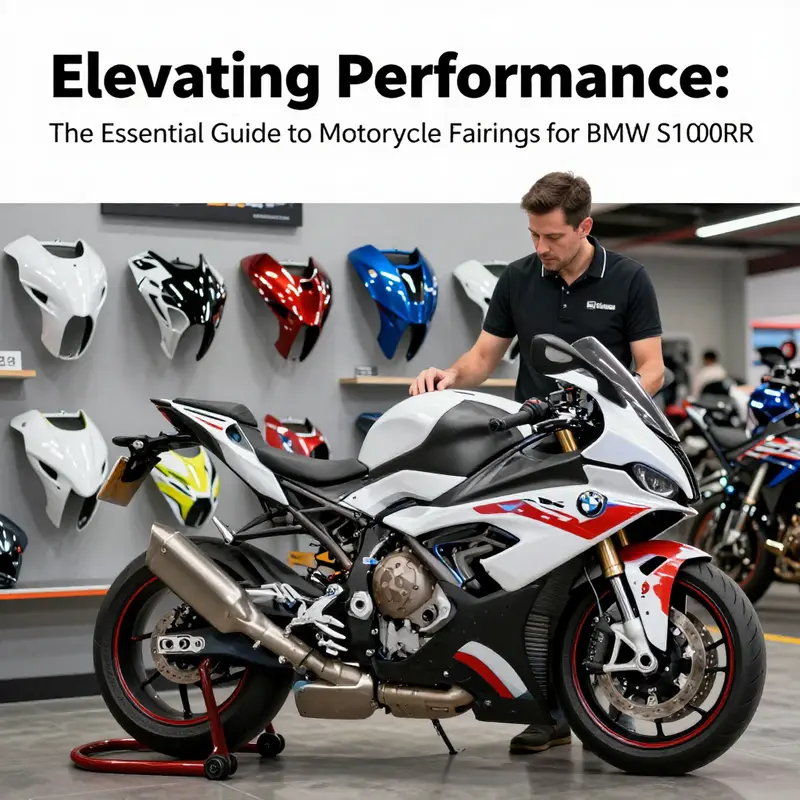
The pursuit of high-performance fairings for the BMW S1000RR extends beyond color or surface finish. It is a careful journey through materials science, precision manufacturing, and dependable logistics, aimed at aerodynamic integrity, structural support, and rider identity. These fairings are critical components that influence stability at speed, rider protection, and the motorcycle’s balance. Sourcing them requires a strategic lens that weighs not only price but fit consistency, environmental exposure of materials, and a supplier’s ability to scale with a shop’s evolving needs. The S1000RR has earned its reputation through disciplined aerodynamics and premium build quality, so buyers must mirror that discipline in procurement. The geography of manufacture matters as much as mold precision, and the right supplier can turn a good set into a reliable performance edge for riders worldwide.
In recent years the global market for S1000RR fairings has grown into a bustling ecosystem, with China emerging as a central node of production. Guangdong Province—particularly Foshan and Guangzhou—has become a focal point for premium-grade fairings. Producers and contract manufacturers in this region have built mature supply chains for ABS plastics and carbon fiber, and they know how to translate complex aerodynamic designs into mass produced parts without compromising tolerances. The factories here handle high-volume runs and agile, small-batch work, a capability for OEM-style replicas and bespoke upgrades. This dual capacity matters because riders often seek fairings that fit exacting dimensions while allowing customization in paint schemes or textures. Rapid prototyping and iteration—driven by local tooling and mold-making ecosystems—shorten lead times and accelerate inspection.
A core strength of Guangdong facilities lies in access to integrated materials and processing technologies that deliver robust, aviation-grade performance in a motorcycle shell. Prepreg carbon fiber, 3K twill laminates, and CNC-machined molds enable stiff, lightweight panels with predictable responses under load. Autoclave curing ensures uniform resin distribution and minimizes voids. For riders who demand UV-stable gel coats and anti-static resins, regional manufacturers can provide these as standard enhancements. The result is a fairing that looks pristine and behaves consistently at high speeds, in varying weather, and after long rides or track sessions. The mix of advanced composites, controlled curing, and surface finishing creates a product that resists environmental wear, maintains gloss, and retains color fidelity over time.
From a procurement perspective the Guangdong cluster offers more than material capability. Local supply chains reduce import friction, lower lead times, and increase transparency in production timelines. Raw inputs such as epoxy resins, dry carbon sheets, release agents, and coating systems can be sourced near the factory, cutting delays from cross-border movement. In practical terms a well-run supplier in this region can shorten the cycle from order to final inspection to roughly 15–25 days, a meaningful gain for brands that balance inventory with aftermarket demand. Proximity to export channels—Shenzhen and Hong Kong, for example—also enhances shipment reliability and scheduling for retailers and repair shops. In a market where a fraction of a second can influence performance or customer satisfaction, these logistics advantages translate into real gains.
Yet speed is not the only strength. Reliability, technical capability, and long term partnership potential must guide decision making. A structured supplier evaluation becomes essential. Buyers should examine on time delivery rates, reorders cadence, and the flexibility of minimum order quantities within clear, timely communication. The modern supply chain rewards predictability; a factory that can forecast material lead times enables distributors to plan without sacrificing quality or speed. The supplier relationship becomes a collaborative venture focused on continuous improvement rather than a one-off transaction. In practice this means identifying facilities with robust quality management systems, ISO certifications, and documented R&D capabilities that can respond to European and North American markets with stringent standards. A partner that can demonstrate traceability from raw materials to finished inspections carries lower risk of disruptions and counterfeit variants.
Within this framework the ecosystem supports both OEM-grade programs and smaller, customization focused orders. For shops requiring OEM-grade fidelity with enhanced material performance, Guangdong can deliver volume with exacting tolerances and finish quality. A Foshan-based company exemplifies how a supplier maintains control over mold integrity, resin infusion, cure cycles, and post process inspection while still accommodating requests like alternate gel coats, anti static properties, or bespoke reinforcement patterns at mounting points. The result is a product suite that fits precisely to avoid gaps, misalignment, or aerodynamic penalties during high speed runs.
The supplier landscape also emphasizes end to end quality control and transparency. Facilities that publish production calendars, verifiable certifications, and real time updates help procurement teams manage multiple SKUs across brands. The ability to consolidate supplier relationships without sacrificing performance is a strategic advantage that reduces administrative overhead and builds resilience against single source vulnerabilities. Buyers should prioritize partners with clear quality assurance programs, from incoming material inspection to final-fit checks and post production evaluations. The goal is not merely a part that fits but a supply chain that sustains high level performance over the life of a project.
Beyond the factory floor, digital marketplaces shape sourcing decisions. Platforms like Alibaba provide verified supplier listings and real time pricing data. The challenge is to sift options while guarding against counterfeit outputs. A disciplined due diligence approach—factory audits, sample units, and customer references—helps buyers build stable, long term relationships. Credible listings combine detailed specs with accessible communication channels so buyers can confirm fitment and material composition before committing to larger orders. A well structured sourcing plan on these channels includes evaluating supplier responsiveness to technical questions, customization options, and post sale support. The aim is to turn a marketplace listing into a reliable ongoing supply arrangement rather than a one time transaction.
A practical implication for purchasing leadership is a formal evaluation framework that translates qualitative observations into measurable criteria. The framework should consider on time delivery history, lead time reliability, response times, and willingness to participate in quality improvement. It should also assess customization capacity and spare parts support for customers who demand color matching, finish durability, or reinforcement enhancements at mounting interfaces. The complexity of S1000RR fairings, with precise radii and contours and integrated mounting provisions, makes these criteria critical. A misstep or late shipment can derail a bike’s schedule, impact shop installation timelines, and erode customer confidence in aftermarket brands.
In addition to technical and logistical considerations there is a broader strategic dimension. The partnership potential—trust, collaboration, and aligned priorities—often yields greater value than a single favorable quote. Suppliers who invest in product development, provide roadmaps for material upgrades, and co-create solutions tend to deliver stable, sustainable outcomes. This matters especially in the aftermarket, where regulations around materials safety, environmental impact and finish longevity can shape future offerings. The most successful sourcing programs balance governance and innovation with price and lead times. A high performance fairing is a living component of the rider’s experience, not a shelf item after receipt.
The sourcing narrative benefits from grounded examples of how a well chosen partner reshapes outcomes for retailers and workshop networks. When a supplier aligns production capacity with demand, maintains transparent schedules, and delivers consistent finishes that resist chalking or micro cracking, the impact is felt across the value chain. The rider who buys a S1000RR fairing expects a precise fit, a predictable warranty posture, and reliable after sales service. A partner that delivers these through proactive quality assurance, accurate documentation, and timely remediation adds real value beyond a single transaction. In a market with abundant choice, this reliability becomes a differentiator that sustains brand loyalty and accelerates aftermarket growth.
This chapter has drawn on market insights and production realities shaping how buyers source BMW S1000RR fairings. The decision to procure a fairing system is strategic, not merely a procurement exercise. The best outcomes come from a deliberate fusion of regional manufacturing excellence with rigorous supplier qualification, anchored by a commitment to quality, speed, and partnership. By recognizing the unique demands of high performance motorcycling and translating them into concrete supplier criteria, buyers can build supply chains that are resilient and responsive. The resulting fairings do more than cover a motorcycle; they contribute to rider confidence, machine stability, and riding experience authenticity.
For readers seeking a current snapshot of supplier ecosystems and pricing dynamics, credible resources provide verified supplier listings, real time pricing data, and detailed product specifications for S1000RR fairings from China. This reference can support due diligence efforts and help procurement teams benchmark capabilities across potential partners. External resources can complement in house evaluations by offering a broader view of what is possible in modern composite manufacturing and the realities of global supply. In the end, choosing the right fairing partner is less about chasing a single advantage and more about building a durable, collaborative relationship that keeps riders safe, bikes performing, and brands credible in a crowded market. External resource: https://www.alibaba.com/showroom/bmw-s1000rr-fairings.html
Precision in Carbon: Inside the Manufacturing Fabric of High-Performance Motorcycle Fairings
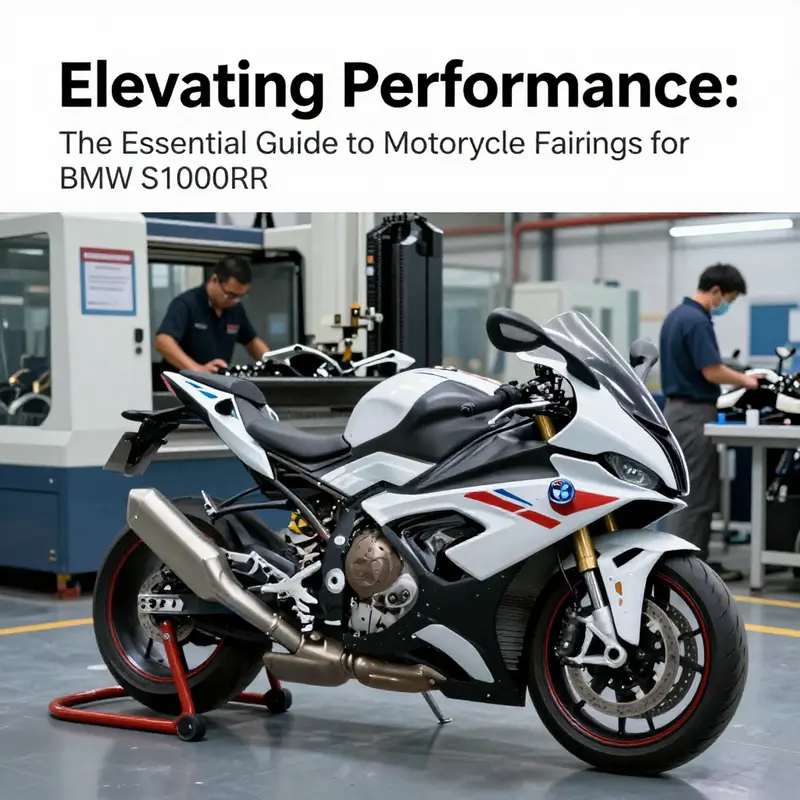
The fairing is more than a cover over internals; it is a carefully engineered boundary between performance and control. In the world of high-performance sport bikes, the fairing must cooperate with engine temperament, rider leverage, and the relentless pressures of wind, heat, and vibration. The modern production of motorcycle fairings—whether conceived for a flagship sport machine or an ambitious aftermarket program—relies on a continuum of materials science, precision tooling, and stringent quality control. The journey from a design sketch to a finished, ride-ready shell is long and exacting, and it unfolds in a way that reveals much about modern manufacturing culture. The chapter you are reading follows a thread through the processes that turn composite materials into aerodynamically efficient, mechanically reliable, and aesthetically compelling fairings that endure the rigors of track days, spirited street riding, and the daily grind.
At the core of high-performance fairings lies a relationship between weight, stiffness, and surface integrity. Carbon fiber stands out for its strength-to-weight ratio and its ability to be formed into complex, aerodynamically tuned shapes. The most common production route for carbon fairings is either a resin transfer molding (RTM) or a wet lay-up process, both supplemented by rigorous curing strategies. In practice, a stack of prepreg carbon fiber may be laid into a high-precision mold, or a dry carbon fabric mounted in the mold will be infused with resin. In either case, the subsequent curing stage is where performance is born. An autoclave is not merely a curing oven; it is a controlled environment where temperature and pressure create a uniformly dense, void-minimized laminate. The result is a component whose stiffness aligns with the rider’s expectations for an edge-of-acceleration response and a chassis that remains predictable when the bike is pushed into cornering with combustion-driven vigor.
The epoxy resin system plays a decisive role, from initial wet-out to final heat treatment. Modern carbon fairings employ prepregs or carefully formulated resins designed to wet the fibers uniformly while resisting micro-cracking under stress. The choice between prepreg systems and resin infusion is often driven by production economics and the scope of the order. For small-to-medium runs that demand tight tolerances and fast turnaround, prepregs cured in autoclaves are a natural fit. For larger volumes or more variable geometries, RTM and related infusion methods offer scale without sacrificing structural integrity. In either path, the emphasis is on repeatability: the fiber-to-resin ratio must be consistent, the laminate must be free of voids, and the external surface must be ready for a high-gloss gel coat or a matte, UV-stable finish that resists chalking and micro-scratching.
Surface finish is where engineering meets artistry. The layup process is followed by a careful surface preparation phase that ends with a UV-stable gel coat providing impact resistance and color stability. The completed shell must weather long-term exposure to sunlight, variable temperatures, and the occasional abrasion from gravel and debris without showing premature degradation. Anti-static resin systems are sometimes employed to minimize static buildup during assembly, a small but meaningful detail that contributes to handling and assembly safety on the shop floor. The aesthetic goal—gleaming, flawless paint or clear-coat over a carbon argued by its weave pattern—requires skilled finishing and meticulous defect control. The finish is not decorative only; it reduces surface friction and maintains laminar flow across the rider’s wake, a subtle but measurable contributor to stability at high speeds.
While carbon fiber is the marquee material for premium fairings, there are practical, cost-conscious paths as well. Fiberglass-reinforced plastic (FRP) remains a viable option for non-critical aesthetic components or for large-batch production where cost containment is essential. The injection-molded FRP route uses thermoset resins with glass mat reinforcing. The result is a robust shell that can be produced at a significantly lower per-part cost, but with a different performance envelope compared to carbon fiber. The choice between carbon and FRP is not simply about price; it is a calculus that weighs stiffness, damage tolerance, and the rider’s intended use. For a bike that will be ridden aggressively on track days, the carbon route remains compelling. For a bike used primarily on the street, a well-executed FRP variant might offer an appealing balance of mass, cost, and durability.
The fairing’s geometry, from fastback tail to sculpted air intake ducts, is not a matter of aesthetic preference alone. Each curve is a vector in a complex aerodynamic field; each cutoff line is a potential boundary for flow separation. The manufacturability of these curves depends on precise tooling and a deep understanding of thermoforming or autoclave-compatible layups. CNC machining plays a crucial supporting role here. Modern tooling produces the precise molds that define the part’s external geometry and the intricate interfaces where fairings mate to frame, engine covers, and subframes. The mounting points, brackets, and fastener pockets must be machined or milled with exacting accuracy to ensure true fit and repeatable performance across a range of production lots. The reference to CNC methods in the production chain is not a luxury; it is a necessity for achieving consistent, repeatable interfaces that can be deployed across the globe with minimal rework.
Quality control is the backbone of reliability. Finished shells undergo surface inspection to identify any pitting, resin-rich areas, or waviness that would compromise either fit or aerodynamics. Dimensional verification confirms that the part adheres to a tight tolerance window for every mounting hole, edge, and clip point. Impact testing, while not always part of every batch, is performed on critical components to ensure that a worst-case impact scenario—such as a stone impact on the track—does not lead to catastrophic delamination. This multi-layered QA regime, implemented after cure, guards against surprises in the field and underlines the commitment to rider safety and performance.
The manufacturing landscape for fairings is increasingly defined by geographic specialization and scale. In recent years, production centers in key manufacturing hubs have developed mature supply chains that enable both OEM-grade components and high-end aftermarket parts to emerge with speed and consistency. In particular, supply chains anchored in coastal provinces with long-standing expertise in composites—regions with well-developed resin systems, carbon fiber preforms, and autoclave capacity—demonstrate robust capabilities. The advantage of these clusters is not only the depth of experience but also the ability to coordinate the entire lifecycle of a part: from resin suppliers and prepregs to mold fabrication, curing, post-processing, and final inspection. This integrated ecosystem reduces lead times and enhances traceability, which is vital for B2B buyers who require reliable production calendars and consistent quality.
The procurement side of fairings is a field of its own. For business buyers and shop managers responsible for sourcing, the evaluation of suppliers extends beyond price. A strategic framework that assesses operational reliability, technical capability, and the long-term potential of a partnership yields better outcomes than price alone. Within this framework, ISO-certified facilities, transparent production timelines, and evidence of prior OEM-grade or OEM-equivalent performance become critical differentiators. Some regions are recognized for their strength in customization and flexibility, while others excel in volume and cost efficiency. Buyers are wise to look for demonstrated capabilities in dye-stable gel coats, resin systems with reduced exothermic risk, and post-mold finishing workflows that deliver a uniform sheen and resilient textures. The dialogue between supplier and buyer, conducted in good faith and supported by verifiable certifications and samples, differentiates a project that ends in a perfect fit from one that ends in delays.
A practical picture of the sourcing landscape is the reality of online marketplaces that host a broad spectrum of sellers. Platforms such as Alibaba and similarly styled marketplaces provide access to a global network of suppliers, with real-time listings and specifications. For a purchaser, navigational diligence becomes a discipline. Requesting factory audits or technical samples, verifying the supplier’s quality-management documentation, and cross-referencing customer reviews are essential steps in mitigating the risk of counterfeit or substandard products. It is also important to test fitment with a small batch before committing to a larger order, ensuring that the claimed compatibility aligns with the customer’s frame geometry, mounting spacers, and bracket placements. From a design standpoint, the goal is a shell that integrates cleanly with the bike’s lines, reduces drag without sacrificing rider visibility, and provides a protective envelope that preserves engine access and serviceability. In the post-purchase phase, a well-made fairing should reassure the rider about long-term resilience, ease of maintenance, and the capacity to withstand the bruising of gravel roads, track debris, and fast-leaving wind pressure.
Sourcing decisions are also shaped by regional manufacturing capabilities and the supplier’s strategic orientation. In some clusters, manufacturers emphasize flexibility for small-to-medium orders and customized finishes, offering a nimble response to boutique demand. In others, the emphasis lies on high-volume throughput and standardized components that meet strict tolerances and robust QA protocols. The value proposition for buyers is the assurance that a given producer can deliver consistent results, maintain supply schedules, and support upgrades or part replacements over the lifecycle of the bike. The modern fairing ecosystem rewards those who marry design intent with manufacturing discipline, so every curve and interface arrives as a repeatable statement of performance and aesthetics.
To close the loop on the technical narrative, it helps to connect the engineering with the rider’s experience. A carbon fairing cured under controlled pressure and temperature offers a tangible advantage in stiffness, with smoother load transfer to the subframe and reduced flex under high-speed cornering. The improved aero behavior translates to a more stable ride, where line fidelity is higher and feedback to the rider is clearer under throttle, braking, and lean. The glossy finish or the matte, textured surface that often accompanies carbon constructions contributes to heat management, as surface roughness can be used to influence boundary-layer behavior without compromising caching of heat from the engine bay. On the mechanical side, precise mounting ensures that the fairing remains aligned with the frame under dynamic loads, preserving the intended aerodynamics without introducing contact with moving components or intercooler ducts. Every stage—from the first layup to the final polish—plays a role in delivering a shell that respects the rider’s need for precise control, predictable handling, and a visual identity that matches the machine’s performance trajectory.
The broader message here is that the marriage of engineering discipline and manufacturing maturity makes possible the kind of high-performance fairings that riders expect. The most successful suppliers are those who can demonstrate consistent quality, clear timelines, and a track record of reliability in demanding markets. They are the ones who invest in tooling, molds, and inspection regimes that guarantee compatibility not just with a single bike, but with an entire family of models that share certain platform characteristics. The growth of the aftermarket is not a story of glittering finishes alone; it is a story of process control, material proficiency, and the ability to translate a shared design language into durable parts that perform when it matters most. If you examine a well-made carbon fairing from any significant producer, you will find in its DNA the same pattern: a meticulously engineered blend of lightweight materials, stable chemistry, precise tooling, and rigorous quality checks that reflect a professional, cross-border manufacturing ecosystem. And if you look closely at the underside, you will see a structure that has been designed not just to look good, but to endure.
For readers seeking a practical touchpoint in this landscape, consider exploring a representative catalog that highlights how aftermarket fairings are organized and presented to customers. A curated entry point can help you understand how parts are described, measured, and compared across suppliers. When you navigate such catalogs, you are seeing the same organizational logic that underpins the manufacturing process: material choice (carbon fiber or FRP), laminate build (RTM or wet lay-up), surface finish (gel coat or paint), and the essential interfaces that connect the shell to the bike’s chassis. This logical framework guides both the engineering team in the factory and the purchasing manager in the showroom, ensuring that every purchase aligns with the rider’s expectations for fit, performance, and durability.
If you are curious about how this world links to broader discussions about motorcycle bodywork, a deeper technical overview of carbon fiber’s role in bodywork can provide useful context. It offers a closer look at how the weave, resin, and curing processes converge to create a part that is both light and tough, and how the interaction of these materials influences the final surface quality. For a broad technical primer, see Carbon Fiber Motorcycle Bodywork Explained, which delves into the composites science behind fairings and how it translates to real-world performance. (External resource: https://www.motorcycle.com/tech/carbon-fiber-motorcycle-bodywork-explained/)
Beyond the technicalities, the market for fairings is a story of global collaboration and careful project management. Each shell that leaves a modern factory is the summation of a global supply chain: a mold produced with CNC precision, prepregs or infusion resins sourced from specialized resin vendors, carbon fiber fabrics woven to exacting standards, an autoclave cycle calibrated to perfect density, and a surface finish that must weather not just years of weather but also the abrasions of aggressive riding. The result is a product that supports the rider’s goals—improved aerodynamics, better heat management, stronger protection for internal components, and a look that communicates speed and precision even when the bike is at rest. In this ecosystem, the most successful parts are those that disappear into the rider’s experience, becoming almost invisible in their effectiveness while delivering a measurable margin of confidence on the road or on the track.
Internal link reference for further exploration of related aftermarket catalogues highlights how distributors and retailers frame the product experience. For readers who want to consider a parallel in another market segment, the Honda fairings collection can serve as a useful comparative reference to understanding how product lines are organized, labeled, and positioned for different bike architectures. This link provides a practical glimpse into how fairings are categorized and presented to buyers across a broad spectrum of models, helping to illuminate the common design language that threads through both primary and aftermarket OEM-like components. See the Honda fairings collection for a representative view: Honda fairings collection.
In sum, the manufacturing of high-performance motorcycle fairings is a discipline that blends high-tech materials with precise process control and global logistics. It demands a careful balance of weight, stiffness, and surface quality, all orchestrated within a framework of reliability and repeatability. The narrative of these components—carbon or FRP, RTM or wet lay-up, autoclave-processed laminae, and rigorously finished surfaces—reflects the enduring driver behind all modern performance engineering: the desire to harmonize speed, safety, and style through components that are as enduring as they are beautiful. This chapter does not merely catalog steps; it traces a continuous line from material science to rider experience, showing how every stage matters when the goal is to deliver fairings that can be trusted to perform under pressure, while reassuring the rider with a surface that looks as fast as it functions. The result is a product that embodies the best of contemporary manufacturing practice: a lightweight, stiff, and visually striking shell whose production story is as carefully engineered as the machine it adorns.
Edge of the Wind: Market Currents, Materials, and Online Gateways Shaping BMW S1000RR Fairings
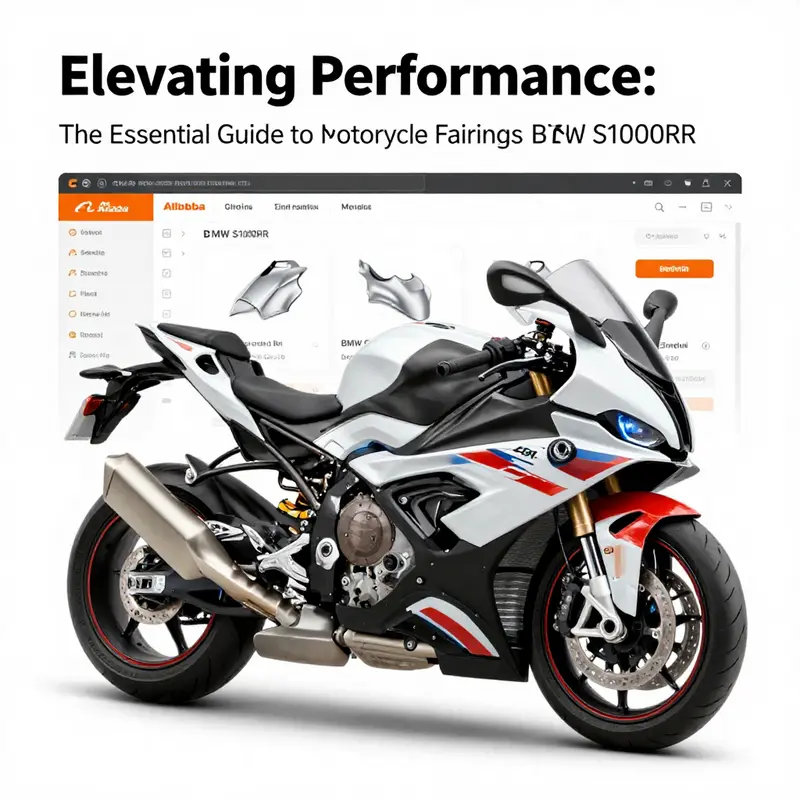
The BMW S1000RR has long stood as a benchmark in the world of superbikes, a machine whose aerodynamic silhouette and high‑tech underpinnings set the pace for what riders expect from a performance fairing.
In the aftermarket ecosystem, the fairings that dress this machine are not mere cosmetic shells but precision interfaces between rider, aerodynamics, electronics, and visible identity. The market around these components reveals a dynamic that blends engineering ambition with commercial opportunity, and shows how a high‑velocity myth can be sustained by the people and processes that extend its profile for riders across climates, purposes, and budgets.
At the core of current market dynamics is a push toward aerodynamic refinement that complements the S1000RR’s chassis geometry. Enthusiasts seek fairings that preserve or enhance downforce at speed while also reducing pitched moments that destabilize the bike in gusts or during rapid direction changes. This has translated into fairings with more efficient front spoilers and redesigned air intakes, offering a broader set of options that promise improved stability on open‑road track stretches and highway straights. The shift is about a holistic reinvention of how air moves around the bike and how the rider perceives the machine when wind pressure climbs and tires bite into the pavement with renewed confidence.
Coupled to that aerodynamic drive is a rising appetite for customization and personal expression. Riders want the S1000RR to resemble a bespoke machine, even when sharing a core platform. Custom paint jobs and bespoke graphics have moved from niche to mainstream. Popular themes echo racing heritage and brand aesthetics, with bold two‑tone contrasts, high‑gloss finishes, and UV‑stable gels that resist sun fading. The visual language of a fairing now communicates as loudly as its performance signature.
Material innovation sits at the heart of both performance and visual goals. Original equipment manufacturer fairings have long relied on high‑impact ABS plastics for durability and cost efficiency. The aftermarket segment is embracing carbon fiber or carbon composites for reduced weight and enhanced stiffness, especially for track riders. The latest carbon offerings use prepreg 3K twill, machined molds, and autoclave curing to minimize voids and achieve a satin‑smooth surface. UV‑stable gel coats and anti‑static resin systems guard against environmental hazards and static buildup during high‑speed riding, ensuring a fairing that maintains structural integrity under heat and vibration.
The supply chain behind this marketplace is a story of specialization. China remains a dominant global supplier for S1000RR fairings, with production hubs in Guangdong, Fujian, Zhejiang, and Shanghai. Leading centers feature prepreg carbon fiber, CNC‑machined molds, and autoclave curing, contributing to OEM‑grade appearance and fit. Lead times from order confirmation to final inspection commonly reflect a just‑in‑time approach, with ranges around 15–25 days to balance reliability and demand. This geography underpins cost, quality control, and responsiveness for B2B buyers seeking consistency across seasons and race calendars.
In practice, procurement decisions favor suppliers with ISO certifications, robust R&D, and traceable materials. Zhejiang, Shanghai, Fujian, Jiangsu, and Anhui are often cited for a mix of process discipline, customization capability, and cost efficiency. Buyers verify certifications, request samples, and confirm production timelines, while also considering post‑sale support and warranty terms as essential parts of the value proposition. Digital marketplaces then act as gatekeepers and accelerators, encouraging precise product specifications, rich imagery, and verifiable reviews, while reminding buyers to beware of counterfeit or substandard finishes.
For those seeking a concrete path, a disciplined procurement mindset helps. Start with a shortlist of ISO‑certified suppliers with clear lead times and sample programs, assess fitment against a decal template, and examine weatherproofing for connectors and seals. Consider the total cost of ownership, including installation, repainting, and warranty. As the market matures, buyers will increasingly leverage data such as defect rates and after‑sales service metrics to shape decisions. The practical outcome is an ecosystem where aerodynamic ambition, material science, and supplier collaboration come together to deliver a fairing that meets or exceeds OEM standards while allowing riders to express their identity.
The end result is a wind‑driven collaboration between rider, builder, and manufacturer, where online marketplaces democratize access to high‑quality components while elevating transparency across listings, specifications, and reviews. The S1000RR fairing ecosystem is not merely about panels; it is about a resilient network that supports reliability, fit, and performance, with lead times, test panels, and warranty processes that build confidence for owners and teams alike.
If you are seeking a starting point for supplier data and real‑time pricing, the contemporary English‑language resource landscape provides centralized showrooms that aggregate verified listings and timelines, helping buyers understand how this modern market operates in 2026 and beyond: https://www.alibaba.com/showroom/bmw-s1000rr-fairings.html
Final thoughts
Understanding sourcing, manufacturing, and market dynamics is crucial for business owners dealing in high-performance motorcycle fairings for the BMW S1000RR. As the demand accelerates, aligning with reputable suppliers, grasping the complexities of production, and utilizing effective online channels will ensure your business thrives in this competitive landscape. Investing in quality is not just about aesthetics; it’s about building trust with your customers through reliability and performance.