
Motorcycle accessories that combine aesthetic appeal with enhanced functionality have become essential for riders looking to elevate their experience. The Reckless Industries 2-Speaker Batwing Fairing stands out as a prime example, offering not just visual flair but also a rich audio experience during rides. This article delves into the benefits, key features, installation compatibility, technological aspects, and market insights related to this innovative fairing. By understanding each chapter, business owners can appreciate how this product could serve their customers and fulfill market demands.
Riding Soundscapes: How a Dual-Speaker Batwing Fairing Rewrites Comfort and Style on Long Miles
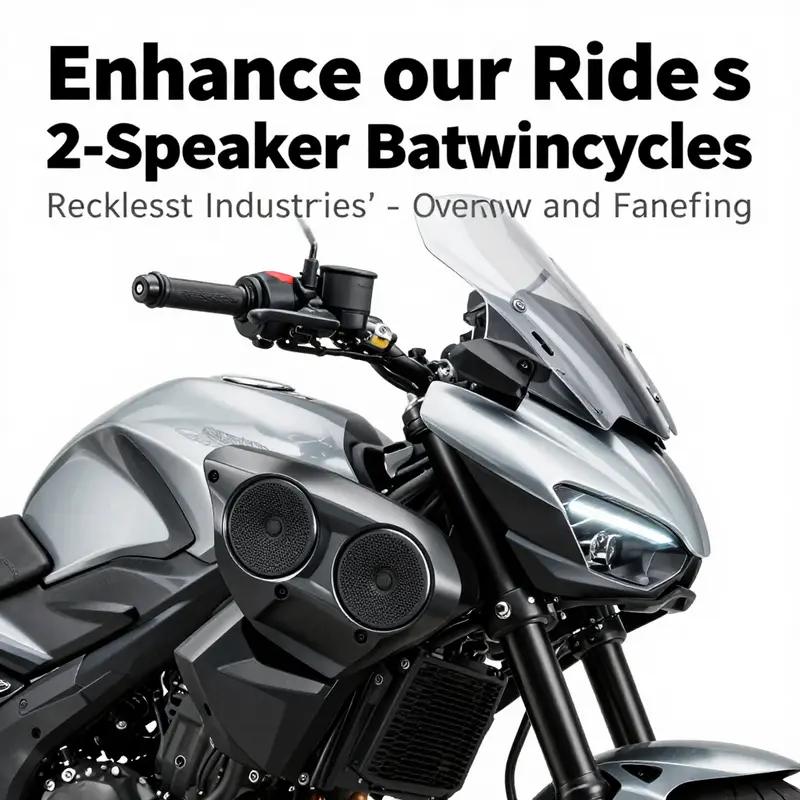
Wind is the constant companion on a long ride, a force that can erode resolve as reliably as any distant horizon. When the road stretches and fatigue starts to press in, riders often search for solutions that address comfort, clarity, and connection without asking them to surrender control. A dual-speaker batwing fairing offers one such solution, not by altering the physics of the ride, but by reorganizing the rider’s personal environment around the wind and the road. It works as a single, integrated system where form follows function, and function, in turn, enhances form. The result is a smoother ride that feels less like a fight with the elements and more like a conversation with the road itself. What makes this particular fairing meaningful is not merely its ability to direct air but its capacity to couple that air’s theater with a listening experience that travels with the rider from city streets to open highways. The design embodies a careful balance between aerodynamics and audio, creating a practical canopy that also serves as a stage for sound. The wind deflection remains the headline feature, and it is engineered with intent. The batwing profile is sculpted to redirect fast-moving air away from the torso and head, diminishing the buffeting that can sap energy and attention during hours in the saddle. The rider’s helmet and shoulders are shielded by a broad, gently curved surface that channels the breeze into predictable patterns rather than turbulent, unpredictable gusts. This not only lowers fatigue but helps maintain posture. When muscles stay looser and the spine remains aligned, concentration can stay with the ride, with less time spent fighting the environment and more time spent enjoying the journey.
Pairs of speakers are the other half of the story. A built-in audio system is not a mere accessory; it is a deliberate extension of the rider’s cockpit. The two speakers are positioned to deliver clear, balanced sound without overwhelming the rider’s perception of wind noise or traffic cues. At highway speed, where wind pressure can scatter vibrations, a well-tuned pair of drivers can deliver a consistent stereo image that feels immersive rather than distracting. For someone who uses music to set cadence on a long voyage or to keep hands-and-brain coordination sharp during navigation prompts, the audio system becomes a practical companion rather than a luxury. The speakers are designed to work through a range of connections, including auxiliary inputs, wireless Bluetooth, and USB, which means riders can diversify their sources without juggling adapters mid-ride. The listening experience becomes less about cranking up the volume and more about preserving the soundtrack of the road in a way that remains readable over the engine and wind. This approach to audio is especially important on bikes where wind and road can quickly erase subtleties. The result is audio that maintains fidelity and presence, letting a guitarist’s legato or the singer’s breathy phrasing land with clarity even as the bike breathes through shifts and downhills.
The fairing’s silhouette does more than house speakers; it anchors a complete sense of intention. The batwing shape is iconic enough to contribute to the bike’s visual language, signaling a stance that is both protective and assertive. The lines of the fairing echo the bike’s own geometry, creating a cohesion between machine and accessory. When riders look at their reflections in showroom glass or in the chrome of a passing truck’s reflection, the fairing reads as a purposeful modification rather than a decoration. This alignment of aesthetics and function matters because riders often gauge the value of an aftermarket addition by how seamlessly it integrates with the bike’s identity. A well-integrated fairing makes the ride feel more cohesive, and that sense of unity is part of the experience as much as its performance metrics.
From a practical standpoint, installation and compatibility play a central role in whether a rider will feel the fairing’s benefits from day one or after patiently negotiating fitment questions. The design emphasizes straightforward attachment to a range of models, with mounting options that can accommodate different preferences for installation speed and permanence. A boat-style mounting system offers a robust, semi-permanent solution that can be trusted in demanding conditions, while a plug-and-mow style approach provides a more serviceable path for those who like to swap configurations without specialized tools. The overarching philosophy is to offer a secure, stable foundation that keeps vibrations in check and audio output stable, so that the rider’s focus remains on the road rather than on the installation process. The compatibility story is grounded in a recognition that riders move between bikes with some regularity, and a modular approach to mounting can reduce downtime and frustration when a new bike arrives in the garage.
The experience is also about how this integration affects rider comfort over time. Wind fatigue is a legitimate, measurable constraint on endurance. A well-designed fairing reduces this fatigue by altering the way air interacts with the rider’s body. That reduction translates to longer, more comfortable riding sessions and, by extension, more opportunities to explore new roads, new routes, and even new playlists. The product’s audio system complements this by offering consistent audio output that remains intelligible across a spectrum of speed and wind conditions. In practice, this means a rider can listen to a carefully curated mix or a navigation cue without leaning forward or cranking the volume to compensate for wind noise. The result is a more relaxed posture, less physical tension, and a greater sense of control over the riding environment. The combined effect—wind deflection plus reliable audio—creates a sensory framework in which sound and wind become predictable elements of the ride rather than disruptive forces. This is how a single accessory can become an essential part of the road experience.
In thinking about the broader ecosystem of aftermarket wind protection and audio integration, it helps to consider how riders relate to their machines. The fairing speaks to a desire for both performance and personality: the rider who wants to project a bold look while reclaiming everyday comfort. The two-speaker setup invites a degree of social connection, enabling hands-free communication and shared listening experiences that reflect a modern motorcycle culture that blends individual exploration with a sense of community. The aesthetic, the airflow dynamics, and the audio pathways all cohere into a single representation of modern riding: a balance between the openness of open roads and the intentional enclosure of a cockpit where the rider can think, listen, and ride with clarity.
For readers who want to explore related options within the broader market, there are multiple configurations and styles that share this spirit of integrated wind management and audio functionality. If you are curious about how this concept fits into the wider catalog of fairings and mounting systems, a nearby collection of Kawasaki fairings offers a spectrum of designs that emphasize the same core principles—wind deflection, rider comfort, and a modular approach to installation. Kawasaki fairings collection provides a useful portal to understand how different models in the lineup approach fit, finish, and mounting hardware while maintaining an emphasis on rider experience. This context helps frame the batwing’s value not as a standalone piece but as part of a broader strategy to optimize both comfort and presence on the bike.
As riders consider their next upgrade, it is worth remembering that the best accessories are those that recede into the performance narrative rather than interrupt it. The dual-speaker batwing fairing exemplifies this principle by delivering practical wind management and dependable audio without compromising the machine’s silhouette or handling. It stands as a reminder that modern riding often involves layered improvements: better aerodynamics, smarter sound, and a design language that respects both the rider’s needs and the bike’s identity. For someone planning longer trips with companions or simply seeking a more engaging solo ride, such a package can transform the everyday commute into a more immersive journey. In this sense, the fairing becomes less about altering a machine and more about enhancing the rider’s relationship with the road—the wind, the soundscape, and the shared rhythm of miles passing beneath the wheels.
External reference: https://www.recklessmotorcycles.com/products/2-speaker-batwing-fairing
Sonic Wings: The Dual-Speaker Batwing Fairing and the Modern Cruiser Experience
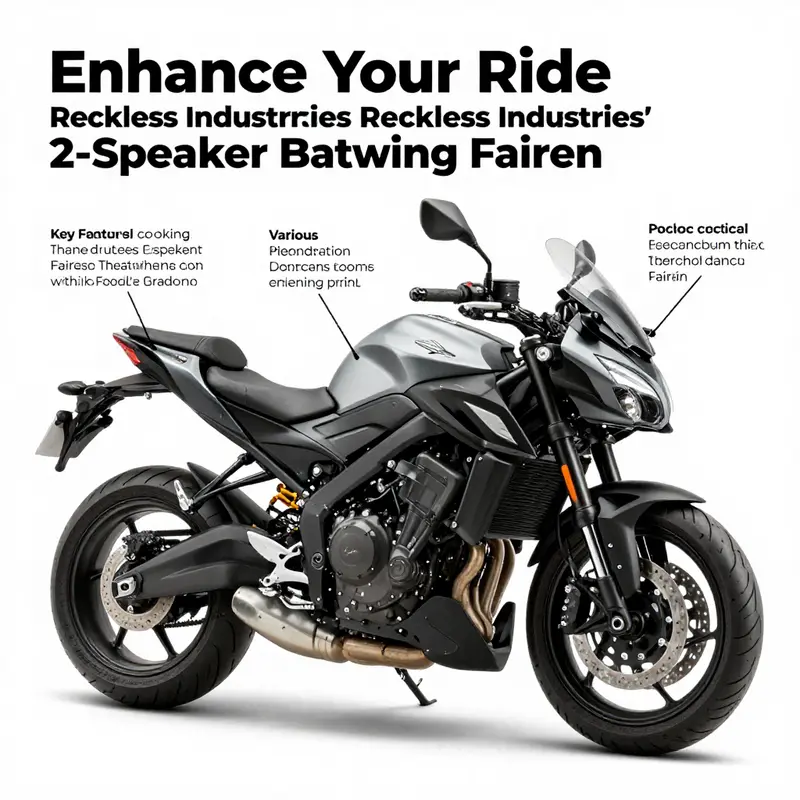
A motorcycle’s silhouette often speaks first, a batwing fairing signaling intention before the engine even roars. Yet when a fairing is more than a shield against wind and weather, when it functions as a doorway to sound, the rider’s experience shifts from merely riding to composing a mood on the fly. The concept of a dual-speaker batwing fairing is not just an upgrade in gadgetry; it is a careful fusion of acoustics, aerodynamics, and ergonomic design. In this narrative, the fairing becomes a tuned system, its interior chambers shaped to guide sound toward the rider while preserving the lines and integrity of the bike’s original form. The result is an integrated audio environment that feels less like a gadget strapped to the side of a machine and more like an extension of the rider’s senses. The joining of sound and sculpture is a reminder that the best enhancements disappear into the ride and only the benefit remains obvious: music, voice prompts, or the pulse of an emergency alert, all accessible with minimal distraction.
At the heart of this design is the integration of two high-quality speakers fitted directly into the fairing. Rather than mounting bulky components on ridiculous brackets or creating wind-blasted pockets of turbulence, the speakers are positioned to balance dispersion and fidelity. The enclosure geometry is tuned to reduce vibrations that would otherwise color the audio with wind noise and chassis resonance. In practice, the rider perceives a stable stereo field where the left and right channels sit in a coherent stage, even at highway speeds. This is not merely about volume; it is about spatial accuracy and warmth of tone. The enclosure acts as a resonant chamber that helps the midrange breathe and the highs stay crisp, while the bass is delivered with surprising punch for a unit that remains visually and aerodynamically streamlined. The result is an audio experience that feels intimate, as if the music were whispering from inside the fairing rather than broadcasting from an external module.
Designers emphasize fit as the cornerstone of a seamless upgrade. A fairing built for cruiser geometries—broad, rounded, and generous in curvature—provides a natural home for dual speakers without creating gaps or misalignments. The goal is a precise integration that respects the bike’s factory aesthetics, so the upgrade reads as an original feature rather than a retrofit. When a fairing matches the contour of the motorcycle’s lines, it preserves the clean profile that riders prize while expanding the cockpit’s sensory reach. The broader effect is a sense of cohesion: the music or navigation prompts accompany the ride with the same confidence the body feels from its seat and handlebars. For riders who crave a touch of customization without compromising the bike’s identity, this approach offers a compelling balance between form and function. Within this design philosophy lies an invitation to explore how audio can reinforce the rider’s intention—whether it is to energize a spirited cruise, to map a new route with confidence, or to savor a favorite track as the kilometers unfold.
Connectivity is another essential thread in the fabric of a modern batwing audio system. The dual speakers can be fed through multiple input methods, ensuring compatibility with a range of devices and preferences. An auxiliary input allows quick acceptance of a portable player or another source, while a Bluetooth interface enables wireless streaming from a phone or a dedicated device. USB connectivity provides a reliable option for direct digital playback or for firmware updates that preserve performance over time. The capability to switch seamlessly among these inputs means the rider does not need to choose one source of entertainment over another; instead, sound becomes a flexible tool that adapts to the moment. The practical advantage extends beyond music: turn-by-turn navigation audio, ride data readouts, or safety alerts can be delivered through the same channels without demanding attention away from the road. The day when a rider had to choose between function and form is fading, replaced by a design ethos that treats audio as a contextual extension of riding rather than a separate accessory.
The aesthetic proposition of a batwing fairing remains integral to the rider’s sense of identity on the road. The batwing silhouette is recognized instantly, a symbol of confidence and presence. By maintaining this profile while integrating a self-contained stereo system, the design preserves the iconic visual language that riders value. The interplay between shape and sound is more than cosmetic; the fairing’s curvature helps to shepherd wind around the rider and away from the speakers themselves, reducing fatigue and turbulence. A deliberate curvature also guides sound waves outward, broadening the stereo image for both the rider and any passenger. The result is a visual statement that does not fight against modern audio tech but embraces it within a familiar and purposeful form. In the best executions, the fairing’s look remains timeless; the audio system becomes a subtle acceleration of the ride’s emotional cadence, turning a long freeway stretch into a concert hall with a moving backdrop of scenery.
Installation that respects the machine’s original cues is a recurring theme in refined fairing upgrades. A factory-style approach to installation means the upgrade can slot into the bike with the same attention to detail that builders dedicate to a stock component. This philosophy reduces the risk of misalignment, minimize drilling or non-reversible alterations, and preserves the bike’s resale value. The mounting strategy often involves straightforward, service-friendly brackets that attach to existing anchors or simple mounting points. Some configurations offer multiple mounting options, such as a boat-style mount or a plug-style mount, to accommodate different riding setups and personal preferences. The emphasis is on ease of maintenance and reliability. Riders should expect a clean, integrated look that does not interrupt the fairing’s aerodynamic performance or the bike’s overall balance. When maintenance becomes a routine rather than a disruption, ownership becomes more about the pleasure of riding and less about the anxiety of upkeep.
Beyond the immediate sensory payoff, riders often reflect on how such an upgrade affects comfort and fatigue on longer journeys. Weatherproofing is a practical concern; the enclosures are designed to withstand rain, sun, and just the ordinary salts and grime of road life. Durable materials and sealed interiors protect the electronics from the worst that riding days can throw at them. A well-executed setup also minimizes the weight penalty, preserving the bike’s handling and steering feel. The rider experiences steadier steering input, clearer audio at various speeds, and the sense that the chassis and system are communicating rather than competing for attention. These nuances matter when the road stretches ahead and the sun dips toward the horizon. The music, the navigation cues, and the rider’s voice of experience all unify in a single, coherent arc—sound that follows the rider’s intent rather than overpowering it.
For those who are curious about the broader ecosystem of fairing upgrades, the landscape includes a wide range of shapes, sizes, and integration philosophies. A skilled installer or a thoughtful enthusiast will look at the bike’s existing electrical architecture, the rider’s preferred listening experience, and the vehicle’s wind management to determine the best path forward. The conversation is not simply about adding speakers; it is about pursuing a harmonious interface where audio reinforces the ride without drawing attention away from the road. In practice, this means choosing a system that respects the bike’s original aesthetics while offering a simple path to future upgrades. It also means recognizing that the best outcomes come from balancing fidelity, durability, and ease of installation. When done well, a dual-speaker batwing upgrade feels less like a modification and more like a natural evolution of the motorcycle’s character. For readers who want to explore similar paths in other brands or models, a broad category of fairings and mounting options is worth examining, and one relevant collection to begin with is the Yamaha fairings catalog, which provides a glimpse of how manufacturers approach fairing design across a spectrum of bikes. Yamaha fairings collection
As a part of the ongoing conversation about how riders experience their machines, it is helpful to consider external perspectives and real-world feedback. The broader community often notes that an integrated audio platform should enhance, not complicate, the riding experience. When properly implemented, the system fades into the background as the rider focuses on the road, the ride itself, and the moment’s soundtrack. The durability and the ease of installation can influence a buyer’s long-term satisfaction as much as acoustic quality. In short, the best batwing audio upgrades harmonize three key elements: the sound system’s technical excellence, the fairing’s iconic look and aerodynamics, and the practicalities of fit, weather resistance, and maintenance. This synthesis creates a living, responsive cockpit where music, navigation, and voice prompts support the rider’s intent instead of distracting from it.
For readers seeking further context beyond the chapter’s scope, a practical starting point is to explore industry examples and installation approaches from established retailers and manufacturers who emphasize factory-style integration and rider-centric design. These resources help illuminate how a dual-speaker batwing concept translates into real-world performance, reliability, and lasting value. External references offer a broader frame for evaluating how audio integration interacts with bike geometry, rider posture, and the evolving expectations of modern cruising. In the end, the journey from concept to road is a craft—the art of crafting a soundscape that sits comfortably within the bike’s physical and emotional landscape, rather than an add-on that competes with it.
External resource: Reckless Motorcycles Official Site.
Sound on the Move: Installation, Compatibility, and the Reckless 2-Speaker Batwing Fairing for Vulcan Nomads
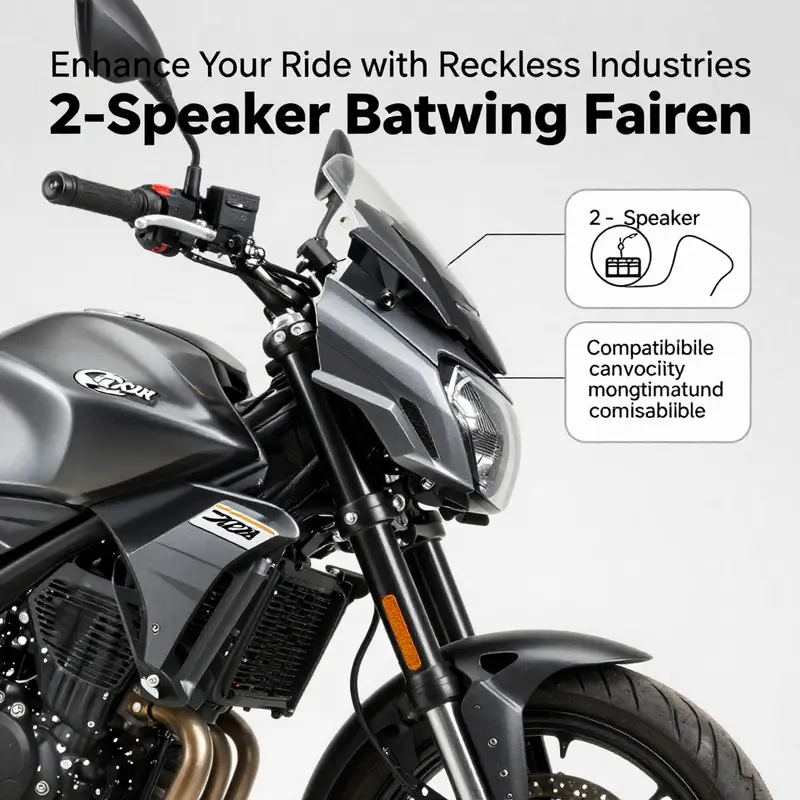
The ride is about more than the road; it is a choreography of wind, weight, and the music that keeps pace with motion. The Reckless Industries 2-Speaker Batwing Fairing sits at the center of that choreography, a visually striking piece that also claims a practical role: to deliver stereo sound while contributing to the bike’s aerodynamics and rider comfort. This chapter navigates what the fusion of form and function means for Vulcan Nomads, focusing on installation realities, model compatibility, and the subtle decisions a rider makes when choosing a fairing designed to marry aesthetics with an on-bike audio experience. At the heart of the product is a simple premise: a dual-speaker system housed within a batwing silhouette that complements the bike’s lines and provides a listening field without sacrificing wind protection. The part is identified in product descriptions with a model-like designation that often appears as KNOMAD1665, a tag that helps dealers and owners confirm suitability for the Vulcan Nomad family. The core features anchor the practical value of the fairing: two speakers built into the upper panel, delivering stereo output that can be accessed through multiple connection methods—auxiliary input for legacy devices, Bluetooth for wireless streaming, and USB for charging or direct playback from a digital source. These capabilities are not merely conveniences. They expand the rider’s ability to tailor the riding environment, from long cross-country sessions to short commutes, without needing to carry portable audio gear that could snag on wind gusts or highway lanes. The mounting strategy further reinforces the idea that sound should travel with the ride, not cling to it. The described options include boat mount and plug mount configurations, a flexible approach that speaks to different installation preferences and frame geometries. Boat mount arrangements tend to favor a cleaner exterior profile and a broader mounting footprint, while plug mount configurations can simplify alignment with the bike’s existing fairing hardware, offering quicker swaps for riders who test-fit several options. Yet, even with such straightforward mounting language, the practical steps require careful attention. The fairing must locate itself in a place where the speakers can project clearly toward the rider without bouncing off wind pressure or interfering with the bike’s instruments and mirrors. The 2006 and later VN1600G Vulcan Nomad, along with the 2005 to 2008 VN1600D Vulcan Nomad, are cited as compatible targets in the product literature. Those two lines share a family resemblance—a bike that favors touring comfort and mid-sized displacement—yet they do not become interchangeable by virtue of branding alone. The details matter: the Nomad’s fairing mounts and the surrounding windscreen geometry influence how the batwing’s silhouette behaves at speed and how the embedded audio system will perform in varying atmospheric conditions. It is for this reason that potential buyers are urged to verify fit and configuration with authorized dealers who understand the precise model year, frame geometry, and any evolving hardware changes that may accompany a given production run. The caveat is not a obstruction but a guard against mismatches that can lead to unsatisfactory results, such as suboptimal speaker direction, added vibration, or wiring that barely clears moving parts. In this landscape, compatibility is not simply a paper note; it is a lived attribute that emerges through careful assessment of mounting points, power supply availability, and the fairing’s tolerance to the bike’s aerodynamic forces. One strand of the conversation centers on the electrical demand of a dual-speaker setup. The rider’s machine provides a limited yet sufficient powered circuit that must be managed responsibly, ensuring the audio system does not contend with essential accessories or the battery’s reserve during cold starts or extended idle periods. The design intent behind such a batwing fairing is to keep mass and wind deflection in mind. Heavier hardware, if not properly integrated, can alter the handling balance, particularly on models with certain center of gravity characteristics or with aggressive bagging setups. Consequently, installation guidance frequently emphasizes maintaining fairing alignment with the bike’s lines and ensuring seals remain weatherproof, the wiring harness is secured away from hot exhaust paths, and connectors are protected against moisture and debris. While the public-facing research materials may not disclose a step-by-step installation protocol, the overarching guidance remains consistent: rely on professional or manufacturer-endorsed installation to preserve warranty and performance. The beauty of the two-speaker concept lies in balance. The rider experiences a stereo field through a panel that does not demand a wind tunnel or a laboratory setting to justify its existence. Yet that benefit rests on thoughtful sourcing. The fairing’s integration with the VN Nomad’s bodywork should respect the rider’s shoulder and upper-body posture, allowing audio cues to align with sightlines and control placements. In practice, this means considering where the fairing meets the fork crown, how it interacts with the bike’s headlight and instrument cluster, and whether any auxiliary accessories—such as a windscreen extension or a tank-mounted accessory—will interfere with the batwing’s profile. The compatibility conversation, then, is both mechanical and experiential. Riders who pursue this particular batwing must weigh how the sound system’s presence influences the visual rhythm of their machine and how the fairing’s shape supports or restricts airflow around the rider’s torso. For some, the crisp, directionally focused audio helps reduce fatigue on long rides by providing a consistent auditory anchor, while for others the preference may be for a more minimalist or traditional fairing profile. Those considerations naturally lead to the practical matter of sourcing and verification. The literature note accompanying the product emphasizes consulting authorized dealers of the manufacturer for pricing and availability, a reminder that market conditions and stock can fluctuate. The 06+ Vulcan Nomad platforms have a loyal following precisely because they offer a balanced canvas for aftermarket refinements, from sound systems to wind protection and storage solutions. When a rider contemplates a upgrade as ambitious as a dual-speaker batwing, it is wise to approach the decision with a holistic sense of fit, electrical load, and the bike’s overall ergonomics. The mounting options—boat mount or plug mount—offer versatility, but they also demand careful alignment and secure fastening. The process should prioritize weather sealing, cable management, and a clean electrical feed that harmonizes with the bike’s existing harness. Aesthetics should not be dismissed, either. The batwing’s lines ought to look intentional, not like an add-on that sits awkwardly on the fairing. The best installations feel as though they belong to the bike’s original design language, echoing the Nomad’s touring heritage while adding a contemporary audio dimension. For riders who want to explore further options or verify fit against specific production years, a quick, thoughtful foray into related fairing resources can be enlightening. If you are navigating Kawasaki-centric customization ecosystems, the Kawasaki fairings collection presents a familiar design vocabulary and keeps compatibility considerations within a recognizable frame. This avenue can be a helpful reference point when visualizing how a batwing integrates with the Nomad’s lines and how a given mounting scheme might translate to other Kawasaki platforms. For readers who want a direct path to explore such options, the Kawasaki fairings collection can be explored here: Kawasaki fairings.
None of the above replaces direct engagement with the original manufacturer’s guidance or with an authorized dealer who can confirm fitment for your exact bike and year. The information in research summaries often reflects the product’s advertised capabilities rather than the granular, model-specific nuances that arise during installation and long-term use. As a result, the practical takeaway is clear: approach installation as a collaborative process with professionals who understand both the bike and the fairing, confirm compatibility with the precise VN1600 Nomad variant, and prepare for an experience where sound quality and wind protection converge in a way that improves comfort without compromising control. When done thoughtfully, the Reckless 2-Speaker Batwing Fairing becomes more than a cosmetic upgrade; it animates the machine with a sonic dimension that travels with the rider through twists, straightaways, and the hum of daily journeys. To gather additional context on how similar aftermarket components are evaluated and integrated within a spectrum of bikes, consider external sources that discuss fairings and electrical integration in broad terms. For an external resource that delves into broader themes of fairing selection, installation considerations, and rider comfort, see https://www.revzilla.com/.
As the road unfolds, riders weighing this fairing’s potential will benefit from recognizing that compatibility is a living standard shaped by model year, component interaction, and the rider’s own goals. The journey from the showroom to the highway is as much about understanding the constraints as it is about embracing the enhancements. The batwing’s audio integration invites a more immersive cruising experience, but it also invites a disciplined approach to fitment, wiring, and maintenance. With careful attention to the bike’s architecture and professional input, the result can be a seamless blend of sound, shelter, and style that honors the Nomad’s touring legacy while expanding its horizons beyond wind and asphalt.
Technological Dimensions of a Two-Speaker Batwing Fairing in Modern Cruiser Motorcycles
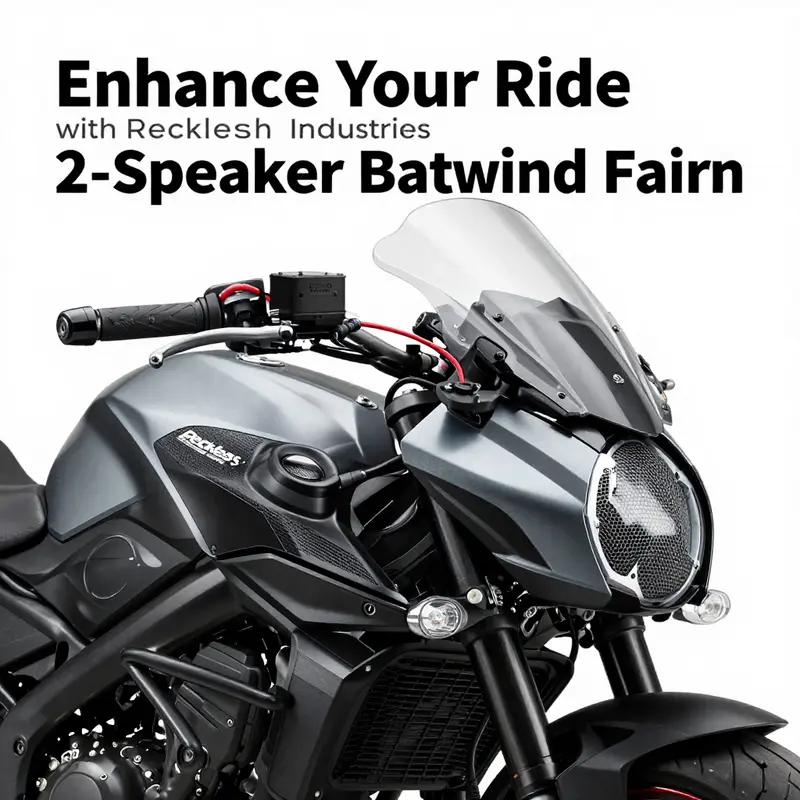
The two-speaker batwing fairing represents a convergence of acoustic engineering, aerodynamics, and rider centered technology. In modern cruisers, the fairing must shield wind, deliver immersive audio, enable seamless device connectivity, and support rider safety. The system becomes a listening cockpit that wraps around the rider with purpose built acoustics, sealed electronics, and intelligent connectivity. The result is a setup that can project sound toward the rider with spatial clarity, while the surrounding shell optimizes wind flow and reduces fatigue over long rides. In this sense, the fairing becomes a middleware between the rider, the bike, and the urban or open road environment, translating music, navigation prompts, and phone notifications into a manageable, non distracting experience.
Central to this embodiment is seamless audio integration. The two speakers live inside a rigid enclosure embedded within the fairing’s contour, shielded from the oncoming gusts and road noise that typically intrude into a rider’s cabin. Acoustic engineering here goes beyond simply placing speakers behind a panel. It demands a deliberate alignment of drivers with the rider’s ears, taking into account the rider’s seating position, helmet geometry, and typical touring posture. The enclosure is tuned to a directional profile that widens the sweet spot for a rider while diminishing the acoustic bleed that can bother a passenger or passersby. The system is designed to function across multiple input modalities—auxiliary input, Bluetooth, and USB—so a rider can mix music, stream navigation cues, and handle phone calls in a hands-free manner. When the rider selects a route or a playlist, the interface offers cues that are perceptible but not overwhelming, a balance between immersion and situational awareness that matters when traversing traffic or negotiating curves.
The airflow-managed shell that houses the speakers is not merely a protective casing. It is part of an aerodynamic strategy that uses CFD-informed contours to minimize drag and buffeting. Engineers approach the fairing as a fluid-structure problem: the outer surfaces shape the wind stream so it glides past the rider’s head with reduced turbulence, which translates into steadier wind pressures on long stints and less fatigue around the neck and shoulders. The LED lighting integrated into the same architecture complements this aerodynamic choreography. LEDs provide high visibility to other road users while running with lower power demands than traditional lighting. The lighting scheme is designed to be integrated into the silhouette and to contribute to the overall visual presence of the bike during both day and night riding. The result is a fairing that reads as a single, coherent system rather than a collection of separate add-ons.
If the audio is the heart of the rider’s sensory experience, the ear-level delivery is the circulatory system. The speakers are positioned so the sound energy reaches the rider’s ears with minimal interference from helmet hardware and wind noise. In practice, this means calibrated driver placement within the upper fairing cavity, a channel that guides sound toward the listening axis while shielding it from excessive vibrations that would otherwise color the audio with hiss or rattles. The balancing act between loudness, fidelity, and clarity at highway speeds requires careful tuning of the enclosure’s internal volume, damping materials, and the acoustic seal that keeps the sound coherent even when the fairing shakes under acceleration or when passing trucks send a transient gust across the roadway.
Connectivity capabilities broaden the fairing’s usefulness beyond just music. Bluetooth is a common standard across modern motorcycle electronics, and a two-speaker batwing system often leverages this protocol to interface with smartphones, GPS apps, and on-bike control modules. Hands-free control becomes practical, allowing riders to switch tracks, adjust volume, or answer calls with voice prompts or simple steering-wheel-like gestures recognized by the integrated interface. Voice command compatibility, in particular, supports safer riding by enabling interactions without necessitating physical contact with a device. The combination of voice interactions and clear, directed audio creates an ecosystem where a rider can access navigation assistance, weather alerts, or message previews in a non-intrusive way.
Designers also consider weather resilience and durability as essential engineering traits. The fairing’s external shell is typically manufactured from impact-resistant polymers that resist UV exposure and temperature cycling. Internal components—speakers, control modules, and connection ports—are sealed to resist moisture, dust, and road spray. This protection is essential for reliability, particularly when a rider pushes the bike through varying climates. The mounting approach—whether a boat mount or a more compact plug mount—adds another layer of practicality. A well-chosen mounting system preserves adjustability and vibration damping, ensuring the fairing remains stable without transferring excessive vibration to the audio system. In the end, the hardware must be both serviceable and enduring, because a rider’s riding season often spans multiple climates and road conditions.
From a rider’s perspective, the user interface is a critical thread that ties together the audio, lighting, and aerodynamic performance. The best implementations present a clean control surface that can be operated with gloves on, while also offering an intuitive pairing process for devices. The non-distracting design philosophy emphasizes access to essential functions without forcing the rider into a display of distraction. In practice, this translates to minimal on-fairing controls that are logically arranged and physically robust. When done well, riders experience a sense of integration: the sound feels like an audible extension of the bike’s character, the lighting reads as a safety feature and aesthetic statement, and the entire assembly disappears into the ride as a natural, almost invisible enhancement.
In the broader market context, these innovations reflect a convergence trend where aftermarket and factory ecosystems align around rider experience. The fairing’s acoustic and aerodynamic packages illustrate how modern touring machines can offer high-quality entertainment, navigational support, and weather resilience without compromising wind protection or handling. Rather than treating audio, lighting, and wind management as separate upgrades, manufacturers and customizers are moving toward modular architectures. These architectures permit individual components to be tuned and upgraded as technology evolves, while preserving the original ride feel that attracts cruiser enthusiasts. The interplay between performance and comfort becomes a defining factor in choosing a fairing, and riders increasingly expect their two-speaker batwing configurations to deliver consistent output across a broad speed range, maintain clarity when wind noise rises, and integrate smoothly with their other cockpit technologies.
As readers explore the practical implications, a useful point of reference emerges in established riding communities and product ecosystems that emphasize integrated fairing solutions. For those who want to explore related aftermarket options for other brands and models, a curated selection of fairing collections is worth examining. See a relevant Yamaha fairings collection for general context and comparable design approaches that emphasize modularity and compatibility with rider accessories. Yamaha fairings link
For a broader understanding of how lighting and aerodynamics can be fused in a batwing configuration, consider a broader industry reference that surveys how established touring models address these elements. This external resource discusses the evolution of LED integration and wind management in batwing-inspired fairings and helps place the two-speaker approach within a wider design trajectory. External reference: a well-known touring model page with batwing styling and integrated LEDs, which illustrates the practical outcomes of the concepts described here. Harley Street Glide page: https://www.harley-davidson.com/us/en/motorcycles/standard/street-glide.html
null
null
Final thoughts
The Reckless Industries 2-Speaker Batwing Fairing exemplifies how motorcycle accessories can seamlessly blend aesthetics with enhanced functionality. Its innovative features, ease of installation, and advanced technology cater to the needs of modern riders, while the favorable market trends suggest a strong demand potential. For business owners in the motorcycle industry, offering such products not only meets consumer desires but also enhances the overall riding experience. Adopting this fairing can position a business at the forefront of the evolving motorcycle accessory marketplace.