
Motorcycle fairings serve as more than just aesthetic enhancements; they are crucial for optimizing performance and rider experience. As business owners in the automotive sector, understanding fairings is vital for product development, marketing strategies, and enhancing customer satisfaction. This article unpacks the essence of motorcycle fairings, discussing their definition and purpose, the various types available, the innovative materials used, and how they influence overall performance and safety. Each chapter adds depth to your comprehension of this critical motorcycle component, aiding in informed decision-making in the fast-evolving motorcycle industry.
Winged Shields and Wind: A Comprehensive Look at Motorcycle Fairings, Definition, and Function

Fairings are among the most transformative elements in motorcycle design, yet they often travel under the radar of casual riders who think of bikes as engines on wheels rather than machines shaped by air. Put simply, fairings are aerodynamic body panels mounted on the frame that sculpt a motorcycle’s silhouette. They define its face and its lean, and they do so with a purpose that blends physics with human comfort, safety with speed. The tale of fairings begins with airflow and ends with a rider that can go farther, faster, and more securely than without them. To understand fairings is to understand how speed, efficiency, and protection operate together in a single, carefully engineered form.
At their core, fairings are structures designed to streamline the bike’s shape. They cover the front and upper portions of the machine, enclosing the engine, fuel system, and other critical components. This enclosure serves several intertwined roles. Aerodynamically, it reduces drag by guiding air smoothly around the bike rather than letting air crash into exposed surfaces. Reducing drag lowers parasitic power losses, which translates into better acceleration, improved top-end pace, and, crucially, steadier high-speed stability. In practical terms, the rider experiences less buffeting and a more predictable wind pressure on the torso, shoulders, and helmet as speed climbs. The rider’s fatigue comes not from battling gusts but from the sustained engagement with the command line of the machine.
The protective value of fairings extends beyond wind. Exposed engine bays and exposed components are vulnerable to the elements and debris, particularly on longer rides that cross varied weather and road conditions. Fairings act as a shield, diverting rain, dust, pebbles, and minor debris away from sensors, wiring, and exposed metal surfaces. This protective function contributes to longevity and reliability, reducing maintenance costs and downtime that would otherwise interrupt ride plans or training schedules. The aesthetic impact is not incidental; the same panels that shield the internals also frame the bike’s visual language, emphasizing lines, angles, and mass distribution in a way that can convey aggression, speed, or elegance depending on the design language chosen.
In defining what fairings are, it is helpful to recognize their quasi-anatomical role in the motorcycle’s body. They are not mere shells slapped on as a cosmetic add-on. They are integral parts of the chassis ecosystem, working with the frame, suspension, and powertrain to affect mass distribution, heat management, and even rider ergonomics. The way a fairing integrates with the cockpit, the seat, and the rider’s leg position can influence steering feel and the rider’s ability to shift weight during cornering and braking. A well-designed fairing blends into the bike’s overall geometry so that wind flows around the rider rather than pushing against them, creating a more composed ride and a more confident handling character at speed.
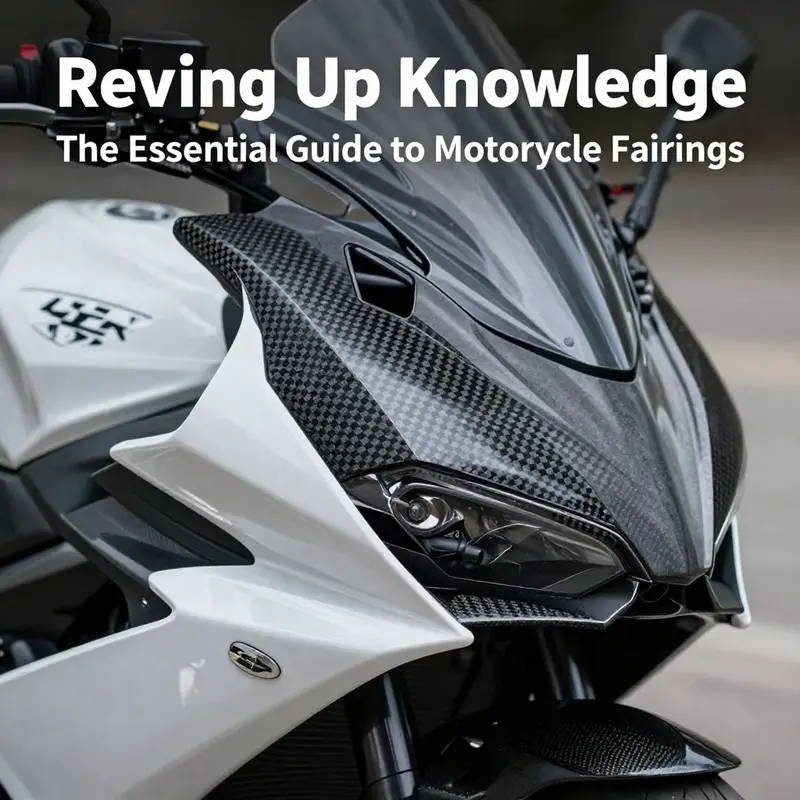
Materials selection is a decisive thread in the fairing story. Today’s fairings are commonly crafted from lightweight materials such as fiberglass, carbon fiber, and reinforced plastics. Each material brings a different balance of stiffness, toughness, weight, and cost. Carbon fiber, for instance, offers exceptional stiffness-to-weight performance, yielding a lighter, more responsive feel and a sharper interaction with high-speed air flow. Fiberglass presents a versatile, cost-effective alternative that can be molded into complex shapes with relative ease and reliability. Reinforced plastics strike a middle ground, providing good impact resistance and durability while keeping weight down. The choice of material is not merely about saving grams; it shapes how the fairing behaves under dynamic loads, how it resists fatigue and crack growth, and how it ages through exposure to sun, rain, and road salts. Over long-term ownership, the material also informs maintenance strategies, repairability, and the ability to return a damaged panel to service without a full replacement.
Beyond raw materials, the architecture of a fairing—how it encloses the engine bay, how it encases the front end, and how it integrates with the windscreen or faring extensions—affects a broad range of performance parameters. Aerodynamics is the most discussed, and deservedly so, because even small changes in curvature, angle, or taper can yield measurable differences in drag coefficient and flow separation at race or highway speeds. Subtle contours influence how air reattaches to the surface after passing the front of the bike, which in turn governs the low-pressure zones that help hold the chassis upright and resist lift. A fairing’s design also shapes pressure distribution around the rider’s torso, which can alter perceived wind noise, ride comfort, and the sensation of stability in gusting conditions.
The rider’s protection is another central thread in the fairing narrative. While full fairings tend to cover large portions of the bike, it is the rider’s exposure to wind and weather that most often motivates a purchase decision. A properly shaped fairing reduces the direct wind exposure, creating a more thermally comfortable riding experience. The wind barrier also helps shield the rider from rain, splashes, and debris that would otherwise strike the chest, arms, and shoulders. In sport or track-oriented contexts, this barrier becomes even more important, since rider posture tends to place the upper body into aggressive, forward-leaning angles where wind pressure can be particularly punishing over long stints. The result is not just comfort but the opportunity to maintain focus and precision in steering and braking for longer periods.
From an aesthetic vantage, fairings narrate a bike’s personality. The lines, the massing, the way the fairings enclose or reveal the engine’s silhouette all communicate a sense of speed before the bike even moves. A sleek, tightly wrapped skin signals efficiency and velocity, while a more sculpted, multi-panel approach can emphasize aggressive intent or a boutique, high-performance pedigree. This aesthetic function matters because motorcycles are frequently objects people form an emotional relationship with; the fairing becomes a canvas on which engineers and designers translate performance values into something visually legible and emotionally resonant. The relationship between form and function is not a trade-off in this space; it is a synthesis where shape supports purpose and purpose reinforces identity.
In terms of maintenance and lifecycle, fairings introduce practical considerations that owners and technicians learn to manage. They are subject to impact risks, especially in urban riding where curbs, low-speed contact, and parking mishaps can nick or crack panels. When damage occurs, the repair path often depends on material choice and the extent of the impact: minor cosmetic scrapes may be addressed with refinishing, while structural concerns demand replacement or repair of the affected panel. Because fairings are often composed of modular sections, many riders choose to replace individual panels rather than the entire shell, especially if the damage is localized or if color matching is a priority for resale value. This modularity also fuels the aftermarket ecosystem, where designers and fabricators propose new shapes, vents, and cutouts to optimize performance or to reflect a rider’s personal style. The trade-off here is that aftermarket panels must be fitted with care to preserve the bike’s aerodynamics and structural integrity; improper alignment can increase drag or create buffeting rather than reducing it.
A thread that runs through materials, design, and function is the idea of standardization. In an industry that values reproducibility and safety, many fairings are designed to meet broad international safety and design standards. Standardization helps ensure that a given panel can fit a range of models within a family, which simplifies the supply chain for replacement parts and supports consistent performance across different configurations. For riders who take to the track, consistent engineering standards translate into predictable behavior during high-speed runs and repeated cornering, where every millimeter of alignment matters. In everyday riding, standardization means that a replacement panel sourced from a wide network of suppliers can be expected to fit with reasonable accuracy, preserving aerodynamics and protection without requiring a bespoke fabrication process.
As with any technical system, the relationship between fairings and the bike’s other systems is holistic. The fairings influence, and are influenced by, heat management—how the engine sheds or retains heat—and by the bike’s overall weight distribution. A well-integrated fairing system complements the cooling strategy by shaping airflow toward radiators or air-cooled fins, reducing hot spots in the engine bay while maintaining a comfortable air layer around the rider. Handling is also subtly affected, since the mass of the fairing contributes to inertial properties that influence turn-in and mid-corner stability. When designers optimize these relationships, they are not chasing an isolated metric like top speed; they are aiming for an integrated performance profile where drag, weight, cooling, and rider experience reinforce one another.
The discussion would be incomplete without considering how fairings are chosen in practice. For most riders, the decision hinges on a balancing act among weight, protection, and aesthetics, all wrapped in cost and availability. A race-focused build might emphasize carbon fiber for weight savings and stiffness, accepting a premium price and higher repair costs. A sport-tourer might favor robust reinforced plastics that tolerate longer maintenance intervals while offering respectable aerodynamics and weather protection. Commuter bikes, or naked bikes that eschew full fairings, might rely on modest panels or partially enclosed shapes to manage wind without excessive weight or cost. In each case, the goal is to craft a wind-guiding envelope that respects the bike’s intended use, the rider’s comfort threshold, and the rider’s aesthetic sensibilities. The result is a dynamic dialogue between performance targets and practical constraints, where form follows function without surrendering character.
If you want to explore the range of designs and how different silhouettes translate into aerodynamic outcomes, you can browse a sample collection of panels that demonstrates the breadth of options available. For a visual sense of the range, explore the collection of fairings. The catalog illustrates how small shifts in curvature, vent placement, and edge treatment can create starkly different airflows and looks, reinforcing the idea that fairings are as much about art as they are about physics. This intersection of art and engineering is where riders often connect with the concept at a deeper level, recognizing that the machine is a crafted instrument rather than a mere machine.
The scholarly and industry perspectives on fairings converge on a simple truth: fairings are an essential, multifaceted component that affects performance, safety, economy, and identity. They are not merely aesthetic shells but active participants in how a bike behaves at speed, how efficiently it uses fuel, and how a rider participates in the rhythm of motion. Their design requires an understanding of aerodynamics, materials science, ergonomics, and standards. In practice, this means engineers, fabricators, and riders cooperate across disciplines to tune the air cushion that surrounds a motorcycle, so that every ride feels guided by the wind rather than battered by it. The ongoing evolution of fairings—through lighter composites, smarter ventilation, and more precise fitment—reflects a field in which progress is measured not only in miles per hour but in comfort, safety, and the quiet confidence that comes from a well-shaped machine moving through air with minimal resistance.
For readers seeking a deeper technical grounding, a respected industry overview can provide context for the principles discussed here. External resource: https://www.motorcycle.org/education/resources/motorcycle-fairings-design-and-function/
As the journey from engine to air continues to be refined, the fairing sits at the crossroads of performance and personality. The best fairing designs disappear into the background of the rider’s awareness, turning wind into work done by the bike rather than by fatigue. They make the ride feel smoother and the track feel more navigable. They do not merely cover but tune the machine’s interaction with air, weight, heat, and motion. The rider remains the constant in this equation, but the fairings—quietly, insistently—shape the ride’s quality, the journey’s length, and the rider’s confidence in every turn.
Fairing the Curve: How Motorcycle Panels Shape Speed, Safety, and the Rider’s Experience

Fairings are the sculpted skins of a motorcycle, shaping the way air moves around the machine and the rider. They influence drag, lift, noise, and stability. Properly designed fairings reduce fatigue, keep debris away from critical components, and help maintain engine temperatures. Materials range from fiberglass to carbon fiber and reinforced plastics, each offering trade-offs between weight, stiffness, cost, and repairability. The choice of fairing type—full, half, or touring—reflects riding goals: outright speed, nimble handling, or long-distance comfort. Installation and maintenance matter as much as aesthetics; a misaligned panel can create turbulence or heat buildup. In short, fairings translate engineering into feeling: a rider senses the bike’s character through wind resistance, protection, and the visual language of its silhouette.
null
null
Riding the Streamlined Edge: How Motorcycle Fairings Define Speed, Safety, and the Rider’s Experience

Fairings are more than a glossy surface on a motorcycle. They are the shaping of a machine’s character, the unseen engineering that sits between the rider and the air. From the moment a rider powers up, the fairing begins to influence what the bike feels and how it behaves. It encloses the front and upper portions of the frame, sheltering the engine, fuel system, and other components, but it does so with purpose rather than mere protection. The goal is to guide air smoothly around the bike, to shave resistance, and to create a stable, tactile relationship between machine and rider at speed. When a rider leans into a curve or opens the throttle, the fairing responds by shaping the pocket of air that surrounds the bike, reducing the turbulence that can mix with the rider’s line of sight and balance. In this sense, fairings are a practical marriage of aesthetics and physics, a design dialect that translates aerodynamic theory into a tangible riding experience. The more efficient that dialogue is, the more the rider can feel confident in the motorcycle’s balance and its capacity to respond quickly to shifting inputs.
A fairing’s primary task is aerodynamic. It is an active contributor to a bike’s drag, and in turn to its speed, acceleration, and fuel economy. By directing airflow around the bike rather than letting it crash into the engine and rider, fairings reduce form drag and help to minimize pressure differentials that would lift or destabilize the front end. The science behind this is not simply about making something sleek; it is about controlling the wake generated behind the machine. A well-shaped fairing helps to keep the air attached to the bike longer, delaying separation and reducing the size of the turbulent region that trails the motorcycle. In practical terms, this means less energy is wasted pushing air aside, more energy remains to move the bike forward, and the engine works less hard to achieve the same speed. The effect compounds at highway and race speeds, where small differences in drag translate into meaningful gains in range and acceleration. Yet aerodynamics is not a single number but a complex interaction of shape, surface texture, and the rider’s posture. A fairing must harmonize with a rider who actively shifts position for improved aerodynamics, which in turn reinforces the sense of control and confidence at high speed.
Stability and comfort ride hand in hand with the art of fairing design. When air flows cleanly along the bike’s surface, the rider experiences noticeably less wind rumble and buffeting, especially around the helmet and shoulders. This is not only about comfort; it matters for control. Turbulent air can feed back into the handlebars, nudging the rider off line just enough to require more attention than the moment calls for. By smoothing the air path, fairings dampen these disturbances and make steering feel precise and predictable. The rider’s body is also shielded from the worst of the wind and weather, particularly on longer rides or inclement days. A fairing acts like a moving shield, reducing fatigue from constant wind pressure and protecting the torso and arms from rain and debris. The result is a more focused riding experience where attention remains on line, tempo, and lane position rather than fighting the wind. This protective function is often as important as top speed; it enables riders to stay sharper farther into a journey, which translates into safer overtaking, steadier cornering, and better reaction times when road conditions change.
Materials and construction are the quiet workhorses behind a fairing’s performance and durability. Modern fairings are typically fabricated from lightweight composites such as fiberglass, carbon fiber, or reinforced plastics. Each material brings its own balance of weight, stiffness, impact resistance, and cost. Carbon fiber offers exceptional strength-to-weight performance, a key advantage on race bikes where every gram matters and handling is sensitive to even small weight changes. Fiberglass individual panels or layers can be tuned for stiffness and cost, providing a robust option for street motorcycles and less expensive race variants. Reinforced plastics strike a middle ground, delivering weather resilience and impact tolerance while keeping weight reasonable. The philosophy is not simply about shaving weight but about achieving the right stiffness distribution across the panel so that the fairing holds its shape under wind loads and minor impacts. The mounting interfaces matter just as much as the skin. Fairings must work with the frame and subframes, tolerate the realities of dynamic load transfer, and maintain alignment with the instrument cluster and lights. In this light, the fairing is a structural element as well as a cosmetic shell, its geometry chosen with careful attention to how it will share load with surrounding components and how it will respond to hard braking and sudden gusts of wind.
The shape of a fairing communicates a lot about performance intent. A sport-focused shell tends to be razor-lean, with aggressive lines that carve through the air and generate downforce where needed for stability in fast cornering. A touring-oriented fairing, by contrast, emphasizes broad wind protection, extensive radii, and a smoother silhouette to minimize drag across a long ride. The integration of functional features is a deliberate design language. The panel surfaces may incorporate cooling intakes, air outlets, and channels that help manage engine temperature without creating drag-inducing separations. Even the choice of edge treatment matters; thin, sharp edges can help shed air efficiently, while rounded transitions reduce the likelihood of flow separation at the cost of a small drag penalty. Designers also consider the rider’s line of sight and the interaction between the windscreen and the fairing. A well-integrated windscreen reduces optical distortion and makes wind pressure feel steadier, reinforcing the sense of a single, protective enclosure rather than a separate wind barrier slapped onto the bike.
In the world of motorsports, fairings take on a distinctly technical role. Racing fairings are engineered for maximum control of airflow at very high speeds. They aim to maximize downforce, suppress lift, and deliver a predictable response to throttle and steering input. The air ultimately becomes a tuning tool, shaping a relationship between the rider, the chassis, and the track. Lightweight materials are preferred, but the rules of the track and the realities of crashes require durability and repairability. That tension produces designs that can be repaired quickly and structurally sound when damaged. The balance is delicate: too aggressive a scarcity of material can compromise integrity, while too heavy a shell slows the bike or dulls its steering. Skilled engineers negotiate this balance by optimizing panel stiffness, ensuring that the fairing behaves as a unified system rather than a collection of brittle, individual pieces.
The fairing’s role extends beyond the track and into everyday riding through features that bolster visibility and safety. Many modern fairings integrate lighting elements, such as turn signals and auxiliary LEDs, which improve conspicuity in traffic and during night riding. The placement of lights is carefully considered so that they remain visible to other road users even in the presence of the bike’s own silhouette. Aerodynamic realism remains at play here as well; lighting and indicators must not interrupt the smooth air path or create drag hot spots that alter the fairing’s behavior at speed. A subtle yet important benefit is how these integrated elements help riders communicate intent more clearly, reducing the chance of misinterpretation by others on the road. Across street and race contexts alike, this integration underscores the fairing’s dual mission: to protect and to perform.
The broader implications of fairing design reach past motorcycles themselves. The same aerodynamic principles that inform a bike’s shell are relevant to high-speed transportation systems and even to aerodynamic concepts in unmanned aerial vehicles. When engineers pursue faster, more efficient, and safer travel, they borrow lessons about streamlining, load transfer, and environmental protection from fairing-centric design. The underlying idea is to reduce energy losses and improve control while preserving or enhancing rider or operator comfort. In this way, fairings serve as a practical and visible bridge between pure aerodynamic theory and real-world riding experience, translating complex fluid dynamics into something a rider can feel, trust, and rely on.
For readers curious about practical options without getting lost in brand-specific discourse, a fairings catalog provides a broad view of available shapes and manufacturing approaches. It is a useful reference point for understanding how different designs respond to real-world riding demands, from the tight corner of a city street to the endless sweeps of a highway. The catalog represents a spectrum of intent, from minimal, well-proportioned shells that emphasize weight savings to larger, more protective suites that prioritize rider comfort and weather protection. In the end, the best fairing for a rider is the one that aligns with their goals, riding style, and the conditions they encounter most often. It is about the harmony of form and function, where every contour, every edge, and every attachment point is chosen to make the bike feel more alive and more predictable at speed. More than a cosmetic layer, the fairing becomes a carefully tuned component of the machine’s identity and capability.
External resources offer deeper technical dives into how fairings influence aerodynamics and fuel efficiency, as readers explore the physics in greater depth. For a deeper dive into this topic, see https://www.motorcycleinsider.com/aerodynamics-fairings-motorcycle-performance
Final thoughts
As the motorcycle industry continues to evolve, the importance of motorcycle fairings remains pivotal for both safety and performance. Business owners must appreciate the intricate balance between form and function that fairings provide. Understanding the nuances of fairing types, materials, and their impact on performance can guide strategic decisions regarding product offerings and positioning in the market. Embrace this knowledge to ensure that your business not only stays competitive but also meets the demands of today’s motorcycle enthusiasts. By aligning your products with the benefits offered by advanced fairings, drive your business to new heights.