
Motorcycle enthusiasts constantly seek ways to enhance their riding experience, and audio quality is a critical aspect that shouldn’t be overlooked. Upgrading to 6.5 inch speakers for motorcycle fairings can significantly improve sound clarity and power, transforming both daily commutes and long journeys. These specialized speakers not only fit snugly into the fairing space, fitted for outdoor conditions, but they also ensure that riders enjoy high-quality audio at various speeds. In this detailed guide, you’ll discover the performance characteristics of these speakers, explore important installation considerations, understand durability and weather resistance, compare leading brands, and delve into the specific component features that set these speakers apart. By the end, you’ll be well-versed in how to select the best 6.5 inch speakers for your motorcycle, making an informed decision that enhances your overall riding experience.
Riding with Clarity: The Performance Signature of 6.5-Inch Fairing Speakers
The fairing is more than a shield against wind and weather; it is a listening chamber that shapes every note you hear while riding. When you upgrade a motorcycle’s front or side fairing with 6.5-inch speakers, you do more than boost volume. You set a performance trajectory that balances power, clarity, and weather resilience against the unique acoustical challenges of the open road. The rider’s helmet, the engine buzz, the wind whistling past the ears, all these elements create a moving acoustic landscape. In this context, the most meaningful performance characteristics are not abstract specs but how they translate into audible difference during a ride. A well-chosen set of 6.5-inch speakers should deliver a confident, directional sound that feels immediate and immersive, even as speed climbs and weather shifts.
Power handling sits at the top of the list. The loudness you achieve on a bike is not only a function of the amplifier and the speaker’s peak rating, but a careful match between amplifier power and the speaker’s continuous power capacity. A benchmark often cited in premium fairing systems is a figure around 300 watts RMS with a peak capability near 600 watts. These numbers matter because at highway speeds, wind noise rises dramatically and the system must stay clean without pushing the voice coil into distortion or thermal limiting. The aim is a robust, unclipped output that remains faithful to the music’s attack and sustain. It is not simply about cranking up volume; it is about maintaining tonal integrity as the environment changes around you. In practice, a high-power handling rating gives you headroom for casual listening on long rides and for those moments when you need to fill the cockpit with sound without fogging your ears with distortion.
Sensitivity is the other half of the equation, acting as the bridge between the amp’s power and the perceived loudness in the rider’s seat. Measured in decibels, sensitivity indicates how efficiently a speaker converts electrical power into audible sound. A higher sensitivity rating means you get more volume from less amplifier power, which is particularly valuable when the bike’s wind noise is stealing dynamic range from the signal. On a fairing, where wind and road noise are a constant, you want enough sensitivity to keep voices, melodies, and cues intelligible without requiring an oversized amplifier. The practical effect is a clearer soundstage that feels like a personal movie theater mounted to the bike rather than a static car audio install strapped to a motorcycle. Proper sensitivity helps preserve midrange clarity—the layer of vocals and guitar textures that give music its life—while still delivering impactful bass and crisp highs when the mix calls for it.
Impedance is a more technical, yet essential, dimension of compatibility between the speaker and the bike’s audio system. Most 6.5-inch fairing speakers present either a 2-ohm or 4-ohm load, and the choice matters for both electrical efficiency and thermal reliability. A lower impedance can deliver more current to the voice coil, producing higher potential output for a given amplifier power, but it also draws more power and can heat up the amp and wiring if the system is not sized accordingly. A higher impedance is gentler on the electrical path and often pairs more gracefully with factory or pre-wired aftermarket systems, though it may require a touch more amplifier headroom to achieve the same perceived volume. The key is to ensure impedance matches across the entire signal chain, avoiding mismatches that degrade damping, reduce control over the woofer, or invite distortion when the rider asks for dynamic transients. When planning an upgrade, check the intended amplifier’s compatibility with the speaker’s impedance and design the wiring and fuse strategy to support sustained performance without sagging at speed.
Durability in the open, outdoor riding environment is a non-negotiable performance criterion. The fairing speakers must withstand rain, dust, mud spray, and the constant vibration of corrugated roads. A sound upgrade that falters in wet weather or starts whistling with vibration quickly loses its value. For fairing installations, rugged enclosures, reliable gaskets, and weather-sealed connectors are not luxuries; they are prerequisites. The design language favors waterproof construction, dust resistance, and shock-absorbing mounting that keeps the motor’s acoustic center stable during long rides. Rugged materials and well-engineered seals help preserve voice coil alignment and protect sensitive components from the shocks and flexing that come with riding over imperfect pavement. The result is not merely survivability; it is consistent sound quality across a wide temperature and moisture spectrum. In this sense, environmental durability becomes a practical gauge for long-term performance: a speaker that endures the weather and the ride, maintaining tonal balance without frequent recalibration.
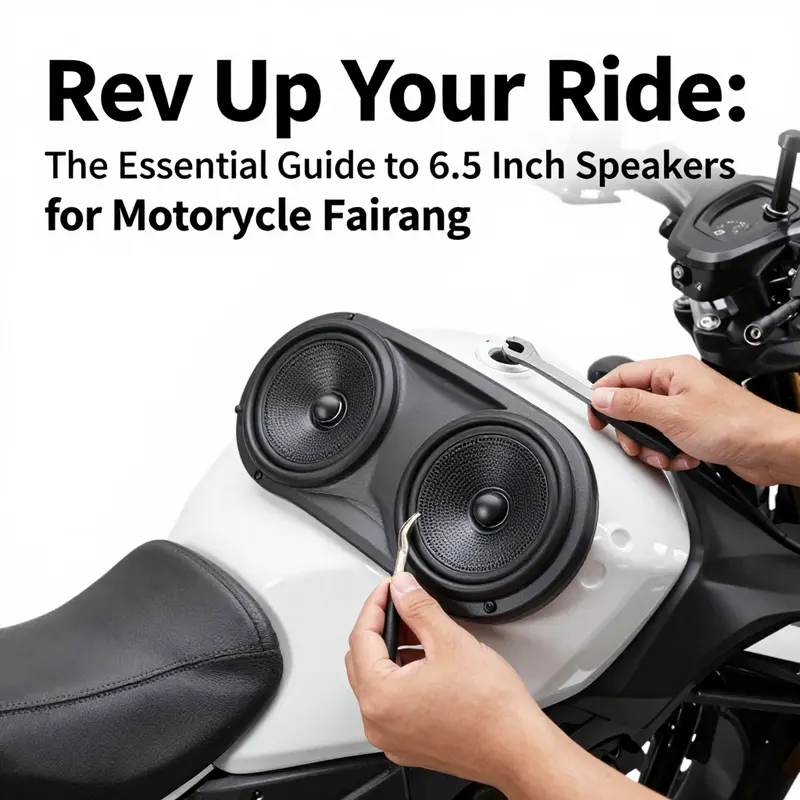
Compatibility and precise fitment are more than a matter of snap-in convenience. For riders who want a clean, factory-like integration, the availability of fairing-specific pod options and mounting solutions matters. When a speaker pod is designed to align with the fairing’s geometry, it preserves the protective silhouette and avoids unsightly gaps or rattles that can degrade performance. Precise fitment also helps steer the sound toward the rider, which is crucial for perceived intelligibility at speed. The integrated mounting hardware streamlines installation, reduces the chance of accidental binding or vibration, and supports consistent acoustic alignment with the rider’s seating position. In practice, this means looking for pods and enclosures that are designed to complement the fairing’s contours and to anchor securely to pre-drilled holes or established mounting points. A well-fitting system minimizes the need for nonstandard brackets, reduces rattles, and preserves the visual coherence of the bike’s front end. If you’re exploring options for a specific building block of your bike, a targeted range of accessories and fitment pods can dramatically simplify the upgrade while preserving the aesthetic integrity of the fairing.
In selecting materials and construction approaches, the choice of woofer cone material and tweeter design shapes the sound’s character as much as the power figures do. The material choices must balance stiffness, mass, and damping, so that the woofer responds crisply to transients without ringing or mudding the bass. A lightweight yet stiff cone can deliver quick attack and clean midrange, while an appropriately chosen surround and spider setup manages excursion and distortion at the extremes of motion. On the tweeter side, many premium designs lean toward high-frequency components crafted from lightweight, rigid alloys or composites that retain tonal brightness without harshness. The result is a sound that can carry above road noise with a natural presence and airiness in the treble, without introduce listening fatigue on long rides. The overall goal is to deliver a coherent sound stage where the vocal lines or instrumental cues float clearly above wind and engine textures, giving the rider a musical experience that feels integrated with the ride itself rather than artificially bolted on.
Beyond raw specs, the true measure of a 6.5-inch fairing speaker is how the system behaves when mounted and driven by a typical motorcycle setup. A useful evaluation starts with an in-vehicle listening check: play a familiar track with a range of frequencies and dynamics, then observe the balance across bass, mids, and highs as you accelerate. Check for sibilance in the upper registers and for any muddiness in the midband as wind pressure shifts with airspeed. Listen for how quickly the system recovers after a large transient, such as a drum hit or a guitar pluck, and whether the enclosure’s resonances become audible at certain RPM ranges. If the sound remains well-behaved and proportional to the input across riding speeds and weather conditions, you’ve found a setup that respects the acoustic relationship between rider, machine, and environment. Remember that the best performance emerges not from blasting music at full tilt, but from sustaining clarity and balance that let you hear the cues you want—vocals, rhythm, and tonal color—without trading comfort or safety for loudness. As you refine the system, consider how a dedicated fairing speaker pod can help manage directivity, keeping the intended sound path toward the rider so that a listening privacy remains intact even when the traffic picks up.
For riders who want to explore compatible options more deeply, a practical step is to consider the broader ecosystem of fairing accessories and mounting solutions. Some riders find value in pairing a four- to six-inch midrange response with a compact high-frequency unit to preserve vocal textures and environmental ambience. The goal is to arrive at a sound that feels balanced within the bike’s overall acoustic space, rather than a standalone blast of loudness. When you settle on a configuration, verify that the fitment is precise, the weather seals are intact, and the wiring paths avoid sharp bends that could lead to fatigue over time. The result is a coherent, ride-friendly sound signature that complements the bike’s performance without drawing attention away from the road. A final note on integration: the sound system should respect the bike’s electrical system and any existing accessories, maintaining reliability because the road rewards consistency. To further explore model-specific fitment options within a broader fairing ecosystem, you can browse a dedicated catalog such as the Honda fairings collection, which categorizes compatibility and aesthetics in a way that helps riders align sound upgrades with their preferred fairing style. Honda fairings collection.
External resource: for a deeper dive into high-performance 6.5-inch motorcycle speakers and their benchmark specifications, see the detailed product documentation and test results provided by a leading midrange specialist at https://www.amazon.com/dp/B07ZC9KJLQ
null
null
Rugged Soundscapes: Enduring the Elements with 6.5-Inch Fairing Speakers
“Durability in the open air” is not a slogan so much as a requirement when riders choose 6.5-inch speakers for the motorcycle fairing. The front and side fairing spaces are exposed to rain, wind, dust, UV rays, and a relentless rhythm of vibration from engine and road. In that environment, sound fidelity is not only about clarity and volume; it is about lasting performance, consistent output, and predictable behavior when the weather, terrain, and speed change in an instant. A speaker that sounds great in dry, controlled conditions but falters under spray or grit will force riders to compromise between listening pleasure and riding safety. The design challenge then becomes how to balance acoustic engineering with protective enclosures and rugged construction, so the sound remains directional toward the rider while the hardware survives years of exposure. The result is not merely a louder speaker but a whole system that stays aligned with the rider’s ears as the ride evolves from a sunny highway to a misty bend or a rain-soaked back road.
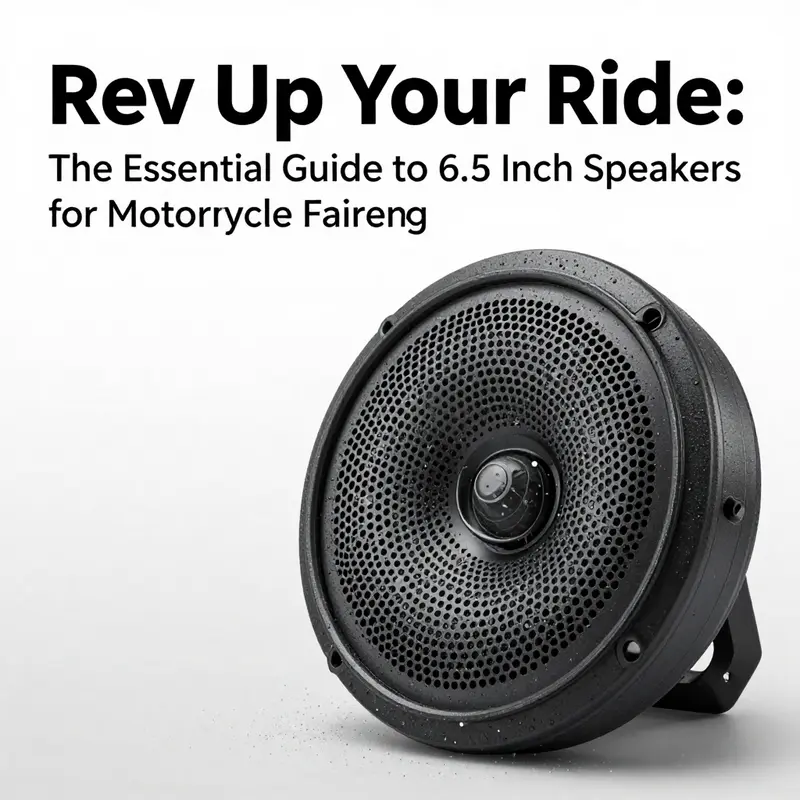
Durability begins with sealing. The best-rated 6.5-inch fairing speakers are built to an IPX5+ level of weather sealing. That spec translates into a protection framework that can withstand water jets from any direction without letting moisture penetrate the inner components. It is not about withstanding a bath; it is about surviving the spray and splashes that accompany sudden rain, river crossings, or car wash detours. A true weather-resistant design also anticipates thermal cycling. Heat is a constant companion in enclosed fairings exposed to sun, and UV exposure can make plastics brittle and grilles susceptible to micro-cracks. Materials choices matter here. An ABS plastic frame offers a robust, impact-resistant backbone that resists warping and flexing under vibrations. It keeps tolerances stable, so the voice coil, spider, and magnet stay correctly aligned. A metal mesh grille provides a sacrificial shield against gravel, branches, and incidental impacts, while also helping to dissipate heat away from the voice coil rather than trapping it in a confined space. The combination of a sturdy frame and a breathable, protective grille creates a durable platform that preserves acoustic integrity even after miles of dirty pavement and gusty wind.
Sound quality in a harsh environment hinges not only on the shell but on how the internal mechanics manage motion and resonance. Vibration is an ever-present antagonist for motorcycle audio. The engine’s rumble, the road’s ripples, and the aerodynamics of a moving chassis all conspire to excite unwanted modes within the speaker assembly. A well-engineered 6.5-inch unit uses a front isolation strategy to decouple the diaphragm from external shocks. A flexible, durable spider made from a resilient material helps to absorb and dampen these forces before they reach the voice coil. In practice, this means crisper highs and more controlled mids, even when the bike rides over rough pavement at highway speeds. Along with the isolation spider, a thoughtfully designed surround and cone geometry reduce parasitic vibrations that can smear details at higher volumes. The result is a sound that remains articulate and precise, not a muffled or boomy response that grows tiresome on long rides.
The on-rack reliability of a motorcycle speaker also relies on how the system handles moisture and dust through connectors, wiring, and mounting interfaces. Weatherproofing extends beyond the diaphragm to every point where water could creep in: gaskets around mounting flanges, sealed wiring harnesses, and corrosion-resistant fasteners. A reliable unit will use connectors with o-ring seals and grounded, shielded cables designed to resist salt, rain, and mud. In addition, the installation itself plays a critical role. A well-executed mount keeps the speaker coaxial with the rider’s line of sight—angled toward the rider’s ears to maximize vocal clarity and reduce stray reflections off the windshield or fairing inner walls. Proper sealing around the perimeter of the mounting hole prevents water intrusion, while a tight, vibration-resistant fit keeps the speaker from loosening due to the daily shocks of the bike’s drivetrain. Even the finish matters: coatings that resist corrosion from salt spray and road grime extend the life of the metal components and keep the aesthetic intact under sun and rain.
A broader, design-centered approach to durability also considers the thermal environment inside the fairing. Enclosures that trap heat can degrade adhesives, seals, and even the performance of the speaker’s long-term electrical components. Solutions that preserve thermal pathways, with ventilated enclosures or materials that tolerate heat cycles without swelling, contribute to longevity. In addition, the choice of materials for the front grille and frame can influence longevity under UV exposure. UV-stable plastics resist yellowing and embrittlement, maintaining a clear path for sound and a visually intact appearance after seasons of sun exposure. A metallic grille, while heavier, provides a robust barrier against impact and a hard-wearing surface that resists scratches and deformation. In combination, these material choices help ensure that the speaker maintains both acoustic fidelity and structural integrity, enabling consistent performance across the life of the motorcycle.
Beyond the shell and the spider, the overall engineering philosophy matters for riders who want a system that endures. Some designs are tailored specifically for the motorcycle environment, with attention to vibration isolation, waterproofing, and dust ingress. In such approaches, the entire speaker assembly is treated as a rugged module, designed to be installed in a way that integrates with the bike’s electrical system and the fairing’s geometry. This kind of integration reduces stress points and simplifies maintenance because fewer external accessories are required to keep water out. The goal is a cohesive unit whose components are chosen and assembled to tolerate the peculiarities of road use—from engine heat to spray at highway speeds to the occasional whether it is a dusty desert ride or a monsoon-drenched stretch of highway. In this way, durability is not a feature that can be added later; it is embedded into the core design from the very first layout decisions.
When riders consider upgrading or replacing their fairing speakers, the selection should hinge on a balance of rugged construction and sonic potential. A speaker system that can deliver clear, directed sound at speed while preserving voice intelligibility for GPS prompts and rider communication is crucial. The more robust the weather sealing and the more abuse-tolerant the materials, the less time a rider spends worrying about how the system will perform when the sky opens or when the road throws up a shower of spray. The ideal choice is a 6.5-inch system that pairs an IPX5+ sealing standard with an ABS frame, a metal grille, and a vibration-tolerant front suspension mechanism—an engineering trifecta that safeguards both durability and performance. In practice, this translates into predictable sound staging: a clear, focused sound that compresses gracefully under wind and noise while ensuring the rider can hear cues from turn signals, ride companions, and the bike’s own mechanical rhythm. It also means fewer service intervals due to water ingress or corrosion and a more seamless ride experience where music remains a steady companion rather than a fragile accessory.
For riders who want a reference point when surveying options, consider how the weather and environment will shape your use. If you routinely ride through rain, salt spray, or long periods in direct sun, you should expect the best-performing, most durable units to offer IPX5+ protection, sturdy ABS frames, and corrosion-resistant grilles. Look for designs that explicitly address vibration management through a combination of spider material and mechanical mounting strategies. The more a system aligns with those principles, the longer it will sustain sound quality and structural integrity without needing frequent replacement or adjustment. And while the specifics of fit differ from bike to bike, the core idea remains universal: durable, weather-resistant 6.5-inch fairing speakers are not a luxury; they are a practical requirement for riders who demand reliable, high-quality audio across every mile of the journey.
For riders seeking a sense of how various fairing geometries influence mounting compatibility, a quick look at the Yamaha fairings collection can provide useful context about space and orientation. See: Yamaha fairings collection.
External resource: https://www.harley-davidson.com/us/en/accessories/audio/stage-iii-4-speaker-kit.html
A Rider’s Ear in the Wind: Choosing 6.5-Inch Fairing Speakers for Clarity on the Open Road
Riding with the wind as a constant companion makes every mile a test of focus, balance, and the moment when music or narration becomes a reliable companion rather than a distraction. A 6.5-inch speaker setup designed for motorcycle fairings is, at its best, a precise balance between durability, weather resistance, and directional sound that reaches the rider without becoming washed out by engine rumble, wind, or road noise. These speakers are purpose-built to fit into the fairing’s cavity, a space that is not just a housing but a carefully contoured acoustic chamber. The result, when correctly chosen and installed, is a voice that travels along a clear path toward the rider’s ears, maintaining intelligibility at speed while avoiding startling splits in sound between rider and passenger or the surrounding environment. This balance is not achieved by sheer wattage alone; it comes from an integrated approach to enclosure design, driver material, and mounting hardware that neutralizes the resonance of a moving metal and plastic shell rather than amplifying it.\n\nIn practice, the most dependable options share several core traits. They are engineered to resist rain, dust, and spray, with seals and gaskets that preserve the integrity of the coil and voice coil assembly. The waterproofing is not merely a rain shield but a sustained boundary that prevents moisture from creeping into the crossover and wiring—the kind of detail that saves a rider from the sudden surprise of crackling audio after a downpour or a long stretch of highway where spray is kicked up by tires and sprayed back by wind. The fairing space itself is a small theater. It directs the sound toward the rider, but it also filters it, shaping how the woofer’s low end and the tweeter’s crisp highs interact with the bike’s own acoustic environment. High-frequency transients can turn harsh quickly if the mounting or enclosure lacks stiffness, so a robust build that dampens vibration becomes part of the listener’s comfort rather than a nuisance.\n\nFrom an installation standpoint, the appeal of well-designed 6.5-inch fairing speakers lies partly in their compatibility with existing mounting patterns. The most straightforward upgrades require no drilling or permanent modification, simply swapping the old units for new ones that fit the same screw holes and plug into the same harness. A true plug-and-play path is especially valuable for riders who want to preserve the original aesthetics and maintain factory-sealed integrity. It is equally important that the electrical load be compatible with the bike’s electrical system and the accompanying amplifier. A common consideration is impedance, which governs how much current a speaker draws from the amplifier. A well-mannered design matches either a 2-ohm or a 4-ohm load to its amplifier stage, with a crossover that keeps bass from muddying mids and highs, ensuring that voices and treble remain distinct even as the wind thickens traffic and engine noise.\n\nIn the spectrum of options, you’ll encounter three general tiers that reflect different priorities: the entry-level models that emphasize weatherproofing and reliable, if modest, output; the mid-range designs that push power handling toward a few hundred watts peak with improved sensitivity and a more aggressive yet controlled sound; and the premium iterations that pair high-quality materials with advanced crossovers and rugged enclosures. The premium category often emphasizes a coaxial configuration—where the tweeter is integrated with the woofer to deliver a compact footprint without sacrificing dispersion—and a titanium or aluminum tweeter for extended high-frequency response. These attributes translate into a sound stage that remains clear in the highway wind, allowing crackling detail in cymbals or the bite of a clean vocal line to remain audible against the road’s roar. Importantly, the weatherproofing across these tiers remains a defining feature, so riders can rely on performance from the first drizzle through the heat of mid-summer squalls.\n\nBeyond the hardware, the rider’s experience hinges on how sound is shaped by the installation and by the broader audio chain. Even the most capable speaker will fall short if it is mounted loosely or aimed away from the listener. A solid installation uses vibration-damping materials at contact points to minimize rattling and to preserve the speaker’s natural response. The angle of the driver is a subtle but decisive factor: a slight downward tilt or a small angular offset toward the torso can dramatically improve clarity for the rider, especially when reading the midrange where voices and most instrument cues sit. Wiring should be routed with care, away from heating vents and moving parts, and protected by moisture-resistant terminals. The crossover, usually tucked behind the fairing panel, should be sealed and accessible for occasional service, not buried behind a heat sink that makes routine checks impractical. In short, the upgrade is a convergence of sound science and practical riding needs: sound that travels well in a moving frame, stays protected in the weather, and remains easy to service after thousands of miles.\n\nFor riders contemplating a swap, the decision often comes down to how much sound quality matters relative to ease of installation and the integrity of the fairing’s original look. A direct replacement that mirrors the OEM footprint will minimize fitment risk and preserve the fairing’s lines. When the goal is richer, more authoritative sound, a model that delivers greater sensitivity and robust high-frequency response becomes appealing, provided it can be mounted securely without sacrificing weather seals. As always, it helps to verify compatibility with your bike’s fairing opening and the mounting pattern, so the upgrade feels seamless rather than invasive. And while more power does translate into higher potential output, it also demands attention to the amplifier and the electrical system, ensuring that the system remains balanced and stable under tall-speed conditions and during long rides where heat becomes a factor.\n\nTo help frame the practical path forward, consider the broader ecosystem of options that live in this space. There are direct replacements designed to drop in with minimal fuss, and there are more ambitious systems that require a modest amount of fabricating time or the addition of accompanying components such as a compact amplifier and a small subwoofer for extended bass emerge. The goal is to strike a match between the rider’s listening preferences and what the motorcycle’s fairing can support without compromising safety or weather resilience. The cleverest solutions are those that respect the fairing’s structural integrity, preserve aerodynamics, and deliver a clean, intelligible sound stage that can be enjoyed without excessive volume. In that sense, the fairing speaker choice becomes less about chasing the loudest option and more about achieving consistent, rider-directed audio that remains intelligible as speed and wind rise.\n\nFor readers who want to explore a path more rooted in OEM compatibility and field-tested installation, a practical starting point is to look for models that claim straightforward, factory-like fitment. Such options often provide a reliable baseline and minimize the risk of misalignment that can degrade sound quality. If you’re curious about where a particular OEM or aftermarket solution sits on the spectrum of performance and compatibility, a quick check of installation notes can reveal whether it is designed to preserve factory seals, whether it uses stock connectors, and how it handles environmental exposure. It’s also wise to consider the broader ecosystem of fairing upgrades, since many riders pair new speakers with improved routing of audio signals, or with a modest amplifier upgrade that preserves the system’s thermal margin and avoids overloading the electrical network.\n\nFor readers who want to explore related hardware and mounting philosophy, a useful avenue is to view collections that focus on fairing enhancements for popular fairing eras and mounting patterns. These pages provide visual references for fitment and offer a sense of how similar openings can accommodate different acoustic goals, without committing to a particular brand or model. Honda fairings collection offers an accessible entry point to understanding how fairing geometry translates into speaker placement and wiring routes. By examining a range of OEM-style openings and aftermarket mountings, riders can form a clearer sense of which path aligns with their bike’s silhouette and their listening tastes.\n\nExternal reading: https://www.harley-davidson.com/en-us/vehicles/accessories/audio/stage-iii-fairing-speakers.html
Sound at the Edge: The Engineering Behind 6.5-Inch Motorcycle Fairing Speakers
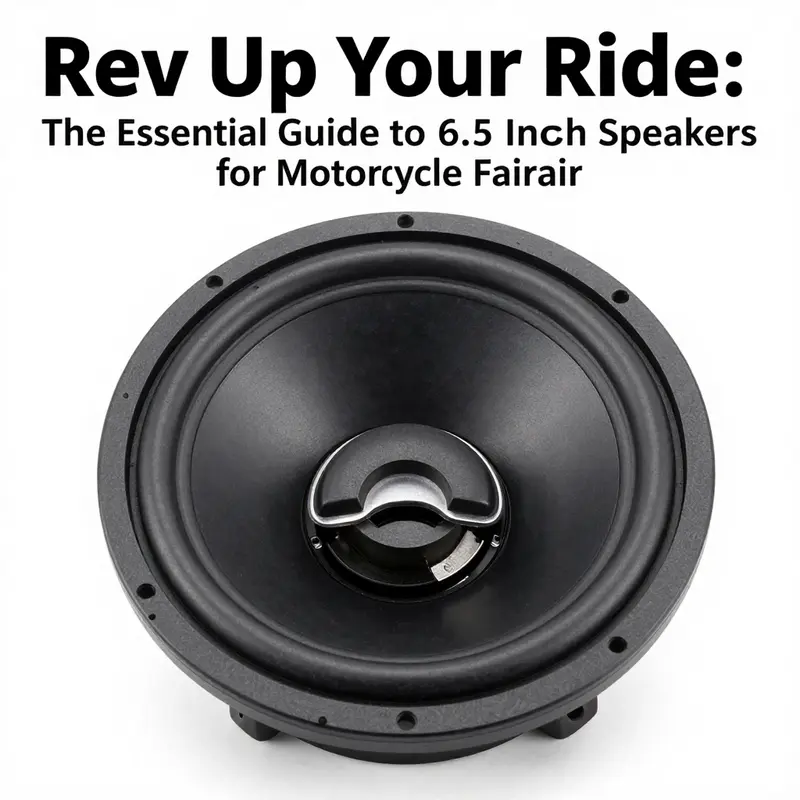
In the wind, sound takes on a life of its own. The fairing of a motorcycle creates a unique acoustic micro-environment, one that not only shelters the speaker from rain and dust but also shapes how music travels through a compact, curved chamber. A 6.5-inch speaker designed for this setting is more than a simple driver mated to a grill; it is a carefully tuned system that respects space, power, and the rider’s direct line of hearing. The goal is straightforward on the surface—clear, directional audio that remains intelligible at highway speeds—but achieving it requires a blend of material science, enclosure psychology, and electrical compatibility. When a rider contemplates upgrading or replacing the stock fairing speakers, the conversation naturally turns to the core components that make up a robust, road-ready solution. The discussion begins with power handling and efficiency, because the bike’s electrical system is not a limitless reservoir. A well-designed 6.5-inch fairing speaker is engineered to deliver meaningful output without demanding more current than the alternator can consistently provide at sustained highway RPMs. In practical terms, this translates to a high power rating that emphasizes usable, distortion-free output at comfortable listening levels rather than a flashy peak that collapses under real-world vibration and airflow. Speakers described in this class are frequently built to handle substantial peak power while staying efficient in everyday operation. The electrical impedance is an important detail here; many of these designs target a 2-ohm configuration, a choice that fosters greater current delivery from compatible amplifiers or head units. The benefit is not simply louder sound, but a speedier transient response, so voices and transient percussion stay crisp even as wind noise climbs. The rider’s perception of balance, bass, and clarity hinges on this efficient coupling between the speaker and the motorcycle’s energy heart. The result is a system that feels responsive rather than electrically anemic, a key factor when the intent is to enjoy music without sacrificing safety or situational awareness. The rider’s ability to hear dialogue in a soundtrack, to pick out a cymbal hit before a shift, or to enjoy a bass line without the woofer seeming to fight the wind, all depend on that efficiency at the core. The importance of materials cannot be overstated in this regard. The driver’s mid-bass cone is typically crafted from a durable, heat-tolerant material with a geometry designed to minimize fatigue under constant vibration. Within the same assembly, the high-frequency band is entrusted to a dedicated tweeter that is lightweight yet rigid, a combination that supports a clean, extended top end. A common approach is to pair a 1-inch tweeter with a robust mid-bass, using a cone material that resists the wear and tear of long rides in sunlight and rain. Titanium or titanium-coated diaphragms for the tweeter are frequently chosen for their stiffness-to-mass ratio, which helps deliver crisp, articulate highs without sibilance. The mid-bass element benefits from materials that can withstand continuous flexing, heat, and occasional impetuous gusts of air that sweep through a fairing at speed. The overall drive unit is designed to work in harmony with the enclosure, rather than fighting it; a well-balanced system converts electrical energy into acoustical energy with minimal phase distortion and controlled excursion. The practical upshot is a sound that remains consistent as speed rises, with a directional emphasis that keeps vocal material anchored toward the rider rather than dissipating into the wind. This is especially important because the fairing’s interior acts as a kind of sculpted chamber, shaping how waves reflect and interact. The enclosure is not an afterthought but a co-creator of the listening experience. A rainproof, dustproof construction shields the sensitive interior from the elements. Sealed enclosures, gaskets around mounting interfaces, and corrosion-resistant terminals keep the inner workings intact even when the riding season is at its worst. The seals serve a practical dual purpose: they protect against ingress and they dampen unwanted resonances that could otherwise color the sound in the space between fairing panels and rider ears. Weatherproofing is not merely a badge; it is a functional requirement that preserves long-term performance. In the realm of installation, one of the most appealing attributes of modern 6.5-inch fairing speakers is plug-and-play compatibility. A well-executed design will slot directly into the original speaker openings, reducing the amount of modification needed and preserving the aesthetic integrity of the bike. For riders who value a clean, factory-like transition from stock to upgraded audio, this direct replacement capability is significant. The harnesses, connectors, and mounting patterns are aligned to fit the OEM footprint, which means fewer adapters, splices, or timing headaches. This approach makes upgrading more accessible to riders who want a straightforward, reliable swap rather than a bespoke, labor-intensive installation. The acoustical engineering within these speakers takes into account the fairing’s bounded space and the reflections that occur inside it. The enclosure’s size, shape, and internal damping all influence how the driver’s energy is radiated. Designers tune the system to emphasize a broad, even dispersion without introducing harsh reflections that would distort the signal. In this intimate listening environment, dispersion is not about wide reach alone; it’s about controlled coverage that keeps sound in front of the rider’s ears and minimizes the risk of hearing fatigue. This requires careful attention to the driver’s mechanical limits, the enclosure’s acoustic load, and the crossover network that divides the audio spectrum into appropriate paths for the woofer and the tweeter. The crossover, though often invisible to the user, is a critical ingredient. It ensures that high frequencies are steered toward the tweeter and that lower, midrange content stays with the mid-bass. The result is a coherent sonic image rather than a jumble of conflicting frequencies. The rider experiences a sense of sound that feels centered and stable, a hallmark of quality in a field where wind noise and helmet acoustics can otherwise overwhelm delicate detail. For those exploring options, it helps to consider how the speaker will live in the fairing’s ecosystem. Compatibility is not merely about diameter and mounting depth but about the entire signal chain: the head unit or amplifier driving the speaker, the wiring harness’ gauge and insulation, and the weather seals that keep the whole assembly reliable through seasonal shifts. It is easy to underestimate the importance of these layers, yet they determine whether the upgrade remains satisfying over years of outdoor riding. When scanning potential upgrades, riders commonly encounter OEM-style replacements that promise a seamless fit and an uncomplicated installation. The practical appeal of such options is clear: the installation time is minimized, the risk of misalignment or poor sealing is reduced, and the overall ride remains free of aftermarket headaches. In choosing an upgrade path, many riders also weigh performance against reliability. A speaker suited to fairing installation prioritizes durability and predictable behavior in a range of temperatures, from bright sun to sudden rain squalls. The best designs maintain a consistent impedance, preserve the integrity of the high-frequency details, and resist degradation from humidity and salt exposure. The listening experience, then, becomes a curated balance among power handling, material integrity, water resistance, and precise acoustic tuning within the fairing’s confines. A tightly integrated system—one that respects the fairing’s geometry, power budget, and environmental exposure—produces a listening experience that feels purpose-built for the open road. For riders who want to visualize how to start the journey, it can help to look at how some production lines illustrate the relationship between enclosure design and sound output. The fairing’s curved surfaces, the rider’s seating posture, and the helmet’s proximity all assign a particular path for the sound to travel. The speaker’s design must counteract those variables, delivering intelligible midrange and articulate highs without letting the bass become muddy or overpowering. In practice, this means selecting a driver that can operate at modest currents while offering solid dynamic range, paired with a robust, weatherproof enclosure and a cross-over network that preserves coherence across the audible spectrum. When you consider these elements together—the power handling, the premium driver materials, the weatherproof and vibration-resistant construction, the plug-and-play compatibility, and the acoustic optimization for the fairing interior—you begin to see why a 6.5-inch speaker is a popular choice for upgrading the front end of a motorcycle audio system. It is not merely a matter of bigger is better; it is a matter of thoughtful integration. The product design must anticipate the rider’s needs: reliable performance under rain, consistent volume and clarity on a windy highway, and a straightforward installation that respects the bike’s original assembly. For riders who are curious about how these components come together in a real-world setting, a good starting point is to explore OEM-style upgrade options in the Honda fairings ecosystem. See the Honda fairings collection for examples of how OEM-fit speaker assemblies align with aftermarket upgrades Honda fairings collection. As you weigh your options, keep a clear view of your riding environment and a practical sense of how you listen to music while navigating traffic, wind, and weather. The best 6.5-inch fairing speakers deliver a sound that feels like it belongs to the motorcycle itself: focused, persistent, and resilient in the face of the road’s many changes. They do not shout; they illuminate. They respect the rider’s hearing. They integrate with the bike’s electrical system and enclosure physics, producing a listening experience that remains enjoyable from the first mile to the last. External resource: https://www.amazon.com/dp/B07Y9QZJ9K
Final thoughts
Upgrading to 6.5 inch speakers for motorcycle fairings is an investment in both sound quality and rider satisfaction. Understanding the performance characteristics, installation nuances, and durability features of these speakers enables business owners to make informed choices for their customers. By comparing leading brands and recognizing the significance of high-quality components, you can ensure that every motorcycle enthusiast enjoys an optimal audio experience on every journey. As you explore options for these speakers, keep in mind the unique qualities that make them an essential addition to any motorcycle—performance, durability, and user-friendly installation.