
In the competitive world of motorcycle parts, the 7-inch fairing headlight bucket has emerged as a pivotal accessory for both vintage and modern riders. This specialized component not only enhances the aesthetic appeal of the motorcycle but also significantly improves visibility during rides. The following chapters will explore its universal design compatibility, key features and benefits, installation stability, and valuable market insights for business owners looking to expand their product offerings in this niche. By understanding these aspects, business owners can make informed decisions about inventory, cater to customer preferences, and boost sales potential.
Universal Fit, Integrated Form, and Enduring Strength: The 7-Inch Headlight Bucket at the Core of Modern Motorcycle Fairings
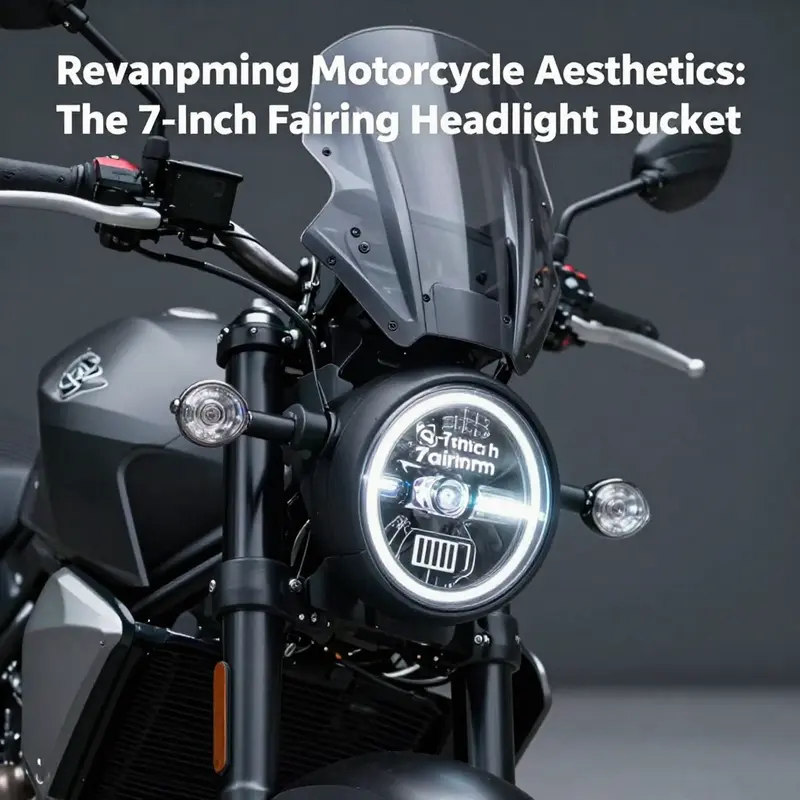
The headlight is often viewed as a distinct component, a simple circle of light set into the front of a motorcycle. Yet within the broader architecture of a contemporary fairing, the 7-inch headlight bucket plays a more consequential role. It is not merely a housing; it is a performance platform that blends form, function, and resilience. When viewed through universal fit, integrated design, and durable construction, this part becomes a linchpin that connects rider safety, aesthetic intent, and the practical realities of riding in varied weather and road conditions. In the evolving world of motorcycle customization and restoration, the 7-inch headlight bucket has become a focal point where engineering and styling converge, enabling riders to realize both classic looks and modern performance with minimal compromises.
The idea of universal fit is central to the appeal of the 7-inch bucket. It denotes an interface that accommodates a broad range of bikes without requiring extensive fabrication. Universal fitment means standardized mounting geometry, precision-toleranced housings, and adaptable brackets that align with diverse chassis layouts. For riders who swap bikes or mix retro aesthetics with modern components, universal fit reduces risk and accelerates the path from concept to riding. It enables a rider to retain lighting performance while exploring different fairing silhouettes or windscreen configurations. The bucket thus becomes a shared platform across many builds, not a bespoke one-off insert. Quality is maintained through engineering that resists vibration and thermal cycles, preserving alignment across installations.
Beyond fit, the integrated design of the bucket brings a new aesthetic and aerodynamic logic to the bike. In contemporary configurations, the headlight bucket is part of a streamlined system that couples the lens, housing, and wind-deflecting elements into a single unit. This integration reduces parasitic drag, lowers wind noise, and supports a cohesive silhouette that can echo retro cues while delivering modern performance. The seven-inch diameter provides a versatile balance between light output and fit across different fairing profiles, with a lens that spreads light to improve visibility and rider comfort.
Durability is the third pillar, guiding material choices and seals. Aluminum and stainless steel housings offer corrosion resistance, strength, and thermal stability. Finishes resist abrasion and oxidation, helping the assembly endure rain, salt spray, and road debris. Seals and gaskets protect reflector stability and lens clarity over time, contributing to reliability across seasons and long tours.
From a practical standpoint, a well-designed bucket supports consistent alignment, heat management around the light source, and robust mounting hardware that withstands vibration at speed. This reliability translates into fewer adjustments after installation and greater confidence in front-end performance.
Sourcing realities matter too. The universal-fit approach supports scalable production, aftermarket support, and potential OEM/ODM partnerships, enabling customized finishes and mounting options that remain compatible with a variety of fairings and electrical interfaces.
For readers seeking to explore sourcing options, a representative listing highlights the potential for OEM/ODM partnerships and durable, all-weather construction. This context underscores that the headlight bucket is not merely cosmetic but a practical foundation for front-end performance.
External references and supplier information emphasize universal fit and multi-style compatibility as part of a broader market narrative, illustrating how a single design can support a wide range of models and customization paths.
Illuminating Form and Function: The 7-Inch Fairing Headlight Bucket as a Bridge Between Performance, Protection, and Personal Style
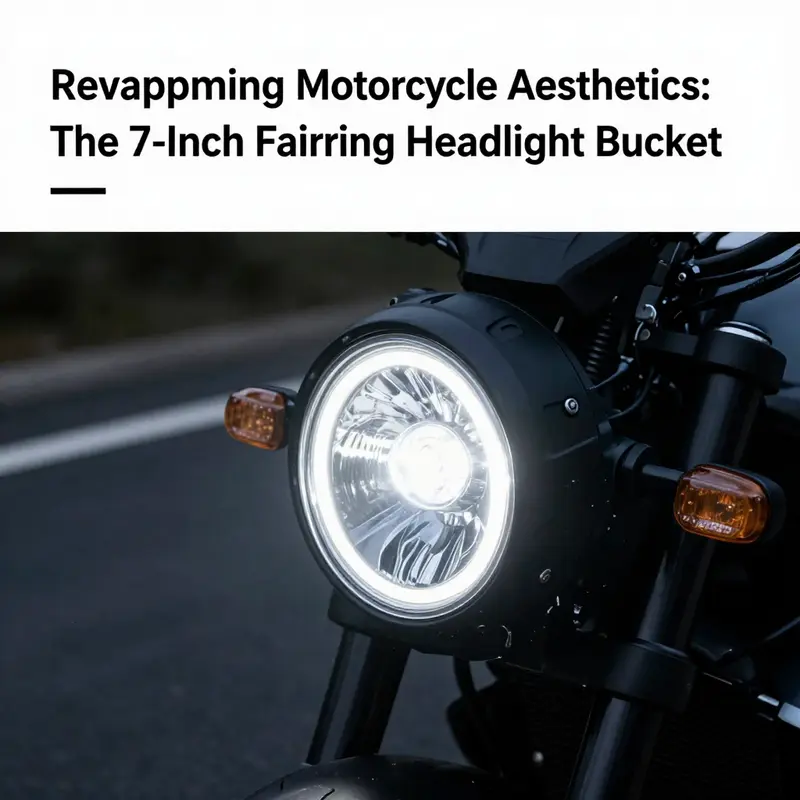
The 7-inch fairing headlight bucket sits at a quiet crossroads of form and function, a component that often goes unseen by casual riders yet governs how a motorcycle breathes, sees, and presents itself on the road. It is not merely a housing for a lamp; it is a compact theater of engineering choices that ripple through the bike’s aerodynamics, weight distribution, and user experience. In both modern and retro visions of motorcycling, the seven-inch diameter is more than a measurement. It is a design gesture that announces a rider’s intent: to pursue visibility without surrendering the motorcycle’s character to a sea of generic parts. When approached with the right mindset, this headlight bucket becomes a focal point where illumination technology, material science, and styling converge to redefine how a machine communicates with the night and with its rider. In practical terms, the seven-inch bucket is typically advertised as a universal fitment, crafted to accommodate a broad spectrum of classic cruisers, custom builds, and retro-styled machines. This universality is not a compromise but a deliberate design philosophy: a single, adaptable interface that reduces installation complexity, preserves the integrity of the bike’s front end, and offers a consistent mounting geometry for a variety of lamps, including high-efficiency LEDs. The appeal of this approach rests on a simple truth: every rider wants a headlight that aligns with the bike’s silhouette while delivering a lighting performance that protects and guides, regardless of whether the machine is a purist’s café racer or a modern boulevard cruiser. A headlight bucket that integrates smoothly with a windscreen or the surrounding fairing can elevate the whole aesthetic, creating a cohesive visual story where the front end looks like a single, purposeful unit rather than an assemblage of parts bolted together for convenience. The integration of the headlight bucket with the fairing and windscreen is more than cosmetic. It matters for aerodynamics, reducing turbulent air that can spoil stability at speed and contribute to noise and buffeting. When designed with attention to airflow, the front end works with the rider’s line of sight, channeling air in a way that keeps the glass clear and the rider focused, even on windy highway sections or windy mountain descents. Materials chosen for these buckets reflect a practical philosophy as well as a stylistic one. The dominant choice tends toward corrosion-resistant aluminum alloy or stainless steel, a pair of metals that deliver strength without the mass penalty that older designs used to bear. Aluminum’s lightness helps preserve front-end handling and reduces unsprung weight to a degree that can tighten steering and improve steering feel. Stainless steel, when used in conjunction with aluminum or as a frame for structural support, brings durability against chips, salt spray, and road grit that accumulate in the northern and coastal riding seasons. Coatings and surface treatments add a further shield, heightening UV resistance and maintaining a like-new appearance through many seasons of exposure to sun, rain, and road salt. The result is a headlight housing that remains dependable and attractive, a crucial consideration for riders who view their machines as long-term investments and expressive art forms rather than collections of disposable parts. Beyond raw durability, the seven-inch bucket is engineered for thermal management as well. LEDs, while efficient, still generate heat when driven at high luminance, especially in cool night air that can deceptively cool the outer shell while inner components run hot. Some higher-end designs incorporate a built-in heat-dissipation approach, such as a small, purpose-built airflow path or an active cooling element. The practical benefit is simple: stable color temperature and consistent brightness, which translates into more reliable night vision and a reduction in sudden dimming that can occur as the lamp warms or cools. The lifespan of a well-designed headlight system is typically long, with modern assemblies often advertising lifetimes around tens of thousands of hours. A conservative but credible figure in the industry places LEDs within a bucket like this at approximately fifty thousand hours under typical riding conditions. That level of longevity speaks to a broader expectation: riders want something that endures, resisting the kind of degradation that can accompany cheaper plastics and poorly integrated LED drivers. The longevity argument is not merely about not replacing bulbs; it is about the cost of ownership and the rider’s peace of mind on long trips and remote roads where maintenance becomes a logistical concern. The seven-inch headlight bucket also serves as a canvas for how a rider can express personal style without compromising function. A retro Cafe Racer-inspired look, for example, can be achieved through exposed raw metal finishes, smoked glass or tempered glass lenses, and subtle texturing that evokes vintage craftsmanship. The design language invites customization because many owners want to connect the machine’s exterior with an interior story. With a headlight bucket that supports painting or wrapping, the rider can coordinate the front end with a colorway, a motif, or a graphic that spans the fairing, windshield, and other chrome or matte components. It becomes a tactile dialogue between the rider’s vision and the bike’s silhouette. Some models also offer an optional one-piece integration with the windscreen, a choice that transforms the front of the motorcycle into a single, streamlined element rather than separate pieces that meet at angles. This integrated approach improves air management by guiding the breeze across the surface of the screen and fairing, which, in turn, reduces cockpit noise and provides a calmer, more predictable ride. The improvements in aerodynamics are subtle but meaningful, particularly at highway speeds where even a small reduction in buffeting can relieve rider fatigue and allow sharper focus on road texture and traffic cues. The lighting performance of these buckets builds on that aerodynamic foundation. A seven-inch diameter is large enough to host a lens with a wide-beam design, a configuration that spreads light broadly across the lane and shoulder. This is not merely about brighter headlights; it is about more evenly distributed illumination that fills in dark corners and shadows, allowing the rider to see obstacles earlier and react with greater confidence. In a world where night riding is a test of perception and timing, the combination of a wide-beam lens and modern LED emitters makes a tangible difference. The technology behind the LED array, the lens geometry, and the reflective housing all work together to maximize ground coverage without creating glare for oncoming traffic. The human eye’s perception at night benefits from this synergy, with rider fatigue reduced because the eyes can scan the surroundings more comfortably and with fewer focal distractions. The practicality of universal fitment means that many riders can upgrade their front end without committing to a full fairing replacement or a custom fabrication project. The ease of installation is not just about technical convenience; it also reduces the barrier to experimenting with looks and performance. A rider who wants to align the front end with a new paint scheme, or to reflect a personal homage to a classic design, can choose a headlight bucket that accepts a retro glass lens or a smoked finish, then pair it with a matching windscreen and fairing contours. The aesthetic and practical considerations converge in a way that encourages experimentation, while the engineering keeps the rider safe and the machine reliable. The choice of materials, the approach to cooling, the potential for integrated wind protection, and the scope for customization are all part of a larger philosophy: this component should be both robust and expressive, blending into the bike’s overall narrative rather than standing as an afterthought. In the broader ecosystem of motorcycle customization, the fairing and its headlight bucket function as a keystone—an anchor that supports a chain of improvements across lighting, aerodynamics, and styling. A well-chosen seven-inch bucket has a cascade effect: it informs the line of the fairing, sets the tone for color and finish, and subtly shapes rider expectations about performance capabilities. Riders who prize a classic stance alongside modern reliability find that this small but significant piece delivers the best of both worlds. For those approaching upgrades with a view toward long-term ownership, building around a universal seven-inch headlight bucket often proves most economical and satisfying. It provides a platform that can grow with the rider’s ambitions—whether it’s a subtle polish to existing lines, a bold renovation to evoke a particular era, or a thorough reimagining that aligns with a freshly conceived performance profile. In practical terms, the choice becomes about balancing three axes: illumination quality, front-end integrity, and personal expression. The LED-driven, wide-beam performance ensures the rider can perceive hazards with a margin of safety that would be hard to achieve with smaller, less capable lamps. The aluminum or stainless construction preserves structural integrity without excessive weight, supporting nimble handling and dependable durability in all weather conditions. And the customization pathway—paint, wrap, or integrated windscreen options—offers a route to a unique identity that still respects the bike’s mechanical roots. It is this trifecta of lighting prowess, rugged construction, and stylistic flexibility that makes the seven-inch fairing headlight bucket a compelling choice for riders at the intersection of performance and personality. The moral of this design story is simple: good lighting is not an afterthought, and a well-made headlight bucket is more than a protective shell. It is a precision instrument that works in concert with the rest of the front end to reveal the road ahead while revealing who the rider is. In the end, choosing a seven-inch bucket is about choosing a reliable, adaptable partner for a motorcycle’s ongoing evolution—a partner that can handle the demanding conditions of night riding, a partner that stays true to the machine’s aesthetic, and a partner that invites the rider to participate in the creative process of customization. For readers curious about how similar fairing components are integrated in practice and how they align with broader styling families, exploring a range of fairing collections can provide a useful map of compatibility and design language. A visit to a dedicated collection that features Honda fairings, for instance, can illuminate how universal components are incorporated into a coherent front-end design, illustrating the balance between adaptability and brand-specific cues. This aligns with the broader principle that a universal seven-inch headlight bucket should honor the bike’s lineage while offering a flexible foundation for contemporary lighting technology and cosmetic expression. External references and practical considerations aside, the most important takeaway is that the seven-inch headlight bucket is a sophisticated, multi-purpose element. It fuses illumination excellence with aerodynamic sensibility and personal storytelling, offering riders a straightforward path to safer night riding without sacrificing the individuality that makes each motorcycle a personal statement. Internal link for further exploration into compatible fairing language and model-specific styling can be found in the Honda fairings collection, where the spirit of universal fit and cohesive front-end design is demonstrated in a series of curated examples that echo the goals described here. For readers seeking a direct practical reference to the kind of sourcing and specifications behind these components, an external resource outlines OEM-friendly universal seven-inch headlight assemblies, including material construction and durability claims that reinforce the arguments for durability, ease of installation, and long service life. External resource: https://www.alibaba.com/product-detail/OEM-Service-Universal-7-inch-Motorcycle-headlight_1600598949373.html?src=whatsapp&spm=a2700.13017655.0.0.5e5c3a4dHtJYjZ
Steady Beam, Steel-Strong Shell: Installation and Structural Integrity of the 7-Inch Motorcycle Fairing Headlight Bucket
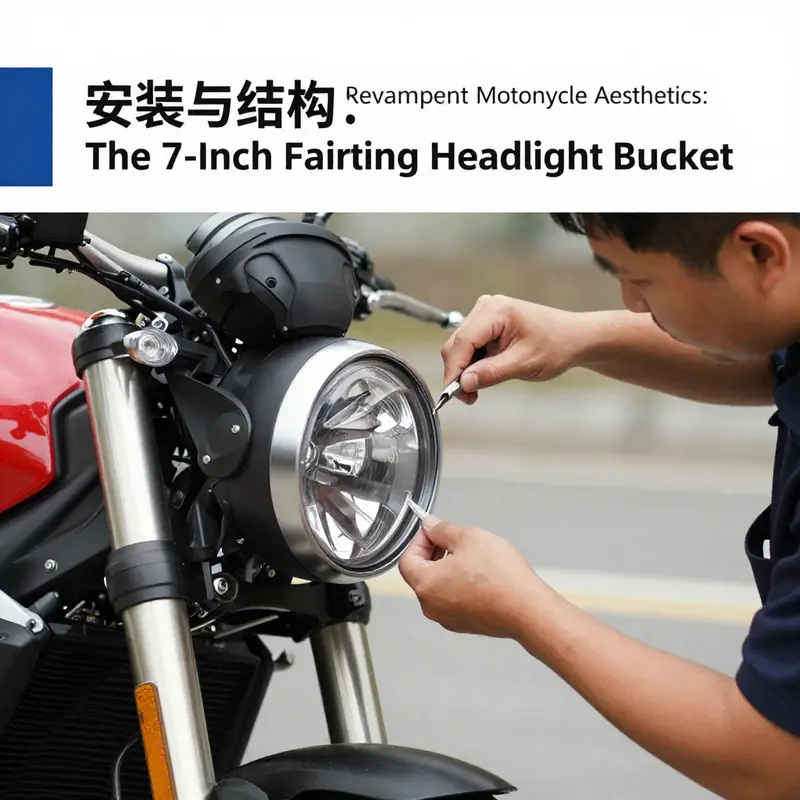
The moment a rider leans into a curve, the bike’s face—the seven-inch headlight bucket nestled within the fairing—enters the dialogue between light, wind, and will. This component is more than a housing for a lamp; it is a carefully engineered interface that transforms visibility into confidence. It must cradle a powerful light with precision, resist the relentless onslaught of road grime and weather, and do so without contributing unnecessary weight or drag. In the best designs, the bucket behaves like a small structural member of the bike itself, a node where aesthetics, aerodynamics, and durability converge. The central challenge is to deliver a part that is both universal in fit and exact in performance, a paradox that designers and builders resolve through material choice, geometry, and integrated features that preserve alignment while withstanding the vibratory and thermal stress of real-world riding.
At the core of any seven-inch headlight bucket is a balance between strength and weight. Most practical iterations use high-strength aluminum alloy or stainless steel. Aluminum offers a compelling combination of low density and good rigidity, which keeps overall mass down while maintaining a robust resistance to bending and fatigue. Stainless steel, while heavier, brings exceptional durability and a higher resistance to impact and corrosion in the face of road salt and spray. The ultimate choice often comes down to the expected riding environment and the rider’s willingness to trade a bit more weight for longer service life. In either case, the cast or forged process matters. Forged sections can yield superior grain structure and impact resistance, while precision casting can deliver intricate mounting points and a more integrated form. In a well-executed design, the material choice is not merely about surviving a pothole or a winter rainstorm; it is about preserving the headlamp’s optical alignment under duress, so the beam pattern remains predictable night after night.
The structural logic of the bucket is inseparable from its mounting philosophy. A seven-inch unit must anchor securely to the bike’s frontal structure, absorbing wind pressure, engine vibrations, and occasional misalignment caused by rough surfaces. A robust mounting system typically combines a few complementary ideas: precise dowel or locating pins, a surrounding frame or bracket, and a fastener strategy that resists loosening at speed. In most designs, you will find a set of bolt points that align with the bike’s subframe or fork crown, reinforced by gussets that transfer load away from sensitive seams. Many versions augment this with snap-in or latch-style fasteners that keep the outer shell sealed and maintain consistent spacing relative to the surrounding fairing. The result is a connection that feels almost integrated, as if the headlight bucket grew directly out of the bike’s chassis rather than being bolted on as a separate accessory.
A practical consequence of this robust connection is improved aerodynamics. When a headlight bucket is tied to the fairing with tightly controlled geometry, air follows the contour of the bike more smoothly. Gaps become minimized, and the risk of buffeting—a phenomenon that can buffet the rider’s helmet and degrade comfort at highway speeds—drops noticeably. In higher-end configurations, you may see an integrated windscreen or a single-piece fairing that blends into the headlight bucket. The optics benefit from a stable housing, while the rider enjoys quieter airflow and a more stable posture even on gusty roads. The seal between the lamp, the bucket, and the surrounding fairing also plays a critical role here. A well-sealed assembly protects the lamp’s wiring, keeps moisture from creeping into the connector, and supports consistent beam performance across climate conditions.
The optics deserve particular attention within the broader installation narrative. A seven-inch headlight often relies on a wide-beam lens or reflector geometry to maximize peripheral illumination. This is especially valuable on bikes that run with little ornamentation or fewer auxiliary lights, where the single primary source must provide a broad, evenly lit field. The headlight bucket must accommodate the lens’s diameter and the lamp’s reflective surface while preserving a careful air gap that prevents heat from building up inside the housing. Heat management is not an afterthought; LED sources generate heat, and without a proper thermal path, performance can drift, and longevity may be compromised. Designers respond with thermal channels or a hollow core through which air can circulate, and sometimes a vented rear panel that channels warm air away from the lamp. In addition, the interior finish of the bucket is often chosen to minimize stray reflections that could distort the beam pattern or create glare for oncoming riders.
Durability isn’t only about resisting the weather; it’s also about resisting the everyday wear and tear of riding. The front edge of the bucket and the surrounding fairing must tolerate incidental contact with branches, curbs, or the occasional stone strike without deforming. This is where the choice of hardware matters. Stainless steel fasteners are common for their corrosion resistance, while corrosion-resistant coatings on aluminum provide a durable, low-maintenance surface. The mounting points themselves are reinforced—often with thickened sections or internal ribs—to distribute loads. Anti-vibration measures are another critical piece of the puzzle. Rubber dampers or silicone sleeves isolate the lamp assembly from the roughness of the frame, reducing micro-movements that can nudge the headlamp out of alignment over time. The result is a bucket that not only survives but remains precise; the beam writes a consistent path through the night rather than wandering with every bump.
The installation mindset behind a seven-inch bucket is rooted in universality without surrendering precision. Universal-fit designs promise compatibility with a wide range of bikes—from classic cruisers to custom builds and retro cafe racers. That compatibility is achieved through a modular approach: a common base geometry, adjustable mounting ears, and a selection of bracket options that can be rotated or shimmed to align with unique fork crowns or fairing gaps. This universality is not a license to guesswork. Rather, it invites a careful verification process. Before a single bolt is tightened, a rider or mechanic should confirm that the bucket’s outline aligns with the bike’s front end, that the lamp’s axis can be aimed accurately, and that the lens does not protrude into the windscreen path or create interference with other fairing components. The process often begins with a simple measurement: the centerline of the headlight should align with the bike’s centerline, and the bucket should sit flush against the fairing’s inner wall to minimize gaps that could trap moisture or create turbulent eddies.
The installation sequence, while straightforward in principle, benefits from a thoughtful, methodical approach. A rider should first inspect the dedicated mounting surfaces for flatness and readiness. If the surface shows a scratch or a small burr, a light deburring can prevent interference with the gasket seal. Next, a dry fit ensures that all fasteners find their corresponding holes without forcing the piece into place. The gasket or seal should then be positioned to create a weather-tight barrier. Electrical connections must be clean, dry, and secure, with any spade or blade connectors seated fully and the harness routed away from sharp edges or hot components. When it comes time to tighten, torque control is essential. Over-tightening can deform the aluminum shell or crack the mounting ears; under-tightening invites movement under wind load. A typical guideline is to snug fasteners and then perform a measured recheck after a brief ride to verify that there is no creeping of the assembly and that the light consistently aims where intended.
Beyond the mechanical and optical considerations, the aesthetic integration of the bucket plays a subtle but meaningful role. A seven-inch unit, especially one designed with a retro or cafe-racer vibe, often features an exposed glass lens with a slightly smoked or tinted finish. This look can harmonize with matte or brushed metal surfaces on the fairing, reinforcing a timeless, sport-born character. The integration isn’t merely cosmetic; it sends a signal about attention to detail. Even when viewed from a distance, the alignment of the lamp, the curve of the windscreen, and the gloss of the glass reflect a careful engineering philosophy. In that sense, the installation is an act of storytelling—the rider’s intention to fuse classic silhouette with modern illumination in a way that respects both history and today’s performance expectations.
Compatibility conversations—about universal fit and ease of retrofit—continue to shape how riders approach upgrades. The spectrum runs from subtle, largely invisible updates to bold, statement pieces that redefine the bike’s front-end attitude. Regardless of how bold or understated the choice is, the objective remains consistent: a stable, reliable source of illumination that remains aligned under pressure and provides a confident, uninterrupted view ahead. For those exploring the broader ecosystem of compatible parts, a practical way to gauge fit is to consider the surrounding hardware and bracketry as a system rather than as separate pieces. A bucket that threads smoothly into a bike’s existing substructure, with mounting points that mirror the bike’s geometry, reduces the amount of modification required and preserves the integrity of the front-end geometry.
To illustrate the broader context without naming specific brands, consider the way a rider can explore a community-driven ecosystem for fairings and related components. A dedicated online collection—such as a catalog dedicated to modular fairings and compatible headlight assemblies—provides a useful repository of geometry, brackets, and adaptors. In that vein, a rider can ground the decision in a familiar resource by engaging with a curated set of offerings that emphasize compatibility with a variety of classic and modern chassis. This approach helps ensure that the seven-inch bucket you choose can thread into your bike’s front-end with minimal fabrication, maximum rigidity, and a clean, cohesive line that complements the bike’s overall silhouette. The goal is not simply to mount a light; it is to weave a stable, predictable, efficient front-end system that respects the rider’s intent and the machine’s heritage.
From a maintenance perspective, the bucket’s durability revolves around inspection intervals, gasket integrity, and the continuity of the electrical path. A periodic check—especially after seasonal storage or off-road detours—helps catch corrosion at a nascent stage and preserves the seal that keeps dust and water at bay. If a gasket shows signs of fatigue, it should be replaced rather than re-seated to avoid an ill-fitting seam that invites moisture ingress. Wiring harnesses should be checked for brittle insulation or crushed sheaths, and connectors should be tested for continuity and resistance to moisture. Cleaning should emphasize dry brushing and non-abrasive padding to avoid micro-scratches that could later foul the lamp’s reflective surface or impair the seal. A well-maintained bucket remains integral to the headlight’s aim, brightness, and uniformity, ensuring that the rider’s nighttime visibility does not degrade over the years.
The installation and structural integrity narrative here is not a standalone technical excursus; it is a continuous thread that ties the visual language of the bike to its functional reliability. When the seven-inch bucket is designed with a thorough understanding of material behavior, load paths, and environmental exposure, it becomes more than an accessory. It becomes a poised instrument, ready to project light with purpose while withstanding the test of time. The rider’s experience—confidence in the beam, steadiness in the frame, and comfort in the wind—derives from this careful integration. The resulting front end is not merely illuminated; it is reinforced by engineering decisions that pass the daily grind test and the long night ride alike.
For readers who want to see how this philosophy translates into actual parts catalogs and compatible options, there is value in exploring broader collections that already organize fitment around common chassis categories. In this context, the concept of a universal-fit seven-inch headlight bucket comes alive when you encounter a well-structured assortment that offers clear notes on mounting points, lens geometry, and compatibility with retro-styled builds. The practical takeaway is that a good fit is not a matter of luck but a function of precise measurements, thoughtful hardware selection, and a holistic view of how the front end behaves under load. When these factors align, the results are immediate: a crisp, stable beam that cuts through darkness with confidence, and a shell that holds its line through the tarmac’s micro-challenges.
As you consider sources of further information, you can explore external references that discuss the technical and material aspects of these assemblies. An authoritative resource provides detailed specifications, materials, and installation guidance for universal seven-inch headlight buckets, underscoring the balance between corrosion resistance, weather sealing, and compatibility with a wide range of bikes. This material reinforces the idea that the right bucket is not merely about optics; it is about a robust, integrated system that supports consistent performance across climates and terrains. It is within this broader framework that the seven-inch headlight bucket becomes a crucial contributor to both safety and style on the motorcycle.
Internal resource note: to see how a major parts collection panels its offerings around front-end fairings and their lighting integrations, you can explore the Honda fairings collection. This repository showcases how compatible front-end components—from fairings to mounting brackets—are aligned to common chassis footprints, helping riders gauge fitment before committing to an upgrade. https://www.summitfairings.com/collections/honda-fairings
External reference for further technical detail: the detailed product and installation guidance on a universal seven-inch headlight bucket, including material composition and assembly notes, can be reviewed at the following source. https://www.alibaba.com/product-detail/OEM-Service-Universal-7-inch-Motorcycle-Headlight_1600589882558.html
In summary, the installation and structural design of the seven-inch motorcycle headlight bucket sit at the intersection of durability, precision, and rider confidence. The right materials and mounting strategy yield a housing that not only protects and guides the light but also preserves the front-end geometry and the bike’s character. When these elements are executed with care, the rider benefits from a stable beam, a clean silhouette, and a front end that remains true across miles and seasons. The objective is not only brighter nights but steadier illumination that supports safer, more assured riding. The chapter calls for an appreciation of the bucket as a functional sculpture—a small yet indispensable piece that, when properly engineered and installed, elevates both the ride and the rider’s trust in it.
Shaping Light and Line: A Comprehensive Guide to the Market, Materials, and Buying Pathways for 7-Inch Fairing Headlight Buckets
The 7-inch fairing headlight bucket sits at a nuanced crossroads in motorcycle customization. It is not merely a housing for a lamp; it is a junction where aesthetics, aerodynamics, durability, and procurement strategy converge. Riders who chase a look that nods to retro sensibilities while insisting on modern reliability understand that the headlight bucket is a cornerstone of both style and function. In the contemporary market, these components are offered in a spectrum that ranges from utilitarian, universal-fit shells to integrated systems that fuse the headlight with windshields and fairings. The result is not just brighter nights or crisper daybreaks; it is a tangible shift in how a bike communicates its personality and how a shop plans its inventory and workflow.
At the heart of these buckets lies a simple yet powerful design philosophy: universal fit. A lot of seven-inch headlight shells are marketed as adaptable to a variety of classic cruisers, custom builds, and café racers. The advantage here is clear for shop owners and builders who work across model lines. Universal fit reduces the burden of sourcing, reduces the risk of nonfit, and speeds up the turn from concept to on-bike reality. But universal fit does not exist in a vacuum. It must contend with a real ecosystem of mounting points, electrical interfaces, and bodywork geometries. This is why the most trusted options couple the bucket with precise alignment features—such as locating pins and robust brackets—that keep the lamp steady at highway speeds when vibrations and wind pressures rise. In practice, the best universal-fit buckets present a tempered balance: broad compatibility on the outside, with well-thought-out internal tolerances to accommodate a range of headlights, lenses, and reflectors.
A second pillar of modern design is integration. Rather than a separate, standalone light unit, many recent fairing designs pair the headlight bucket with a windscreen or a partial fairing module. This integration is more than cosmetic; it has real aerodynamic consequences. A streamlined profile reduces wind noise, channels air over the bike more efficiently, and can even influence how cooling air interacts with the radiator and accessories. When the bucket is integrated with an upper fairing or a windscreen, the headlights must align precisely with the rider’s sightline and with the optical center of the lens. Achieving this alignment across a range of bike geometries requires careful tolerancing and, often, a modular approach to mounting hardware. The practical upshot is that integrated designs tend to be favored by builders who want a clean, factory-like appearance and a smoother ride at speed, while still maintaining the option to replace or upgrade the lamp module without dismantling the entire front end.
Material choice remains a defining factor in how these buckets perform, weather the rider’s route, and endure the elements. The field has largely shifted toward metal—primarily aluminum alloy and stainless steel—over traditional plastics. Aluminum alloys contribute a favorable combination of light weight and strength, which is particularly valuable when the bucket must withstand vibrations and occasional impacts without compromising the gimbal of the lamp or the integrity of the mounting points. Aluminum also resists corrosion well enough for riding in rain, road salt, or humid coastal air. Stainless steel, while heavier, adds exceptional resistance to corrosion and can be shaped into more rugged or decorative forms that suit aggressive café racer aesthetics. The choice between aluminum and stainless often translates into a broader conversation about the expected life cycle of the headlight assembly, the climate in which it will operate, and the rider’s willingness to trade a bit of weight for extra durability.
In addition to metal, the lenses and shells themselves play a crucial role in the bucket’s performance and look. A smoked or smoked-gray smoked glass lens, for example, can impart a vintage vibe while reducing glare and refractions that might otherwise bounce off a bright beam in foggy nights. Some builders prefer smoked glass for its retro appeal, while others lean toward clear or lightly tinted lenses when their LED or projector-style modules require more precise light distribution. The lens design—whether a wide-beam lens, a projector, or a hybrid—helps determine the perceived brightness and the width of the illuminated field. A 7-inch diameter paired with a well-designed wide-beam or projector lens can deliver an expansive, evenly lit arc that improves night visibility without creating harsh hotspots. These lighting characteristics become a meaningful differentiator when riders push into twisty roads, rural patches, or urban areas where street lighting is inconsistent.
Beyond optics, electrical and environmental resilience define the daily reliability of the bucket. Many contemporary setups run in 10–30V DC systems, a window that accommodates a broad spectrum of motorcycles, from older machines adapted for modern lighting to contemporary builds designed around robust LED arrays. International certifications—such as IP-rated water and dust seals, CE or DOT compatibility, and other quality-management assurances—are not merely paperwork. They translate to real-world protection against rain, mud, dust, and temperature swings. When a bucket proudly carries an IP68 rating or a similar standard, riders gain confidence that its seals, gaskets, and coatings will hold up under riding conditions ranging from desert heat to Arctic spray. For a shop, this translates into fewer warranty claims and a more predictable supply chain, especially when operating in markets with diverse climates.
The market’s price structure mirrors the practical realities of manufacturing, customization, and volume. The most accessible options for a single-unit enthusiast who seeks a quick upgrade tend to be found with smaller but well-resourced manufacturers who sell through global platforms, offering universal-fit buckets with a baseline feature set. For small shops and builders aiming to deliver a branded, finished front end, the economics shift toward OEM/ODM arrangements and larger batch purchases. In the current landscape, a typical price range for a single bucket can vary significantly depending on what is included in the kit, the finish, and the level of customization offered. For a simple, universal-fit shell with standard aluminum construction, a single unit might sit in the mid-to-lower tens of dollars when bought in bulk, but fluctuate to a higher range when ordered in a small lot with specific surface finishes, integrated windshields, or branding. Price tiers frequently reflect the supplier’s willingness to accommodate customization—whether that is laser-etching, color-matched finishes, or additional mounting accessories.
From a procurement perspective, understanding the pricing architecture is essential for planning, especially for small shops expanding into a broader product line. For those evaluating suppliers on a global scale, several patterns emerge. First, a number of OEM-focused manufacturers offer universal-fit 7-inch headlight buckets with aluminum alloy and stainless steel variants, designed to withstand wide climate ranges and to support full weather-sealing. These suppliers typically set a modest minimum order quantity, often around ten sets, which is a practical threshold for small businesses exploring customization or local assembly partnerships. The unit price tends to follow a tiered structure: single-unit or very small orders carry a premium, reflecting the cost of customization and the absence of economies of scale. As order volume rises, per-unit costs decrease, with more favorable pricing seen in the 10–99 unit range and further reductions at higher volumes. This tiered approach encourages brands and workshops to forecast demand and consolidate orders to leverage bulk pricing.
Another important dimension is the distinction between fully assembled, ready-to-install options and modular, replaceable components. Some suppliers provide integrated systems that come ready to drop into a fairing with minimal modification, while others offer the headlight bucket as a modular shell that requires adapters, mounting hardware, and sometimes a separate lens or LED module. For the installer or reseller, the choice hinges on the intended workflow and the desired degree of control over performance and aesthetics. Ready-to-install solutions often command a premium but can reduce installation time and risk, while modular options maximize customization flexibility and can align with a shop’s existing electrical and optical configuration. In regions with strong DIY and custom-build communities, modular solutions frequently win favor because they allow the builder to curate the exact components that align with a target look and light pattern.
The supply landscape for seven-inch fairing headlight buckets has been shaped by a mix of global sourcing and regional manufacturing. A typical buyer today will find options on large international platforms offered by OEM service providers who emphasize universal fit and climate durability. These vendors often list both aluminum alloy and stainless steel variants, highlight integration options such as windshields or fairing assemblies, and publish technical data on the light distribution pattern and lens type. Buyers should pay close attention to the stated operating voltage window, the level of weather sealing, and the method of mounting to the bike’s frame or fairing. They should also consider whether the supplier supports branded or custom finishes, since branding can be a strategic differentiator for small shops seeking to cultivate a recognizable product line.
In this context, the process of choosing a supplier becomes an exercise in balancing cost, speed, and reliability. For instance, one widely used pricing tier is to offer a universal 7-inch bucket at a lower base price when ordered in moderate quantities, with incremental discounts as the order size increases. A global market perspective shows a progression from roughly mid-thirty-dollar to mid-sixty-dollar per unit range for small quantities, moving down toward the low tens or even high teens per unit as volumes progress into the hundreds. These ranges are indicative rather than fixed, as they reflect current market dynamics, material choices, and the level of customization involved. The decision to select one route over another depends on a builder’s timeline, budget, and long-term strategy for product identity on the road.
For readers who are building or upgrading a bike with a 7-inch headlight bucket, there is value in thinking beyond the lamp itself. The bucket’s material, finish, and mounting system speak to the broader project’s quality and cohesion. A kit that emphasizes corrosion resistance and a precisely engineered mounting system, for example, helps ensure that the front end remains stable at high speeds and that there is a clean integration with the fairing and any wind protection. The aesthetic choices—whether a smoked lens, a matte or polished finish, or a bracket that echoes the bike’s lines—contribute to a narrative about the bike’s character as much as they contribute to the actual road performance.
In terms of direct purchasing guidance, an informed buyer will weigh several signals. First, assess the supplier’s stated material composition and any available certifications. Then, consider the implied compatibility with your chosen model range and how much customization you require. If the project demands a quick turnkey solution, you may favor suppliers who offer ready-to-install bundles with minimal modifications. If you want maximum control over the final appearance and the electrical integration, you might choose a modular knock-on solution, even if it requires more hands-on assembly. Finally, consider the after-sales support and warranty posture, since a well-supported product reduces risk and increases the likelihood of a satisfied customer.
From an ideation standpoint, the chain of decisions around the 7-inch headlight bucket reflects a broader truth in motorcycle fabrication: components are conversations. The bucket speaks to the rider’s desire for a look that is both classic and current, and it speaks to the builder’s need for predictability and repeatability in production. The interplay between universal fit and integrated design creates a spectrum of options that can be tailored to different brand stories and riding philosophies. In markets with a strong café racer or retro cruiser ethos, the bucket may be chosen for its authentic appearance and the ease with which it can be customized—whether by finishing, by lens choice, or by the decorative touches that define a bike’s exterior voice. In markets that prize performance and reliability, the emphasis may shift toward structural integrity, weather sealing, and compatibility with high-performance LED modules, driving demand for more rugged materials and more precise manufacturing tolerances.
For readers seeking practical shopping guidance, a few benchmarks can help. First, establish the expected climate range and riding conditions. If salt, humidity, or dusty roads are common, steer toward options with robust corrosion resistance and tight IP-rated seals. Second, map the intended lens and light pattern against the rider’s typical routes. A wide-beam design can dramatically improve peripheral visibility on rural roads, while a projector-style lens may offer more concentrated illumination for high-speed highway riding. Third, evaluate the total cost of ownership, including the potential savings from faster installation, reduced risk of vibration-induced looseness, and the likelihood of compatibility with other components in your front-end assembly. Finally, align your choice with a supplier that can support your customization aspirations—whether through color and finish options, integrated windshields, or branding that helps your project stand apart.
As you plan your next front-end upgrade, consider the deeper thread that ties these buckets together: the promise of clarity, control, and character on the road. The bucket determines how a bike meets the night and how a rider meets the day’s demands. It is a practical piece of engineering that also frames a rider’s identity. With a broad market offering that spans basic, utilitarian shells to premium, integrated assemblies, there is a path for every rider and every builder to create a front end that feels both timeless and timely. If you want to explore a catalog that blends these ideas with a broad community of builders, you can dive into the Yamaha fairings collection, which offers a window into how fairing ecosystems shape and are shaped by the headlight components they cradle. Yamaha fairings collection.
External resource: for a deeper look at the pricing and supplier landscape described in this chapter, see the detailed market analysis on a leading global manufacturing platform. External reference: https://www.alibaba.com/product-detail/OEM-Service-Universal-7-inch-Motorcycle_1601281395375.html
Final thoughts
The 7-inch motorcycle fairing headlight bucket stands as a testament to the perfect blend of elegance and functionality in motorcycle accessories. With its universal fit, aerodynamic design, and superior illumination benefits, it is a must-have for both modern and retro bike enthusiasts. For business owners, recognizing and investing in these components can lead to elevated customer satisfaction and increased sales opportunities. The insights provided throughout the article will enable you to make informed purchasing decisions and tailor your offerings to meet market demand effectively.