
Motorcycle enthusiasts and business owners alike have recognized the significance of fairings in reshaping motorcycle culture, particularly during the vibrant 1970s. This era not only saw a shift in design but also an enhancement in the functionality of motorcycles, driven by the desire for higher speeds and improved aerodynamics. By covering the engine, fairings changed not just the look of motorcycles but also their performance metrics, leading to an explosion of interest in not just riding, but in customizing and showcasing these remarkable machines. Through this journey, we will delve into the evolution of fairings, the artistic representations of these motorcycles, and the technological innovations that defined this captivating decade.
Drawing the Wind: The Aerodynamic Craft of 1970s Motorcycles and the Quiet Revolution of the Fairing
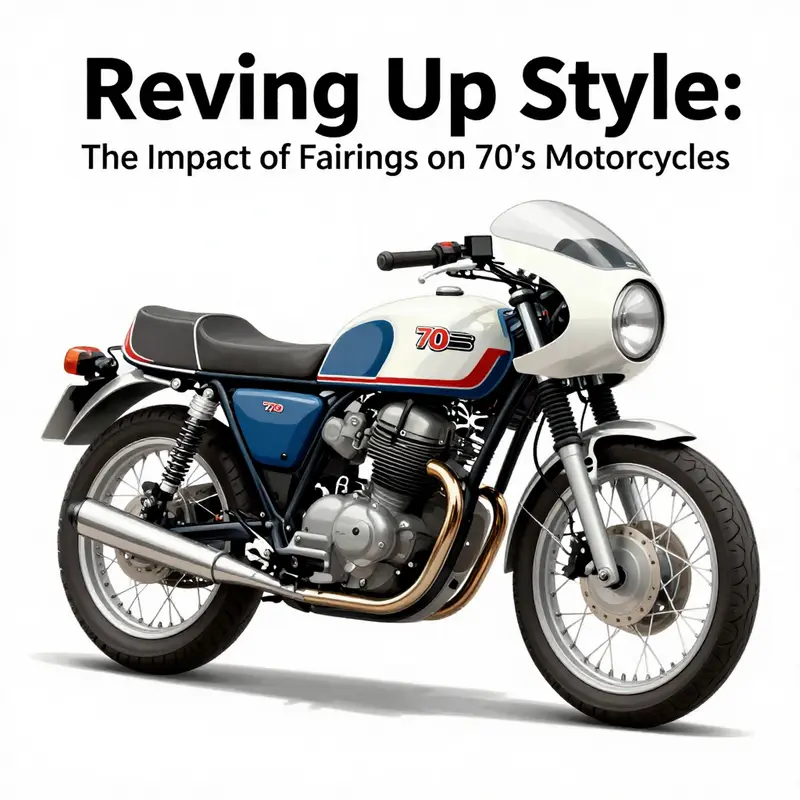
The 1970s arrive with a weather of change in motorcycle design, a decade that quietly redefined the posture and purpose of bikes in daily life and on the open road. Before this era, machines tended to present a straightforward, utilitarian silhouette, their lines dictated by the needs of reliability and cost rather than speed. In the following years, a new visual and functional language emerged: the fairing. It began as an idea, a shield that could slice through air while sheltering the rider from the gusts and rain that once tested endurance. What happened during that decade was less a single invention than a shift in sensibility—a move toward integration, where engineering and aesthetics fused around the rider’s experience. The result was a family of bikes whose fronts, once simple and exposed, grew into sculptures of angles and planes, each curve chosen to coax wind to part and glide rather than rush and buffet. The fairing became not merely an accessory but a defining feature of a generation’s motorcycle identity, a graphic grammar that said speed is a conversation between rider, machine, and air itself.
From the first sketches to the final fiberglass layups, the evolution of the 70s fairing traces a practical arc. Designers sought to reduce wind pressure and then to tame it, so the rider could stay energized for longer journeys and maintain control at the higher speeds becoming possible on the highways. The earliest models embraced the essential purpose of a shield, but as the decade progressed, the same shield grew more ambitious. It wrapped around the front end with a confidence that suggested both protective instinct and a statement of intent. This was not mere cover; it was a deliberate aerodynamic surface, a kind of pre-digital wind tunnel translated into physical form by skilled hands and tested against the realities of road and weather. The materials reflected the era’s balance between accessibility and performance. Fiberglass and early plastics offered the lightness and malleability needed for bold shapes, while the constraints of manufacturing and repair kept designers honest about weight, rigidity, and ease of replacement. The result was a family of front and partial fairings that could be paired with sportier chassis or used to convert touring machines into more imposing, seated silhouettes. The common thread was a disciplined search for efficiency without sacrificing the rider’s sense of connection to the road.
The visual impact of the 70s fairing is inseparable from the broader aesthetic of the period. Angular lines—sharp noses, edgy vents, and pronounced headlight recesses—evoked a technology-forward mood even for riders who prized comfort as much as speed. The fairing’s geometry worked with the bike’s overall stance: the front end rose slightly, the cockpit tucked inward, and the rider’s posture adapted to a more aerodynamic, slightly hunched position that felt both purposeful and modern. In this design vocabulary, form and function were not rival considerations but partners. The fairing arranged air as a collaborator, guiding it around the machine’s body and over the rider’s frame. The sound of wind, the feeling of pressure on the chest, the way mirrors reflect a changing sky—all of these become part of the ride’s sensory language. Designers learned to control the air not just to reduce drag, but to make the experience itself more legible, more predictable, and more forgiving at speed. The rider’s visibility, comfort, and confidence grew in tandem with the fairing’s protective envelope, a bond that helped redefine what it meant to travel on a motorcycle for longer distances and with more companions along the way.
In technical terms, the fairing’s contribution to performance was multi-layered. Aerodynamics, of course, played a central role. A well-shaped front end could dramatically reduce the lift and pressure that buffet drove into the rider’s chest and arms at highway speeds. Meanwhile, the fairing helped direct flow to stabilize the bike, smoothing gusts that could otherwise upset steering at the critical moment when a rider transitions from cruising to overtaking. The practical benefits extended beyond speed and stability. A streamlined profile could improve fuel efficiency by reducing drag, which mattered in an era when efficiency and economy loomed large in both sport and touring contexts. Yet the fairing was not a purely functional device. Its surface became a canvas for the era’s design language, a way to express aggression or elegance, technology and access, all in one compact package. The most striking examples, those with bold cross-sections and angular facets, announced a rider’s intent with a visual intensity that spoke to the era’s appetite for mechanical confidence.
The fairing’s evolution did not happen in a vacuum. It paralleled shifts in power, chassis, and riding culture. Manufacturers pursued better braking, more capable suspensions, and engines capable of sustaining sustained high-speed cruising. The fairing answered these advances by enabling riders to stay longer in the realm where performance mattered most: the road ahead. As the machines grew in capability, so did the scale and sophistication of their protective shells. The front fairing, in particular, became a focal point—a structural element that conveyed both a sense of momentum and a promise of reliability. It was in the front that the geometry could be most expressive and most functional at once. A well-proportioned nose, a protective chin, and integrated windscreen could drastically alter the bike’s personality. The rider’s line of sight, the wind’s influence on helmet and shoulders, and the way mirrors and fairings interacted—all of it shaped how a motorcycle in the 70s was perceived and experienced.
The materials used in these early fairings tell a story of hands-on craft and evolving technology. Fiberglass, chosen for its lightness and ease of shaping, allowed designers to push the envelope with complex planes and recessed contours. Plastic composites, when introduced, offered new opportunities for curvier, more integrated forms without sacrificing rigidity. The manufacturing realities of the time meant that many fairings were produced in small batches or as part of a bike’s optional equipment, creating a patchwork of shapes and sizes across models. A fairing that might seem modest today could represent a significant engineering investment at the time, one that balanced weight, strength, and repairability. Restorers and collectors today often encounter the same dilemma: how to preserve or reproduce a shape that embodies a moment when mass-produced speed and human ingenuity converged. In that sense, every front fairing that survives is a stubborn artifact, a piece of the 70s’ dialogue about what a motorcycle should look like and how it should behave when the weather turns outside the cockpit.
A tangible reminder of these trends persists in the form of a front fairing from the era that surfaces now and then in the collector market. This artifact—listed as a usable item from the 1970s—serves as a direct link to the practical realities of the time. It embodies the characteristic angularity, the clean junctions, and the sense of purpose that defined the look of the decade. Studying such pieces offers a rare, tactile entry point into the broader story of how designers translated the dream of speed into an everyday machine. For enthusiasts who seek authenticity, sourcing original parts like this front fairing has become a crucial step in understanding the materials, construction techniques, and aesthetic choices that characterized 1970s motorcycle fairings. The existence of these components in today’s market underscores the era’s lasting influence and the ongoing appetite among restorers to connect with a period when form and function were in passionate conversation with one another. A direct link to a real-world artifact helps researchers, historians, and hobbyists appreciate the craftsmanship and the constraints that shaped those designs. Link to the artifact.
When we pull back from the artifact and look at the broader canvas, the fairing of the 70s emerges as a synthesis of technology, art, and a rider’s shifting aspirations. It responded to a cultural moment that valued speed and glamour, but it did so with an eye toward practicality. The rider’s comfort mattered as much as the bike’s bragging rights. The fairing’s coverage reduced wind fatigue, enabling longer journeys without sacrificing the rider’s sense of connection to the surroundings. It protected the body from the elements while inviting a more engaged riding posture, one that felt neither restrictive nor claustrophobic. The interplay of protection and openness was delicate: a fairing that was too bulky could create new challenges in handling and heat management, while one that was too minimal would fail to deliver the promised gains in stability and comfort. Designers learned to balance these concerns with an intuitive grasp of rider psychology. Driving a bike with a well-executed fairing could feel like wearing a tailored coat in a storm: it repelled the wind’s bite while letting you breathe the road’s energy in a controlled, manageable way.
For riders of that era, the fairing was as much a statement as a tool. It announced, visually, that this machine belonged to a new class of riders—those who valued performance without compromising the long-range comfort that touring demanded. The fairing’s presence suggested a disciplined approach to speed, one that recognized wind resistance as a visible, measurable force. The rider was invited to engage with this force, to learn its rhythms, to anticipate gusts, and to steer with confidence rather than fear. The design language adopted during these years—bold geometry, clean lines, and a sense of propulsion even at rest—taught a generation of riders to see the motorcycle as an integrated system. The engine, the frame, and the windscreen did not compete for attention; they cooperated to deliver a ride that could feel both exhilarating and reassuring.
In the years since, the legacy of the 70s fairing has echoed through the evolution of motorcycle design. Modern fairings borrow scale, proportion, and some of the crisp, planar logic that defined the era, yet they benefit from advances in materials, composites, and manufacturing precision. The result is a family of surfaces that honor the past while embracing new possibilities for airflow management, weight reduction, and acoustic comfort. Today’s riders experience the same core ideas in a different language: the wind is still a partner, the rider still a strategist, and the fairing still a central actor on the bike’s stage. The narrative of the 70s fairing is thus not a nostalgic memory but a living thread that runs through every contemporary discussion of motorcycle aerodynamics and aesthetics. If you trace the lines from the era’s first bold front pieces to today’s integrated, sculpted shells, you see a continuous dialogue about how best to balance speed, control, and comfort. The drawing board of the 1970s became a blueprint for a century of evolution, and the fairing, in its many forms, remains the clearest expression of that design philosophy: wind not as adversary, but as collaborator, shaping not only how a machine moves, but how we experience movement itself.
For readers who want to explore the lineage further, there are curated resources that trace the fairing’s trajectory from those early days to contemporary practice. A focused collection of fairings can illuminate the heritage and diversity of shapes produced during the era, offering a window into the artistic decisions behind each contour. This thread of history is not merely about nostalgia; it is about understanding how a practical shield became a signature feature, capable of transforming a machine into a coherent, expressive instrument. The 1970s fairing, in its boldness and restraint, reminds us that good design often emerges where engineering constraints meet a rider’s lived experience. The narrative of that decade’s fairings continues to inspire restorers and designers alike, inviting new generations to study, sketch, and, perhaps, redraw the wind in pursuit of a bike’s timeless clarity. For those drawn to the visual history of these machines, a closer look at modern collections—rich with panels, scoops, and the echoes of that angular language—provides a bridge between the era’s tangible artifacts and today’s digital interpretations. In the end, the wind’s angle, the rider’s grip, and the fairing’s silhouette remain a shared poem about speed, shelter, and the human urge to master the elements without surrendering the thrill of the ride. To see how that poetic lineage travels into current practice, readers can explore broader catalogs of fairings and observe how the same fundamental concepts are reborn in new materials, new methods, and new forms, while staying faithful to the core idea that a motorcycle is at its best when wind and rider move in synchronized choreography.
Internal reference for those wishing to connect historical insight with contemporary practice can be found via a curated collection exploring fairing design. This resource offers a bridge between the 70s aesthetic and today’s customizable, modular solutions, highlighting the continuity of lines and the enduring importance of aerodynamics in motorcycle culture. Honda fairings collection.
External resource to extend understanding of the era’s artifacts and the tangible pieces that survive today: a direct link to an original 1970s front fairing listing, illustrating the kind of component that helped define the look and function of the period’s motorcycles. https://www.ebay.com/itm/305162545886
Shielded Velocity: The Aesthetic Language of 70s Motorcycles Enveloped by Fairings
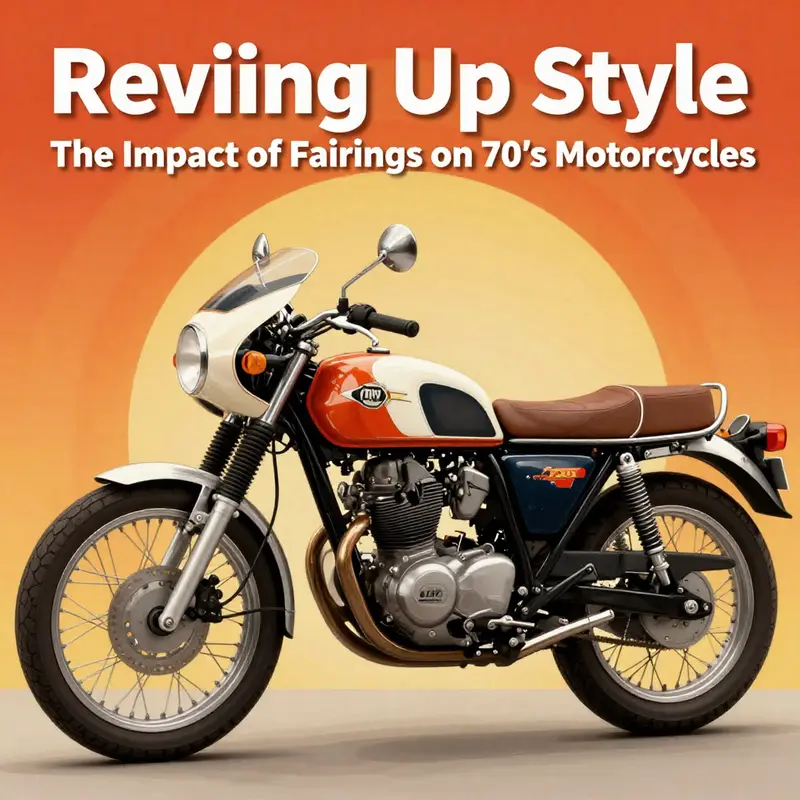
The 1970s introduced a vocabulary of motion that read not just as speed but as a visual statement etched in fiberglass and plastic. Motorcycles of that decade carried a new kind of shield, a sensuous hull that wrapped around machinery and rider alike. These fairings did more than reduce wind resistance. They crystallized a cultural moment when speed and style braided into a single gesture. Designers looked toward jet silhouettes and racing cars, translating those influences into shapes that could slice through air while still capturing a sense of drama. The result was a fleet of machines whose lines suggested not only forward propulsion but the promise of a future glimpsed through chrome and color. In this way, the fairing became both tool and sculpture, a functional armor that invited the eye to move along it, tracing the pathway of velocity as if it were a line on a drawing board.
The fairing itself—whether a full enclosure or a more restrained half design—emerged from practical needs and an appetite for spectacle. Aerodynamics mattered, but so did the way a bike looked perched on the street or in a showroom window. The 70s favored bold statements over subtlety. The shapes leaned toward sharp angles and sweeping arcs that communicated speed even at rest. The visual language was not shy; it announced the rider’s willingness to push boundaries and to align personal identity with the machine under the wind. Materials such as plastic and fiberglass made these forms possible, enabling designers to realize complex contours that would have been heavy or unwieldy with older methods. The shift to lighter, moldable substrates allowed a level of experimentation that echoed the era’s broader leaps in technology and manufacturing. The eye met a synthesis: form that could approach a comet’s tail while serving the practical demands of stability, cooling, and protection from road debris.
Within that broad design move, two essential modes of fairing helped map the aesthetic terrain. Full fairings embraced the front of the machine in a continuous shield, turning the silhouette into a single, unbroken line that seemed to slice through air while creating a horizon of speed. The lines set a tone of velocity—long, uninterrupted curves that suggested a path forward. In contrast, half fairings offered a sportier, more modular appearance. They framed the rider’s torso and sometimes exposed more of the engine bay, balancing aerodynamic aims with a sense of immediacy and rider involvement. The choice between these styles was rarely only technical. It spoke to a philosophy about how speed should be experienced: as a shared rhythm between rider, machine, and road, or as a more solitary, streamlined experience where the bike’s face, so to speak, had a direct and theatrical relationship with the air rushing by. Across both configurations, the fairing’s geometry—its corners sharpened into nips and its planes folded into shallow valleys—projected a forward motion that felt as if it could outrun the clock itself.
Color played a decisive role in how these machines communicated their character. The era’s palettes were bold and uncompromising. Neon greens, electric blues, blazing oranges, and chromed surfaces contrasted with matte blacks and metallics that hinted at chrome like a theater troupe’s rim lighting. These colors did not merely decorate the metal; they choreographed the rider’s stance and the bike’s silhouette against the urban landscape. In dynamic illustrations and promotional posters, color was used to stage drama: the bike charging through rain-slick streets, sunlight glinting off a curved fairing edge, the rider’s gear echoing or clashing with the machine’s hues to heighten the sense of personality and narrative. The visual drama was rarely accidental. It was part of a concerted effort to amplify the machine’s presence in half-lit showrooms and in glossy catalogs. The aesthetic relied on contrasts and harmonies that could be captured by an artist’s brush or a photographer’s lens, turning mechanical form into a social sign—the bike as lifestyle icon rather than a mere transportation tool.
Artists who depicted these machines often leaned into the same rhythm that founded their existence. Illustrations and paintings placed the motorcycles in environments that could range from urban canyons filled with neon reflections to open roads meandering into scenic horizons. In these scenes, the fairing’s shape did more than encase the engine; it framed the rider as an actor in a broader drama of speed and freedom. The art paid homage to the relationship between human and machine, a partnership built on trust, balance, and a shared appetite for edging toward the horizon. The lines of the fairing guided the eye to the rider’s posture, the curve of the shoulders, the angle of the head, all while the surrounding city or landscape offered a counterpoint to the machine’s geometry. In promotional art, this relationship was often elevated to a kind of myth—the bike as an emblem of personal liberation and modernity. The fairing went beyond mechanical function; it became a metaphor for control in a world expanding toward new orbits of possibility.
To understand the era’s aesthetic, it helps to glimpse the fairing as a sculpture in motion. The drawing boards that informed production often began with a study of airflow and mechanical clearance, but those constraints were translated into a choreography of lines and planes. The designer’s hand sought a language of velocity that could be read even when the bike stood still. A crease here, a fillet there, a taper that suggested the air’s own resistance—each choice amplified the illusion that wind itself was part of the bike’s ensemble. The fairing’s face—its most visible edge—became the meeting point where engineering logic and artistic intuition embraced. The result was not merely a wind protector; it was a stage set for an idea: that speed can be made visible, legible, and beautiful. Artists who studied and revived these lines today often emphasize the sense of momentum inherent in the originals. They chase a memory of how air felt when it met a plastic curve designed to whisper rather than shout, to yield a little of its own energy back to the rider through improved stability and a quieter ride.
Culturally, the fairing era signaled a shift in how motorcycles were perceived by youth and enthusiasts. The fairing’s sleek language connected with broader cultural currents that celebrated futuristic design, performance engineering, and the thrill of the open road as a canvas for personal identity. The machines were less about utilitarian transport and more about an aspirational lifestyle, one that promised speed with safety and sophistication. In galleries and magazines, these bikes appeared as more than machines; they were ambassadors of a mindset that valued bold experimentation and the courage to stand out. The interplay of form and function in the 70s took root in a broader artistic and industrial ecosystem. It reflected the era’s optimism about technology and its democratization of mobility. The fairing, in its many configurations, captured that optimism in a single, telling silhouette, a shape that belongs as much to a painting as to a roadway.
The research surrounding these representations points to a layered significance. The aesthetic appeal arises from the fusion of forward-looking engineering with an expressive, almost cinematic visual rhetoric. In drawings and promotional materials, the fairing becomes a protagonist that conducts the viewer’s gaze across the frame. It directs attention to air flow, but it also frames the rider’s stance, the bike’s stance, and the space around them. The strongest images from the era show riders in urban or highway contexts where light plays across convex surfaces, creating highlights and shadows that emphasize the fairing’s geometry. Color and line work become instruments of narrative: color suggests mood and energy; line work defines speed and control. In this way, the fairing drawing functions as a bridge between technology and storytelling, a visual shorthand for a world in which speed was not only attainable but elegantly designed.
Those who study this period note how the fairing’s role extends into the present through contemporary design practices and restoration aesthetics. The look and feel of 70s fairings still resonate in modern re-creations and reinterpretations, where designers borrow the language of the era to evoke a specific atmosphere. The cultural memory of the fairing—its shape, its color, its relationship to the rider—persists as a reference point in contemporary art and illustration. It is a reminder that aesthetics in mechanical design is never incidental. The lines chosen by designers of the past carried with them a social message about speed, youth, and the belief that the future could be shaped with a single linear sweep of a hand across a drawing board. In the end, the 70s fairing is a compact history of how beauty and performance learned to speak the same language, a language that continues to be spoken by artists, engineers, and riders who seek to understand and emulate that distinctive synthesis of form and function.
For readers curious about how those classic looks survive in today’s market, consider the ongoing interest in reproductions and modern restorations. The fairing’s legacy persists not only in museums or books but also in active workshops and galleries that celebrate the era’s linework and color relationships. Exploring these continuities can deepen a viewer’s appreciation for the era’s impact on contemporary design. A contemporary gateway to the era’s linework is available in the Yamaha fairings collection, which offers a portal to the evolving language of fairing shapes and their enduring appeal. By examining such resources, one can trace how the 70s aesthetic continues to inform present-day craftsmanship and visual culture, even as materials, manufacturing processes, and rider needs evolve. The drawing and depiction of fairings thus remains a conduit between historical memory and current practice, inviting a new generation to interpret the same wind-tuned elegance that once defined a generation of riders and artists alike.
In reflecting on the cultural significance of these machines, one sees a chain of influence that runs from the shop floor to the art studio. The 70s fairing is not merely a protective enclosure but a statement about how speed is imagined and marketed. It is a reminder that design is a conversation between constraint and aspiration. The shape, color, and finish work together to communicate a story—the rider as explorer, the road as a stage, the machine as a partner in the journey. When artists revisit these forms, they are not simply cloning a look; they are reinterpreting a history of invention that once bridged the gap between everyday transportation and the dream of high velocity. That is why the fairing remains so potent in the collective imagination: it is at once a technical solution and a cultural artifact, a symbol of an era when speed could be drawn, painted, and worn as a living badge of identity. The drawing of a 70s fairing is, in effect, a sketch of memory—memory not only of a machine but of a time when art and engineering moved in concert toward a shared horizon.
As this chapter threads together the visual logic, the cultural resonance, and the material realities of the era, it becomes clear that the fairing’s appeal lies in its multiplicity of meanings. It is aerodynamic aid, yes, but it is also a canvass for color and line. It is a protective shell, yet it is also a surface that invites the eye to ride its curves and follow its edges into the distance. It embodies a moment when design was both purposeful and dramatic, when the act of drawing a bike could reveal a philosophy about velocity, mobility, and personal expression. The fairing’s legacy endures because it speaks to a universal aspect of motorcycling: the desire to go faster, to look bolder, and to feel wholly mapped by the machine beneath and the air that surrounds it. In studying the era’s artistic representations and its real-world embodiments, one gains not only an appreciation for the craft but also a sense of how the visual language of speed continues to shape how we see riding itself.
For researchers and enthusiasts seeking closer ties between historical aesthetics and modern practice, the journey can be both illuminating and practical. The fairing’s story invites a nuanced understanding of how form conquers resistance and how lines become carriers of meaning. It suggests why particular silhouettes endure in popular imagination and why promoters chose vivid palettes to set a bike apart in crowded showrooms. It also explains why contemporary designers and restorers still reference those iconic shapes when they want to evoke that specific, time-bound atmosphere. The 70s fairing remains a doorway into a design mindset that prized clarity, drama, and a relentless pursuit of the optimal silhouette for speed. Its legacy is not simply about nostalgia; it is a continuing invitation to read air, angle, and color as a coherent language that can still guide new creations. In this sense, a chapter about artistic representations of 70s motorcycles with fairings becomes a study in how visual culture negotiates the boundaries between engineering precision and expressive boldness, a negotiation that continues to inform both how we draw and how we ride.
External context, such as historical design trends documented by industry bodies, provides a broader frame for these observations. It helps situate the glowing colors, the dramatic silhouettes, and the promotional bravura within a larger arc of innovation and culture. Those seeking a deeper dive into the era can consult resources that map the evolution of design principles, materials, and manufacturing strategies across the decade. Such context enriches our understanding of why the fairing emerged as a hallmark of the period and why its visual language continues to resonate with artists and admirers today. If you wish to explore a representative look at the era’s fairing aesthetics in a modern catalog context, you can browse the Yamaha fairings collection as a starting point for how these lines are interpreted and revived in contemporary pieces. This kind of exploration helps connect the dots between historical drawings and present-day practice, reinforcing the idea that design is a continuum rather than a fixed relic.
For readers who want to extend their inquiry beyond the immediate visuals, the broader narrative of design trends during the motorcycle boom offers a fertile landscape. The MIC’s historical design trends resource provides a layered analysis of the period’s influences, from technical constraints to popular culture’s hunger for speed and individuality. It is a reminder that the 70s fairing is part of a larger dialogue about how machines become cultural artifacts when aesthetics and engineering join forces on the road. In that sense, the fairing is not only a tool but a language—a way of speaking through form that invites interpretation, reinterpretation, and enduring fascination.
Internal link note: For readers curious to see a contemporary interpretation of the era’s linework and to compare how modern reproductions echo those iconic forms, the Yamaha fairings collection serves as a useful touchstone. The link below offers a gateway to archived aesthetic sensibilities that continue to inform present-day craftspeople and enthusiasts alike: https://www.summitfairings.com/collections/yamaha-fairings
External reference: For a broader historical perspective on how design trends evolved during the 1970s motorcycle boom, consult the Motorcycle Industry Council’s Historical Design Trends resource: https://www.motorcycle.org/resources/historical-design-trends/ .
The Drawn Line Between Speed and Shelter: Aerodynamics, Aesthetics, and the 1970s Motorcycle Fairing
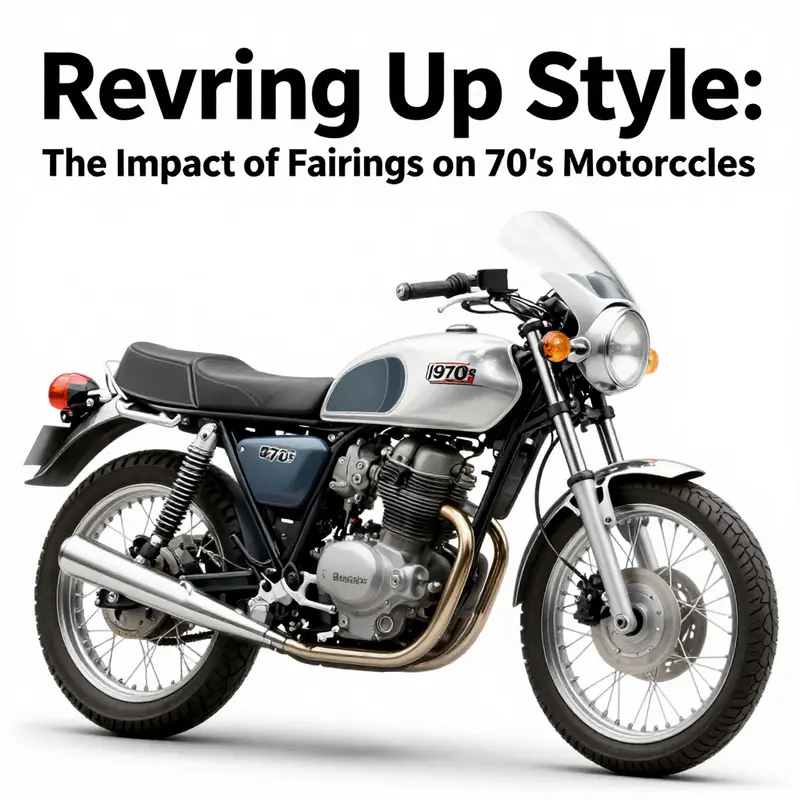
The 1970s arrived with a hunger for speed tempered by an awareness of efficiency, comfort, and the rider’s endurance on long journeys. In motorcycles, the fairing emerged as an aerodynamic shield that wrapped around the engine and rider, shaping the machine’s profile while serving as wind protection. It moved from a functional afterthought to a defining design language. In the drawings and showroom floors of that era, the fairing became not merely an accessory but a statement about what modern riding could feel like: less fatigue, more control, and a silhouette that spoke to velocity imagined by designers and riders alike. When we examine the era’s machines, the sense of momentum is almost tactile. The lines on a page seem to hold a map of wind, downforce, and mass, as if a single gesture could forecast how the bike would slice through air and carry a rider toward the horizon. This is the moment when form and function fuse, and the fairing’s role expands from enhancement to signature.
In truth, the introduction of fairings did not arrive with universal fanfare. There were veterans who remembered a time when a naked bike was the ideal of purity, simplicity that valued mechanical directness over shelter. Yet the decade’s climate—rapid engine advances, a push toward efficient transportation, and a growing market for sport and touring motorcycles—created a fertile ground for the fairing to prove its worth. Wind, at speed, is a forceful partner; it demands attention and respect, and it can subtly alter steering, tire contact, and rider fatigue. A well shaped fairing, designed in studios and validated in wind tunnels or on the road, could transform a ride. It could reduce buffeting, streamline airflow to the engine and radiators, and give a rider a sense of composure when the bike leaned into curves at pace that demanded both courage and precision.
The fairing’s visual language tied to broader aesthetics of the era. The lines of 1970s motorcycles—long, sweeping curves from front wheel to rider and beyond—were more than styling; they were the poet’s breath on a machine, a shape that whispered speed could be seen and felt. The visual narrative of these bikes was a dialogue between protection and sport, between a cockpit sheltered for cross country rides and a fairing that hinted at track ready precision. The fairing’s job became twofold: deliver aerodynamic advantage while crafting a visual identity that could stand up to bold color schemes, chrome accents, and graphic treatments. The process of drawing such a fairing—whether pencil sketches or early epoxy and lath prototypes—was a study in restraint and ambition. Designers imagined how air would move around a machine that sits between rider and road, turning that movement into a line on a page that would become form. Those drawings were not mere illustrations; they were simulations of wind behavior, visualizations of rider protection, and projections of the machine’s personality into a viewer’s imagination.
Among the era’s emblematic machines were models bridging practical and pictorial: the Honda CB750 and the Suzuki GS series. The CB750, renowned for reliability and broad appeal, showed how a carefully tuned fairing could deflect wind and hold a line through high speed straights and long, open corners. The Suzuki GS family, with its own distinctive approach to sport touring, showcased how fairings could be scaled to fit different riding philosophies—from city commuting to extended highway cruising. In both cases, the fairing did more than house the engine and shape the platform; it contributed to a rider’s sense of confidence. The rider’s silhouette, the bike’s stance, and the reflections of the surrounding landscape began to be framed by this protective shield. The effect was more than cosmetic. It was a practical instrument of control, a predictor of how a machine would behave when confronted with the air’s unpredictable gusts and the road’s changing demands.
For readers who are drawn to the visual documentation of that era, the fairing drawings preserved in catalogs, magazines, and design portfolios offer a crucial record of how designers translated aerodynamics into tangible forms. The sketches often reveal a disciplined balance: on one side, a linearity that tracks the rider’s line of sight and the machine’s center of mass; on the other, a curvature that courts the air’s natural path around the engine, through the radiator area, and toward the tail. The drawing process started with a simple outline of the bike’s front geometry and evolved into a more complex choreography of planes and curves. Designers would test the relationships between the fairing’s lower intake, the seat height, the rider’s posture, and the bike’s overall weight distribution. They would consider how the wind would interact with a helmet, a chest, or a riding jacket, and how the fairing’s surface would manage or amplify those interactions. The drawings functioned as shared language—engineers, stylists, and riders could interpret the same image and foresee the machine’s behavior under different riding regimes. This collaborative aspect of the era’s design culture is essential to understanding why fairings became so central to the 1970s motorcycle identity.
The question of materials and construction in those early fairings further anchored the drawings to reality. In the mid to late 1970s, many fairings relied on fiberglass shells, sometimes reinforced with internal bracing and mounted to a tubular frame. The choice of fiberglass offered a practical balance: it was light enough not to overwhelm performance, yet rigid enough to maintain the fairing’s form at speed. The joinery with the bike’s frame and chassis was critical, because vibrations and flex could undermine both aerodynamics and rider comfort. Some designs used metal brackets or lightweight internal frames to carry the fairing’s load without transferring too much vibration to the rider. The windshield itself varied—from modest, utilitarian screens to more generous, curved shapes that offered wind protection for the helmet and chest while preserving the rider’s field of vision. The manufacturing realities behind these choices influenced the drawings. The illustrator needed to anticipate where the fairing might flex, where air might detach, and how a given panel would align with the bike’s intake and exhaust routing. This is why the era’s drawings often appear precise in their geometry, yet expressive in the way the lines sweep around the rider’s body. The drawings served as a blueprint for actual manufacture and a visual promise to the rider about what the experience would feel like once the bike was in motion.
In the broader spectrum of design, the fairing’s aesthetic dialogue extended beyond the primary motorcycle and into the way riders perceived speed. A well proportioned fairing could sharpen a bike’s proportions, visually compressing its length while projecting a sense of power from the front wheel. Designers used color, graphic stripes, and badge placement to reinforce that sense of speed even when the machine stood still. The color schemes of the era—often bold, high-contrast, and sometimes aggressive—worked in tandem with the fairing’s curves to convey speed with minimal motion. The effect was almost architectural: a building-like shell that suggested both shelter and velocity, a protected cockpit that could embrace a rider for hours, and a façade that spoke of engineering discipline. The drawings then acted as a bridge between the invention of the form and its cultural reception. They allowed buyers to imagine a ride that balanced the demands of practical travel and the romance of sport, a balance that was particularly resonant in a decade that celebrated both mechanical achievement and personal expression.
An important thread in this narrative is the way fairings influenced riding philosophy itself. Before fairings became widespread, riders often prized lighter, more exposed machines that demanded a higher tolerance for wind fatigue and a direct relationship with the road. As fairings became more common, the rider’s experience shifted. A touring rider could accumulate more miles with less wind fatigue, while a sport rider could maintain a steadier posture and a more predictable aerodynamic profile through extended corners and higher speeds. The fairing’s protective function allowed a broader spectrum of riders to consider long-distance journeys as a legitimate, enjoyable pursuit rather than a grueling test of stamina. This, in turn, influenced the market’s expectations about what constituted a capable motorcycle. The CB750 and GS series—again, as archetypes of the era—helped define a category that valued versatility as much as speed. The fairing was central to that versatility; it enabled a single machine to serve a practical daily commute, a weekend blast through back roads, and a multi-day touring itinerary without requiring a different bike for each activity. The 1970s thus gave birth to a design philosophy that recognized a fairing not merely as a tool for wind management but as a mediator between the rider’s ambitions and the machine’s performance envelope.
This philosophy is also evident in the way designers approached the fairing as a canvas for period-correct storytelling. The drawings show an interplay of line weight and surface treatment, where the fairing’s leading edge often carries a sense of forward thrust, while the cockpit area is sculpted to accommodate the rider’s posture and vision. The lines that originate at the forks and sweep toward the rider’s legs can give the entire motorcycle a sense of forward momentum, even when the bike is stationary. The negative space around the rider—the open air above the tank and under the fairing—becomes as much a part of the composition as the fairing itself. In this sense, the 1970s fairing drawing is a narrative of air and shelter, a visual shorthand for the rider’s heartbeat in sync with the engine’s pulse. It is a language that captures how a machine can look both protected and ready to race, a paradox of comfort and velocity that defined the epoch.
To reconnect with the specific bikes often cited as icons of the era—like the CB750 and the GS family—the drawings reveal how different manufacturers pursued distinct design grammars within the same aerodynamic problem. The Honda approach tended to emphasize a broad, protective front that enveloped the engine and contributed to a calm ride at speed, while Suzuki’s lines often highlighted a more agile, sport-oriented silhouette that suggested nimbleness and a readiness to slice through corners. These variations reflect not only engineering choices but also the cultural moods of their respective markets. The visual language of the fairing—its curvature, its bevels, its intersection with the fuel tank and seat—became a shorthand for the brand’s temperament. The era’s illustration and photography thus serve as a documentary record of how designers translated the demands of wind, weight, and rider preference into a readable aesthetic.
For readers who want to explore the historical trail beyond description, the fairing drawings offer a scholarly starting point for deeper investigation. They illuminate the decisions behind fairing geometry, the compromises accepted to achieve stability at high speed, and the stylistic cues that helped bikes communicate their intended use. In museums, archives, or dedicated galleries, these illustrations are valued not only as technical documents but as expressions of a moment when the motorcycle was both machine and sculpture. The 1970s were a time when the diagram and the drawing carried as much cultural weight as the finished product, and the fairing stood at the core of that synthesis. The result was a popular mythos in which aerodynamic efficiency and personal freedom converged on two wheels, a mythos that continues to resonate in the way modern designers reinterpret the era’s silhouettes for contemporary machines.
The chapter of history that these fairings inhabit is not closed, even if the technology has evolved. The principles that guided the early fairing designers—consideration of rider comfort, stability through air management, and the expressive potential of a machine’s silhouette—still influence contemporary thinking. The modern replicas and reinterpretations of 1970s fairings, whether in museum displays, hobbyist restorations, or the design studios that dream of retro-inspired sport-tourers, continue to demonstrate how a well-conceived fairing can embed a sense of place within a vehicle. The drawings from that era preserve a record of what the designers believed could happen when air and metal met in the right proportions, and they invite new riders to question not only what a motorcycle can do, but how it can feel when it does it. As designers now re-examine the same questions with more advanced materials and computational tools, the core objective remains: to translate the velocity of a rider’s ambition into a form that protects, guides, and inspires.
In contemplating the visual and tactile character of 1970s fairings, one can also appreciate the broader cultural shifts of the time. This was a decade that celebrated technological optimism while embracing a pragmatic sense of travel in an increasingly interconnected world. The fairing became a practical courtesy—the wind’s adversary turned ally—so that journeys could stretch longer and ride quality could improve without sacrificing the thrill of speed. The drawings that captured these lines carried a certain poetry, a sense that the rider and machine were partners on a shared quest for reach and resilience. The legacy of that era’s fairings is visible not only on showroom floors but in the way designers talk about the compatibility of aerodynamics with human factors. It is a reminder that speed, when pursued with discipline, can be tempered by shelter; and shelter, when designed with vision, can become speed’s most faithful ally. The 1970s thus emerge as a critical chapter in the study of motorcycle aesthetics—an era when the fairing’s shape became a symbol of modern riding, and its drawn lines told a story about how a machine could be both fast and welcoming at the same time.
For readers who wish to explore more about period-accurate fairings and their visual heritage, a curated collection of Honda fairings can offer a tangible glimpse into the era’s design language. The link below leads to a resource that presents a range of historically informed options and references that align with the aesthetic discussed here. Honda fairings collection: https://www.summitfairings.com/collections/honda-fairings
Final thoughts
The integration of fairings into 70’s motorcycle designs marked a pivotal moment in the industry, emphasizing a harmonious balance between aesthetic appeal and superior performance. As motorcycles became more aerodynamic, they not only captured the imagination of riders but also revolutionized motorcycle culture. This rich history offers invaluable insights into both the artistry and technology behind motorcycle design, encouraging today’s business owners to appreciate and harness these elements in modern-day innovations. The legacy of the 1970s continues to inspire, making it essential for creators and enthusiasts alike to recognize the value of both form and function in the ever-evolving world of motorcycles.