
Adventure motorcycles are designed for both rugged terrains and long-distance touring, making rider comfort and protection paramount. One crucial component that enhances these qualities is the adventure motorcycle fairing. These specialized aerodynamic components provide enhanced rider protection from the elements, improve bike aerodynamics, offer integration and customization options, and are built using durable materials that can withstand harsh riding conditions. This article delves into the multifaceted role of adventure motorcycle fairings, examining their contribution to overall performance and rider satisfaction. Each chapter will explore a critical aspect of fairings, from their protective capacities to their aerodynamic benefits, as well as the innovative designs that allow for personalization and adaptability, establishing why they are essential for any adventure rider.
Built to Shield: How Adventure Motorcycle Fairings Deliver Real-World Protection
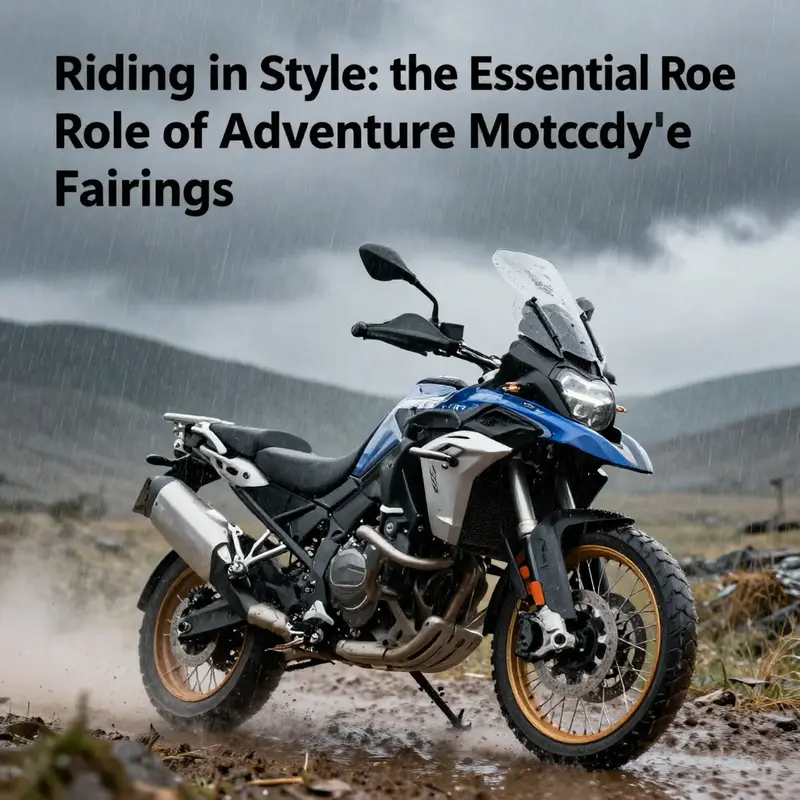
Built to Shield: How Adventure Motorcycle Fairings Deliver Real-World Protection
An adventure motorcycle fairing is more than an aesthetic shell. It is a protective system engineered to keep both rider and machine working when conditions turn hostile. On long rides that move from smooth pavement to gravel tracks and back again, fairings must do several jobs at once: deflect wind, fend off flying debris, protect vulnerable components, manage airflow for cooling, and integrate with luggage and accessories. The essential design challenge is to deliver broad protection without compromising the bike’s off-road agility or adding unnecessary weight.
On adventure machines, fairings typically offer fuller coverage than a minimalist skid-plate-and-bash-plate approach. The geometry wraps around the frontal area and often extends downward and to the sides. This coverage guards the headlight, instrument cluster, fuel system, and parts of the upper engine cases. A wider profile also reduces direct impact from rocks and tree limbs during trail riding. Designers balance coverage with durability, shaping panels so they can absorb impacts and direct forces away from sensitive mounts.
Material choice drives much of a fairing’s protective capability. High-impact polycarbonate blends and reinforced ABS plastics are common because they combine toughness and flexibility. These materials deform under strike rather than shatter, absorbing energy that would otherwise transfer to the chassis. Composite layups and thermoplastic alloys find use where weight savings matter. In premium applications, carbon fiber or fiber-reinforced composites are used sparingly for panels that must be rigid, but these tend to be reserved for aesthetic or performance-focused elements because they behave differently under high-energy impacts.
The construction approach is equally important. Where street fairings prioritize smooth surfaces and tight tolerances, adventure fairings include built-in sacrificial zones and reinforced mounting points. Sacrificial zones take the brunt of an impact and are designed to be replaced without disturbing major structural attachments. Reinforced mounts ensure that, when struck, a panel breaks away at predictable points. This reduces the chance of complex damage that would immobilize the bike in remote locations. A robust mounting architecture also keeps panels from vibrating loose under heavy off-road use.
Protection extends beyond hard hits. Wind management features are a crucial part of rider safety and comfort. Adjustable windshields and integrated deflectors tune airflow to reduce buffeting at highway speeds. This reduces rider fatigue, which indirectly enhances safety over long distances. Adjustable systems allow riders to change the shield height and angle on the fly. Small deflectors placed at strategic points break up turbulence, directing air over the shoulders rather than the chest and neck. When properly managed, airflow also aids in temperature control. Channeling cool air toward radiators and away from heat-sensitive electronics improves reliability in hot climates.
Aerodynamics and protection go hand in hand. A fairing that channels air efficiently reduces drag and improves fuel economy. For long-distance riders, this translates to fewer fuel stops and less exposure to harsh conditions while refueling. A carefully shaped nose and smooth transitions between panels minimize pressure spikes that can lift the front wheel at high speeds or create crosswind sensitivity. Those same shapes work to deflect stones and branches, letting the fairing serve a dual purpose: streamline on the tarmac and shield on the trail.
Real-world scenarios reveal how integrated protection saves rides. Consider a gravel-loaded stretch where a kicked rock can strike a headlamp or instrument cluster. A fairing with a hardened outer layer and recessed lamp mounts can prevent shattering and keep the bike’s electrical systems intact. On forest tracks, branches can snag protruding components; a smooth, continuous fairing surface offers fewer catch points and reduces the risk of sudden stops or forced steering corrections. Even in low-speed tip-overs, a durable panel can prevent costly dents in the fuel tank and steer tubes.
Integration with luggage systems is another protective consideration. Adventure riders carry tools, spare parts, and often delicate electronics. Fairings that pair well with panniers and top cases help shield those loads from wind and stone. Built-in frames or mounting tabs allow luggage to sit closer to the machine’s centerline. That reduces pendulum motion and minimizes stress on the mounts during off-camber maneuvers. When fairings incorporate pockets or channels for wiring and accessory mounts, they protect vulnerable cables and connectors from abrasion and weather.
Heat management must be considered alongside impact protection. Routing airflow to radiators and intercoolers is critical, especially when a fairing increases frontal coverage. Designers incorporate ducting and louvers to ensure heat rejection remains effective. In colder conditions, the same ducts can be partially closed to accelerate engine warm-up. The best designs achieve a balance where the fairing shields without creating thermal hotspots.
Durability and weather resistance matter as much as impact resistance. UV-stable coatings prevent fading and hairline cracking under prolonged sun exposure. Flexible paints and finishes that can bend slightly with a panel help avoid flaking. Sealing between panels keeps water and dust out of electrical boxes and bearing surfaces. For long-term reliability, fasteners are chosen to resist corrosion and loosening from vibration. Quick-release systems or service-friendly panels make roadside repairs simpler when they do become necessary.
Repairability and modularity are design philosophies that truly shine on extended trips. Swappable panels, standardized fasteners, and readily available bracketry mean a rider can replace a damaged section without needing specialized tools. Modular fairings also make it possible to adapt the bike to different journeys. Removing lower extensions for technical trails reduces snag points and weight. Reattaching extended wings or peak skirts for highway legs restores wind protection and weather shielding.
A critical, often overlooked role of the fairing is protecting softer electronics and sensors. Modern adventure machines pack a lot of electronics in exposed locations. Wiring harnesses, GPS mounts, and electronic control units can be rendered useless by moisture or impact. Fairings that provide sealed cavities and deliberate cable routing reduce exposure. Integrated mounting bosses allow accessories to be secured without drilling into structural members.
Testing and validation underpin effective protection. Impact testing evaluates how materials behave under point loads and distributed strikes. Wind tunnel testing evaluates buffeting and drag. Field testing in diverse climates checks for thermal and UV resilience. The best fairings are validated through a combination of lab and real-world trials, ensuring they stand up to the varied stresses adventure riding applies.
Selecting the right fairing requires weighing trade-offs. Heavier, thicker panels offer superior abrasion and impact resistance, but they add weight high on the chassis. That can affect handling, especially when riding technical trails. Thinner, more flexible materials save weight but may need more frequent replacement after hits. Riders must judge priorities based on their intended use: long pavement stretches with occasional dirt demand different protection than constant technical off-road travel.
When choosing a fairing, consider compatibility with the bike’s geometry and suspension travel. A fairing that interferes with fork movement or limits steering lock can create safety hazards. Panels should clear full suspension compression and allow for wheel kick-up without contact. Mounting hardware should avoid introducing stress concentrations at the frame or fork clamps.
Finally, look for fairings that are service-friendly. Panels that allow access to routine service points—oil filters, radiators, spark plugs—without full removal reduce the temptation to skip maintenance. Color-matched repair panels and an available supply chain for replacements matter when miles are measured in thousands and help keep the bike on the road.
For those who want to explore different fairing styles and options, a good place to start is the honda fairings collection, where OEM-style panels and accessories are cataloged for comparison. For detailed technical specifications and development notes on a fairing kit, see this technical fairing kit documentation: https://www.honda.com/motorcycles/technical-resources/fairing-kits/crf1000l-africa-twin/.
A well-designed adventure fairing is a strategic investment. It reduces fatigue, minimizes the risk of costly damage, and streamlines the bike’s behavior across environments. When protection, aerodynamics, and serviceability are planned together, riders gain a piece of equipment that quietly keeps the journey moving, mile after unpredictable mile.
Streamlined Shield: How Adventure Motorcycle Fairings Boost Speed, Comfort, and Durability
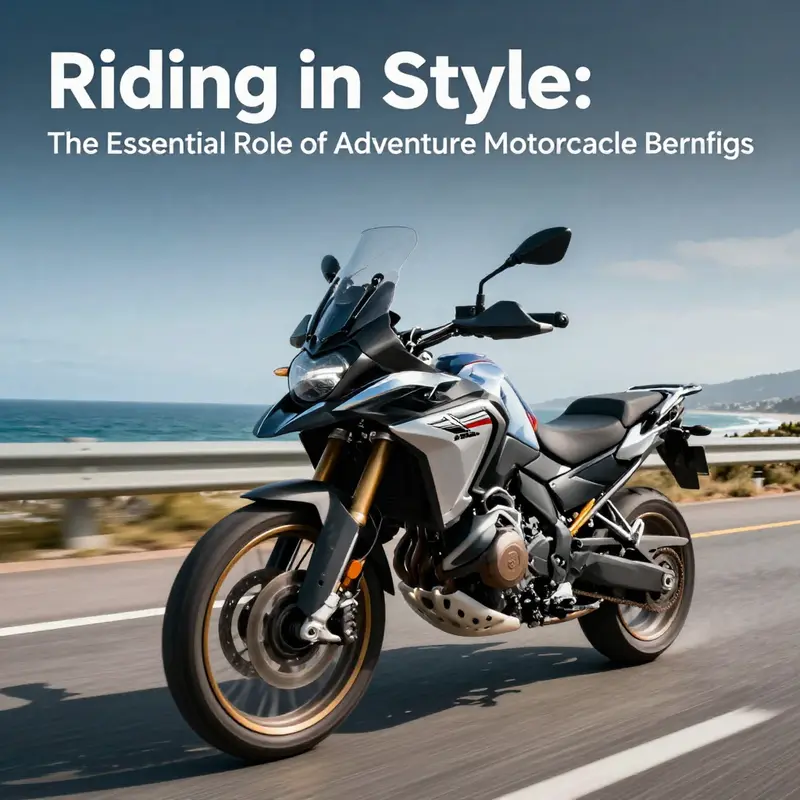
Adventure motorcycle fairings are more than styling. They are engineered shields that shape airflow, protect vital parts, and reduce rider fatigue on long journeys. On an adventure motorcycle, fairings must perform in two contrasting worlds. They need to cut through high-speed highway wind and shrug off mud, stones, and rain on rough tracks. That dual purpose drives their form, materials, and mounting systems.
At their core, adventure fairings smooth the air that meets the bike and rider. That smoothing reduces aerodynamic drag. Lower drag means the engine wastes less energy battling wind. The result is steadier speeds with less throttle input. For long highway stretches, this translates into meaningful fuel savings. When you multiply small gains across hundreds of miles, the impact shows in lower fuel stops and less wrist strain.
Stability is another direct payoff. A fairing that channels airflow reduces turbulent pockets around the rider. Less turbulence equals steadier handling at higher speeds. That steadiness is crucial when tiredness makes tiny corrections feel larger. It also improves confidence when crossing bridges or open plains where crosswinds can nudge the chassis. Thoughtful fairing geometry can guide crosswinds over the bike, reducing sudden steering inputs.
Fairings also act as a physical buffer between rider and environment. Wind protection reduces direct pressure on the chest and helmet. This lowers the energy the rider expends keeping a steady posture. Over a long day, reduced muscle fatigue improves alertness and reaction time. For mixed-surface adventures, the shield keeps much of the spray, dust, and small debris off the rider and controls. That protection reduces distractions and the need to wipe visors or clean instruments frequently.
Beyond rider comfort, fairings defend critical components. Engine, radiator, exhaust, and wiring all benefit from a well-contoured outer shell. When riding off-road, flying stones and mud can abrade or clog components. A robust fairing diverts much of that impact away from sensitive parts. It also channels water and dirt out of intake and cooling paths. Over time, that protection reduces wear and lowers repair costs.
Material choice balances weight, impact resistance, and repairability. ABS plastic is a common material for its toughness and affordability. It resists cracking on blunt impacts and tolerates heat and UV exposure. Composite options, including carbon fiber, cut weight and increase stiffness. Carbon adds a premium feel and strength but raises repair costs and brittleness in some impact types. Manufacturers and modders select materials based on the expected mix of road and off-road time, and the rider’s tolerance for repair complexity.
Fairings for adventure bikes are rarely monolithic. Modular construction is a defining trait. Panels often attach via brackets, bolts, and quick-release fittings. Modular designs allow riders to swap damaged sections fast. They also enable customization for seasons. A lower section can be removed for cold-weather insulation or added for extra splash protection in rain. Modular systems also simplify adding accessories such as auxiliary lights, GPS mounts, or luggage racks. This adaptability keeps the bike mission-ready without heavy downtimes.
A windscreen is a central fairing element. Adjustable screens let riders tune airflow based on speed and posture. A taller screen diverts wind over taller riders, reducing helmet buffeting. A shorter screen can increase feel and feedback for spirited riding. Some designs include deflectors or vents to adjust flow without changing the screen height. Small changes in screen angle can alter pressure zones around the helmet by notable amounts. That effect matters for riders who switch between seated touring and standing off-road positions.
Aerodynamic tuning also touches cooling and intake flows. The fairing must direct enough air to the radiator and engine without creating unwanted turbulence. Too enclosed a fairing can trap heat and reduce cooling efficiency. Smartly placed ducts and louvers channel air where needed while keeping the frontal section smooth. Many designs include hidden channels that preserve the clean appearance while solving airflow requirements. The best solutions balance streamlining with effective cooling.
Performance and protection trade-offs deserve attention. A large, wrapped fairing improves wind protection but increases frontal area. Greater frontal area can make the bike more vulnerable to crosswinds at low speeds. It may also increase the chance of snagging on tight trails. Designers mitigate these issues with tapered shapes and venting. Reinforcing mounting points prevents flex and rattling, which can otherwise negate aerodynamic gains.
Installation and mounting quality are where theory meets reality. A well-designed fairing becomes ineffective if brackets flex or panels misalign. Rattles and gaps create new turbulence. Rigid, well-engineered mounts keep the fairing aligned under vibration and torque. Using steel or aluminum brackets enhances durability. Rubber isolates reduce vibration transfer to plastic panels and decrease noise.
Customization deserves a balanced approach. Aftermarket fairings and kits offer stylistic choices and additional features. Decals and colorways personalize a bike without altering airflow. Screen extensions and small deflectors fine-tune comfort. However, radical reshaping without testing can introduce instability. Riders who modify fairings should test changes progressively and pay attention to handling in crosswinds and at speed.
Practical testing can be simple. Track fuel consumption before and after fairing changes under similar riding conditions. Note comfort levels, helmet buffeting, and chest pressure at cruising speed. For deeper analysis, some riders use temperature sensors to monitor cooling efficiency. Wind tunnel data or computational fluid dynamics deliver precise insights. Those tools are common in development but impractical for most owners. Instead, careful road testing reveals most meaningful effects.
Durability and maintenance planning stretch a fairing’s value. Panels exposed to stones and branches take inevitable nicks. Choosing materials that flex rather than shatter reduces replacement frequency. Panels with replaceable lower sections save full-panel swaps. UV-resistant coatings protect paint and plastics from sun bleaching. Quick access to mounting hardware speeds repairs on the trail, so designs that avoid hidden fasteners are advantageous.
Integration with luggage systems is essential for practical adventure riding. Fairings must maintain clearances for panniers and top boxes. They should also provide mounting points for racks without compromising the shell’s integrity. When luggage attaches directly to the fairing, designers reinforce those zones to distribute loads. A poorly integrated fairing can transfer stress to fragile plastics instead of the subframe.
Safety standards play a role in fairing design and sourcing. Compliance with recognized standards validates material performance under stress. Panels that meet safety benchmarks often follow higher-quality manufacturing processes. That consistency pays off in predictable behavior during impacts and in prolonged exposure to elements.
Aerodynamic benefits compound on longer rides. The calming effect of a well-designed fairing reduces micro-corrections. Riders conserve energy and maintain focus. Less fatigue means safer decision making in remote areas. The mental resilience to handle unexpected situations is an underrated advantage of good fairing design.
Finally, selecting the right fairing is a systems decision. Consider the bike’s intended use balance, the rider’s height and riding posture, and luggage needs. Evaluate material choices for repairability and weight. Confirm mount strength and panel modularity before committing. If possible, test a configuration on a representative route. Practical experience uncovers fit and comfort issues that spec sheets cannot predict.
For those exploring styles and fitment options, see the Honda fairings collection for inspiration and compatible designs. The collection highlights modular approaches and mounting standards common in adventure fairings. Practical examples often clarify what works best for various riding styles.
An illustrative product showcases many typical attributes. It uses durable ABS plastic for resilience and cost-effectiveness. The kit’s contours reduce drag and manage airflow while standing up to off-road conditions. Modular panels and mounting brackets improve serviceability and customization. The product meets CE standards, showing its focus on safety and longevity. For more detail on such kits, consult this product page: https://www.alibaba.com/product-detail/Bajaj-Pulsar-135-Motorcycle-Full-Plastic_1600742789437.html
In sum, adventure motorcycle fairings are a synthesis of aerodynamics, protection, and adaptability. Their design decisions echo across fuel economy, rider comfort, component longevity, and real-world versatility. Riders who weigh these aspects carefully often find fairings repay their cost in comfort and reduced wear. The right fairing becomes a trusted partner on long roads and unpredictable trails.
Built to Ride: Seamless Integration and Personalization of Adventure Motorcycle Fairings
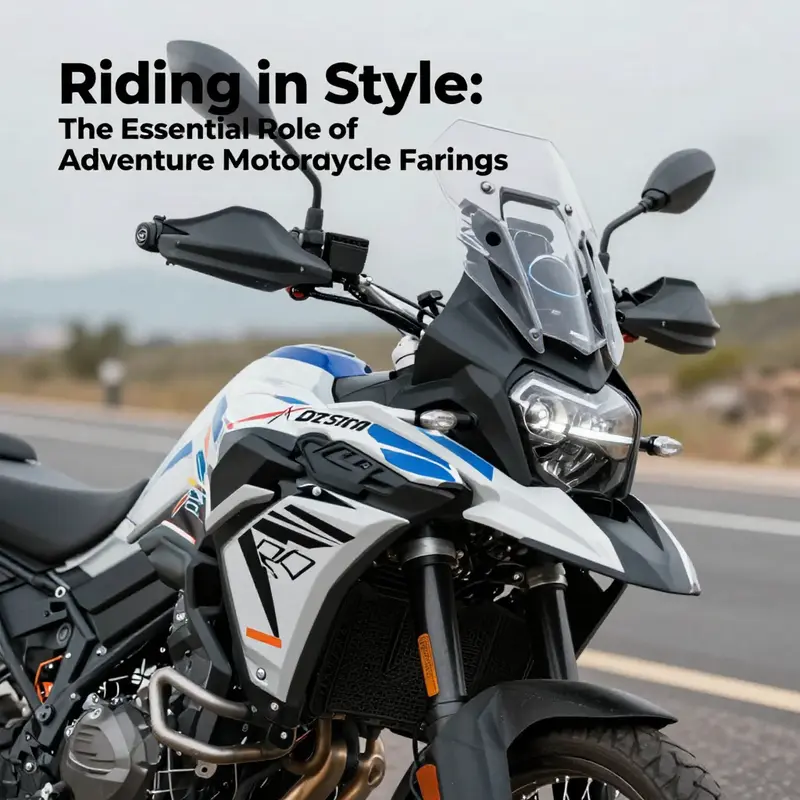
Integration and Customization: A Unified Approach
Adventure motorcycle fairings have evolved beyond simple wind deflectors. They now function as multi-purpose platforms. These platforms protect riders, shape airflow, carry gear, and host electronics. The challenge for designers is to blend all functions without adding weight or compromising durability. A well-integrated fairing does more than look purposeful. It becomes an intuitive extension of the machine and the rider.
Designers begin with a clear set of priorities. Protection and visibility lead the list. Any fairing must shield the rider from wind, rain, and debris. It must also provide clear sightlines to mirrors, displays, and the road. Once these fundamentals are set, the broader opportunities for integration reveal themselves. Lighting runs through the fairing often. Protective ducts and channels for wiring must be planned early. Mounting points for electronics and luggage get built into the structure. When these elements are conceived together, the result is cohesive. The fairing no longer looks like a series of aftermarket add-ons. Instead, it reads as a single, purposeful component.
Integration brings clear safety benefits. Lighting systems embedded into the fairing increase visibility at night. When turn signals and auxiliary lamps sit within molded recesses, they are less likely to break off during a low-speed crash. Built-in mounts for navigation keep displays within the rider’s natural line of sight. Riders spend less time looking away from the road. Communication gear can be housed cleanly behind panels, with antennas routed through reinforced channels. The tidy layout reduces snag points for cables. It also prevents weather from compromising sensitive electronics. In short, integrated systems help the rider maintain focus and control.
Storage integration is another major advance. Designers now craft fairings with modular pockets and attachment points. A small, lockable compartment can carry documents or a first aid kit. Larger mounting plates accept top boxes or racks without the need for aftermarket brackets. When attachment points are reinforced within the fairing’s skeleton, load paths are managed. This reduces stress on the motorcycle’s frame. It also improves stability when luggage is loaded for long rides. The fairing becomes part of the bike’s cargo strategy rather than a cosmetic addition.
Modularity is the bridge to customization. Riders face highly varied environments. One day may demand long highway runs with high wind. The next could mean slow, technical trails where rock strikes are likely. Adjustable wind deflectors let riders change airflow quickly. Removable lower panels allow for easier access to components in the field. Quick-release fasteners and standardized brackets accelerate maintenance and swapping. A modular fairing lets the rider tailor the machine to the mission without a shop visit. The flexibility is practical and empowering.
Material choice places limits and offers opportunities. Reinforced polymers provide impact resistance and cost efficiency. Carbon fiber yields weight savings and stiffness, but at a premium. Designers balance these materials to suit the fairing’s purpose. Critical mounts and exposed corners get tougher materials. Large cosmetic areas use lighter composites. The goal is to maintain structural integrity while keeping the assembly light. Weight matters for handling and suspension setup. Thoughtful material selection keeps performance intact while enabling integrated features.
Digital tools have transformed the customization process. CAD allows engineers to model complex parts and simulate stress under various loads. Flow dynamics modeling refines wind deflectors and fairing contours. Rapid prototyping, including 3D printing, shortens the iteration cycle. Designers test fitments and make adjustments before final molds are produced. For riders, that means bespoke parts can be realized with less lead time. Custom vents, sensor housings, and camera mounts move from concept to functional parts faster than before.
Customization now covers aesthetics and function. Riders often want unique colorways and graphics. But customization also extends to ergonomics and electronics. Fairings can be shaped to reposition airflow based on rider height. Small changes to deflectors significantly alter pressure and buffeting. Adjustable screens and variable-angle wind shields let riders tune protection on the go. On the electronics side, fairings with built-in bays can host battery packs, GPS units, and sensor arrays. These spaces maintain waterproofing and conceal wiring. The bike’s silhouette stays clean while gaining capability.
For the most dedicated riders, a fully custom fairing is possible. Using CAD, a rider and fabricator can design a one-off shell. Embedded features include sensor mounts, tailored ducting for cooling, and bespoke luggage interfaces. These projects require precise measurement and careful integration with chassis geometry. A bespoke approach solves unique needs. It can also create a distinctive appearance that sets a machine apart at a glance.
Intelligent fairings are another frontier. Embedded sensors can monitor airflow, vibration, and impact. These sensors feed data to the rider or to a logging system for later analysis. In extreme touring, such data reveals wear patterns and helps schedule maintenance. Lighting systems tied to ambient sensors automatically adjust intensity. When rain is detected, wipers or hydrophobic treatments activate. Communication systems integrated into the fairing allow seamless pairing with helmets and devices. The fairing becomes a smart hub that enhances situational awareness.
Durability under harsh conditions remains paramount. Adventure riders expose fairings to UV, temperature extremes, and abrasions. Joints and fasteners are stress points. Designers use captive hardware and reinforced bosses to protect these areas. Weather seals and drainage channels are included to prevent water ingress. Surface finishes resist fading and scratching. In short, customization should not compromise longevity. The best designs anticipate the harshest conditions and build resilience into every connection.
Installation and serviceability are practical concerns often overlooked. A highly integrated fairing must still allow access for repairs and tuning. Removable panels, snap-fit sections, and accessible wiring harnesses reduce labor time. Standardized connectors and routed harnesses make aftermarket upgrades less invasive. When riders can swap components with simple tools, the barrier to personalization falls. This encourages more riders to tailor their setup rather than leave it stock.
Ergonomics link integration and customization directly to rider endurance. Properly designed fairings reduce fatigue by smoothing airflow and protecting from the elements. Custom-fit screens can be tuned for a rider’s height and riding position. Narrower fairing sections avoid contact with luggage when the bike is loaded. Thoughtful shaping guides air away from hands and shoulders. These subtle changes keep riders stronger for longer rides. In long-distance scenarios, they are often the difference between a comfortable day and a struggle.
Aesthetic unity matters too. Custom parts should harmonize with the bike’s lines. Designers use consistent panel gaps and matched finishes to keep a factory look. Integrated vents and scoops are styled, not merely bolted on. This attention to detail elevates perceived value. Riders appreciate when practical modifications also enhance the machine’s visual coherence.
Finally, the community around customization fuels innovation. Riders share templates and fitment tips. Fabricators refine mounting systems based on rider feedback. This iterative loop pushes fairing technology forward. Open-source templates and 3D-printable parts lower entry barriers for personalization. The result is a wider palette of secure, tested options available to the average rider.
Throughout this evolution, the best fairing designs maintain a central truth: integration should simplify the rider’s experience, and customization should be accessible. When designers succeed, riders gain a strong, adaptable platform that protects, organizes, and connects. A well-crafted fairing reduces fatigue, increases safety, and makes long journeys more reliable. It also gives the rider tools to adapt the machine to new roads and climates.
For riders considering upgrades, look for fairings that offer reinforced mounting points. Seek systems that provide access panels and pre-routed wiring. Prioritize designs that balance material strength with manageable weight. If you want a starting place for replacement panels and similar components, consider checking a trusted parts collection like the Honda fairings collection linked here: https://www.summitfairings.com/collections/honda-fairings
For a deeper look at how integrated and customizable fairing systems are developing industry-wide, refer to the comprehensive overview from Motorcycle News. It covers real-world applications of smart fairing technology and highlights emerging trends in integration and personalization: https://www.motorcyclenews.com/features/adventure-motorcycle-fairing-integration-and-customization-2025/
Built to Brave the Elements: Material Science and Durability for Adventure Motorcycle Fairings
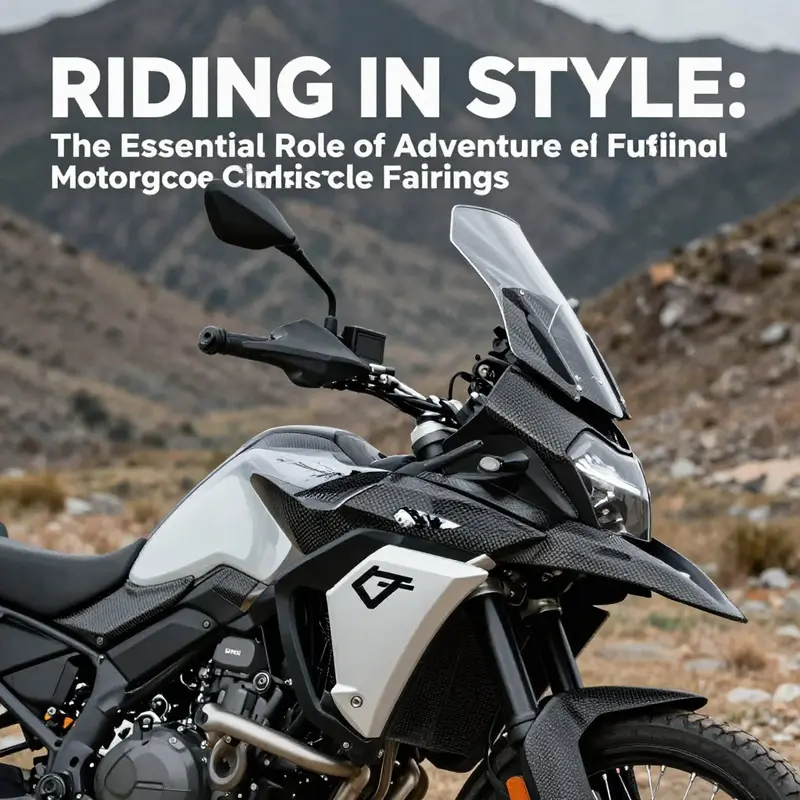
Materials, Durability, and Design in Adventure Fairings
An adventure motorcycle fairing must do more than look rugged. It must shield a rider from wind, water, and flying stone. It must survive falls, bumps, and long miles under sun and salt. Designers balance weight, strength, repairability, and environmental impact. The result is a set of material and engineering choices that define how well the fairing performs over thousands of varied miles.
The first requirement is impact resistance. Adventure bikes travel mixed terrain where small rock strikes and accidental drops are common. Materials must absorb energy without shattering. Reinforced thermoplastics fill this role well. They combine ductility with toughness, flexing under load and returning to shape. This flexibility reduces catastrophic failures, allowing panels to deform rather than crack. For riders, that means easier roadside repairs and less chance of shards creating secondary damage.
Alongside thermoplastics, advanced composites have become essential. Composites pair a structural fiber with a resin matrix to generate desirable properties. When engineers align fibers in targeted directions, panels gain stiffness where needed and controlled flex where desirable. Carbon-fiber or glass-fiber reinforcements create a favorable strength-to-weight ratio. On an adventure bike, that ratio matters. Lighter fairings reduce overall mass and help suspension and handling without sacrificing protection.
Sustainability now drives material selection as much as sheer performance. Manufacturers increasingly incorporate recycled plastics and plant-based fibers. These bio-composites can match many mechanical properties of traditional materials, especially when processed with modern techniques. Using recycled content lowers the carbon footprint of production. It also introduces new design trade-offs. Some sustainable materials demand tailored coatings or hybrid layups to meet UV and moisture resistance expectations. Careful engineering mitigates these limitations while retaining the environmental benefits.
Weather resistance is another cornerstone. Ultraviolet radiation, heat cycles, and moisture accelerate degradation. Polymers without stabilization fade, become brittle, or chalk. To fight this, fairing materials are often compounded with UV inhibitors and antioxidants. Surface coatings add additional protection and cosmetic longevity. A well-specified clearcoat prevents color fade and resists chemical attack from fuels, cleaning agents, and insect residue. For riders who cross deserts, mountains, and coastal roads, such treatments preserve both appearance and structural integrity.
Design features echo material choices. Reinforced edge structures concentrate strength where parts join or where impacts most often occur. These edges use thicker cross-sections, internal ribs, or over-molding to prevent tear-out from mounting hardware. Impact-absorbing zones are another intentional detail. Sacrificial sections or layered constructions allow a panel to absorb an initial blow and protect internal components. In many cases, these zones are designed for straightforward replacement, so minor crashes don’t turn into major rebuilds.
Seamless integration with the motorcycle frame influences durability too. A fairing that meshes tightly with mounting points reduces relative motion. Less motion means fewer stress cycles and lower fatigue rates for both plastic and metal components. Rubber isolators and engineered bushings are often used at mounting interfaces to damp vibration. This reduces the formation of hairline cracks in brittle materials and lowers noise and rider fatigue. Properly tuned mounts extend a fairing’s usable life by distributing loads rather than focusing them at a single bolt or tab.
Manufacturing methods shape performance at a micro level. Injection molding lends precise geometries and consistent wall thicknesses for thermoplastic panels. When done correctly, it yields repeatable parts with integrated reinforcement ribs. Thermoforming suits simpler geometries and can be economical for low-volume runs. For high-performance composite fairings, hand layup, vacuum-bagging, and resin infusion control fiber orientation and void content. Fewer voids mean longer life and higher impact tolerance. Additive manufacturing is emerging as a tool for prototyping and small-batch custom parts. Its strength lies in iterative design, enabling rapid refinement of structural ribs, mounting bosses, and aerodynamic details.
Testing protocols offer insight into expected longevity. Accelerated UV exposure simulates years of sun in months. Salt spray chambers test corrosion resistance of embedded metal inserts and fasteners. Drop and impact tests reveal how energy disperses through a panel and whether mounting points hold. Fatigue testing cycles loads to find weak spots before a part ever reaches a rider. These methods help manufacturers tune materials, thicknesses, and reinforcements to real-world conditions.
Repairability matters when a fairing must be mended on the trail. Thermoplastics are often repairable with heat and plastic welding. Cracked composites can be patched with resin and fiber, restoring strength in a field-friendly way. Designers increasingly plan for these repairs through modularity. Quick-release panels and standardized fasteners let a rider swap damaged pieces with minimal tools. This approach reduces downtime and keeps solutions simple when professional service is far away.
Weight and stiffness present an enduring trade-off. Stiffer materials transmit more vibration to the rider and attachments. Engineers often aim for localized stiffness—reinforcing areas that bear aerodynamic loads while allowing other regions to flex. This strategy preserves ride comfort and reduces stress concentrations. Strategic use of ribs, inserts, and sandwich constructions achieves this balance, delivering panels that feel robust without being unnecessarily heavy.
Surface finishes and coatings contribute to long-term durability. Textured surfaces hide scratches better than glossy paints. Ceramic and polyurethane topcoats add abrasion resistance for panels facing rocks and brush. When paints chip, exposing raw material, degradation accelerates. Thus, weather-resistant base layers and flexible topcoats protect both look and function. Some manufacturers spray adhesion-promoting primers to ensure paint bonds to composite matrices or recycled substrates.
Mounting hardware selection is equally important. Corrosion-resistant metals such as stainless steel or coated alloys prevent failure at critical joints. Fastener geometry influences load distribution: broad flange heads and captive fasteners reduce pull-through risk in soft plastics. If metal inserts are molded into a thermoplastic panel, they must accommodate differential thermal expansion between metal and polymer. When this mismatch is addressed with compliant features or floating inserts, stress concentrations diminish and long-term reliability improves.
A holistic view of fairing durability extends to the entire lifecycle. Designers consider repair, reuse, and end-of-life recycling. Panels engineered for disassembly allow materials to be separated and recycled more effectively. Bio-composite components can sometimes be composted or repurposed. Lifecycle thinking reduces waste and appeals to riders concerned about long-term environmental costs. It also nudges design toward modularity and standardization, which simplify repairs and extend a bike’s service life.
Emerging materials offer exciting possibilities. Nanocomposite additives can boost strength and UV resistance at low weight penalties. Self-healing polymers promise to close minor scratches and cracks autonomously, extending cosmetic and structural life. Hybrid layups that blend recycled fibers with high-performance resins create panels that combine sustainability with high durability. While these technologies are still maturing, they point toward fairings that better resist daily hazards and require less maintenance.
Material science alone is not enough. Good design translates raw properties into functional resilience. Aerodynamic contours reduce buffeting and lower the sustained loads a fairing endures at highway speeds. Smooth transitions between panels cut stress risers, distributing wind pressure evenly. Effective airflow management also prevents debris from embedding in vulnerable sections, cutting down on repetitive wear.
Finally, real-world maintenance habits dictate how long a fairing lasts. Regular cleaning removes road salts and oils that accelerate breakdown. Periodic inspections catch fatigue cracks before they grow. Applying UV protectants and re-coating damaged areas preserves both appearance and structural function. When riders treat fairings as engineered components rather than cosmetic shells, longevity improves markedly.
Together, these factors form a durable fairing: careful material selection, purposeful engineering, thoughtful manufacturing, and rider-aware design. The best solutions blend toughness with reparability and environmental consideration. They resist impacts and sun, integrate smoothly with mounts, and accept straightforward repairs. As material science advances, riders will see fairings that last longer, weigh less, and cause less environmental harm. For a deeper look at fairing features and selection criteria, see the comprehensive guide: Motorcycle Fairings Guide: What to Look For – CarInterior.
Final thoughts
Adventure motorcycle fairings play a pivotal role in enhancing the ride experience, providing riders with the necessary protection, improved aerodynamics, and customization capabilities to tackle diverse terrains confidently. As riders increasingly seek comfort and an individualized touch for their motorcycles, investing in quality fairings becomes a strategic decision. By understanding the multifaceted benefits these components offer, business owners and enthusiasts can better appreciate their essential role in adventure motorcycling. Ultimately, the right fairing contributes not just to performance but also to the joy and satisfaction derived from riding.