
The aero bathtub motorcycle fairing represents a unique merge of aesthetic design and engineering functionality, aimed at enhancing rider performance and comfort. As motorcycle enthusiasts increasingly seek products that balance speed with visual appeal, understanding this fairing type is critical for business owners in the industry. This article explores the integrative aspects of aero and bathtub fairings, from their aerodynamic principles to manufacturing techniques, market dynamics, and future developments. Each chapter offers insights that equip businesses to meet evolving consumer demands in the motorcycle market.
The Aero Bathtub Fairing: Redefining Wind, Comfort, and Control on Modern Motorcycles
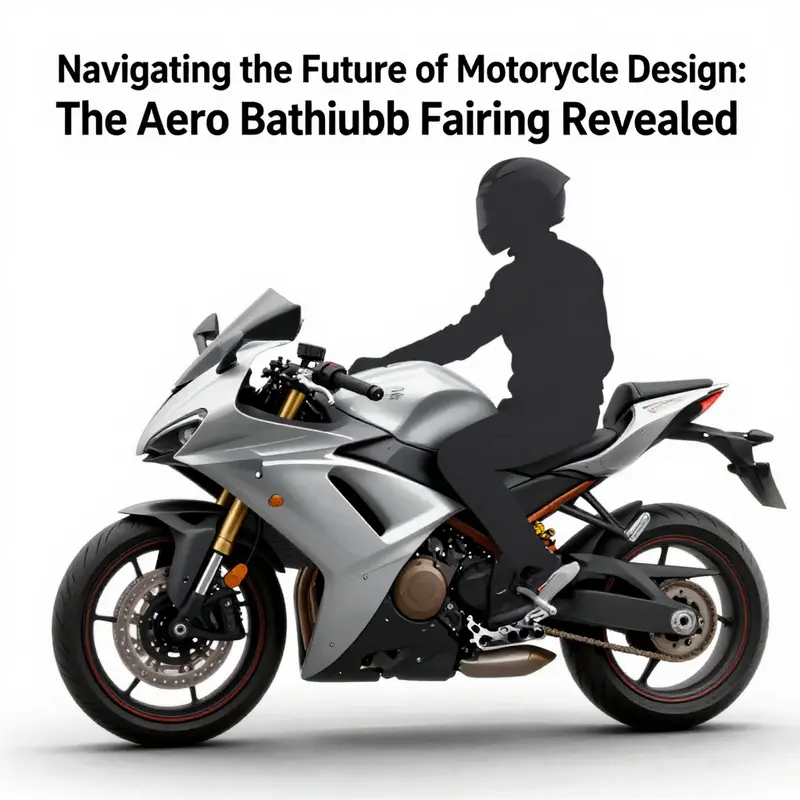
The aero bathtub fairing takes its name from a profile that envelopes the rider with a smoothly rounded, tub-like form while pursuing the clean, low-drag lines that mark high-performance aerodynamics. It is not a single, standardized product, but rather a design language that blends wind shielding, ergonomic protection, and a cohesive visual identity. In practice, this approach treats the rider as part of the airflow system, guiding air along generous contours that wrap from the front of the machine to the rider’s legs and torso. The result is a wind facade that minimizes abrupt gusts and turbulence while maintaining access to ideas of sportiness and efficiency. The term may be debated in some circles, yet the core idea remains clear: create a fairing shape that reduces the wind’s assault on the rider without sacrificing the bike’s character or its cooling and instrumentation needs. The path from concept to road involves more than adding plastic; it requires thoughtful integration with the bike’s chassis, the rider’s posture, and the wind’s unpredictable behavior at different speeds and crosswinds. The end goal is a seamless collaboration between form and function, where the air flow is steered rather than bumped into the rider as a fast-moving obstacle.
Aerodynamics is, at its heart, a study of how air behaves around solid bodies in motion. An aero bathtub fairing aims to manage that behavior by shaping the front profile to encourage a smooth pressure distribution and by fashioning side contours that disrupt the formation of strong, unstable wake behind the rider. A rounded, bathtub-like silhouette helps keep the flow attached longer along the fairing surface, reducing separation that creates drag and buffeting. When air stays more attached to the surface, it travels in a more predictable path around the bike. This translates to less turbulence around the rider’s helmet and torso, which in turn reduces fatigue on long rides and improves perceived stability at highway speeds. In practical terms, that stability means a rider feels more connected to the motorcycle, especially in gusty conditions or when lane lines shift under a crosswind. The effect compounds with speed: the higher the velocity, the greater the potential payoff from streamlined surfaces that guide air more evenly across the bike’s form.
The comfort payoff of this design is linked to a broader understanding of rider ergonomics. A tubelike fairing can offer more inclusive shielding for riders of varied heights, particularly where leg protection and lower torso coverage intersect with the bike’s wind envelope. The goal is not only to keep wind off the rider but to sculpt it so that it parcels cleanly around the knees, shins, and hips, helping to maintain a relaxed upper body posture. With fewer abrupt eddies and reduced buffeting through the chest and helmet, the rider experiences less fatigue during long distances. In turn, that comfort supports better concentration, enabling a steadier throttle hand and more precise steering inputs. At the same time, careful integration with the bike’s fairing rims, mirrors, and instrument cluster is essential. The bat-like wings of the fairing’s sides can be tuned to hold the rider in a natural, slightly upright stance, which is particularly valuable for sport-touring and long-range riding styles that demand both control and all-day comfort.
Designing an aero bathtub involves more than freehand drawing. It requires a disciplined engineering process that runs through conceptual sketches, computational simulations, and physical validation. Modern fairings rely on computational fluid dynamics to map how air interacts with every contour; this helps engineers predict drag, lift, and the onset of flow separation. Wind-tunnel testing remains a trusted step for validating those simulations, ensuring that the theoretical gains translate to real-world performance. Material choices then come into play: composites and layered laminates can deliver the stiffness needed to preserve shape at high speeds while keeping weight within reasonable bounds. The chosen materials must endure exposure to sun, rain, and road spray, all while maintaining color and gloss over the life of the bike. Manufacturing considerations—such as mold design, repairability, and ease of assembly with other fairing components—are not afterthoughts. They are woven into the early stages so that the final product behaves predictably on a wide range of motorcycle geometries.
A fairing’s silhouette is also a storytelling device. The bathtub profile shares a kinship with broader bat-wing styling in which large, sweeping surfaces extend toward the rider’s midsection and hips. This form encourages a sense of enclosure without feeling claustrophobic, and it can be visually linked to the bike’s character by aligning with the lines of the tank, dash, and seat. The goal is a coherent system in which the fairing’s curvature mirrors the bike’s architecture rather than competing with it. When done well, the result is a visual statement that suggests efficiency and precision while delivering the tactile benefits of wind protection. The sense of speed and poise is as much about perception as it is about measured performance. For riders, this means a ride that looks right and feels right at the same time, a combination that reinforces confidence and enjoyment on both highway straights and curving back roads.
As a design approach, the aero bathtub speaks to a broader trend in motorcycle engineering: the pursuit of model-specific fit without sacrificing a universal philosophy of airflow optimization. Fairing design is rarely one-size-fits-all. The geometry must harmonize with the bike’s chassis geometry, riding position, cooling needs, and even the rider’s line of sight. A fairing that clamps down air enough to improve aero metrics but blocks the rider’s view of instruments is a step in the wrong direction. In the design discussions that guide these decisions, there is a constant balancing act between aero gains and practical usability. Engineers weigh how much air should be diverted around the rider and how much should be allowed to reach the engine and radiators for cooling. They also consider heat management, especially for engines that run hotter and for riders in temperate climates who want protection from wind chill on cool mornings without overheating the bike’s cooling system on hot afternoons.
Beyond the purely technical considerations, the aero bathtub fairing invites a conversation about model variety and aftermarket customization. The path from concept to road is often a negotiation with the bike’s existing features and the rider’s preferences. Some riders seek maximal wind protection for long-distance comfort, while others want a lighter touch that preserves more of the bike’s naked or near-naked silhouette. In that spectrum, designers must decide where the fairing’s emphasis lies—wind shielding, aesthetic emphasis, or a balanced blend of both. The bathtub form can accommodate various degrees of mass, with lower, more compact versions offering a sportier feel, and taller, more enveloping variants delivering greater shield and quietness. The choice often hinges on the intended use: a touring-oriented machine with hours behind the handlebars benefits from a larger, smoother fairing, whereas a bike built for spirited weekend rides might prioritize weight and agility.
For riders exploring the breadth of fairing options available on the market, it helps to think about fitment in practical terms. The chassis dictates mounting points, windscreen height, and the path of airflow around the engine compartment. Any subsequent fairing update must respect these fundamentals, or the gains in aerodynamics become offset by clipping thresholds, misalignment of mounting points, or interference with ancillary components. A well-integrated aero bathtub is thus less about chasing radical shapes and more about achieving a calm, controlled air environment. It aims to reduce drag-induced fatigue and to offer a predictable response as crosswinds shift and the bike leans through corners. In this sense, the tub’s rounded shelter and its smoothly contoured sides are not merely stylistic decisions; they are functional choices that influence how a motorcycle negotiates air at speed.
For readers seeking a concrete sense of how sophisticated this approach can be, consider model-specific options and the broader ecosystem that supports fairing design. A well-curated collection of fairings for various popular models can illustrate the range of fitments and styling cues that designers prioritize. To explore one broad family of fairings and the options they open for riders, visit the Honda fairings collection. This repository showcases how different shapes align with diverse chassis geometries and riding goals, from sport-focused performance to long-haul comfort. It is a practical entry point for understanding how an aero bathtub philosophy translates into real-world choices and how those choices affect both aesthetics and performance. Honda fairings collection.
In sum, the aero bathtub fairing represents a thoughtful blend of airflow science and rider-centered design. It is an evolving concept that invites experimentation within a framework of careful engineering and practical usability. It is less about chasing a single revolutionary invention and more about embracing a design language that can adapt to different bikes, rider sizes, and riding goals. The result is a fairing that not only cuts through air efficiently but also contributes to a riding experience that feels balanced, quiet, and secure at speed. As the wind learns to part around the bike rather than slam into the rider, the journey becomes more about the road’s possibilities and less about battling the air itself. The chapter ahead will continue to thread these ideas into a broader examination of how aero strategies shape modern motorcycle performance across different styles and models.
External resource: https://www.harley-davidson.com/us/en/technology/design-performance-innovation.html
null

null
Form, Force, and Fabrication: Materials and Methods Behind Aero Bathtub Motorcycle Fairings
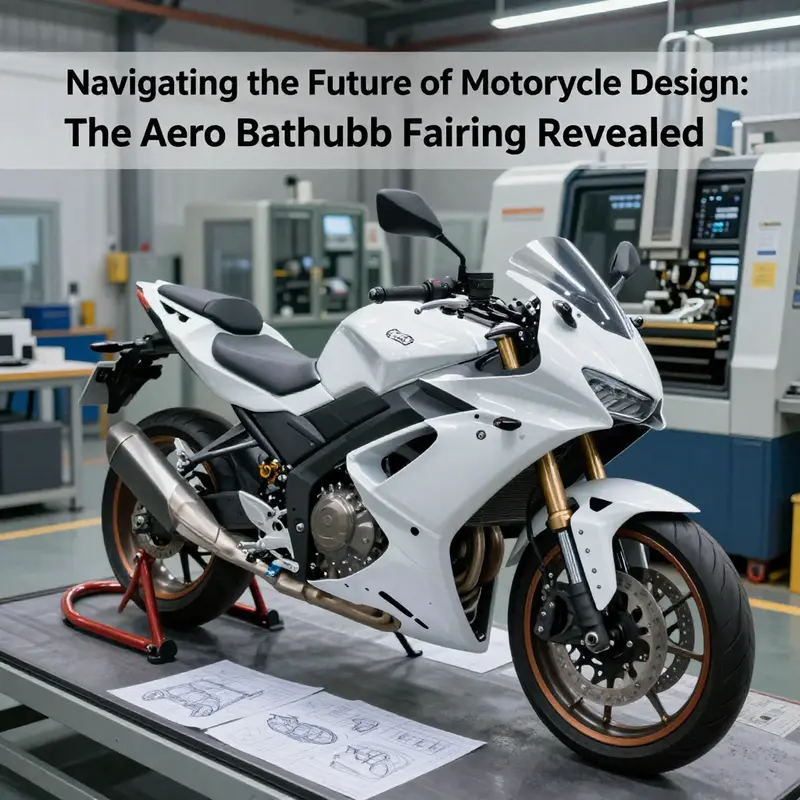
The allure of an aero bathtub motorcycle fairing rests as much in its silhouette as in the science that holds it together. It is a design where the rider’s posture, the mechanical lines of the engine, and the swirl of air over the machine converge into a single, sculpted form. To translate that form from idea to street-ready reality requires more than a good eye for curves. It demands careful material selection, manufacturing discipline, and an understanding of how each choice affects balance, stability, and energy use at speed. In this chapter, we explore the core decisions that shape aero bathtub fairings, from the materials that form the laminate to the processes that shape, finish, and sustain them through countless miles of wind and weather. The discussion stays grounded in the practicalities of sport-touring and high-speed riding, where the goal is to reduce drag without compromising rider comfort or repairability. It is a conversation about trade-offs, where every micrometer of thickness and every gram of weight counts toward a smoother ride and a longer life for the fairing itself.
At the heart of any aero bathtub fairing is the collaboration between form and function. The tub-like geometry is more than a visual cue; it is a deliberate attempt to cradle the rider while guiding airflow around the hips, torso, and knees. The material choice drives how faithfully that cockpit contour can be realized and how well it will respond to the rigors of daily use. Fiberglass offers a practical entry point. Its cost-to-performance ratio is favorable, and it is forgiving during the shaping stage, which matters when the goal is to preserve delicate curves over a complex mold. Hand lay-up remains a time-honored method here. Resin-infused fabric is laid over a mold in successive layers, with careful attention paid to resin density and fiber orientation. The result is a fairing that can be tuned for stiffness without becoming overly brittle. In a workshop setting, technicians can adjust laminate thickness in localized areas to fine-tune aero balance, an option that keeps fiberglass fairings relevant for custom builds and small-batch projects.
Carbon fiber pushes the conversation toward optimization at the scale of grams and the sail-like stiffness that translates into responsive handling. A carbon fiber tub offers the potential for a lighter, more rigid shell that can hold its shape at higher speeds and resist flutter. The intrinsic strength-to-weight advantage means designers can thin the walls of the fairing while preserving impact resistance. But carbon fiber is not a universal remedy. The raw cost, labor intensity, and the need for precise layups and void-free curing demand specialized skills and controlled environments. Vacuum bagging becomes nearly essential in this context, drawing out air pockets and ensuring a uniform laminate thickness. The result is a surface with a crisp, camera-ready finish that accepts clear coats with a deeper, glass-like shine. For riders chasing the ultimate in performance, carbon fiber can unlock meaningful gains in aerodynamics, especially when paired with a shape that minimizes separation and maintains a gentle pressure gradient along the rider’s silhouette. Yet the stewardship of that advantage rests on process discipline, tooling quality, and meticulous post-cure handling.
A third path, ABS plastic, often chosen for OEM applications and high-volume production, reflects a different calculus. ABS is sturdy, impact resistant, and amenable to rapid molding processes such as compression molding. Its relatively dense polymer matrix resists UV exposure reasonably well when paired with suitable surface finishes and coatings. In the context of an aero bathtub, ABS provides reliable protection for the rider and the engine’s forward sections at a reasonable price point, while enabling repeatable geometry across large production runs. The trade-off is weight and a surface that, while smooth, may not achieve the same feather-light stiffness as carbon fiber. Still, ABS remains a practical backbone for fairings intended for daily commuting and broad-usage models where repairability and serviceability take priority. The blend of materials—fiberglass for cost-effective customization, carbon fiber for performance, and ABS for mass production—illustrates a spectrum rather than a single, one-size-fits-all solution. It is a spectrum that designers navigate with the rider’s use-case in mind.
The manufacturing sequence for aero bathtub fairings mirrors the material logic and the intended market. Hand lay-up, favored for fiberglass and carbon fiber, offers unrivaled control in shaping complex contours. Each layer of fabric is saturated with resin, laid with precision, and cured under conditions that prevent fiber shifting or resin-rich pockets. This artistry is complemented by vacuum bagging, which not only removes entrapped air but also yields a denser, stronger laminate. With carbon fiber, the benefits of vacuum-assisted lamination are amplified, enabling thinner skins that still deliver rigidity. The technique, however, demands careful mold handling and a clean room-like environment to prevent contamination that could compromise surface finish and lamination integrity.
When ABS takes the lead, compression molding becomes the focal point. This approach supports rapid, repeatable production with tight tolerances and consistent surface quality. The molds themselves must be engineered to maintain dimensional stability as the part cools, and the downstream processes—demolding, trimming, and finishing—must be integrated into a smooth production flow. In all cases, mold design is a critical step, shaping not just the final appearance but the very ease with which the fairing can be installed and serviced. Complex geometries around the rider’s leg protection zones, the intersection with engine covers, and the transitions to mirrors and wind deflectors demand careful toolmaking and surface treatment to avoid panels that bind or crack under stress.
Surface finish plays a decisive role in how the final product performs and ages. Gel coats, clear coatings, and UV inhibitors are deployed to resist environmental exposure and maintain a glossy, drag-minimizing surface. Surface smoothness translates directly into aerodynamic efficiency; even minor imperfections can disrupt laminar flow and produce unwanted turbulence. A well-finished fairing not only looks pristine but reduces boundary-layer separation at speed, a subtle yet meaningful factor in stability and fuel efficiency. With fiberglass or carbon fiber, post-cure finishing, sanding, and polishing are essential to remove weave texture and to prepare for paint or clear coats. In ABS-built fairings, the surface is typically molded to a refined finish, requiring less manual intervention, though cosmetic touch-ups and impact repair still follow established refinishing protocols.
Durability and longevity cannot be divorced from the material and manufacturing choices. Carbon fiber, while offering superior stiffness and lightness, invites new considerations regarding impact resistance and repairability. A puncture in a carbon skin may not be as easy to repair as a fiberglass panel, demanding dedicated repair strategies and specialist skill. Fiberglass, by contrast, tends to be more forgiving when damaged; damaged sections can be repaired with resin patches and rebuilt layers, enabling riders to keep a custom silhouette without prohibitive cost. ABS, with its robust, impact-resistant profile, can absorb minor impacts and recover well with standard repairs, though repeated exposure to sunlight and heat can lead to down-mrift of brittleness over time if not adequately protected. Across all materials, UV stabilization, weatherproof coatings, and regular inspection regimes are essential for preserving aerodynamic shape and structural integrity. A fairing that wires its performance to a specific wind profile also wires its life to how well it resists fatigue from repeated wind loads and engine heat.
The economic dimension of manufacturing aero bathtub fairings is inseparable from the engineering choices. Custom, hand-laid carbon fiber shells can achieve the lightest and most aerodynamically optimized forms, but at a premium price and extended lead times. Fiberglass options strike a balance, offering customization potential and repairability that suits small shops and dedicated enthusiasts alike. ABS-based solutions emphasize manufacturability and scale, enabling kits that can be installed on a wide range of platforms with predictable quality and faster turnaround. The evolving landscape of materials science keeps the door open to hybrids: multi-material laminates or layered compositions that combine carbon’s stiffness with fiberglass’s resilience, or ABS cores with carbon skins that aim to deliver performance without the full cost of a monolithic carbon fairing. In practice, the best approach is chosen not by theory alone but by aligning the architectural goals of the bike’s aerodynamics with the rider’s expectations for weight, energy use, and serviceability.
For readers seeking a practical gateway to the world of aftermarket and OEM fairings, a catalog approach can illuminate the options without getting lost in brand names. A broad collection of fairing options—organized by geometry, mounting style, and intended usage—can serve as a reference point for material and process decisions. This cataloging helps a builder or a small shop decide whether to prototype a new tub shape in fiberglass, to push a high-strength carbon laminate for a race-inspired project, or to select a durable ABS shell for a daily commuter model. The key is to treat the fairing as a system component: its mass, stiffness, and finish influence handling, comfort, and the motorcycle’s overall balance at every speed. By integrating material and process choices into the early design conversation, engineers can anticipate how airflow interacts with rider posture, engine heat, and the bike’s undertray or storage modules. The result is not just a more efficient profile, but a coherent ride experience where aero gains translate into tangible benefits—less fatigue, steadier high-speed highway cruising, and a more confident cornering posture.
For a broader sense of the available fairings and to explore how different geometries have been realized in the real world, readers can consult the collections that house a variety of fairing designs. collections/honda-fairings offers a window into how a catalog can support customization while preserving the integrity of the original aero concept. This kind of resource—whether used for inspiration or for practical fitment and compatibility checks—helps ensure that the pursuit of aerodynamic refinement remains grounded in feasibility and maintainability. The chapter’s emphasis on material behavior, manufacturing nuance, and the lifecycle of the fairing provides a framework that applies whether one is pursuing a custom hand-laid carbon shell or a mass-produced ABS cover that slips onto a popular platform. It is a reminder that, beneath the glossy surface, the aero bathtub fairing is a carefully engineered compromise among weight, stiffness, cost, and the endurance required to keep the wind out while letting the rider push toward the horizon.
Beyond the workshop, the narrative of materials and manufacturing is also a story about knowledge transfer. The best outcomes occur when designers, fabricators, and riders share a language of layers, resins, and lamination schedules. The builder who understands how resin viscosity affects weave alignment can tailor a lay-up to a specific climate or performance target. The technician who knows the curing window can optimize a carbon’s cross-fiber strength while maintaining a surface that accommodates a flawless paint finish. In this sense, the aero bathtub fairing becomes more than a shell; it becomes a collaborative artifact that embodies the discipline of fabrication and the art of aerodynamics. As materials science continues to evolve, it will push toward lighter, stiffer, and more damage-tolerant solutions that still honor the rider’s comfort and the machine’s architectural balance. The practical takeaway for enthusiasts is clear: the right combination of material choice, manufacturing technique, and finish strategy yields a fairing that is not only beautiful to look at but enduring in the face of miles, wind, and weather.
External reading for designers and builders who want to dive deeper into material selection and process nuances can be found at https://www.motorcycle.com/tech/choosing-the-right-material-for-your-motorcycle-fairing/ for a detailed, technical discussion that complements the narrative here.
Where Wind Meets Wallet: Market Dynamics and Economic Ripples of Aero Bathtub Fairings

Market forces and economic ripple effects
The rise of aero bathtub motorcycle fairings blends aerodynamic engineering with a distinct, enveloping silhouette. This fusion appeals to riders who want speed, comfort, and a striking look. As a product category it is reshaping supply chains, manufacturing investment, and aftermarket dynamics. Global demand is climbing, and the numbers reflect that shift: forecasts suggest a strong compound annual growth rate through the latter half of this decade. That growth is driven by several clear factors, which together explain why an otherwise niche styling preference now matters to firms and regional economies.
First, rider preferences are changing. Enthusiasts and commuters alike prize efficiency and protection. The bathtub-style wraparound shape reduces turbulence around the rider and engine. That reduction produces measurable gains in stability and fuel economy. When consumers see real-world benefits, willingness to pay increases. This preference shift converts into higher unit prices for premium fairings and a broader market for performance-oriented accessories. A growing segment of buyers seeks fairings that deliver both form and function, which pushes manufacturers to invest in aerodynamic testing and refinement.
Second, materials and manufacturing improvements lower the barrier to more advanced designs. The move from basic thermoplastics to engineered composites and hybrid laminates yields lighter, stronger panels. Those materials demand new production methods, including vacuum infusion, carbon-fiber lay-up, and precision molding. Investment in these technologies raises fixed costs for producers, but it also improves margins on higher-end models. Economies of scale follow as larger runs justify tooling and automation. Smaller shops that once relied on simple fiberglass kits now compete by offering bespoke or limited-run composite parts.
Third, the aftermarket and customization economy is expanding. Riders who retrofit motorcycles with aero bathtub fairings often seek tailored colors, integrated vents, and modular mounts. That creates value-added opportunities for designers, painters, and installers. Independent suppliers and boutiques play a pivotal role, offering alternatives to OEM options. The expansion of e-commerce and specialized marketplaces has accelerated this trend. Online platforms allow niche producers to reach international customers without traditional distribution networks. That lowers entry costs and increases competition, forcing incumbents to innovate and diversify.
Regional demand patterns are also forming distinct clusters. In some territories, higher-speed road networks and a culture of performance riding drive interest in aerodynamic upgrades. In others, harsh weather and long touring distances incentivize protective fairings that increase comfort and reduce fatigue. Emerging markets are notable for rapid uptake as middle-class incomes rise and local manufacturers innovate. These regions often attract both OEM investment and aftermarket suppliers seeking new customer bases. Their growth helps explain the robust forecast seen across the industry.
From an economic standpoint, the emergence of aero bathtub fairings affects more than just revenue. It shapes employment profiles. New skill sets—composite technicians, CAD aerodynamicists, and digital fabricators—become valuable. Training and apprenticeships expand. Suppliers that produce mold tooling, finishes, and fasteners see increased orders. At the same time, traditional fabrication jobs shrink or evolve. This shift often creates higher-paying positions but fewer roles for low-skill labor, changing local labor market dynamics.
Supply chains feel the impact too. Demand for specialized resins, core materials, and precision hardware increases. That concentration of demand can raise vulnerability to raw material price swings and supply disruptions. Manufacturers hedge by diversifying suppliers, localizing some production, or locking long-term contracts. Trade policies and tariffs influence sourcing decisions. Companies with flexible manufacturing footprints gain an advantage when rapid adaptation is required.
Investment in research and development intensifies as firms seek aerodynamic gains. Wind-tunnel testing, computer fluid dynamics, and iterative prototyping become core activities. These capabilities create intangible assets and intellectual property that can differentiate players. At the same time, they raise barriers to entry for small firms without access to testing facilities. Industry collaboration and shared lab access sometimes arise to spread costs and accelerate innovation across the ecosystem.
Pricing and margins depend on the balance between perceived value and production cost. Premium-priced aero bathtub fairings justify their cost through improved performance, longevity, and aesthetic appeal. However, lower-cost replicas and counterfeit parts depress prices and create safety risks. That tension leads to a bifurcated market: high-end, validated components sold through verified channels, and cheaper alternatives sold through informal networks. Protecting brand and safety standards becomes a priority for reputable manufacturers and distributors.
Regulation and standards exert a further economic influence. Safety rules, homologation procedures, and emissions standards indirectly affect fairing design. For instance, changes to vehicle certification requirements can raise development costs. Insurers and fleet operators may prefer certified fairings that demonstrably improve protection. These preferences influence purchasing decisions for tour operators, courier services, and rental fleets, which are important volume buyers for aftermarket bodywork.
Resale and lifecycle economics are relevant to consumer choices. Well-designed aero bathtub fairings can boost resale values by improving bike aesthetics and functionality. Conversely, custom installations that damage original mounting points or complicate servicing can reduce resale value. This creates a market for OEM-style retrofit kits that preserve vehicle integrity while adding aerodynamic benefits. Aftermarket providers who deliver reversible installations find a ready audience among owners cautious about long-term value.
The category also spawns new business models. Subscription and rental models for specialty fairings emerge for events and short-term needs. Co-design arrangements between suppliers and clubs or racing teams allow iterative improvement and market testing. Licensing and partnerships help smaller designers scale production while preserving design control. Digital technologies, including 3D scanning and on-demand manufacturing, lower the cost of bespoke fits and small-batch runs.
Risks remain. Raw material volatility, geopolitical trade friction, and intellectual property disputes can slow growth. Counterfeits and poorly designed parts risk safety incidents that could prompt stricter regulation. Still, opportunities abound for firms that combine aerodynamic engineering, quality manufacturing, and responsive distribution. Companies that invest in training, secure supply chains, and clear certification will capture the high end of demand, while agile suppliers can serve a broad aftermarket hungry for style and performance.
For riders and industry observers, the aero bathtub fairing is more than styling. It is a case study in how design, materials, and consumer preference converge to reshape markets. Savvy firms align product development with certification, scalable manufacturing, and thoughtful aftermarket strategies. For deeper regional projections and market analyses that informed these trends, see this industry overview: https://www.linkedin.com/pulse/middle-east-africa-motorcycle-fairing-2026-7zqkx/.
For riders exploring retrofit options, a comprehensive selection of model-specific fairings can be a useful starting point, for example the Honda fairings collection.
Shaping the Future of Aero Bathtub Fairings: Materials, Aerodynamics, and Rider Integration
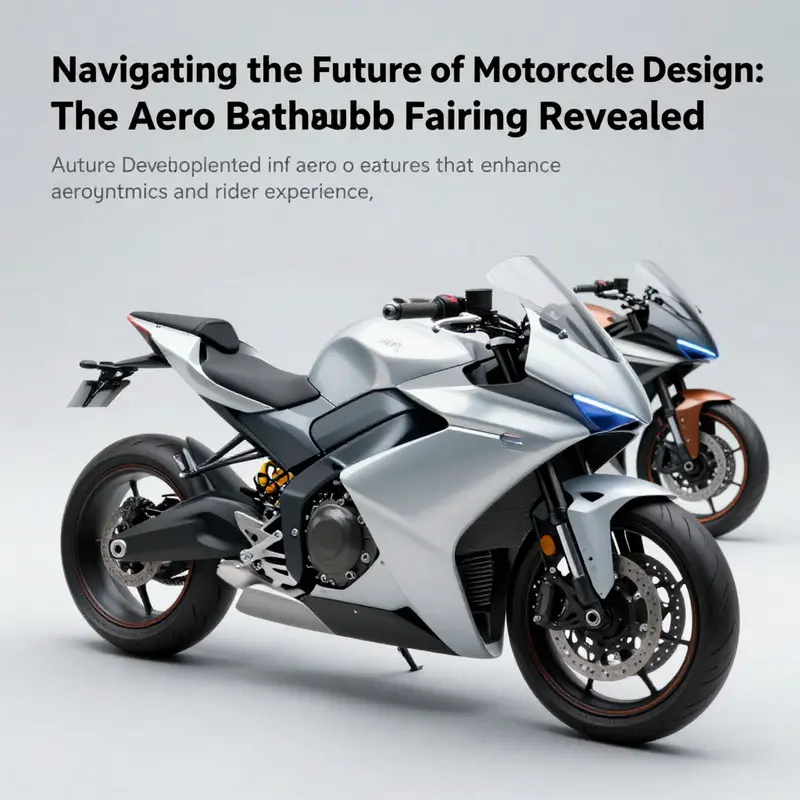
The conversation about aero bathtub fairings moves beyond style. It now sits at the intersection of aerodynamics, materials science, rider comfort, and systems integration. What was once a simple tub-like shell grown from stylistic preference now has the potential to become a multifunctional platform. Designers are learning to treat the fairing not as an afterthought, but as a composite system that influences fuel efficiency, rider stability, noise, and even electronic functionality.
Advances in computational fluid dynamics and accessible wind-tunnel validation have rewritten what a fairing can achieve. Engineers can now iterate shapes quickly and cheaply using high-fidelity simulations. Small curvature changes that previously took weeks to validate are now evaluated in hours. The result is fairing geometry that blends the classic, wraparound bathtub silhouette with subtle, high-efficiency contours. These contours reduce drag where it matters most, control separation zones behind the rider, and tame side gust response without sacrificing the visual identity that riders value.
Materials progress plays an equal role. Traditional fiberglass remains relevant because of its cost effectiveness and reparability. But newer thermoplastic composites and high-modulus carbon blends make it possible to create thinner skins with higher stiffness. These materials allow designers to integrate complex internal structures directly into the fairing skin. Embedded ribs and honeycomb cores improve impact resistance and reduce the need for bulky support frames. Thermoformable plastics introduce the possibility of lower-cost, near-net-shape parts that are easier to recycle. Additive manufacturing steps in for prototyping and low-volume customization, enabling bespoke vents, channels, and mounting points without heavy tooling.
Integration of active aerodynamic elements will define a major leap forward. Imagine adjustable lower flares that deploy during high-speed runs to smooth airflow under the chassis, or micro-vanes that open to reduce pressure spikes in crosswinds. These active systems can be electromechanical or fluidic. When paired with simple sensor inputs — yaw rate, side-slip, and wheel speed — they can respond in milliseconds to changing conditions. The goal is subtle stability assistance rather than radical control. Riders retain feel and authority while the fairing quietly reduces buffeting and improves straight-line economy.
Thermal management is a less obvious but crucial frontier. The bathtub shape inherently channels airflow around the rider and engine. By carefully directing that flow, fairings can aid cooling. Integrated ducts that feed engine radiators or brake cooling circuits will become more common. At the same time, rider comfort benefits from controllable ventilation. Adjustable vents can be tuned to feed warm or cool air to the rider’s legs and torso, improving long-distance comfort without relying on heavy, power-hungry seat heaters.
Noise reduction and rider protection will also see meaningful innovation. A well-shaped fairing can reduce aerodynamic noise at the helmet by smoothing the wake and isolating turbulent zones. Designers are experimenting with layered skins and internal acoustic treatments that dampen broadband noise while keeping weight low. For physical protection, the bathtub form lends itself to leg and lower-torso shielding. New energy-absorbing liners, combined with strategic breakaway points, balance crash protection with damage control, keeping repair costs reasonable after low-speed incidents.
Electronics and connectivity are increasingly woven into fairing design. Fairings are evolving into wiring and sensor carriers. Integrated housings for cameras, radar, and LIDAR can be shaped to minimize aerodynamic penalties while preserving sensor fields of view. Fairings will route harnesses and power to active elements, reducing clutter and improving weather sealing. With more sensors, advanced rider-assistance features become feasible. Fairings will help present the sensors cleanly, keeping them precise and protected from stone chips and debris.
Sustainability and lifecycle thinking are moving closer to the center of fairing development. Composite recyclability and the use of bio-derived resins are no longer fringe talking points. Manufacturers and aftermarket fabricators are experimenting with thermoplastic composites that can be re-melted and reformed. This shift reduces waste and supports lower-cost, small-batch production runs. Removable skins and modular lower sections simplify repair and replacement. Rather than replacing an entire assembly after damage, riders will swap out a modular segment, reducing material use and expense.
Customization and modularity will thrive in this environment. Riders desire individual expression and functional upgrades. Modular bathtub fairings allow easy fitment of wind deflectors, luggage mounts, or performance lowers. They can be tailored to a wide range of chassis geometries, enabling more universal aftermarket options. For model-specific fitment, curated collections provide off-the-shelf solutions that maintain OEM alignment and mounting integrity. Riders looking for such options can begin their search with a detailed parts collection like the Honda fairings collection to understand fitment approaches and styles.
Regulatory and safety standards will influence shape and function. As active systems become common, design validation protocols will evolve. Fairings carrying sensors and actuators will require defined test cycles for environmental durability, electromagnetic compatibility, and crash behavior. These tests will push manufacturers to consider mounting redundancy and graceful failure modes. Standards will also shape lighting integration and visibility features, ensuring that aesthetic choices do not compromise detection by other road users.
There are trade-offs and challenges. Adding active systems increases complexity and cost. High-performance materials improve strength but raise repair costs and sometimes result in brittle failure modes. Designers must balance aerodynamic gains against real-world benefits. A shape that performs brilliantly at 120 mph offers little value to a commuter if it catches crosswinds and makes low-speed maneuvering uncomfortable. The design process must therefore be contextual. Performance gains should align with the intended use case.
Adoption will be incremental. Expect early implementations in performance and touring segments where stability and efficiency are rewarded. Aftermarket solutions will accelerate feature diffusion by offering bolt-on active elements and modular replacements. As manufacturing techniques mature, switchable features and smart materials will trickle down to mainstream models. Collaboration between chassis engineers and aerodynamicists will be critical. A fairing cannot deliver its full potential in isolation; it must work with the bike’s suspension geometry, weight distribution, and rider posture.
For designers and riders considering future-proof fairings, a practical approach helps. Prioritize designs that are repairable and modular. Choose materials with clear recyclability credentials. Favor passive aerodynamic improvements first, then add active elements when they demonstrably improve safety or comfort. Validate designs with both simulation and real-world testing. Finally, ensure that electronic integrations are serviceable and well documented.
The aero bathtub fairing is poised to transform from a stylistic cousin of classic designs into a smart, integrated system. By combining refined aerodynamics, advanced materials, active control, and sustainable manufacturing, the fairing will enhance performance and comfort. It will also become a platform for the next wave of rider-centric technology. For engineers and riders alike, the opportunity lies in thoughtful integration rather than purely aesthetic revival. For more historical fitment context and options tailored to specific motorcycle platforms, see the Honda fairings collection.
External reference: https://www.harley-davidson.com/uk
Final thoughts
The exploration of aero bathtub motorcycle fairings reveals their significant role in enhancing the riding experience. As a business owner in this field, understanding the design principles, aerodynamic benefits, material choices, market dynamics, and future trends can put you ahead of the competition. Staying informed and adaptable will ensure your offerings meet the rising demand for performance-oriented, stylish motorcycle components. Embracing innovations in fairing technology is not just beneficial; it’s essential for long-term success in the motorcycle market.