
Aerodynamic fairings play a pivotal role in motorcycle design, fundamentally shaping the performance and comfort levels of modern bikes. These expertly crafted panels are more than just aesthetic upgrades; they are engineered solutions to reduce drag, enhance stability, and improve overall rider experience. Understanding the complexities of fairing design, from full body panels to half-fairing kits, is essential for businesses involved in motorcycle sales and manufacturing. Throughout this exploration, we will elaborate on the principles driving aerodynamic fairing designs, their influence on performance metrics like speed and fuel efficiency, the benefits of half-fairing kits, and exciting aftermarket enhancements available for motorcycle enthusiasts. Each chapter delves deeper into the mechanics and advantages of aerodynamic fairings, equipping business owners with knowledge that can propel their offerings in the competitive motorcycle market.
Shaping Speed: How Aerodynamic Fairings Transform Motorcycle Performance and Control
Shaping Speed: How Aerodynamic Fairings Transform Motorcycle Performance and Control
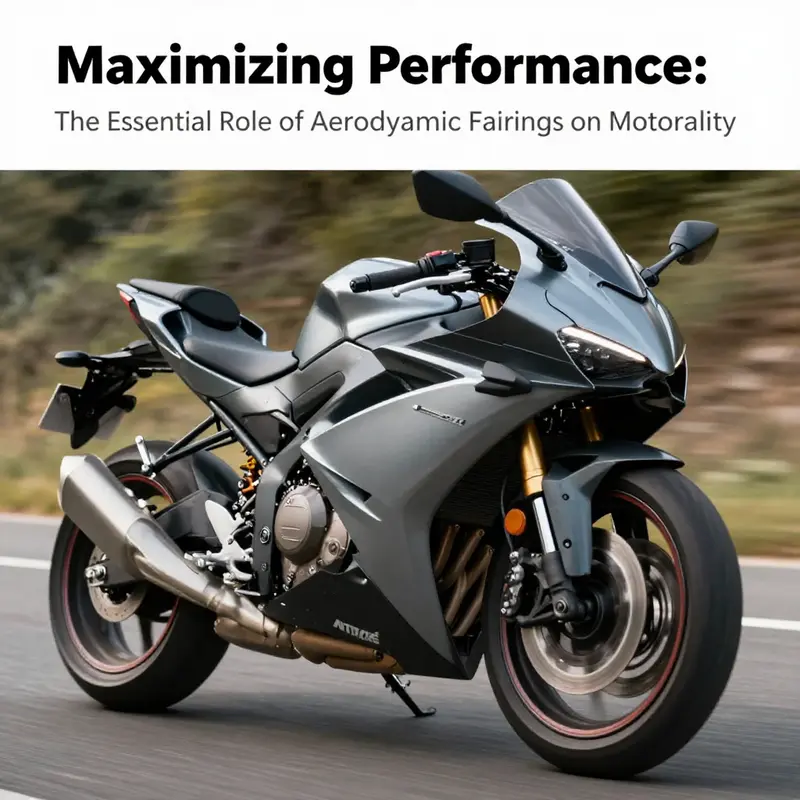
An aerodynamic fairing is more than a cosmetic shell. It is a functional extension of the motorcycle, shaped to manage airflow, reduce drag, and influence the forces that act on both machine and rider. At highway pace, air becomes the dominant opposing force. A well-conceived fairing turns that force from an obstacle into a controllable element, improving stability, extending range, and making sustained high-speed riding less fatiguing.
The core objective of fairing design is to smooth the path of air as it meets the motorcycle. Smoothness reduces turbulence, and reduced turbulence lowers drag. Lower drag translates to higher top speeds for the same power, faster acceleration in certain speed bands, and better fuel economy on long runs. But performance gains are only part of the story. Fairings are also tools for balancing lift and downforce, channeling cooling air to the engine, deflecting wind away from the rider, and shaping the bike’s handling feel.
Design begins with goals. Engineers decide whether the priority is outright top speed, rider comfort for long tours, agile handling in twisty roads, or a blend of these. Each objective pushes the fairing toward different trade-offs. A full fairing that wraps the lower body reduces drag most effectively, but it adds complexity to maintenance and can increase weight. A half fairing leaves the lower engine exposed for easier access and slightly higher drag, while offering a familiar sport-touring aesthetic and improved cockpit comfort. Designers must weigh these practical concerns against aerodynamic gains.
Modern fairing development relies heavily on digital tools. Computer-aided design allows rapid iteration of shapes, while computational fluid dynamics (CFD) simulates airflow around a model. CFD outputs—pressure maps, streamlines, and wake visualizations—let engineers quantify drag, predict lift forces, and spot regions of separated flow. This virtual testing shortens development cycles and reduces reliance on expensive wind tunnel time. Physical validation still matters, but CFD narrows design choices before prototypes are built.
Shape is the unmistakable element of performance. The frontal area must be minimized without compromising essential functions like lighting, rider visibility, and instrument placement. Smooth transitions from the nose to the fuel tank and along the flanks prevent abrupt pressure changes that create turbulence. Curved surfaces can help maintain attached flow, while sharp edges and abrupt geometry encourage separation and turbulent wakes. Designers use subtle curvature and carefully placed chines or lips to control where flow detaches and how the wake behaves behind the bike.
Beyond drag, lift control is crucial for stability. Motorcycles experience lift forces that can reduce traction on the front wheel or lighten the rear, especially at speed. A balanced fairing design prevents excessive front lift that can destabilize steering. Conversely, some modern fairings incorporate small winglets or spoilers to generate slight downforce. This downforce improves front-end grip during hard acceleration and high-speed cornering. The magnitude of aerodynamic downforce on street motorcycles is modest compared to race machines, but even small adjustments can deliver noticeable improvements in planted feel.
Air management extends to cooling systems. Engines and brakes require directed airflow to shed heat. Fairings often include ducts, vents, and internal channels that guide ambient air to radiators and brake rotors. Well-executed ducting preserves exterior streamlines while servicing thermal needs. Designers must guard against overheating or aerodynamically detrimental openings. A trade-off exists: larger openings improve cooling but increase drag. Intelligent placement and internal channel geometry reconcile these competing demands.
Rider comfort and ergonomics are inseparable from fairing design. At speed, the rider becomes a bluff body behind the fairing. A tall, contoured windshield can shelter the head and torso, reducing wind buffeting and noise. Lower wind force reduces rider fatigue and improves control during long rides. Designers shape the upper portion of the fairing to deflect airflow around the shoulders and helmet, preserving visibility and reducing the wake impinging on the rider’s chest. Adjustable windshields and split-flow designs let riders tune comfort for different conditions.
Materials and construction strategies influence performance, durability, and cost. Lightweight composites like fiberglass, ABS plastics, and carbon fiber are common. Each material has trade-offs: ABS offers impact resistance and affordability; carbon fiber minimizes weight and maximizes stiffness but increases cost. Manufacturing methods—vacuum forming, layup, or injection molding—affect tolerances and finish. A precise fit reduces panel gaps that would otherwise create drag and wind noise. Robust mounting systems prevent flutter and maintain aerodynamic accuracy under vibration and load.
Aftermarket solutions expand the choices available to riders. Kits provide opportunities to upgrade aerodynamics without replacing major components. Half fairing kits offer a balance between wind protection and serviceability, letting riders access the lower engine more easily while gaining upper-body shielding. Some aftermarket pieces add winglets or deflectors designed to generate downforce or smooth local flow. When selecting aftermarket parts, fit quality and material properties matter. Poorly fitting components can create more drag than they eliminate and may compromise handling.
Integration with chassis and suspension is vital. Aerodynamic forces change load distribution across the wheels. When a new fairing increases front downforce, the suspension may need valving adjustments to maintain ride balance. Conversely, reduced drag and altered pressure zones around the fuel tank can influence weight transfer during acceleration and braking. Engineers evaluate the motorcycle as a system, not as isolated parts. Suspension, steering geometry, and tire characteristics interplay with aerodynamic behavior to produce the final ride feel.
Testing across conditions completes the cycle. CFD predicts behavior in controlled virtual conditions, but real-world testing introduces road roughness, crosswinds, and rider variability. Engineers measure pressures, accelerations, and fuel use during instrumented runs. Wind tunnel tests with scale models remain valuable for isolating flow phenomena. Data from on-road testing feeds further refinement. The iterative loop—design, simulate, prototype, test—yields robust solutions that perform in everyday environments, not just idealized labs.
Aerodynamics also shape safety considerations. By reducing buffeting and improving stability, fairings can reduce rider fatigue and enhance the ability to control the bike in a crisis. Thoughtful venting prevents heat accumulation that could injure a passenger or damage components. Mounting systems and panel integrity affect crashworthiness; panels should fail in predictable ways and avoid creating hazards during an impact. Designers must balance fragile lightweight choices against durability needs.
Aesthetic language is inseparable from aerodynamic intent. Sleek lines and aggressive noses suggest speed and efficacy, but styling choices can be functional. Aesthetics can guide air through intended paths, hide vents, and manage visual mass to indicate the bike’s intended purpose. Clean integration of aerodynamic features maintains visual coherence while delivering measurable gains in performance.
Practical considerations guide owners and riders when choosing fairings. Think about maintenance access, daily riding speeds, climate, and the types of roads most often ridden. Long-distance commuters value wind protection and reduced consumption. Urban riders may prioritize maneuverability and easy servicing. Riders who enjoy modifying their bikes should consider available aftermarket solutions and the quality of fitment. Professional installation often ensures correct alignment and secure mounting.
Fairings will continue to evolve. Advances in CFD fidelity, materials science, and manufacturing techniques enable lighter, more efficient, and more integrated designs. Adaptive aerodynamics—small elements that adjust with speed or steering angle—are moving from high-end applications toward mass-market possibilities. As engineers refine the relationship between rider, machine, and air, fairings will remain a central element in extracting better performance and comfort from motorcycles.
For riders and designers alike, the fundamental lesson is this: fairings do not merely hide the mechanicals. They shape how the motorcycle interacts with its most pervasive environment. When designed and integrated with care, aerodynamic fairings yield a package that is faster, steadier, more efficient, and more comfortable. For reference designs and kit options that demonstrate these principles in production and aftermarket contexts, see examples of Honda CBR1000RR fairings (2012–2016).
For deeper technical background on the CFD-driven design process and aerodynamic metrics used to evaluate fairings, consult this detailed study:
https://www.researchgate.net/publication/387694822DesignandAerodynamicAnalysisofMotorcycleforBetterDragCharacteristic
Racing the Air: How Aerodynamic Fairings Redefine Performance, Stability, and Fuel Efficiency in Modern Motorcycles
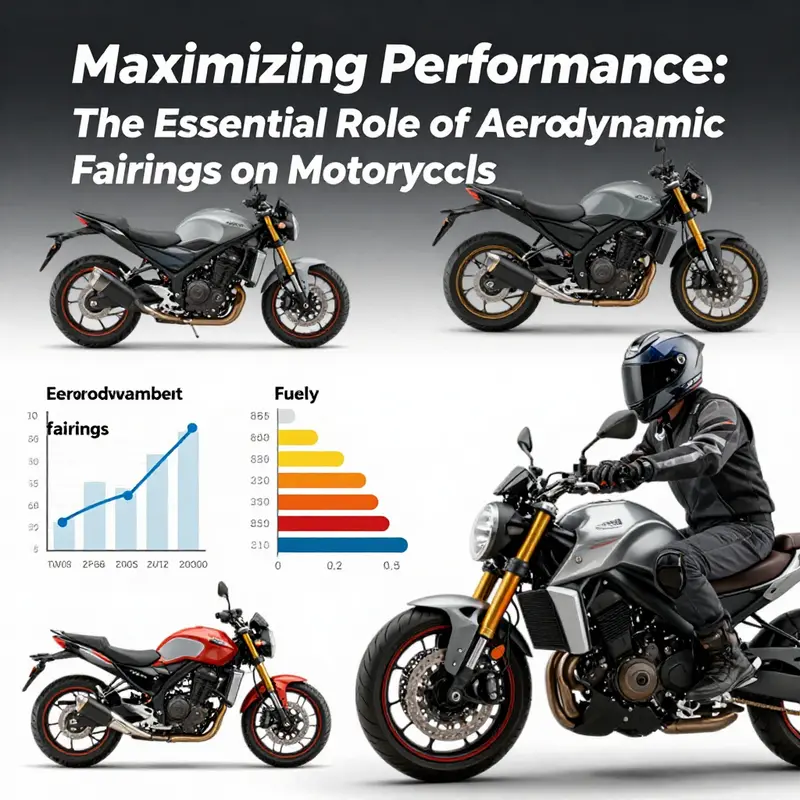
The motorcycle’s bodywork is more than a shield against rain and debris; it is an active partner in how a bike slices through the air. An aerodynamic fairing, carefully shaped and integrated, can transform performance figures that riders feel in the handlebars and on the speedometer. The conversation about fairings begins with a simple premise: air is a powerful opponent. At highway speeds, it becomes a steady, invisible force that saps acceleration, drains fuel, and buffs the rider with wind gusts that fatigue the body and blur vision. A well conceived fairing changes that dynamic, guiding air smoothly around the machine and over the rider, reducing drag, increasing stability, and refining the overall riding experience. In this sense, the fairing is not merely an aesthetic feature but a core performance device, a conductor that harmonizes engine output, suspension behavior, and rider comfort into a coherent aerodynamic performance package.
To understand how this works, it helps to think about the different shapes and their roles. Full fairings, which envelop the sides and often the top of the bike from the front to well behind the rider, are the archetypal solution for aggressive aerodynamics. Their primary strength lies in drag reduction. A streamlined contour minimizes flow separation, lowers the wake behind the motorcycle, and reduces the pressure drag that would otherwise act like a brake at speed. With less drag, the engine can push the bike forward with less effort, which translates into not only a higher potential top speed but also improved fuel economy at sustained highway cruising. The wind is redirected away from the rider, too, which mitigates fatigue and enables a more relaxed posture on long rides. In practical terms, riders experience a more stable, planted feel at high speeds, with less wind buffeting around the torso and head. Safety and engine longevity also benefit, as a smoother flow protects the intake and cooling pathways from abrupt gusts and debris spray.
Partial fairings, including the increasingly common half-fairing configurations, strike a different balance. They shield the upper portions of the bike—often the headlight, instrument cluster, and upper midsection—while leaving the engine and lower chassis exposed. This design reduces drag compared to naked bikes substantially, though not to the degree achieved by full fairings. The gain is a nimble, more maintenance-friendly platform that still delivers noticeable comfort improvements, particularly for sport-touring riders who want wind deflection without the full enclosure. The rider experiences less wind fatigue on the chest and arms, and service access to the engine and electronics becomes easier because fewer panels are in the way. In aggregate, the partial fairing approach enables a broader spectrum of riding experiences: from spirited, twisty-road dynamics to longer, more comfortable highway stints where the rider appreciates the balance between protection, accessibility, and agility.
A layer of nuance emerges when we consider how fairings influence handling and stability, especially as speeds climb. Drag is only part of the story. The shape of the fairing also shapes the flow field that develops around the bike. A well designed profile minimizes adverse pressure gradients that can induce lift or buffeting, particularly around the front wheel and rider’s chest. The most optimized configurations seek a smooth boundary layer transition, reduced wake turbulence, and predictable separation points that keep the front of the bike grounded to the pavement and the rider’s line of sight stable. In the middle of the bike, near the rider’s torso, a carefully sculpted wind deflector or slight V-shaped intake can channel air in ways that reduce turbulence over the chest and shoulders. This reduces the vertical oscillation in airflow that can lead to a sense of “pluck” in the handlebars at high speed, enabling finer steering inputs and more precise steering feel.
Beyond the basics of drag reduction, modern fairings increasingly explore the concept of downward aerodynamic force. While it may sound exotic, the idea is simple: a fairing can be shaped and augmented with components to generate a small amount of downforce at the front end. This helps keep the front wheel planted under acceleration and through aggressive cornering. For smaller-displacement machines, specifically, the addition of wing-like deflectors or strategically contoured surfaces can contribute to a more stable front-end feel at highway and spirited riding speeds without compromising weight or fuel economy. The principle is not about turning the bike into a flight machine; it is about harnessing a portion of the airflow to improve grip and confidence. When riders push into fast corners, the downforce concept translates to a calmer front end, allowing more precise throttle control and a steadier line through the apex.
The spectrum of fairing choices extends into the realm of rider comfort and practical usability. Among the most popular options are front fairings with integrated screens and fairing panels that direct air over the rider’s helmet and torso, producing a shield that shields against headwind without obscuring the rider’s field of view. The effect is a gentler wind envelope around the upper body, reducing turbulence that can spill into the cockpit and destabilize posture. For riders who value speed and efficiency without sacrificing serviceability, half-fairing kits offer a compelling middle ground: they provide effective wind management while preserving easier access to the engine, frame, and electricals for maintenance. The trade-off is clear—slightly higher drag than a full fairing, but significantly greater ease of access and often a lighter, more understated aesthetic that suits sport-touring sensibilities.
In the real world, the benefits of fairings are not purely theoretical. A number of industry analyses and field observations point to meaningful gains in fuel economy at highway speeds when a road-ready fairing system is present. With drag reduced, the engine operates at lower throttle openings for the same cruise speed, which translates to less fuel burned per kilometer. The effect compounds as speed increases: the drag penalty grows roughly with the square of velocity, so even modest reductions in drag at higher speeds yield tangible improvements in efficiency. It is not merely about economy, either. The same aerodynamic work that lowers drag tends to stabilize the airflow around the bike, reducing yaw and pitch oscillations that can otherwise make high-speed riding feel nervous or inconsistent. The rider senses a calmer chassis and more predictable response to steering inputs, a difference that becomes especially noticeable on long, straight highway runs where fatigue can undermine focus and precision.
To illustrate, consider the literature on mid-range to large-displacement sport-oriented motorcycles. Studies emphasize how optimized fairing shapes support smoother torque delivery and more consistent acceleration as air resistance is shaved down. The fairing’s geometry—whether it wraps more completely around the body or leaves space for accessible maintenance—directly influences the torque curve’s perceived smoothness at different speeds. A streamlined body that minimizes flow separation tends to deliver a more favorable aerodynamic moment of inertia for the rider, improving high-speed stability and reducing the effort required to maintain a given speed over long distances. In practical terms, riders notice steadier revs, less wind fatigue, and a sense of confidence when leaning into long corners or throttling up on a fast, open road.
The conversation about fairings is also a conversation about customization and practicality. For riders who want to pursue performance while keeping maintenance manageable, aftermarket half-fairing solutions provide an appealing blend of sport aesthetics and service access. These kits cover the upper portion of the bike, from the headlight to the handlebars, delivering meaningful wind deflection with a lighter footprint than a full enclosure. They are particularly popular among sport-touring enthusiasts who prize a balanced blend of performance, comfort, and accessibility. On the other hand, full fairings continue to be the preferred choice for riders who chase maximum aerodynamic efficiency and the most stable high-speed ride possible. The investment is larger, but the payoff includes a noticeable drop in drag and a corresponding improvement in top-end performance and sustained fuel economy at highway speeds. In this context, riders, engineers, and fabricators converge on a common principle: the shape of the bike’s skin matters, and it matters in proportion to how smoothly air can be guided around the machine.
The broader implications of these aerodynamic choices extend into daily riding and long-distance travel alike. With wind fatigue reduced and airflow managed, riders can maintain longer energizing rides with less sensation of wind pressure on the chest and head. Longitudinal stability promotes a more relaxed thrust of the legs, enabling a more natural posture and reducing fatigue over hours in the saddle. This, in turn, influences rider endurance, concentration, and safety. When engines work more efficiently at cruising speeds, the rider experiences not only lower fuel expenditures but also a more predictable engine character—less abrupt surges or lags as airflow pressures change with speed and posture. In a broader sense, aerodynamic fairings contribute to an ecosystem of performance: they improve efficiency, stability, and comfort without requiring riders to compromise the essence of sportfulness that motivates many to ride in the first place.
The industry continues to innovate in this space through nuanced shaping, material choices, and integration with the machine’s overall thermal management and chassis geometry. Advances in composite materials, adaptive wind deflectors, and integrated cooling pathways demonstrate that fairings can be engineered to perform across a spectrum of riding contexts—from urban commutes to highway tours and controlled track environments. The goal remains consistent: to guide air in ways that free the rider from wind-induced fatigue while enabling the machine to operate with efficiency and stability at a wide range of speeds. The most compelling designs are those that disappear at speed, becoming almost invisible to the rider, while their effect—reduced drag, steadier handling, improved comfort—remains boldly evident in how the bike feels and performs.
For readers seeking a practical sense of how these concepts translate into real-world options, the literature highlights a variety of fairing configurations that have proven effective across the spectrum of riding styles. A full fairing, with its enveloping silhouette, can offer the most substantial gains in highway efficiency and high-speed stability, along with robust protection for the engine and lower body from debris and spray. For riders who want to preserve a more open, accessible chassis while still reaping aerodynamic benefits, a half-fairing approach provides a middle ground with meaningful wind management and easier maintenance access. And for those who crave added front-end stability without a heavy enclosure, wing-deflective components and carefully sculpted front contours illustrate how even modest design choices can influence downforce characteristics and posing of the air stream around the front wheel.
In closing, the impact of aerodynamic fairings is measurable, visible in the physics of drag and the felt experience of ride quality. They are not a single gadget but a system—an interplay of shape, materials, and integration with the bike’s powertrain and chassis—that collectively shifts how a motorcycle travels through air. When well executed, fairings reduce the work the engine must perform to maintain speed, extend the rider’s endurance on long trips, and enhance confidence at the steering wheel or handlebars. The result is a motorcycle that cuts through air more efficiently, travels farther on a tank of fuel, and carries a rider with a sense of control and comfort that invites longer and more purposeful journeys. The future of fairings lies in ever more precise tailoring to riding context, further reducing drag while preserving or even enhancing usability, heat management, and the purity of the riding experience.
Internal link note: for a sense of how fairing choices tie into specific design philosophies and catalog options, see the broader catalog of fairings collections with practical fitment considerations, such as the Honda fairings collection. Honda fairings collection.
External resource: for a technical breakdown of fairing performance and integration on a popular mid-displacement platform, refer to the detailed engineering guide available here: https://www.kawasaki.com/er6n-fairing-guide
Half Fairings, Full Potential: Balancing Aerodynamics and Accessibility in Motorcycle Design
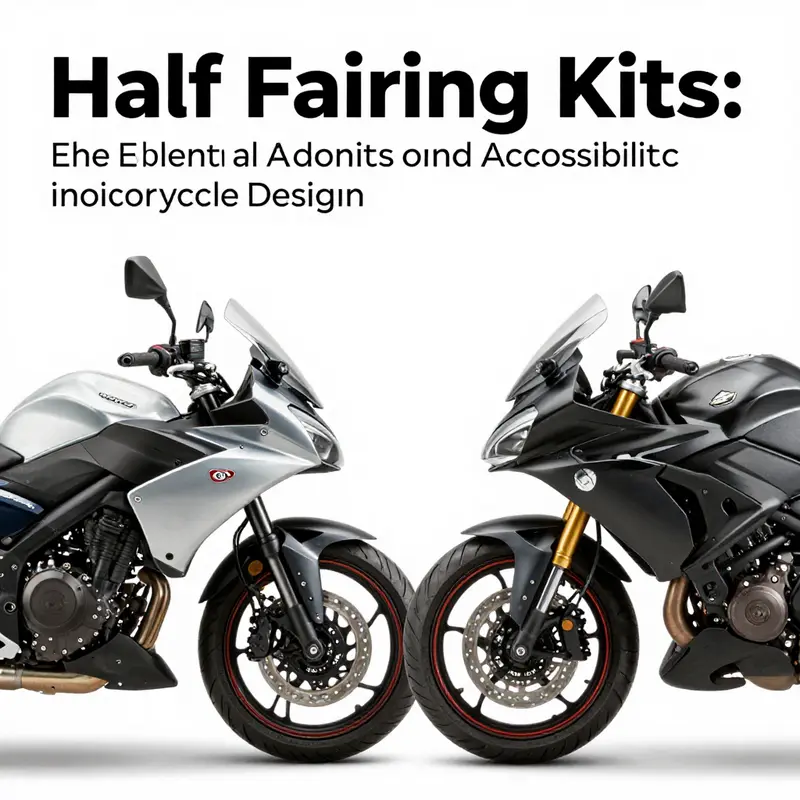
Half fairing kits have emerged as a thoughtful middle ground in the ongoing quest to tame the air around a motorcycle without turning the bike into a full weather shield. They are not naked bikes, and they are certainly not full race machines; they occupy a pragmatic space where riders crave wind management, fuel efficiency, and a sportier silhouette, yet still want rapid access to the engine, air filter, spark plugs, and other routine maintenance points. This design solution rests on a simple premise: cover enough of the front end to redirect turbulent air away from the rider’s upper body and the bike’s critical components, while leaving the lower half and crucial service areas readily accessible. The result is a package that improves the rider’s experience at highway speeds, reduces fatigue on long rides, and preserves a level of serviceability that many sport riders value when they perform maintenance themselves or visit a shop for regular inspections. In a field where every extra kilogram and every drag-inducing surface matters, half fairings are a practical compromise rather than a luxury upgrade, a choice that aligns with a broader engineering ethos of balancing performance with real world usability.
From an aerodynamic standpoint, the advantages of half fairings emerge most clearly at sustained highway speeds. When a rider settles into a steady 60 miles per hour and climbs toward higher speeds, the air around the torso and shoulders becomes a major contributor to drag and buffeting. A well designed half fairing acts as a weather vane, guiding airflow over and around the rider’s upper body and the upper engine bay instead of letting gusts impinge directly on the chest and helmet. This redirection reduces form drag and also mitigates wind gusts that can cause the rider to fight against the wind with subtle knobs of body position, constantly polishing micro-adjustments that sap focus over long distances. CarInterior’s practical guide to motorcycle fairings notes that half fairings deliver a favorable balance between aerodynamic gains and serviceability. The medium they carve between sheer wind protection and accessible maintenance is precisely what makes them appealing to sport-touring and commuter riders who still crave some of the thrill and visual language of a fairinged machine. A half fairing’s shaping—streamlined upper contours, carefully placed cutoff lines where the fairing ends above the knee, and a gentle integration of the windscreen height—contributes to smoother airflow and a steadier ride, particularly on models where the rider sits in a fairly upright yet aggressive posture.
The aesthetic language of half fairings also matters. The design intent frequently emphasizes a clipped, aggressive front end that echoes the look of full fairings without their heft. This visual effect can be particularly appealing to riders who want a modern, performance-oriented visage but still value the naked bike’s legible mechanical lines. The result is a bike that communicates intent through its silhouette: it looks ready to slice through air even when the rider is stopped. In this sense, half fairings serve more than just a mechanical function; they influence the perceived performance of the machine, a psychological benefit that contributes to rider confidence and pride in the bike’s character. While some riders may perceive a full fairing as the ultimate statement of aerodynamic science, the half fairing offers a nimble compromise that can satisfy enthusiasts who want a polished aero profile without surrendering access and ease of maintenance.
A key practical benefit of half fairings is maintenance accessibility. Access to the engine, air filter, spark plugs, valve cover area, and electrical components is noticeably easier when the bike’s bodywork is lighter and more modular in the front. Compared with full fairings, half fairings typically require less time to remove, less torque on fasteners, and fewer alignment considerations when reassembling. This is not merely a convenience; it translates into real-world operational efficiency. For riders who perform routine maintenance themselves, the ability to reach the air filter or battery quickly from the rider’s cockpit area can save meaningful time during a weekend service session. Even when a workshop is involved, the reduced panel complexity often means shorter labor times and a simpler, more predictable process for inspecting critical systems. This focus on serviceability also reduces the risk of damage during a roadside repair or a quick on-the-fly adjustment in a backcountry setting, where time and tools are precious commodities.
The balance between aerodynamics and accessibility also has a practical effect on rider comfort. Wind noise and the sheer amount of wind pressure acting on the helmet can be substantially reduced when the air is guided more cleanly over the rider’s torso. That translates into less helmet buffeting, lower perceived wind pressure on the shoulders, and a more comfortable stance for longer rides. Riders who frequently commute or take longer weekend sorties report that the wind deflection offered by half fairings translates to a more relaxed neck posture and reduced fatigue at the end of the day. In addition, by shielding the upper engine bay and radiator components from direct wind impact, the half fairing can contribute to more consistent engine temperatures during steady-state cruising, a subtle but meaningful note for endurance riders who spend hours in the saddle.
Of course, no design solution is without trade-offs. The argument for half fairings often hinges on the rider’s anticipated riding conditions and priorities. In the event of a high speed crash or heavy weather exposure, they offer less leg protection than a full fairing. The lower portion of the bike remains exposed, and with that exposure comes a different risk calculus for rider protection and clothing. Weather protection is deliberately reduced in the lower torso region, so riders who frequently ride in rain or cold may prefer a more comprehensive envelope or a higher performance riding suit. Visually, the half fairing’s lighter, sportier attitude can be as much a reflection of personal taste as of engineering capability. Some riders value the more transparent silhouette that reveals the bike’s frame and mechanical rhythm, while others crave the monolithic, wind-sculpted look of a full fairing. These preferences shape choices about whether to pursue a half fairing kit or a full fairing upgrade. As with many aspects of motorcycle customization, the decision blends performance objectives with personal style and practical considerations.
Availability and compatibility considerations are central to the half fairing decision. These kits are generally designed to fit specific models, ensuring that the fairing aligns with the bike’s steering geometry, headlight arrangement, instrument cluster, and mounting points. Because integration with the existing lighting and dash is crucial for rider visibility and usability, manufacturers emphasize precise fitment and corrosion-resistant fasteners, with attention to weather sealing around the points where the fairing interfaces with the bike’s frame. The model-specific fitment extends to consider the exhaust routing, radiator shrouding, and radiator fan shrouds, ensuring that the kit does not interfere with the bike’s cooling or electrical system. For riders looking to upgrade a popular model with a proven half fairing kit, a widely available option is the Honda CBR1000RR half fairing family, which has earned a reputation for blending sportiness with practical serviceability. For those curious about a direct path to a kit for that particular model, you can explore the Honda CBR1000RR half fairings collection here: Honda CBR1000RR fairings (2012–2016).
In terms of construction and materials, half fairings tend to rely on lightweight, durable composites and tuned polymer blends. The goal is to balance stiffness with impact resistance, while remaining sufficiently flexible to absorb minor impacts without transferring excessive load to adjacent panels. The mesh of interactions between panel geometry and material properties influences not only the aero performance but also the fairing’s longevity under real-world conditions—vibration, road debris, heat from exhaust and engine, and the need for color retention across months of exposure to sun. The craft of shaping these panels emphasizes smoothness and continuity in the airflow path, with careful attention to radii, edge sharpness, and the transition lines where the fairing ends near the cockpit. This attention to detail is what allows a half fairing to deliver its aerodynamic promise without introducing new friction points or alignment headaches during maintenance. The engineering philosophy behind the half fairing is not merely to create a visually appealing shell but to sculpt a surface that interacts harmoniously with the bike’s own aerodynamic signature, letting the rider feel the air flow rather than battle against it.
From a rider’s perspective, the practical implications of upgrading to a half fairing extend beyond drag and comfort. The ease of removal and reinstallation translates to faster access during routine checks and faster replacements of small components that might otherwise require removing large sections of bodywork. This practical advantage has helped popularize half fairings among sport-touring enthusiasts who want an edge on the highway without surrendering the ease of servicing the bike’s core systems. The quick access to the air filter and the top end components becomes particularly valuable during long trips when a rider might need to perform a quick air filter check or tune a carburetor or fuel-injection mapping tweak in a way that doesn’t demand dismantling the entire front of the motorcycle.
For riders who value configurability and the evolving vocabulary of sport bike aesthetics, half fairings offer a canvas for personalization. The modular nature of many half fairing kits means that riders can experiment with different upper contour lines, windscreen heights, and color schemes to tailor the machine’s wind deflection to their own riding posture and climate. They can also blend the half fairing with a minimalistic, naked-bike look or with a more aggressive sport look, depending on the rider’s preference and the rest of the bike’s styling cues. This flexibility is central to why half fairings remain a popular choice; they let riders adapt the aerodynamic character of their machine without forcing a wholesale redesign of its mechanical layout or its maintenance workflow. If you are exploring upgrade paths and want to see a model-specific option, consider the Honda CBR1000RR half fairings collection linked above for a concrete example of how fitment, styling, and engineering intent come together in a single kit.
In the broader arc of motorcycle fairing development, half fairings serve as a bridge between naked bikes and full fairings. They acknowledge that some riders demand high speed stability and reduced drag while others demand hands-on maintenance access and a more open cockpit. This bridging role aligns with a pragmatic approach to aerodynamic engineering, one that prioritizes real-world usability alongside theoretical gains. As the market continues to evolve, half fairings will likely incorporate refinements in panel geometry, attachment mechanisms, and smart integration with electronics such as riding mode switches, data loggers, and sensor housings. They may also incorporate more sophisticated airflow management features, such as micro-deflectors or subtle winglets designed to improve downforce at exceptional speeds, while preserving the accessibility that remains the essence of their appeal. The outcome is a versatile category of motorcycle fairings that recognizes the rider as an active contributor to the machine’s performance; it invites experimentation, personal preference, and practical decision making. For riders who want a grip on aerodynamic efficiency without sacrificing engine access and routine maintenance, half fairings offer a convincing pathway that respects both performance and practicality. For a broader technical overview and deeper dive into aero dynamics and fuel efficiency implications of fairings, see the external resource here: CarInterior guide.
Winds and Upgrades: How Aftermarket Aerodynamic Enhancements Refine Fairings and Elevate Motorcycle Performance
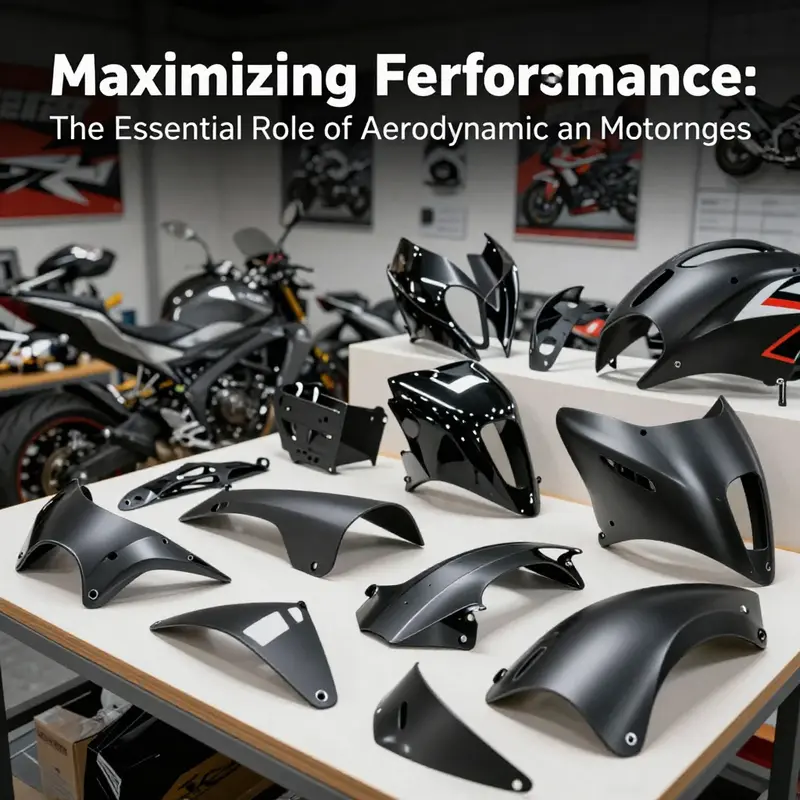
The way a motorcycle cuts through air is a conversation between form and motion, a dialogue that begins at the front wheel and continues over the rider’s shoulders, into the tank and along the tail. The aerodynamic fairing is more than a contour on plastic; it is a carefully shaped partner that channels rushing air into a smooth, coherent flow. Aftermarket enhancements in this space are not merely cosmetic upgrades. They are tactical choices that alter drag, stability, and rider endurance at speed. The philosophy behind these modifications is simple at heart: when airflow can be managed with predictable precision, a bike becomes steadier, more efficient, and less exhausting to ride for hours on end. The practical effect is often measurable in the way the motorcycle behaves at highway speeds, where the wind becomes a passive force rather than an active rider against which one must brace.
To appreciate what aftermarket fairing enhancements seek to accomplish, it helps to picture the air as a living medium that responds to shape. A well-designed fairing shields the rider and engine from the most disruptive portions of the wind, guiding air in a way that reduces turbulence behind the rider’s torso and along the bike’s surface. This smooths the boundary layer, lowers pressure drag, and can even influence the way the motorcycle trims to the road as speed climbs. The result is not a single-performance spike but a broad, practical improvement in efficiency, stability, and comfort. Riders who frequently push beyond moderate speeds report that a refined airflow reduces helmet buffeting, minimizes wind gusts that tug at the rider’s chest, and makes long rides feel less taxing on the upper body. In the arc of a day’s ride, those small benefits compound into a noticeable uplift in fatigue resistance and sustained control.
A principal consideration in aftermarket aero work is integration. Stock fairings stem from a deliberate balance of aerodynamics, access, cooling, weight distribution, and manufacturing cost. Aftermarket designers facing this landscape must respect those constraints while pursuing incremental gains. It is not enough to add a more aggressive profile or a taller screen; the modification must work with the bike’s geometry, the rider’s posture, and the engine’s cooling demand. A well-matched kit preserves, and sometimes enhances, the original intent of the motorcycle: a balanced, predictable ride at the speeds where wind noise, drag, and turbulence become meaningful. This means that the most successful aftermarket options sit close to the contours of the frame, fill gaps that would otherwise pull air away from the intended flow paths, and avoid creating new turbulence pockets behind the rider. In practice, that translates to a fairing system that looks integrated, not tacked on, with brackets and joinery selected for stiffness and durability while remaining serviceable for routine maintenance.
Among the aftermarket families, fairing kits are the most common starting point. A kit typically includes upper and mid sections that enclose the rider’s torso and the engine’s upper regions, sometimes extending to the lower fairing to guide airflow along the sides of the bike. The appeal of a full fairing package is clear: a single, cohesive silhouette that minimizes drag across a broad spectrum of speeds. Yet a full fairing demands a more careful fitment, as it must align with the headlamp architecture, mounting points, and surrounding trim. For riders who prize maintenance access or a lighter footprint, half fairing solutions or front fairings present an attractive compromise. These options deflect wind over the upper body and chest while preserving easier access to the engine, radiators, and wiring. The choice between full and partial fairings is as much about riding style as it is about aerodynamics. A sport-focused rider chasing maximum highway stability might favor a complete conversion, while a sport-touring enthusiast who covers long miles may opt for a streamlined upper shell that preserves serviceability and versatility.
In the realm of airflow management, wing deflectors and front fairings occupy a special niche. Winglets, when designed to work with the fairing’s curvature, can create downforce at higher speeds, nudging the bike deeper into the wind’s passing stream and stabilizing the front end. Front fairings, meanwhile, sculpt the initial contact between air and the bike, setting the tone for how the flow travels over and around the chassis. These components are typically built from durable composites that resist weathering and impact, while maintaining the rigidity required to hold their shape under load. The material choice is not merely a matter of weight; it is a factor in dimensional stability and durability, ensuring the fairing maintains its geometry through road vibrations, wind, and temperature swings. Carbon fiber, fiberglass, and advanced blends often populate the upper tiers of aftermarket offerings, each with its own balance of stiffness, weight, and cost. The decision is seldom purely about reducing drag; it is about preserving the feel of the bike’s steering and the rider’s ability to place the front wheel with confidence, even when exposed to gusting crosswinds.
The performance story of aftermarket fairing enhancements is not only about drag numbers. It is also about how air interacts with the rider’s body and the motorcycle’s mass distribution. As air flows around the rider, it can form turbulent wake zones that induce subtle, persistent buffeting or alter the perceived weight transfer during braking and cornering. A thoughtfully designed fairing reduces those disturbances, smoothing the transitions between straight-line cruising and cornering. The rider senses this as steadier front-end behavior and, over time, a reduction in the need to fight against the wind. In the fastest degrees of travel, where every mile per hour counts, the stability gained from cleaner airflow translates into improved tire feedback, more linear throttle response, and a greater sense of control when larger gusts influence the bike’s path. This is why many riders who are not chasing outright top speed still find aftermarket aero enhancements worthwhile; they create a more comfortable, confident ride across the throttle’s entire range.
Aesthetics always play a part, even when function dominates. Customization options—color, finish, texture—let owners tailor the look to their bike’s identity while preserving the performance gains. A matte black or vivid finish can emphasize the lines of the fairing’s silhouette, reinforcing the impression of speed even when the machine is at rest. The value of aesthetics here is not merely personal taste; it helps the rider feel that the upgrade belongs to the motorcycle as a whole, rather than appearing as an add-on. A cohesive appearance can also reflect the rider’s attention to maintenance and care, signaling to other riders and onlookers that the aero upgrade is a thoughtful, well-appointed modification rather than a quick cosmetic patch.
From an installation perspective, aftermarket fairing enhancements are designed to be accessible to a wide range of owners. Many kits are marketed as plug-and-play for common mounting points, with standard hardware and instructions that minimize the need for specialized tools. The process often involves removing factory panels to attach brackets, aligning parts for proper clearance around the headlight area, mirrors, and the radiator, and then securing the new pieces with bolts that are easy to reach. The goal is to achieve a precise fit, avoiding gaps or misalignments that could promote unwanted airflow separation. While the installation can be a straightforward weekend project for a mechanically inclined rider, it is wise to follow torque specifications and ensure no interference with electrical wiring or sensor housings. A well-installed kit feels almost like the bike came with the aero upgrades from the factory, reinforcing the sense that the modifications were part of a deliberate, integrated stewardship of performance rather than a hasty add-on.
Riders who seek the largest ecological and experiential gains often explore a holistic approach: pairing aero upgrades with compatible suspension tuning, proper tire choice, and, where relevant, exhaust and climate handling that keep the engine within its efficient operating envelope. The synergy between upgraded fairings and other performance-oriented components can amplify the impact beyond sheer drag reduction. By aligning airflow with the chassis’s natural dynamics, these riders experience steadier straight-line stability, more predictable responses through mid-corner transitions, and smoother engine torque delivery at sustained speeds. The cumulative effect is a bike that feels more composed at the speeds where wind becomes a real counterforce, and less tired after long sessions on the road.
For riders who value accessible customization and broad compatibility, the marketplace offers a spectrum of options designed to fit a wide range of brands and models. This versatility allows enthusiasts to pursue personal style without sacrificing core performance goals. When evaluating options, it is wise to weigh the balance between cosmetic appeal and aerodynamic merit, ensuring that any visual upgrade does not undermine the flow paths essential for the intended effects. The question is not simply “how much drag can we shave away?” but rather “how does this configuration influence the bike’s behavior over the range of speeds and riding scenarios the rider actually experiences?” The answer lies in thoughtful selection, precise fitment, and a rider’s willingness to test and adjust the setup to their local conditions and riding priorities.
In your search for a practical and aesthetically satisfying upgrade, consider exploring the broader ecosystem of fairing options that suit your bike’s geometry and your riding goals. A curated collection of components can provide a balanced pathway toward improved aerodynamics, while respecting the bike’s original design language. For readers who want a straightforward starting point to examine compatible kits and the stylistic implications of a fairing refresh, a helpful reference is the general Honda fairings collection, which showcases a range of upper-shell configurations and mounting strategies that align with common sport-oriented frames. This resource illustrates how an aftermarket line can be harmonized with existing geometry, reinforcing the idea that the most successful aero projects are those that respect and extend the bike’s native design language rather than overpower it with an abrupt aftermarket silhouette.
As with any significant modification, the practical payoff rests on thoughtful consideration of riding style, environment, and maintenance habits. The aerodynamic gains are most meaningful when the rider’s habits and the bike’s handling align with the upgraded profile. A rider who spends long hours on highways, where wind loads are persistent and fatigue accumulates with every mile, will likely notice the difference in endurance and stability. Conversely, a rider who uses the bike mainly in urban or mixed conditions may value the ease of maintenance and the visual integration of a well-chosen kit more than marginal performance gains. In either case, the goal remains consistent: to harness the wind’s energy in a way that complements the bike’s dynamics, reduces unnecessary effort, and enhances the overall riding experience. The path from a stock silhouette to a refined aero setup is not only about chasing numbers; it is about translating airflow into a tangible sense of control and confidence on two wheels.
External resources and practical guidance can complement hands-on experimentation. For enthusiasts who want to study the specifics of kit design, mounting strategies, and the interplay between frame geometry and aero elements, broader technical references offer valuable context. External reference: https://www.motomodz.com/cb1300-cb400-fairing-kit
Final thoughts
Aerodynamic fairings are at the forefront of motorcycle design, merging aesthetic appeal with functional necessity. As they significantly impact performance, fuel efficiency, and rider comfort, understanding their design and benefits is crucial for businesses in the motorcycle industry. From comprehensive analysis of full fairings to practical applications of half fairing kits and the advantages of aftermarket enhancements, each aspect offers valuable insights for improving motorcycles. As companies embrace the technological advances in fairings, they are poised to meet the growing demands of riders seeking superior performance. Investing in quality aerodynamic fairings not only elevates the riding experience but also propels businesses to new heights in an ever-evolving market.