
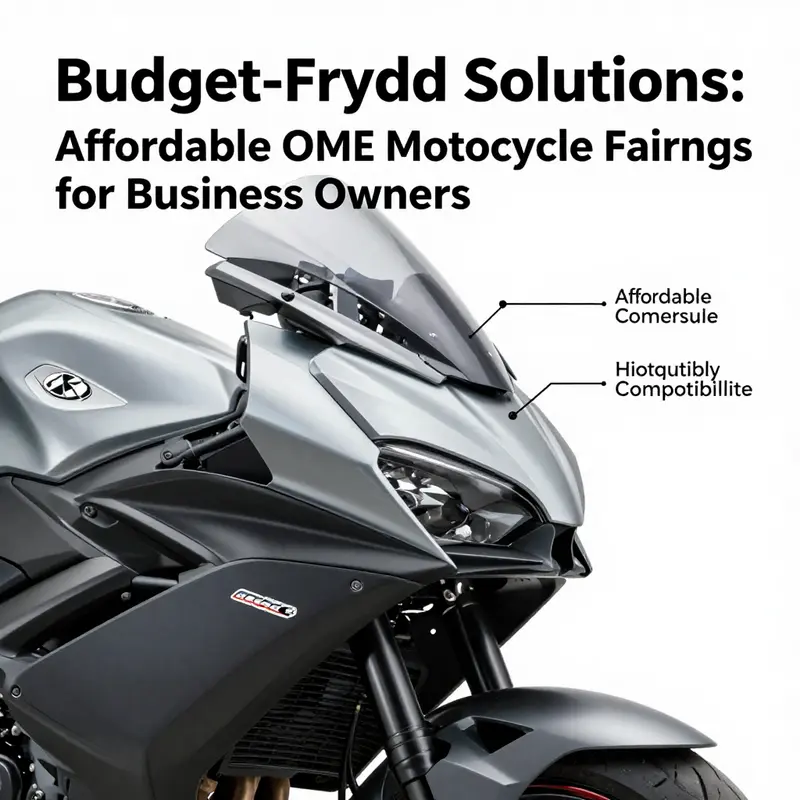
As the motorcycle industry continues to thrive, business owners seek solutions that balance affordability and quality. Affordable OEM motorcycle fairings provide an excellent option for enhancing bike appeal without straining budgets. This article delves into three crucial chapters: understanding compatibility and fitment to ensure customer satisfaction, exploring the material science that guarantees durability and performance, and optimizing sourcing and supply chain management for efficient business operations. Together, these chapters guide you in making informed decisions that cater to today’s market demands.
null
null
Rugged Precision at a Fair Price: Material Science Behind Affordable OEM Motorcycle Fairings
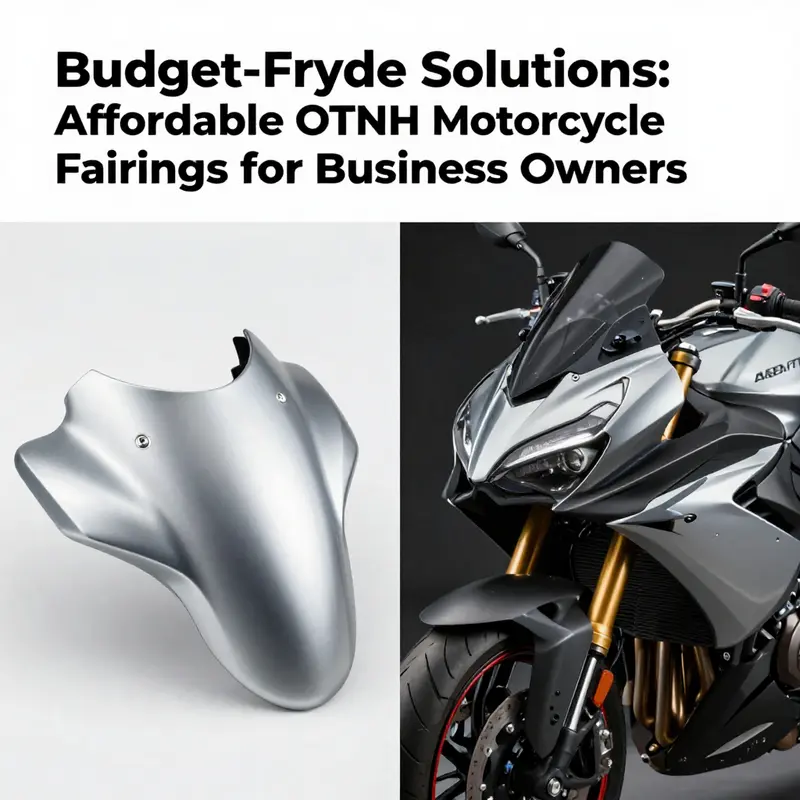
A bike’s silhouette is more than style; it is a carefully engineered balance of aerodynamics, protection, and durability. When riders search for affordable OEM-compliant fairings, they quickly learn that the true ceiling of value is not found in the sticker price alone, but in how material science and manufacturing choices translate into fit, finish, and long-term performance. The centerpiece of this balance is the injection-molded ABS plastic that underpins many affordable, OEM-standard fairings. ABS, or acrylonitrile butadiene styrene, is a thermoplastic that brings together stiffness, impact resistance, surface gloss, and UV stability in a way that suits the harsh realities of outdoor use. It behaves predictably across temperature swings, resists cracking from minor impacts, and accepts a high-gloss surface that can mimic the factory look with fewer post-production steps. This combination makes ABS a workhorse material for riders who want fairings that look right, fit right, and hold up under the sun, rain, and occasional mishandling on a garage floor or track day paddock.
The truth about affordable OEM-compliant fairings begins with the molding process. Injection molding is a mature, scalable technology that enables precise replication of complex aerodynamic shapes. When a manufacturer is producing thousands of identical fairings, injection molding delivers uniform wall thickness, intricate curves, and consistent surface texture. The process reduces variability that once plagued hand-laid composites and older molding approaches. For riders, that consistency translates into reliable fitment across model years and minor revision changes. It also means that a single tooling setup can serve multiple trim levels or regional variants with the same fundamental geometry. In other words, you can achieve a factory-grade silhouette without paying for a bespoke, high-cost composite. This economy of scale is central to why affordable fairings can deliver OEM-standard fitment at a fraction of the cost of bespoke or high-end aftermarket options.
In practice, the modern ABS used for motorcycle fairings is not just a generic plastic. Formulations often include carefully selected additives that upgrade performance without inflating price. Impact modifiers help ABS resist cracking during sudden impacts or when the bike experiences a hard tip-over on a driveway seam. UV stabilizers shield the surface from sun-induced degradation, preserving gloss and color over years of exposure. Heat stabilizers maintain stiffness and dimension during hot summer rides, while anti-scratch and anti-abrasion additives help the surface resist minor abrasions from debris and road grit. These additives are blended into the resin before molding, so they become integral to the finished part rather than being layered on later. The result is a fairing that can look like it rolled off the showroom floor and endure daily use with minimal cosmetic deterioration.
The surface finish is another critical axis of value. A factory-like gloss is not achieved by accident; it is the outcome of resin chemistry, mold design, and post-mold processing. ABS surfaces can be formulated to accept primer and clear coats that mimic OEM paint depth and brilliance. When a fairing is painted to match a model’s color scheme, the paints and clear coats interact with ABS’s surface chemistry to produce a homogeneous, durable finish. In many cases, the colorfastness and gloss retention of ABS are comparable to more expensive materials, simply because the resin’s rigidity and surface energy invite uniform paint adhesion and durability. The economics of this approach become clear when you consider the lifecycle of a rider’s fairing: a low-cost, quickly repaired or repainted component can maintain its appearance for years with routine maintenance, lowering the total cost of ownership.
A fundamental driver behind the affordability of OEM-compliant ABS fairings is the precision that modern plastics manufacturing enables. The injection-molded approach supports tight tolerances, often down to a fraction of a millimeter. In well-controlled facilities, tolerances of ±0.2 mm are achievable for critical features such as mounting bosses, bolt holes, and edge radii. This precision is not a cosmetic luxury—it directly influences fitment. When mounting points line up with the bike’s frame mounting hardware and the adjacent panels align without force, installation becomes straightforward and durable. Poor tolerances, by contrast, can cause gaps, misalignment, or stress concentrations that lead to cracking or paint chipping over time. For models in the mid-to-high-volume segments, maintaining tight tolerances is both a technical requirement and a cost discipline, ensuring compatibility across a fleet of similar models and model years. In practice, the combination of ABS chemistry and precision molding yields a product that behaves like an OEM partner—reliable, predictable, and consistent.
To understand why this matters for both riders and procurement teams, it helps to consider the broader supply chain. The most cost-effective and high-quality options for affordable OEM-compliant fairings often originate from injection-molded ABS produced in established manufacturing hubs. Regions with deep capabilities in precision plastic injection molding, tight tolerances, and scalable export experience can deliver parts that adhere closely to OEM specifications. In a global market, this means manufacturers can achieve a confluence of price, performance, and speed that smaller shops or materials-only suppliers struggle to match. While the chemical and process science underpinning ABS remains constant, the real-world differences arise in mold design, control of resin quality, and process monitoring. The upshot is clear: you don’t have to sacrifice compatibility to stay within budget. A well-engineered ABS fairing can be a faithful stand-in for a factory part, providing the same fit, the same surface quality, and the same functional longevity at a more accessible price point.
Sourcing strategies matter, especially for B2B buyers and procurement managers whose success is measured in part by lead times, minimum orders, and warranty coverage. Guangdong Province and Zhejiang Province in China have earned reputations as hubs of precision plastic injection molding, with facilities that combine aggressive cost structures with robust process controls. Guangdong, home to major manufacturing ecosystems in cities like Guangzhou and Shenzhen, emphasizes high-volume production and export-ready capabilities. Zhejiang, including Ruian and Taizhou, has long specialized in small and mid-size automotive components, where tight tolerances and efficient CNC post-processing are a given. For buyers, this means a straightforward path to affordable yet reliable fairings through established suppliers who can replicate OEM geometries without sacrificing the finish. The critical caveat is diligence: verify supplier track records, check export compliance, and confirm that the parts have been tested for fitment on the specific model and year you intend to service.
Among the practical signals of a trustworthy supplier are documented experience producing parts for recognized international brands, transparent material specifications, and clear warranty terms. When a supplier demonstrates a track record of supplying injection-molded ABS components to the aftermarket or directly to OEMs under contract, it becomes easier to trust that the fairings will meet the functional expectations of the model they’re designed to fit. In the context of affordable OEM-compliant fairings, that trust is earned through repeatable performance: consistent surface finish, accurate color matching, robust attachment points, and durable resistance to sun exposure and impact over time. The economics of this arrangement play out in practical terms: cost per unit declines with higher volumes and longer production runs, while the quality controls ensure that the parts will not require frequent returns or rework. The net effect for riders is a more reliable, affordable option that doesn’t feel like a compromise.
To illustrate how these factors cohere in real-world buying decisions, consider the practical steps a rider or shop might take when selecting ABS fairings. First, confirm compatibility by model, year, and sub-model. Even slight variations in a bike’s fairing design across years can create misalignment. Second, verify the material specification—ABS with UV stabilizers and impact modifiers will typically outperform basic blends in long-term outdoor use. Third, assess the supplier’s reputation and export readiness—from documentation and certifications to the responsiveness of customer support. Fourth, evaluate lead times and MOQs to ensure the parts fit within project schedules and budget constraints. Finally, consider the finish and color options. ABS-based systems respond well to factory-like finishes when matched with appropriate primers and topcoats, delivering an aesthetic that mirrors the OEM’s gloss and depth while remaining cost-efficient to reproduce at scale.
The educational thread tying all these considerations together is that the material choice—ABS—does not merely stand in for a premium composite. It is a deliberate design decision that aligns performance with assembly economics, paint compatibility, and lifecycle resilience. ABS’s predictable behavior under heat, sun, and impact, paired with advanced molding techniques and a disciplined global supply chain, makes affordable OEM-compliant fairings a practical reality for riders who want factory-faithful appearance and fit without the premium price tag. In sum, the story of affordable OEM fairings is a story of intelligent material science meeting scalable manufacturing. It is the convergence of chemistry, process control, and logistics that enables a rider to purchase a panel that looks right, fits right, and lasts.
For model-specific fitment references and a sense of the broader ecosystem of affordable options, explore the Honda fairings collection, which demonstrates how variations in form can be matched with one reliable ABS substrate and a consistent finishing approach. This channel provides a window into how different bike families translate the same material platform into tailored, OEM-like results across generations and design evolutions. Honda fairings collection.
The dialogue between material science and practical riding needs does not end with a single material or a single process. It extends into how a rider pair can navigate color, texture, and finish choices that maintain a machine’s identity while delivering the shielded, aerodynamic profile that fairings are meant to provide. The modern ABS formulation, with its stabilized surface chemistry and predictable molding behavior, makes the dream of affordable OEM-compliant fairings not only feasible but reliable. As with any component that endures the elements, the true measure of success lies in repeat exposure: daily commutes, occasional track days, and the incidental roughness of life in motion. The ABS-based solution offers a balance that keeps the bike looking sharp and performing as expected, with the confidence that a factory-like fit will persist through the miles.
In the end, the affordability story is not about sacrificing fidelity. It is about embracing a material platform that is precisely engineered to match the demands of modern motorcycling. The synergy of compatible geometry, robust surface performance, and disciplined manufacturing creates fairings that are accessible to a broader audience while honoring the standards riders expect from OEM-level components. The chapter that follows will extend this thread by exploring how these materials behave under specific environmental stresses, and how informed maintenance choices can extend the life and appearance of ABS fairings without eroding their value.
External resource for deeper material science context: Motorcycle Plastics Guide: What They’re Made Of & How to Choose, which provides a broader view of plastics used in motorcycles and how to evaluate them for durability and performance in real-world riding conditions. https://www.motorcycle-accident-lawyer.com/motorcycle-plastics-guide/
Affordable OEM-Standard Fairings: Sourcing and Supply-Chain Strategies for Cost-Effective, Fit-Driven Replacement Panels
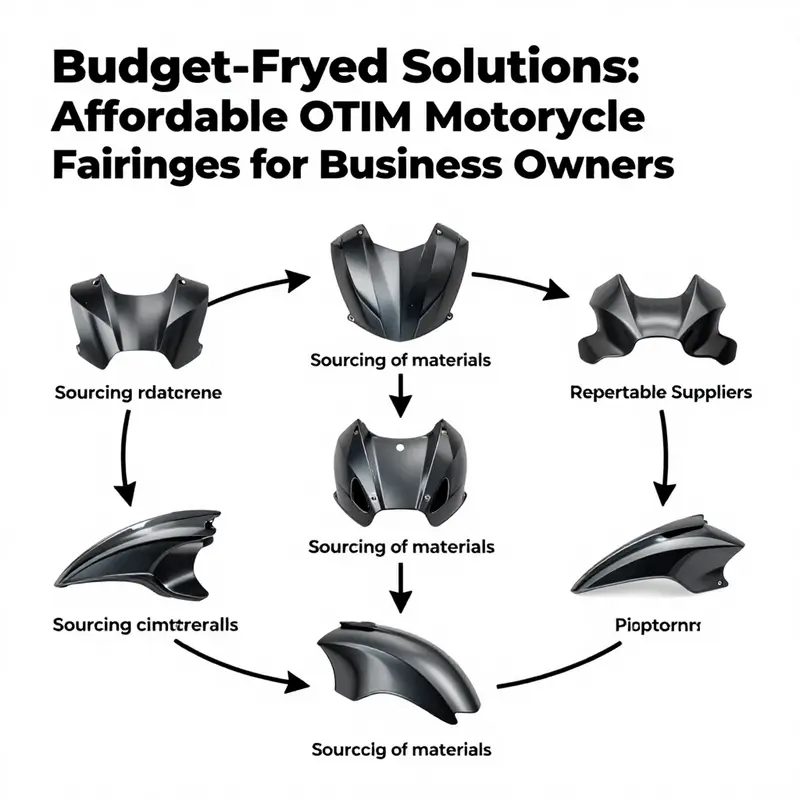
Sourcing affordable yet OEM-standard motorcycle fairings requires orchestrating a reliable supply chain that balances cost discipline with strict quality and fitment control. Riders and procurement professionals alike confront a landscape where lower sticker prices can mask hidden costs in misfit panels, delayed deliveries, or inconsistent finishes. The discipline, therefore, is not merely choosing a cheap part, but curating a network of suppliers and logistics that consistently deliver fairings that align with the dimensional tolerances, surface integrity, and regulatory expectations that define true OEM compliance. The path to affordability begins at material choice and manufacturing discipline, then widens into supplier capability, export readiness, and the cadence of production and logistics that make a replacement fairing viable for a rider who needs reliable service without the premium price tag that often accompanies factory originals.
At the core of affordable OEM-compliant fairings lies injection-molded ABS plastic. This material has become the benchmark for cost-efficient, durable fairings that still provide a factory-like surface finish and robust impact resistance. ABS offers a predictable balance of rigidity and give, allowing fairings to withstand road provocation while keeping weight at a practical level. The mold design and process controls determine surface texture, color stability, and the ability to reproduce the subtle curve geometry that corals the fairing into a seamless assembly with adjacent parts. For riders who want a fairing that fits, looks right, and holds up to everyday use—without paying the premium charged by brand-backed OEM variants—the ABS route is the most credible foundation. That foundation becomes even stronger when the manufacturer has a proven export pedigree and a track record of working with distributors that understand the unique demands of cross-border sales. Warranty alignment, post-sale support, and clear documentation become credible markers of value only when the supplier operates within a transparent export framework and maintains consistent quality control metrics across batches.
The geographic dimension of sourcing plays a critical role in cost control, lead times, and risk management. In China, certain regions have evolved into specialized ecosystems for plastic injection molding and fairing fabrication, each contributing distinct strengths to an affordable-OEM equation. Guangdong Province offers logistical advantages, given its proximity to major export ports and well-developed distribution networks. This geographic cluster enables rapid shipping, faster replenishment cycles, and, in many cases, more predictable transit times to North American and European markets. Jiangsu and Zhejiang bring precision engineering and advanced materials access, alongside robust CNC capabilities that can sustain tight tolerances essential for proper fitment on a broad range of models. These zones also benefit from mature supplier ecosystems, where manufacturers routinely maintain ISO 9001 quality systems, ergonomic process controls, and traceability that supports batch-level quality assurance. Having a single-source or closely aligned set of suppliers across these regions reduces the friction that often accompanies complex imports, where a misalignment in documentation or a lapse in quality control can erase any price advantage through return costs, rework, or warranty claims.
Chongqing, historically celebrated as the motorcycle production heartland, offers a different sort of value: vertical integration and streamlined production cycles that can yield significant cost savings without sacrificing the core requirements of OEM-equivalent performance. The ability to coordinate finishing, post-processing, and assembly in a tightly coupled environment translates into shorter lead times and easier synchronization with the rest of the supply chain. For buyers focused on aftermarket parts that still seek OEM-like fidelity, Chongqing’s ecosystem reduces the risk of miscommunication between design intent and final product. The regional strength lies not only in scale but also in the depth of experience, where manufacturers routinely operate with internationally recognized quality expectations and export-ready documentation. A well-managed supply chain built around this hub benefits from clearer communication channels, more reliable MOQs that align with production planning, and sharper pricing dynamics, particularly for large-volume purchases or steady restock cycles.
Beyond raw materials and manufacturing locales, the selection of suppliers hinges on rigorous due diligence. A dependable supplier should demonstrate compliance with international and regional standards that govern automotive components, even when those standards apply to non-vehicle contexts. ISO 9001 is a foundational signal of process quality, while country-specific certifications such as CCC in China, EPA standards in relevant markets, and Europe’s EURO 5 expectations map the regulatory terrain that a given fairing might encounter through its lifecycle. A concise and transparent quality system, with traceability for each batch, provides a buyer with the confidence needed to scale procurement while maintaining consistent performance. This is not a mere checkbox exercise; it directly impacts post-sale issues, returned parts, and the level of customer satisfaction that can be achieved in a competitive aftermarket market. A supplier that publishes a clear defect rate, a documented corrective action process, and a straightforward returns policy reduces the friction of onboarding and ongoing procurement, enabling a smoother, more predictable supply chain.
To translate these capabilities into a practical procurement strategy, many buyers adopt a tiered network approach. Core production may be concentrated in one or more robust facilities renowned for consistent finish, accurate fit, and repeatable tolerances. Complementing this core are design-minded partners who contribute advanced tooling, refined surface textures, or improved windscreen geometries, all while ensuring the overall system remains harmonized through shared design intent. The tiered approach helps balance cost against performance: the most critical fitment interfaces—where gaps, misalignments, or eclipsed panel edges can disrupt aerodynamics or rider protection—receive the strongest engineering emphasis and the tightest quality control. Less critical surfaces—where minor cosmetic variance is acceptable—can absorb variations that still meet official standards, preserving overall affordability without compromising safety or function.
A key operational discipline in this ecosystem is maintaining and utilizing an up-to-date compatibility database. For those evaluating aftermarket fairings, the ability to cross-reference model makes, years, and variant specifications with verified fitment data is a decisive factor in avoiding post-purchase headaches. Compatibility certainty reduces the risk of returns and rework, which is particularly important for riders making a single conversion or for small-scale shops stocking multiple fits. In addition to fitment data, root documentation about material grades, wall thickness, and sealing interfaces helps installers understand where additional reinforcements or protective coatings might be warranted to ruggedize a fairing for ambitious riding. This level of transparency—material specs, tolerances, finish options, and installation guidance—creates a perception of reliability that resonates with both individual riders and B2B buyers who aim to minimize after-sales concerns.
Lead times, minimum order quantities, and supplier responsiveness are more than scheduling concerns; they shape cash flow, inventory planning, and the ability to respond to market dynamics. Guangdong and Jiangsu-based suppliers frequently offer favorable MOQs for bulk purchases, but smart buyers structure orders to align with project timelines, rather than chasing the lowest unit price alone. When MOQs are well matched to demand forecasts, the supply chain remains lean, reducing inventory carrying costs and the risk of obsolescence. In the end, the lowest cost per fairing is not the sole objective; rather, the most favorable trade-off is the combination of price, reliability, and speed—speed in response to demand shifts, speed in production ramp-ups, and speed in delivery to the customer who expects a timely replacement.
The practical realities of fairing procurement extend into the realm of windshields and ancillary components. A February 2026 update highlighted the necessity that windshields meet strict optical and mechanical standards because of how they influence visibility and rider safety. It is not enough to produce a fairing shell that looks right if the windshield complement does not perform optically or structurally as required. As such, buyers should vet not only the primary shell’s geometry but also the compatibility of associated components with the materials and joining methods used in the panel system. The most credible suppliers often provide documented test results, mechanical tolerances, and even example assembly photos that illustrate how the fairing integrates with the windshield, fasteners, and mounting brackets. This level of documentation streamlines installation and reduces the likelihood of misfit or damage during assembly, which in turn supports a smoother ownership experience.
For readers seeking a practical reference point that demonstrates how credible suppliers present fitment and material data, a well-regarded U.S.-based source offers detailed fitment guides, material specifications, and customer reviews. The value of such a resource is not merely in the price it lists but in the clarity with which it communicates how an affordable, OEM-compliant option translates into real-world performance. The presence of a transparent catalog, updated compatibility information, and accessible support channels becomes a proxy for reliability in the broader market. That reliability—paired with a disciplined sourcing approach—enables businesses and riders alike to pursue affordability without surrendering quality, warranty protection, or long-term durability. External resources can provide valuable corroboration and additional best practices for readers who want to deepen their understanding of OEM-compliant fairings within the aftermarket ecosystem. External resource: https://www.motorcyclefairingsusa.com/.
Final thoughts
In summary, affordable OEM motorcycle fairings present a promising avenue for business owners aiming to excel in a competitive market. By prioritizing compatibility and fitment, leveraging advanced materials like injection-molded ABS, and implementing efficient sourcing strategies, businesses can offer quality products that appeal to cost-conscious customers. Making informed decisions in these areas not only enhances your inventory but also builds trust and satisfaction among your clientele, leading to long-term success.