
As the Australian motorcycle market thrives, business owners are capitalizing on the growing demand for aftermarket motorcycle fairings. These components are not just about aesthetics; they represent a fusion of performance enhancement, customization, and rider safety. In this comprehensive exploration, we will delve into the key suppliers and logistical advantages, the importance of material quality, and the latest design trends shaping the preferences of Australian riders. Each chapter is designed to provide actionable insights that can help elevate your business strategy in this dynamic market.
From Guangdong to the Outback: Navigating Australia’s Market for Aftermarket Motorcycle Fairings
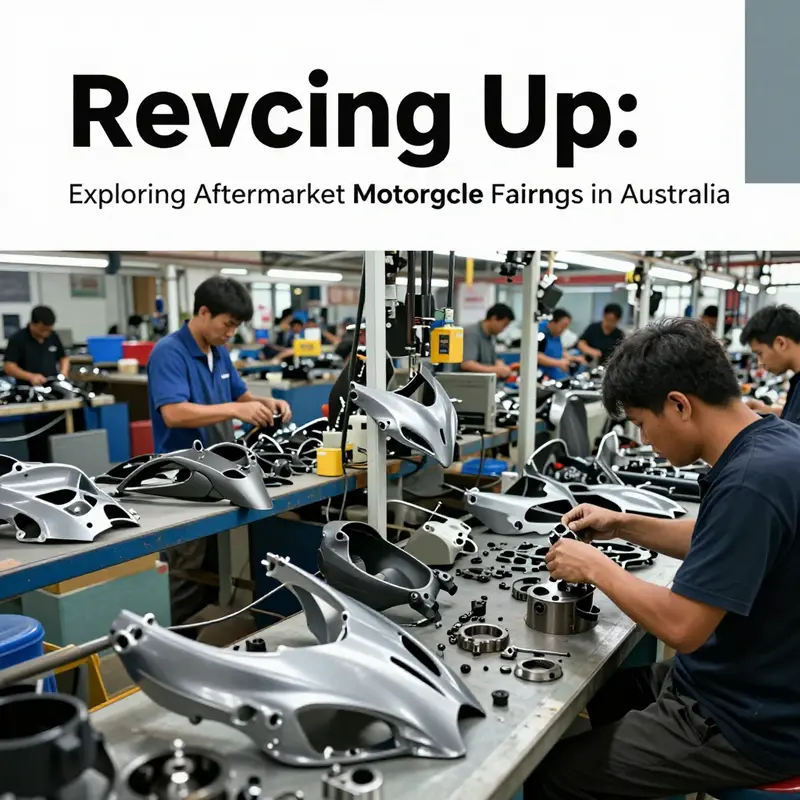
The Australian riding landscape continues to embrace aftermarket fairings as a practical and expressive way to tune performance, comfort, and style. Across cities and highways, riders—from quick urban commuters to endurance-minded tourers—seek fairings that combine improved aerodynamics, reduced wind fatigue, and a visual statement that mirrors their riding ethos. The chapter that follows weaves a coherent narrative about how Australia sources these components, the pressures of supply chains, and the strategic choices that distributors and repair shops make to balance quality, price, and reliability. It is a story of continents bridged by polymers, paint booths, and the real-world constraints of custom builds that push every component to its limits.
In this context, the origin of aftermarket fairings matters more than ever. Asia, and China in particular, has become the linchpin of global production for motorcycle bodywork. Guangdong province, with its adjacent hubs in Guangzhou and Foshan, has built a specialized ecosystem that includes hundreds of factories focused on polymer injection molding, UV-resistant coatings, and automated painting processes. The result is an ecosystem where scale and capability translate into faster turnaround times and deeper options for customization. Lead times that once stretched by weeks can now shrink by nearly half for some suppliers, thanks to vertically integrated supply chains, standardized parts, and near-end-to-end production pipelines. For Australian buyers, this is not just about price; it is about predictable schedules and the ability to meet tight shop calendars when a race-ready or travel-ready build needs to be completed on a specific timeline.
The logistical advantages extend beyond production floors to the dockside and railway lanes of global shipping. A large portion of the Chinese market’s export activity moves through established channels that offer Delivered Duty Paid (DDP) terms, bringing Australian importers a much clearer view of total landed cost. Major ports such as Nansha and Shekou play pivotal roles in routing finished fairings to Australian distributors and repair shops, with carriers and freight forwarders standardizing documentation to minimize delays at customs. While this logistical framework is not a universal guarantee, it represents a robust baseline that reduces the typical friction points of overseas procurement. In practice, when a business talks about cost, it is not just the price of the raw part that matters; it is the sum of production capacity, quality assurance, paint match consistency, packaging integrity, and on-time delivery.
Model-specific fitment is another critical dimension in the Australian market. When a shop or fleet manager sources for a particular model, the demand is often for OEM-grade replacements or parts that can approximate the exact contours and mounting points of a stock fairing. Platforms like Alibaba.com have become a common entry point for B2B buyers who need to verify supplier credentials, track records, and compliance with international standards. Among the more established suppliers, profiles that highlight high customer ratings and transparent product specifications can provide a degree of reassurance in an otherwise complex procurement exercise. For example, a supplier with a demonstrated history of producing model-specific panels can be a practical choice for a shop that serves a mix of late-model and older machines. The emphasis is on precision engineering and the ability to provide a close fit with minimal on-site modification, thereby decreasing labor costs and installation time.
The material conversation is equally consequential. Original equipment manufacturers often rely on ABS plastic for fairings due to its balance of rigidity, impact resistance, and weather performance. In aftermarket circles, a spectrum of reinforced polymers and composites now competes with OEM-grade ABS on a cost/performance axis. For many Australian riders, the appeal lies in getting a competitive blend of durability and affordability without sacrificing the structural integrity required for high-speed riding or rough-road exposure during touring. This is particularly important for full fairings, which demand consistent panel-to-panel alignment and weather sealing to protect riders and engines from wind-driven debris and moisture ingress. Nevertheless, some builders prefer partial fairings or clip-ons to achieve a leaner aesthetic or to simplify customization. These lighter configurations can reduce drag and weight, improve handling at certain speeds, and offer quick-change options for show-and-go events or track days.
A consistent theme across design choices is the performance payoff that fairings deliver beyond aesthetics. Aerodynamics matter; a well-fitted full fairing maintains cleaner airflow around the rider and the engine, contributes to smoother high-speed stability, and can reduce wind noise—benefits that translate directly into rider comfort and fuel efficiency on long rides. For touring setups, robust protection from wind and debris matters, and the right fairing geometry can limit fatigue on neck and shoulder joints over long miles. For track-focused builds, rigidity and precise fit become non-negotiable, because even small misalignments can ripple into handling inconsistencies and sealing challenges. This is where the evaluation of suppliers becomes as important as the procurement of parts.
In Australia, the procurement process often sits at the intersection of local capability and international manufacturing strength. Local distributors and importers—such as established wholesalers and dedicated workshop suppliers—play a foundational role by bridging the gap between overseas factories and Australian customers. They provide a critical service: translating global supply capabilities into supply chain reliability on home soil. They offer not only stock and delivery, but also support in terms of product specifications, return policies, and after-sales services. The result is a procurement ecosystem in which a shop can balance its inventory with a mix of in-stock components and a pipeline of back-ordered OEM-grade replacements sourced from overseas manufacturers.
Direct sourcing from overseas manufacturers remains a viable option for shops that want to control quality and timelines. The key is a disciplined approach to supplier selection: how well a factory can meet forecasted demand, the quality of materials used, the precision of technical specifications, and the credibility of certifications and audits. In this respect, the model-specific example becomes instructive. A direct sourcing program that targets a well-known, model-specific line must align with stringent fitment requirements, and it benefits from a supplier that can demonstrate repeatable, high-precision outcomes and robust packaging to survive long voyages. Such a program often relies on verified platforms and a network of vetted Chinese suppliers, where a track record of performance helps reduce the risk of misfit or delayed shipments.
The sourcing journey becomes clearer when you map it against two practical pathways. The first is leveraging local Australian suppliers who bring established logistics arrangements and familiar return policies, thereby delivering speed and convenience for urgent needs. The second is engaging with overseas manufacturers through trusted intermediaries who offer model-specific components with proven fitment and competitive pricing. Each path has trade-offs. Local suppliers may provide faster lead times and stronger accountability on paperwork, but price competition with overseas manufacturers may be more intense. Direct overseas sourcing often yields cost advantages and broader customization options, but it requires more rigorous supplier evaluation, a tighter logistics discipline, and a clear plan for quality control and after-sales support.
A crucial element in supplier evaluation revolves around production capacity and technical specifications. For high-volume demand, a factory’s ability to ramp up production without compromising panel accuracy becomes a deciding factor. For model-specific parts, exact fitment is the difference between a seamless installation and a flood of on-car modifications. Verification should extend to material sourcing, including resin types, fillers, and any reinforcing fibers used in composite options. Certifications can help guarantee parity with defined standards, while transparent return policies protect the buyer against defects and misrepresented product claims. Real-world performance data, when available, provides a pragmatic basis for decision-making, moving conversations from glossy brochures to trackable outcomes on the road or track.
In the Australian market, two practical local sources frequently appear in procurement discussions. One is a broad OEM catalog complemented by a reliable distribution and logistics network, enabling delivery within roughly a week or two through standard express carriers. The other is a logistics specialist capable of coordinating large-volume shipments and handling border clearance efficiently. These players are not about selling a single item; they are about orchestrating a supply chain that keeps a workshop on schedule and a rider on the road. The value they provide is not merely the part itself but the confidence that the part will arrive with accurate fitment, proper finish, and durable packaging. When combined with model-fit considerations, the procurement approach becomes a careful balancing act of timing, cost, and reliability.
For buyers who want to explore direct overseas sourcing while still maintaining oversight over quality, digital marketplaces and supplier verification services offer a practical route. These platforms can connect buyers with vetted Chinese manufacturers who specialize in aftermarket fairings and related body components. The critical step is to attach a rigorous qualification process to each supplier: a review of lead times, production capacity, and material credentials; verification of a clear product specification sheet; and an understanding of the return or warranty terms. In practice, this means aligning production calendars with the shop’s installation schedules, ensuring that paint finishes can be matched or color-matched to the rest of the bike’s scheme, and confirming that the mounting points align with the bike’s frame and subframes. When done thoughtfully, the result is a procurement workflow that minimizes downtime and yields a predictable supply stream for a fleet that depends on timely, precise, and cost-effective parts.
Throughout this process, the question of model-specific fitment remains central. An example like a 2003 GSXR 1000 fairing, though only one among many possible models, captures the essence of what buyers must validate. Will the replacement panel align with the mounting points, preserve the original aerodynamics, and maintain compatibility with the bike’s electronics and lighting? Will the paint-ready surface accept a color match that is durable through sun exposure and washing cycles? These questions shape the due diligence checklist that procurement managers use, and they influence both the selection of manufacturers and the negotiation of terms. While it is tempting to pursue the lowest price, the most dependable route for Australian shops is often to couple strong supplier credentials with a robust fitment quality record, verified through real-world installation histories and, where possible, independent performance data.
In the end, successful sourcing in Australia rests on a pragmatic synthesis of local know-how and global manufacturing strength. Local distributors and Australian repair shops add a practical layer of reliability, from stock management to post-sale support and warranty considerations. They translate the complexities of overseas production into a smooth customer experience, preserving lead times and protecting against miscommunication. At the same time, the best overseas partners offer the precision, scale, and innovation that keep Australian builds competitive on both road and track, with a chisel-like focus on fit and finish. The outcome is a market where riders can specify a fairing solution that matches their bike’s geometry, their performance goals, and their budget. A well-chosen pathway—whether through a local distributor, a direct overseas supplier, or a blended approach—enables Australian riders to accelerate their projects, reduce downtime, and deliver editions that stand up to the demanding conditions of Australian roads and weather.
To summarize in practical terms, a sound sourcing strategy for aftermarket fairings in Australia rests on three pillars. First, align with suppliers who demonstrate capability to meet forecasted demand and who can provide model-specific fitment data, material quality assurances, and transparent certifications. Second, leverage local logistics channels that can quickly move parts through customs and to the workshop with dependable tracking and predictable transit times. Third, maintain a balanced portfolio that combines stock-ready options for immediate needs with a pipeline of overseas-manufactured custom panels for unique builds. When these elements come together, the result is a resilient supply chain that supports both daily maintenance and ambitious customization. This approach is anchored by practical actions: vet suppliers with evidence of performance, use B2B platforms to validate track records, and prefer partners who publish clear product specifications and requestable return policies. The continuity of supply becomes a competitive advantage in an environment where riders demand reliability as a function of freedom on the road.
For readers seeking further context about OEM-style sourcing practices from Australia, a detailed guide offers additional perspectives on parts selection, supplier validation, and the balance between cost and quality. External resource: https://www.australianmotorcyclewarehouse.com.au/guide-to-oem-parts. For model-specific parts and inspiration, you can explore a dedicated catalog such as the GSXR-1000 K9 fairings collection, which illustrates how a well-structured catalog aligns with real-world fitment and finish. Explore the model-specific catalog here: GSXR-1000 K9 fairings 2009-2012.
Built to Last: How Materials Shape Performance and Durability of Aftermarket Motorcycle Fairings in Australia
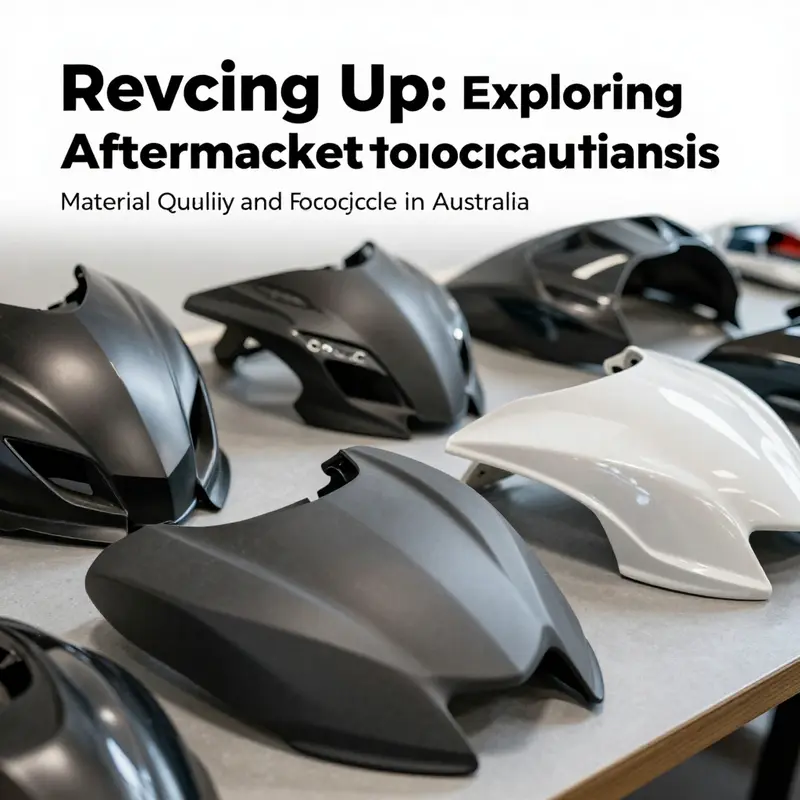
Material choices define how an aftermarket fairing performs on Australian roads. Riders choose fairings for looks and protection. Yet the true value lies in how materials respond to impact, weather, flexibility, and aerodynamic demands. Across Australia, from humid coastlines to arid outbacks, fairings must resist UV, salt, heat, moisture, and road debris. Selecting the right compound and manufacturing process is the single most important factor in achieving long-lasting performance.
Most modern aftermarket fairings fall into a few material families: ABS and modified ABS blends, reinforced thermoplastics, fiberglass-reinforced plastics, polycarbonate variants, and higher-end composites such as carbon fiber or Kevlar-infused laminates. Each option balances weight, cost, impact resistance, and ease of repair. ABS remains common because it yields good impact resistance and straightforward injection-molding production. Reinforced polymers add fillers or fibers to boost stiffness and heat resistance while keeping costs reasonable. Fiberglass and polycarbonate offer different trade-offs: fiberglass brings stiffness and a familiar repair path, while polycarbonate excels at resistance to shattering.
Impact resistance is the top material attribute for many riders. A fairing must absorb energy from minor crashes and stone strikes without catastrophic failure. Materials with high tensile strength and controlled flex are best. Thermoplastics like ABS deform slightly on impact and then retain shape if the force is limited. Polycarbonate bends and flexes far more, absorbing energy rather than cracking. Fiberglass, while stiff, tends to crack under sharp impact; however, it can often be repaired through patching and re-laminating. Manufacturers now blend materials, layering thermoplastic skins over composite cores, to combine toughness with structural rigidity. This hybrid approach reduces repair complexity and extends service life while keeping weight down.
Weather durability matters in Australia. UV radiation causes fading and embrittlement. Coastal salt and humidity accelerate corrosion of metal fittings and can work at seams and fastener points. High daytime temperatures can soften some plastics if not stabilized. Leading suppliers add UV stabilizers and protective coatings to maintain color and resilience. A UV-resistant gel coat or two-stage automotive paint system helps preserve surface gloss and prevent crazing. Sealants at joint areas and stainless-steel or coated fasteners limit salt-induced corrosion. Riders who frequently travel through coastal areas should prioritize fairings with proven UV and salt-spray resistance.
Aerodynamics and stiffness are intertwined. A well-shaped fairing reduces drag, stabilizes the bike at speed, and shelters the rider from wind buffeting. But to realize aerodynamic benefits, the material must hold its designed shape under load and vibration. Excessive flex changes the fairing profile at speed, reducing stability and increasing flutter. Stiff materials or reinforced sections around mounting points preserve aero geometry. Engineers measure flexural modulus and creep properties to ensure the profile remains true across expected stress ranges. For touring and high-speed applications, a stiffer composite with targeted flex zones offers the best combination of comfort and stability.
Surface finish and paint adhesion also depend on base material and process. Injection-molded thermoplastics accept direct painting after a proper primer and adhesion promoter step. Fiberglass typically requires a gel coat followed by sanding and painting. Composite fairings intended for higher performance use are often painted after a clear-coat to protect the laminate. Paint quality affects not just aesthetics, but UV protection and resistance to chemicals like fuel and cleaners. Australian riders should ask suppliers about paint curing processes and whether a protective clear coat with UV inhibitors has been applied.
Fitment is a material-linked performance issue. Precision-fit fairings reduce vibration, lower wind noise, and maintain aerodynamic efficiency. Thermoplastic parts produced in high-tolerance molds usually deliver excellent repeatability. Composite panels made in hand-layup processes require tighter quality control to hit the same fit standards. That is why many buyers seek suppliers who use CNC fixtures and jigs for hole placement and consistent mounting points. Accurate fit reduces the need for shims or re-drilling, and saves time during installation.
Testing methods provide objective measures of material performance. Impact tests, flexural tests, and UV exposure cycles reveal how a fairing will age. Reputable suppliers provide data on tensile strength, elongation at break, flexural modulus, and results from accelerated weathering tests. For Australian conditions, look for materials that maintain at least 80 percent of their original tensile strength after extended UV and heat cycles. Salt-spray tests for at least 24 to 48 hours simulate coastal corrosion on fasteners and seam adhesives. Certifications and compliance with standards such as ISO and AS/NZS give buyers confidence that the material selection and manufacturing process meet recognized benchmarks.
Maintenance and repairability should influence material decisions. Thermoplastics often allow simple repairs using heat and plastic welding. Fiberglass repair requires resin, cloth, and careful sanding, but it is a well-known technique among workshops. Composite repair can be more complex, depending on the fabric and resin system used. For riders who value ease of repair and lower replacement costs, ABS or reinforced thermoplastics are practical. For those prioritizing weight savings and performance, carbon or hybrid composites deliver benefits, at the cost of more specialized repair methods.
Weight matters for handling and fuel efficiency. Lighter fairings lower the center of mass and improve agility during cornering. They also slightly improve fuel economy by reducing the inertial load on the engine. Material selection plays a direct role: polycarbonate and well-designed composites achieve substantial weight savings over traditional fiberglass at comparable stiffness. However, light materials must not sacrifice durability. Designers achieve this by using sandwich structures, honeycomb cores, and targeted reinforcement in high-stress zones, such as mounting points.
Fastener systems and mount interfaces deserve attention. Material stiffness determines the type of fasteners used and whether backing plates or inserts are necessary. Soft plastics are prone to stripping under repeated assembly cycles. Reinforced inserts, metal bushings, or captive nuts embedded during molding prevent this. For composite panels, bonded or bolted mounts with metal reinforcement plates are common. Proper fastener choices reduce micro-movements, which otherwise lead to fatigue cracks in the fairing and surrounding brackets.
Environmental considerations are rising priorities. Some riders and workshops prefer materials that are recyclable or have a lower carbon footprint in production. Thermoplastics often allow recycling at end of life, while thermoset composites are harder to recycle. Manufacturers are developing bio-based resins and recyclable fiber systems. For buyers conscious of environmental impact, ask suppliers about material provenance and recyclability.
Choosing a fairing material also ties into the intended use. Track riders value stiffness and consistent aero profiles, along with the ability to replace a damaged part quickly. Long-distance tourers need durability against UV, stone impacts, and ease of repair in remote areas. Urban riders might prioritize cost and abrasion resistance. Custom builders often seek materials that accept modifications and painting easily. A well-informed buyer matches the fairing material to the bike’s use case.
Sourcing matters as much as material specs. Many Australian buyers import fairings produced in major manufacturing hubs that specialize in polymer and composite work. These suppliers often offer model-specific panels with precise molds and finishing processes. When sourcing overseas, verify the supplier’s material certifications and request performance test data. Ask for samples or a pilot run to confirm fit and finish before committing to larger orders.
Finally, good material choices are supported by clear product documentation. Suppliers should publish technical data sheets showing composition, tensile and flexural values, heat deflection temperature, and UV testing results. Clear warranty terms, return policies, and support for installation issues signal confidence in material quality. For buyers in Australia, those assurances matter because conditions vary widely across the continent and the consequences of premature material failure can be severe.
For riders seeking example fitment options for specific models, consider reviewing available model-specific fairings to compare material notes and fitment claims. See an example listing for a common sportbike generation here: Suzuki GSXR-1000 K3 fairings (2003–2004). For a deeper dive into testing, material science, and performance criteria used by experts, consult this technical resource: https://www.motorcycle-technology.com.au/materials-and-performance-in-aftermarket-fairings
Understanding material science helps buyers match fairings to real-world needs. When materials are chosen and manufactured with Australian conditions in mind, riders gain durability, safety, and lasting aesthetics. That alignment between material selection, production process, and intended use sets the best aftermarket fairings apart.
Wind, Weight, and Custom Skin: Crafting Australia’s Aftermarket Fairings for Speed, Style, and Safety
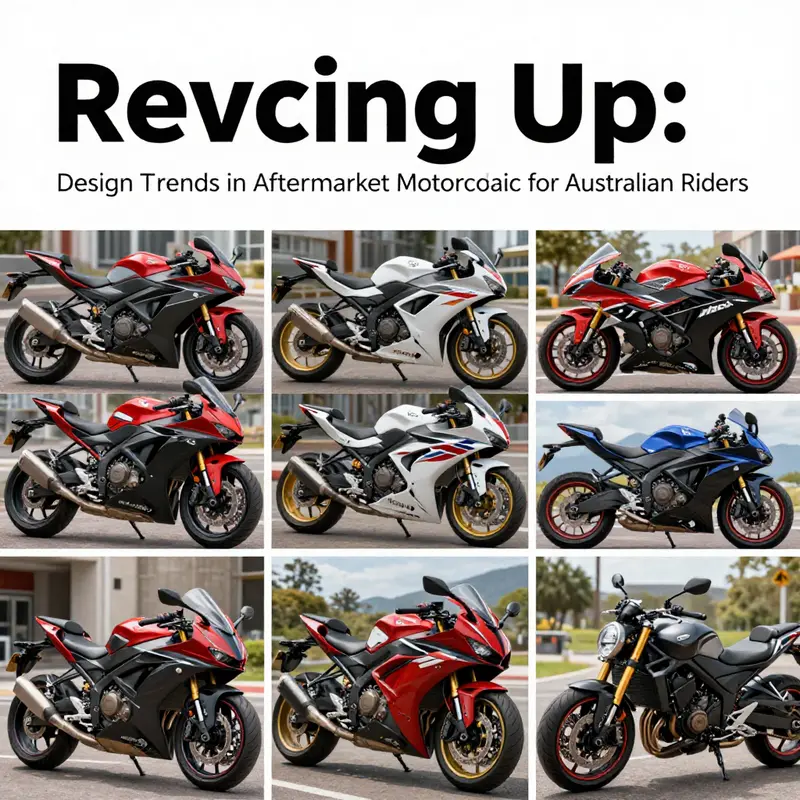
Across the vast expanses of Australia, the design language of aftermarket motorcycle fairings reflects a riding culture that prizes speed, endurance, and personal expression. Riders—from suburban commuters navigating busy roads to long-haul travelers carving desert corridors—seek a balance of aerodynamic efficiency, rugged durability, and a look that matches their identity on two wheels. In this context, fairing design has evolved from cosmetic upgrades to a strategic blend of lightweight engineering, precise fitment, and protective performance tailored to Australia’s road networks, climate ranges, and riding motivations.
A central thread is the adoption of lightweight materials that do not compromise strength. Carbon fiber, reinforced fiberglass, and other high-strength polymers offer a favorable balance of stiffness, impact resistance, and cost. For Australian riders, lighter fairings translate to better power-to-weight, sharper acceleration, and more agile handling, benefits that matter on long highway stretches or when approaching the first corner on a weekend track day. The climate and geography — sun exposure, coastal humidity, and dusty inland routes — drive the need for UV resistance and corrosion protection, addressed by UV-stabilized resins and multi-layer finishes.
Durability and fit are equally important. Model-specific fitment data, tolerance ranges, and installation notes help ensure aerodynamic gains do not come at the cost of safety. Australian buyers benefit from documentation that confirms year, model, and sub-model compatibility, reducing the risk of ill-fitting panels that can increase wind noise or place undue stress on mounting hardware.
Finally, the aftermarket ecosystem blends global manufacturing with local needs. Suppliers in Asia and beyond provide scalable production and efficient logistics, while Australian retailers seek clear certifications, transparent returns, and reliable lead times. Transparent model coverage and honest product specifications help builders and riders choose options that stay true to geometry, protect vital components, and express personal style. For readers exploring practical examples, a look at Honda fairings collections demonstrates how fit, finish, and customization options can be balanced across multiple bodywork configurations. https://www.summitfairings.com/collections/honda-fairings
Final thoughts
In conclusion, the aftermarket motorcycle fairing market in Australia is robust and ripe with opportunities for business owners. By understanding the sourcing landscape, prioritizing material quality, and staying abreast of design trends, you can strategically position your offerings to meet the evolving demands of Australian riders. As customization and performance continue to drive this market, seizing these insights will be key to excelling in this competitive environment. Equip your business for success by focusing on these critical aspects of aftermarket motorcycle fairings.