
The aftermarket motorcycle fairings market in South Africa is burgeoning amidst growing local and international demand. This presents a significant opportunity for local business owners, who can leverage the supply from international markets, particularly Asia. In this exploration, we will delve into the import dynamics of motorcycle fairings, the role of Asian manufacturers in this supply chain, as well as how to evaluate the quality and performance of these products. Each chapter will enhance your understanding and equip you with knowledge to capitalize on this evolving market.
Cross-Border Supply and Standards: How Imported Aftermarket Fairings Reach South African Riders
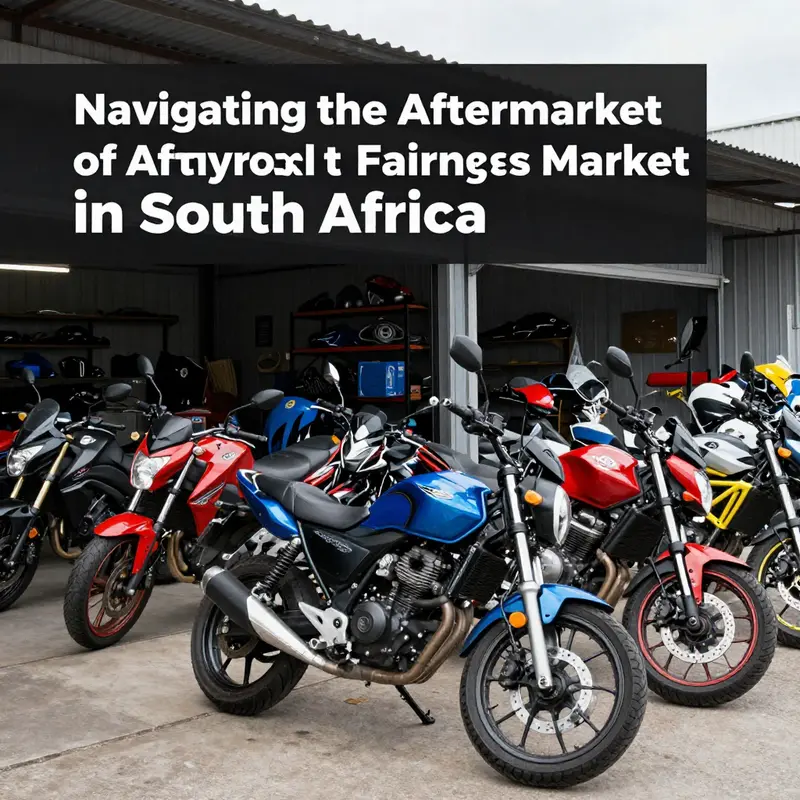
Cross-Border Supply and Standards: How Imported Aftermarket Fairings Reach South African Riders
The flow of aftermarket motorcycle fairings into South Africa is a study in contrasts. Demand for performance, protection, and personalization grows steadily. Local manufacturing capacity remains limited. International supply chains fill the gap, bringing a wide variety of materials, designs, and price points to riders and workshops. That pipeline is shaped by trade rules, logistics choices, fitment challenges, and quality concerns. Understanding those dynamics helps buyers, retailers, and installers make smarter decisions.
Most imported fairings arrive from established manufacturing regions in Asia and Europe. Producers in eastern and southern China, in particular, provide a large share of parts. They operate proven molding processes for ABS plastic and fiberglass. Some facilities also form carbon fiber components for high-end kits. These suppliers can produce full body kits, partial fairings, and trim panels in short runs or larger batches. Their strengths are speed, tooling experience, and an extensive parts catalog. For South African importers, that translates into accessible styles for many popular models and competitive unit pricing when orders are consolidated.
The regulatory environment in South Africa shapes how these parts cross the border and reach users. Imported components must comply with national consumer protection and general product safety requirements. Authorities expect accurate descriptions, material disclosures, and truthful marketing. While aftermarket fairings frequently lack a specific mandatory certification, they still fall under broader import controls and the same liability standards as other vehicle parts. Importers must prepare commercial invoices, bills of lading, and supporting documentation showing material composition and intended use. Working with customs brokers and freight forwarders familiar with vehicle part classifications reduces clearance delays. That practical expertise matters. Small paperwork errors can lead to extended inspections and unexpected fees.
Cost structure depends on shipment mode, freight consolidation, and duties. Sea freight is the most economical for bulk orders. Air freight remains viable for urgent replacements and low-volume specialty parts. Many distributors use a hybrid approach. They ship cores, tooling, and large inventories by sea. They air-ship urgent or high-value items when demand spikes. Consolidating orders cuts per-piece freight cost. It also lowers customs handling charges and import VAT applied at the point of entry. Importers who maintain a bonded warehouse manage cash flow better. They defer customs duties until they actually move goods from the warehouse to local retail channels.
Customs classification is a small but important detail. Harmonized System codes determine duty rates and whether parts are subject to additional restrictions. Importers should verify HS codes with customs brokers, because misclassification can invite penalties. Accurate declarations must describe the base material, such as ABS plastic, fiberglass, or carbon. The declared value must reflect the transaction value and include permitted adjustments. In cases of cross-border e-commerce, where individual consumers receive smaller packages, local distributors sometimes ease the process by consolidating multiple purchases into a single commercial shipment.
Quality and fitment form the core of buyer concern. A fairing that does not align with mounting points damages the bike and risks rider safety. Differences in mold tolerance and small variations in chassis year cause fitment headaches. That is why many importers emphasize compatibility charts, fitment videos, and clear technical drawings. Some suppliers publish measured mounting points and provide sample brackets. For widely traded models, aftermarket catalogs often include dedicated runs that match OEM mounting holes. Buyers should demand explicit fitment confirmation for their model and year. When uncertain, they should consult local installers before purchase.
Material performance matters too. ABS plastic remains the most common choice. It blends impact resistance with cost efficiency and paintability. Fiberglass offers stiffness and ease of repair, though it tends to be heavier and more brittle on impact. Carbon fiber provides strength and weight savings, but at a premium price and with particular bonding and curing needs during installation. Material grade and UV resistance should be specified. Lower-grade ABS can exhibit stress cracking or rapid color fade under strong sunlight. South African climate variations—from coastal sun to inland heat—expose fairings to intense UV and temperature cycles. Importers and buyers should request material data sheets where possible.
Testing and inspection protocols make imports reliable. Many responsible distributors require pre-shipment inspections. They check dimensional tolerances, surface finish, and paint adhesion. Random sampling during production reduces the chances of systematic defects reaching the market. When signing purchase agreements, South African importers often negotiate acceptance criteria and reserve the right to reject batches that fail inspection. For smaller retailers without inspection teams, third-party quality control services in source countries provide independent checks. These inspections cost more up front but pay off by lowering return rates, warranty claims, and rework costs for local workshops.
Pricing and market positioning vary widely. Lower-cost kits attract hobbyists and budget-conscious riders. Mid-range offerings balance value with durability. High-end carbon kits target performance-oriented buyers. Price differences reflect materials, mold complexity, shipping method, and after-sales support. South African distributors who bundle services—such as local painting, fitting, and warranty handling—create additional value. Those services help offset the technical risk of imperfect fitment. When buyers factor in painting, labor, and minor adjustments, the total cost of a complete installation can rise significantly above the advertised kit price.
E-commerce channels influence the experience as well. Direct-to-consumer cross-border sellers ship individual pieces to South Africa. International marketplaces and specialized parts sites offer wide selections. Local marketplaces aggregate listings. These platforms reduce search friction and reveal comparative pricing. However, they also increase the risk of purchasing from vendors who provide inadequate technical support. For higher-value purchases, many buyers prefer working with local distributors who handle customs clearance, quality inspection, and fitting. That model shortens lead times for repeat orders and improves accountability for warranty and returns.
Returns management and warranties present logistical challenges. Reverse logistics across continents are costly. Importers typically set clear return windows and inspection steps. They document damage upon arrival, photograph defects, and coordinate return authorizations with overseas suppliers. In some arrangements, suppliers accept responsibility for major manufacturing defects but exclude paint issues or installation errors. That makes local installers responsible for correct mounting and finishing. South African shops that offer installation often include a short local warranty covering fitment and workmanship. They do not usually cover material failures beyond the original import warranty.
Market demand responds to riding patterns. Touring and long-distance riders value fairings that improve aerodynamics and rider comfort. Fairings designed for long highways or extended gravel stretches should resist debris and crosswinds. For commuters, partial fairings and windshields that reduce rider fatigue can be appealing. Customization trends also matter. Many riders value unique colors, integrated aerodynamic features, and aftermarket designs that deviate from OEM styling. Those preferences shape importers’ stock choices and promotional strategies. Vendors that track local preferences adjust their product mix accordingly.
Supply reliability depends on supplier responsiveness and tooling capacity. Manufacturers that maintain flexible molds and quick color changeovers win repeat business. Suppliers who maintain spare molds for popular models shorten lead times. South African importers often prioritize suppliers with proven communication practices. Fast response times from manufacturers reduce downtime caused by fitment questions and tooling adjustments. For items with complex shapes, close collaboration between importer and manufacturer leads to rapid prototyping and quicker resolution of alignment problems.
Risk management includes avoiding counterfeit or low-quality knock-offs. Cheap imports may undercut prices, but they also risk premature failure and safety issues. Buyers should scrutinize material claims and customer reviews. Distributors should ask suppliers for certificates and test data. For ABS parts, UV resistance and impact testing results are useful. For fiberglass and carbon, laminate schedules and resin type matter. Photos of in-process production and plain packaging samples reveal workmanship. Insisting on sample shipments before placing large orders is a practical safeguard.
Local service networks close the loop. Paint shops, upholsterers, and fitment technicians adapt imported parts to local bikes. They trim, re-drill, and reinforce mounting points when necessary. Those adjustments require skill and experience. Training workshops and installation guides reduce the margin for error. Some importers provide technical training to local partners. That improves the final fit and finish for riders.
For prospective importers and buyers, a few practical measures improve outcomes. Verify supplier reputation through multiple channels. Request material data sheets and dimensional drawings. Arrange pre-shipment inspection for large orders. Use bonded warehouses to manage cash flow. Work with experienced customs brokers. Keep clear records of warranties, return policies, and liability allocations. Factor in local painting and installation costs when comparing prices.
The network that brings aftermarket fairings to South African riders blends global manufacturing strength with local expertise. It leverages international tooling capabilities while depending on domestic installers and retailers. That relationship can deliver high-quality, affordable, and well-fitting fairings when managed carefully. It can also produce frustration when communication, testing, or documentation fall short. Understanding import dynamics, and applying practical safeguards, helps reduce risk and raises the chance of a positive outcome for every ride.
For riders seeking a specific example of parts availability, collections that match early-2000s superbike generations show how international catalogs map to local demand. See the GSX-R1000 fairings (2003–2004 collection) for an illustration of model-specific inventory and compatibility considerations: https://www.summitfairings.com/collections/suzuki-gsxr-1000-k3-fairings-2003-2004
For deeper technical background on fairing materials and aerodynamic benefits, refer to this technical analysis: https://www.motorcycleperformance.com/aftermarket-fairings-technical-analysis-2026
Shaping the Wind: How Asian Manufacturing Powerhouses Redefine South Africa’s Aftermarket Motorcycle Fairings
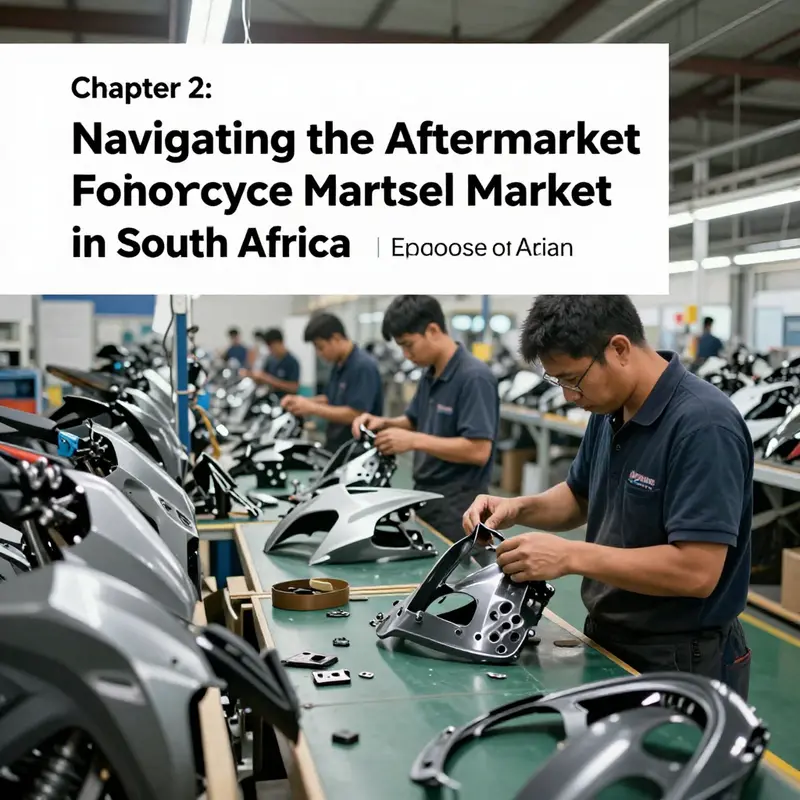
Across South Africa, the aftermarket motorcycle fairing landscape is not simply about color and style but about weathering a complex global supply chain that ties local riders to distant factories and agile logistics networks. The changing dynamics of supply and demand have pushed South African distributors, repair shops, and individual riders to think beyond price and appearance. They must consider fitment accuracy, material performance, and the capacity to respond quickly to shifting riding conditions and regulatory expectations. In this atmosphere, Asian manufacturers have emerged as pivotal actors. They bring not only cost advantages but also an ecosystem of precision engineering, standardized production, and an increasingly reliable service model that makes it feasible to outfit a wide range of bikes with aerodynamic shells that endure the harsh climate and rugged terrain common to South Africa. The result is a market that blends affordability with improving quality, enabling more riders to pursue both performance gains and protective benefits as they log longer miles on long, windy roads, dusty passes, and desert highways alike.
The geographic logic behind this shift is straightforward. Asia remains the hub of motorcycle component manufacture, with Chongqing, Guangdong, Jiangsu, and Zhejiang standing out as decisive centers in the global supply chain. Chongqing is often described in industry circles as the motorcycle capital of the country, a descriptor earned through the concentration of manufacturers that can scale OEM production to meet bulk demand. This capacity translates into reliable sourcing for aftermarket programs that require consistent availability, rapid replenishment, and the ability to meet large orders without compromising on lead times. At the same time, Guangdong stands out for its proximity to export gateways and the sophistication of its manufacturing ecosystem. The region’s mills, mold shops, and assembly lines are accustomed to exporting to distant markets, and their readiness to integrate with international distributors helps shorten the distance from factory floor to dealer shelf to rider’s garage. The flood of components out of Guangdong is supported by a mature logistics network that continuously improves handling times and reduces delays at border crossings and ports. Zhejiang and Jiangsu contribute deep strengths in mold design, precision engineering, and advanced materials, enabling fairings that are not only lighter but also sturdier and more aerodynamic than earlier generations. This combination of bulk capacity and technical finesse ensures that Asian suppliers can deliver both the volume and the quality that South African markets demand.
From a materials perspective, the core emphasis remains on ABS plastic and composite constructions that strike a balance between weight, impact resistance, and heat tolerance. ABS excels in situations where riders encounter high speeds and constant wind loads, while fiber-reinforced composites offer added rigidity and stiffness for more aggressive aerodynamics. The regional capabilities in molding technology, including multi-part injection and advanced vacuum forming, mean that fairings can be produced with tighter tolerances, accurate fitment, and compatibility across a spectrum of motorcycle models. This is particularly important given the diverse range of bikes that South African riders bring into the aftermarket channel, from sport and supersport classes to adventure and naked bikes used on mixed terrain routes. The ability to provide documentation that accompanies the product—CAD files for customization, material certificates, and detailed technical specifications—gives South African retailers and workshop technicians greater confidence in the suitability of these parts for various makes and models. In turn, this transparency supports safer installations and reduces the risk of misfitment that can undermine rider confidence and compromise performance.
Quality and service are closely linked in the Asian-manufactured fairing story. As the export analysis reports from China highlight, the focus has shifted from merely pumping out parts to elevating the overall offering through improved material conformity, better surface finishes, and more robust after-sales support. For South African distributors, this means a more predictable supply chain in which the parts arrive with clear installation guidance, compatible mounting points, and, where possible, a ready availability of accessories such as mounting kits or quick-fit hardware. The emphasis on service is not a nuisance; it is a practical response to the realities of cross-border trade, where language barriers, time zones, and logistics disruptions can otherwise derail a project. The modern Asian supplier seeks to minimize these frictions by maintaining close communications with distributors, providing prompt replies, and offering after-sales assistance that can help workshop teams diagnose fitment issues without returning items or incurring costly delays. Acknowledging this, many established suppliers have built robust response networks that reply within hours and maintain a presence in major markets beyond their home countries. In this environment, a well-supported chain of supply becomes as important as the parts themselves.
This chapter appreciates how India fits into the broader Asian picture. Indian manufacturers contribute to a more diverse supply landscape, introducing alternatives that complement the heavier presence of Chinese suppliers. They bring a different set of strengths, often emphasizing lightweight yet durable materials and modular design concepts that simplify customization. For South African riders, modularity translates into practical advantages when adapting fairings to landscapes ranging from city streets to rural byways and off-road tracks. Indian production lines are increasingly oriented toward corrosion resistance and long-term performance even under challenging weather and environmental conditions. That focus aligns well with the expectations of local riders who value resilience and practicality as much as aesthetics. It is this combination—modularity, durability, and cost advantages—that helps create a more competitive, responsive market in which distributors can offer options that suit both urban commutes and weekend adventures. In this sense, India is not merely a second source; it is a critical counterbalance to China’s scale, injecting nimbleness and imaginative design approaches that respond to evolving consumer tastes without inflating prices or extending lead times.
The role of China in particular has evolved beyond basic price competitiveness. The same export reports underscore how Chinese manufacturers are raising their game by tightening compliance with international material standards, improving the documentation package, and expanding technical support. This is not about chasing the lowest possible price at the expense of safety; it is about building a more robust value proposition that preserves fit and function across a broad set of models while delivering dependable performance during hours of riding and exposure to South Africa’s varied climates. For retailers, such improvements translate into greater confidence in stocking decisions. They can commit to larger runs knowing that the parts will meet fitment expectations and that customer inquiries can be answered quickly with precise compatibility information. This alignment of product quality with service responsiveness reduces the friction that often accompanies importing and selling aftermarket components in a cross-border setting.
The narrative of Asia’s role also includes a note about the future. As electrification and smarter vehicle concepts gain traction, Asian suppliers are increasingly exploring integrations with lightweight, modular fairings that can accommodate additional features. Components such as integrated lighting, sensor housings, or aerodynamic tweaks designed to support e-motorcycles are not merely optional flourishes; they represent practical responses to a changing rider profile. The capacity to incorporate such features through existing tooling and mold designs is one of the advantages of a mature industrial ecosystem. Zhejiang and Jiangsu, in particular, are known for innovations in mold design, tool customization, and rapid prototyping. This means that the gap between concept and production is shrinking, offering South African customers the possibility of more customized, visually compelling, and aerodynamically efficient fairings that still honor the practical demands of regional topography and climate.
Beyond the technical and logistical considerations, several market dynamics shape how Asian manufacturers interface with South Africa. Demand remains highly responsive to riding conditions and local events, which can create spikes in interest for certain styles or finishes. The capacity to pivot quickly—retooling lines, adjusting colorways, or offering new texture finishes—becomes a competitive advantage. South African distributors increasingly value transparent operational practices, clear lead-time estimates, and reliable documentation that helps them track orders, manage inventory, and communicate with end customers. In such an environment, suppliers that combine full-spectrum capabilities—mold design, material science, quality control, and responsive service—earn sustainable advantages over those offering lower-cost, lower-service alternatives. The net effect is a market where price remains important, but it is no longer the sole determinant of choice. Riders and retailers alike recognize that a fairing is not just a cover; it is a protective and performance-enhancing component that interacts with fuel systems, air intake dynamics, and the rider’s own body position at speed. The reliability of the overall system depends on the integrity of every interface, every mounting point, and the predictability of the supply chain that brings these parts to life.
For those evaluating options, a practical approach is to weigh not only the sticker price but also the quality signals embedded in the product and the service network behind it. Prospective buyers should seek detailed technical specifications and compatibility notes rather than relying on glossy visuals alone. Materials standards, thickness tolerances, and finish quality can reveal a lot about how a fairing will behave in real-world riding. A vendor that provides CAD files or digital models for customization signals a readiness to collaborate with local workshops on fitment and customization tasks. It is also prudent to assess the supplier’s warranty framework and return policy, since aftermarket components in a cross-border context benefit from clear policies that protect both distributors and riders. While price remains a meaningful entry point, the longer-term value is built on predictable supply, durable materials, and responsible engineering that stands up to the particular demands of South Africa’s road conditions, including long desert stretches, winding mountain passes, and rural routes that introduce dust and vibration into the system.
The South African aftermarket community benefits from this Asian-led ecosystem in ways that ripple through workshops and riders alike. Technicians gain access to readily available, consistently engineered parts that fit a range of models with minimal modifications. Retailers can curate inventories that address common repair scenarios and seasonal riding patterns without absorbing excessive risk through misaligned stock. For riders, the improved reliability of aftermarket fairings translates into tangible advantages: better protection for the rider and the engine, enhanced aerodynamics to trim drag and improve comfort on long cruises, and an opportunity to customize the appearance of a bike without triggering prohibitive costs. In a country where road conditions can vary widely, from city asphalt to off-road tracks, this balance of protection, performance, and personalization matters. It is a reminder that the evolution of the aftermarket sector is as much about the aligned expectations of multiple stakeholders as it is about any single manufacturer’s capabilities.
To illustrate how reference points and catalog context matter in decision-making, consider the practical value of a well-curated catalog that helps explain fitment across diverse model lines. For riders seeking a particular aesthetic aligned with certain model families, distributors can use catalog references to guide purchase decisions and ensure compatibility. Although the landscape is broad, a careful buyer can discern which offerings provide the strongest return on investment by looking at how well the parts integrate with existing components, how durable the materials appear to be under heat and vibration, and how comprehensively the documentation supports installation. In this way, an ecosystem that ties together manufacturing scale, material science, and service is what ultimately determines whether a given fairing program will be seamless in practice or repeatedly challenging in execution.
As this chapter closes its survey of supply chain dynamics, it is useful to reflect on the broader implications for South Africa’s aftermarket experience. Asian manufacturers bring a calibrated balance of cost efficiency and technical capability, but a healthy market also requires robust local competencies. The gradual improvement of installation services, safer handling, and detailed compatibility guidance by local retailers helps bridge the gap between factory lines in Asia and riding experiences on South African roads. The collaboration between overseas producers and domestic partners thus becomes a living system, continually refined by feedback from workshops, riders, and distributors. In this sense, South Africa is becoming less a passive recipient of imported parts and more an active participant in a transcontinental chain that fuses global efficiency with local know-how. The result is a riding culture that values both performance and protection, where fairings are appreciated not as mere shells but as integrated components that help riders navigate the wind, the heat, and the demanding landscapes that define the country’s diverse geography.
For readers who would like to explore further, a practical starting point is to examine how a cataloged set of fairings can illuminate compatibility and installation details. To access a representative catalog offering a spectrum of fairing styles and model alignments, see the collections page related to fairing options: collections/honda-fairings catalog. This resource can serve as a rough reference point for the kind of documentation and fitment clarity that successful South African distributors are now expecting from Asian suppliers. It is not a recommendation for any specific model but a reminder of the value of clear technical communication and standardized interfaces when integrating aftermarket shell systems with a wide variety of motorcycles.
Looking ahead, the trajectory of Asian-supplied aftermarket fairings in South Africa seems set to blend traditional strengths with emerging innovations. The ongoing refinement of material standards, the expansion of CAD-based customization, and the willingness to provide robust after-sales support are likely to endure as core differentiators in a competitive market. The potential integration of smart features and lightweight, high-strength composites could redefine the balance between aesthetics and efficiency, offering riders new ways to tune aerodynamics and protection without sacrificing reliability. In a market that already appreciates the connection between form, function, and value, these developments will be watched closely by distributors who must balance inventory risk with the needs and aspirations of South African riders. As the supply ecosystem matures, it is reasonable to expect that the wind will continue to shape more than just the aerodynamics of a fairing; it will push the market toward greater collaboration, better technical clarity, and a more resilient, responsive aftermarket experience for riders across the country.
External context beyond South Africa also informs these patterns. For deeper context on how Asia’s motorcycle parts export sector is evolving, see the China’s Motorcycle Parts Export Analysis Report from June 2024, which highlights quality improvements and service enhancements as key drivers of long-term market share growth. This external resource helps explain why South Africa’s aftermarket players can increasingly demand reliable documentation and support from suppliers who are motivated to secure durable, recurring business across continents.
Quality and Performance in South Africa’s Aftermarket Motorcycle Fairings: A Practical Guide
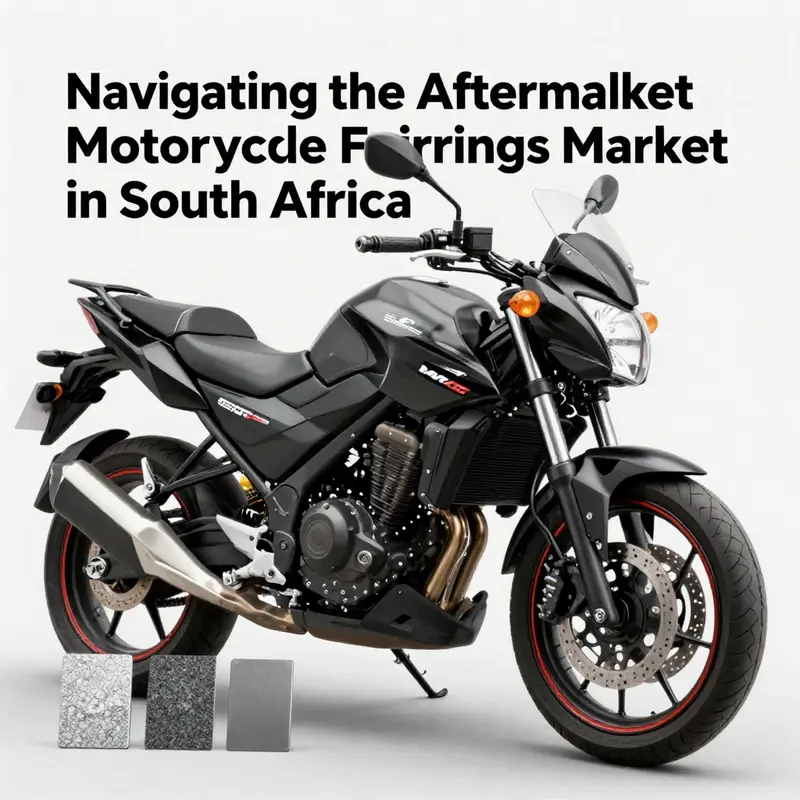
South Africa’s aftermarket motorcycle fairing market sits at a turning point where demand meets discerning riders seeking durable, well-engineered upgrades.
Buyers increasingly want fairings that withstand heat, dust, and long rural roads while preserving style, fit, and reliability. Quality and performance hinge on material choice, design validation, and credible supplier practices, all evaluated against local riding conditions.
Key signals of credibility include material certificates, CAD/FEA testing data, wind-flow assessments, and clear compatibility information. Materials such as high-impact polycarbonate (PC) and fiberglass-reinforced polyester (FRP) offer trade-offs between durability and weight, with ABS available more economically. Suppliers who publish precise mounting dimensions, gasket details, and installation guides help ensure proper fit and long-term reliability. In a market with import dependencies, a structured supplier evaluation framework, such as the South African Automotive Aftermarket Association’s framework, helps buyers differentiate between parts that merely look good and those that deliver safe, cost-effective performance over time. The result is a buyer’s process that balances design rigor, practical serviceability, local support, and total cost of ownership, yielding fairings that support safe riding in South Africa’s diverse environments.
Final thoughts
In summary, the aftermarket motorcycle fairings market in South Africa offers lucrative opportunities for business owners, provided they understand the import dynamics, the vital role of Asian manufacturers, and how to assess product quality. By adhering to preferred sourcing methods and focusing on high-quality components, businesses can not only meet local demand but also enhance customer satisfaction and trust. Understanding these factors empowers you to navigate the competitive landscape effectively and ensure your offerings resonate with consumers.