
The motorcycle accessories market is undergoing significant changes, largely driven by innovations in payment solutions such as Afterpay. This buy-now-pay-later service allows customers to purchase premium motorcycle fairings and split their payments into manageable installments. Business owners need to understand these developments, as they may impact their sales strategies. In the upcoming chapters, we will explore Afterpay’s function within the motorcycle fairing sector, the economic ramifications of this payment model, and shifting consumer behavior that aligns with financial flexibility now afforded to motorcycle enthusiasts.
Splitting the Cost of Style: Afterpay and the New Economics of Motorcycle Fairings
Motorcycle fairings can transform a bike’s look and performance. They often carry a high price tag. For many riders, that upfront cost blocks upgrades or repairs. Flexible payment plans have changed that. One popular option lets buyers spread payments into four interest-free installments. That shift affects how riders buy fairings, how shops price parts, and how online marketplaces list inventory.
This chapter explains how buy-now-pay-later options reshape the motorcycle fairings market. It covers buyer benefits, practical risks, and what to check before committing. It also examines how merchants and marketplaces adapt. The goal is to give riders and shop owners the context they need to make confident choices.
How it works — and what to watch for
At its core, the payment plan splits a purchase into four equal payments. Payments come every two weeks. No interest applies when payments arrive on time. That structure lowers the immediate cash needed to buy a full fairing kit. Riders can choose a higher-quality kit or custom paint by using a plan. They can also avoid using a credit card for the purchase if they prefer debit-linked solutions.
The plan’s appeal goes beyond simple affordability. It matches how many younger buyers manage cash. Shorter repayment windows encourage budget discipline. The transparency of four equal payments makes decisions predictable. Still, there are important caveats. Missed payments trigger fees. Those fees are capped in many programs, but they can add up if multiple payments are late. Most offerings do not report payment history to credit bureaus. That means timely payments help with budgeting but do not build credit history. Conversely, a defaulted plan can lead to collection efforts and potential restrictions on future use.
For motorcycle fairings specifically, this payment model addresses an acute pain point. A full fairing kit, with matching panels, brackets, and bolts, can cost several hundred to more than a thousand dollars. Add professional painting, shipping, and installation, and the total climbs higher. Breaking this cost into four pieces reduces the barrier to entry. Riders who would otherwise delay a purchase until savings accumulate may proceed instead. That trend accelerates purchases during peak riding seasons and before track days.
Merchants often notice clear effects. Conversion rates tend to rise when pay-later options appear at checkout. Average order values also increase. Shoppers feel more comfortable adding upgrades, like reinforced mounting brackets or higher-grade plastics. For shop owners, the trade-off is a merchant fee paid to the payment provider. That fee often comes as a percentage plus a flat amount per transaction. Businesses must weigh the higher sales volume and order size against these extra costs.
Integration matters. Retailers that embed the option directly into checkout gain the most benefit. When the payment choice appears early in the process, customers spend more time considering premium items. Marketplaces that display the installment price on product pages also see increased engagement. Listings that show the four-part price make the total cost feel more attainable. That is why many sellers now flag pay-later availability in product descriptions and thumbnails.
Using a pay-later plan wisely
Buyers should treat the option like a short-term loan. Set up automatic payments if possible. That removes the risk of forgetting a due date. Read return and refund policies carefully. Return logistics for fairings can be complicated. A returned item may trigger refunds that interact with the payment provider’s timelines. Some providers refund the merchant first, then reconcile with your outstanding installments. Other providers may expect you to continue payments until the seller confirms the return. Understand the pathway before you order.
Check the retailer’s compatibility and fitment policies. A fairing kit that doesn’t fit your model creates additional costs. Confirm part numbers, submodel compatibility, and year ranges. For example, if you ride a specific model year of a sportbike, use the vendor’s fitment guide or contact support. Shops that offer clear fitment guides reduce the chance of returns.
If you plan to use a pay-later option for custom paint, factor timing into your decision. Custom work extends the fulfillment timeline. Longer jobs can overlap with installment schedules. Confirm whether the payment plan charges the first installment at purchase or at shipment. That timing determines cash flow while you wait for the finished product.
Know the fees and limits. Late fees are typically modest per missed payment, but they can be a percent of the order in extreme cases. Payment providers also set purchase caps for new users. High-value items may require approval or an alternative payment method. If your total exceeds the plan’s limit, split the purchase or choose another financing option.
A useful tactic is to compare total cost against alternatives. A credit card with a 0% promotional APR, a small personal loan, or a layaway with the shop might offer better terms for some buyers. However, the simplicity and speed of four-part plans often win in practice. They require minimal paperwork and approve most users quickly at checkout.
Marketplace and platform dynamics
Online marketplaces and direct retailers each approach pay-later options differently. Marketplaces can attract buyers by listing the installment price on product pages. That visibility works well for high-ticket accessories, such as fairing kits for supersport and superbikes. Buyers searching for parts often filter for payment options. Listings that include the installment badge gain more clicks.
Direct retailers get benefits from improved checkout experience. Installment options integrated into point-of-sale systems are now common. When a shop uses a commerce platform that already supports these payments, adding the option is often a straightforward toggle. The real work lies in staff training, return handling, and clear customer communications.
For international shoppers, availability varies. Not all pay-later providers operate in every region. Cross-border purchases may face different rules. Sellers who ship internationally should make payment availability clear on product pages.
Practical examples and scenarios
A rider wants a full fairing kit for a sportbike. The kit costs several hundred dollars. Shipping and painting add another few hundred. Paying in four installments makes the purchase manageable. The rider orders the kit, pays the first installment, and schedules painting. The shop begins work knowing the sale has been paid partially. The buyer receives the kit when complete and finds the fit excellent.
Another rider seeks a single replacement panel. The panel costs less but still strains a weekly budget. The installment option spreads the cost and avoids depleting the rider’s emergency fund. Smaller purchases can still benefit, because the payment plan keeps cash available for fuel and maintenance.
A third scenario highlights the risk. A buyer orders custom-painted panels and misses two payments while the shop completes the work. Late fees accumulate. Customer support helps resolve the issue, but the stress and extra costs sour the experience. This emphasizes a core rule: use pay-later plans only when you can meet the payment schedule.
What sellers should do differently
Clear product pages reduce returns. Provide high-resolution photos, compatibility charts, and installation notes. Explain shipping timelines when items require painting or assembly. List warranty terms and restocking fees. When an installment option is present, include a short note on how returns interact with the payment provider.
Train customer service teams to handle pay-later inquiries. They will need scripts for explaining first installment timing, refund flows, and chargebacks. Fast, transparent handling reduces disputes and negative reviews.
Merchants should track metrics. Measure conversion lift, average order value, and return rates for orders using instalments. Compare those figures with orders using traditional payment methods. That data guides decisions about which payment providers to retain.
Customization and aftermarket trends
Fairings are a key area for customization. Riders often prefer unique colors, stickers, or aerodynamic tweaks. The ability to pay over time encourages more customization purchases. That pattern has downstream effects. Paint shops and fitting services see more work. Sellers that bundle installation or painting can increase margins. Payment plans make those bundles more attractive because they lower the immediate cost barrier.
The trend also affects the secondary market. Used and aftermarket panels appear more frequently with buy-now-pay-later options. Sellers can move inventory faster when buyers can pay in installments. For small businesses and hobby shops, that speed matters.
Practical tips for buyers considering payment plans
-
Set reminders and use autopay. Missing a payment is the fastest way to make the plan expensive. Autopay avoids that risk.
-
Confirm return and refund timing. Ask how refunds will be handled between the seller and the provider. This avoids surprises if the part does not fit.
-
Check compatibility thoroughly. Use the seller’s fitment tools. Contact support if you are unsure.
-
Budget for extra costs. Include painting, shipping, and installation in your calculations.
-
Read the fee schedule. Know the exact late fee amounts and cap rules.
-
Compare alternatives. For very large orders, different financing might be cheaper.
A quick resource for a common fairing type
If you ride a particular model and want a quick starting point, vendor pages that organize fairings by model and year help. For instance, there’s a focused collection for Honda CBR1000RR fairings by year that can help you check fitment and compare options before you buy. You can view that collection here: Honda CBR1000RR fairings 2012-2016.
Final considerations
Pay-later plans change the psychology of buying. They make high-ticket accessories feel more accessible. That effect benefits riders who prioritize upgrades now rather than later. It also benefits shops that can present higher-value bundles and add-ons. But this convenience comes with responsibility. Treat the option like credit. Budget, anticipate timelines, and read policies.
When used correctly, installment payments open doors. They let riders invest in higher-quality parts and customization without an immediate cash drain. They also let sellers reach customers who might not otherwise buy. The balance between convenience and discipline determines whether the experience is empowering or costly.
To learn more about how these buy-now-pay-later plans work, and to check availability for your next fairing purchase, visit the provider’s site: https://www.afterpay.com/en-us/.
The Economic Echo of Afterpay: Reframing Motorcycle Fairings Purchases
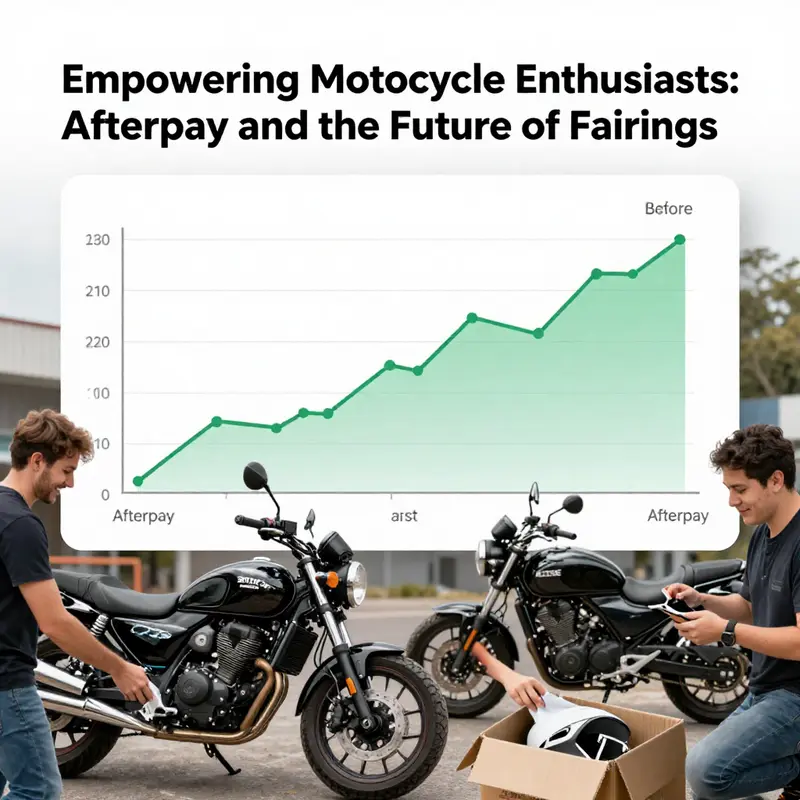
The rise of buy now, pay later (BNPL) in motorcycle accessories reshapes affordability for riders seeking to upgrade with fairings. Afterpay allows four installments that are typically interest-free, lowering the upfront barrier and shifting the perception of what is affordable. This change is not about encouraging reckless spending; it is about spreading a larger upgrade across pay cycles so it feels within reach.
From a behavioral standpoint, BNPL tools tend to attract riders who manage cash flow carefully and value flexibility. The first payment is due at purchase, with subsequent payments scheduled over weeks. Immediate gratification remains, but it is delayed and distributed, which can expand experimentation with different finishes, materials, and fitment across models.
The online aftermarket ecosystem further accelerates this trend. Platforms that host fairings increasingly offer BNPL as a standard option, complemented by fitment guides and transparent installment terms. The result is a smoother path from discovery to checkout and a greater likelihood that higher-margin components enter the cart.
Merchants bear merchant fees for BNPL, often in the 3% to 6% range of the transaction. While consumers may incur no interest, these costs influence pricing strategy, margins, and promotional tactics. In markets with tight margins, retailers might balance value with profitability by bundling items or prioritizing higher-margin fairings.
Macroeconomic and policy dynamics also matter. Tariffs, trade costs, and local subsidies can reshape supply chains and prices, while BNPL can help sustain demand by lowering the effective cost in the near term. The financing option becomes part of a broader toolkit for managing volatility in input costs and consumer sentiment.
Education and prudent use remain essential. A well-informed customer understands fitment compatibility, maintenance implications, and total cost of ownership when financing upgrades. Retail messaging that emphasizes transparent terms, clear descriptions, and reliable support strengthens trust and reduces post-purchase dissonance. In this sense, BNPL acts as a catalyst for thoughtful customization rather than a driver of indiscriminate spending. Example catalogs, such as Honda fairings collections, illustrate how retailers balance model-specific fit with accessible payment options for a broader audience.
Spreading the Cost, Shaping the Craft: How Flexible Financing Rewrites Demand for Motorcycle Fairings
The evolution of how riders pay for high-value motorcycle components is more than a financial trend; it is a shift in how the riding culture negotiates risk, time, and identity. When a rider weighs a set of fairings—protective skins that cut drag, guard the engine, and alter the silhouette of a machine—the decision isn’t only about speed or weather protection. It’s about the burden of upfront cost versus the promise of better performance, aesthetic alignment, and longer-term satisfaction. In markets where the exchange of money for gear happens online as much as at a shop, a BNPL option—Buy Now, Pay Later—adds a practical foil to the calculus. The idea of spreading a four-installment plan over several weeks sounds simple, yet its implications ripple through how products are researched, how brands position themselves, and how communities discuss value. The appeal rests on more than financial relief; it hinges on the alignment of payment convenience with the desire for customization and high performance. The motorcycle aftermarket, long a playground for enthusiasts who measure progress in horsepower and handling, is now also a proving ground for how payment design affects decision making itself.
High-ticket components like fairings embody both the engineering ambition of the rider and the aesthetic promise of a more compelling ride. The upfront sticker price sometimes creates a barrier that only a subset of buyers is willing or able to clear. The introduction of flexible financing reframes that barrier from a single hurdle into a sequence of smaller, predictable steps. This change matters not only to the buyer but to the broader market of sellers, manufacturers, and retailers who must recalibrate how they present value. If a consumer can examine a fairing set in the same way they would consider a running wardrobe upgrade—by weighing fit, color, finish, and aerodynamics—then the financing mechanism becomes part of the product’s value proposition itself. It is not merely a payment channel; it is an element of the overall user experience that can tilt the balance between hesitation and purchase.
As the online channel becomes the default engine for aftermarket parts, the importance of clear, reliable information grows. Riders no longer rely solely on a local showroom where hands-on comparison is possible. They browse, compare, and simulate the decision in a matter of minutes, often using multiple devices and platforms. In this context, the BNPL option reduces cognitive load. It allows a rider to separate the thrill of finalizing the choice from the burden of the immediate expense. This decoupling supports more deliberate decision-making, which can lead to more thoughtful selections that align with both performance goals and personal budgets. It also shifts the decision from a single moment of withdrawal to a longer, ongoing relationship with the product and the retailer. The result is a marketplace that rewards researchers, testers, and careful planners as much as impulse buyers, because the financing option lowers the cost of commitment while maintaining the perception of value.
Yet the value proposition is not merely about affordability. It’s also about how the decision to upgrade intersects with a rider’s sense of identity and responsibility. For many, a fairing set signals not just a preference for speed, but a commitment to maintaining airworthiness, optimizing handling, and protecting a ride that may be a daily commuter, a weekend warrior, or a track-focused machine. The BNPL pathway supports these varied uses by giving customers room to balance short-term cash flow with longer-term performance considerations. If a rider is weighing a setup that promises better aerodynamics and more precise steering, the ability to fund the purchase in installments can make a premium choice seem more practical, not just desirable. This is especially true for younger riders who are navigating education costs, start-up expenses, and the early stages of building credit. The affordability lens reframes what “quality” means in the aftermarket ecosystem: quality becomes linked to a payment plan as much as to materials, fit, and engineering.
The online marketplaces that host these components further amplify the impact of BNPL options. Listings that clearly present payment flexibility alongside detailed specifications, installation notes, and fitment guides reduce friction at every step of the journey. When a shopper sees a comprehensive description—careful attention to weight, stiffness, airflow characteristics, and mounting compatibility—paired with the assurance of installment terms, the perceived risk decreases. In many cases, the shopping process becomes more about precision and fit than about financial anxiety. The consequence is a higher propensity to explore premium options, consider additional finishes, or invest in complementary accessories that enhance the overall package. The effect is not only more sales but a more engaged, informed customer base that values both performance and practicality in equal measure.
The behavior pattern here is nuanced. Younger riders, in particular, show a greater appetite for digital payment methods that reflect their everyday financial habits. They grew up with app-based shopping, instant approvals, and rapid feedback loops. When a four-installment plan aligns with their budgeting rhythms, the perceived convenience of the purchase extends beyond the checkout. It becomes part of a streamlined riding lifestyle where planning and execution happen within the same digital ecosystem. This convergence helps explain why the demand for branded, high-quality fairings has surged alongside the availability of flexible payment arrangements. The same riders who might have postponed a purchase because of a hefty upfront cost now see the value in spreading that cost across several pay periods while still unlocking the performance benefits and aesthetic gains a premium set promises.
The market analogy here is subtle but important: payment flexibility redefines time-to-value. The rider receives the benefits of a better-equipped bike sooner—in terms of aerodynamics, protection, and appearance—while distributing the financial impact. The psychological effect is a sense of momentum. The bike feels faster not just because of the new shaping, but because the rider’s budget now mirrors the cadence of their riding schedule. The four-installment plan becomes a rhythm that fits into a monthly cycle, easing the tension between desire and discipline. In this way, BNPL-style financing functions as a mechanism for ramping up a rider’s engagement with the aftermarket ecosystem. It invites exploration, comparison, and experimentation without forcing immediate, large-scale sacrifices. The market then rewards vendors who present transparent, trustworthy information about fit, warranty, and post-purchase support, because credit risk is mitigated not merely by the payment terms, but by the confidence created through clear communication and robust service.
This dynamic does more than boost sales; it reorients the expectations around product performance. When buyers know they can finance a high-quality fairing, they are more likely to scrutinize long-term durability, repairability, and compatibility with existing hardware. They ask questions about fitment tolerances, paint compatibility, and the ease of installation. The discourse shifts from “can I afford it?” to “will this investment hold up over time, and will it integrate smoothly with the bike’s current configuration?” For retailers and manufacturers, that means emphasis on documentation, fitment guides, and after-sales support. It also means a more transparent conversation about the total cost of ownership, including potential return policies and maintenance considerations. The BNPL option becomes a catalyst for a mature buyer’s journey, where the purchase is part of a larger narrative about how a rider’s machine evolves in step with their riding life.
In the broader ecosystem, the phenomenon sits at the intersection of value perception and consumer trust. As more buyers participate in BNPL-enabled transactions, the market must address questions about renewal risk, return logistics, and the implications of partial payments if a user decides to upgrade again within the same cycle. Trust signals—clear product photography, video demonstrations, reliable fitment data, and credible warranties—gain increased significance. The purchasing decision becomes less about finding the lowest upfront price and more about ensuring that the total experience, from research to installation to ongoing support, aligns with the rider’s needs. This shift helps explain why listings on large marketplaces commonly present alternative payment terms with equal emphasis on quality indicators, fitment compatibility, and user reviews. It becomes a more holistic ecosystem where payment flexibility, performance, and aesthetics are all part of a single value proposition.
A practical result of this shift is improved access to brand-specific and model-specific components that were previously out of reach for many riders. While the market for fairings has always rewarded precision in design and engineering, the BNPL option broadens the circle of buyers who can justify premium choices. It does so by reducing the friction of cash flow while increasing the perceived value of a high-quality, well-fitted piece of hardware. This alignment of payment method with product quality underlines a broader trend in e-commerce: financial tools that feel invisible, integrated, and fair can be as influential as the product features themselves. As retailers tailor their catalogs and marketing messages to reflect this reality, the rhythm of the market becomes more about reliability and confidence than about sheer price sensitivity.
For readers seeking a practical entry point into this landscape, a curated selection of brand-specific fairings can be found in dedicated collections such as the Honda fairings collection. This collection exemplifies how a well-organized catalog can reduce decision fatigue by providing precise fitment information, visually rich representations of the product, and clear notes about installation requirements. The presence of a robust fitment matrix—that is, precise notes about model years, submodels, and any necessary hardware—complements the financing narrative by offering assurance that the purchase will deliver the promised performance without unexpected surprises. It is precisely this blend of technical clarity and financing flexibility that resonates with riders who demand both speed and reliability from their upgrades. You can explore this kind of thorough, model-specific offering here: Honda fairings collection.
As the conversation around payment flexibility evolves, so too does the conversation about consumer responsibility. With the ability to spread payments, some riders may be tempted to expand their carts with multiple items, chasing a bundled upgrade that promises a more significant transformation. This dynamic highlights the importance of responsible consumer education: clear guidance on budgeting, the total cost of ownership, and the potential costs associated with missed payments. Ethical retailers recognize this and respond with transparent disclosures, realistic post-purchase support, and tools that help customers model installment scenarios before they commit. The result is a more mature ecosystem where the focus shifts from impulse to informed, confident decision-making that respects both rider ambitions and the realities of personal finance.
In synthesizing these currents, the message for the next phase of the market seems clear. Financing flexibility is not merely a convenience; it is a design parameter that shapes how products are created, marketed, and supported. The most successful players will be those who integrate finance into the product narrative in a way that preserves transparency, facilitates accurate expectations, and aligns with riders’ broader goals—whether their objective is to shave seconds off lap times, improve daily ride comfort, or simply upgrade the bike’s appearance with a finish that matches their identity. At the same time, the community of riders—forums, social channels, and review forums—will continue to be a critical barometer of value, translating the abstract benefits of a payment option into real-world experiences, verified by peers who share a passion for both performance and design.
External resource: https://www.ebay.com/b/Afterpay-Shop-With-Afterpay/165478/bn_1920538
Final thoughts
As the motorcycle accessories market evolves, the integration of Afterpay into the purchase process for motorcycle fairings signifies a shift towards greater financial flexibility for consumers. This trend not only heightens accessibility but also promotes increased sales for business owners by tapping into a younger demographic. By embracing Afterpay, businesses can improve their customer experience, attract new buyers, and gain a competitive edge in the growing e-commerce landscape. Understanding these dynamics is crucial for success in today’s marketplace.