
Understanding the Airtech motorcycle fairing products is crucial for business owners considering inventory choices. User feedback, market positioning, and competitive analysis offer vital perspectives on quality and value, ensuring you can make informed decisions for your business. This review delves into real user experiences, evaluates market position, compares with competitors, and projects future insights, laying a solid groundwork for any business looking to optimize their product offerings in the motorcycle accessories segment.
Voices from the Wind Tunnel: Rider Feedback and Real-World Performance of Modern Motorcycle Fairings
Riders seek a balance between protection, performance, and appearance. A fairing that blends aerodynamics with a durable finish can improve long rides and spirited sessions. This chapter follows rider voices who have spent miles with different kits to explore what works, what challenges appear, and how these signals align with what buyers expect from modern fairing lines.
A key theme is wind protection. When the design smooths the air around the torso and shoulders rather than creating excessive turbulence, fatigue drops and comfort rises on long days. Riders report that the right shape also supports a natural riding posture, which helps with control at highway speeds and during fast cornering.
Fit and materials receive careful attention. Many riders value factory like mounting points and clean gaps, as well as coatings that resist heat cycles. ABS and PC ABS blends are common for impact resistance and detail retention, but some batches show minor deviations that remind buyers to check model specific fits and paint alignments.
Installation resources matter. Clear guides and video tutorials reduce the barrier to tinkering, while labeled hardware and well packaged parts help a smooth fit. A supportive packaging and a simple return policy can matter almost as much as the kit itself.
Customization and model specificity are highlighted as advantages. A range of finishes and textures lets riders express style while preserving fit with the bike geometry. Model specific kits that line up with mounting points and radiator openings are praised for a cleaner look and a simpler install.
After sales support and quality control also shape satisfaction. Responsive guidance on hardware choices and alignment issues can turn a potential frustration into a quick resolution. Strong QC and careful packaging reduce the risk of damage in transit and set the stage for reliable long term use.
Overall the sentiment points to a mature market. When fairings deliver protection, fit, durability, and solid installation guidance, they improve both performance and appearance. The best products stand out for reliable fit, durable materials, a convincing finish, helpful installation resources, and accessible support.
Looking ahead, ongoing materials development and better standardization may push even closer to factory like results. The rider voice remains a practical guide for manufacturers and retailers, helping to shape products that perform well in real world conditions and appeal to personal expression.
Between Premium Craft and Practical Fit: AirTech Motorcycle Fairings in the Modern Aftermarket
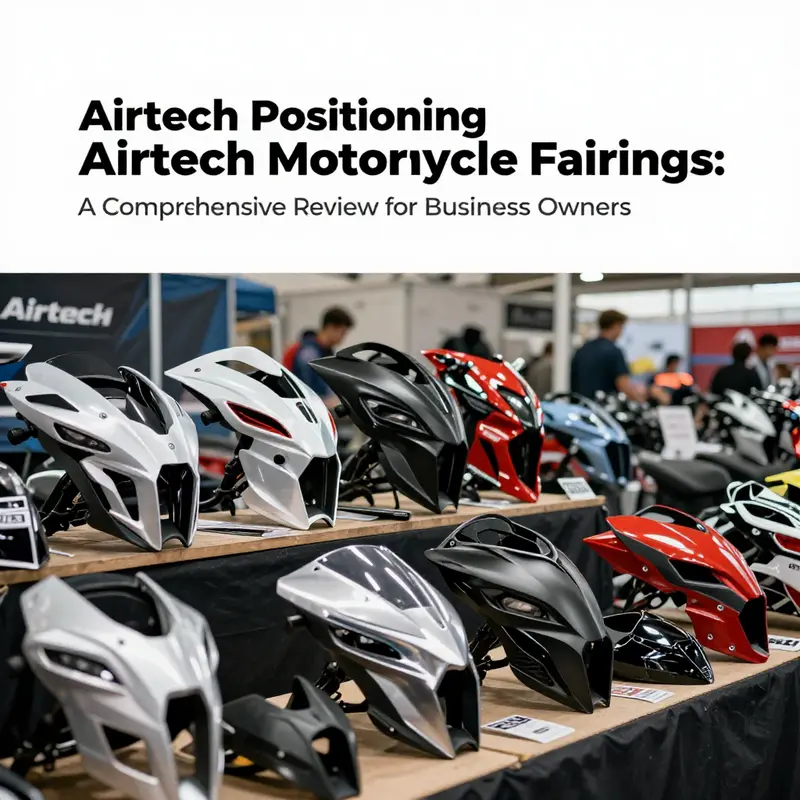
AirTech motorcycle fairings occupy a nuanced space in the aftermarket ecosystem, a place where aesthetics, engineering, and supply chain maturity converge to shape how riders perceive value. The chapter’s lens rests not on a single product line or a single model year, but on the brand’s broader market positioning: a deliberate tilt toward higher-quality materials and precise fit while remaining accessible to riders who want more than bare-bones replacement panels. In this frame, AirTech is less a budget option and more a proposition that promises both visual refinement and functional performance. What this means in practice is a balancing act. On one side lies the desire for OEM-like fitment and durable surface finishes that survive sun, rain, and road debris; on the other side lies the imperative to offer a price point that, while premium in the aftermarket sense, remains compelling when compared to genuine OEM replacements. The result is a narrative about value that depends as much on manufacturing discipline as on design language, and it is this balance that many riders weigh when they consider repairing, restoring, or upgrading their machines after the inevitable dents and scuffs of life on two wheels.
The material story is central to this balance. Modern aftermarket fairings widely leverage high-impact polycarbonate and ABS composites, sometimes in PC/ABS blends, to achieve a combination of rigidity, impact resistance, and weight management. These materials carry a cost premium over basic plastics, but they also deliver durable impact resistance and a smoother, more uniform surface that responds well to refinishing and clear coating. The emphasis on UV resistance is not merely cosmetic; it safeguards color stability and gloss retention, preserving the fairing’s visual appeal under long hours of sun exposure at highway speeds. In the context of a market that increasingly values longevity alongside aesthetics, AirTech’s material choices align with a broader industry trend that treats fairings less as disposable cosmetic add-ons and more as substantive components that contribute to the bike’s aerodynamic profile and overall curb appeal. The choice of polymer chemistry also affects how easy a panel is to color-match or repair if abrasions occur, a practical consideration for riders who intend to keep their machines looking showroom-clean after years on the road.
Material selection feeds into another crucial vector: manufacturing quality and process control. The production ecosystems underpinning AirTech fairings—many of which leverage Guangdong’s advanced injection molding and automated painting capabilities—provide a backdrop of scale and consistency that can translate into tighter tolerances and repeatable finish quality. This is not merely a technical footnote; for riders who expect a fairing line to align with multiple other panels, to hold an edge against weathering, and to accept a consistent finish across batch after batch, the safety net of strict quality control becomes a real differentiator. When suppliers report strong on-time delivery rates and solid reorder performance, those KPIs are often a proxy for the operational maturity that underwrites reliable aftermarket support. In practice, this means that buyers who partner with established distributors or reputable online platforms can expect a level of predictability in both timing and finish that is rarer in a fragmented, lower-cost segment of the market.
Pricing is the practical hinge on which positioning tips between premium craft and relative accessibility. Full fairing kits commonly fall in the range of several hundred dollars, with typical ballparks around four hundred to nine hundred dollars depending on model complexity, the extent of surface finishing, and the level of OEM compatibility. This pricing strategy communicates a value proposition that embraces superior fitment and surface quality while still presenting a more affordable option than many OEM replacements. It also invites a nuanced conversation with customers about what they really need from a repair or upgrade. For riders restoring a bike after damage—say, a deer collision or other impact—the ability to source a complete kit that aligns with the original geometry without extensive alignment work can be a decisive factor. The cost of labor and downtime compounds the appeal of a kit designed for a near OEM experience from the first bolt. In a market where appearance matters almost as much as performance, a price point that signals quality without alienating budget-conscious buyers can carve out a strong niche for a brand that can demonstrate consistent manufacturing discipline.
Historical sentiment around AirTech, largely sourced from early forums and anecdotal posts, adds another layer to the market’s perception. In the remote corners of online communities, one might encounter polarized statements spanning from strong dissatisfaction to guarded praise. However, those comments cluster around a pre-2020 era when production methods, materials, and consumer expectations diverged more sharply than they do today. What those conversations reveal is not a universal verdict but a spectrum—one that reflects variability across batches, model-specific fitment quirks, and the evolving standard by which riders evaluate aftermarket parts. In contrast, the absence of comprehensive, independent, up-to-date third-party evaluations for the brand broader than anecdotal chatter means that prospective buyers must rely on a combination of current vendor disclosures, recent user feedback from credible e-commerce platforms, and direct inquiries about material spec, finish quality, and warranty terms. This caveat does not diminish AirTech’s credibility; rather, it underscores the importance of grounded due diligence in a market where technology and consumer expectations advance rapidly.
From the perspective of a reviewer seeking to understand market dynamics, the strategic advantages of AirTech lie in its ability to position itself at the intersection of aesthetics and engineering reliability. The design team’s emphasis on precise fitment—enabling OEM-compatible mounting geometry or close replication of the intended line—the emphasis on surface finishing, and the packaging that prioritizes protection during shipment, all signal a brand intent to deliver a holistic experience rather than a mere visual upgrade. The market’s demand for customization further reinforces AirTech’s appeal. Enthusiasts increasingly want not just a fairing that shields and streamlines but one that supports a visually distinct identity. In an era when colorways, textures, and decals can shift brand perception, the ability to offer a palette of finish options, coupled with dependable fit, defines a credible promise to riders who want their machines to look as good as they perform on the open road.
A practical dimension to consider is the integration of aftermarket fairings into the broader ecosystem of parts and services. The automotive and motorcycle aftermarket economy thrives on a network of suppliers, distributors, and repair shops that value consistent quality and supply chain reliability. In this landscape, AirTech’s position as part of Guangdong’s robust manufacturing cluster becomes a strategic asset. A mature supply chain translates into shorter lead times, more predictable inventory planning, and stronger after-sales support. For shops and riders alike, this operational reliability translates into lower risk when choosing a complete fairing kit for a specific model and year. The capability to meet warranty expectations, provide replacement panels, and respond quickly to replacement requests becomes a practical proof of value—one that can tip the scales toward long-term customer satisfaction and repeat business.
To ground this discussion in a concrete purchasing mindset, consider how a discerning rider assesses materials, finish, and compatibility. Start with the core questions: What exact polymer formulation is used in the main panels and subcomponents? Are there reports of delamination, cracking, or UV-induced fading after a season of exposure? How consistent is the sheen and pigment across panels from the same batch, and how well does the finish hold up under aggressive sun and road debris? A responsible supplier will provide material data sheets and finish specifications, along with clear guidance on surface preparation, priming, and topcoat compatibility. These details matter because they empower a buyer to plan for maintenance and potential refinishing, rather than discovering mid-life that a color or gloss mismatch complicates the bike’s aesthetic narrative. For those who prioritize an OEM-like experience, the ability to source a complete, matched, and properly assembled kit—preferably with a verified fitment diagram and mounting instructions—offers a tangible reduction in the time and frustration often associated with aftermarket installations.
In practical terms, a rider comparing options should probe a few critical dimensions beyond surface appeal. First, verify the exact model compatibility and whether the panels require any alignment adjustments during installation. Second, check the coating system’s durability—how three- or four-coat finish systems respond to cleaning agents and daily riding exposure. Third, examine warranty policy and post-purchase support: is there a straightforward process for parts replacement if a panel arrives damaged or if a panel doesn’t align as expected? Finally, assess the availability of finish options and the ease of color matching for future touch-ups or repairs. These inquiries are not mere due diligence; they are the practical steps that translate a premium design language into reliable, long-term ownership experiences.
For readers who want a tangible sense of how aftermarket ecosystems present OEM compatibility and aesthetic variety, a targeted exploration of specific bike categories can be instructive. Within the broader market, certain platforms curate collections that reflect common model families and generations, offering a practical pathway to understanding fitment expectations. For example, a rider exploring a fairing kit for a mid-range sport touring bike might find curated ranges that emphasize both form and function. The alignment between the model’s mounting geometry and the kit’s panel geometry reduces the likelihood of misfit complications, which in turn enhances confidence in the upgrade path. The emphasis on compatibility alongside design is a hallmark of brands that aim to bridge the gap between factory precision and aftermarket customization.
In this narrative of market positioning, one finds that AirTech’s promise hinges on delivering a credible blend of aesthetics, fit, and endurance. The price range communicates more than cost; it signals a tier of manufacturing discipline and a commitment to surface quality that buyers can gauge against their own expectations for longevity and ease of maintenance. The brand’s allure lies not simply in how fairings look or how they mount; it rests in the assurance that a complete kit can withstand real-world conditions without becoming a cosmetic liability after a few seasons on the road. That combination—visual refinement coupled with engineering reliability—defines AirTech’s place in a market that increasingly demands more than cosmetic improvements. It asks for components that contribute to a bike’s overall story: its appearance, its aerodynamics, and its durability across miles and years.
For those seeking a practical touchstone, a good starting point is to examine how current market players communicate material choices and performance expectations. A clear, up-to-date specification sheet that lists polymer grades, thickness tolerances, UV stabilizers, and surface finishing parameters helps prospective buyers separate marketing gloss from engineering substance. In the absence of universally standardized third-party testing for every model, corroborating the claims with contemporary user feedback becomes essential. Look for recent purchaser reviews on reputable e-commerce platforms that confirm sustained color retention, fit accuracy, and the absence of warping or cracks after exposure to typical riding environments. Such feedback complements the brand’s own documentation and contributes to a more complete picture of AirTech’s role in the modern aftermarket.
An important note for readers who prefer a direct hands-on reference is to consider how a specific model’s fairing kit aligns with the bike’s maintenance cadence and service access. Some kits may require more extensive trimming, or more complex reassembly steps, than others. The level of ease with which a kit can be installed and serviced affects the overall ownership experience just as much as the initial fit and finish. If a kit’s panels are designed to clip into existing mounting points with minimal modification, it reduces off-bike time and the risk of misalignment after a wipe-down or a battery change. The ideal scenario combines precise geometry, robust clip systems, and a finish that endures the demands of a rider’s daily or weekend schedule. In the absence of exhaustive third-party testing, those practical considerations become practical benchmarks, guiding buyers toward options that deliver consistent performance over time rather than a momentary visual upgrade.
The narrative of AirTech’s market positioning is therefore a story of converging priorities. It reflects an aftermarket sector that prizes not only the visual appeal of the bike’s silhouette but also the reliability and predictability of the ownership experience. The brand’s strength lies in its potential to offer a near-OEM feel at a price point that remains accessible to a broad spectrum of riders, all while leveraging sophisticated manufacturing networks capable of maintaining quality across large production runs. The result is a proposition that can appeal to riders who value both the art of the bike’s appearance and the science of its durability. As the market continues to evolve, AirTech’s continued success will likely hinge on transparent material specifications, consistent finish quality, and a service framework that can bridge the gap between a premium aesthetic and everyday practicality.
To readers who want to explore related products and communities, a practical avenue is to examine model-family collections that demonstrate the breadth of aftermarket offerings while underscoring how fitment is managed across generations. For instance, the Kawasaki Ninja ZX-14R fairings family is a useful case study in how one model line has been supported by a spectrum of aftermarket options, illustrating the tension between exact OEM geometry and desirable customization. This frame of reference can provide a grounded sense of what constitutes good fit, how finish quality is assessed in real-world applications, and what to expect when upgrading to a full kit. See the Kawasaki Ninja ZX-14R fairings collection for context on how aftermarket lines map onto specific bike geometries and how vendors present compatibility information to prospective buyers. Kawasaki Ninja ZX-14R fairings (2006-2011)
In sum, AirTech’s market positioning emerges as a calculated blend of aesthetic refinement, measured engineering reliability, and scalable manufacturing capability. It targets riders who want a premium visual and tactile surface without stepping into the highest OEM price tier. The absence of broad, independent, post-2020 evaluations is not a fatal flaw; rather it highlights the importance of due diligence—checking material statements, assessing finish consistency, and seeking current buyer feedback before committing. When these elements align, AirTech fairings offer a compelling narrative of value, where the look is not merely skin-deep but a visible cue to a more durable, better-engineered riding experience. In a market that rewards both form and function, AirTech’s blend of precision fit, surface quality, and manufacturing discipline positions it as a noteworthy option for riders seeking to elevate their bike’s presence while preserving practical reliability over the long haul.
External resource: https://en.wikipedia.org/wiki/Polycarbonate
Air Tech Motorcycle Fairings Revisited: Navigating Quality, Value, and Competition in a Shifting Market
When the subject is Air Tech motorcycle fairings, the record is diffuse and uneven. Early discussions from a decade and a half ago sit beside more recent shopping threads, and the most vocal opinions often reflect personal disappointment or enthusiasm rather than a controlled, standardized assessment. A harsh 2007 post that cried, I HATE AIR TECH!!!!, sits opposite another note in the same forum praising a purchase that seemed to offer surface quality comparable to a much more expensive option. Those snapshots illuminate a consumer landscape where price, expectations, and perceived finish pull in different directions. What they do not deliver is a clear, current verdict on how Air Tech fairings perform in today’s market, where materials science, manufacturing methods, and omnipresent reviewer scrutiny have evolved far beyond that era. The absence of recent, authoritative third‑party testing makes it essential to approach Air Tech with a careful, evidence‑driven mindset that weighs both historical context and contemporary realities.
From a pricing and positioning standpoint, Air Tech fairings appear to occupy a mid‑market niche. The reference to a “$200 part” in user discussions hints at a tier that aims to attract riders who want a confident visual and frontal profile without paying the premium demanded by high‑end OEM replacements or top‑tier composites. In practice, mid‑range positioning invites mixed outcomes. It can mean fairings that look correct from a distance, and that fit acceptably enough to ride with, but that demand careful preparation, skilled installation, and patience with finish and long‑term durability. The dual nature of user reports—some praising the value while others voice dissatisfaction—points to a broader pattern in this segment: batch‑to‑batch variation, model‑to‑model differences, and a range of tolerances that reflect the realities of high‑volume, cost‑sensitive fabrication. The key takeaway for a modern appraisal is not to dismiss Air Tech out of hand based on the loudest 2007 opinions, but to recognize that a comprehensive judgment must extend beyond surface impressions and into materials, manufacturing practices, and aftercare options that have matured or shifted in the intervening years.
Material choices and construction quality occupy a central role in any fairing assessment. The mid‑range market commonly employs thermoplastic resins such as ABS or PC/ABS blends, chosen for their balance of impact resistance, formability, and cost. The exact formulation—whether a pure ABS, a PC/ABS alloy, or a specialty blend—can affect rigidity, heat tolerance, and UV stability. In turn, those material decisions influence finish quality: how well a gel coat or coated surface resists micro‑cracking, how paint adheres over time, and how well the surface tolerances hold under vibration and heat cycling. A fairing that starts with a precise mold and a consistent resin mix will typically exhibit better edge definition, fewer flash lines, and more predictable joint alignment across multiple panels. Conversely, a variable supply chain, where molds are re‑used across many batches and where finish operations are outsourced, can produce noticeable variance between early units and later runs. The absence of regulated third‑party tests for Air Tech in recent years makes it even more important to scrutinize the material data provided by sellers: notes on resin type, any post‑cure steps, and explicit statements about surface coatings and their UV or chemical resistance.
Fitment and structural integrity are the practical tests that separate promising mid‑range kits from projects that require extra work. A fairing is not merely a visual accessory; it is a functional interface that must align with the bike’s existing mounting points, fuel tank geometry, frame contours, and fairing stay hardware. In theory, a well‑designed set should clamp without forcing the bike’s geometry into a compromise, and should leave room for routine maintenance without undue disassembly. In reality, reflective gaps, misaligned tabs, or misprinted part numbers can signal something more than cosmetic misfit. The best current indicators, given the lack of centralized testing data, are batch consistency notes and model‑specific fit guides supplied by manufacturers or experienced installers. The more a seller can document matching tolerance stacks, reinforcement points, and instructions for trimming, the more credible the offering becomes. It is also worth noting that fitment is often the most bike‑specific variable. Even two bikes of the same model year can differ enough to alter panel alignment, particularly in older frames or frames with aftermarket bolt patterns. For riders evaluating Air Tech fairings today, the prudent approach is to simulate the installation using the model’s official mounting references, supplement that with verified user photos from similar bikes, and verify whether the set includes reinforced mounting features or extra fasteners for high‑stress zones.
Finish quality, paint compatibility, and long‑term resilience are closely tied to both projected life in the elements and the owner’s maintenance routine. UV exposure, temperature swings, and road debris create a cumulative demand on surface coatings. Inadequate UV stabilization or subpar adhesion can yield chalking, micro‑cracking, or peel‑off at panel seams after a season or two, which undermines both aesthetics and resale value. Conversely, a panel with a robust protective layer and a stable color coat can age with grace, requiring only routine polishing and wax maintenance. The decision to purchase should, therefore, consider not just initial appearance, but how a given kit holds up under typical riding conditions—daily commuting, weekend track days, or occasional long tours. The recommended practice is to request clear statements about the coating system, the expected service life under typical conditions, and any recoat or refinishing options supported by the manufacturer. For riders who care about maintaining a factory‑new look without constant upkeep, those details can be decisive.
Warranty and after‑sales service should not be overlooked as a practical lens for evaluating fairness and reliability. In the absence of widely published independent reviews, the warranty policy becomes a tangible proxy for the brand’s confidence in its own product. A fairing set that carries a clear period of coverage for manufacturing defects, along with reasonable claims procedures, indicates a supplier that expects to stand behind its work. Transparent communication about return windows, defective‑part replacement, and whether color‑matched components are guaranteed can dramatically affect the ownership experience. Conversely, vague language, limited coverage, or obstacles to making a claim can slow down a rider’s ability to fix a problem and may signal inconsistent quality control. Given the historical gaps in public review data for Air Tech, buyers should treat warranty terms as a critical data point, alongside material certifications and fitment guidance, rather than a mere formality.
In examining Air Tech against its competitors, the absence of a direct, comprehensive, independent comparison is a reminder that the landscape of aftermarket fairings is broad and heterogeneous. Competitors range from budget‑level, generic reproductions to more specialized, branded lines that emphasize exacting fitment, engineered reinforcements, and finish fidelity. The central question for a modern assessment, therefore, is not only about whether Air Tech can replicate the look of the original panels, but whether it can deliver predictable fit, consistent surface quality, and a durable finish at a price point that makes sense for the rider’s ambitions. When weighing this against the broader spectrum of options, the value proposition becomes a function of model‑specific fit, the weight and stiffness of the panels, and the level of finish realism that the buyer expects for street use, show conditions, or track days. Because the existing documentation does not provide a transparent, apples‑to‑apples comparison across brands, prospective buyers should combine careful hands‑on evaluation with the best available public information. They may consult product pages for explicit materials lists and thicknesses, compare reported weights, and, where possible, review installation videos and user galleries that illustrate how the panels contour to typical bike shapes and how much trimming or shaping is required. These practical signals—material notes, panel thickness, reinforcement features, and documented fitment—offer a more robust basis for comparison than subjective memory of an old forum post or a single glowing opinion.
To deepen the context in which Air Tech sits, it helps to consider how the broader aftermarket network frames fairing purchases. A well‑structured ecosystem of manufacturers, distributors, and installers offers buyers a spectrum of experience—from those who customize and tailor panels to bikers who install off‑the-shelf units with minimal modification. The supplier landscape, particularly in regions known for manufacturing prowess in plastics and composites, plays a decisive role in price, availability, and support. The initial research notes that many components in this space are produced through arrangements that involve factories in Guangdong and Zhejiang, provinces that have long supplied a wide array of plastics and composite parts to the global market. Such supply chains can yield consistent production rhythms in large batches, yet they can also produce variation when molds wear or when materials shift between suppliers. For a rider weighing Air Tech against a competitor’s offering, it is helpful to look beyond the sticker price and toward the entire lifecycle of the product—from the first unboxing to ongoing maintenance and any refinishing work that might be required to preserve aesthetics.
The modern buyer’s path, therefore, is not dissolved into a single metric of “best” or “worst.” It is a composite of fit, finish, material integrity, and serviceability. It invites a more nuanced conversation about what the rider values most: a near‑OEM aesthetic, the easiest possible installation, or the most durable surface that resists micro‑abrasions and yellowing. It also invites dialogue about how to extract reliable information in an arena where official third‑party evaluations are scarce. In this light, the chapter’s narrative threads together not a definitive verdict, but a framework for ongoing, informed evaluation. The absence of a modern, authoritative benchmark should motivate buyers to seek updated feedback from 2020 onward, to request model‑specific specifications, and to verify that the chosen model carries certification and warranty assurances that align with the rider’s expectations for long‑term ownership. It is precisely this kind of due diligence that turns a mid‑range fairing purchase into a measured investment rather than a quick cosmetic upgrade.
External resource for broader context on fairings evaluation: https://www.revzilla.com/motorcycle-fairings
null
null
Final thoughts
In summary, Airtech motorcycle fairings present a mixed bag of user experiences reflecting the brand’s dual nature. Understanding market positioning and competitive dynamics is vital for business owners looking to integrate or promote Airtech products. The lack of recent comprehensive evaluations and the dated user feedback from 2007 underline the necessity for further research. Investing in quality fairings should be informed by current data and reliable sources. This approach not only enhances inventory choices but also aligns with evolving consumer expectations.