
The fusion of cutting-edge design and unique customization plays a crucial role in motorcycle culture, especially with the iconic aesthetic inspired by the anime classic, Akira. As motorcycle enthusiasts seek to express individuality, the Akira motorcycle fairing has emerged as a prominent choice, shaped by concepts from a legendary source. In this exploration, we’ll uncover the concept designs that evoke the spirit of Akira, delve into the latest trends in customization, and assess the broader impact on motorcycle culture. Each chapter offers insights that not only celebrate this aesthetic but also reveal opportunities for business owners in the motorcycle industry looking to capitalize on these trends.
Riding the Neon Edge: Akira Motorcycle Fairing Concept Designs and the Real-World Echoes of Cyberpunk Aesthetics
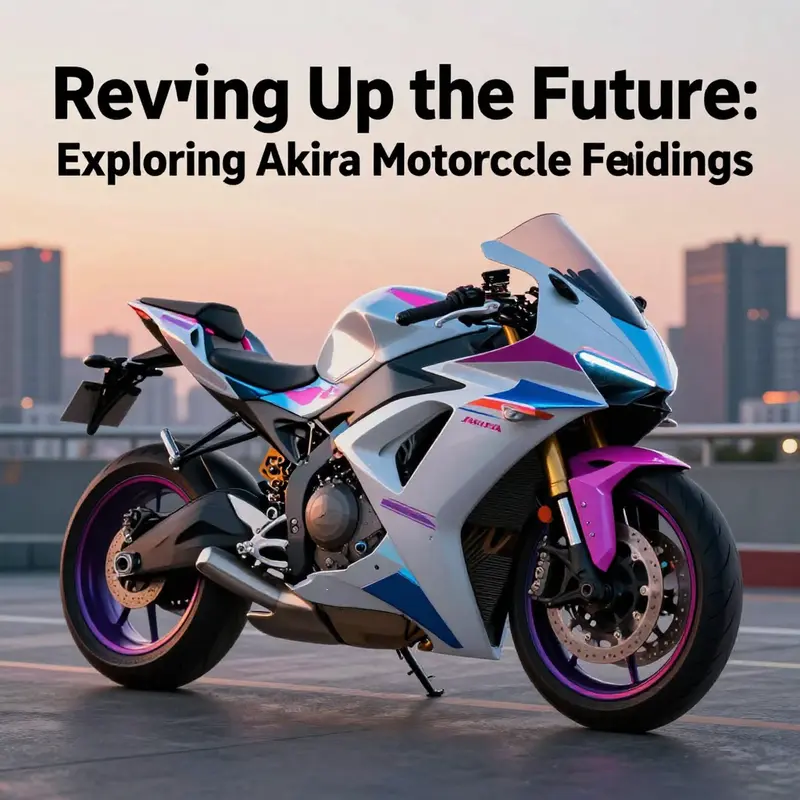
The Akira motorcycle, as imagined in the late 1980s and immortalized on screen in the 1988 film, has lingered in the mind as a symbol of how design can fuse aggressive aerodynamics with a narrative of power and rebellion. The fairing—what it looks like, how it folds around the rider, how it communicates speed before the bike even moves—becomes more than a shell. It is a language. In Akira, the fairing is not merely a protective cover; it is a mechanical exoskeleton that speaks of a future where form and function are inseparable, where metal and light fuse into one continuous line. This chapter traces the lineage of Akira’s fairing from the realm of cinematic invention into the workshop and the studio, where concept designs are translated into tangible forms without losing the story that gave them birth. It is a journey through aesthetics that read as poetry of motion and through engineering that reads as a compact manifesto on how a rider interacts with air, electronics, and steel in one breath. Although the images that first sparked the fascination belong to a fictional universe, the design language they codify has proven remarkably persistent, traveling across continents and generations to inform both the do-it-yourself sphere and the professional designer’s sketchbook. The result is a continuum in which cyberpunk dreams meet the wind tunnel, and where the line between art and engineering grows increasingly thin, almost imperceptible to the casual observer until the bike is in motion, when it becomes undeniable that the fairing is a living part of the machine’s personality and capability.
To understand the enduring appeal of Akira’s fairing is to begin with its silhouette. The rider Kaneda’s machine is instantly legible: a bold, aggressive stance that reads as a statement rather than merely a mode of transport. The fairing encases the frame with a metallic sheen, its contours sweeping in sharp, deliberate gestures that imply both speed and control. There are intricate mechanical cues—apertures that suggest air management, ribs and seams that hint at the exhaust architecture, and strategic color blocks or metallic inlays that communicate power and precision. When designers translate this fictional language into real-world concepts, they confront a fundamental tension: the need to honor the aesthetic’s dramatic identity while ensuring the piece can actually perform in daylight and in rain, at city speeds and on open highways, with rider safety and comfort never compromised. The best concept designs do not merely imitate the film’s look; they reinterpret it through the lens of contemporary materials science and manufacturing processes, turning the once fantastical alloyed surfaces into feasible, repeatable parts that can withstand the stresses of real riding without surrendering the film’s essential mood.
The narrative thread of Akira’s fairing also travels through the work of concept designers who translate cinematic cues into future-forward shapes. One such designer, noted in design communities for a distinctive series of red, forward-leaning forms, emphasizes fairing shapes that align closely with the cinematic archetype: front air intakes that demystify the air flow, a rear exhaust logic that reads as both performance-driven and sculptural, and a metallic stripe language that travels across the body in a single, continuous sweep. This approach does not merely copy features; it elevates them into a coherent system that can be adapted for different propulsion technologies while preserving the cyberpunk visual vocabulary. The result is a family resemblance that is instantly recognizable to fans yet adaptable enough for modern engineering requirements. In this way, Akira’s fairing acts as a bridge from fiction to factory floor, a blueprint for designers who want to honor a beloved aesthetic while delivering something that can actually be ridden, tuned, and repaired in the real world.
The fusion of aesthetics and engineering is especially vivid in the so-called modern interpretations that have emerged in the electric-bike sphere and in boutique shops that specialize in high-end customization. Carbon fiber becomes the preferred material not merely for its lightness but for its ability to be molded into precise, high-contrast geometries that catch the light in a way that recalls chrome and steel yet offers improved stiffness and acoustical considerations. LED strips and micro-optics provide the visual language of the cybernetic horizon—lines that glow, edges that hint at sensors and control surfaces, all integrated into a single body that seems to breathe with the rider. These contemporary interpretations keep faith with Akira’s sense of speed and power while embracing the realities of electric propulsion: the battery pack’s geometry informs the fairing’s structure, the electronics require careful routing through the frame, and the need for heat dissipation remains a driving design constraint. In this context, the fairing becomes a control surface for energy management as much as a shield for the rider, with vents, channels, and micro-reinforcements calibrated to extract maximum performance from a given package without surrendering the film’s iconic silhouette.
Interest in Akira’s fairing has also traversed into the micro-communities that celebrate customization as a form of storytelling. Collectors and builders share photographs of their experimental pieces, sometimes pairing the futuristic with the familiar by preserving the underlying geometry of a stock design while adding aggressive spoilers, vented panels, and sculpted knuckles that evoke the film’s mechanized world. The aesthetic vocabulary—clean lines, aggressive angles, metallic finishes, and the visible suggestion of internal mechanisms—serves as a semiotic shorthand for speed, rebellion, and precision. It is a language that invites interpretation: a sculptural panel that doubles as a duct, a heat-sink disguised as a decorative element, a strip of light that acts as a cybernetic spine. This interpretive flexibility is, perhaps, the most compelling aspect of Akira’s fairing: it does not dictate a single outcome but offers a grammar with which designers and builders can compose their own visions.
From the standpoint of fabrication, the Akira-inspired concept designs reveal a pragmatic side that often remains unseen in those cinematic frames. The process begins with digital modeling that explores how curves intersect with load paths and with the rider’s body geometry. Aerodynamic simulations are run not to chase a perfect, static profile but to understand how the shape behaves under a spectrum of speeds and crosswinds. The goal is not to erase the film’s dramatic angles but to ensure they perform. In practice, this means carefully balancing stiffness and weight, choosing materials whose properties complement the fairing’s geometry, and designing anchors that can accommodate the vibrations and torsion that come with riding on rough roads or at the edge of performance. It also means planning for maintenance, so the fairing can be removed, repaired, or replaced without destabilizing the overall balance of the bike. The best concepts anticipate these realities; they offer modular, serviceable architectures where panels can be swapped or reconfigured without compromising the core look—a practical homage to the film’s idea of a modular, adaptable machine for a flexible, fast world.
The fairing, in this reading, becomes a narrative device that explains why people fall in love with bikes that look like they could outrun a storm. It is a reminder that speed has an appearance, and that appearance is not merely skin-deep. The Akira-inspired shapes give the rider an impression of the wind’s behavior before the wind even arrives, suggesting a cockpit that is both secure and aggressive. The relationship of the rider to the bike changes when the fairing speaks so clearly and so boldly: the sense of enclosure tightens, the rider’s posture aligns with the machine’s lines, and the entire chassis reads as a single, purposeful organism moving through space. This alignment is what makes the concept design compelling to enthusiasts who crave not only performance but also storytelling reflected in metal and composite.
As designers push further into the 21st century, the Akira influence is less a mimicry and more a discipline. It teaches the value of silhouette language—how a few decisive vectors can evoke an entire world. It teaches restraint, too: the most revered Akira-inspired pieces avoid over-ornamentation, instead relying on the geometry of the fairing to communicate intent. When a line of light travels along a vent, or when a panel edge catches the sun and reveals its curvature, the viewer experiences a sense that this is not just a bike; it is a vehicle of a cinematic moment, a vehicle built to be seen in motion and to be reflected upon after the ride. In this sense, Akira’s fairing functions like a frame for a visual narrative—one that the rider inhabits, and that invites spectators to imagine the story of speed and power unfolding at the edge of a city night.
What does this mean for the broader motorcycle-design ecosystem? It means a recomposition of the design brief around aesthetics-as-technology. It means recognizing that the fairing is not simply a protective barrier but a performance instrument, shaping airflow, heat dissipation, and even the rider’s ergonomics. It means inviting material scientists, mechanical engineers, and digital artists to collaborate on a shared vocabulary, where the cyberpunk memory of Akira anchors ambitious projects that otherwise might seem impractical or prohibitively expensive. It means acknowledging that a chapter in anime can give birth to a new chapter in the history of machine design: a chapter where the bike’s outer shell is not a passive skin but an active participant in the ride, a living interface between rider, machine, and the environment.
For readers who want a tangible sense of how this aesthetic can translate into real, purchasable options without stepping outside the realm of credible, non-fiction contexts, a single, practical reminder helps bridge the gap between fantasy and reality: the fairing can be treated as a modular system, with discrete panels and channels that allow customization while maintaining structural integrity. Even within this framework, however, the Akira-inspired language remains a guiding light. It prompts designers to think about how a shape communicates velocity, how a texture implies durability, and how a color and a line can tell a story about the rider’s relationship to technology. It invites riders to see their machines as partners in a narrative rather than as mere devices for transportation. In the end, the Akira fairing is less about copying an image and more about rekindling a myth—the myth that speed can be beautiful, that a machine can narrate a future, and that a well-chosen line of metal and light can carry the eye forward with as much insistence as the engine carries the wheel.
To connect this narrative to present-day experiences and offerings, consider how enthusiasts discuss and share their visions within the broader culture of aftermarket customization. The community thrives on dialogue about proportions, mounting points, and the interplay of color and texture. It is a space where the historical memory of Akira’s design is constantly reinterpreted in new media, where 3D-printed inserts and precision-machined brackets allow bolder, more precise iterations than ever before. The result is a living archive, not a museum piece. Each new concept tests the balance between homage and originality, between cinematic reverie and practical riding realities, pushing the boundary of what a motorcycle fairing can be without losing the rider’s primary purpose: to move, to respond, to protect, and to connect with the road in a moment’s breath.
An important facet of this ongoing conversation concerns the material and manufacturing choices that enable these visions to move from render to road. High-performance composites offer the stiffness and lightness needed for aggressive shapes, while also permitting the complex geometries that Akira-inspired lines demand. The deployment of integrated lighting systems, moisture management features, and discreet venting elements is not a postscript but a central feature of the design that affects everything from heat management to the rider’s visibility and the bike’s overall energy efficiency. The cinematic inspiration remains a guide, but the practical demands of modern riding—safety standards, weather resistance, vibration isolation, and serviceability—shape how the final product evolves. Designers must constantly negotiate the tension between an icon’s fidelity and a bike’s real-world needs, ensuring that the aesthetic remains legible and that every surface contributes to performance rather than compromising it.
The cultural resonance of Akira’s fairing also unfolds in education and storytelling. For students and hobbyists, the fairing becomes a case study in how visual culture informs engineering practice. It invites them to ask questions about proportion, line, and light, to explore how a single design cue can transform the perceived speed of a vehicle, or how the suggestion of internal components can convey mechanical sophistication without exposing the rider to risk. This educational impulse is not about emulating a film prop but about recognizing that design language can instruct and inspire—teaching that the most effective fairings are those that communicate intent instantly, even to observers who have never ridden a bike themselves. In this sense, Akira’s influence extends beyond aesthetics; it shapes a way of thinking about how machines express their purposes at a glance, how riders interpret those signals, and how designers translate a story into a tool that moves through space with grace and precision.
From this perspective, the line between art and engineering dissolves a little more with every new concept inspired by Akira. The fairing becomes less a barrier and more a gateway: a gateway into the rider’s perception of speed, a gateway into the collaboration between material science and narrative imagination, a gateway into a future where the bike’s outer surface is as expressive as its inner organ. The enduring appeal lies in this synthesis—the ability to honor a cinematic origin while advancing the technology and practice of contemporary motorcycle design. In a field where the surface often speaks louder than the drivetrain, Akira’s fairing provides a robust, poetic vocabulary that designers can borrow, adapt, and reframe for new generations of riders who crave not just speed but meaning, not just propulsion but a story they can ride into and beyond. If this is the dream, then the ongoing workshop of concept designs will continue to refine and reinterpret it, ensuring that the legacy remains not a static image but a living, evolving dialogue between cinema, studio, and street, where every turn of the wheel is a line of verse in a kinetic epic.
For readers drawn to the practical side of how such aesthetics find their way into real options, there is a bridge to existing aftermarket ecosystems. A thoughtfully designed Akira-inspired fairing can coexist with a rider’s desire for customization without sacrificing reliability or resell value. It is possible to conceive a modular set of panels that can be swapped with minimal downtime, allowing owners to alternate between a futuristic red narrative and a more restrained, street-legal profile as needed. The design discipline thus embraces flexibility, offering a spectrum of choices rather than a single, rigid solution. And because this approach aligns with contemporary manufacturing trends—digital-to-manufacture workflows, rapid prototyping, and scalable production techniques—it remains accessible to a broad audience of enthusiasts who want to express their passion without compromising on safety or durability.
As the conversation progresses, it becomes clear that Akira’s fairing is not a relic of an animated future but a continuing source of inspiration. It prompts designers to consider not only how to create beauty but how to deliver it in a way that endures, adapts, and translates into real riding experiences. The fairing, in its most effective incarnations, serves as a reminder that engineering can be seductive and that storytelling can be practical. The best iterations honor both impulses: they respect the icon’s mood and rhythm while ensuring that every component—the air intakes, the vents, the mounting points, the inner supports—serves a legitimate purpose in the rider’s day-to-day life. In this convergence of art and function, Akira’s fairing becomes a kind of compass for a broader design culture that prizes clarity, precision, and imagination in equal measure.
For those who want to explore this aesthetic in a curated, tangible way, consider engaging with the broader ecosystem of aftermarket fairings and related components. A well-chosen set can align with the Akira-inspired narrative while delivering the practicalities demanded by real-world riding. The opportunity lies not just in recreating a look but in cultivating an expressive, performance-driven platform on which riders can write their own chapter of the cyberpunk-influenced future. In the end, Akira’s motorcycle fairing is more than a design exercise. It remains a compelling invitation to imagine speed as a conversation between light, metal, and air; to treat the rider as a participant in a living design; and to recognize that, in the right hands, a fairing can be both a shield and a statement, a functional shell and a cinematic message all at once.
Internal link for further perspectives on contemporary fairing options can be found here: Kawasaki fairings collection.
External resource: https://www.carinterior.com/which-anime-motorcycle-designs-became-real-a-guide
Wired Silhouettes: Akira-Style Motorcycle Fairings in Modern Customization
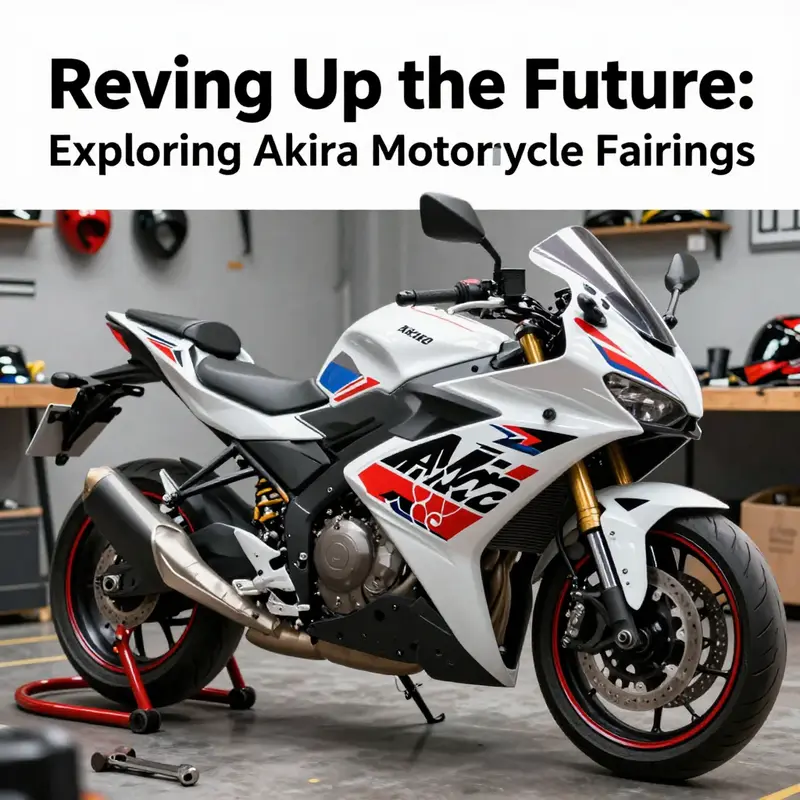
The Akira-inspired fairing has become more than a style statement; it is a cultural artifact that sits at the intersection of art, engineering, and a rider’s identity. The film’s silhouette—sharp angles, aggressive lines, and a sense of motion frozen in steel and plastic—continues to shape how enthusiasts imagine a bike that looks fast even when standing still.
In practice, Akira-inspired fairings are built around a simple design vocabulary: shape, substrate, and light. Shape defines the bike’s forward posture, the way the nose folds into the cockpit, and how a sculpted tail reads from every angle. Substrate refers to materials and fabrication techniques—carbon fiber for strength and lightness, reinforced fiberglass for cost-effective variants, and high-performance polymers for complex curvature. Light is the modern accent, with LED runs and subtle underglow that highlight the geometry without overwhelming the silhouette.
Practical considerations anchor the fantasy. Builders often start with a base platform that can carry the look without forcing a complete chassis redesign. Fitment data, windscreen height, brackets, and radiator geometry become the constraints that shape the final form. The result is a modular family of kits rather than a single universal solution, offering adaptability across a range of sport and street bikes while preserving the fierce cinematic mood.
Manufacturing realism remains essential. Vacuum forming, precision layups, and CNC-guided molds enable the razor-edged geometry seen on the screen while delivering durability under road conditions. Finishes—gloss, matte, edge detailing, and color relationships—are chosen not only for beauty but for how they resist sun, rain, and road debris. Some builders chase hyper-accuracy; others opt for an interpretation that channels the film’s energy through fewer defining cues, always balancing aesthetics with ride comfort and reliability.
Beyond technique, a community culture sustains the Akira look. Galleries of progress posts, shared molds, and open source fitment notes turn a cinematic fantasy into a reproducible process. The most enduring builds translate a moment from cinema into a practical riding experience, proving that speed, control, and storytelling can travel together on two wheels.
If you are beginning a project, seek base-model compatibility, documented measurements, and reputable paint partners who can reproduce the film’s color relationships without compromising durability. The goal is not to clone a single frame but to translate the essence of Akira’s geometry into a rideable form that respects the bike, the rider, and the road.
The Akira-inspired movement remains a living dialogue between cinema and street, a field of possibilities where imagination meets engineering. This chapter invites you to explore that dialogue, test fit in your shop, and contribute your own line to a global conversation about speed, edge, and personal legend on two wheels.
Chrome, Neon, and Rebellion: The Akira Aesthetic Shaping Modern Motorcycle Culture
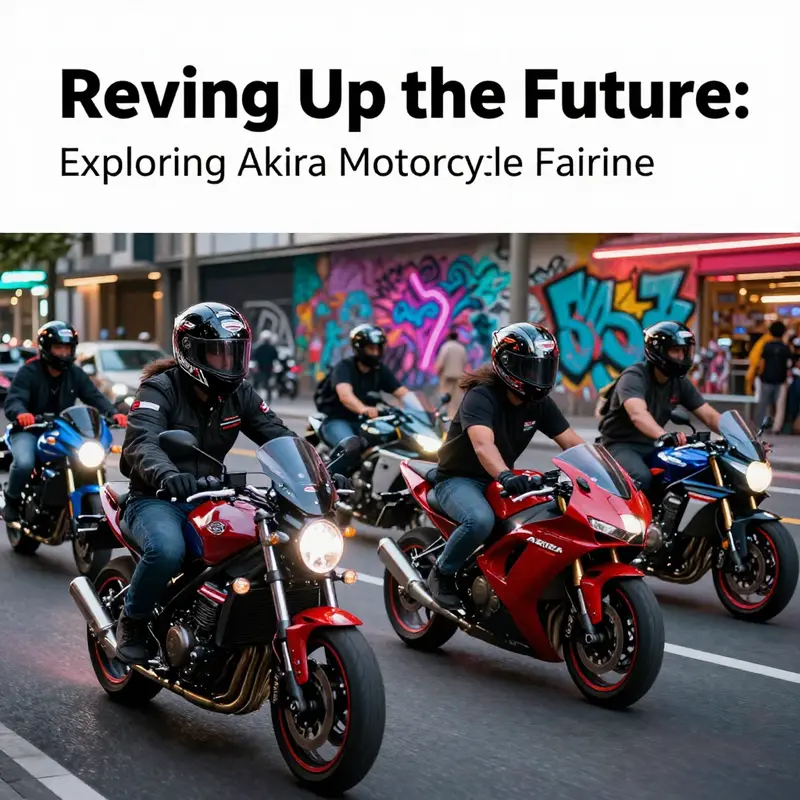
The Akira aesthetic did not merely arrive as another visual trend in motorcycle culture; it arrived as a framework for seeing the machine itself as a canvas of personal sovereignty and futuristic rebellion. Katsuhiro Otomo’s 1988 anime, with its starkly drawn cityscapes and armored riders, offered a language that fused cyberpunk futurism with the tactile intimacy of mechanical craft. When riders looked at the film’s stylized bikes—glinting chrome, exposed wiring, angular fairings that read as protective armor rather than mere shells—they saw a blueprint for how true customization could transform a machine into a portable sculpture. The impact extended beyond paint schemes or glowing accents. It reshaped how people talked about speed, space, and self-expression on two wheels, turning the motorcycle into a moving myth rather than a simple device for commuting or recreation.
The visual vocabulary of Akira is instantly recognizable: neon tracers that sketch the air around a bike in motion, jagged lines that favor sharp geometric forms, and a sense of architecture rather than mere surface decoration. This is not cosmetic polish; it is a narrative choice. The rider becomes a character in a larger story about urban life, power, and the edge between control and chaos. The film’s biker gang, a spectrum of reborn street legends and technocratic bravado, crystallizes a particular zeitgeist. Their bikes, clad in armor and lit from within, suggest a hybrid of motorcycle engineering and stagecraft. In real-world garages and showrooms, that same longing for a machine that communicates who you are—without saying a word—has translated into a distinctive approach to fairings, frames, and lighting. The Akira influence nudges riders toward a philosophy: let the bike’s silhouette carry a message as forcefully as its engine carries you forward.
In practice, the election of form over function, or perhaps more accurately, form as function in disguise, translates into a design ethic that many builders and riders find deeply resonant. Akira’s riders inhabit a space where the bike is a vehicle for storytelling as much as for transportation. The fairing, once primarily a wind-deflecting shell, becomes a co-creative surface—part sculpture, part theater. The armor-like panels, the visible bracing, the membranous filigree of wiring that peeks through gaps in the metal—these elements are not just for show. They signal a stance: we do not simply ride; we narrate through velocity, through the chorus of mechanical parts working in concert. The Akira aesthetic, with its cyberpunk iconography, invites a rebellious gaze—one that questions conformity and dares to redefine what a motorcycle can be in a city that constantly tests the limits of motion and control.
This cultural shift did not emerge in isolation. It grew from a global network of riders, builders, photographers, and enthusiasts who share a language of experimentation. The film’s influence travels through the hands of custom bike builders who translate cinematic iconography into tangible pieces. A fairing is no longer a purely aerodynamic component; it is a canvas for dramatic angles and luminescent detail. Angles become statements, and the wind-cutting profile is measured not only by drag coefficients but by how the silhouette reads at a glance. A rider’s choice of lighting—neon tubes, LED matrices, halo rings—becomes a visual echo of the film’s electric skyline. The motorcycle emerges as a hybrid of street gear and gallery piece, designed to be observed from the curb and from the rider’s own perspective while moving at speed. The Akira influence makes the act of riding feel like a staged performance where safety, speed, tradition, and futurism are all part of the choreography.
The cultural ethos that accompanies the Akira aesthetic is equally consequential. It reframes the relationship between rider and machine as one of mutual autonomy rather than passive consumption. In many quarters of the global riding community, the Akira-inspired rider is someone who asserts personal taste as a form of resistance against uniformity. The bike becomes a narrative of choice—a visual diary of trials, triumphs, and the incremental compromises that come with modifying a machine to suit a particular temperament. The ethos is less about matching a particular look and more about building a coherent identity: an attitude that values craftsmanship, risk-taking, and a certain openness to improvisation. This is where the Akira aesthetic intersects with broader questions about mobility in contemporary cities. Urban environments that demand efficiency and standardization suddenly seem hospitable to individuals who want to carve out a lane for imagination, even if that lane includes neon-lit fairings and exposed mechanical innards as a form of camouflage against the sameness of the city.
If one wants to understand the aesthetic’s appeal, it helps to think of motorcycles as symbols, and the Akira-inspired bike as a symbol with a backstory. The film stages motorcycles as instruments of power and rebellion, not simply as tools for getting from point A to point B. In real life, this symbolism translates into a design language that many riders use to communicate their own aspirations. A rider’s choice to highlight alloy surfaces or to reveal internal components through translucent panels is less about showing off mechanical complexity and more about telling a story of raw capability. The motorcycle, in this sense, becomes a character whose evolution mirrors the rider’s own path—an ongoing narrative that unfolds with each ride through traffic, weather, and the city’s changing contours. The Akira influence also fosters a sense of community around shared references. The mythic aura surrounding the film’s world invites gatherings, exhibitions, and informal road rides where participants compare silhouettes, lighting schemes, and the way the bike “reads” in different environments—from neon-lit urban nights to sun-bleached rural lanes.
Community, in turn, becomes the living archive of the Akira aesthetic. Annual gatherings, pop-up showcases, and curated photo sessions provide a space for experimentation to be witnessed and judged by peers, for better or worse. These events become a practical laboratory for realizing the film’s vision: bikes that blend artful sculpture with speed-optimized engineering. The process often begins with a concept sketch or 3D render, but it quickly moves into a realm where craft, electronics, and metallurgy must work in harmony. The panel lines that appear in the film as razor-thin creases become guidelines for real-world fairing geometry. Builders draw inspiration from the film’s geometry—bold planes, sharp intersections, and layered shading that catches light in a way that makes the bike appear almost sculptural as it moves. The result is a kinetic sculpture that happens to be powered by a motorcycle engine, a combination that speaks to a desire to transform engineering into storytelling.
The symbolism of motorcycles within the Akira framework extends beyond aesthetics. It resonates with the broader cultural narrative of speed as freedom and agency. In many urban centers, speed is both a practical necessity and a contested ideal—a symbol of individuality within a crowded, regulated space. Akira’s motorcycles embody a paradox: they appear effortless in motion, yet the craft behind them is anything but. The rider’s control over such a machine becomes a metaphor for personal sovereignty. The fairing, armor, and integrated lighting are the outward signs of that sovereignty. They signal to other road users that this rider’s path is chosen, not passively accepted. In this sense, Akira’s influence is as much about psychology as it is about aesthetics. It invites riders to claim public space with confidence while simultaneously acknowledging the fragility of that space in dense urban environments.
The chapters of this cultural conversation also reveal how technology and artistry interweave. The Akira-inspired fairing design embraces a modular, adaptable approach. It borrows from aerospace and automotive cues—vented panels, cooling intakes, heat-resistant composites, and light-diffusing surfaces—all while staying grounded in the intimate, tactile rituals of motorcycle modification. The result is a hybrid practice: builders balance aerodynamic benefit with sculptural impact, durability with dramatic presence. This balance is not incidental. It embodies a practice in which form informs function and function, in turn, enriches narrative. When a rider leans into a corner, when the tail of the bike catches a streetlight, the fairing’s geometry and lighting work to communicate velocity, intent, and emotion. The rider becomes a courier of a story that moves as fast as the machine itself, a story that invites onlookers to imagine their own chapters in a world where the street is a canvas and the bike is the brush.
In the broader ecosystem of motorcycle culture, the Akira aesthetic’s influence extends into how people document and share their builds. The rise of design-forward photography and cinematic styling around bikes has created a feedback loop: more riders aspire to a cinematic look, and more builders respond with even more dramatic, film-inspired silhouettes. This ongoing dialogue is not about replicating a single image but about iterating a language that emphasizes contrast—between neon glow and shadow, between polished metal and weathered steel, between city noise and the quiet precision of a finely tuned engine. The fascination with glow, the willingness to expose cabling for a raw, “engineered” appearance, and the use of angular, almost armor-like fairings all appear as deliberate choices that reflect the influence of Akira’s visual grammar.
Design platforms and creative communities have played a crucial role in translating this aesthetic into something accessible for riders who may not want to embark on a full-blown, bespoke build. The proliferation of modular components and design kits offers a pathway toward achieving a similar silhouette without sacrificing safety or practicality. Even as these materials are repurposed from different generational cues, the underlying intent remains tied to the Akira spirit: to craft machines that are not just transportation devices but storytellers in motion. The attention to how light interacts with surface, how lines guide the eye along a bike’s frame, and how a silhouette can convey speed before the engine roars—all of these reflect a design philosophy that makes the bike a visual instrument as much as a mechanical one.
Within this chapter, it is essential to acknowledge the careful balance between homage and originality. For many riders, the aim is not to clone a cinematic universe but to honor the mood and energy of Akira while incorporating personal history and local riding realities. The city becomes a studio, the bike a canvas, and the rider a curator who selects from a palette of angles, finishes, and lighting effects to compose a unique, living artwork. In practice, this means engaging with both the aesthetics and the engineering constraints of the project.An armored fairing that looks spectacular in a photo must also withstand real-world wind pressures, debris, and weather while remaining maintainable. The dialogue between art and engineering is continuous; compromises are negotiated, not discarded. The best Akira-inspired builds tend to harmonize bold visual statements with reliable mechanical performance. That harmony is what sustains the subculture’s growth—riders who want to push the envelope while keeping the ride enjoyable and safe.
The narrative of Akira’s impact on motorcycle culture is thus not a single chapter in a fashion magazine but a living, evolving story told by people in garages, at shows, and along long stretches of highway. It is a story about how aesthetics can empower communities to imagine new futures for themselves, how design can reframe the street as a space of possibility, and how subcultures can flourish when there is a shared, reverent attention to the machines that carry them. The fairing becomes a chapter header in that story—a bold, forward-leaning line that announces, with confidence, that motion is a form of expression. When we look at the Akira-inspired silhouette, we glimpse not just a particular style but a commitment to rethinking how a bike is perceived, how it moves, and what it can say about the rider who chooses to ride it.
For readers who want to explore how such sensibilities translate into real-world parts and assembly options, a practical entry point is to consider how modular fairing systems can support the Akira-inspired aesthetic without requiring a full custom build from scratch. The concept of modularity aligns well with the idea of a bike as a personal canvas. By selecting a combination of angular panels, exposed structural elements, and strategic lighting, riders can achieve a look that is recognizably Akira-inspired yet uniquely their own. This approach also helps address concerns about safety and maintenance, as modular components can be swapped or upgraded as needs change, allowing the rider to evolve the bike’s visual language over time without starting from zero each season. In this sense, the Akira influence becomes not only a stylistic choice but a practical philosophy for ongoing customization. The goal is to strike a balance between the film’s iconic future-forward mood and the rider’s everyday realities on the road, in terms of weight, aerodynamics, and reliability. The road, after all, remains the ultimate judge of any aesthetic experiment, and the best experiments are those that endure under real use while still conveying a sense of wonder and possibility.
Within this broader conversation, it is worth noting how the Akira-inspired look interacts with other design currents in motorcycle culture. The blend of retro-futurism with modern materials and electronics creates a dialogue across generations of riders. It echoes classic lines of sport and street bikes while infusing them with a digital glow and a sense of kinetic sculpture. The result is not a single trend but a family of expressions—the same idea expressed in slightly different keys, each voice contributing to a chorus that celebrates speed, form, and storytelling. As this chorus grows, so too does the community’s appetite for sharing, critiquing, and refining ideas about what a motorcycle is capable of communicating when it is given a head, a heart, and a tail with a story to tell. In this way, Akira’s influence remains dynamic, not static; it invites continuous interpretation, discussion, and reinvention.
For readers who wish to trace a tangible thread from cinema to street, consider the practical realities that undergird these aesthetic choices. The fairing, as a primary element of the bike’s visual identity, serves multiple duties: it protects riders from wind and debris, it shapes air flow for cooling and performance, and it frames the rider in a sculptural light that makes the bike appear both streamlined and fortressed. When combined with internal lighting cues, these fairings can transform nighttime riding into a theatrical experience while still preserving all functional responsibilities. The Akira look encourages bold contrasts—gloss against matte, bright neon against muted metal, rigid panels against flexible mounting points—that together articulate a narrative of resilience and improvisation. The appeal lies in how these contrasts, curated with a steady hand and a clear sense of purpose, give life to machines that are as much about visual poetry as they are about mechanical precision.
This chapter thus invites readers to see the Akira aesthetic not merely as a style but as a philosophy of motion and identity. It is a reminder that the motorcycle is a cultural artifact whose meaning emerges through the hands that shape it and the eyes that read it. The film’s influence persists because it taps into something essential about riding: the desire to be seen, to belong, and to push beyond conventional limits. The bikes inspired by Akira carry that charge into the present, where the lines between fiction and fabrication blur and the street becomes a stage for ongoing experimentation. The result is a living, evolving culture in which technology and artistry meet in the same breath, where the fairing is both shield and stage, and where every ride is a small, rebellious act of storytelling on two wheels.
If you want to see how these ideas translate into actual parts and build paths, explore the practical routes designers take to achieve the Akira-inspired silhouette while staying grounded in real-world constraints. For a clearer sense of how modular or readily available components can contribute to a similar visual impact, you can review the fairing collections that are commonly used by riders seeking adaptable, high-geometry profiles. As a starting point, you can browse the collections/honda-fairings to understand how modular panels and finishing options can be orchestrated to form a striking, battle-ready stance that echoes Akira’s armored bikes while remaining accessible to enthusiasts who are building toward a unique, personal style.
In sum, the Akira aesthetic has redefined how riders narrate their presence on the road. It has turned the fairing from a mere shield into a storytelling device, a piece of kinetic sculpture that travels with you. It has fostered a community that values both the beauty of design and the discipline of craft. And it has inspired a generation to see the motorcycle as a moving monument—a machine capable of articulating fearlessness, ingenuity, and a cinematic sense of possibility with every turn of the throttle.
External resources deepen this conversation by offering broader context on how cinema influences motorcycle culture. For a deeper exploration of the Akira aesthetic, see this external resource: Akira aesthetic impact on motorcycle culture. https://www.motorcycle.com/akira-aesthetic-motorcycle-culture-influence/
Final thoughts
The Akira motorcycle fairing phenomena is not merely about aesthetics; it weaves together elements of culture, community, and individuality. As business owners look to adapt to these trends, understanding the significance of the Akira-inspired fairing offers insights into a rich market filled with passionate enthusiasts. The blend of iconic design and personalized customization continues to captivate riders, illustrating that in the world of motorcycles, art and function can beautifully coexist.