
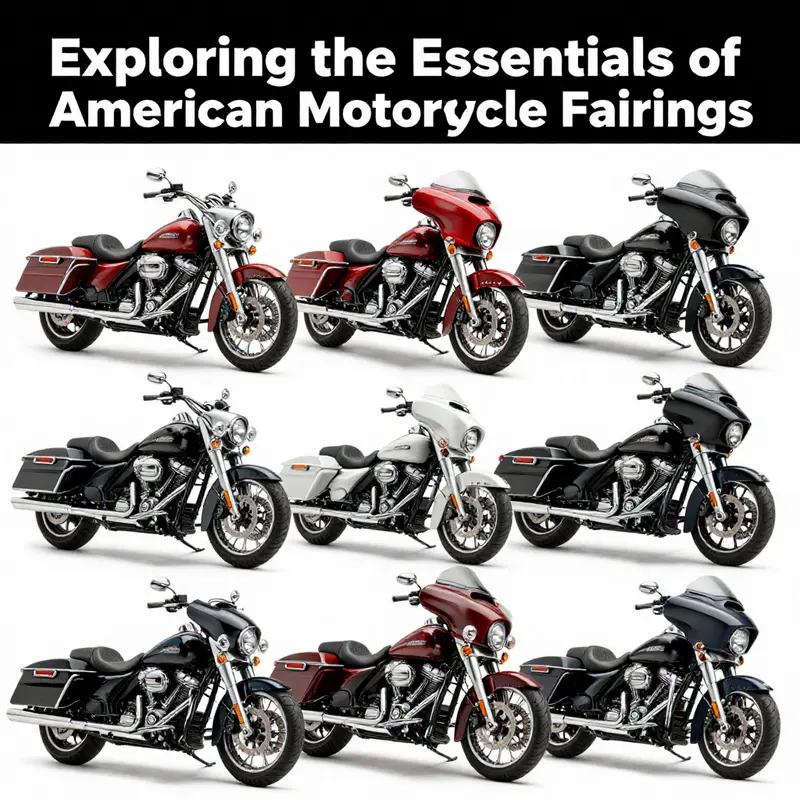
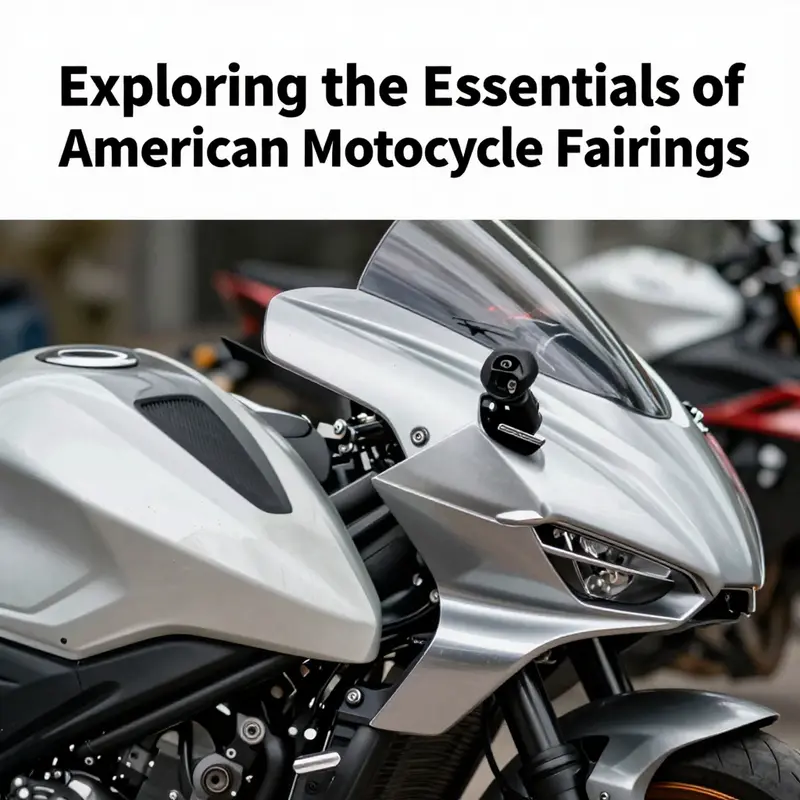
American motorcycle fairings play a pivotal role in enhancing both the performance and aesthetic appeal of motorcycles. For business owners in the motorcycle industry, understanding the intricacies of these components can lead to better product offerings and increased customer satisfaction. Fairings serve not only to improve aerodynamics by reducing drag and wind resistance but also to bolster the visual identity of the motorcycle. The following chapters delve deeply into the various types of motorcycle fairings, the materials used in their construction, the economic landscape affecting the market, and the ever-evolving trends in customization, providing a comprehensive overview that will aid business owners in making informed decisions.
null
null
null
null
Riding the Market: Economic Currents Shaping American Motorcycle Fairings
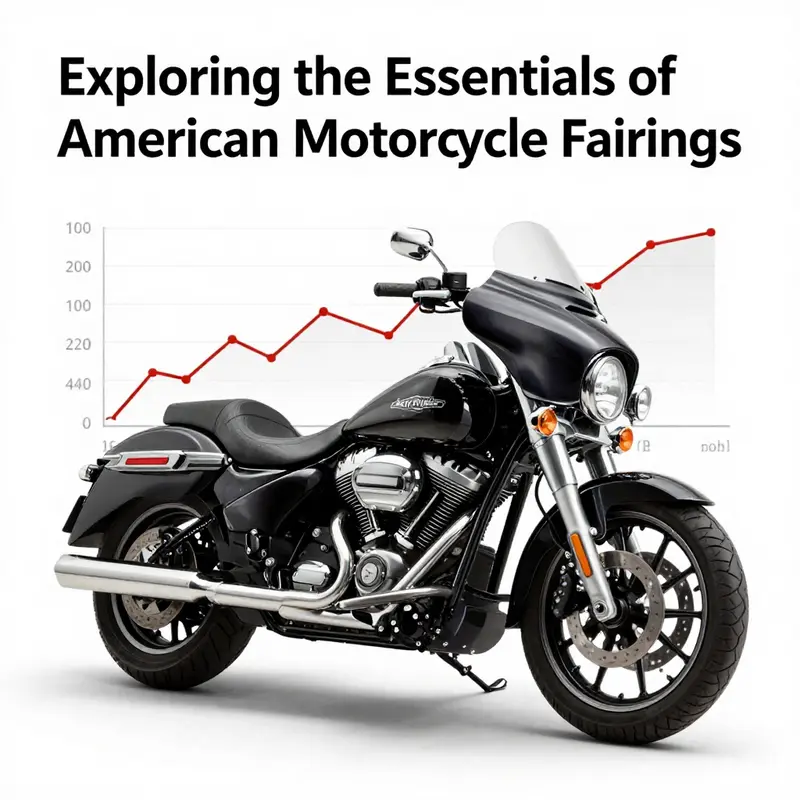
Fairings do more than cloak an engine in sleek lines. In the American motorcycle landscape, they function as a critical intersection of aerodynamics, materials science, and consumer economics. They sculpt how air flows over a bike, influence stability at highway speeds, and quietly determine fuel efficiency by trimming drag. Yet behind every well-designed nose cone and side panel lies a web of economic decisions—costs, supply chains, and market signals—that reshape what riders expect and what manufacturers can deliver. The result is a market whose trajectory is not simply a function of taste, but a chorus of influences that starts with technology and ends with a better ride on the road. To understand how these forces play out, it helps to look at four economic currents that consistently steer the fairing market: technological advancement, market growth, economic headwinds, and shifting consumer preferences. Together they create a dynamic that rewards durable value, precise fit, and credible performance claims as much as it does eye-catching styling.
Technology has become the invisible hand guiding fairing design. Lightweight, high-strength composites, and precision fabrication methods are more accessible than ever. Advances in materials science allow manufacturers to push the envelope on aerodynamics while reducing weight, and they enable fairings that resist impact and endure through long miles of riding. The adoption of CNC machining for mounting points, the switch to fiber-reinforced plastics, and the growing use of finely tuned resins all contribute to fairings that are stiffer, more form-stable, and more forgiving under stress. Riders sense the payoff as smoother air over the torso, reduced buffeting at high speeds, and a chassis that feels more planted on a windy highway. This is not merely about performance gains; it is a translation of engineering into everyday riding comfort. When a fairing design can deliver measurable reductions in rider fatigue over a long distance, it becomes part of a value proposition that customers weight alongside style and price. In this sense, technology acts as a multiplier for perceived quality, allowing brands to justify analytical costs with tangible riding benefits.
Market growth in the broader motorcycle segment is another powerful signal that shapes the fairing market. The global market has demonstrated resilience, with forecasts pointing to a step-up in value as the economy recovers and more people view motorcycles as both recreation and practical transportation. In the United States, demographic shifts have broadened the pool of potential riders. Younger riders, in particular, are embracing motorcycles as an affordable mobility option and a lifestyle choice, while a segment of riders seeks longer-range, touring-capable machines that demand advanced fairing systems. This convergence of affordability with performance needs creates a natural demand for fairings that balance wind protection with weight, and that can support long-distance comfort through features like integrated storage, ergonomic shapes, and adaptable windshields. As consumers expect more from every mile, the market rewards fairings that offer durable protection, consistent fit, and tasteful, modern aesthetics—areas where quality and brand reputation become competitive differentiators. The market, in effect, is telling manufacturers to invest in better fit, better materials, and better after-sales support as a baseline expectation rather than a premium add-on.
Yet the path to growth is not free from friction. Economic headwinds—rising inflation, fluctuating currency values, and persistent supply chain disruptions—interact with raw-material costs to shape what fairings cost and how quickly they reach buyers. The costs of key inputs such as reinforced resins, fiberglass, carbon fiber composites, and specialized finishes can swing with global demand. When supply chains tighten or shipping lanes clog, lead times lengthen and carrying costs rise. In periods of elevated input prices, manufacturers must balance the demand for premium, higher-margin fairings with the pressure of keeping fairings affordable for a broad rider base. The result is a dual discipline: tighten the engineering and manufacturing tolerance to protect price integrity, while preserving the performance and fit that riders rely on. This tension often drives manufacturers toward more efficient production planning, multi-sourcing strategies, and lean inventory practices. It also makes the aftermarket space more important, since riders increasingly consider replacement or upgrade options that optimize both aerodynamics and personal style, particularly for touring-oriented riders who demand sophisticated wind protection and dependable durability.
Shifts in consumer preferences further contour the shape of the market. The touring motorcycle segment has surged in prominence for many riders seeking long-distance comfort, stable handling, and integrated storage solutions. Fairings that can house larger windscreens, offer better protection from crosswinds, and accommodate additional features tend to electrify interest in premium options. At the same time, the naked and standard bike segments still command attention, driving demand for lighter, less obtrusive fairings that preserve the bike’s character while still delivering some wind-deflection benefits. This divergence pushes manufacturers to design modular or adaptable fairings—parts that can be swapped or reconfigured to meet different riding styles without sacrificing structural integrity or alignment with existing body lines. For consumers, the emphasis shifts toward value propositions centered on comfort, durability, and the long-term cost of ownership. When a rider traces the economics of a fairing purchase, they consider not only the sticker price but the extended life of the part, the ease of installation, the availability of compatible mounting hardware, and the predictability of service or repair work in the future.
The strategic implications for players in this market are clear. Companies that invest in research and development to push performance thresholds while maintaining reliable, repeatable manufacturing processes tend to capture share more effectively than those who rely on price alone. A robust supply chain is equally essential. The feedstock for fairings—resins, fibers, and plastics—must be available at predictable costs and in consistent quality. Global disruptions can ripple through the entire production cycle, delaying new model launches or forcing substitutions that affect fit and finish. To manage this, firms are increasingly adopting dual-sourcing strategies for critical materials, maintaining higher levels of on-hand inventory for components with long lead times, and strengthening relationships with suppliers who can deliver consistent quality even when market conditions tighten. All of this has a direct impact on the consumer experience. When a fairing arrives with pristine fit and a finish that holds up under sun exposure, it reinforces a brand’s reputation for reliability, an intangible asset that compounds with every satisfied ride and every positive review.
The aftermarket ecosystem plays a pivotal role in extending the life of the fairing market. While OEM parts set the baseline for fit and durability, aftermarket options offer personalization and performance optimization that many riders crave. Custom or aftermarket fairings allow for distinctive styling and niche aerodynamic tuning that can complement a rider’s preferred posture or riding environment. This does not simply expand the catalog; it changes what constitutes a fairing’s value proposition. Quality control becomes more challenging in an environment where parts are produced by a broader network of suppliers with varying capabilities. The most successful aftermarket providers are those who align with core engineering standards, provide robust fitment data, and offer clear installation guidance. They also focus on compatibility and reliability to keep a rider’s investment protected when swapping out sections or upgrading to newer configurations. In this sense, the fairing market becomes less a single product category and more a spectrum of adaptable, modular solutions that can evolve alongside a rider’s skills and ambitions.
From a business perspective, the market demands a trifecta: rigorous R&D, resilient supply chains, and a compelling service promise. Innovation in materials and manufacturing can translate into smaller, more aerodynamic forms that still meet safety standards. But innovation must be tempered with realism about costs and manufacturing feasibility. The most durable brands are those that communicate a clear value proposition—how a given fairing improves handling, reduces fatigue, or enhances the riding experience—while maintaining consistent quality and predictable delivery schedules. Brand equity, built through dependable performance, clear fitment data, and responsive customer service, often earns riders’ trust twice: at the point of sale and during ownership, when service and replacement parts become part of the ongoing relationship. This emphasis on service is not a secondary afterthought; it is essential to sustaining demand, especially as consumers increasingly expect hassle-free experiences alongside premium performance.
For riders exploring a broad spectrum of options, the catalog of fairings becomes a practical resource. A well-curated collection demonstrates not just how a fairing looks, but how it aligns with different riding goals and geographic realities. A rider who plans frequent highway journeys across varying weather conditions will prioritize wind protection and stability, while a city rider may seek lighter components with quicker handling. The availability of reliable mounting systems, color-matched finishes, and durable surface treatments contribute to a positive ownership experience and are often what tip a buyer toward one option over another. In this context, the market rewards transparency—clear fitment information, honest performance claims, and straightforward installation guidance that minimizes the guesswork and the potential for misfit parts. The result is a mature ecosystem where new entrants can compete by offering superior engineering, not just appealing aesthetics.
To illustrate one practical way the market communicates its breadth, consider the broad catalog of fairings available across categories and brands. Even if a buyer’s focus is on a specific riding style—say, a touring configuration with a full windscreen and integrated luggage—the underlying requirements are consistent: precise engineering to maintain stability at speed, robust attachment points to survive long-distance use, and surface finishes that resist UV exposure and chipping from road debris. These requirements translate into real-world decisions about materials, manufacturing tolerances, and finishing processes. When a rider reads a product description, they are not only evaluating form but also whether the part will integrate cleanly with existing hardware, whether the mounting instructions are straightforward, and whether the supplier offers after-sales support for installation or future replacements. These are not abstract concerns; they are the operational details that determine whether a fairing will become a reliable long-term component of a rider’s machine or a transient upgrade that soon becomes a maintenance headache.
The broader economic narrative also emphasizes the importance of compatibility. In a market crowded with variations across makes and models, the ability to deliver compatible fairings without bespoke engineering is a competitive advantage. Standardized mounting patterns, modular design approaches, and careful documentation reduce installation time and error rates, which in turn lowers warranty costs and enhances customer satisfaction. For manufacturers and retailers, this translates into opportunities to capture greater share by emphasizing consistent fitment and rapid availability, rather than simply chasing the latest stylistic trend. The balance between form and function thus becomes a strategic axis around which the market orbits. Riders who value looks will still lean toward bold lines and glossy finishes, but the most satisfied customers often come from those who found a fairing that delivers real-world benefit without complicating upkeep.
In examining how these forces converge, it is instructive to view the catalog as a reflection of the market’s priorities: durability under the elements, predictable quality at predictable prices, and a service structure that supports long-term ownership. This is the axis that aligns engineering ambition with consumer realities. The fairing market thus rewards labs that push technical boundaries while maintaining practical production ecosystems. It rewards suppliers who can offer consistent, quality-controlled parts and who can navigate the ebbs and flows of input costs with smart procurement and agile manufacturing. And it rewards brands that communicate clearly about what their fairings can do, how they fit, and how to care for them over time. When all these threads come together, the rider experiences a coherent, confident product story—from the moment a part is selected to the moment it becomes a trusted companion on long rides.
For readers who want to explore a concrete example within this broader framework, a catalog that emphasizes compatibility and fit across a range of models can serve as a useful reference point. A curated collection that highlights interchangeable mounting systems and standardized dimensions can illuminate how manufacturers prioritize cross-model compatibility without sacrificing performance. This kind of catalog not only helps riders identify suitable options but also demonstrates how market dynamics push for scalable, repeatable production. It is in these practical details—the precision of fit, the predictability of lead times, and the steadiness of after-sales support—that the economic story of American fairings unfolds most clearly. In the coming chapters, we will see how these principles manifest in different segments, how aftermarket ecosystems expand the options for riders, and how policy and trade considerations feed back into the price and availability of components that are, in many ways, the armor and the signature of the modern motorcycle.
Internal link example for readers seeking a catalog breadth: explore the Honda fairings collection to glimpse the range of shapes, mounting options, and finishes that illustrate how a well-structured catalog communicates value through compatibility and quality. Honda fairings collection
External resource for market context: for a broader view of market size, ROI, and brands shaping the fairing landscape, see the external market research resource at MarketsandMarkets, which outlines the trajectory from $140 billion in 2025 toward roughly $175 billion by 2029, underscoring how technology, supply chains, and consumer demand intersect in this evolving space. https://www.marketsandmarkets.com/Market-Reports/united-states-motorcycle-fairing-market-36818881.html
Forging Velocity and Voice: Customization at the Heart of American Motorcycle Fairings
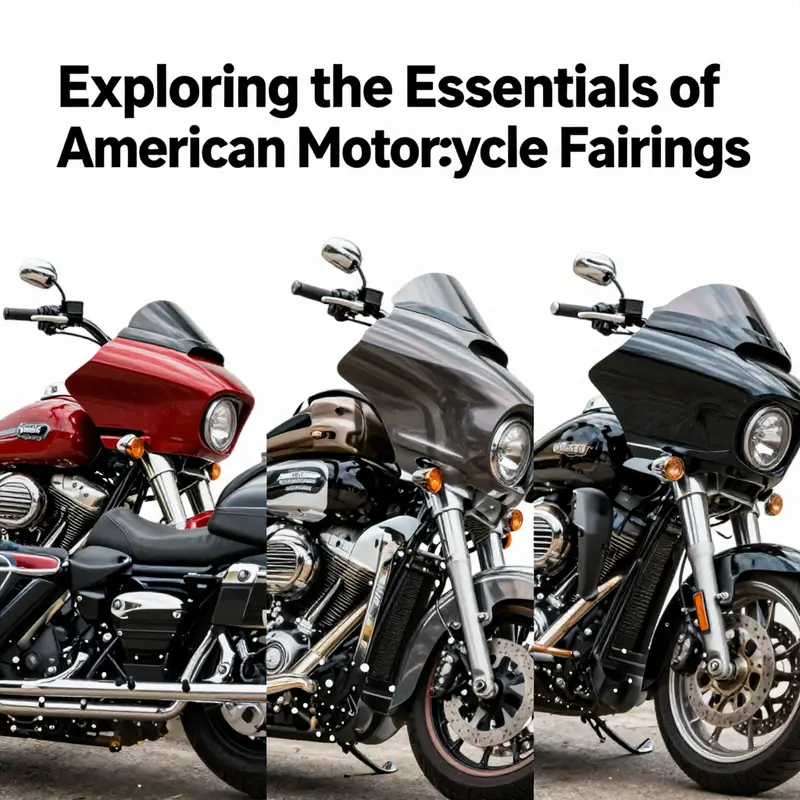
Riders across the United States are redefining what a fairing can be. No longer a simple shield against wind and weather, the modern American fairing is a canvas for personal identity, engineering rigor, and connected living. The chapter that follows traces how customization has moved from a niche indulgence to a central design philosophy. It reveals how application-led innovation, advanced materials, and integrated technology cohere into fairings that not only cut through air but tell a rider’s story through shape, texture, and intelligent function. The narrative remains anchored in the practical realities of riding: wind management, weight, rigidity, and durability, but it opens toward a broader view where the fairing is a system that links rider, machine, and environment in a seamless loop of performance and expression.
Aerodynamics remains the compass, yet the path to optimal airflow has grown richer and more deliberate. Modern design teams recognize that rearward air separation, edge treatment, and internal ducting interact with a rider’s posture, gear, and riding rhythm. A fairing tuned for long highway miles emphasizes calm airflow, minimal buffeting, and quiet cabin pressure, while a package aimed at canyon carving privileges crisp response, reduced under-hood turbulence, and edge control in turns. This duality reflects a core truth: customization in the American scene is less about chasing a single optimal form and more about building adaptable systems that respond to the rider’s context. The result is a language of shapes where broad surfaces, sculpted channels, and carefully placed intakes work in concert with the rider’s anatomy, the bike’s geometry, and the road’s demands.
If the early era of aftermarket fairings was about replacing a factory shell with something more stylish or tough, today’s practice blends aesthetics with performance. The concept of application-led innovation sits at the center. Builders ask not only how a shape looks, but how it behaves at lean angles, on gusty straights, or during sustained wind loads at highway speeds. The answer often involves a mix of form and function: a wider, more enveloping shield may deliver comfort on long rides by reducing wind fatigue, while a leaner silhouette can minimize parasitic drag and maintain helmet clearance when adopting aggressive riding postures. In this ecosystem, the fairing is a dynamic interface that negotiates the rider’s needs with the machine’s capabilities. It has become common to see adjustments in curvature, a revised fairing chin, or a recontoured tail that guides the air more efficiently around the engine bay and rider, with the underlying goal of reducing fatigue and sustaining precision at tempo.
A cornerstone of contemporary customization is the rapid prototyping revolution enabled by 3D printing. This technology lowers the barrier to exploring new forms while preserving aerodynamic integrity. Riders and builders can iterate shapes rapidly, test how a new fairing fillet directs airflow, and produce lightweight mounting adapters with astonishing speed. 3D-printed components can be customized to match a rider’s exact body geometry—adjusting the height and sweep of a windscreen, fine-tuning the angle of a shoulder shield, or creating a bespoke vent that channels cooling air precisely where it is needed. It also enables personalized fitment tests for complex routing of electronic harnesses, cameras, and communications devices. The cycle from concept to verified part can unfold in days rather than months, empowering more riders to pursue one-off expressions without risking aerodynamic penalties. The payoff is a sense of ownership that comes with a fairing tuned to the rider’s silhouette, stance, and riding tempo, while staying within the bounds of wind management and structural integrity.
Material selection remains a central lever in the customization toolkit. The enduring triad of hard plastics, fiberglass, and aluminum continues to serve as a sturdy foundation, but the contemporary practice treats these materials as a system rather than as discrete choices. Multi-layered composites, with internal ribs and optimized laminate sequences, provide the stiffness to resist flutter and the surface integrity to support high-gloss finishes or matte textures. A fairing may pair a robust outer shell with a lighter internal skeleton to achieve a favorable stiffness-to-weight ratio. The choice between a fully integrated laminate and a modular, component-based assembly often hinges on the rider’s priorities: a rider seeking quiet regard under fast driving conditions might favor a damping-friendly layup, while someone chasing weight reduction might lean into carbon-inspired textiles and lightweight resins. Aluminum accents—applied with intention as both structure and aesthetic cue—contribute to torsional stiffness and a muscular silhouette, while UV-stable plastics and protective coatings extend the panel’s life in sun-scorched landscapes or wet climates. This material choreography matters not just for performance but for longevity and resale value, as riders increasingly expect their investment to endure the ravages of time and weather.
The design language of American fairings continues to negotiate between heritage aesthetics and contemporary aero efficiency. Heritage cues—clean lines, strong geometry, and expressive color separation—still resonate, but they now coexist with modern sculpting that de-emphasizes drag-inducing roughness. Designers experiment with layered surfaces that catch light in shifting ways, producing a sense of movement even at a standstill. The color story has grown more sophisticated as well: vivid contrasts can slice through space, while deeper, monochrome palettes emphasize line and proportion. The combination of texture, gloss, and subtle carbon-fiber motifs communicates a rider’s intent—whether it be a nod to endurance, a statement of performance, or a declaration of understated elegance. The aim is not to imitate the look of a racing shell, but to achieve a coherent narrative where the fairing’s geometry, finish, and graphic language align with the bike’s stance and the rider’s temperament. In practice, this means that a single panel can do double duty: shaping airflow while performing as a stage for color, pattern, and texture, all in service of a unified machine identity.
Technology’s role in the fairing ecosystem has grown from accessory to core functionality. Modern fairings are designed with electronics so integrated that the shell itself becomes a communication hub. This transition demands disciplined planning: clean, discreet cable routing, secure mounts for displays and sensors, and modular bays that can accommodate a range of electronics without compromising aerodynamics. When a rider wants navigation cues, connectivity, or performance readouts, the fairing must deliver with minimal cognitive load. The result is a more coherent riding experience, where information is available at the right moment without visual clutter or hardware conflict with the wind. A well-conceived fairing houses and protects its electronics while ensuring easy service access and straightforward upgrades. It is a platform, not a final artifact, enabling riders to swap in new displays, sensors, or connectivity modules as technology evolves while preserving aesthetic integrity and structural stability.
The market context helps explain why these trends are not a niche blip but a broader movement. The North American market for motorcycle fairings and related body kits has grown substantially, driven by demand for customized, high-tech solutions. Industry analyses place the sector in the billions of dollars range with a robust growth trajectory. A key driver is the expansion of the aftermarket ecosystem, which now supports more sophisticated materials, better fitment guarantees, and easier access to components that enable personal expression without sacrificing performance. Availability through reputable channels provides riders with confidence that fit and finish will be consistent across model years and configurations. Compatibility checks have become a standard part of the buying process, reflecting the reality that even small differences in frames, radiators, or mounting points can have outsized consequences for fit and performance. The shift toward modular, upgrade-friendly systems is particularly important for riders who want to evolve their machines across seasons or adjust to changing needs, such as different climates, road conditions, or usage patterns, all without starting from scratch.
Within this ecosystem, the balance of breadth and depth in offerings matters. Riders gain access to abundant choices—from complete fairing sets to targeted panels and accessories—that let them shape their machine in ways that suit local terrains or personal routines. The principle of guaranteed fit becomes a touchstone for confidence, while the promise of durable, US-sourced materials and manufacturing networks becomes a practical differentiator for many buyers. The possibility of small-batch production and rapid tooling dramatically lowers the barrier for true one-off designs, enabling a rider to test a bold concept and then scale it if it proves successful. Yet the same advances carry responsibility: riders should evaluate long-term durability, maintenance implications, and repairability. A fairing designed for frequent track use may demand different care than one intended for commuter miles. Clean finish, robust sealing, and compatible paints and coatings all contribute to the longevity of the investment and the ease of service in the future.
A practical path for riders who want to translate this design philosophy into real-world builds begins with context. Start with the riding environment: long interstate sessions favor a design that minimizes fatigue and buffeting, while a dynamic road course calls for a shape with precise edge control and efficient venting. Consider the fairing as an ecosystem rather than a standalone shell. Evaluate how material choices, surface geometry, and attachment methods intersect with the bike’s chassis, cooling system, and instrumentation. Check compatibility early and often, as even minor year-to-year variances can affect fitment, panel alignment, and gasket sealing. The goal is a cohesive assembly where every component supports the others, delivering consistent performance and a unified visual impression.
This approach to customization also invites a broader culture of learning and sharing. Riders who embrace 3D printing, CAD sketching, and test-fitting often contribute back to the community by sharing lessons learned, new mounting strategies, or novel surface finishes. The result is a continuously expanding library of knowledge that makes it easier for newcomers to join in and for seasoned builders to push boundaries without compromising safety or reliability. For those who want to explore an established catalog while preserving the essence of American design, a widely used reference point is the Honda fairings collection, which provides a practical view of how catalogs present shape, fitment, and finish across a range of bikes. This link offers a sense of the organizational logic behind aftermarket offerings and demonstrates how a well-structured catalog can support creative experimentation while reducing the risk of misfit:
The path forward for riders and builders is not to chase the newest trend every season, but to cultivate a disciplined, iterative design habit. Start with a clear riding goal, then select materials and a base geometry that best support that goal. Add modular components to modify airflow, weight, and aesthetics, and use digital tools to prototype and validate changes before committing to production. Finally, view the fairing as a living part of the bike’s story—a platform that can grow with the rider, adapt to new technologies, and reflect a continued commitment to performance, safety, and personal expression. In that sense, the future of American motorcycle fairings looks not only faster but more expressive, more connected, and more durable under the road’s many moods.
For readers seeking a broader perspective on how these design trends intersect with market dynamics and the evolving culture of customization, an external resource offers a comprehensive look at design trends in motorcycle customization: Custom Motorcycle Design Trends Guide 2025. https://www.carinterior.net/custom-motorcycle-design-trends-guide-2025/
Final thoughts
In summary, American motorcycle fairings not only enhance the performance and aesthetics of motorcycles but also reflect significant opportunities for business owners in the motorcycle industry. By understanding the various types, materials, market dynamics, and customization trends, businesses can position themselves strategically to meet the evolving demands of riders. A well-informed approach to selecting and offering motorcycle fairings can set a business apart in a competitive market, ultimately leading to increased sales and customer loyalty.