
As motorcycles continue to evolve, so does the demand for aftermarket parts that enhance performance and aesthetics. For business owners in the motorcycle industry, sourcing high-quality aftermarket motorcycle fairings is crucial in meeting customer needs and staying competitive. With a multitude of offerings in the marketplace, it’s imperative to understand the best sources for these parts. This guide explores the optimal places to purchase fairings, emphasizes the significance of model compatibility, evaluates material quality, and highlights safety and compliance considerations—ensuring you make informed decisions for your business and clientele.
Where to Buy Aftermarket Motorcycle Fairings in a Modern, Model-Specific World
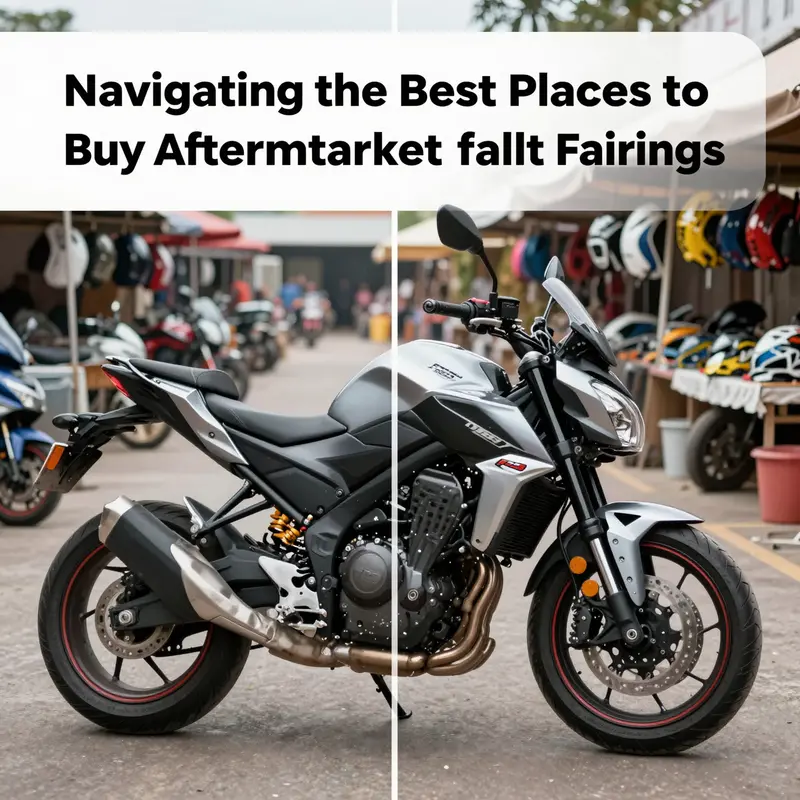
Choosing where to buy aftermarket motorcycle fairings is more than a simple price comparison. It is a decision that can affect compatibility, safety, performance, and even long-term ownership satisfaction. In a market that has grown increasingly complex as bikes evolve, the best path forward balances access to a wide range of options with the assurance that what you purchase will actually fit and perform as intended. The conversation has shifted in recent years from “whatever fits any bike” to a more precise dialogue about model specific kits, verified fitment, and the protections that come with buying from sources that understand the exact mechanical revisions that arrived with newer platforms. For riders who own modern machines, especially models that received notable design updates for 2026, the emphasis on model specificity is not a luxury but a necessity. A forward shifted radiator shroud, redesigned headlight housing, and altered subframe mounting points are not cosmetic tweaks; they redefine how fairings mount, seal, and interface with sensors and ECU systems. In this new reality, the smartest approach is to weigh two broad avenues against your priorities: manufacturer driven, model-specific kits offered by official third-party brands, and the broader, more generalist reach of online marketplaces that curate vast catalogs from many suppliers. Each path has its advantages and pitfalls, and most riders arrive at a blended strategy that leverages the strengths of both while mitigating the risks.
On one hand, manufacturer oriented channels offer a clarity that is hard to beat. When a brand or its official partners publish model-specific fairing kits, you are not navigating vague fit notes or generic sizing charts; you are looking at a lineup that has been molded, tested, and verified against the exact geometry of your bike’s chassis. This is particularly valuable for modern motorcycles that incorporate integrated sensors, advanced aerodynamics, and complex mounting points. The promise of a model-specific kit often includes retooled mounting brackets, revised gasket sets, and laser-cut templates that translate directly into a near plug-and-play experience. The advantage extends beyond fit: you gain access to materials that are chosen for compatibility with the bike’s intended use, whether that means enhanced durability under heat and vibration, or improved aerodynamics that survive high-speed testing. The security of a warranty and the assurance that safety standards have been considered are additional layers of protection that many riders, especially those who ride aggressively or use their machines for track days, value highly.
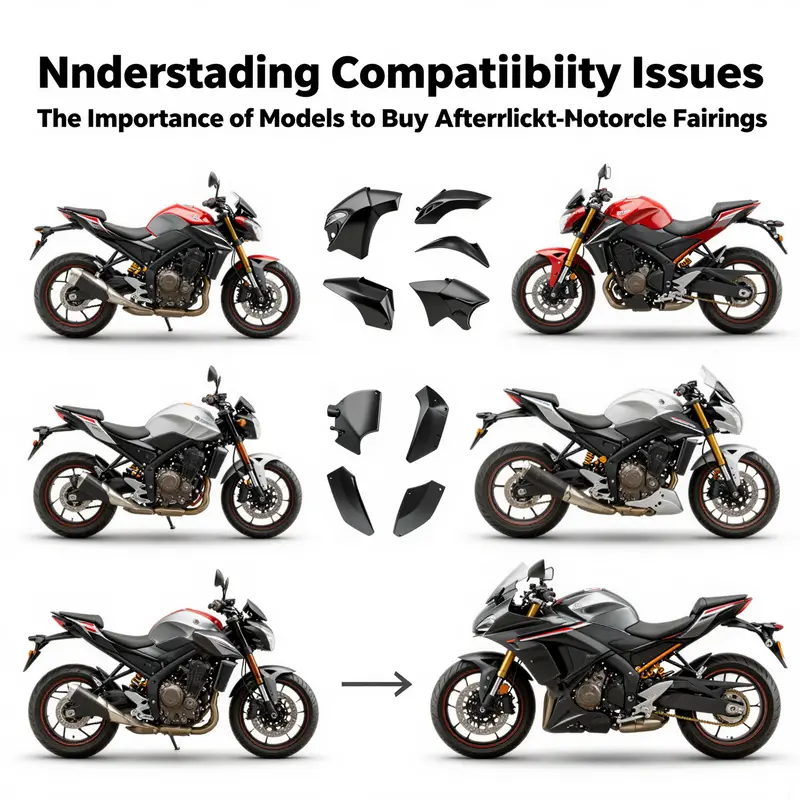
That reliability comes from the way these offerings are developed. When a manufacturer or its approved third-party partners release 2026 specific fairing kits, they acknowledge the significant mechanical revisions that arrived with the new year’s models. A few of these revisions can dramatically influence fitment: mounting points may shift, brackets can be redesigned to accommodate different radiator geometry, and subframes may present altered attachment angles. In practical terms, what this means for a buyer is not guessing the right fit but choosing a product that the producer has explicitly validated for their exact model year. A customer who buys this way is less likely to encounter misalignment at the lower edge of the fairing, misfit around the headlight assembly, or gaps around the radiator that compromise cooling efficiency or weather sealing. The fabric of safety is strengthened when you avoid ad hoc fittings that might leave sensors or ECU interfaces exposed to vibrations, moisture, or misrouting of harnesses.
The advantages of this path extend into the realm of information accessibility. Manufacturer websites that carry model-specific kits typically accompany their listings with detailed technical specifications, explicit model year compatibility, and installation resources that range from step-by-step guides to installation videos. Some platforms go further, offering downloadable templates, CAD drawings, and torque specifications that ensure your installation respects the bike’s fastener thresholds and gasket pressures. For riders who value a sense of continuity in service and support, this is a crucial factor. When questions arise about fitment or color compatibility, a brand-backed source usually offers direct customer support from engineers or product specialists who understand the nuances of the bike you ride. This is not about merely acquiring a cosmetic cover but about maintaining the integrity of the bike’s aerodynamics, protection, and sensor interfaces—areas where even small deviations can ripple into performance or reliability concerns.
On the other side of the spectrum are online marketplaces. These platforms aggregate listings from a wide array of suppliers, from large manufacturers to smaller shops and even individual artisans. The breadth of options here is compelling. You can browse a vast array of fairing shapes, materials, and finishes, and you can compare prices side by side. For riders who are exploring styling directions, colorways, or more affordable options, marketplaces can be a valuable starting point. User reviews and real customer photos provide a form of social proof that sometimes helps you gauge what you’re getting before it arrives at your doorstep. The ability to search across different sellers can also surface niche offerings that a single-brand site might not carry, including specialty finishes or unique graphic schemes that align with a rider’s personal expressiveness.
Yet there is a meaningful caution here. The very breadth that makes marketplaces appealing also introduces risk. The catalysts for this risk are often the most common pain points: misrepresentation of fitment, inconsistent construction quality, and the absence of a robust warranty when the product diverges from the bike’s exact geometry. This is particularly acute for riders with newer bikes that incorporate sensors, ECU interfaces, and sensor-integrated lighting—systems that are both precise in their function and sensitive to mounting tolerances. Unspecific listings can be silent about whether a fairing kit aligns with a specific bodywork revision, whether the part includes all necessary gasket sets, or whether the bracket geometry truly matches the subframe mounting points. Price competition on marketplaces can be fierce, and while that is attractive, it’s not a substitute for the kind of validation that a model-specific kit carries with it. In some cases, a low sticker price can mask the cost of a return, remanufacture, or compatibility issue that only reveals itself after installation. For riders who take a long view of ownership, buying a model-verified kit from a manufacturer channel minimizes these kinds of post-purchase frictions and the headaches that follow.
The most effective approach, therefore, is often hybrid. A rider begins with marketplaces as a search tool to learn about the landscape, compare options, and gather a sense of what finishes or textures are available for their bike. The next step is to narrow the field to models and kits that explicitly state compatibility for the bike year in question. In this stage, the VIN, or vehicle identification number, becomes a practical compass. A VIN-based part number validation gives you the strongest signal that the kit you’re considering will align with your bike’s gauge cluster, sensors, and control modules. It’s a level of specificity that generic fit notes simply cannot guarantee. If the marketplace listing itself does not provide a VIN-based cross reference, take that as a prompt to contact the seller for confirmation. If the seller cannot provide a VIN-specific cross check, that is a red flag. The next step is to move toward a manufacturer driven purchase for critical components or for the final, essential pieces such as brackets and seals, where precise fitment matters most. In this way, you reap the breadth of the marketplace for research and the security of model-verified parts for installation and use.
The practical discipline here is simple but powerful. Start by identifying a few non negotiables for your install: exact year compatibility, bracket design that aligns with your bike’s radiator shroud and subframe, and a gasket or seal kit that ensures weather resistance and vibration isolation. Then verify that these elements are explicitly confirmed by the product page or by the brand’s installation resources. If the kit claims 2026 model support, confirm the exact year range and note any caveats regarding serial ranges or regional variants. The 2026 revisions to main ride components can render a kit that worked perfectly for 2023 to 2025 models unsuitable for today’s bike without the explicit recalibration and redesigned mounting hardware. When all the pieces line up, you gain a result that not only looks right but also preserves the integrity of cooling pathways, sensor alignments, and the overall aerodynamics that your bike was engineered to achieve. When they don’t line up, the cost of a return or the risk of misfit is not worth the savings.
A practical tip that often saves time comes from treating the purchasing journey as an education and a test. Use marketplaces to gather data on fitment expectations and community feedback, but rely on manufacturer websites for the final decision on critical components. You can do this by focusing your purchase on brand-backed or brand-authorized sources for the parts that have the most direct impact on performance and safety. To help you visualize this approach, consider a curated path: begin with the marketplace to view the spectrum of finishes and price points, then check the model-specific compatibility notes on official sites that host kit-level diagrams, installation steps, and warranty details. This two-step method gives you the best of all worlds—an expansive view of options and the assurance of a precise, safe fit.
For readers who want to explore a vendor path that exemplifies the kind of catalog structure and pathway I’m describing, consider visiting a Suzuki fairings collection on a major retailer site. It is a practical case of how a well-structured catalog helps you see what a model-specific kit might look like in practice, including bracket outlines, gasket sets, and template-driven installation notes. Suzuki fairings collection
External links and related resources can also shape confidence in your final decision. Alongside the strong point of model-specific fitment, the documentation that accompanies these parts often includes torque specifications, gasket material choices, and even color-matching considerations that reduce trial-and-error steps. If you are new to this kind of shopping, you will find that a careful read of the installation notes can reveal whether a kit aligns with your bike’s sensors or whether a protective film is recommended to shield fasteners from heat or vibration. These details might seem small, but they contribute to a smoother, more predictable installation process and fewer surprises once the bike is on the stand and you begin the fitment checks.
The conversation about where to buy is not a debate about who has the lowest price. It is a careful assessment of the tradeoffs between breadth, depth, and safety. Marketplaces offer breadth and competitive pricing, which can be particularly attractive for accessories that emphasize aesthetics or non critical hardware. They can also help you discover small, artisan studios that offer custom finishes and unique textures that might be hard to find through standard manufacturer channels. On the other hand, manufacturer websites excel in depth and trust. For components that bear directly on the bike’s safety profile and longevity, model-specific kits with verified fitment, issuer warranties, and engineering support are the wise choice. The optimal path for most riders is a blend: use marketplaces to survey the field and to understand the range of options; then commit to purchasing the critical, fit-dependent parts from sources that explicitly validate compatibility for your exact model year. In doing so, you preserve the integrity of your machine while still exercising the flexibility and value that a robust marketplace ecosystem can provide.
A final note about the bigger picture: the best places to buy aftermarket fairings do not exist in a vacuum. They are part of a broader ecosystem that includes technical documentation, customer support, and return policies that reflect a vendor’s understanding of the installation reality. The stakes are higher for newer models, where the risk of misfit and the exposure of sensors or ECUs can have tangible consequences. In practice, this means trusting sources that publish clear compatibility statements, offer VIN-based validation where possible, and deliver installation resources that guide you through brackets, seals, and alignment checks with confidence. It also means recognizing that building a satisfying, safe, and visually compelling ride may require a careful, staged purchase plan that leverages both the openness of marketplaces and the assurance of model-specific kits. When done thoughtfully, this approach yields results that look right, fit correctly, and perform under the demanding conditions riders expect.
For readers who want a tangible example of how this strategy translates into a real-world catalog experience, you can explore a Suzuki fairings collection as a concrete reference point for model-specific fitment and catalog organization. This reference helps you imagine how a well-structured retailer page presents the necessary compatibility cues and installation resources that support a confident purchase. As you navigate, keep your eye on the details: the exact year range the kit covers, the inclusion of brackets and gasket sets, and the availability of installation videos or templates that can save you time and reduce the risk of errors. Those elements, when combined with a VIN-based cross check, form a robust framework for choosing the right aftermarket fairings and ensuring your bike remains both safe and striking as you ride.
External resource: For a broader understanding of how VINs guide compatibility and how part numbers align with exact bike configurations, see the Vehicle Identification Number overview. This resource offers foundational context that can empower your decision-making as you compare options and verify fitment before you buy.
null
null
Choosing the Right Armor: Material Quality as the Cornerstone of Durable Aftermarket Motorcycle Fairings
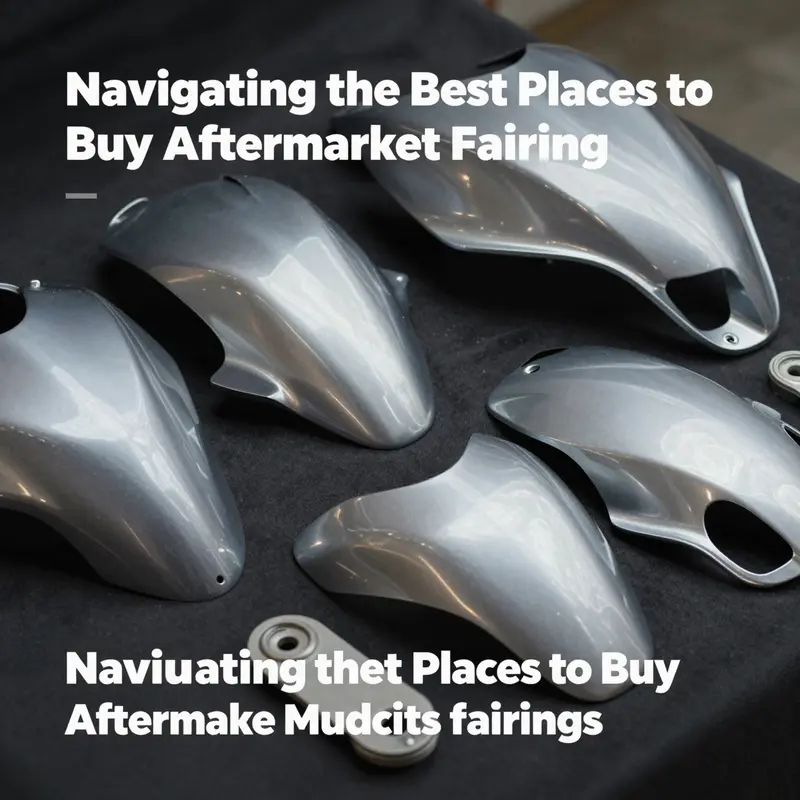
Material quality in aftermarket motorcycle fairings is more than a cosmetic concern. It directly influences ride stability, impact resilience, and long-term performance under heat, sun, rain, and road debris. In a market where fitment can vary, the way a fairing is built matters as much as its appearance. The best purchases come from model-specific kits with verified specifications and documented testing. Official third-party manufacturers provide such kits with validated fitment for current year models and back them with testing, mounting geometry updates, and alignment templates to ensure proper installation. Model-specific validation is crucial when a bike has hardware changes, such as radiator brackets, redesigned headlight housings, or altered subframe points. If a kit is designed for an older chassis, it may threaten safety and sensor alignment rather than improve aerodynamics.
At the heart of durable fairings lies material selection. Fiberglass-reinforced polycarbonate and high-density polypropylene are common foundations. Fiberglass-reinforced polycarbonate blends stiffness with added strength, resisting cracking while keeping weight manageable. HD polypropylene emphasizes impact resistance with energy-absorbing characteristics, handling debris and heat cycling well. These materials provide a practical baseline for durability and performance.
Performance-focused riders may opt for carbon fiber or hybrid composites. Carbon fiber offers stiffness and weight savings, improving handling. Hybrid laminates mix carbon with UV-resistant resins for durability. These options carry a premium and depend on model-year fitment; always validate against VIN.
UV stabilization is essential. Prolonged sun exposure causes yellowing and embrittlement; UV stabilizers protect the polymer matrix, extending life in sunny climates.
Surface finish matters. A smooth, uniform surface indicates controlled molding and post-processing; defects like air bubbles or seams can indicate corner-cutting and may translate into fit issues after temperature cycling. Quality control tests—tolerances, mold integrity, scratch resistance—translate into fewer misalignments and longer service life.
Documentation matters too. Clear documentation of resin systems, reinforcement orientation, and layering helps confirm expected performance. Third-party certifications add confidence that the kit will perform under heat, wind, and impact. VIN-based part numbers enable model-specific compatibility checks, especially on 2026 models with updated geometry.
Practical takeaway: seek model-specific, verified kits with balanced material systems, proper UV protection, and reliable mounting hardware. Compare pricing against long-term durability and warranty support. Prefer official or well-known aftermarket manufacturers that publish fitment for your exact year and model. This approach reduces fitment surprises and supports safety, aerodynamics, and sensor alignment.
null
null
Final thoughts
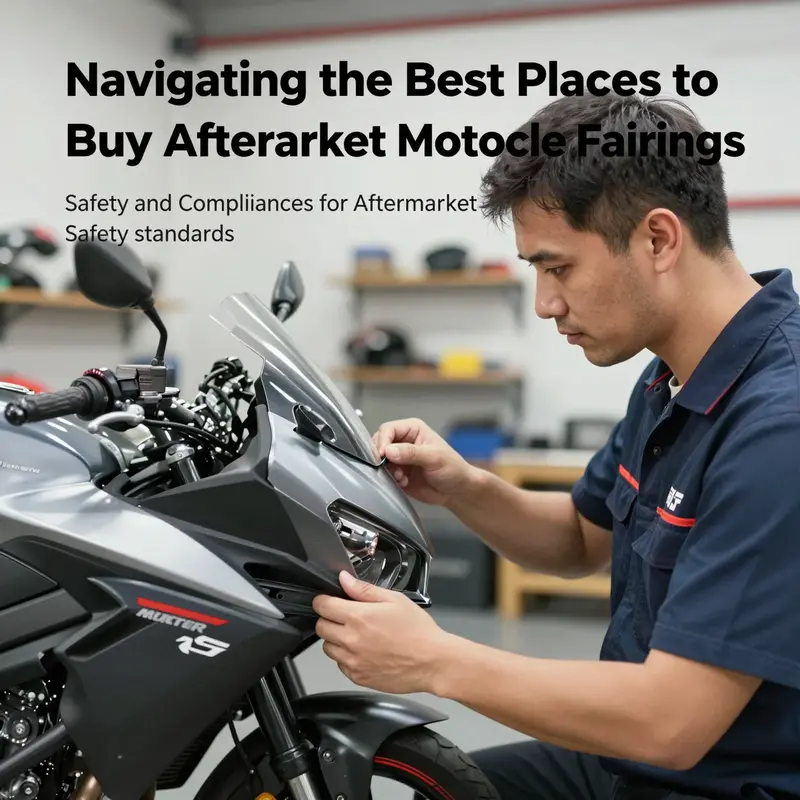
In summary, selecting the right source for aftermarket motorcycle fairings is vital for any business owner aiming to provide excellent service and products. Relying on verified manufacturer websites ensures compatibility and quality, while marketplaces may offer lower prices with potential risks. Understanding the importance of model-specific fitment, scrutinizing material quality, and adhering to safety standards can significantly impact customer satisfaction. Equip your business with the knowledge and resources to choose wisely, ensuring your customers ride safely and stylishly.