
Motorcycle enthusiasts seek not only performance and speed but also a personalized and immersive riding experience. Aftermarket motorcycle fairings with integrated radio functionality provide a solution to this demand, transforming bikes into mobile entertainment hubs. This article delves into the innovations behind high-performance aftermarket fairings with radio features, weighing the benefits and drawbacks of these sophisticated additions, understanding installation considerations, and exploring current market trends. Each chapter highlights critical aspects that business owners should consider when entering or expanding in this niche market.
Sound, Speed, and Sealed Perfection: Designing High-Performance Aftermarket Fairings with Integrated Radio
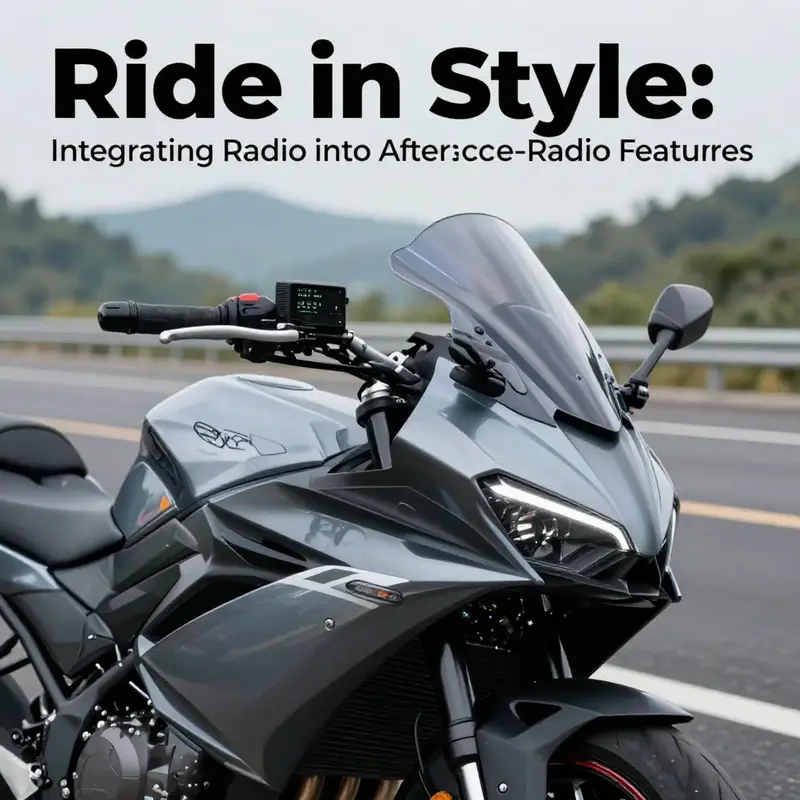
Riders who seek to fuse advanced listening experiences with high-speed aerodynamics are increasingly turning to aftermarket fairings that incorporate radio functionality as a core feature rather than as an add-on. The promise is straightforward: a single, purpose-built shell that protects the rider from wind and weather while hosting a compact, weatherproof audio system that can deliver music, turn-by-turn navigation prompts, or hands-free communication without shifting attention away from the road. Yet the reality rests on a careful balance. The design challenge is not simply about tucking a radio into a panel; it is about weaving electronics into a sculpture that must endure the buffeting of air at triple-digit speeds, the jolts of road irregularities, and the constant vibration of a motorcycle engine. In this context, a high-performance aftermarket fairing with radio features becomes more than a convenience. It becomes a co-creator of the riding experience, shaping how a rider perceives sound, how sound interacts with wind, and how reliably the system operates across years of service. The result is a product that speaks to a rider’s desire for immersive entertainment and practical convenience, while demanding a disciplined approach to engineering that marries acoustics, materials science, and electrical systems into one integrated solution. This integration, at its best, preserves the clean lines of the machine, maintains or even improves aerodynamics, and delivers a sound that feels natural rather than invasive. At its worst, the same integration can introduce drag, additional weight, potential water intrusion, and a vulnerability to EMI and electrical faults if not executed with precision and care. The tension between aesthetics, performance, and reliability is therefore at the heart of any thoughtful discussion about high-performance aftermarket fairings with built-in radio capabilities. It is not enough to claim that the fairing is weatherproof or that the speakers are rugged; a truly capable design must anticipate how the rider will use the system in real-world conditions, from a windy canyon road to a rain-soaked highway, and how it will age as miles accumulate and components wear. In this sense, the conversation about integrated radio fairings naturally moves beyond the surface appeal of a glossy panel and into the domain of tonal engineering, structural integrity, and maintenance predictability. When a rider powers up such a system, the first impression should be not a jolt of noise or a dull, muddy sound, but a sense that the audio system is a transparent extension of the bike’s performance ethos. The sound should feel balanced, with clear highs, controlled mids, and a bass response that respects the rider’s helmet and the wind-induced noise that inevitably accompanies high-speed cruising. Achieving this requires an acoustic design that respects the harsh acoustic environment of a helmeted rider, where wind and tire noise can dominate. Acoustic engineers approach this by crafting sealed enclosures for drivers that isolation mountings can dampen vibration, and by shaping internal volumes to create resonant characteristics that align with typical riding speeds and helmet types. In practice, this means speakers that are robust against water spray, sealed connectors that resist corrosion, and a chassis that maintains consistent performance across temperature swings. It also means the audio system must interpolate with the bike’s electrical system in a way that is both safe and unobtrusive. The electrical architecture is a critical piece of the puzzle. Aftermarket radio-integrated fairings draw on a compact, high-efficiency amplifier and a digital signal processor to manage audio channels, crossovers, and noise cancellation or suppression routines. The wiring harness must be organized to minimize harness length, reduce heat buildup, and protect lines from abrasion. Power demands, while modest compared with the demands of a modern head unit in a car, still matter on a motorcycle. A fairing that draws power directly from the bike’s electrical system needs robust fusing, a route that avoids heat sources, and a consideration of alternator or charging capacity to ensure that the audio system never competes with essential systems for electrical supply. The risk of electrical faults rises when installers take shortcuts or route harnesses through flexing panels without strain relief. The best installations separate the critical bike circuits from the audio harness with dedicated fuses and shielded grounds, and they use weatherproof grommets and sealed connectors to prevent ingress of moisture or dust. A premium build also recognizes the inevitability of maintenance work. The radio module, the four speakers, and the amplifier must be accessible for service without requiring a full disassembly of the fairing. In a well-thought-out design, service points are placed in protected, but accessible, zones, with quick-release mounting points that avoid long downtime during routine checks. Such practicality is especially important given the more challenging maintenance environment typical of aftermarket components, where routing through tight spaces and dealing with aftermarket hardware can complicate the process. The choice of material for the fairing itself plays a pivotal role in this equation. Hand-laid fiberglass, as opposed to standard ABS, offers a balance of strength and weight that is well-suited to the demands of performance-oriented fairings. Fiberglass can be engineered to resist impact with a predictable failure mode and can be molded to produce smooth aerodynamic surfaces that minimize drag. The weight implications, though not as dramatic as carbon fiber composites, remain significant enough to affect handling, especially for riders who tour or pursue aggressive cornering. A fairing that weighs less may deliver quicker feedback through the handlebars and a slightly more agile feel at the limit, while a heavier unit could dampen the steering input and require a longer cadence to maintain the same ride quality. From an aerodynamics standpoint, the integration of audio hardware must be designed so it does not disrupt the fairing’s primary function of reducing drag and managing lift. The fairing’s contours, skim lines, and turning vanes must be engineered with the radio hardware in mind, ensuring that speaker enclosures do not protrude in areas where airflow is most sensitive to separation, and that any ports are carefully integrated to avoid creating turbulent wake effects that would otherwise degrade stability at speed. Moreover, the installation must account for heat accumulation inside the fairing. Amplifiers and power electronics generate heat, and in a sealed environment, that heat needs to be dissipated without compromising the rider’s comfort or the integrity of seals. Strategic placement of cooling channels, the use of thermal barriers between electronic components and rider-facing surfaces, and the adoption of heat-resistant materials all contribute to a design that remains reliable across long rides and across seasons. Beyond the technicalities, there is the human aspect of using a fairing with radio features. Riders value the ability to adjust volume or switch tracks without taking their gloves off or glancing away from the road for more than a heartbeat. A well-established integration respects the natural ergonomic patterns of riding, offering control interfaces that are intuitive and accessible within the rider’s field of view, and that can be operated with the hand on the throttle or in one of the handlebar grips. This kind of usability translates into fewer eye movements away from the road and less cognitive load during high-speed maneuvers. It also implies a thoughtful approach to safety. For example, navigation prompts should be discrete, audible cues rather than intrusive alerts that would command undivided attention. The system should gracefully handle interruptions to audio during critical riding moments, such as sudden deceleration or the need to acknowledge a warning tone from the bike’s own instrumentation. On the provider side, the marketplace for aftermarket fairings with radio features emphasizes the importance of reliability, repeatability, and fit. Since the market is dominated by specialized manufacturers and tiered suppliers, a robust supply chain is essential. A capable supplier must demonstrate consistent quality control, the ability to deliver to multiple model lines, and the capacity to support customized requests, such as different speaker configurations or alternative mounting schemes. The procurement logic for such parts often hinges on a balance between performance, durability, and cost. The most successful sourcing strategies begin with clear specifications for acoustics, enclosure volumes, and mounting interfaces, then align those specs with manufacturers that have proven track records of producing composite fairings that can be tuned to strict tolerances. For buyers who operate at scale—dealers or workshop networks—there is added value in establishing partnerships with suppliers who can provide consistent documentation, testing results, and after-sales support. The global manufacturing ecosystem for motorcycle fairings remains heavily concentrated in Asia, with mature hubs in provinces that specialize in precision composite production, resin systems, and injection-molded components. This geographic reality means that buyers and repair shops should evaluate supplier capabilities in areas such as quality control processes, tooling maintenance, and the ability to scale production to meet demand without sacrificing fit, finish, or electrical integrity. When evaluating a potential supplier for a radio-integrated fairing, it is prudent to look for evidence of a systematic approach to fitment across model families, a track record of successful electrical integration projects, and a willingness to support post-sale service and warranty claims that address water ingress or connector failures. A professional installation remains a critical safeguard, and it should be treated as part of the overall value proposition rather than an optional add-on. To riders researching options, there is value in exploring model-agnostic, adaptable designs and catalogs that present compatibility across multiple sport and sport-touring platforms. Consumers should demand clear guidance on what years and variations are supported, the expected weight changes, and the maintenance implications of a radio-equipped fairing. It is also wise to consider how a given design handles upgrades, such as a higher-power amplifier or a larger speaker array, because the incremental heat and power demands can influence the overall system performance and longevity. For riders who want to explore model-specific options without compromising the integrity of their bikes, a careful reading of the available catalogues and a conversation with qualified installers can reveal whether a given fairing is a drop-in solution or if it will require adapters or minor structural modifications. The broader context of this market is also shaped by consumer expectations for clean aesthetics and minimal intrusion into the bike’s original silhouette. A well-executed radio-integrated fairing preserves the lines and silhouette of the motorcycle while offering a discreet, high-fidelity audio experience. Achieving this outcome often means concealing speaker grilles behind the fairing’s sculpted surfaces, designing grills that blend with the texture and color of the bike, and ensuring that all control hardware sits flush and accessible without catching on gear or gearshifts. For the rider, the end result is a sense that the fairing is a continuous extension of the machine, rather than a separate add-on. When one considers the practicalities of ownership, there is an undeniable appeal to a single, integrated solution that reduces clutter, minimizes the number of accessory mounts, and simplifies maintenance. The convenience of a unified unit becomes equally important on long trips where the rider must manage power budgets, ensure weather seals remain intact after a rainstorm, and trust that the system will perform in a variety of temperatures and altitudes. Yet the advantages do not come without responsibilities. The higher upfront cost of a radio-enabled fairing compared with simpler, non-electronic forms reflects the added engineering, materials, and testing required to meet performance and reliability standards. The weight penalty, though modest, must be weighed against potential gains in aerodynamics and ride quality. The potential for moisture-related failure, if seals degrade over time, is not purely theoretical; it is a practical concern that underscores the need for professional installation and scheduled inspections. As the market continues to mature, there is growing interest in more modular approaches. Future fairings may feature swappable speaker modules, plug-and-play power interfaces, and transparent cooling channels that allow riders to upgrade audio capability without replacing the entire shell. This evolution would also enable easier repairs when a speaker or amplifier fails, potentially reducing downtime and extending the life of the fairing. For now, riders and shops who pursue this path should anchor their decisions in a few guiding principles: fit and finish, weatherproofing, electrical safety, and a design that respects the bike’s original engineering philosophy. In practice, those principles translate into a few concrete expectations. The first is that the fairing must sit securely on the bike, with mounting points designed to distribute loads without compromising the frame. The second is that the enclosure volumes and speaker paths should be tuned to the rider’s helmet and typical riding velocity so as not to produce a wash of distortion at cruising speeds. The third is that all seals resist dust and water ingress, maintaining performance across seasons and after exposure to road spray and occasional immersion in rain. The fourth is that the electrical installation can be serviced, tested, and upgraded without specialized tools or invasive procedures. The fifth is that the design remains compatible with the rider’s broader electrical ecosystem, including any navigation devices, communications gear, or helmet-integrated audio. These thresholds help distinguish a well-engineered, high-performance fairing from a cosmetic add-on that does not deliver the intended improvements in sound, weather resilience, or ride quality. In the end, the decision to adopt an integrated radio fairing is a choice about how riders want to experience speed, weather, and music as a unified phenomenon. It is a choice about trusting the machine to deliver a consistent, high-fidelity acoustic environment without compromising the bike’s handling or the rider’s safety. It is about recognizing that the modern sport and sport-tour motorcycle is not only a machine to be ridden but a platform that can be tuned to the rider’s sensory preferences, turning each ride into a more immersive, more controllable, and more confident journey. For riders who want to explore the breadth of aftermarket options within a model family, there is a robust ecosystem of compatible fairings and accessories that can be tailored to different bikes and riding styles. For instance, those seeking Honda-compatible aftermarket options can start by exploring the Honda fairings catalog, which hosts a broad range of shells that can be paired with integrated audio solutions when properly configured. The goal is to find a balance where the beauty of the motorcycle remains intact while the rider reaps the benefits of an enhanced listening environment and a simplified, resilient installation. For readers who want a concrete starting point, consider examining available catalogs and model-fit options that emphasize compatibility and serviceability, and consult professional installers who can verify fit, seal integrity, and electrical safety before committing to a purchase. Internal resource: Honda fairings. External resource: https://www.ebay.com/itm/375684973938
Sound on the Wind: The Craft, Care, and Consequences of Integrated-Radio Aftermarket Fairings
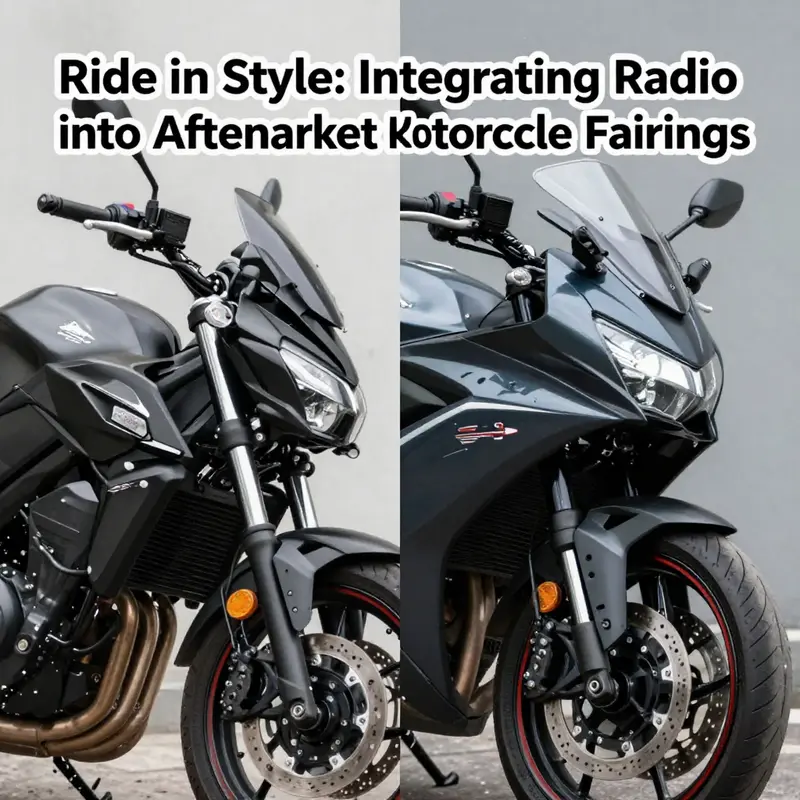
Riders have long chased the intersection of performance and presence. The road is a stage where the wind talks back in hiss and howl, and the fairing that wraps a motorcycle is the instrument through which that conversation is shaped. When factories began engineering aerodynamically slick shells that protected the rider from buffeting and the bike from debris, they also opened a channel for a different kind of interaction: entertainment. The aftermarket industry rose to that desire, presenting fairings that not only reduce drag and shield the engine but also cradle an integrated radio system, turning a long highway ride into a moving living room. It is a remarkable convergence of engineering disciplines: aerodynamics, acoustics, electrical systems, and human factors. The result can be transformative for some riders, delivering the sounds of a favorite playlist, a navigational whisper, a rider-to-rider intercom, or simply clear, dependable phone connectivity while the machine carries its own weather-proof engine and fuel economy defenses along the open road. Yet with those benefits come costs and constraints that demand careful consideration. A level-headed rider does not simply chase novelty but weighs the total system against the riding objectives, the bike’s geometry, and the environment where the wind conducts most of its conversation.
The most immediate and tangible benefit is aerodynamic refinement paired with practical weather protection. Aftermarket fairings with integrated radio systems are typically designed as three-quarter or full fairings. They are molded not merely to sculpt the silhouette but to streamline the air around critical outlets and mechanical components. When a fairing is shaped to reduce turbulence under the engine and to guide airflow smoothly past the handlebars and rider, it can yield measurable gains in fuel economy and engine longevity. On long tours, where gusts and crosswinds can sap rider stamina, these shapes serve as a shield for the most exposed parts of the machine. The added mass of the fairing assembly and the integrated hardware is not merely an aesthetic choice; wind tunnel-inspired curves and ribbing contribute to reduced fatigue on the rider’s body by taming buffeting, so the head stays steadier, the posture remains comfortable, and the rider can concentrate on steering rather than compensating for sudden gusts. For riders who ride in climates where moisture and debris are persistent threats, the more robust outer shell also acts as a barrier against grit and rain, providing a predictable boundary between the machine and the external environment. The built-in audio system adds another dimension to the experience. At highway speeds, where wind noise can drown out crucial cues, a well-tuned radio can deliver music, weather and traffic updates, GPS prompts, and essential communications without forcing the rider to fumble with a phone or a separate speaker system. The integration is not an afterthought but a designed feature set that must work in harmony with the bike’s electrical architecture. Acoustic tuning becomes a core engineering activity, ensuring that the drivers’ cabin—now a small, armored space—reproduces sound with clarity rather than distortion. The idea is not simply to blast sound louder; it is to manage the sonic environment so that the rider hears the music and the navigation prompts with the least distraction and the greatest intelligibility.
But the functional advantages come packaged with caveats. The premium in cost is the most conspicuous hurdle. A fairing that integrates robustly sealed audio hardware requires specialized components, weatherproof connectors, and a power system that can handle peak draw without destabilizing the motorcycle’s electrical network. Custom acoustic tuning, often necessary to suit a particular model’s acoustic signature, adds another layer of expense. In practice, this means riders who opt for integrated radio fairings often pay a premium not only for the hardware but for the expertise necessary to install and calibrate it. The investment can be significant, especially when one considers that the system is meant to endure the same climate exposure as the rest of the bike. Harsh sun, temperature fluctuations, and humidity can all degrade seals and dampen performance if the installation is not meticulous. The weight penalty is another dimension to consider. Even when the weight increase feels negligible in static terms, it is a factor in how the chassis responds in cornering, braking, and quick stabilization after a wobble. The fairing’s mass shifts the bike’s moment of inertia slightly, altering how it responds to wind gusts and rider inputs. For riders who value nimble handling—whether in city lanes or twisty canyon roads—that incremental weight must be weighed against the benefits of the added protection and the audio system’s convenience. In many cases, a rider seeking razor-sharp handling will opt for a lighter, non-integrated solution and place the emphasis on the rider’s experience rather than the machine’s integrated features.
Installation complexity is seldom a trivial matter. A fairing designed to accommodate an integrated radio system must marry the fairing’s structural integrity with the electrical and acoustic components. This often means a dedicated harness, a sealed pathway for wires, and a robust mounting framework that can withstand vibration without loosening or creating rattles that pierce the listening experience. The sealing work is particularly crucial. If the integration compromises moisture protection, the consequences can be electrical faults, corrosion, or intermittent performance that frustrates rather than delights. Because this is a high-stakes combination of weatherproofing and electronics, many riders insist on professional installation. A careful installer will verify far more than fit and finish; they will test for heat buildup, verify that the weather seals remain intact after repeated opening and closing of the fairing, and ensure that the radio’s amplification and speaker placement resist the wind’s strongest blows without distorting sound. The risk of improper sealing compounds the cost, but it also underlines a broader truth: the value of the integrated system depends as much on the quality of the installation as on the hardware itself. For some riders, this is not a deterrent but a necessary barrier to ensure that the investment yields lasting satisfaction rather than a recurring stream of problems.
The scope of upgrade options is another practical constraint. An integrated system exists within a designed ecosystem. While standalone audio installations can often be swapped or upgraded piecemeal, integrated fairings tend to constrain the rider to a more fixed upgrade path. The idea of swapping a speaker set or upgrading the radio module later must be weighed against the broader goal of preserving seal integrity and electrical compatibility. This is not to say the pathway is closed; rather, it is more deliberate. The harmonious balance of components makes upgrades more predictable, but less flexible in the sense of a modular gadget that can be swapped with minimal effort. In the long run, this trade-off can influence the overall ownership experience. Riders who prize modularity might hesitate, while those who value a clean, cohesive, weatherproof solution that looks and sounds like it belongs on the bike may see the stability and integrated performance as the ultimate advantage.
The conversation about integrated radio fairings naturally loops back to the realities of model compatibility and service life. A fairing may be designed to fit a range of chassis configurations, yet the nuances of radiator routing, frame geometry, and windscreen shape create a spectrum of fit that is rarely universal. Even when the visual silhouette looks identical, the behind-the-scenes fit can differ in subtle, yet meaningful, ways. As a consequence, some riders find themselves needing bespoke adjustments or even alternative mountings to ensure a snug, weatherproof seal. That is not a trivial outcome; it means a fairing that seems to fit perfectly on one iteration may demand careful modification on another. The end result is a riding experience that benefits from consistency and reliability, but with the caveat that the initial path to that stability may require a measured, professional touch.
The phrase integrated radio brings with it expectations about how the rider will interact with the machine. A built-in radio is not simply about listening to music; it is about establishing a reliable, hands-free environment for navigation, communication, and safety. The intercom function can transform two-up riding by guaranteeing a stable channel for communication in conditions where shouting over wind would otherwise be ineffective. GPS navigation prompts preserved within the rider’s auditory field allow attention to remain focused on the road rather than on a device screen. However, those promises depend upon careful tuning of the audio chain. If the speakers’ placement is suboptimal or the enclosure resonates with the bike’s engine, sound quality will suffer. Acoustic design aims to deliver clarity at speed, with a frequency response that remains balanced in a wind-rich environment. The result should be an immersive audio experience that does not overpower essential road cues, traffic signals, or the sound of the tires on pavement. Achieving such a balance requires an artistic ear as well as engineering precision; it is not merely about cranking up the volume but about shaping the listening landscape in which the rider operates.
For riders who see their motorcycle as a personal instrument—an extension of their daily life rather than a purely functional machine—the integrated radio can stand as a meaningful enhancement. It creates a sense of continuity between the waking life of the rider and the journey they undertake on the road. The soundscape becomes a companion, a way to anchor memory, share routes, or simply enjoy the isolation of a long ride where the world becomes a thread of scenery punctuated by a curated mix of music and ambient sound. Yet this is not universal. Some riders prefer the pure mechanical communion with road texture—the creak of the wind in the fairing, the subtle rumble of the engine, the cadence of the road—without any electric accompaniment. For them, the added weight and the possibility of electrical faults are more weighty concerns than the promise of enhanced entertainment. The choice thus rests on a rider’s priorities: the degree to which entertainment, navigation, and communication are woven into the travel experience, and the willingness to accept the responsibilities that accompany a more complex electrical system.
In the broader context of the aftermarket ecosystem, integrated radio fairings sit at a crossroads between tradition and technology. They reflect a continuing desire to customize the machine to fit the rider’s life, not just to fit the rider to the machine. They also embody a careful negotiation with reliability, serviceability, and the realities of weather resistance. A well-executed installation respects the bike’s structural integrity, preserves the original lines, and delivers sound that feels natural rather than engineered. The rider who pursues such a system is often a devotee of longer rides, a traveler who plans days and weeks of road time, and who wants a companion on the journey that can talk back to the wind without shouting over it. That conversation—engineered through the right materials, the right acoustic tuning, and the right installation—can feel like a natural extension of the ride. The rider finally discovers whether the investment translates into a better, more enjoyable, or more efficient journey.
To help frame a well-considered decision, many riders start by envisioning their typical routes, climate, and the kind of riding they do most often. If the ride involves sustained highway miles in a relatively predictable climate, the integrated system can yield meaningful comfort and practicality. The acoustics must be tuned to deliver intelligible voice prompts at speed, so navigation remains a quiet but reliable guide rather than a muffled directive. If a rider frequently navigates urban traffic or variable weather, then the reliability of water and dust seals, the integrity of the wiring harness, and the ability to maintain or replace components without a full teardown become the decisive factors. The decision process often begins with a broader conversation about the rider’s priorities: how much emphasis is placed on aesthetics, how important the audio experience is, and how much the total ownership cost is worth relative to the enjoyment and convenience gained on the road. Such deliberation reflects a broader truth about aftermarket engineering: it is not a single feature that determines value, but the sum of performance improvements, user experience, and the confidence that the system will stand the test of miles and seasons.
In this light, the choice to pursue an integrated radio fairing becomes more than a purchase. It is a commitment to a particular kind of riding—one that treats the journey as a curated experience and the bike as a platform for both movement and mood. The practical realities—the weight, the cost, the installation, and the potential for moisture intrusion—remain important. Yet for many riders, those concerns recede when the sound threads through the wind and the navigation voice becomes a trusted guide along winding roads. The result is not simply a louder cockpit but a more thoughtful, connected, and resilient riding practice. The fairing, thus, is not only a shell; it is the bicycle’s voice, translating the music of the highway into a meaningful accompaniment to the act of riding itself.
For those who want to explore further, a nearby reference point for design philosophy and application can be found in widely shared technical discussions that detail batwing and fairing kit specifications, including how acoustic systems are integrated within the aerodynamics. While each installation is unique to the bike and the rider, the core principles—robust sealing, controlled acoustic pathways, and harmonized electrical integration—remain constant. In the conversation between wind and sound, the rider discovers that the goal is not to defeat the wind but to converse with it, to let the movement of air and the rhythm of music align in a way that makes miles feel like a shorter, more meaningful journey. The integration is about stewardship of the bike’s environment as much as about the rider’s enjoyment. When done with care, it yields a ride that feels both technologically advanced and serenely infused with the human touch that makes motorcycling so compelling.
To close the frame for this chapter yet keep the thread ready for the next, consider the internal alignment between form and function. The fairing’s look should reflect not just style but the purpose of the space it creates for sound and control. The rider’s comfort should be supported by a system that can be trusted in rain, shine, or high-speed exposure. In this sense, the integrated radio fairing is less a gadget and more an extension of the rider’s conduct on the road: a deliberate choice that blends the physics of airflow with the psychology of motion, the art of acoustic engineering with the craft of weatherproofing, and the joy of hearing the world in a new, engineered harmony. As you move forward, the next chapters will explore how these choices play out in different riding communities, different climates, and different styles, shedding further light on when such an investment becomes not just desirable but essential for the rider’s personal connection to the road.
External resource for deeper technical exploration: https://www.motorcyclefairings.com/batwing-fairing-kit-performance-specifications-and-how-to-apply-it-in-industry/
Internal link for further inspiration: Honda fairings collection
Riding with Resonance: The Quiet Craft of Integrating Radio Systems into Aftermarket Motorcycle Fairings

The road hums with its own soundtrack, a thousand micro-melodies born of wind, tires, and geometry. For riders who want more than the wind in their visor, an integrated radio in an aftermarket fairing promises a companion that never tires, a soundstage tuned to the geometry of their ride. Yet this promise sits at the intersection of engineering and craftsmanship, where a perfectly tuned head unit can be as heavy as it is helpful, and every channel of air, wire, and vibration must be coaxed into collaboration rather than conflict. The aim is not merely to bolt a speaker into a shell and call it a day. It is to weave a system that respects the bike’s structural integrity, protects sensitive electronics from the elements, and preserves or even enhances the rider’s experience at speed and in all weather. In that sense, the chapter on installation considerations reads less like a shopping list and more like a careful orchestration of fit, function, and future reliability.
Compatibility forms the backbone of a successful installation. The first question is essential: is the fairing kit designed with your motorcycle’s make, model, and year in mind? Compatibility is more than a label; it determines the paths for wiring, the room for speaker enclosures, and the vital clearance around shoulder-slung turns and the rider’s knees. A mismatched kit can alter the line of the bodywork, disrupt mounting points, or crowd the head unit in a way that overheats or vibrates loose at highway speeds. Before any tool touches paint or fasteners, the battery should be disconnected. A simple precaution such as this guards against accidental shorts, helps maintain fuse integrity, and minimizes the risk of accidental activation that could startle a rider mid-assembly. It is the quiet first step that saves more headaches than any clever trick later on, and it signals a respect for the electrical architecture that powers the entire system.
The act of removing existing components is as much about restraint as technique. Fairings are more than shells; they are doorways to the bike’s aerodynamics, sensor placements, and electronics. The work demands the right tools and a patient touch. Screwdrivers, hex keys, and panel poppers must be used with care to avoid lifting paint or bending delicate brackets. As panels come away, there is a moment to observe how the original routing was conceived. This observation matters because a well-planned install follows the lines already present in the bike’s anatomy. The fairing’s internal cavities offer natural channels for wiring, often designed to keep cables away from hot engine bays or moving parts. When a rider discovers these channels, the installation begins to feel less like intrusion and more like continuation—an extension of the bike’s existing design language rather than an add-on afterthought.
At the heart of integration is an intelligent approach to the radio system itself. The fairing must provide more than space; it must offer pathways for wiring that minimize exposure to heat, moisture, and vibration. It must include ventilation and dedicated mounting points for the speakers and the head unit that keep components secure under strain. The design must anticipate weather exposure, so the wiring harness is routed through sealed passages and connected with weatherproof connectors. The goal is to create a sealed, robust route for power and audio signals that can survive the ride through rain, dust, and the occasional stone that finds its way past the windscreen. Route planning is a quiet skill that often determines long-term reliability. A neat, tucked path reduces chafing, lowers the risk of pinched wires, and simplifies future maintenance. As connectors emerge from grommets, the installer must ensure all seals are intact, because moisture is a patient adversary that will exploit even the smallest gap.
Ventilation is another often overlooked factor. Electronic components generate heat, and a compact fairing does not always provide generous cooling. Adequate airflow around the radio head unit and the speaker enclosures helps maintain performance and prolongs life. This is not about creating a wind tunnel in the cockpit; it is about ensuring that heat does not accumulate at the back of the unit where a stubborn, stubborn thermal throttling could reduce audio output or trigger overheat protections. Even the most robust components will not deliver their best if kept in a stifling pocket behind thick plastics. The fairing should feature vents or channels that direct air away from heat sources while not allowing water to intrude. The installing technician may also consider adding heat-shielding materials or relocating certain components to shrouded pockets where heat can dissipate more easily without compromising access for future service.
Secondly, the realm of aerodynamics and weight distribution cannot be ignored. A fairing with an integrated radio inevitably adds mass, and that mass, while modest on most modern bikes, sits in a position that interacts with the bike’s center of gravity and its airflow. Properly balanced weight distribution helps preserve steering response and stability at speed, while poorly placed enclosures can create subtle tugging on the handlebars or provoke flutter at high RPMs. The rider should expect a small but real effect on the machine’s handling characteristics, especially if the installation adds significant door-like surfaces in the wind or if the electronics are mounted distant from the bike’s core frame. A thoughtful installation minimizes these risks by choosing mount points that align with existing structural brackets, using vibration-isolating hardware, and preserving the fairing’s original aerodynamic profile as much as possible. It is not about chasing perfect symmetry but about respecting the bike’s native performance envelope while adding a new convenience that does not become a liability when the road tilts into a corner or the weather turns gusty.
A crucial element is the manufacturer’s guidance. Official manuals, which accompany factory or aftermarket fairing kits, provide installation steps that reflect verified compatibility and tested procedures. They are not merely a list of steps; they encode years of practical experience about fit, seal integrity, harness routing, and the interplay between the fairing’s structural supports and the bike’s electrical system. Following these manuals helps ensure the work is not only functional but also safe. The manuals also offer important cautions about torque specifications, protective coatings, and the order in which panels should be reassembled after testing. In short, they are not optional extras but a framework that holds the entire project together. A responsible installer borrows heavily from those guidelines, checking cross-reference pages against the bike’s model year, and noting any revision specific to that year’s engineering. When in doubt, it is wise to pause, re-check the wiring diagram, and consider consulting a professional who specializes in electronics integration within motorcycle fairings.
The practical mechanics of connection deserve focused attention. Weatherproof connectors are not merely a decorative choice; they are a line of defense against corrosion, moisture intrusion, and vibration-induced wear. All entry points should be sealed, and every joint should be tested for continuity and resistance to moisture ingress. Using grommets and weatherproof sealants at every potential breach reduces the risk of short circuits and corrosion that can appear years after installation. A comprehensive plan also anticipates future service. The rider may need to access the head unit to update firmware or swap out a speaker if wear and tear take their toll. Configuring quick-release fasteners or modular mounting points can make such maintenance feasible without disassembling large sections of the bike. The goal is a robust yet accessible system that invites care rather than discourages it.
Beyond the mechanical, the electrical architecture presents its own set of realities. The system needs a clean power supply, ideally with dedicated fusing close to the battery and a distribution path that avoids sharp voltage dips that could affect other electronic accessories. It is common for riders to retrofit or adapt to existing power rails, but this must be done with attention to total current draw and the implications for the battery’s longevity. A radio head unit and several speakers can pull more current than a simple accessory, especially when the system includes backlighting options or amplified outputs. The installer must consider sleep modes, standby consumption, and the possibility of radio interference with other electronics, particularly when the bike’s ignition and charging system share a common ground. Shielded cables, properly crimped terminals, and careful grounding practices reduce the risk of hum, noise, or signal loss that can frustrate even the most patient rider.
In the broader context, these installations carry an ethical dimension as well. Riders entrust technicians with a part of their daily safety and comfort. If a fairing modification compromises visibility, hinders access to critical controls, or obscures essential indicators, the evaluation has failed its primary test. Therefore, the process should include a thorough post-installation test ride that focuses not only on audio quality but on the integration’s resilience to vibration, wind pressure, and environmental exposure. The rider should inspect the seals after the first significant ride, listen for unusual rattles, and monitor the system for heat buildup during extended operation. A practical rule of thumb is simple: if any aspect of the installation makes the bike feel less predictable or imposes new maintenance hurdles, it is time to rethink the approach rather than press on blindly.
For riders who are exploring different options, the notion of a dedicated fairing with integrated audio can be appealing, but it must be rooted in mindful planning. A well-executed installation respects the bike’s core design while delivering an enhanced sensory experience that does not overshadow safety or reliability. The path from concept to road-ready system is iterative. It begins with careful compatibility checks, moves through a patient removal of existing panels, advances with intelligent routing and secure mounting, and culminates in a rigorous testing phase that evaluates weather seals, heat dissipation, and control accessibility. The result is a seamless blend of form and function: a fairing that not only shades the rider from wind but amplifies the journey with sound that responds to pace, terrain, and weather, yet never compromises the machine’s inherent integrity.
For those who want to begin their exploration with a clear, model-agnostic sense of options, a practical starting point is a curated assortment of fairings designed for common platforms. These collections offer framing that aligns with the bike’s existing lines, a consideration that matters as much as the choice of speakers or the head unit. While the specifics of each bike will vary, the underlying principles remain universal: secure mounting, proper cable management, weather protection, and a balanced approach to weight. When browsing, it helps to imagine the installation as a dialogue between the bike’s geometry and the added technology, rather than a unilateral addition. The rider’s stance, seating position, and line of sight should all remain comfortable and intuitive, with the audio system becoming a companion rather than a distraction.
As part of the broader ecosystem of aftermarket enhancements, the topic of fairings with radio systems invites a broader look at the resources available for riders and technicians alike. A constructive path includes checking dedicated content that offers model-specific fitment information, plus professional guidance for those who prefer hands-on assistance. For riders who want to compare options across a spectrum of platforms, a practical avenue is to explore a reputable fairing collection that showcases compatibility with different bodywork shapes and mounting schemes. This approach supports informed decision-making and helps ensure that the chosen solution aligns with the bike’s original performance philosophy rather than simply adding weight or complexity.
In the end, the installation of an integrated radio in an aftermarket fairing is less about chasing the loudest volume and more about harmonizing technology with discipline and design. It is a craft that asks for patience, respect for the machine, and a willingness to pause when doubt arises. When done with care, the result is a ride that speaks through wind and road, with audio that fits the bike’s silhouette and the rider’s intent. A well-executed installation can become a trusted companion on long journeys, offering clarity when visibility is reduced, and a reliable soundtrack that does not intrude on the rider’s awareness of traffic, terrain, or fatigue. The goal is not merely entertainment, but a cohesive experience where every sound has a place, every channel carries intent, and the machine and rider work in concert toward a safer, more immersive journey.
For readers curious about where to begin, consider visiting a curated selection of fairings that emphasize compatibility and fit. The link below points to a dedicated collection that presents suitable options without diving into a sea of incompatible parts. This resource can help you frame your choices within a practical context and guide conversations with installers or technicians who will bring the technical expertise to life. Honda fairings collection
Internal hyperlink note: This chapter includes a linked reference to a curated collection of fairings that aligns with the discussion of compatible, model-appropriate kits. You can explore the collection here: https://www.summitfairings.com/collections/honda-fairings
External resource for further reading: a manufacturer’s official support page offers detailed, model-specific installation guidance and troubleshooting tips that complement the considerations outlined above. External resource: https://www.harley-davidson.com/support.html
Sound on the Move: The Rise of Radio Equipped Aftermarket Fairings

Riding has always been about the journey, and sound has become a personal companion. The aftermarket motorcycle fairing, once a simple shield against wind and debris, is evolving into a platform for live audio, weather alerts, navigational prompts, and rider to rider communication. The shift toward radio equipped fairings reflects a broader appetite for customization that blends performance with practicality. Riders who value long journeys, unpredictable weather, and the social rhythm of open road travel are driving demand for a fairing that does more than streamline air flow. They want listening experiences that are robust enough to survive vibration and weather, yet nuanced enough to deliver clear audio across a spectrum of speeds and road textures. In this context, the fairing becomes not just a bodywork component but a compact weatherproof entertainment and information hub embedded in the bike’s most integrated form of rider protection. The result is a confluence of engineering disciplines, acoustics, materials science, electrical engineering, and industrial design converging to create a cohesive system that respects both rider safety and sensory enrichment.\n\nMarket dynamics are fueling this convergence. The aftermarket segment for fairings is expanding toward systems that integrate electronics in meaningful ride enhancing ways. A growing number of riders are embracing touring configurations where moderate wind protection pairs with extended on bike connectivity. Commuters and urban riders increasingly seek weather resistant audio and turn by turn prompts that help keep attention focused on the road rather than on device handling. As fleets age and second hand bikes gain new life, owners are more willing to invest in bolt on enhancements that deliver modern conveniences without requiring a full OEM replacement. In this environment radio equipped fairings offer a practical compromise: enhanced rider experience without sacrificing the core benefits of a full fairing, improved aerodynamics, integrated protection, and a single coordinated electronic architecture.\n\nAn essential feature of this trend is the way audio is integrated. The market now favors solutions where audio systems are embedded into the fairing itself or tightly coupled to it through handlebar mounted sound bars or fairing integrated speakers. This arrangement leverages the structural rigidity and weatherproofing of the fairing to protect delicate components, while also exploiting the curved surfaces and cavities of the fairing to optimize acoustics. The acoustic design is deliberate: speakers are positioned to project toward the rider’s ears with minimal echo from nearby hard surfaces, and enclosures are tuned to reduce resonance that would otherwise muddy dialogue or music at highway speeds. In practice, riders experience a balance between clarity and power that makes long rides less monotonous and more enjoyable without demanding headphones, which can be unsafe in traffic. The trend resonates with riders who prize both form and function—the cafe racer silhouette, the sport standard’s focus on rider engagement, and the adventure-touring model’s appetite for robust, all-weather capability.\n\nThe material choices behind these integrated systems matter as much as their electronic configurations. OEM solutions tend to rely on high-grade ABS plastics, but the aftermarket sector increasingly offers alternatives that maintain impact resistance and weather durability at a more accessible price point. Composites and reinforced polymers provide improved rigidity and lighter weight, which can subtly influence the ride feel and efficiency. The net effect is a fairing that can accommodate sensitive electronics—radios, amplifiers, and digital interfaces—without compromising structural integrity or ingress protection. Lightweight materials, when paired with careful aerodynamic shaping, not only curb drag but also facilitate more flexible routing of power and signal lines. The end result is a more seamless integration where the radio module sits within a protective shell, its antenna tactically placed to minimize interference while preserving visual appeal. This is not mere gadgetry; it is a considered upgrade that respects the bike’s geometry and the rider’s ergonomics.\n\nFrom the rider’s perspective, audio integration translates into tangible benefits. Navigation prompts and weather alerts can be delivered through the fairing’s audio system, keeping eyes on the road and hands on the controls. Music, podcasts, or rider-to-rider communications can accompany long rides without requiring separate devices or cumbersome mounts. The safety implications are nuanced. On one hand, a well-placed radio system reduces the need for precarious device handling and can support clearer communication with other riders in a group ride. On the other hand, there is a potential risk if the system becomes a distraction or if the audio levels drown out critical roadway cues. This tension explains why many manufacturers emphasize safety-focused features: gradual volume limiting, automatic noise compensation, and modes that prioritize voice prompts or navigation cues in traffic. The design philosophy here is not to overwhelm the rider with sound but to tailor it to the ride, so the audio becomes a supportive backdrop rather than a dominant on-road soundtrack.\n\nThe engineering challenges are real and instructive. Sealing and weatherproofing are at the top of the list. A fairing must endure rain, dust, temperature extremes, and the enduring vibration of a motorcycle engine. The radio and its connectors must be protected against moisture ingress, while wiring harnesses need to be sheathed and routed to minimize wear at points of flex. Power supply considerations are equally important. A robust installation factors in the bike’s electrical system, ensuring that the radio draws from a stable source without introducing voltage dips that could affect other electronic components. Designers also must account for heat dissipation; compact enclosures can trap heat, so venting and thermal management strategies are not afterthoughts but essential components of the overall system architecture. The result is a compact, weatherproof module that remains serviceable. A well-executed installation balances waterproofing with service access, so components can be inspected or replaced without requiring extensive disassembly.\n\nBeyond the hardware, a critical consideration is the fairing’s compatibility with a breadth of model years and configurations. Compatibility is rarely a simple plug-and-play proposition. The same fairing design might require different mounting hardware, cable lengths, or routing paths for a range of motorcycle generations. This reality nudges riders toward professional installation or installers with extensive experience across brands and eras. It also underscores the importance of modular designs. A modular approach where audio modules, power modules, and speaker assemblies can be swapped or upgraded without reworking the entire fairing helps future-proof the investment. In a market segment that values both aesthetic consistency and functional longevity, modularity becomes a key differentiator. The best designs provide straightforward service access while maintaining the glossy, integrated look that riders expect from a premium aftermarket addition.\n\nFrom a consumer perspective, the economics of these systems matter. The initial sticker price reflects not only the cost of the audio hardware but the precision required to integrate it into a protective shell that withstands the road’s rigors. When weighed against the lifetime enjoyment of a longer touring season and the convenience of on-bike connectivity, many riders find the investment reasonable, especially when installation is performed by trained technicians who can guarantee weather sealing, electrical integrity, and performance optimization. Yet the financial equation is not uniform. Weight gain, potential changes to handling, and the possibility of warranty concerns can shape a buyer’s decision. These trade-offs become part of the decision-making fabric, and they likely influence which riders pursue such upgrades and which prefer more modest setups that emphasize aesthetics and wind protection alone.\n\nThe narrative around this technology is not simply about adding radio hardware to a fairing. It is about rethinking the fairing as a distributed electronics platform. In this view, the fairing hosts more than just aerodynamic efficiency; it becomes a sheltered, integrated stage for audio and connectivity. This shift aligns with a broader market trajectory toward feature-rich aesthetics where riders expect tactile satisfaction from materials and form alongside the convenience of built-in electronics. The integrated system design requires careful collaboration between mechanical engineers, acousticians, electrical designers, and stylistic teams. The aim is to preserve the sculptural integrity of the fairing while embedding a functional, weatherproof audio system that can survive decades of riding life with minimal fuss.\n\nIndustry observers note that the appeal is particularly strong among three riding segments. First, touring and sport touring riders who rack up long hours in the saddle appreciate the ability to stay connected with practical audio cues and navigation without dangling devices. Second, cafe racers and sport standards, who value clean silhouettes and uncluttered lines, benefit from compact integrated audio that complements their minimalist aesthetic rather than competing with it. Third, adventure touring enthusiasts, who encounter varying climates and terrain, require a system that can withstand exposure to rain and dust while delivering reliable audio. These groups exemplify how a single aftermarket enhancement can resonate across different riding philosophies, turning a practical upgrade into a defining feature that enhances the overall riding experience rather than merely adding gadgetry.\n\nIn terms of market growth, the trend toward integrated audio solutions is likely to persist as materials become more sophisticated and as electronic components become smaller, more efficient, and more rugged. The ability to deliver crisp audio at high speeds, to integrate Bluetooth or other wireless connectivity without compromising safety, and to offer intuitive user interfaces will shape the next wave of fairing designs. The market for aftermarket fairings with radios is therefore not a niche but a growing category within the broader fairing market. As more riders seek to blend high-performance aerodynamics with personal entertainment and practical connectivity, the fairing becomes a platform for ongoing upgrades and evolving user experiences. This dynamic edge where form, function, and sound converge will likely attract new manufacturers and more diverse design philosophies, further enriching the customization ecosystem that riders rely on.\n\nFor readers seeking concrete pathways to explore compatible options, the ride toward integration often starts with a broader collection of fairings designed to accommodate electronics and weatherproofing. If you want to see how these concepts manifest in a real world catalog, consider examining the Yamaha fairings collection which showcases how the industry translates performance inspired shapes into practical integrated solutions that can host audio modules and related hardware. This example illustrates how a manufacturer translates a riding philosophy into a cohesive accessory platform that blends aesthetics with functionality.
Final thoughts
Integrating radio functionality into aftermarket motorcycle fairings is reshaping the riding experience for enthusiasts. As the demand for personalized, high-performance motorcycle accessories continues to grow, business owners must assess both the advantages and challenges of these products. Emphasizing quality installation and remaining aware of evolving market trends can establish a solid foundation for success in this dynamic sector. Those who navigate these insights can effectively leverage the potential of aftermarket fairings, turning a simple ride into an unforgettable experience.