
The Basalt Grey Metallic finish has emerged as a hallmark of sophistication in BMW’s Motorrad lineup. This rich and lustrous color is most prominently featured on models like the R 1250 GS and R 1250 RS, enhancing both their visual appeal and their market value. Understanding the importance of this color, its compatibility with various fastener kits, and the aesthetics it brings to motorcycle design aids business owners in making informed decisions about parts and maintenance. Moreover, recognizing the authenticity of parts and their specifications reinforces the integrity of upgrades or replacements. In this exploration, we will delve into the significance of the Basalt Grey finish, the compatibility of fastener kits, the aesthetic advantages of the fairings, and the importance of sourcing authentic components.
Basalt Grey Metallic: The Quiet Signature That Shapes BMW Fairing Identity
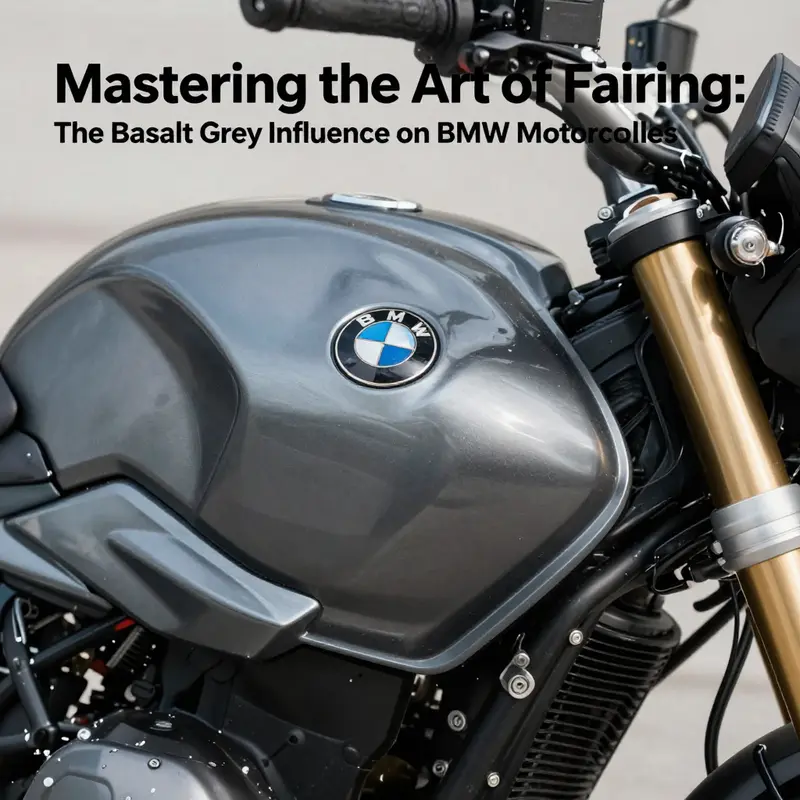
Basalt Grey Metallic is more than a shade on a metal shell; it is a deliberate signature baked into BMW’s approach to form, function, and the experience of riding. In motorcycle design, color can be a narrative device as potent as the sculpted lines that carve through air. Basalt Grey, with its deep, almost mineral presence and subtle metallic flecks, acts as a visual anchor for the fairing a canvas on which power, precision, and restraint converge. When light shifts across the surface, the finish reveals a spectrum of depth. In the sun, the flecks sparkle with a quiet, almost mineral glitter; in the shade, the tone settles into a velvety shade that emphasizes the muscular contours of the bike’s profile. This is not an aggressive color statement but a refined one, a color that invites close inspection while remaining confident at speed. In that tension between visibility and discretion, Basalt Grey Metallic reinforces an identity built on engineering discipline and a taste for understatement that has become a hallmark of BMW’s touring and sport-touring lineups.
On the surface, Basalt Grey appears as a simple utilitarian finish. Yet the way it interacts with the fairing’s geometry is anything but simple. The fairing is not merely a protective shell; it is a sculptural element that shapes the machine’s aerodynamics and the rider’s experience of motion. The darker, textured look of Basalt Grey helps the fairing’s edges and bends read clearly under different lighting, delivering a crisp silhouette that remains legible at high speeds. The color’s depth catches and plays with the reflections of the surrounding environment, emphasizing the fairing’s volume and the machine’s stance. The contrast between the glossy surface here and the matte or satin treatments that may wrap other panels creates a visual hierarchy: Basalt Grey foreground invites the eye to follow the graphic lines, the way air would swirl along a well-tuned body. This is design as aerodynamic storytelling, where color is part of the wind’s choreography, not just a cosmetic afterthought.
The choice of Basalt Grey Metallic sits within a broader design language that has defined BMW Motorrad’s visual vocabulary for decades. It embodies a philosophy of premium, understated elegance that does not shout but speaks with confidence. This tone is not about flash, but about a disciplined confidence that mirrors the engineering rigor behind the machine. In the early 2000s, BMW’s signature palette leaned into sophisticated, neutral tones that paired gracefully with the chrome of fasteners, the black of plastic fairing panels, and the metal gleam of the drivetrain carryover. Basalt Grey colludes with the bike’s mechanical rhetoric—its proportional mass, its intake and exhaust geometry, its riding posture—to create a cohesive story of strength and refinement. Collectors and enthusiasts who study these bikes often note how the color sustains its appeal across editions and over time. It is a color that ages with dignity, a stone-like shade that seems both grounded and capable of moving with the machine’s shifting energy.
There is also a practical dimension to Basalt Grey’s enduring popularity. The finish does a quiet job of masking the inevitabilities of real-world riding—the small scratches and scuffs that accrue on long journeys, the micro-blemishes from gravel and rain, the micro-abrasions of everyday use. The color’s depth makes such marks less conspicuous than brighter hues would, while still allowing the geometry of the fairing to remain legible to the eye. In this sense, Basalt Grey is not only about aesthetics; it is about maintaining the perceptual integrity of the machine as it endures the demands of travel and performance. That resilience aligns with BMW’s engineering ethos: create components that perform at the highest level while preserving a calm, composed visual language that respects the rider’s focus.
The historical arc of Basalt Grey Metallic speaks to a design era when BMW’s touring and sport-touring models sought a visual coherence that could bridge different styles within a single brand language. The shade appeared as part of a broader commitment to a premium palette that could support both the lug-and-link functionality of a production bike and the refined lines of a sculpted, aerodynamically optimized shell. In this sense, Basalt Grey is not merely a color; it is a historical marker, signaling a period when German engineering and minimalist luxury converged in a way that could be understood by riders across continents and decades. The color’s appeal persists because it captures a timeless balance—strength without aggression, complexity without clutter. For collectors, this balance is a key criterion for authenticity and value, because Basalt Grey encodes a design intent that remains legible long after a machine leaves the showroom floor.
Restoration and preservation of Basalt Grey finishes reveal another layer of the color’s significance. When repainting or touching up panels, the priority is to recreate the factory appearance with accuracy. Authentic color reproduction—whether through a careful repaint or a compatible factory-matched coating—ensures that the fairing’s lines, transitions, and the light-play across its surface remain faithful to the original design intent. In a world where color trends shift rapidly, Basalt Grey Metallic has shown remarkable staying power. It is less a trend and more a constant in BMW’s design vocabulary, a reliable reference point for designers and enthusiasts who want the bike to age gracefully while preserving its visual authority. The finish itself is a reminder that good design is as much about how something ages as it is about how it performs when it’s new. Basalt Grey invites riders to measure time not by the odometer alone but by the evolving relationship between rider, road, and the metal that connects them.
Every nuance of the fairing’s shape—its wind-sculpted curves, its integrated vents, the way light gathers along a seam—contributes to a sense of purpose. Basalt Grey’s depth helps the eye resolve the fairing’s geometry, encouraging a reader of the machine to follow the lines that channel air with minimal disruption. The color does not distract from the fairing’s function; it enhances the perception of precision. This synergy between hue and form reinforces a design culture in which color is a deliberate part of aerodynamic reasoning. The fairing becomes, in a sense, a canvas where performance and aesthetics meet, and Basalt Grey Metallic is the quiet brushstroke that keeps the composition coherent at any speed, in any light, and across the long arc of a ride.
In reflecting on the broader topic of alpha BMW motorcycle fairing aesthetics, Basalt Grey Metallic emerges as a case study in how color can carry a brand’s identity without overpowering its engineering message. It demonstrates that the most enduring design choices are often those that allow a machine to look both formidable and refined, a paradox that is easier to appreciate when the color contributes to the narrative rather than shouting the story. The Basalt Grey finish aligns with a philosophy of restraint the idea that true luxury is not flamboyance but the confidence to let performance speak through shape, light, and proportion. For riders who seek a fairing that communicates capability with quiet dignity, Basalt Grey Metallic remains a compelling choice, a reminder that in high-performance machinery, color is not decoration but a partner in the art of motion.
For readers who want to explore related topics in the broader ecosystem of fairings and styling across brands, there is value in looking at cross-brand hardware considerations. While the core topic here is BMW’s Basalt Grey, a practical aspect of owning and maintaining a fairing involves the hardware that keeps it aligned and secure on the machine. A cross-brand approach to fasteners and organizers can simplify maintenance and upgrades, ensuring that the visual and aerodynamic integrity of the fairing is preserved over time.
Basalt-Gray Precision: Compatibility and Maintenance of BMW Fairings and Fastening Systems
Basalt Grey Metallic, known in factory terms as a distinct Basalt finish, has long anchored BMW’s visual language for both adventure and sport models. In the realm of motorcycle fairings, color is more than a cosmetic choice; it sets up how light plays across planes, how depth reads under changing angles of sun, and how the bike’s silhouette communicates its character to riders and onlookers alike. The Basalt Grey Metallic shade absorbs and reflects light with a quiet, almost mineral calm, letting the bike’s lines speak for themselves. This depth exists not simply in tint but in the way the metallic flecks catch the eye as the rider moves through urban canyons or open highways. When a fairing is painted in Basalt Grey Metallic, the surrounding environment—dirt, spray, rain, and dry air—appears differently as the finish shifts with the bike’s stance and the rider’s perspective. It is a color that supports rather than competes with the machine’s form, providing a backdrop for the engineering precision embedded in the bike’s aerodynamic panels, bracing ribs, and fairing joints.
In this context, the fairing kit that one might consider for upgrading or replacing the outer bodywork becomes more than a hardware accessory. It becomes a statement about how compatible components preserve both the visual integrity and the aerodynamic performance of the machine. An ABS injection-molded fairing kit, designed for high-performance BMW sport bikes from a specific era, exemplifies this principle. The kit is engineered to align with the original geometry, ensuring a seamless transition from the factory mold to the user’s hands. It uses injection-molded ABS plastic, a material chosen for its balance of rigidity and impact resistance, weather resilience, and ability to hold tight tolerances under temperature swings. The result is a set of panels that mirrors the bike’s intended air-flow behavior while offering a robust surface that can withstand road grime, minor impacts, and the occasional tip-in on gravel sections or track weekends.
A kit of this kind is typically available in multiple color options, including classic black, clean white, or bright yellow. The choice of color can be a tool for tailoring the bike’s appearance to a rider’s preference or to echo specific branding cues, but the underlying strength remains the same: a precise fit, preserved aerodynamics, and durable surface protection. The panels themselves are designed to reproduce the original aesthetic without compromising the bike’s silhouette. The injection-molding process helps maintain consistent wall thickness and clear radii where panels meet, defending against high-speed flutter and ensuring smooth, uniform gaps that contribute to both look and performance. When the fairing lines are kept true, the rider benefits not only from visual coherence but also from preserved airflow management, which is essential for engine cooling, rider comfort, and stability at speed.
Beyond appearance and fit, maintenance becomes a crucial companion to this Basalt-Gray presentation. The fairing kit, like the factory panels, lives in a harsh environment: road salts, humidity, UV exposure, and occasional impacts. The recommended upkeep begins with regular cleaning using mild soap and water. This approach prevents the buildup of grime that can degrade the surface over time and helps maintain the finish’s luster. Harsh chemicals or abrasive cleaners are a temptation in the middle of a long ride or a quick wash, but they can strip protective coatings and dull the metallic flecks that give Basalt Grey its depth. A gentle touch is part of preserving the color’s character and the panel’s surface integrity.
When it comes to dealing with scratches or blemishes, patience matters. For minor scuffs on ABS surfaces, a plastic polish or a touch-up formula aligned with ABS plastics can help restore the surface without melting or deforming the edgework. It’s not unusual for riders to encounter shallow markings after a few seasons of mounting and dismounting the bike from stands or trailers. In those moments, slow, careful polishing can restore a nearly factory-like surface that reflects light evenly, returning the panel to its understated but purposeful presence on the machine. More significant scratches may require more involved attention, potentially including a spot-repair approach that respects the panel’s curvature and alignment with adjoining pieces.
Installation is where the narrative of compatibility becomes concrete. A fairing replacement or upgrade kit comes with fasteners chosen to match the mounting points and the original points of contact on the frame and subframe. Following the manufacturer’s torque specifications is essential to avoid overloading mounting points or inducing misalignment that could alter fairing gaps or disrupt the bike’s aerodynamic envelope. The process benefits from a methodical approach: verify panel orientation before securing, begin with upper mounting points to establish alignment, and then progressively tighten lower connections while monitoring the panel’s edge-to-edge fit along the frame tank lines. The goal is a seamless interface—no gaps that could collect road debris, no misaligned edges that could interfere with the rider’s knees or with the windscreen’s operation. In practice, these steps become a routine part of a rider’s maintenance ritual, a discipline that keeps the Basalt finish looking uniform as the bike moves through time and weather.
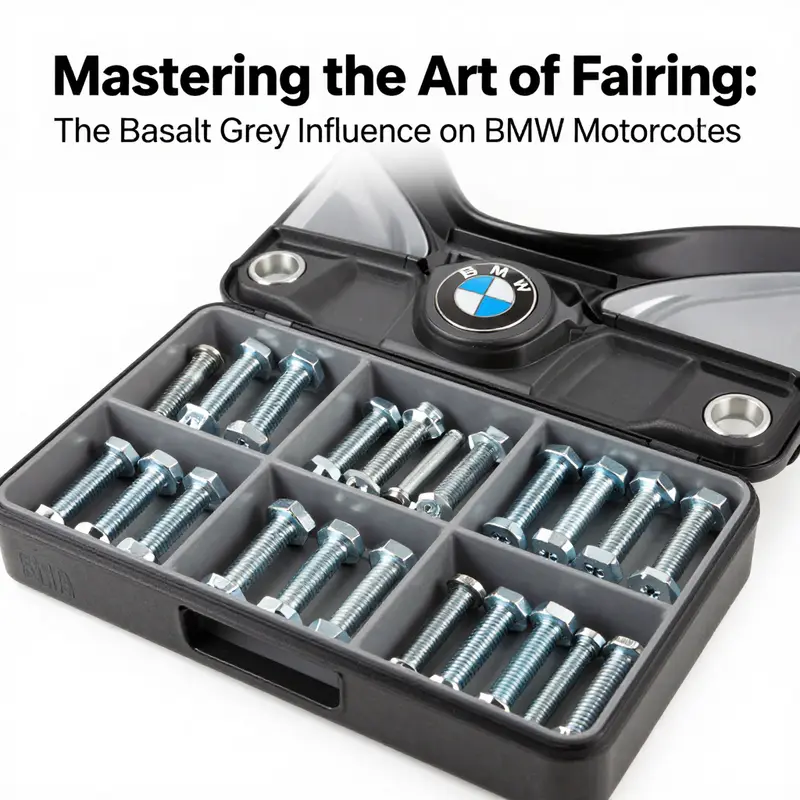
The kit’s construction philosophy also reflects a broader truth about modern motorcycle bodywork. An injection-molded ABS system supports predictable, repeatable geometry that mirrors the original contouring while offering a durable surface that resists weathering and minor impacts. A comprehensive fastener kit, often described in general terms as a CNC-machined aluminum set, adds another layer of reliability. With a well-organized assortment of fasteners, spacers, and caps, riders can perform routine maintenance without scavenging for parts in a hurry. A 210-piece kit, for example, provides a complete array of components that can be used across several brands, enabling careful, deliberate maintenance and small upgrades without sacrificing precision or fit. The inclusion of a clear plastic organizer ensures that tiny hardware—clips, sleeves, and bolts—stays sorted and accessible, turning a potentially frustrating job into a controlled, repeatable procedure. This is the practical heart of compatibility: the ability to replace, upgrade, or refresh components while maintaining the bike’s intended geometry and appearance.
The conversation around compatibility would be incomplete without acknowledging the broader ecosystem of aftermarket bodywork. While the Basalt finish anchors the BMW’s appearance, the possibility of exploring compatible pieces for other brands and models markets the idea of standardization in fasteners and mounting strategies. For riders who want to broaden their access to compatible panels or to organize their workshop more efficiently, a universal approach to fasteners can be a wise path. It is not merely about swapping parts; it is about ensuring that each component—panel, fastener, or clip—contributes to a coherent whole that respects the bike’s original aerodynamic intent while permitting controlled customization.
For riders who are curious about how this world of aftermarket bodywork operates across different manufacturers, there are avenues to explore that connect the broader ecosystem of fairings with the BMW experience. In this context, the availability of diverse panels and fasteners invites a wider consideration of how fairings interact with different riding styles and environments. The practical takeaway is that a Basalt-Gray BMW, when equipped with a well-fitting, injection-molded fairing kit and a robust fastener system, can maintain its refined aesthetic while delivering dependable performance over the long haul. The combination of Basalt Grey Metallic’s depth, the exacting fit of injection-molded ABS panels, and the reliability of CNC-machined aluminum fasteners creates a balanced equation: beauty meets durability, and precision meets practicality. This is the core appeal of modern BMW bodywork, where color and contour are not merely decorative but are integral to the bike’s overall performance and rider experience.
For those who want to broaden their understanding of aftermarket bodywork in a broader context, see the Yamaha fairings collection as a point of reference for the kinds of modularity and fit that riders expect from modern kits. Yamaha fairings offers insight into how panels, mounting hardware, and finishing choices come together to support a rider’s goals, whether purely cosmetic, protective, or performance-oriented. This link is not a direct endorsement of any one product but serves as a useful benchmark for thinking about fit, finish, and the practicalities of maintenance across brands.
In sum, Basalt Grey Metallic serves as a quiet canvas for the engineering that supports safe, confident riding. The combination of injection-molded ABS fairing panels and a well-curated fastener kit ensures that compatibility and maintenance live in harmony. The fairing is not just a shell; it is a carefully engineered interface between rider, machine, and environment. When properly selected and installed, it preserves the bike’s lines, protects critical components, and remains resilient through weather, road use, and the inevitable vibration of riding. As the ride continues, the Basalt finish remains a steadfast partner, reflecting light with a disciplined sheen while the fasteners and panels hold true under pressure. For enthusiasts and technicians alike, the lesson is clear: compatibility is not a compromise but a discipline—one that keeps the bike looking purposeful and performing reliably on every road chosen.
External reference: https://www.amazon.com/dp/B07ZP5KJQH
Basalt Grey in Motion: The Alpha Racing Style Fairing and the Language of Modern BMW Performance
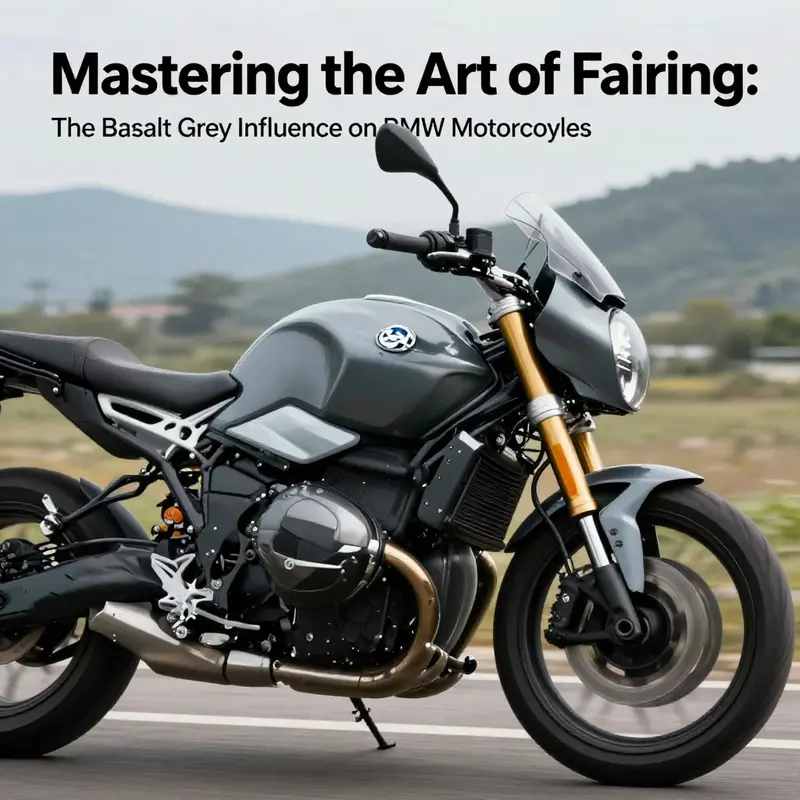
Basalt Grey, with its deep, sculpted undertone and subtle metallic flecks, speaks a language of restraint and intensity at once. When applied to a racing-inspired fairing, this color becomes more than a coat; it acts as a tactile map of aerodynamics and purpose. The Basalt Grey Metallic known in factory catalogs as a distinctive M410 finish carries a quiet authority. It does not shout; it persuades. In the context of a premium sport machine, the Basalt Grey glosses under streetlights and absorbs the glare of sunlit straights alike, while a matte variant of the same shade absorbs light differently, lending depth and nuance to the machine’s contours. The result is a visual identity that nods to track heritage while remaining perfectly suited for daily riding. This is not merely about color; it is about how color interacts with form, line, and function to produce a coherent, confident presence on the road and, more importantly, on the track. The decision to pair Basalt Grey with a racing-inspired fairing is a deliberate choice. It aligns a street-legal machine with the visual language of its race-bred cousins, while preserving the refined undertones that keep it accessible and sophisticated in ordinary traffic. The fairing’s surface treatment—typically a matte finish in Basalt Grey—plays a crucial role in this balancing act. Matte finishes minimize glare, which in turn lowers visual fatigue for the rider and reduces the perception of harsh reflections during high-speed transitions. The finish also interacts with the bike’s mechanicals, highlighting the juxtaposition between exposed metal and sculpted composites. In Basalt Grey, the eye travels along the sharp edges and clean lines of the fairing, tracing a silhouette that feels both aggressive and controlled. The line between form and function becomes almost tactile: every contour hints at air being managed, channeled, or redirected. The Basalt Grey finish is not merely cosmetic; it is a design statement about how the bike is meant to move through space as a single, integrated system. This is especially true when the fairing is conceived to replicate the factory racing aesthetic. The Alpha Racing Style Fairing, in its essence, is designed to evoke the look of the race machines while adapting to everyday use. The outcome is a look that is unmistakably performance-oriented—an appearance that communicates track intent without requiring a race decal to prove it. The integration of the fairing with the motorcycle’s body lines is a study in precision. The transition from fairing to tank, from side panel to tail, is seamless. The paint sits in the crevices and on the ridges with exacting consistency, and the color’s depth emphasizes the careful attention paid to panel alignment and contouring. When light hits the surface, you notice the interplay of tone and texture in the shadowed recesses of air intakes and vents. The Basalt Grey’s subtle metallic flecks catch some angles with a hint of sparkle, while in other angles the finish settles into a more uniform matte, allowing the rider’s eye to rest on the geometry rather than on a high-gloss distraction. The result is a distinctive look that stands apart from the standard paint schemes, signaling a more individualized, race-inspired stance without sacrificing street practicality. The design features—sharp contours, integrated air channels, and deliberate scoops—are not only about aesthetics. They contribute to the bike’s overall aerodynamic profile, guiding air smoothly past the rider and under the belly of the machine. In a sense, Basalt Grey serves as a canvas for the speed-focused architecture of the fairing. Its calm, restrained surface invites the eye to follow the lines of the bodywork as they converge toward the front and then diverge into a lean, purposeful rear. The matte finish in particular plays into the perception of depth and motion. As the bike moves, the color’s texture seems to shift, reinforcing the impression that the machine is actively cutting through air rather than simply moving through space. For riders seeking a distinctive look that does not require loud branding to announce its presence, this combination of Basalt Grey and a racing-inspired fairing offers a powerful solution. The finish helps reduce glare for the rider, while the fairing’s geometry enhances the visual impression of speed even while the bike is stationary. It is a design philosophy that values the synergy between paint, form, and function over conspicuous branding. Availability and access to such an upgrade, or its careful restoration, hinge on reliable fitment and factory-grade finishes. In this regard, the surface and structure must work in tandem with the machine’s underlying architecture. Authorized retailers and service providers who can guarantee OEM fitment and master painting services offer a route to ensure that the finish remains durable, consistent, and aesthetically faithful to the original intent. This is not merely about replacing components; it is about preserving the cohesion of the bike’s visual language as it moves between stock performance and individualized styling. The concept of a factory-leaning aesthetic, realized through a Basalt Grey fairing, also invites a broader consideration of maintenance and parts compatibility. When owners seek replacements or repairs for the fairing, the importance of precise fasteners, aligned mounting points, and corrosion-resistant hardware becomes clear. A 210-piece CNC-machined aluminum bolt kit, designed for compatibility across brands, illustrates the level of precision and care that modern bodywork maintenance demands. Such kits help ensure a clean, secure assembly that preserves both the aerodynamic integrity and the visual line of the fairing. The organization of small mechanical parts becomes essential in a project that blends meticulous finish with high-performance engineering. The storage of these fasteners in a clear, compartmentalized organizer echoes the rider’s desire for efficiency and reliability, both in the pit and on the road. The fairing, in this context, emerges as more than a cosmetic upgrade. It is a component of the rider’s experiential identity—an element that signals intent, whether the rider is carving through windy mountain passes or sprinting toward a race line. The Basalt Grey finish, with its muted elegance and depth, interacts with the bike’s mechanicals—brakes, suspension, engine performance—so that the rider’s perception of speed is shaped not just by the machine’s numbers but by its presence. Such cohesion is often achieved by design teams that pay attention to how fairings sit against the chassis. The lines must align with the bike’s structural elements, and the color must tie those lines together in a manner that reads as intentional, not accidental. The result is a product that communicates a philosophy: speed is a language spoken through form, color, and texture as much as through horsepower. Access to this aesthetic path typically requires engagement with specialized retailers who can offer factory-fitment assurances and bespoke painting options. The process often includes careful color matching, surface preparation, and clear protective finishes to preserve the matte Basalt Grey under various riding conditions. This ensures that the finish remains consistent across panels, from the upper fairing to the lower belly pan, and that the integrated air intakes continue to function as designed while maintaining the visual coherence of the overall silhouette. In terms of broader context, the Basalt Grey palette, combined with a racing-inspired line, belongs to a lineage of sport-focused styling that has long bridged the gap between show-ready visuals and track-ready performance. It is a look that has evolved with the rider’s expectations: less about flamboyance, more about a quiet, confident assertion that speed has a purpose and that the machine can be both art and instrument. For readers curious about similar paths in other brands’ offerings, exploring a nearby category such as a Yamaha fairings collection offers a sense of the market’s range and how different design languages interpret the same goals—speed, protection, and identity. See the Yamaha fairings collection for a sense of how aftermarket lines approach form and finish in parallel universes. Yamaha fairings collection. The parallels and deviations between these approaches illuminate how a Basalt Grey alpha-style fairing sits within the broader ecosystem of aftermarket bodywork. In any case, the path to an authentic, race-inspired transformation involves careful attention to fitment, finish, and function. It requires a balance between the rider’s vision for a bold, track-oriented stance and the machine’s innate engineering, which continues to underpin everything from handling to aerodynamics to heat management. As the narrative of Basalt Grey in motion continues to unfold, the layers of design become increasingly cohesive. Each contour, each shade, and each vent contributes to a perception of speed that precedes the rider. This is the essence of the aesthetic fusion embodied by the Alpha Racing-style fairing in Basalt Grey: performance, refinement, and a race-bred attitude, all expressed through color, line, and an unspoken promise of control on every turn. External resource: https://www.bmw-motorrad.com/en.html
Authenticity by Color and Fit: Preserving Basalt Grey Depth with OEM-Grade Fairings on Modern Sport-Bikes
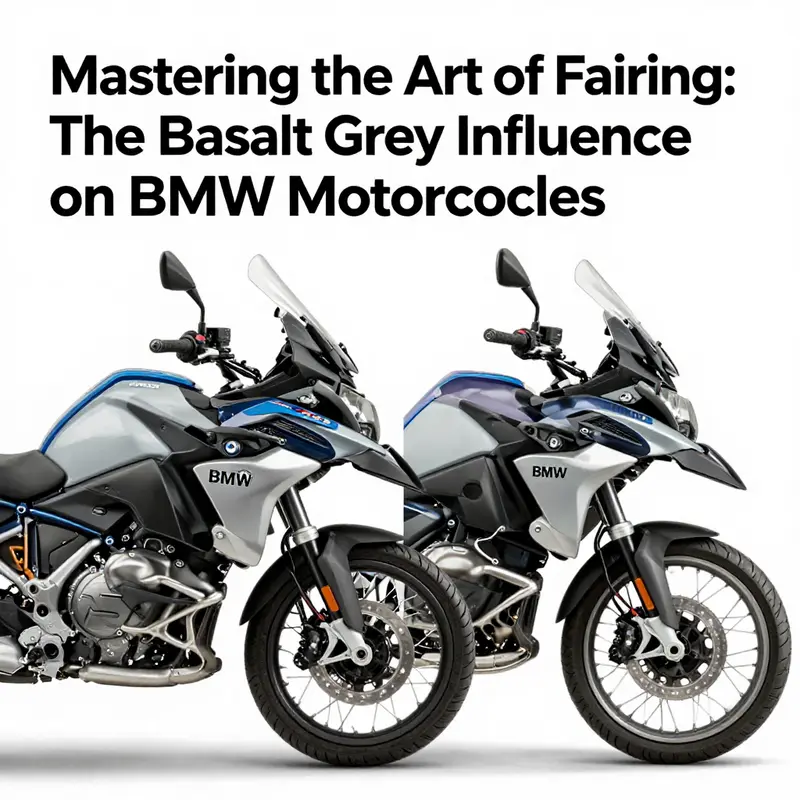
The fairing is more than a shell; it is a statement about a machine’s identity, a surface where engineering precision meets aesthetic intention. For riders who value both function and form, the Basalt Grey Metallic finish – coded M410 – offers a particular kind of depth. The color is not just a look. It is a tactile sense of the bike’s character, a subtle constellation of metallic flecks that shift in light and shadow as the machine rolls toward the horizon. Basalt Grey Metallic sits at an intersection of modern automotive-grade science and showroom drama. It is a color that invites a rider to notice the way the panel lines catch and hold light, the way the finish seems to breathe with every turn of the wheel. When the goal is to preserve that depth, authenticity becomes the guiding principle for choosing a fairing that can carry the color and the engineering intent without compromise. In this context, the chapter that follows does not celebrate a single part but illuminates a philosophy: authentic, OEM-like fit and genuine construction that keep the fairing from becoming a mere cosmetic overlay and instead make it a seamless extension of the bike’s core architecture.
What defines authenticity in this realm is less about a single surface and more about how a replacement panel behaves in the hand and on the bike. A true, racing-inspired replacement aims for near-original fitment, a term that signals not just alignment with the mounting points but an integration with the motorcycle’s underlying geometry. The fairing panels designed for modern sport bikes are increasingly crafted from injection-molded ABS plastic. This material choice matters because ABS offers the resilience needed to withstand seasonal temperature swings, road debris, and the stresses of high-speed aero loads, all while maintaining a surface that accepts multiple layers of paint and clear coats without unnecessary shrink or wavering. A factory-like finish is not a marketing hook; it is a technical attribute, the outcome of controlled molding, precise pigment layering, and careful surface preparation. When applied to Basalt Grey Metallic, the finish reads as a depth-rich layer that remains faithful to the original design language. In this sense, authenticity becomes a multi-layered attribute: material integrity, production fidelity, and color accuracy coalescing into a product that behaves like a factory part, even if it is sourced from aftermarket design families.
From the perspective of fit and compatibility, the most consequential claim is near OEM fitment. A well-engineered fairing offers a pre-drilled design that aligns with the frame’s mounting points with minimal need for modification. The promise is a 99 percent OEM-like fit, which translates into straightforward installation, predictable aerodynamics, and preserved structural integrity. That degree of alignment is not incidental; it relies on a careful return to the original geometry of the bike’s bodywork. The mounting points, the contours of the panels, and the interlocks between upper and lower sections all contribute to how clean the finish remains across a rider’s daily miles. The beauty of that approach is that it respects the bike’s engineering and the rider’s time. When the panel aligns without force, it reduces the risk of cracking around fastener holes, and it helps the paint hold its satin, gloss, or metallic micro-dust in a uniform way. A fairing that mirrors the original curvature—without requiring extensive trimming or reshaping—also preserves the aerodynamic profile that was designed into the bike at the factory. In practical terms, that means fewer adjustments, fewer tool marks, and a more cohesive overall silhouette, which matters for both performance and aesthetics.
The concept of authenticity in this space also emphasizes a controlled, layered finish. A triple-layer base painting is often cited as a hallmark of professional-grade manufacturing and replacement components. The base layers provide a robust foundation for color and clear coats, ensuring the resulting surface can withstand UV exposure, minor abrasions, and the daily wear of weather and road grime. With Basalt Grey Metallic, the interaction of light with the metallic flecks is especially sensitive to the quality of the base. A solid base that’s evenly applied allows the flecks to shimmer consistently, rather than appearing as spotty or uneven specks. This level of finish fidelity is not merely cosmetic; it supports longevity and resistivity, helping the color stay true for years without the need for aggressive refinishing. The end result is a panel that, when installed, reads as a coherent part of the motorcycle’s overall composition rather than a separate piece perched on the frame. It is this sense of continuity—color, texture, and curvature aligned with the bike’s original language—that defines authentic fairing work.
In discussing authenticity, one cannot overlook the practical details that make or break the rider’s experience. A well-designed fairing system considers not only the panels themselves but the hardware that holds them in place. Replacement or repair tasks are simplified when a kit provides high-precision fasteners with predictable tolerances. A 210-piece aluminum bolt kit, designed for broad compatibility, is a reference point in this ecosystem. It demonstrates how aftermarket ecosystems respond to the need for reliable assembly and serviceability across brands and models. The presence of a clear, compartmentalized organizer is more than a convenience; it is a tool for sustaining the integrity of the fairing system. Small differences in head profiles or thread pitches can affect how a panel seats, how seals compress, and how long the finish remains intact in the presence of vibration and wind pressure. When software and hardware teams plan a part with OEM-like intent, they recognize that every fastener contributes to the final aesthetic and functional outcome. The alignment of the fastener geometry with the fairing’s weight, thickness, and mounting surface matters as much as the paint’s depth, the edge finish, or the smoothness of the panel seam. In this sense, authenticity is tactile as well as visual.
The importance of original specifications cannot be overstated. Genuine or genuine-style components that carry the appropriate specifications provide assurance that the fairing will integrate with the bike’s other systems—fuel lines, electrical harness routing, radiator shrouds, and wind deflectors—without forcing awkward compromises. Factory documentation and official paint codes supply the language with which riders and technicians compare components, measure tolerances, and validate compatibility. The official site for the manufacturer, and its paint code descriptions, provides the reference framework that helps builders and owners understand what counts as a legitimate match for color and fit. In practice, that means verifying that the color, metallic content, and finish type align with the bike’s heritage and the rider’s expectations for long-term appearance. A well-chosen fairing that respects these specifications preserves the bike’s genetic code—the features that make a sport bike instantly recognizable, the stance that communicates speed even when the machine is stationary, and the color depth that evokes the brand’s visual language without sacrificing performance.
The ecosystem of aftermarket options sits alongside this philosophy, with a broad landscape of panels, finishes, and fittings. While some riders look for an exact match to the original, others prefer subtle enhancements that keep the bike visually cohesive while offering a slight modernization of line and contour. In all cases, the goal remains the same: to maintain the sense that the bike is a single, executable machine, not a mosaic of mismatched parts. The Basalt Grey finish interacts with the rest of the bike’s color story, and authenticity demands that the fairing’s texture, sheen, and impact resist the test of time while continuing to communicate the same design language at a thousand miles or a thousand corners. To achieve this, one must pay attention to the finish’s preparation, the panel’s alignment with the tank and tail, and how the edges meet at the fairing’s joints. A well-fitted, authentically finished panel is not a cosmetic flourish. It is part of a living system—the airflows and rider inputs that define suppressor drag, stability at speed, and the rider’s perception of control.
For readers exploring the broader aftermarket landscape, it helps to consider how the conversation about authenticity extends beyond a single model or color. You can see how the community frames compatibility and fit by looking at the wider ecosystem of fairing options that emphasize OEM-like dimensions and finish fidelity. In this spirit of cross-model learning, a useful reference point is a vendor’s online collection that emphasizes the breadth of fairings across brands, with a clear path to compatible hardware and installation guidance. This context helps riders make informed choices about where to source panels that deliver genuine feeling on the road, while remaining mindful of maintenance ease and repair readiness. The result is a fairing that not only conforms to the bike’s geometry but links to the historical color depth that has defined the model family for years.
For further exploration of related after-market components and installation considerations, one may find examples in the broader fairing community. The Honda fairings collection offers a useful comparative reference point for understanding how similar engineering compromises are solved across different models and brands. See the Honda fairings collection for insights into panel geometry, fitment strategies, and the practical steps technicians take to align new pieces with the bike’s core structure. External reference for further context on authentic-style fairings and installation specifics can be found here: https://www.ebay.com/itm/403682785485.
Final thoughts
Investing in the Basalt Grey Metallic BMW motorcycle fairing is about more than aesthetics; it’s a commitment to quality, functionality, and the rich heritage of BMW design. By understanding its significance, ensuring compatibility with modern fasteners, appreciating its visual impact, and prioritizing authenticity, business owners can elevate their motorcycle offerings and customer satisfaction. The Basalt Grey not only enhances the motorcycle’s performance but also contributes to a lasting impression on riders and enthusiasts alike, making it a coveted choice in the world of motorcycle design.