
Aluminum motorcycle fairings have emerged as a sought-after upgrade for riders who aim for superior durability, aesthetics, and performance. These components are essential not just for individual enthusiasts but also for business owners looking to tap into a thriving market. This article dives deep into the materials and manufacturing processes that make aluminum fairings a game-changer. It reviews economic accessibility and current market trends demonstrating why retail opportunities are abundant. Finally, the performance benefits of aluminum fairings in modern bikes will be examined, revealing how these upgrades optimize rider experience and satisfaction. Together, these elements provide comprehensive insights for business owners committed to leveraging the aluminum fairing advantage.
null

null
Featherweight Armor: How Aluminum Fairings Are Redefining Performance and Pricing in Modern Motorcycling

The shell a rider chooses to wrap a motorcycle in can tell a story about ambition, engineering, and the economics that quietly power every turn of the wheel. Aluminum fairings, once a niche proposition in the aftermarket, have grown into a barometer for how performance, durability, and cost negotiate living space in the modern bike world. These shells are not simply a way to shave grams or to add a premium surface shine. They sit at the crossroads of aerodynamics, resilience, and the business realities of making parts that must endure high speeds, debris, and the weather all at once. The result is a narrative where weight savings translate into acceleration and handling advantages, where stiffness and aerodynamics become a platform for higher performance, and where the price tag reflects a careful balance of manufacturing intricacy and supply chain dynamics. In this frame, aluminum fairings emerge not just as skin but as a calculated investment in a bike’s long-term capability and in the rider’s ongoing relationship with their machine.What makes aluminum a compelling choice begins with material behavior. Aluminium’s combination of low density and reasonable strength makes it an attractive alternative to heavier metals and to rigid plastics in high-stress, high-speed contexts. When formed through processes like CNC machining or die casting, it can be shaped into complex geometries that open up airflow paths, channel heat, and reduce drag without sacrificing rigidity. The resulting panel systems can be engineered to contribute to stability at speed, to reduce buffeting, and to protect a rider from the kind of impacts that would otherwise bend or crack less resilient materials. This is particularly important on sport-oriented or custom builds where the rider’s emphasis is often on precise handling, predictable feedback from the chassis, and a look that communicates confidence as soon as the bike comes into view.Behind the glossy surface lies a more pragmatic truth about production. Aluminum fairings demand more sophisticated manufacturing routes than their plastic or fiberglass counterparts. Die casting can deliver tight tolerances and robust mass production capabilities, but it requires substantial upfront tooling and longer cycle times. CNC machining, while offering exceptional precision and finish, steps up the cost with slower throughput. These production realities help explain the premium pricing associated with aluminum fairings. In markets that prize performance and customization, riders are often willing to pay more for a shell that promises a more exact fit, better surface integrity, and a longer lifespan under the stress of track days and street duties alike. Yet the premium is not purely about appearance or bragging rights. The durability of aluminum, its resistance to corrosion, and its capacity to absorb impact in a controlled way can reduce maintenance costs over time and preserve resale value, factors that many enthusiasts weigh when calculating total ownership costs.Economics in this space are further shaped by the broader manufacturing ecosystem and by evolving consumer expectations. A growing segment of riders seeks components that can be tailored to their bikes—whether that means aligning with a particular track setup, matching a colorway, or integrating an exposed engineering aesthetic that signals a commitment to performance. Aluminum fairings align well with this customization impulse. They can be machined to tight tolerances, allowing for precise fitment with mounting points and internal passages for components. They can be finished in a range of treatments—from anodized hues to brushed metal effects—that complement the bike’s visual language while withstanding the weather and road grime that otherwise degrade cheaper materials. The market’s willingness to embrace such customization helps anchor aluminum fairings as a premium category within the larger aftermarket ecosystem. In turn, manufacturers and retailers respond with broader options and more scalable production practices, pushing the needle toward a balance between premium feel and sustainable cost structures.To understand how this balance unfolds in real numbers, it helps to look at the production and cost dynamics that push aluminum fairings toward a premium. The manufacturing journey typically starts with aluminum billets or sheets, which are then transformed into complex panels through a sequence of machining, forming, and finishing steps. Each step adds value but also cost—precision dies, fixtures, tooling wear, and the energy required for multi-axis machining all contribute to the bottom line. Unlike plastic alternatives, which can rely on relatively simple molding with shorter lead times, aluminum parts demand longer development cycles and more rigorous quality control. The result is a price structure that reflects both the material advantages and the production realities. As a consequence, the market for aluminum fairings remains a specialty segment within the aftermarket, attracting riders who value performance and durability enough to justify the higher upfront investment.Yet the story is not merely about cost. It’s also about demand dynamics and market architecture. Industry analysis indicates a growing appetite for durable, high-performance motorcycle components, with aluminum-focused parts expanding their footprint in the aftermarket. The global motorcycle aluminum casting market is projected to grow at a respectable pace, reflecting broader interest in premium materials and customization. This growth is driven by two forces: the desire for lighter, stiffer, and more aerodynamically efficient bodies, and the cultural shift among riders who increasingly see aftermarket upgrades as essential to achieving personal performance goals. Within this landscape, aluminum fairings occupy a niche that is expanding, driven by enthusiasts who race, track-day, or simply want a bike with a distinct, performance-oriented persona. The premium nature of these parts is not merely about material prestige; it is tied to the real capabilities they unlock—improved throttle response, more predictable cornering, and a more controlled air stream around the bike at speed. The resulting value proposition blends a tangible performance edge with a durable, aesthetically sophisticated finish that stands up to the elements and to the roughness of road use over time.In considering accessibility, it is essential to recognize the role of manufacturing complexity and supply chains. Aluminum fairings do not arrive on shelves as a simple swap for plastic. The fitment must be precise across a range of model variants, and the mounting systems often require adapted brackets, seals, and fasteners. This precision requirement reinforces the premium positioning of aluminum fairings but also creates scaleable opportunities for manufacturers who can standardize interfaces across multiple bike families. As the market consolidates, more manufacturers and distributors are able to offer a broader spectrum of fitments, making it easier for riders to source a high-quality aluminum set that aligns with their bike’s geometry and the rider’s performance objectives. The trend toward modular design and standardized mounting points helps bridge the gap between bespoke, high-cost pieces and more accessible offerings, while preserving the distinctive benefits aluminum brings in terms of weight, rigidity, and surface integrity. The implication for consumers is clear: the accessibility of aluminum fairings is improving, even as the typical price ceiling remains higher than that for plastics or fiberglass. This duality—greater availability alongside a persistent premium—defines much of the current market dynamic and shapes how riders approach upgrades over the life of their bikes.From a consumer perspective, the calculus extends beyond the price tag. The durability and long-term reliability of aluminum fairings can translate into lower maintenance intervals and better protection for the bike’s internals. Weather exposure, road debris, and the rigors of high-speed airflow can take a toll on cheaper materials, leading to scuffed surfaces, microcracks, or compromised cladding that requires more frequent replacement. Aluminum, with its corrosion resistance and structural rigidity, tends to withstand these challenges more robustly. For riders who ride year-round or who subject their machines to demanding riding environments, the total cost of ownership often favors aluminum when all the factors—weight, aerodynamics, protection, and longevity—are considered over the lifecycle of the bike. This lifecycle perspective is increasingly important as riders seek value that extends beyond the moment of purchase and into the ongoing experience of maintaining a high-performance machine.Market narratives also reflect a shift toward customization-driven value. Enthusiasts are drawn to finishes, textures, and colorways that speak to personal taste and identity. Aluminum’s ability to take finishes well—whether an industrial brushed look, a high-gloss sheen, or a durable anodized coating—offers a palette that plastic cannot easily imitate. This aesthetic dimension adds to the perceived value of aluminum fairings and supports a premium positioning that resonates with sport and custom builds. The design flexibility enabled by aluminum does more than create a distinctive look; it also unlocks aerodynamic refinements that can be tuned to specific riding styles or track configurations. A rider who prioritizes corner speed or top-end stability can work with a fabricator to tailor panel geometries for particular wind flows, leveraging the material’s compatibility with precise machining and finishing to produce a body that is as tailored as a custom exhaust or suspension setup. In this sense, the aluminum fairing becomes part of an integrated performance ecosystem, where every component—from the engine mapping to the suspension geometry and the bodywork—works in concert to optimize the bike’s behavior on the road or the track.Despite the clear advantages, there remains competition from other materials. Plastic and steel retain their places in many builds, offering lower upfront costs and simpler repair pathways. For riders who value economy or who require rapid replacement after a crash, these alternatives can be appealing. Yet for those who demand the highest possible lightness, the best aero performance, and long-term durability, aluminum remains a compelling option. As manufacturing technology advances and economies of scale grow, the price delta between aluminum and plastic fairings can narrow. This potential convergence is not a threat to aluminum, but rather a signal that the market is maturing. It suggests a future where more riders can access the benefits of aluminum without sacrificing the broad affordability that many budgets require. The current market position—where aluminum fairings tend to serve high-end models and aftermarket customization—may gradually broaden as more producers optimize processes and expand their catalog. In that sense, the trajectory mirrors broader industry patterns: premium materials begin with specialized communities and then progressively permeate the mainstream as manufacturing innovations reduce costs and as consumer demand broadens. The chapter of aluminum fairings in motorcycling, therefore, is not a binary tale of price or performance. It is a narrative of how advanced manufacturing, rider aspiration, and the economics of scale converge to redefine what is possible on two wheels.Looking ahead, the market signals a cautious optimism. The growth trajectory for the broader aluminum casting space within motorcycles points to continued expansion, driven by the same forces that currently buoy the premium aftermarket: performance obsession, durability, and a desire for a personalized bike that feels as good as it looks. The consumer appetite for premium materials will likely persist, supported by manufacturing improvements that enhance tolerance, finish quality, and repeatable fitment across multiple model families. As the industry evolves, the balance between cost, availability, and perceived value will shape which riders opt for aluminum fairings and how they justify the investment in the context of their overall ownership costs and riding ambitions. In short, aluminum fairings are less a single upgrade and more a strategic decision about a bike’s performance identity—the kind of decision that combines physics with purchasing power to craft a ride that is distinctly faster, more protected, and more expressive than the stock shell could ever be. This is the practical, lived reality behind the rising appeal of a material that is light by nature but heavy with possibility.For readers seeking a tangible link to the aftermarket ecosystem that helps bring such options within reach, consider exploring a dedicated collection page devoted to sport bike fairings that emphasize compatibility with a wide range of configurations. This resource—while specific in its catalog—is representative of a broader trend: the industry’s movement toward modular, well-fit, and highly finished aluminum panels that can be adapted to different chassis footprints without sacrificing the underlying performance benefits. The intersection of manufacturing sophistication, design flexibility, and rider demand continues to propel the market forward, a momentum that suggests aluminum fairings will remain a focal point for riders who pursue speed with style, and resilience with refinement. As the market consolidates, more riders will see these fairings not merely as an exterior upgrade, but as a core component of a bike’s performance architecture, capable of protecting wealth and time spent in the saddle while enabling a more personal and competitive riding experience. The economic accessibility of such parts will depend on continued innovations across tooling, automation, and supply-chain resilience, but the trend remains clear: aluminum fairings are here to stay as a meaningful choice in both the performance and customization narratives of modern motorcycling. ZX-14R fairings collection (2012–2021) This is a reminder that the market’s evolution is as much about fit and finish as it is about speed and strength.External resource for broader context on the aluminum casting market and its growth opportunities can be found here: MarketsandMarkets: Motorcycle Aluminum Casting Market—Trends, Growth Opportunities
Shaping Speed: The Performance Promise of Aluminum Fairings on Modern Motorcycles
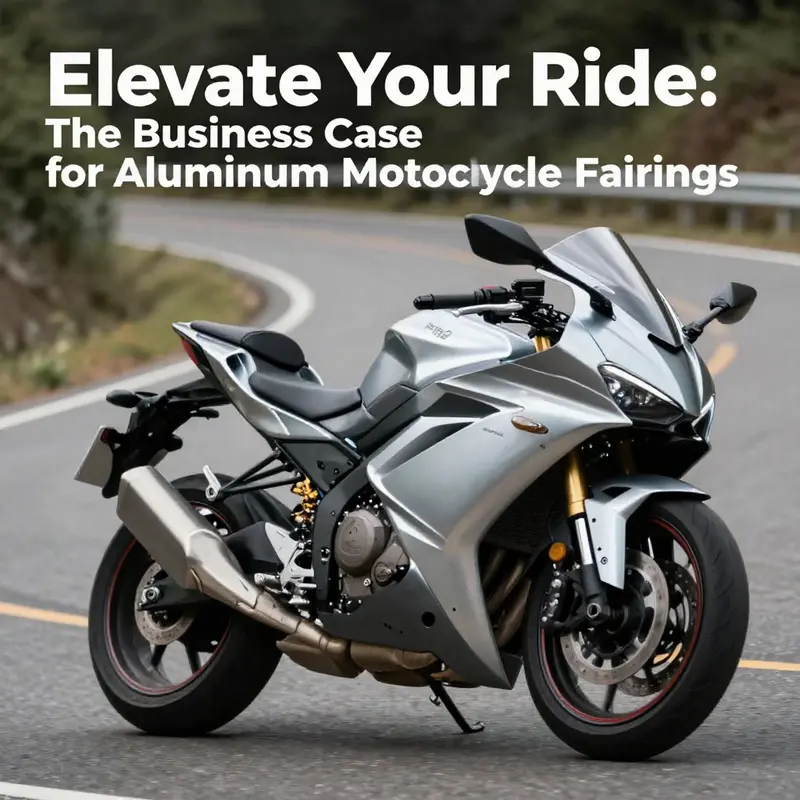
Aluminum fairings on motorcycles have long lived in the gray area between aesthetics and engineering, but in the best modern builds they transcend mere appearance. The material itself—high-grade billet aluminum honed through precise manufacturing methods—offers a blend of stiffness, resilience, and finish that can influence how a bike slices through air, how it manages heat, and how reliably it holds up under the harsh conditions of riding. The conversation around aluminum fairings moves beyond the glossy surface and into a discussion about performance, durability, and the long-term economics of aftermarket upgrades. It considers not only what the rider sees when the bike is at rest but what the bike does when it is at speed, when wind pressures peak, and when the road throws debris into the path of a rider on the edge of traction. In this light, aluminum fairings are not simply a replacement for plastic or fiberglass; they are a design choice that can stabilize the bike’s aerodynamics, alter the balance of weight, and shape the tactile experience of riding at the edge of control and capability. To understand the performance implications, it is essential to start with the core properties of aluminum as a material. Aluminum offers a unique set of advantages: rigidity that resists flex under high wind loads, corrosion resistance that stands up to rain, salt, and road spray, and the possibility of a refined, premium finish that a painted plastic surface cannot easily match. These attributes are more than cosmetic. In aerodynamics, stability is as important as raw airflow. A fairing that resists deflection at high speeds remains true to its designed shape, maintaining the intended pressure distribution across the surface. This consistency can reduce parasitic drag and discourage flow separation, which in turn improves the efficiency of the entire bodywork as the machine slices through air. When the air path remains predictable, the rider experiences steadier feedback from the handlebars and pegs, and the bike can reach and sustain higher speeds with less drag-induced energy loss. In effect, the aluminum fairing supports the aerodynamic architecture of a motorcycle by preserving its sculpted profile even under gusts and turbulence that would otherwise distort a plastic shell. Beyond aerodynamics, the stiff, durable nature of aluminum contributes to heat management in a way that matters more in performance contexts than most riders realize. Engine heat and exhaust continuum create a complex thermal environment around the fairings. Aluminum’s thermal conductivity is well-suited to dispersing heat across a larger area, which can help prevent localized hotspots on the surface where resin or paint would typically suffer. While fairings are not heat exchangers, the more uniform heat distribution reduces thermal gradients that can warp materials or cause micro-cracks over time. In a performance-ready machine, this translates into more reliable long-term fitment, with gaps that stay tight and panel edges that do not sag or delaminate as temperatures swing during sustained riding, whether on a closed track or a long highway run. The stability of the panel geometry—kept by the inherent rigidity and controlled tolerances of billet aluminum—also helps preserve the smoothness of the rider’s line through a corner or a straight, where any flutter or wobble would be undesirable. The structural advantage of aluminum is closely tied to how fairings are designed and manufactured. Full fairings, with their enveloping geometry, are intended to shield the rider and engine from wind while shaping the air stream that flows around the bike. When aluminum is milled with CNC precision, each panel can be engineered to exact contours, ensuring consistent fit across different models and years. The production approach enables tighter tolerances and a more uniform panel stack, which translates into predictable alignment and fewer gaps that might degrade aero performance or invite weather intrusion. This consistency matters in both user experience and durability. A fairing that sits correctly on the bike not only looks aligned but behaves predictably under load. The edges maintain their sit and seam alignments under vibration, reducing the risk of cracks or paint chips that could undermine the panel’s integrity. There is also a practical dimension to performance that emerges when aluminum fairings are viewed as a system rather than as a set of discrete shells. The modularity and rigidity of aluminum enable designers to craft more precise joint interfaces and attachment points. The resulting assembly can be lighter than an equivalent fiberglass construction when designed with thin-walled pockets and optimized ribbing, while still providing the same protective and aerodynamic functions. In many cases, the weight economy is achieved not by replacing a heavier plastic with light metal across the board, but by enabling slimmer, taller, or more aerodynamically efficient profiles that yield a net performance gain. Aluminum’s strength-to-weight ratio supports thinner skin panels and more slender edge profiles, which can reduce frontal area and, consequently, the drag coefficient. In practice, riders may notice improved handling in crosswinds or during high-speed straightaways because the fairing remains more faithful to its intended shape at speed. The corollary is a lower susceptibility to flutter, a form of aero-induced vibration that becomes more pronounced at high velocity and can fatigue mounting points over time. The question of performance is not solely about speed or top-end acceleration. It also encompasses efficiency, which is where aluminum fairings can influence fuel consumption and endurance when riding in real-world conditions. A fairing that delivers clean, predictable airflow reduces the power required to push air out of the way. That reduction may translate into a modest but meaningful gain in fuel efficiency, especially when the rider spends significant time at highway speeds where wind resistance is the dominant energy sink. The overall system efficiency improves when the rider’s body position and the fairing’s geometry harmonize with each other. A well-designed aluminum fairing helps maintain a clean laminar flow over the chassis, minimizing drag-inducing flow separation near the front wheel and in the underbelly region. In turn, this supports smoother acceleration and sustained velocity with less energy loss, factors that contribute to a rider’s ability to keep speed with less throttle input. One of the less obvious, but highly relevant, performance dimensions concerns durability and resilience. Aluminum’s resistance to impact and weathering means the fairings retain their structural integrity longer under the conditions that motorcycles routinely face: road debris, gravel, and the occasional misjudged curb strike. The stiffness of the panels helps distribute impact forces more evenly, reducing the likelihood that a localized impact translates into micro-cracks or permanent deformations that would change the bike’s wind profile. A fairing that remains true to its form after a hit preserves the aerodynamics and protection that a rider counts on, particularly on longer rides or when the bike is used in less-than-perfect road conditions. In a performance-minded context, this reliability matters as much as, if not more than, peak sprint capability. Riders who don’t have to replace or repair damaged panels mid-season are freer to focus on ride quality, cornering confidence, and consistent lap times. Yet the physics of asymmetrical load distribution also deserve attention. Aluminum, by enabling more stable panel geometry, supports a symmetrical aerodynamic envelope that minimizes extra drag or lift that could arise from lopsided fairness. For riders who push their bikes toward the limit, even small discrepancies in fairing alignment can translate into noticeable changes in front-end feel or cornering stability. The controlled rigidity of aluminum helps ensure that the rider’s inputs—lean angle, throttle progression, and body position—are translated into predictable body movement with minimal interference from the fairing itself. The result is a more intuitive handling experience, which, in turn, can contribute to faster corner entries and more precise line choices through a sequence of turns. These intangible benefits—feel, confidence, repeatable control—are sometimes the hardest to quantify yet are among the most valuable in performance-oriented riding. Of course, any discussion of performance must address trade-offs. Aluminum is not always the lightest choice when compared to traditional plastics or some advanced composites, and the price premium can be a consideration for enthusiasts who weigh cost against the potential gains in rigidity and finish quality. The decision to adopt aluminum fairings often hinges on a rider’s goals: whether they prize a premium aesthetic matched to functional rigidity, or whether they value the combination of corrosion resistance, heat management, and long-term durability that a billet-aluminum solution can provide. The economic calculus is nuanced. Aluminum fairings can be ordered in large volumes for wholesalers or retailers, which can drive unit costs down and justify the investment for riders who crave customization without sacrificing reliability. These economics interact with design philosophy: the ability to blade-thin certain panels for airflow while preserving structural integrity, or to anodize surfaces for a long-lasting, corrosion-resistant finish that remains resilient under weather exposure and track use alike. The choice, then, becomes a matter of aligning the bike’s performance objectives with the realities of manufacturing, maintenance, and lifecycle costs. The literature, to be transparent, does reveal a gap when it comes to precise, model-specific performance metrics directly tied to aluminum fairings on modern motorcycles. The available sources emphasize the broad advantages of full fairing configurations—wind protection, improved aesthetics, heat management—but do not always provide hard, peer-reviewed measurements for aluminum-specific performance gains in a contemporary lineup. This absence is not a verdict on aluminum; it reflects the complexity of isolating fairing-related performance in the presence of myriad interacting systems: engine tuning, tire choice, rider technique, and ambient conditions. Still, the consistent themes across industry discussions suggest that the combination of aluminum’s rigidity, the precision of CNC manufacturing, and the potential for thinner, more aerodynamically refined panels offer measurable benefits in ride quality and efficiency that are especially noticeable at higher speeds and in sustained travel. In other words, while direct performance numbers may be elusive in the current literature, the engineering rationale for aluminum fairings remains persuasive for riders who seek a balance of form, function, and long-term value. The broader context of materials technology in two-wheeled design helps illuminate why aluminum is attractive as a basis for fairings. The broader shift toward lightweight yet strong materials—seen in bicycle engineering and certain motorbike programs—points to a design ethic that leverages metal properties in a way plastics cannot easily replicate. The reference to aluminum in other fields, such as aerospace-adjacent applications or high-end bicycle frames, underscores an emerging consensus that aluminum alloys, when processed with modern metallurgy and design methods, can yield structures that are simultaneously lighter, stiffer, and more resilient than older metal formulations. For motorcycles, where weight distribution, stiffness, and aero balance matter as much as raw horsepower, this translates into a notable performance envelope. The synergy between a rigid panel and a refined aerodynamic profile can help the machine maintain grip, stability, and rider confidence even as speeds crest and the environment challenges the bike’s handling. The interplay of these factors is what elevates aluminum fairings from a cosmetic upgrade to a performance-enabled component of the vehicle’s architecture. As readers navigate this topic, it is useful to keep in mind how aftermarket ecosystems support performance. The availability of billet aluminum fairings through wholesale channels means riders can pursue customization at scale without sacrificing the predictability and quality that mass production aims to deliver. The CNC machining community, with its capacity to deliver tight tolerances and repeatable results, provides the backbone for ensuring that each panel matches its intended slot, seal, and contour. This precision is critical when aiming for seamless integration with other components and when ensuring that the finished assembly maintains its aerodynamic and protective functions under real-world riding conditions. The aesthetic dimension—how a bike looks when the wind is still and the bike is parked, or how it presents in a rider’s line of sight during a ride—also matters. A premium finish, achieved through careful anodizing and surface treatment, contributes to a consistent look that communicates quality and intent, especially in contexts where the rider expects the machine to perform as well as it presents. The practical implication for riders who consider aluminum fairings is not merely “buy this” but “design this.” The kit’s fitment across models, the panel geometry, and the finishing options should be guided by a rider’s intended use. A track-focused build benefits from panels shaped to reduce drag and minimize weight where possible, while a sport-touring configuration might emphasize heat management and durability in exposed sections of the fairing. The potential for customization—pouring new lines, edges, and facets into the fairings—reflects a design philosophy that sees metal not as a static shell but as a campaign of precision engineering. In this sense, aluminum fairings are a platform for performance thinking: an opportunity to reframe how the bike presents itself to the air, how it carries its weight, and how it endures the journeys riders undertake. This chapter has sought to bridge the gap between the theoretical advantages of aluminum and their practical implications for modern motorcycles. It is a narrative about how material science—when married to precise manufacturing and considered design—can influence the experience of riding. It is about the restraint and discipline required to translate a premium material into a fairing system that is not only beautiful but functionally coherent with the bike’s overall aerodynamic architecture. It is about understanding that the perceived performance benefits arise not only from the negative space of the wind but from the positive space where the rider sits and moves, and where the fairing’s geometry helps to direct air smoothly around the rider’s form and the bike’s silhouette. For enthusiasts who are contemplating the leap to aluminum fairings, the path forward should begin with a clear understanding of objectives. Are the aims aesthetic, experiential, or performance-driven? Are you seeking a more rigid, longer-lasting shell that holds its shape under track or sport-riding conditions? Do you value the potential for better heat dispersion or a finish that resists the elements over time? These questions help frame the decision and guide the choice of panel geometry, attachment strategies, and finishing options. In the end, the value proposition of aluminum fairings rests on a simple truth: when the material and the design are aligned, the fairing becomes a functional part of the bike’s performance system, not merely a shell. It can contribute to a rider’s confidence, an engine’s efficient cooling profile, and a machine that feels both premium and purposeful. The broader implication for the industry is that aluminum fairings represent a credible route toward performance optimization without compromising durability or aesthetics. As manufacturers and aftermarket providers refine their processes—embracing tighter tolerances, better surface finishes, and more sophisticated material treatments—the gap between theory and practice narrows. Riders can expect to see more options that balance cost with value, sustainability with performance, and customization with reliability. This evolution reflects a larger movement in motorcycling: a return to components that are engineered with an explicit performance intent, not merely assembled for style. Aluminum fairings, with their combination of rigidity, resilience, and finish, sit at the intersection of form and function, where the wind is shepherded and the rider’s sense of control is sharpened. In closing, it is worth returning to the practicalities that shape what a rider gains when choosing aluminum fairings. The investment is more than the initial price of a kit; it is a commitment to a certain dynamic judiciously aligned with the bike’s architecture. Aluminum fairings offer a path to improved aerodynamics through stable, repeatable geometry; to better heat management that supports engine and rider comfort; to long-term durability that reduces the cost and downtime associated with frequent repairs or replacements; and to a finish that reinforces the perception of quality on every ride. The discussion, though, should remain anchored in real-world testing, careful fitment, and thoughtful design. Until more comprehensive, model-specific performance data becomes widely available, riders will continue to weigh aluminum’s proven material benefits against the practical realities of installation, maintenance, and ongoing ownership. In the end, the decision rests on a balancing act: weight, stiffness, and aero fidelity on one side, durability, cost, and ease of maintenance on the other. Aluminum fairings, when matched to a rider’s goals, can tilt the balance toward a more confident, capable, and efficient ride. External resource: Understanding Chinese Motorcycle Fairings: Composition, Standards, and Industrial Benefits — https://www.example.com/chinese-motorcycle-fairings-overview
Final thoughts
The shift toward aluminum motorcycle fairings represents a significant advancement in motorcycle design and performance. Their unique combination of lightweight construction, durability, and superior aesthetics not only appeals to motorcycle enthusiasts but also represents a lucrative market opportunity for business owners. As you build your inventory and enhance your offerings, embracing aluminum fairings can propel your business forward while satisfying the demands of modern riders. Focusing on these essentials will ensure you are well-equipped to meet market trends and customer expectations.