
For motorcycle enthusiasts and business owners alike, the choix of windshields can significantly impact both performance and aesthetics. The batwing fairing windshield, specifically designed for select Harley-Davidson models, stands out as a critical component that combines functional benefits with stylish design. This article will guide you through essential details, including product specifications, available variants, features, and purchasing insights. Understanding these aspects will be invaluable for owners seeking to enhance their riding experience or businesses aiming to meet customer needs effectively.
Riding the Edge: A Detailed Look at the Batwing Fairing Windshield—Specs, Fit, and the Pursuit of Aerodynamic Comfort
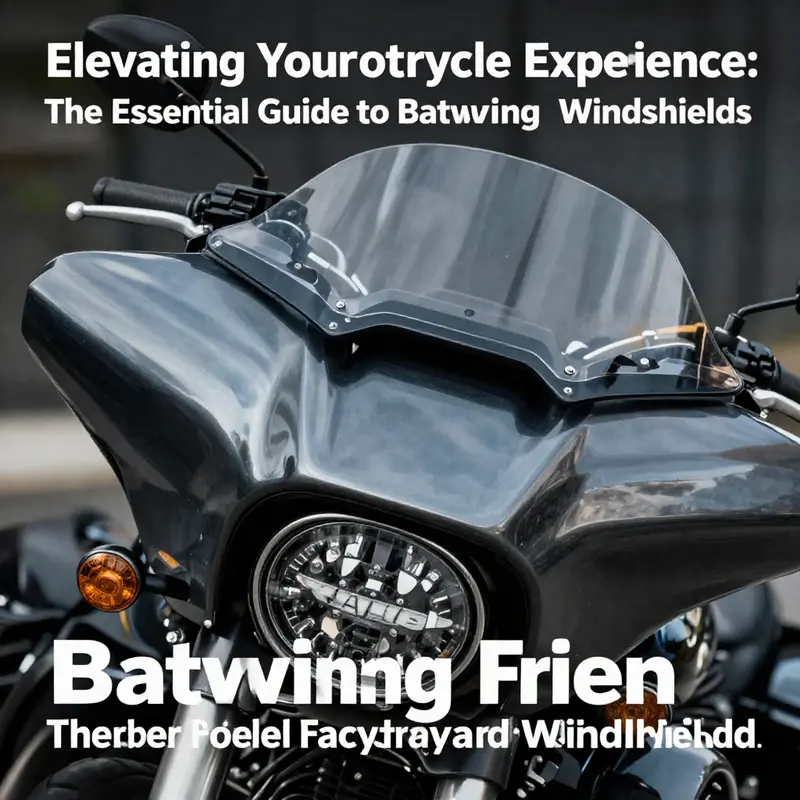
On the open road, wind becomes more than a backdrop; it is a constant companion that shapes every bend, every mile, and every moment of fatigue or clarity. The Batwing fairing windshield sits at the intersection of form and function, a component that turns a motorcycle’s silhouette into a sentinel against weather, noise, and fatigue. This chapter does not merely catalog a part; it traces how a windshield designed to complement a batwing fairing translates into riding comfort, better aerodynamics, and a riding experience that feels more at home in long-distance journeys than in shorter, wind-sculpted bursts of speed. In the design language of touring machines, the windshield is more than a shield; it is the first line of tuning for precision in wind flow, for rider posture, and for the quiet, steady cadence that long miles demand. The Batwing fairing windshield that follows is a well-understood solution for many riders who want a balanced blend of protection, visibility, and visual integration with the fairing’s sweeping lines. Rather than treating the windshield as a simple accessory, this discussion treats it as a keystone of the overall aerodynamics and comfort system that supports extended riding sessions, reduces rider fatigue, and preserves the ride’s character over the years of ownership and use.
From a manufacturing and materials standpoint, the windshield in question is built to endure. It uses hard-coated polycarbonate, a material selected for its combination of impact resistance, flexibility, and weather resilience. The hard coating helps resist scratches that accumulate over thousands of miles as wind, grit, and occasional debris meet the surface. It also stands up well to ultraviolet exposure, a consideration for riders who spend long hours in sunlit conditions. The material choice matters because cyclists will often encounter highway speed where the wind load is not simply a gust but a steady pressure that can complicate visibility if the surface becomes marred or dulled. The choice of durability here is not merely a marketing point; it translates into real-world peace of mind for riders who want to preserve clarity of vision on long trips without constant, intrusive maintenance.
One of the defining practical details is the windshield’s height. In this family of Batwing fairing windshields, several height options are commonly available, notably 5, 7, 10, and 12 inches. Each height offers a different balance of wind protection and upper-field visibility, expanding the rider’s ability to tailor the setup to body size, seating position, and personal preferences. A 12-inch model has long been a popular standard, providing a broad shield that can significantly blunt wind buffet while keeping the rider’s line of sight comfortably above the surface. For riders tall enough to sit upright with a relaxed posture, the 12-inch variant tends to harmonize with the batwing’s geometry, delivering a calm, measured airflow that reduces the engine’s wind-induced ram feeling and minimizes shoulder and neck strain during sustained cruising. For riders who prefer a lower profile or who tuck more deeply into the fairing, shorter options can still deliver meaningful wind reduction while preserving a sportier, lower-seated stance. The key is to understand that height is not mere inches; it is a lever that shifts how wind interacts with the rider’s torso, helmet, and vison line, and thus the overall sense of fatigue after hours in the saddle.
Width is the second axis along which fit and function are defined. Across standard sizes, the windshield maintains a consistent width of about 19.3 inches, or roughly 49 centimeters. This width is not accidental; it reflects a careful matching of the fairing’s internal channel, fairing lips, and the rider’s seating position. A width that is too wide can introduce new flow separation points or create additional drag; a width that is too narrow can leave portions of the rider’s field of view vulnerable to wind and debris. The 19.3-inch dimension represents a design equilibrium intended to maintain a clean, stable air cushion around the rider while preserving clear visibility across the arc of the windshield. When paired with the high sweep of a batwing fairing, this width helps create a predictable, even pressure distribution that minimizes turbulent hotspots and reduces fatigue.
The installation story for these windshields reinforces the sense that the part is designed to be a straightforward, reliable upgrade. Each unit comes with installation instructions and the necessary hardware, enabling a secure, proper fit within the fairing structure. The process is typically accessible to riders who possess basic mechanical aptitude and standard hand tools. The instructions emphasize alignment with the fairing’s interior channels and mounting points, ensuring a flush, stable mount that won’t loosen under vibration or weather exposure. A well-installed windshield not only looks right but also contributes to stability at speed; a crooked seal or a misaligned edge can unintentionally introduce buffeting rather than mitigate it. A clean, methodical approach—checking alignment, tightening hardware to specified torque, and testing the seal—delivers consistent performance over time and avoids common headaches like rattling or wind noise at higher speeds.
In practical terms, the windshield’s mission is twofold: it blocks direct wind and it shapes the air that flows around the fairing. The batwing design itself is a large, sweeping form that collects the wind and guides it across the rider’s torso and upper body. The windshield must complement that architecture rather than fight it. A well-chosen height achieves a balance between reduced wind pressure on the rider’s chest and a clear, uninterrupted view of the road ahead. When the rider sits at a height and posture that pairs well with, say, a 12-inch shield, the air is deflected smoothly with less abrupt separation of flow at the helmet, less buffeting from the sides, and a more uniform pressure distribution across the rider’s shoulders. The cumulative effect can be measured not just in subjective comfort but in the consistent ability to hold a steady line, read the horizon, and enjoy quieter wind noise inside the cockpit.
Beyond raw protection, the windshield contributes to the vehicle’s visual language. The Batwing fairing windshields are designed to integrate with the line and curvature of the fairing itself, producing a cohesive silhouette that remains recognizable as an engineered pairing rather than a quick add-on. There is a sense in riding culture that the upgrade is as much about aesthetics as it is about performance. A windshield that looks like it was designed as part of the original design language tends to look right on the bike and helps preserve the fairing’s iconic presence as the machine ages. This synergy—between aesthetics and wind management—often informs riders’ choices about height, width, and even whether to opt for a detachable windscreen or a fixed mount that aligns with the fairing’s geometry and the rider’s preferred seating posture.
When it comes to compatibility, this class of windshields is intended for batwing-faired touring models from a wide span of years. The design intent is to provide a fitment that accommodates the fairing’s interior geometry and mounting points, creating a stable, reliable pairing across many model years. That said, specificity matters. Some later iterations of batwing and fairing designs introduced subtle changes that required different components or mounting approaches. The upshot is a simple, principle-driven rule: always verify fitment against the exact vehicle year and fairing version before purchasing. This is not a minor step; it is the practical safeguard that ensures the windshield’s edge aligns with the fairing’s outer contour, the mounting holes align with factory threads, and the seal sits flush without gaps that invite wind noise or water intrusion.
In many bikes, the 12-inch windshield emerges as the universal choice, a midpoint between compact protection and an expansive field of view. For riders who wish to swap height settings for different seasons or riding conditions, detachable windshields provide an appealing path. A detachable design allows quick adaptation to varying climates, using a lower shield during hot, still days and a taller option for chilly, windy commutes. Likewise, wind-splitter devices—smaller, strategically shaped shields that mount near the primary windshield—offer additional fine-tuning for airflow. These auxiliary components are frequently marketed as modular add-ons that complement the main shield, enabling riders to craft a personal wind-management profile without buying multiple full-size windshields.
The broader ecosystem of wind management also includes low fairing lowers, which reduce the aerodynamic height of the lower fairing assembly and optimize the overall airflow around the bike’s front end. When used in concert with a 12-inch windshield, low lowers can further smooth the air stream and reduce turbulence in the chest and helmet region. For the rider, this translates into a more stable ride with less fatigue, especially on longer journeys. In combination with the windshield’s material properties, height, and mounting fidelity, the overall system delivers a measure of control that is often described by riders as a more relaxed ride and a more predictable engine note at speed.
From a maintenance perspective, hard-coated polycarbonate windscreens require regular care to preserve clarity and impact resistance. Cleaning should avoid abrasive agents that could scratch the coating; instead, riders typically gravitate to soft microfiber cloths and mild detergents designed for polycarbonate surfaces. UV exposure is a factor that affects clarity over time, so it is prudent to park in shade when possible and to consider a routine, light wipe-down to prevent hazing. The protective coating helps resist minor scratches, but the best defense remains careful handling and proper storage if the bike is kept in a windy or dusty environment for extended periods. With reasonable care, these windshields maintain their optical quality across miles and years, and the surface can remain nearly as clear as it was when first installed.
When it comes to ownership costs, the value proposition of a genuine Batwing fairing windshield is tied to fit, durability, and the confidence that the part was designed specifically to integrate with the fairing. In many markets, the official option is priced accessibly in the mid-range, reflecting the balance between manufacturing quality and the necessity of a precise fit. The investment is often justified by the peace of mind that comes from a product backed by a manufacturer’s warranty and sold through authorized channels. A one-year limited warranty is typical for these windshields, providing coverage for manufacturing defects and issues that arise during normal use. The warranty itself does not replace routine maintenance or normal wear, but it does offer a safety net in the early period of ownership when riders are still discovering the best matching setup for their riding style and climate.
From a purchasing perspective, the model year compatibility story is essential. The windshield is designed to fit batwing-faired touring models across a broad span of years, but end-of-life or transition-year changes in fairing design can alter compatibility. The recommended path is to consult the official parts catalog or contact an authorized dealer to confirm the precise fit for a given year and model combination. The catalog is structured to align part numbers with specific fairing frames, mounting points, and seal geometries. While the essence of the windshield remains the same across many years, the devil is in the details: a tiny shift in mounting hole placement or edge contour can determine whether a given windshield sits perfectly flush or impedes proper airflow.
The purchasing decision therefore involves more than the price tag or the aesthetic appeal. It requires awareness of the rider’s own riding goals. For some, the priority is maximum wind protection on long highway cruises; for others, it is a balance that preserves an open field of vision and a sense of wind connection for sportier rides. The 12-inch height frequently emerges as a practical choice because it covers a broad range of rider heights and seating positions, while the 5- and 7-inch options offer alternatives for riders who prioritize a lower wind profile or who sit lower in the saddle. The 10-inch variant often serves as a middle ground between the extremes, offering a tilt toward wind protection without fully obstructing the upper view. All of these heights share a common thread: they are designed to complement the batwing-form fairing’s sweeping lines and to integrate with the vehicle’s overall aerodynamics, rather than to look like an aftermarket afterthought.
In the end, the Batwing fairing windshield exists to support the rider on a journey that is both tactile and visual. It is a component that, when chosen with care and installed correctly, becomes a quiet partner in the ride—reducing fatigue, smoothing the air, and preserving the clarity of the road ahead. The conversation about its specifications—material properties, height options, consistent width, and warranty—points to a larger theme in motorcycle ergonomics: that the small decisions about wind management can echo across hundreds of miles. A well-matched windshield helps a rider maintain a comfortable posture, hear the engine and road more clearly, and keep a steady focus on the horizon. It is, in every sense, a tool that enables longer, more enjoyable journeys without demanding compromises in visibility or control.
For readers who want to investigate further, the manufacturer’s product page provides the definitive reference for fitment notes, material details, and warranty coverage. There, one can confirm the precise mounting geometry and compatibility with batwing-faired touring platforms, along with related trim and accessory options that can enhance the overall integration of the fairing, windscreen, and aerodynamic shaping. External resources can also offer practical guidance on installation tips, care tips, and the broader ecosystem of wind management accessories that riders combine to customize their machines for different climates and riding styles. The windshield discussed here is a robust, practical example of how a single component can influence comfort, visibility, and riding enjoyment across long-term ownership.
External resource: https://www.h-d.com/en-us/products/accessories/fairings-and-windshields/batwing-fairing-12-in-windshield.html
Wind, Form, and Function: Exploring Batwing Fairing Windshield Variants for Touring Motorcycles
The Batwing fairing, with its sweeping silhouette and integrated windshield, represents more than a styling cue. It is a purposeful approach to shaping the rider’s experience, balancing wind management, weather protection, and the visual language of a touring machine. Inside this design language lies a family of windshields that cater to different riding habits, climates, and preferences. The conversation around these windshields centers on size, material, fitment, and the subtle, almost imperceptible ways a shield can alter the ride. What begins as a fixed installation soon becomes a rider’s ongoing negotiation with wind, noise, and fatigue. The goal, at its core, is to craft a calm, predictable air stream that lets the rider concentrate on the road ahead rather than on bracing against gusts. In practice, this means selecting a windshield that stands up to both speed and weather while preserving the Batwing’s distinctive profile. A well-chosen shield integrates smoothly with the fairing’s lines, maintaining the silhouette that riders identify with while delivering tangible improvements in comfort and control. The result is not simply a shield attached to a bike; it is a carefully tuned aerodynamic element that works in concert with the fairing, the rider’s posture, and the bike’s overall geometry to reduce buffeting and fatigue over long miles. The landscape of options, though, can be complex. While a few sizes dominate the conversation—ranging from compact, low-profile deflectors to tall, substantial shields—the choice hinges on more than personal taste. It depends on riding style, average speeds, typical weather, and even the rider’s height and seating position. In short, the windshield is a negotiation between form and function, a bridge between the motorcycle’s aesthetic intent and the rider’s practical needs. The Batwing family of windshields is framed by a consistent material story: hard-coated polycarbonate that resists scratches and withstands the rigors of road exposure. This material choice matters because a shield lives in a landscape of grime, grit, heat, and UV exposure. A scratch-resistant surface preserves visibility, while weathering resistance keeps the shield clear and true across seasons. The coating also plays nicely with cleaning routines, offering a forgiving surface that can be wiped down without smearing or dulling the gloss of the shield. Beyond the material, the geometry of the shield—the height, the curvature, and the angle at which it meets the fairing—determines how the wind behaves around the rider’s torso and head. Different heights imply different armor levels: shorter shields keep a sense of wind involvement, often pleasing riders who enjoy a more connected feel to the machine and less visual blockage; taller shields, by contrast, create a pocket of calmer air, reducing the wind’s punch at higher speeds and in weather systems that push gusts toward the rider. The position of the shield—how far it sits away from the rider and how it lines up with the fairing’s curves—also matters. A shield that sits too low or too far forward can invite buffeting around the helmet, while one that is well matched to the fairing’s lines helps to smooth the air without producing a tunnel effect. This is where measurement and fit become essential. Documentation in the community notes that common heights include several distinct options, each with its own aerodynamic character. A 5-inch deflector favors a low-profile stance, preserving a clean, almost sleek look while delivering a modest improvement in wind deflection. A 7-inch shield offers a middle ground, maintaining a compact appearance while lifting the rider’s field of view slightly and reducing direct wind pressure on the chest and shoulders. The 10-inch shield represents a more purposeful approach to wind control, delivering noticeable relief to the upper body during long rides at highway speeds. The 12-inch shield, widely cited as a classic choice, offers substantial protection without completely enclosing the rider in a wind tunnel. It is a versatile option for riders who travel across varied climates or who frequently encounter changing wind directions. Some riders gravitate toward the 15-inch shield for the most comprehensive coverage, especially when the bike serves as a long-distance steed on open roads. The range of widths reported in sources—around 19.3 inches in some measurements and about 22 inches in others—reflects differences in measurement points and mounting configurations. In practice, the width is less a single constant than a reflection of how the shield interacts with the fairing, dash area, and side contours. The result is a practical truth: two shields labeled with the same height can present different wind profiles once installed on a given bike. This underscores the importance of verifying fitment with the rider’s own model year and configuration. Compatibility notes accompany every listing, and the manufacturer emphasizes that fitment is model- and year-specific. The Batwing shield set is designed to work with a family of touring platforms from a defined era, typically from the mid-2010s through the mid-2020s. Yet, even within this window, a degree of specificity matters. The same shield may align well with certain trim levels and differ slightly in pose or mounting points on other trims. The wise rider approaches this with a careful fitment check: confirming the shield’s height, width, and mounting geometry against the year and model’s official specifications, and seeking a dealer or service manual to verify hardware compatibility, gasket thickness, and mounting torque. The installation story, then, becomes another layer of precision. When a shield is mounted on a Batwing fairing, the sensitivity to the fairing’s curvature is evident. The shield’s edges meet the outer contours with a seamless line, and the shield’s top edge often approximates the fairing’s crown to avoid gaps that can invite turbulence. The hardware choice—bolts, spacers, and mounting hardware—plays a secondary but important role. Correct hardware supports a solid seal, minimizing vibration, and it preserves the shield’s set position through the vibrations and micro-movements that ride through a motorcycle on rough pavement. The practical implications of all these design decisions show up in daily riding. A shield that is too short may provide insufficient protection from gusts and road spray in certain wind directions, leaving the rider to wrestle with the elements. A shield that is too tall can change the rider’s line of sight, potentially creating glare issues at certain times of day and introducing more weight at the top of the bike, which can subtly alter steering feel. The medium ground—the 10 to 12-inch range—often emerges as a sweet spot for a broad spectrum of riders. It reduces wind pressure on the torso and neck while preserving enough openness to maintain visibility and a sense of road connection. In the end, choosing a shield is as much about the rider’s habits as it is about the machine. A commuter who spends hours on the highway might prefer a taller shield for fatigue relief, while a rider who enjoys twisty backroads at moderate speeds may favor a lower profile for a more responsive, wind-engaged feel. The Batwing shield family also introduces optional features that extend customization without sacrificing the clean lines of the fairing. An integrated vent trim, for example, can be added to soften the edge of the shield and align with the fairing’s contour, offering a more cohesive exterior appearance. This trim line contributes to a refined aesthetic that some riders value as much as wind performance. And while a shield is primarily about air, it also touches acoustics. Wind noise and helmet turbulence can be influenced by the shield’s height and angle. A shield that tames the worst gusts while maintaining a comfortable ambient noise level can enhance communication with a passenger, as well as reduce fatigue from sustained wind exposure over long legs of travel. The storytelling around these windshields is not simply about sheet metal and measurements. It is about how a rider’s body responds to the wind, how the motorcycle’s mass and balance respond to changes in air pressure, and how the overall ride quality translates into confidence. With a well-matched shield, a rider experiences a quieter cabin of air, a more stable helmet position, and a sense that the bike is moving through weather rather than fighting it. The practical path to this outcome begins with careful measurement, clear understanding of the model-year fitment, and a consideration of riding goals. For those who are curious about a broader ecosystem of fairing options beyond the Batwing family, a broader look at the motorcycle fairings collection can be explored through one of the general fairing catalogs that hosts a variety of marques and configurations. This approach keeps the focus on how fairings and windshields interact across brands, rather than narrowing attention to any single line. A broader view also helps readers understand how aerodynamics and aesthetics converge in a touring setup. It is fascinating to note that the windshield is only one part of a larger aerodynamics story. The shield, the fairing, the rider’s posture, and even the choice of lower panels or wind deflectors can create a cumulative effect. Some riders opt for additional, purpose-built components that direct airflow more precisely around the lower body, complementing the Batwing windscreen with lower fairing elements to minimize turbulence near the hips and thighs. These choices require careful alignment with the bike’s geometry so that the visual continuity of the Batwing remains intact while the airflow becomes smoother. When considering purchases, the rider is advised to think about long-term ownership as well. While a shield may function well for several seasons, changes in riding seasons, weather patterns, or even changes in riding goals can prompt a different wind management strategy. A summer-only rider, for instance, might prioritize lighter shields that preserve a more kinetic feel, whereas a rider who travels across climates may prefer the versatility of multiple shield heights to adapt to conditions. The decision-making framework here blends personal preference with practical constraints: how often and where one rides, how much emphasis is placed on aesthetics, and how much the rider values the cumulative effect of wind management on fatigue and concentration. The chapter on batwing windshields would be incomplete without acknowledging the practical channels a rider uses for information and procurement. For those who prefer to engage through official channels, there is a reliable path that emphasizes access to accurate fitment data, warranties, and product support. The official route offers a warranty backed by the manufacturer, ensuring reasonable coverage for the investment in a shield and its mounting hardware. The warranty and service stance is an important factor in decision-making because it reassures the rider that the shield is designed to endure the rigors of touring life and that any manufacturing quirks or wear-related concerns can be addressed through authorized support. In summary, the Batwing fairing windshield family offers a spectrum of height options that balance wind protection with visual access. The 5-inch, 7-inch, 10-inch, 12-inch, and 15-inch variants each have a distinct aerodynamic footprint, and their compatibility is tied to model-year fitment, mounting geometry, and the rider’s terrain. Material choice—hard-coated polycarbonate—ensures durability and visibility across years of exposure to sun, rain, and road grime. Widths that appear different in various references reflect measurement conventions that remind us to verify fitment for a specific bike and year. The choice is, above all, personal, grounded in the rider’s comfort thresholds, travel plans, and tolerance for wind. As the wind shifts, so too does the rider’s strategy, and the Batwing windshield family provides a flexible, aesthetically coherent set of tools to meet those shifting conditions. For those who want to connect the dots between fairing design and the broader ecosystem of motorcycle customization, a look into related fairing options—such as those found in a dedicated Kawasaki fairings collection—offers a useful perspective on how aftermarket components can harmonize with the Batwing’s line and form. This broader context helps riders appreciate how a windscreen’s shape and size can complement different fairing profiles while preserving or enhancing the bike’s visual identity. To learn more about the wider world of fairings and how these components integrate with a touring chassis, readers can explore the Kawasaki fairings catalog as a reference point for understanding the range of shapes, fitment strategies, and mounting conventions that define modern aftermarket fairings. The broader discussion invites riders to think about aerodynamics not as a single decision, but as a series of overlapping choices where shields, fairings, and rider posture co-create the riding experience. For those seeking a direct path to inspiration and practical details, the contemporary literature on windshields emphasizes the importance of alignment with model-year specifics, careful measurement, and the willingness to test-fit to ensure that the shield meets both the rider’s comfort thresholds and the machine’s geometry. The bottom line is straightforward: a well-chosen Batwing windshield can transform long-haul comfort, reduce fatigue, and preserve the machine’s iconic silhouette. It invites riders to ride farther with less effort, to feel more connected to the road while maintaining a shield that looks integrated and deliberate. It is this synthesis of protection, form, and function that makes the Batwing windshield family a central consideration for anyone equipping a touring platform with a wind-deflecting shield. For further reading on the subject’s broader ecosystem and to explore related fairing configurations, consider visiting the Kawasaki fairings collection, which offers a representative sense of how different brands approach the problem of airflow management and visual continuity. Kawasaki fairings.
External reference: For authoritative specifications and warranty details related to windshield and fairing components, see an official resource that outlines the product family’s scope and limitations: https://www.harley-davidson.com/en-us/products/accessories/comfort-and-protection/windshields/batwing-fairing-windshields.html
Batwing Fairing Windshield for Motorcycles: A Rider’s Guide to Fitting, Protection, and Peace of Mind
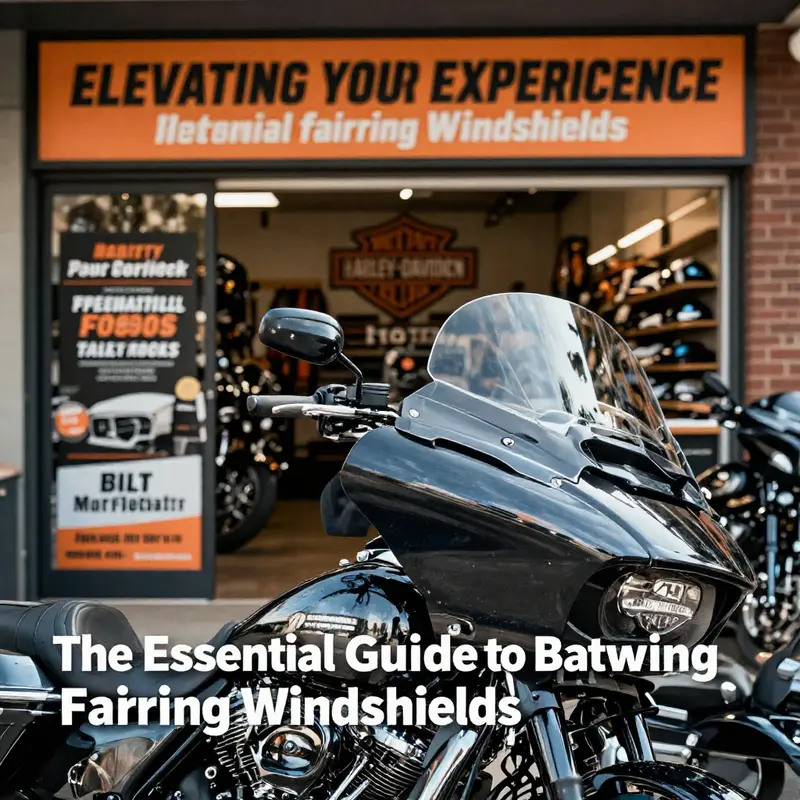
A Batwing fairing windshield is more than a screen that keeps rain off your chest. It is a carefully designed partner for the ride, a balance between weather protection, wind management, and the look that defines a motorcycle’s silhouette. For riders who lean into long miles and variable weather, the Batwing style delivers a singular fusion of function and form. When you start to consider which windshield to pair with a Batwing fairing, you are already thinking about comfort, visibility, and the kind of confidence that comes from knowing your bike has a shield that complements its aerodynamics. The most common configuration in the field today is a windscreen around 12 inches high, designed to sit just below the rider’s eye line for a clean horizon that reduces helmet buffeting without sacrificing peripheral visibility. This height is widely compatible with a broad spectrum of Electra Glide, Street Glide, Ultra Limited, and Tri Glide models manufactured across a generous window of years. The same family of Batwing fairings, with their distinctive curved lines and bold presence, is paired with windshields that emphasize a near seamless integration with the fairing itself, so the overall ride feels cohesive rather than patched together. The goal is a shield that blocks wind, rain, and insects at the point where they stress the rider most, while preserving the open-air sensation that defines motorcycling. The conversation about fitment is not only about height. Width matters, too. Different installation methods or measurement standards can yield a windshield width of about 19.3 inches in one source and 22 inches in another. The result is a practical reminder: not every 19.3 or 22 inch measurement is interchangeable across bikes or mounting kits. It is essential to verify the exact dimensions in relation to your specific model and the mounting hardware that accompanies the Batwing fairing. This is especially true when you are aligning a windshield to a 2014 to 2024 Electra Glide or a 2014 to 2025 Tri Glide, where the geometry of the fairing and the fairing lowers can influence both fit and airflow. The windscreen you choose must be treated as part of the whole aerodynamics package, not an isolated accessory. In practice, many riders discover that a 12-inch windshield provides an ideal middle ground. It tops out just below eye level, which helps to minimize buffeting while keeping the rider’s field of view clear of dirt, bugs, and rain. The result is a ride that feels smooth in a wide range of speeds and conditions, from highway peels to backroad twisties. Yet some riders prefer a taller shield for extreme weather or long-distance comfort, and in those cases a 15-inch option frequently appears as a recommended alternative. The 15-inch Batwing windshield is designed to push the protective barrier higher, offering additional protection from wind blast and flung debris during fast highway gusts or sustained rain. Pricing tends to reflect regional economies and distribution realities. In the United States, the 15-inch Batwing windshield has been listed around 179.95 dollars, a figure that places it in a competitive tier for OEM or OEM-matched accessories that seek to preserve the factory aesthetic while delivering real-world comfort. In Europe, the same 15-inch product appears at roughly 198.00 euros, a difference explained by regional taxes, currency exchange, and logistics. The 12-inch version brings its own price dynamics. In Europe, the 12-inch windshield has been quoted at about 198 euros, while in the United States a dealer-exclusive price often lands near 215 dollars. Those price nuances illustrate the modern reality of motorcycle accessories: the same part can carry different economics depending on where you ride and how you buy. It is worth noting that these windshields are typically marketed as genuine parts designed to fit a specific family of Batwing fairings. The adaptations can extend to the model years, with official fitment checks indicating compatibility with 2014 through 2024 Electra Glide, Street Glide variants up to a certain year, Ultra Limited, and 2014 through 2025 Tri Glide models. The letters and numbers attached to a bike’s model line—Electra Glide, Street Glide, Ultra Limited, Tri Glide—signal more than a badge. They indicate distinct fairing shapes, mounting orientations, and front-end geometry that the windscreen must respect to function as intended. It is not uncommon for riders to encounter a note that certain late year Street Glide models—specifically those released after 2023 in certain markets—are not compatible with particular windshields. A careful fitment check, ideally through the manufacturer’s official tools, can prevent a misfit that would otherwise require returning, swapping, or drilling. The process of selection, then, begins with an honest assessment of riding priorities. Do you want wind protection that climbs a little higher for cold or rainy seasons, or a windscreen that preserves a lower silhouette for a sportier, more open cockpit feel? Do you ride mostly on highways, where gusts and wind buffeting are constants, or do you wander through tree-lined byways where bugs and rain require a more balanced shield? The answers guide you toward the weighty decision of height. The 12-inch windscreen is a popular default, widely compatible, and typically paired with the Batwing fairing as an integrated unit rather than a hodgepodge of aftermarket add-ons. Its hard-coated polycarbonate construction ensures durability and weather resistance, a feature that becomes meaningful after miles that include sun glare, road grit, and freeze-thaw cycles. The material choice matters because polycarbonate, when hard-coated, resists scratching and hazing while maintaining clarity through years of exposure to sunlight and road chemicals. It also stands up better to minor impacts and insect strikes than many other plastics. The combination of a 12-inch height with a sturdy, hard-coated polycarbonate sheet represents a pragmatic compromise between visibility and protection, which is especially attractive for riders who log long distances and want a windscreen that can survive daily use without constant replacement or maintenance. Alongside the physical attributes of the windshield, the purchasing experience itself has become a balance of convenience, warranty coverage, and perceived value. Official Harley-Davidson channels dominate the landscape for those who want a factory-aligned fit, with a warranty structure designed to reassure riders that the investment remains protected as it ages. The typical warranty for such fuel-and-finish components is a one-year limited warranty, a period during which the customer can seek guidance or a claim should there be a defect in materials or workmanship. This warranty is not just a blanket promise; it is a route to repair or replacement under conditions defined by the original manufacturer’s policy. Understanding what this warranty covers matters as much as the shield itself because a windscreen that fails due to manufacturing quirks in its first year tends to sour the riding experience more quickly than a windshield that shows signs of ordinary wear after many miles. The warranty link provides the exact scope, exclusions, and claims path that a rider can follow if an issue arises. It is an example of the way motorcycle parts have evolved: not only do they need to fit precisely, but they also come with a service and support ecosystem that acknowledges the investment riders make in their machines and in their own safety. While price and warranty are critical, the decision to buy a windshield should also reflect a rider’s relationship with the manufacturer’s support network. Harley-Davidson, for example, has a recognized approach to rider education and safety resources, which are often highlighted through programs designed to help riders improve their skills and confidence on the road. When you consider the larger ecosystem, it becomes clear that choosing a Batwing windshield is not simply a purchase; it is a step toward a more predictable, comfortable, and safer ride that corresponds with the bike’s design ethos. The fitment landscape includes a practical reality: there are multiple windshield options beyond the 12- and 15-inch lines. Some riders opt for detachable windshields that allow quick removal for city use or for seasonal storage, while others prefer wind splitters that can be snapped into place to fine-tune air currents without replacing the main shield. Wind splitters are available in several heights and shapes, which can be added to the base windshield to tailor the airflow toward the rider’s torso and chest, reducing wind pressure and fatigue on long trips. The complement to these choices is the option of fairing lowers, which further influence the air flow by redirecting or dampening vorticity near the lower portion of the fairing. In practice, the goal is not to overspecify a single part as a cure for all riding conditions, but to assemble a configuration that works within the broader aerodynamics map of the motorcycle. With that approach in mind, the purchasing decision becomes a conversation about how you ride, where you ride, and how you want your bike to feel after hours in the saddle. The numbers that accompany the windshield—height, width, and even the curvature of the glass or polycarbonate—become meaningful only when they align with your riding posture, head height, and helmet clearance. A well-chosen 12-inch Batwing windshield can help to curate the wind stream so that it wraps around the shoulders without forcing the head to tilt or the neck to crane. In contrast, a taller shield can increase the forward aero load and might push some riders into a more forward-leaning posture as they compensate for wind resistance. These ergonomic considerations matter for long-distance grouping, for couples of riders who prefer to ride side by side with similar wind protection levels, and for solo riders whose posture is tuned to a particular wind pattern. The process of shopping for a Batwing windshield is a microcosm of the broader motorcycle aftermarket experience: it blends compatibility, performance, aesthetics, and the assurance that the ride you obtain will be supported by a network that values riders as customers and safety partners. It is worth noting that different markets command different pricing and distribution channels. The Harley-Davidson official store remains a trusted source for those seeking a seamless integration with the fairing, a coherent warranty experience, and the assurance that installation and fitment are aligned with the manufacturer’s guidelines. If a rider encounters a pricing gap or a regional variation, the wise approach is to compare the total value—fitment certainty, warranty protection, ease of ordering through official channels, and the availability of helpful customer service—against any perceived savings from a non-official retailer. The value proposition is not only monetary; it is an assurance that the windshield will function as the designer intended, with the same curvature and mounting geometry the fairing was built to accommodate. For riders who want to dig deeper into the scope of aftermarket offerings, a practical step is to explore related components within the broader motorcycle fairing ecosystem. One can get a broader sense of how windshields, fairings, and other protective components interplay by exploring the Summit Fairings collections, which catalog a wide range of fairing parts and accents that illustrate the diversity of fitment concepts across different bike families. This broader context helps illustrate how a Batwing windshield fits into a larger strategy of customization and rider comfort. If you are considering additional resources, it is helpful to consult the internal references and fitment checkers offered by the manufacturer to confirm compatibility with your exact model year. The nuance of model codes—Electra Glide, Street Glide, Ultra Limited, Tri Glide—carries practical implications, and the fitment tools often require you to enter your bike’s year and specific configuration to ensure a reliable match. Without that confirmation, a windshield purchase risks misfit, which can lead to mounting frustration and the need for returns or exchanges. The ultimate payoff, however, is the sense of peace that comes with a windshield that works as designed: shielded air, improved visibility, reliable durability, and a wind experience that aligns with your riding style. It is a simple but meaningful improvement that can transform a long highway stretch into a more controlled and enjoyable journey. For those who want to verify the full warranty and coverage details before committing, the official warranty information page is the definitive resource. This page outlines what is covered, any exclusions, and the process for making claims, ensuring riders know exactly what to expect if their windshield encounters a material defect or a manufacturing concern during the warranty period. In the end, the choice of a Batwing fairing windshield—whether a 12-inch or a 15-inch version, with or without detachable elements, and with the careful attention to height, width, and mounting compatibility—constitutes a thoughtful investment in riding comfort and confidence. It is an invitation to ride with clarity and poise, a readiness to face the weather, and a touch of styling that honors the bike’s iconic silhouette. If you want to explore a broader perspective on fairings and related components, you can browse the Summit Fairings collections for related options that illuminate how different bikes in the street-rider ecosystem approach protective aerodynamics. For direct, official warranty details and coverage specifics, refer to the Harley-Davidson warranty information page and make sure you adhere to the fitment check tools that help guarantee compatibility before purchase. External reference: https://www.h-d.com/warranty
Final thoughts
The batwing fairing windshield is not merely a decorative addition; it plays a vital role in improving ride quality and providing protection. Whether you’re a motorcycle enthusiast looking to enhance your ride, or a business owner seeking to expand your product offerings, understanding the specifications and options available will assist in making informed decisions. A well-chosen batwing fairing windshield can elevate both the visual appeal and functional benefits of a motorcycle, catering to the wide-ranging needs of riders today.