
In the motorcycle modification industry, achieving the perfect fairing shape is crucial for both aesthetics and performance. Choosing the right dual-action (DA) sander can significantly elevate your shaping process. This guide dives into the essentials of selecting the best DA sander for motorcycle fairing applications, covering its vital features, comparing top models, and understanding the impact of these tools on fairing design and functionality. Each chapter is structured to deliver insights specifically tailored for business owners seeking to enhance their operations and craftsmanship.
Precision and Performance: Mastering Motorcycle Fairing Shaping with the Ideal DA Sander
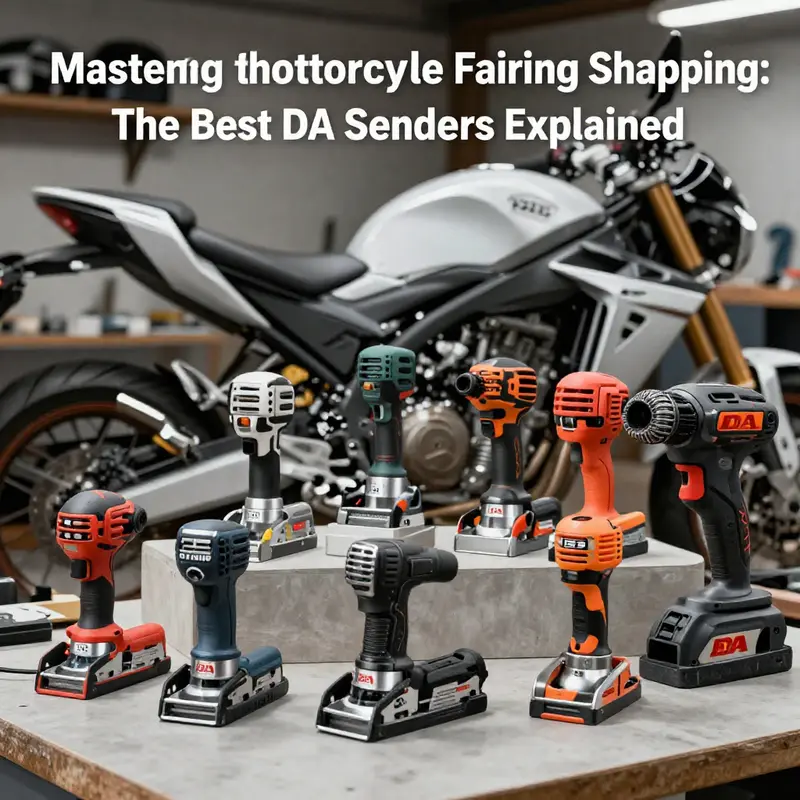
Selecting the right dual action sander is one of the most important aspects of achieving a flawless finish on motorcycle fairings. Motorcycle fairings, often crafted from delicate composites such as polycarbonate and fiberglass, require a tool that not only removes material efficiently but also provides precision and control when smoothing out the intricate curves and contours. The process of fairing shaping is delicate: the tool you choose must work in harmony with both the geometric complexities of the fairing and the structural integrity required for optimal aerodynamics and aesthetics.
Modern dual action sanders have evolved far beyond simple tools; they are now engineered with features that allow for both aggressive material removal and the refined finishing touches necessary for high-quality repairs and customizations. At the core of these devices is a dual-action mechanism that combines rotational motion with oscillation. This design minimizes the risk of swirl marks, ensuring a uniform, even surface while also being gentle on the delicate surfaces of the fairing. The oscillatory motion works in tandem with the rotation to blend out any imperfections, creating a smooth, consistent canvas for painting or further detailing.
A quality DA sander is built on a foundation where power meets precision. The ideal model wields moderate power—typically in the range of 120 to 150 watts—which is sufficient to handle both rugged material removal and delicate surface refinishing. One crucial aspect of these tools is the variable eccentricity setting, generally adjustable between 3.2 and 4.8 millimeters. This adjustability enables the operator to switch seamlessly between coarse grinding and fine polishing. Such control is indispensable when addressing the tight corners, edges, and complex curves found in modern fairings. The ability to customize the tool’s performance to match specific needs not only enhances the quality of work but also extends the longevity of the fairing by avoiding over-sanding at critical points.
One of the standout features in current DA sander models is the variable speed control. With speeds ranging from approximately 3,000 RPM to 8,000 RPM, users can select a pace that offers both efficiency in material removal and finesse during the final polishing stage. Lower speeds are optimal for the preliminary stages of sanding, where aggressive removal is necessary without risking overheating the material or causing damage. When it comes time to bring out a mirror-like finish, higher speeds provide a gentle touch that refines the surface to perfection. This spectrum of options ensures that whether you are addressing a large panel or a minute detail, the tool adapts effortlessly to your needs.
Equally important to power and speed is the ergonomics of the sander. A lightweight design minimizes operator fatigue, allowing for prolonged periods of work without sacrificing precision. Ergonomic handles and balanced construction ensure that the tool feels like a natural extension of the operator’s hand. This becomes particularly significant during long sessions where constant adjustments and fine motor skills are required to capture every curve and contour of the fairing. By reducing fatigue, a well-designed DA sander helps maintain precision from the first stroke to the last, ensuring that every part of the fairing is evenly and meticulously finished.
In addition to these core features, a well-equipped DA sander includes a soft pad system that greatly enhances its versatility. A soft pad conforms to the contours of the fairing, whether flat or highly curved, ensuring a consistent contact surface. This not only mitigates the risk of creating unwanted high spots but also helps in transitioning smoothly between different areas of the fairing. The flexibility of the soft pad is especially beneficial when working on composite materials that are prone to cracking or chipping if over-sanded. It transforms a potentially aggressive process into a controlled, delicate dance that results in a uniform, professional finish. Alongside the soft pad, the ability to interchange sanding pads—such as triangular or oval-shaped pads—expands the sander’s utility. These interchangeable options allow the operator to precisely target edges, joints, and small intricate sections that are otherwise difficult to access.
Dust collection is another critical component of the sanding process. Sanding composite materials generates fine particulate matter which, if left unmanaged, can compromise both the operator’s health and the overall quality of the finish. Advanced DA sanders often incorporate robust dust collection systems designed to capture and contain debris as it is generated. By effectively trapping dust, the sander not only creates a cleaner work environment but also prevents particles from interfering with the smoothing process. This integration of an efficient dust collection mechanism minimizes clean-up time and ensures that the final finish remains pristine and free from imperfections introduced by airborne contaminants.
The selection of appropriate abrasive grits plays a major role in the ultimate quality of the fairing finish. Starting with coarser grits, typically around P120, the sander quickly removes material and evens out rough surfaces. As the process continues, a gradual switch to finer grits, such as P600, refines the texture of the fairing and prepares it for painting or a clear coat finish. This methodical progression ensures that no abrupt transitions or deep scratches mar the surface. The use of specifically designed sanding discs, compatible with the sander’s pad system, further contributes to the overall control and efficiency of the task. In the hands of a skilled technician, these graded abrasive steps enable the transformation of a raw, weathered fairing into a surface that looks and feels new.
The impact of choosing the right DA sander transcends mere technical specifications. In the world of motorcycle customization and repair, the tools you use directly influence the final visual appeal and aerodynamic performance of the machine. Every imperfection, no matter how small, can undermine the overall aesthetic and functionality of the motorcycle. With a tool that combines dependable power, precise variable speed control, and ergonomic design, repairs and custom work become not only achievable but also repeatable with a high degree of consistency. The investment in such a tool is a commitment to quality—it guarantees that every sanding stroke contributes to a smoother, more refined product that ultimately enhances both performance and style.
Within the community of motorcycle enthusiasts and professional technicians alike, there is a universal understanding of the value that a quality tool brings to the table. The satisfaction derived from a well-sanded, smoothly finished fairing extends beyond mere functionality; it symbolizes the meticulous care and dedication that goes into every aspect of motorcycle customization. The use of a DA sander becomes a journey of transformation. Starting from rough material surfaces to ultimately revealing a masterpiece of engineering and design, the process is as much about art as it is about mechanics. The operator, empowered by the right tool, is no longer just fixing or reshaping a component; they are truly refining the very personality of the motorcycle.
The universal principles that guide the selection of a dual action sander for fairing shaping are the same regardless of the motorcycle brand or model. Whether working on a modern performance machine or a classic vintage model, the demands of fabrication and restoration remain consistent. A DA sander that excels under the strain of large-scale material removal while also delivering the finesse required for delicate adjustments is invaluable. The capability to adapt quickly to variations in shape, texture, and material integrity represents the pinnacle of tool design in this field. For example, enthusiasts who restore and customize models with well-known fairing collections, such as those found in various reputable online collections like Honda Fairings, often testify to the enormous benefits derived from using a high-quality dual action sander.
As technological advancements continue to redefine the boundaries between industrial machinery and artisan craftsmanship, the design and functionality of dual action sanders have kept pace with the industry’s demanding requirements. Each iteration of these tools brings enhancements in vibration reduction, user comfort, and overall operational reliability. Manufacturers invest significant research and development efforts to ensure that the latest sander models provide not only improved performance but also increased safety features. With these technological improvements, even novice technicians can achieve professional-level results, which contributes to the democratization of high-quality motorcycle customization.
Furthermore, the continual improvements in dust collection systems and ergonomic design reflect a broader commitment to creating tools that are as safe as they are effective. By reducing the exposure to harmful dust and minimizing operator fatigue, modern sanders foster a work environment that is both health-conscious and conducive to long hours of meticulous work. This dual emphasis on efficiency and safety underscores the importance of selecting equipment that accounts for the human element in every project. In a workshop where precision and attention to detail are paramount, having a tool that minimizes distractions and potential hazards can be a game changer.
Beyond the technical merits of the DA sander, there lies an inherent artistry in its application. Each stroke of the sander is a step toward revealing the underlying beauty of the motorcycle’s design. The interplay of light and shadow on a freshly sanded surface is a visual testament to the craftsmanship invested in the project. This transformation is more than just a functional upgrade—it is an artistic revival that pays homage to the legacy of motorcycle design. The precision of the sanding process, when performed with a reliable tool, results in a finish that is as emotionally engaging as it is technically perfect.
The realm of motorcycle fairing shaping is not merely about correcting imperfections or preparing for a new coat of paint; it is about preserving the character and performance of the motorcycle. A well-sanded fairing plays a critical role in aerodynamic efficiency, impacting how air flows across the surface at high speeds. Maintaining smooth, uninterrupted lines ensures that the motorcycle not only looks sleek but also cuts through the air with minimal resistance. This convergence of aesthetics and functionality is where the true value of a high-end DA sander is validated. With each pass of the tool, the fairing emerges closer to its intended form—a blend of art, science, and passion.
In conclusion, the process of shaping and refining motorcycle fairings demands a tool that balances power, precision, and ergonomics. A superior dual action sander rises to this challenge by offering variable speed control, adjustable eccentricity, and a soft pad system that works harmoniously with the natural curves of the fairing. The benefits of investing in such a tool extend beyond the immediate task at hand, influencing the final look, performance, and durability of the motorcycle. With advancements in technology spurring improvements in both design and functionality, modern DA sanders empower technicians and hobbyists alike to achieve outstanding results—turning rough, uneven surfaces into smooth, aerodynamic masterpieces.
For more technical insights and detailed specifications on these advanced tools, enthusiasts are encouraged to explore further resources such as the product page provided by industry experts here.
Harnessing the Precision of DA Sanders: Elevating Motorcycle Fairing Shaping

Motorcycle fairing shaping represents a delicate blend of art and engineering, where precision and finesse come together to produce aerodynamic surfaces that not only enhance the look of a bike but also contribute to its performance. In this chapter we delve into the multifaceted world of fairing shaping and focus on the unique role played by DA sanders. While current research may not provide explicit details on a specific brand or detailed technical specifications under the name “DA Sanders,” the term has become evocative of the common, high-precision tools that are used to achieve a high-quality finish on motorcycle fairings. These tools are indispensable when working with materials such as ABS, PC/ABS composites, or even glass fiber reinforced plastics – materials that require careful attention to preserve their structural and aesthetic integrity. The process of fairing shaping demands a balance; too coarse a sanding can mar the surface, while too fine a treatment may not remove irregularities effectively. This is why the evolution of DA sanding technology has been so influential, offering adjustable eccentricity and the ability to fine-tune the sanding process to meet the demands of both rough and delicate prior finishing steps.
At the heart of this transformation is the ability of modern DA sanders to combine power with ergonomic design. Typically featuring a motor output in the range of 120 to 150 watts, these tools generate enough force to effectively remove material without compromising control. This moderate power range proves to be ideal for handling the fragile surfaces of composite fairing materials. The light construction of these tools is another indispensable quality, as they help reduce user fatigue during extended periods of detailed work—an aspect critically important for professionals who must maintain consistent quality across numerous parts in high-performance motorcycle modifications. In the context of motorcycle fairing aesthetics and function, smooth curves and precise lines achieved through sanding are fundamental to reducing aerodynamic drag and enhancing speed, stability, and fuel efficiency.
Beyond power and ergonomics, one of the most significant innovations in DA sander technology is the feature of adjustable eccentricity. With typical eccentric distances ranging between 3.2 to 4.8 millimeters, the operator can tailor the tool’s movement to suit various applications. A larger eccentricity is beneficial during the heavy material removal phase, whereas a smaller setting allows for a refined finishing stage. Professionals in the motorcycle repair and custom bodywork fields appreciate this flexibility because it permits a transition from aggressive sanding to delicate buffing without needing to switch equipment. In practice, the ability to adjust eccentricity on the fly means that technicians can address both the initial roughness of a fabricated fairing and the minute imperfections that only become visible after a coarse sanding phase.
The interplay between dust collection and sanding precision cannot be understated. Modern DA sanders often incorporate integrated dust collection systems that help preserve both the working environment and the integrity of the fairing surface. These systems trap fine particles that are released during the sanding process, preventing them from causing scratches on the fairing or being inhaled by the operator. Cleaner work conditions and enhanced surface finishes are the dual benefits of this technology. Moreover, ensuring that the dust clearance works seamlessly with the tool’s operation means the sanded surface is less likely to trap abrasive particles that could later lead to premature wear. In this context, detailed attention to dust management is essential, especially when precision and longevity of the finished product are paramount.
The choice of sanding sheets is another critical aspect of successful fairing shaping. The abrasives selected for the sanding process need to be compatible with delicate composite materials. Common grit ranges, such as P120 to P600, allow the technician to control the degree of material removal and achieve the desired finish. Lower grit numbers are appropriate for initial sanding, where removing imperfections and leveling out the surface are the primary goals. As the work progresses, higher grit abrasives become the tool of choice, creating a surface ready for polishing and final detailing. In this narrative, the DA sander emerges as an instrument capable of supporting every phase of the finishing process, from the initial rough grind to the final delicate polish.
While the term “DA Sanders” may not currently be connected to a single manufacturer or branded product within formal technical literature, it symbolizes a class of dual-action processes that are critical for modern motorcycle fairing shaping. These tools have been widely adopted by professionals not only because of their technological capabilities but also due to their reliability and proven performance under stringent production schedules. Whether in professionally run motorcycle service centers or specialized custom modification workshops, the integration of these sanding tools has led to faster turnaround times, superior surface finishes, and overall improved customer satisfaction.
An illustrative example of the success of DA sander technology in action can be observed in the working environment of motorbike enthusiasts and professionals dedicated to performance enhancements. The interplay of material science, tool innovation, and precise operator skill culminates in fairings that not only meet but often exceed the rigorous safety and design standards prescribed by international bodies. Manufacturers of high-quality fairings have their work supported by tools that are designed specifically to avoid the pitfalls of uneven sanding that can lead to issues such as delamination or unsightly surface blemishes. As technical advancements continue apace, the focus on ensuring that the finishing process is both efficient and repeatable remains a central pillar of the fabrication workflow.
Attention to detail is directly correlated with overall ride performance in modern motorcycles. Aerodynamics plays an essential role in maintaining rider stability and optimizing fuel efficiency. With streamlined fairings, not only is the drag coefficient reduced, but the vehicle is also better equipped to manage high-speed airflow dynamics. In this light, the function of DA sanding technology transcends simple surface preparation; it becomes a critical step in the engineering process that ensures each visible line and contour of the fairing contributes to improved performance. Even minor surface irregularities can create turbulence around the fairing, leading to increased drag and decreased efficiency. Thus, precision sanding is an essential process in ensuring motorcycle fairings achieve their dual purpose of aesthetic appeal and optimal aerodynamic performance.
The integration of DA sander technology into motorcycle fairing preparation has also fostered a culture of continuous improvement among technicians and engineers. The dynamic feedback loop between tool performance, material response, and final surface quality ensures that every project becomes a learning opportunity. Operators refine their techniques as they experiment with different sanding configurations and abrasive materials, pushing the boundaries of what is possible. This ongoing evolution is reflected not only in smoother finishes but also in a new level of craftsmanship that resonates with custom builders and high-performance motorcycle manufacturers alike.
For enthusiasts pursuing high-end customizations, the process of sanding fairings often becomes more than a technical necessity—it transforms into a creative endeavor. A well-executed sanding job accentuates the fluid lines and carefully sculpted features of the motorcycle’s design. As riders observe their machines after a meticulous finishing process, they frequently report a heightened sense of connection to their bikes, appreciating the artistry involved in achieving near-perfect aesthetics. Such detailed work underlines the importance of every stage in the finishing process, highlighting the DA sander as a versatile tool that adapts to both the technical and artistic demands of fairing shaping.
In practical terms, dedicated craftsmanship backed by advanced DA sanding technology has also led to the standardization of fairing production practices. Industry standards, such as ISO and various regional regulatory frameworks, impose strict requirements on both the safety and durability of motorcycle fairings. Tools that deliver consistent results help manufacturers meet these benchmarks while retaining a competitive edge in a market where both form and function are scrutinized by discerning consumers. The meticulous process of sanding, when executed correctly, ensures that every fairing not only withstands the physical rigors of high-speed travel but also retains its aesthetic allure over time.
It is also worth noting that the advances in DA sanding have pushed the boundaries of what can be achieved with composite materials. Modern fairings, incorporating complex geometric forms and lightweight properties, demand a level of precision that only today’s adaptive sanding tools can provide. The technical capabilities of these tools allow for seamless transitions between different sanding phases, ensuring that the final product is free of imperfections that could otherwise undermine performance. This integration of technology and material science highlights the transformative power of a well-implemented finishing process.
For those interested in exploring motorcycle fairings and their diverse range of designs, the industry offers a wealth of resources. One can easily browse through comprehensive collections to see the evolution of fairing design and the impact of advanced finishing techniques. For example, check out the comprehensive insights available on the Honda Fairings Collection page, which showcases a variety of models and design breakthroughs that have been achieved thanks in part to innovations in shaping and finishing techniques.
While DA sander technology represents only one part of the complex process of motorcycle fairing formation, it is a critical element that ensures the final product is both functionally efficient and aesthetically striking. The advanced features of these tools help bridge the gap between rough fabrication and a final product that stands up to the combined demands of high-speed travel and dynamic weather conditions. Its adjustable eccentricity, moderate power output, ergonomic design, and integrated dust collection systems all contribute to a more effective and seamless sanding process. For professionals working in high-performance environments, investments in high-quality sanding tools yield significant dividends in product quality and customer satisfaction.
Looking beyond the immediate application, the philosophy underpinning DA sander technology is one of continuous refinement and adaptability. The tools not only address current challenges associated with composite materials and aerodynamic requirements but also offer a flexible platform for integrating future innovations. As motorcycle designs evolve and the expectations for performance and aesthetics climb ever higher, the precise techniques developed around DA sander technology will continue to adapt and improve. This dynamic interaction between evolving design requirements and advanced tooling underscores the ongoing evolution of motorcycle engineering and the critical role played by finely tuned finishing processes.
In summary, while explicit reference to a single “DA Sanders” entity may be absent from the technical literature, the collective attributes of modern dual-action sanding tools have come to embody reliability, precision, and versatility in the motorcycle fairing shaping industry. These tools are indispensable in achieving the smooth, aerodynamic surfaces that are crucial for both performance and styling, thereby exemplifying the fusion of engineering and art in motorcycle design. For further details on the technical aspects and market-leading specifications of such tools, interested readers can explore additional insights available through industry resources such as the product specifications on the external site: DEWALT DCF887B 产品页面.
Thus, embracing the capabilities of DA sanding technology means empowering every motorcycle enthusiast and technician with the means to achieve excellence. It is a step towards harnessing the full potential of modern materials and design methodologies, ensuring that every curved edge and polished surface contributes to a ride that is not only visually captivating but also engineered for performance and durability.
Mastering Motorcycle Fairing Shaping: A Deep Dive into the World of Dual Action Sanders

For any motorcycle enthusiast or professional technician, achieving a flawless finish on a motorcycle fairing is both an art and a science. When working with materials such as fiberglass, carbon fiber, or plastic composites, the choice of a dual action (DA) sander makes a substantial difference in the quality of the final product. This chapter explores the essential qualities that define the best DA sanders for fairing shaping, drawing on a detailed analysis of prominent models as well as practical experiences in the field.
When we examine a range of dual action sanders designed for fairing work, a few key attributes emerge as critical: power that is both robust and adjustable, ergonomic design to minimize fatigue during extended work sessions, and advanced dust extraction systems to ensure a clean and precise working area. In motorcycle fairing shaping, precision is king. The sander must navigate complex curves, tight contours, and large flat surfaces with equal ease. The device’s pad size, variable speeds, and vibration reduction all contribute to a tool that is not just effective in material removal but also incredibly versatile in fabrication and finishing processes.
The first tool that proves indispensable is one with a larger pad size that allows for extended surface coverage. Sanding a full fairing is no trivial task, and having a tool that can deliver both a rough initial sanding and a gentle final finishing makes a significant difference. High-powered models can remove material quickly without compromising the finish. It is necessary to identify a model that not only boasts high performance but also a control system that can switch from aggressive sanding during initial phases to a more delicate approach when the final smoothness is required.
Imagine the scenario where a professional is tasked with remodeling a fairing on a high-performance motorcycle. The sander must be able to remove uneven resin build-up from a fiberglass surface without causing additional damage. This is where the design of the DA sander becomes crucial. A sander with an adjustable eccentric mechanism enables the operator to control the orbit of the sanding pad. This control allows for precision adjustments that can quickly shift from heavy-duty material removal to the final stages of fine finishing, smoothing out the surface to a nearly mirror-like finish. This versatility not only cuts down on time but also ensures a finish that meets the rigorous demands of both custom builds and restoration projects.
A prime example of this versatile design in action is seen in models with robust variable speed controls. When applying a variable speed function, users can tailor the sanding action to suit the specific material being worked on. For instance, a lower speed setting is ideal for the final smoothing process, gently buffing away imperfections without overheating the material. On the other hand, a higher speed setting makes it possible to rapidly strip away layers of old material or smooth out rough patches before a more detailed finish is applied. The seamless transition between these varying operational speeds is what makes dual action sanders a favorite among professionals engaged in motorcycle fairing shaping.
Equally important is the ergonomic design inherent in the top-performing DA sanders. When sanding for extended periods, the tool’s weight and balance can dramatically influence user comfort and outcome quality. An ergonomically integrated sander not only reduces fatigue but also allows for a steady hand, leading to better precision on delicate surfaces. Manufacturers have focused on lightweight yet durable materials and thoughtfully placed handles that support prolonged use. These features are particularly beneficial when tackling the intricate details of a fairing’s design that may include curves, recesses, or intricate edges.
The smooth operation of a DA sander is further enhanced by an effective dust collection system. In any sanding process, dust not only reduces visibility and precision, but it can also contaminate the work surface, ultimately compromising the quality of the finish. Professional setups often include integrated dust extraction systems, and the best models are equipped with a dust port compatible with standard shop vacuums. This design ensures that dust is efficiently removed from the work area, resulting in both a healthier environment and a superior finish. When dust is controlled, the operator can focus on the nuances of shaping the fairing without having to pause frequently to clean the work area.
Among the models that embody these characteristics, one stands out especially because of its well-rounded performance in the field. This model provides an excellent balance of power, control, and durability, making it the top recommendation for both professionals and serious enthusiasts. Its pad size offers extensive coverage, which is ideal for larger surface areas and eliminates the need for frequent repositioning. The design incorporates an adjustable eccentric mechanism, allowing for precise control over the sanding action, while the variable speed control provides the flexibility that different materials require. Notably, the low vibration design allows riders and technicians to extend often rigorous sessions of fine work without experiencing undue strain.
In contrast, for those who require even more precision in areas of the fairing that feature tight curves and detailed contours, another model offers unparalleled finesse. Although slightly smaller in pad size, its innovative “floating” action minimizes the occurrence of edge marking, a pervasive issue in standard sanding procedures. This characteristic is essential when working on areas where the material’s integrity is paramount, preventing any unwanted abrasion or unevenness that might later necessitate additional corrective measures. Although the high precision option comes at a premium, its superior build quality and meticulous design justify the investment for those who demand only the highest quality finishes in their custom motorcycle projects.
Furthermore, there is a noteworthy option for individuals who are more budget-conscious yet still desire reliable performance. This model, though streamlined in its features compared to its higher-end counterparts, still provides variable speed settings and a balanced design that reduces hand strain. Its compact size makes it particularly valuable when accessing hard-to-reach areas of complex fairings. While its dust collection might not be as refined as the top-tier models, pairing this tool with a high-quality vacuum system compensates adequately. Budget-friendly does not always mean a compromise in quality; rather, it reflects a strategic choice that gives users the confidence that they can achieve excellent results without overspending.
In practice, these dual action sanders are more than just power tools – they are critical instruments in the transformation of a motorcycle’s look and aerodynamics. When shaping a fairing, each step from rough sanding to the final buff can have significant effects on both appearance and performance. The precise removal of material ensures that subsequent layers of paint adhere better and that the fairing assumes the desired smooth, aerodynamic profile. For those invested in the craftsmanship of motorcycle customization, mastering the selection and use of the proper DA sander is fundamental to achieving professional grades of excellence.
There is also a practical synergy between the tools and complementary materials. Careful selection of abrasive grits—from coarser grades like P120 for initial sanding to finer grades like P600 for the finishing touches—ensures the work maintains the structural integrity of the material while also preparing it for even, high-gloss finishes. An often-overlooked aspect of the sanding process is the importance of these consumable materials. The performance of a DA sander is intrinsically linked to the quality and appropriateness of the sandpaper used, as the tool’s effectiveness is maximized only when paired with abrasives suitable for the task. This reinforcement of proper material pairing further highlights the importance of understanding the entire ecosystem of fairing repair and customization.
An experienced technician will often emphasize that a well-sanded fairing is foundational to a successful repaint and long-term durability. Smooth surfaces not only result in visual appeal but also contribute to better aerodynamic properties, making the motorcycle more efficient and reducing potential drag. In turn, this has led many to focus on investing in the best available technology for DA sanding. The precision provided by these tools can reduce the need for subsequent corrective measures, thereby saving both time and resources in the long run.
Moreover, the impact of using the right DA sander is evident in the widespread adoption of these tools by professional custom shops and high-end repair garages. Whether refurbishing older models or designing new custom fairing profiles, the machines serve as extensions of the technicians’ skilled hands. Their efficient dust collection systems further support productivity by maintaining a clean work environment. Those who invest in these tools notice tangible improvements not only in the quality of the finished product but also in overall operation efficiency.
Beyond the tangible mechanical benefits, there is a creative component to working with dual action sanders. Managing the interplay between pressure, speed, and movement requires a keen understanding of material behavior. Skilled operators learn to intuitively adjust their technique based on the feedback provided by the tool and the material, resulting in a level of craftsmanship that cannot easily be replicated by machines alone. This blend of innovative technology and user expertise defines the modern era of motorcycle customization. The passion for perfection drives professionals to continually push boundaries and explore new methods to refine the art of fairing shaping.
In this ongoing pursuit of excellence, continuous learning and technique refinement are as important as the equipment itself. Professionals often participate in workshops and collaborative sessions where the latest trends and tool modifications are shared among peers. These sessions foster a community of practice in which the experiences with different DA sander models are rigorously discussed and compared. The consensus among these experts is that while each tool has its niche, one instrument frequently emerges as indispensable for its comprehensive capabilities. For riders and technicians alike who desire to explore further into the realm of fairing customization, an in-depth understanding of sanding techniques can be found by visiting additional resources such as the collection of premium fairings available on various motorcycle customization platforms. For instance, one can learn more about quality motorcycle fairings by exploring the detailed offerings available on the Honda fairings collection.
Amidst the competitive landscape of DA sanders, what becomes evident is that the choice ultimately rests on balancing cost, precision, and user comfort. Each model discussed represents a different approach to achieving the ideal finish on a motorcycle fairing. The high-powered, larger pad-designs bring efficiency and coverage, making them ideal for extensive surface work, while the models optimized for precision deliver unmatched finesse on complex and detailed contours. Even the more economical options reflect a thoughtful compromise between performance and affordability without sacrificing the overall quality of work.
It is important to underscore that the role of a DA sander extends far beyond mere material removal. These tools serve as guardians of quality control, ensuring that every fairing that leaves the workshop meets the highest standards of smoothness and durability. Motorcycle enthusiasts and professional technicians alike value a tool that not only enhances the appearance of the motorcycle but also contributes to its performance. A well-sanded fairing is less susceptible to cracks, peeling, and other issues that can compromise both aesthetics and function over time.
In closing, the mastery of motorcycle fairing shaping is a testament to both advanced tool technology and refined operator skill. The best DA sanders combine precision engineering with user-friendly features that empower technicians to excel in every aspect of the sanding process. From the initial aggressive material removal to the delicate final buff, these tools transform a rough surface into a work of art. Detailed external analyses, such as those found on the official Makita page, further validate the superior performance of such devices, reinforcing why they remain the preferred choice for high-quality custom motorcycle projects.
This chapter, therefore, serves not only as a guide to selecting the right dual action sander but also as a narrative of ongoing innovation and dedication in motorcycle customization. It highlights how the right balance of power, precision, and ergonomics can lead to exceptional results in fairing shaping, echoing the evolving demands of the industry and the passion of those who ride it.
Transformative Tools: Unraveling DA Sanders’ Racing Legacy Versus True Fairing Shaping Innovations

Motorcycle fairings are an art and a science. Every curve and contour must fit not only for aesthetics but also for aerodynamic efficiency and rider comfort. In the realm of motorcycle maintenance and customization, selective use of advanced double-action sanding equipment has ushered in a new era of precision shaping. Despite the occasional confusion surrounding names in this industry, notably the association of racing champion Daniel Sanders with fairing design, the true revolution comes from the innovative tools that allow experts to finely tune the surfaces of modern composite materials. Although Sanders achieved remarkable success by winning prestigious races like the Dakar Rally in consecutive years, his legacy remains firmly rooted in high-speed performance rather than contributions to the engineering of motorcycle fairings. The narrative that ties his name to fairing design is more myth than reality, as the evolution in fairing shaping is powered by developments in DA sanders that meticulously combine power, versatility, and smart design.
From the earliest experiments with manual sanding techniques to the very sophisticated double-action devices of today, the progression of technology has been relentless. In a typical fairing repair or enhancement process, the focus lies on removing inconsistencies from the surface while preserving the intricate contours that sculpt the overall design. The modern DA sander is designed to tackle a variety of materials such as glass fibers, polycarbonates, and other composite blends that make up the fairings found on high-performance motorcycles. As these tools have evolved, their blend of adjustable eccentricity, precise power control within a moderate range, and an ergonomically sound design have become indispensable to professionals. These machines are engineered not simply to smooth a surface, but to offer a transition from coarse removal techniques to fine finishing stages that make a visible difference in performance and appearance.
When one examines the art of fairing shaping, it is essential to distinguish between the contributions of key racing personalities and the innovations that have come from precision tool manufacturers. Evidence shows that Daniel Sanders, celebrated as a competitive force in the Dakar Rally, has never claimed credit for any advancements in fairing design. Instead, his name sometimes appears in discussions because of his overall impact on motorcycle culture. To be clear, his accomplishments on challenging courses have earned him accolades in the racing world, but they should not be conflated with the technical achievements of engineers and machinists who devote their expertise to fairing repairs. The spotlight, therefore, should remain on the technology at hand: the DA sander that has streamlined maintenance projects and allowed for creative enhancements that blend form and function.
A close examination of modern sanding equipment reveals a balance between power and user control. Advanced sanding machines are built with moderate wattage requirements—typically in the range of 120-150 watts—to ensure the sander is robust enough to cut through tough composite materials while remaining lightweight enough to reduce physical fatigue during extended work sessions. The adjustable eccentricity feature, often set between 3.2 and 4.8 millimeters, provides versatility. A lower setting is ideal for delicate finishing work, whereas a higher setting efficiently removes material in preparation for sanding. With the correct settings and proper sanding paper, ranging in grit from medium (such as P120) to very fine (up to P600), technicians achieve an impeccable finish that elevates both the aesthetic and aerodynamic performance of the fairing.
Because smooth surfaces reduce drag and improve wind flow, these enhancements are not strictly cosmetic. In performance riding, even minor improvements in fairing design can translate into considerable differences in handling and stability at high speeds. The operation of a DA sander is thus a critical component in the maintenance toolkit of any serious motorcycle technician. The quality of work produced by these tools can be clearly observed when comparing a raw, unrefined surface to one that has been meticulously polished. The difference becomes even more pronounced when the fairing is reassembled on a motorcycle, where airflow dynamics significantly influence overall riding performance. In this way, the dream of achieving an ideal balance between style and function depends greatly on the precision of the tools used during the maintenance process.
The evolution of sanding technology mirrors the advancements in composite materials. As motorcycle fairings have become more complex—integrating design elements such as paint contours that accentuate air intakes and dynamic deflections—the need for versatile power tools has grown. This is particularly evident in highly modifiable motorcycles where standard parts are often superseded by custom-fabricated components requiring bespoke treatment. Each new design iteration demands a tool that can adapt quickly and precisely to the task at hand. The DA sander then becomes not just a tool, but a partner to the technician, offering a balance of efficiency, quality, and ease of use that manual methods simply cannot match.
In practical applications, the integration of advanced DA sanding machines ensures that every detail of a motorcycle’s fairing is rendered with care. For instance, when working on a bike with a high-performance fairing made from advanced composite materials, the technician must be able to remove imperfections without damaging the underlying structure. Unrefined sanding methods often leave visible marks or uneven surfaces that can compromise both the look and function of the fairing. However, with a properly adjusted double-action sander, these challenges are mitigated. The tool’s design allows for both aggressive material removal and delicate smoothing in succession. This dual capability is the primary reason why professionals across the globe trust these devices for their projects.
The performance of any DA sander is judged not just by its raw power, but by its ergonomic design. A device that is comfortable to hold and operate over long periods is essential, particularly when dealing with large surfaces or complex shapes. Ergonomics play a vital role in reducing fatigue, which in turn leads to more consistent and high-quality work. The lightweight design of modern sanders allows the technician to maneuver the tool with precision and accuracy, ensuring that every curve of the motorcycle fairing is attended to with a steady hand. Far from the clumsy, heavy machinery of previous decades, today’s models embody a blend of technological innovation and user-focused design that has redefined how maintenance and customization are approached in the motorcycle world.
In the broader context of motorcycle design, enthusiasts often seek comprehensive packages that enhance speed, performance, and visual appeal. Fairings, well known for their aerodynamic capabilities, are a central element in this equation. When properly maintained and refined using advanced sanding methods, fairings do more than just protect the rider and engine from wind resistance; they add a definitive edge to the overall design. The modifications in shape can improve airflow efficiency, reduce turbulence, and even contribute to the cooling of the engine, thereby enhancing overall performance. It is through careful preparation with a versatile DA sander that these subtle yet crucial improvements are made possible.
Modern maintenance processes go hand in hand with the customization of sporting motorcycles. Riding culture today is not merely about dominating the track or the open road—it is also about personalization, self-expression, and commitment to mechanical perfection. While Daniel Sanders’ record in the Dakar Rally is undoubtedly impressive, it is the technical tools that enable riders to translate these feats into everyday reliability and performance. In workshops around the globe, technicians frequently reference the importance of the right sanding equipment to create uniform surfaces that meet both design and safety standards. The careful choice of sanding grit, the calibrated adjustment of eccentricity, and the configuration of the power setting all coalesce to yield a finish that is both durable and visually stunning.
The evolution of sanding technology is mirrored in numerous aftermarket segments, including specialty fairing products and custom modifications. This narrative is reinforced by guides and technical resources, which illustrate the best approaches for handling diverse challenges in fairing maintenance. As enthusiasts seek to optimize their motorcycles, they often consult comprehensive collections of curated fairings—whether these are designed for specific models like sport bikes or touring machines. For those interested in exploring various designs and understanding the subtle differences among fairings, resources like the curated collection available from reliable fairing resources provide an insightful look. Such collections underscore the fact that while the legend of a racing icon like Daniel Sanders captures the imagination, the real magic lies in the technology that turns artistic vision into reality.
It is important to note that the success of modern fairings is linked not only to the tools used during repair but also to the technical expertise of the technicians. The balance between machine capability and user proficiency is at the heart of every successful project. The careful selection of sanding parameters, based on empirical evidence and industry best practices, allows seasoned professionals to achieve a finish that meets exacting standards. This represents an evolution that is technological rather than personal—where the dedication to mechanical precision is what drives innovation. In this sense, the skepticism around attributing fairing design innovations to racing figures like Daniel Sanders is both justified and instructive. The real craftspeople are the engineers, technicians, and designers whose work is often invisible but integral to every smooth line and aerodynamic curve witnessed on a modern motorcycle.
While there are plenty of anecdotes that interweave the excitement of high-speed racing with the intricacies of motorcycle design, the foundation of successful fairing work remains rooted in innovation at the tool level. The DA sander stands as a prime example of how modern engineering can streamline and elevate the entire process. Its refined mechanisms allow for rapid transitions between rough sanding and meticulous finishing, ensuring that no detail is overlooked, no matter how small. This precision is critical when dealing with high-value composites used in race bikes and custom designs alike.
In addition to performance, the lasting durability of a fairing’s finish is another metric by which sanding tools are measured. A well-prepared surface that is free of residue and evenly smoothed lays the groundwork for subsequent stages such as deburring and painting. This attention to surface preparation not only preserves the integrity of the material but also enhances the adhesion of finishing coats, ensuring that the work remains intact over the lifespan of the motorcycle. The interplay between preparation and final finishing is where the capabilities of a quality DA sander truly shine. Each pass with the sander brings the technician closer to a uniformly smooth surface that is both visually appealing and structurally sound.
The broader narrative in fairing shaping reflects an industry-wide commitment to quality and precision. In many respects, the tension between high-profile racing success and technical innovation serves as a reminder that legends inspire enthusiasm, but it is the steady progress in equipment technology that drives real change. The myth that ties racing icons to fairing design overlooks the rigorous, methodical work involved in the customization and maintenance process. In truth, the breakthroughs in composite repair and surface finishing owe more to meticulous engineering and less to celebrity endorsement. The evolution of tools such as the DA sander has reshaped workflows in repair shops and custom garages alike, leading the field towards ever-higher standards of craftsmanship.
For enthusiasts, professionals, and hobbyists, the pursuit of mechanical perfection is a journey defined by careful choices and an eye for detail. Every inch of material removed by the DA sander must be done with intention, knowing that the next layer of fine grit or polishing compound will transform the surface into something both functional and beautiful. It is a delicate dance between tool precision and artistic vision—a process that underscores the importance of using the right equipment for the task at hand. The evolutionary path of motorcycle fairing design is as much about embracing innovative repair technologies as it is about celebrating the culture of racing. As the industry grows, the line between performance enhancement and aesthetic innovation continues to blur, each advancement reaffirming that technology, rather than individual legend, is the true engine behind progress.
As we chart a course through the world of customized motorcycle fairings, it becomes evident that every new development in tool design has a lasting impact. The DA sander stands at the forefront, a testament to modern engineering and a facilitator of beauty in design. For those who invest in understanding and deploying the latest technology, the rewards are more than just a polished finish—they are improvements in aerodynamics, longevity, and overall ride quality. To explore further insights into how fairings are revolutionized by modern technology, consider reviewing additional detailed collections and technical insights available from industry experts.
For further technical specifications and product details on modern sanding equipment, you may visit the external resource provided by the manufacturer at DEWALT DCF887B Product Page.
Final thoughts
The selection of an appropriate DA sander can be pivotal in achieving superior motorcycle fairing shapes. Understanding the unique features and capabilities of these tools will empower business owners to make informed investments, resulting in enhanced service quality and customer satisfaction. Optimal sanding results not only streamline the shaping process but also significantly improve the overall aesthetics and functionality of motorcycle designs. This guide reinforces the necessity of integrating the right tools into your processes, ensuring your motorcycle modifications stand out in the competitive market.