
As motorcycle technology continues to evolve, the integration of quality components like antennas has become essential for enhancing riding experiences. This is especially true for business owners who aim to provide the best products and services to their customers. The right motorcycle fairing antenna can transform how you receive radio signals, offer convenience in installation, and blend seamlessly with the bike’s design. This article explores three crucial aspects: the performance of antennas in signal reception, ease of installation, and aesthetic coordination with motorcycle designs, ensuring every business owner finds the best antenna solution for their needs.
Inside the Fairing: Designing and Choosing Integrated Antennas for Superior Motorcycle Radio Reception

The fairing on a motorcycle is more than a shield against wind. It is a carefully contoured platform that balances aerodynamics, protection, and, increasingly, the hidden life of the bike’s electronics. When riders talk about the best in fairing antennas, they are really wrestling with a simple truth: the space inside that plastic shell can be transformed into a discreet, capable radio platform that preserves the bike’s lines while delivering clearer signals. The challenge is not merely to tuck a piece of metal into a hollow cavity but to craft an arrangement that respects the vehicle’s mechanical behavior, the rider’s comfort, and the unpredictable realities of real-world reception. In this landscape, the best solutions are those that treat the fairing as an integrated system rather than a separate add-on. They embrace the tension between form and function and turn it into a practical advantage for everyday riding across urban streets, mountain passes, and highway runs alike.
To begin with, the essence of a great fairing-mounted antenna is not a singular feature but a fusion of design choices. An amplified, compact antenna inside the fairing can dramatically improve reception without requiring a visible external mast. The amplification addresses inherent losses from routing a signal through long, bent cables and through the shielded, composite walls of the fairing itself. In environments where signal reflections from tall buildings, glass, and other vehicles create a cacophony of multipath interference, a well-chosen, internally mounted antenna can deliver a steadier baseline reception. It is not just about picking up more power; it is about preserving signal fidelity through a clean impedance match, careful shielding, and a layout that minimizes noise pickup from adjacent electrical components.
Riders often prioritize aesthetics, and rightly so. A fairing is part of the bike’s silhouette and brand identity. The temptation to hide the antenna behind paint or under trim is strong, but the best installations acknowledge that concealment should not compromise function. The fairing’s interior becomes a micro-lab where the antenna’s shape, the conductor routing, and the grounded metal surface interact. A well-executed internal configuration can exploit the fairing’s geometry to shape the radiation pattern in beneficial ways. Rather than a generic, blunt radiating element, the system behaves like a small, distributed network tuned to the motorcycle’s operating envelope. In practical terms, this means a design that considers the fairing’s curvature, the rider’s seating position, and the typical riding angles that occur as speed changes and wind forces shift the bike’s posture.
From the perspective of a rider, installation ease is not cosmetic but essential. A mounting approach that allows placement behind the instrument cluster or within a sheltered pocket in the fairing offers several advantages. It avoids the risk of snagging on branches or brush during cornering, reduces the chances of cable fatigue, and keeps the aesthetic uninterrupted. A well-placed internal antenna also benefits from a clean ground plane provided by the surrounding fairing material. Unlike a bare external whip, an internal system can use the fairing’s structure to reinforce the signal, as long as the designers manage coupling and insulation properly. The practical takeaway is simple: the best integration respects the bike’s mechanical life as much as the radio’s electrical life. It does not force the rider to choose between clean styling and reliable reception.
A key design principle centers on the balance between amplification and impedance control. Amplification within the unit can compensate for the losses incurred by routing a coaxial lead through the frangible spaces of the fairing. However, amplification is not a panacea. It must be carefully matched to the system’s impedance to avoid introducing its own distortions, noise, or instability. The aim is a seamless chain from the antenna element to the receiver input, with shielding that suppresses stray currents and preserves signal integrity under changing engine vibrations, weather conditions, and electrical noise from the bike’s own systems. When done correctly, the rider perceives a quieter dial with fewer dropouts, a more stable signal in fringe areas, and a radio experience that remains consistent whether the bike is idling in traffic or roaring along a toll road.
Material choice matters as well. The inside of the fairing can be a challenging environment for electronics: temperature fluctuations, moisture ingress, and vibration can all degrade performance if components are not properly sealed and mounted. The interior should provide a dry, thermally stable pocket with a sealant barrier that keeps moisture away from the coax and connector interfaces. The choice of coatings, grommets, and strain relief becomes as important as the electrical design. Roughly speaking, the installation should behave like a resilient, weather-tight module that can survive the daily grind and the occasional wash without losing alignment or becoming a magnet for road grime. In this sense, the best fairing-integrated antennas are not simply tucked away; they are engineered to be part of a durable, low-maintenance system that lasts across seasons.
Another subtle but vital consideration is how the fairing’s own geometry influences reception. The fairing’s curvature does more than cut drag; it can affect the antenna’s radiation pattern. A concave interior or a smooth, convex external surface can reflect, refract, or even trap certain wavelengths. Designers who account for these effects may shape the antenna element to compensate. This can involve tuning the element’s length and placement to achieve a more uniform reception across the typical riding angles. The result is not merely a stronger signal at a fixed orientation but a more forgiving performance as the rider shifts weight, changes lane, or leans into a curve. While some of these nuances are invisible to the naked eye, they manifest in everyday listening quality—fewer dead zones, less static in crowded urban canyons, and more reliable tuning as the bike’s speed and wind conditions evolve.
The conversation about fairing-integrated antennas is not complete without acknowledging the broader ecosystem of motorcycle electronics. A rider’s radio setup interacts with telematics, GPS receivers, Bluetooth intercoms, and other sensors. Each device has its own spectral footprint, and the path from antenna to front-end can be a conductor of crosstalk if not properly managed. Thoughtful designs segregate the RF path from other signal domains, using shielding strategies, proper grounding, and carefully timed power supply lines. In a well-integrated system, turning on the radio or answering a call does not introduce hums, pops, or intermittent drops into the music or voice communication. Instead, the rider enjoys a coherent, immersive experience where the fairing’s visual presence remains pristine while the acoustic feed stays dependable even at highway speed or in the city’s complex environment.
For riders who crave references to product families without focusing on brands, the practical upshot is that a good installation prioritizes a few core traits: compactness, robust shielding, and a design that preserves the bike’s lines. The equipment should be unobtrusive, weatherproof, and adaptable to different fairing geometries. It should also be built to withstand the stresses of vibration and heat generated by a high-performance machine. In many cases, manufacturers and tuners aim for a modular approach: a small, amplified antenna module that can be mounted behind the fairing’s trim, paired with a weather-sealed connector and a short, low-loss feedline that minimizes coaxial losses and helps maintain signal fidelity. The rider benefits through cleaner aesthetics and a more reliable radio experience without having to compromise either the bike’s appearance or its performance.
Staying mindful of aesthetics and practicalities, many enthusiasts also consider how an integrated antenna interacts with the rest of the cockpit—where the radio sits, how cables route past gauges and switches, and whether the fairing’s interior routing supports serviceability. Accessibility is important for maintenance and potential upgrades. A design that allows easy access to the antenna’s joint, the feedline, and the connector after a long ride or a servicing interval is a design that minimizes downtime and preserves rider satisfaction. The absence of visible, protruding hardware is not merely a stylistic preference; it is part of a broader philosophy that values the motorcycle’s silhouette as a statement and a functional platform at the same time.
From a rider’s perspective, the most tangible benefit of a well-integrated fairing antenna is reliability. Reliability translates into fewer interruptions during a long ride, more consistent traffic updates and weather alerts, and a radio that stays tuned even when a truck passes at speed or a tunnel modifies the propagation environment. The psychological comfort of knowing that the radio works as expected can transform how a rider experiences a ride, turning what could be a small annoyance—a dropped signal—into a non-event. It is the difference between a mechanical, brute-force earpiece and a refined communication experience that feels native to the bike itself. In that sense, the best integrated antennas do not demand attention; they earn it by simply being there when needed and gone when not, letting the rider stay immersed in the road, the wind, and the motorcycle’s evolving soundtrack.
Despite the enthusiasm for integrated fairing solutions, the field remains partly exploratory. Official, widely accepted benchmarks for fairing-integrated AM/FM antennas are scarce, and rigorous, standardized performance analyses specifically for integrated fairing configurations are not abundant. This is less a criticism of the technology and more a reflection of how diverse the riding environment can be and how many fairing shapes exist across brands and models. What this means in practical terms is that riders and installers need to rely on a blend of anecdotal experience, measured experimentation, and sound engineering practice when evaluating options for their own machines. A well-chosen, properly installed internal antenna can yield noticeable improvements in reception and a cleaner look, even if it cannot produce miraculous gains in every possible scenario. In other words, the decision rests on a combination of the rider’s environment, the fairing’s geometry, and the installer’s attention to detail.
For those exploring the integration path, a useful step is to examine real-world case studies and community feedback. Look for riders who have similar fairing shapes, similar seating positions, and similar riding patterns. Compare how their radios perform when they travel between urban cores and rural corridors, and observe how the system handles changing weather and lighting conditions. A robust installation is one that accommodates such variations without demanding constant fiddling or replacement parts. It is also important to consider how the installation affects serviceability. If the rider suspects that repairs will be required, the internal space should allow for straightforward disassembly and component replacement without disturbing the entire fairing structure. The best outcomes come from a design mindset that treats the fairing as a living space for the radio rather than a static shell that merely hides it.
In looking ahead, the evolution of fairing-integrated antennas will likely continue to embrace advances in materials science, RF engineering, and miniature actuation. We may see more flexible, conformal antenna elements that can be printed directly onto inner fairing surfaces, using lightweight, weatherproof substrates that resist flexing and fatigue. The connector technology will improve as well, with seals that remain reliable through repeated thermal cycles and deeper moisture exposure. Even as these innovations emerge, the most enduring criterion will stay simple: how does the integration affect the rider’s experience? If the answer is that the setup remains invisible until needed and dependable when invoked, then the installation has achieved its goal. The fairing has become not a barrier to radio reception but a curated space that supports it—an engineering philosophy that respects both the machine and the rider in equal measure.
To connect this to practical choices, consider the broad landscape of fairing options and how a given model’s geometry shapes installation feasibility. Some fairings provide shallow pockets and rigid walls that afford straightforward mounting behind instrument clusters or beneath trim panels. Others offer more generous interior volumes but present more complex routing challenges. In every case, the goal is to preserve the bike’s aesthetic while delivering a signal path that is short, direct, and shielded. The internal mounting approach can also reflect a rider’s preference for serviceability and future upgrades, offering a straightforward path to replace a module or re-seat a connector when needed. A well-executed plan reduces potential points of failure and keeps the bike ready for a ride, not a repair bench.
For readers seeking a concrete example of how a fairing-based approach can harmonize with broader customization options while staying mindful of practicality, it helps to explore established fairs and accessories collections that emphasize compatibility with a range of models. For instance, the Honda fairings collection demonstrates how a manufacturer’s styling language can be extended with thoughtful, integrated components that respect fitment and aerodynamics. While this chapter does not discuss any specific product line, the underlying principle remains the same: when a fairing is designed with integration in mind, it opens possibilities for clean, efficient, and reliable electronics that accompany the rider rather than obstruct the ride. If this topic resonates, you can explore a representative catalog to appreciate how different fairings accommodate internal modules and how designers balance form and function as one.
In sum, the best in fairing antennas are those that embrace the fairing as a functional surface, leverage its geometry as an ally rather than a complication, and deliver dependable reception without compromising the bike’s identity. They rely on careful impedance control, robust shielding, and an installation approach that prioritizes weatherproofing and serviceability. They recognize that signal quality is a system property, not a single component, and they design for real-world riding where speed, wind, and urban complexity constantly reconfigure the RF environment. They also acknowledge that not every configuration will yield identical results across every riding scenario, but they strive to maximize the average experience—quiet audio, minimal dropouts, and a radio that feels as natural as the engine’s cadence. The fairing becomes not only a guardian of aerodynamics but a calibrated stage on which sound, signal, and speed perform together.
If you are evaluating options, let the bike’s geometry and your riding style guide the decision. Prefer a solution that promises clean integration, weather resilience, and robust grounding against the bike’s own electrical system noise. Favor layouts that minimize coax length, favor short, shielded connections, and provide a mounting plan that reduces stress on the cables during vibration. And remember, the best setup is the one you forget about while riding—no fiddling with wires, no visible hardware, just a steady signal riding along with you, as natural as the wind slicing past the fairing at speed. For a closer look at how a popular manufacturer’s fairing options align with this philosophy, explore the Honda fairings collection linked here: Honda fairings collection.
External reference on antenna fundamentals: https://en.wikipedia.org/wiki/Antenna
Inside the Fairing: Seamless Antenna Installations That Preserve Aerodynamics, Style, and Signal Quality

When riders imagine the ideal antenna, they often picture a sleek, nearly invisible thread of metal that pulls in distant signals without adding a hint of bulk. In practice, the challenge is less about the antenna’s ability to receive and more about where and how it sits in relation to the bike’s primary rider-facing feature—the fairing. The fairing, while critical for aerodynamics, wind protection, and the vehicle’s overall silhouette, is not a dedicated mounting hub for communications gear. It is a streamlined shell designed to cut air resistance, dampen wind noise, and shield delicate components from the elements. The result is a conflict that many riders confront: how to install a reception-capable antenna without compromising the fairing’s purpose or marring the machine’s clean, purposeful lines. The answer lies in a thoughtful blend of understanding signal fundamentals, choosing mounting strategies that respect the fairing’s geometry, and employing installation practices that keep weather, vibration, and aesthetics in balance.
At the heart of every radio signal is a straightforward truth: antennas need exposure and, often, a decent ground reference to perform well. Passive antennas rely on the surrounding metal and space to form the needed reception field. Amplified antennas add a powered element that can improve sensitivity and broaden coverage, but they also introduce a small dependency on a power source and more complex routing. The fairing’s interior is not always a reliable, spacious ground plane, and it rarely provides an ideal, wide-open environment for antenna performance. These realities push riders toward targeted placement strategies that maximize signal while preserving the bike’s engineered flow. The goal is not to force the antenna into a conspicuous cavity but to tuck it into a discreet nook where it can do its job without becoming a focal point of the bike’s design.
One of the most practical truths to keep in mind is that the fairing itself is not a universal mounting solution for antennas. This distinction matters because it frames the options available to riders who want to improve radio reception without drilling holes or altering fairing panels. The common approach is to keep the antenna either on or near the bike’s metal—where a good ground plane can help—with clean, protected wiring that remains out of the rider’s immediate reach and away from moving parts. Magnetic or adhesive-backed solutions can offer temporary or removable benefits, but they demand a careful assessment of the surface’s material, curvature, and weather exposure. If the surface is nonmetallic or curved in a way that disrupts signal lines, a magnetic mount may not be the most effective choice. In such cases, a more considered internal route that leverages existing gaps in the fairing’s structure or a dedicated, low-profile conduit becomes preferable.
From a performance standpoint, the idea of mounting an antenna inside the fairing combines two realities: you gain hidden aesthetics and protection from the elements, but you also reduce the direct line of sight to the outside world, which can shave a few decibels of signal strength if not executed with care. The best interior placements are those that keep the radiator-like elements away from obstructions, crystals in the gauge cluster, or any metalwork that could create unwanted reflections. The interior space behind the instrument cluster or along the inner surface of a fairing panel can serve as a discreet home for a compact antenna, provided there is enough space to spare and a clear, unobstructed path for the radio signal without interference from wiring looms or mounted sensors.
Aerial placement is also about routing, not just position. Even the most robust antenna can underperform if its wire is bent too sharply, routed across heat sources, or terminated with a loose, moisture-prone connector. The aim is to create a tidy, weatherproof path from the antenna to the receiver or power supply that minimizes exposure to moisture and vibration. Where possible, use existing channels or grommets to protect the feed line, and shield it from contact with moving parts or hot surfaces. Nickel-plated or stainless fasteners and weather-sealed connectors can help maintain reliability in variable climates. A tidy loom, secured with adhesive-backed cable clips or zip ties that do not abrade the harness, makes a big difference in both function and longevity. The more the installation resembles a factory finish—where components are mirror-matched to the bike’s lines—the more confident the rider can feel about the long-term integrity of the setup.
The choice between a passive and an amplified antenna adds another layer of consideration. A passive antenna typically requires a decent ground plane and a signal path that preserves the original reception quality. Inside a fairing, one must ensure that the metalwork and any reflective surfaces do not create stray resonances or dead zones. An amplified unit, by contrast, is designed to compensate for less-than-ideal mounting by boosting the signal as it enters the receiver. The practical upshot is simple: if space and power allow, a compact, well-shielded amplified antenna can deliver more consistent performance in urban canyons and rural pockets alike. The catch is the need for a reliable 12-volt feed, a fused power source, and a discreet but accessible control or switch that helps manage the amplifier’s draw without drawing attention away from the bike’s clean cockpit aesthetics. This is where a careful plan pays off—the power routing should be low-profile, weatherproof, and insulated from vibration that could loosen connections or induce micro-movements that degrade performance over time.
In contemplating placement, riders naturally weigh how a solution aligns with the bike’s aesthetic language. The fairing’s silhouette is part of the rider’s visual experience; it communicates a sense of speed, precision, and intent. An antenna that sits in full view—sticking out from the fairing’s edge, or peeking through a vent—can clash with the bike’s lines. Conversely, a concealed or semi-concealed installation can reinforce the impression of a purposeful, engineered machine. The key is to design around the fairing’s geometry so that any protrusion is minimal, its presence is intentional, and its integration feels deliberate rather than improvised. When done right, a rider can flip a switch and activate a robust AM/FM signal without the act drawing attention away from the bike’s design story. This is where the alignment of function and form truly matters.
Beyond signal behavior and styling, weather resistance and mechanical reliability are non-negotiables. A well-chosen interior location reduces exposure to rain, mud, and salt, while also damping the impact of road vibrations that can loosen connectors or strain cables. Weatherproof seals, heat-resistant sleeves, and grommets that seal around feed lines are essential details that keep the system resilient through changing seasons. The installation should also respect the bike’s ongoing maintenance rituals. If components are easy to access, checks for corrosion or wear can be performed without disassembly. A system that can be serviced with a simple hand tool and a few minutes of inspection time is more likely to remain reliable over years of riding.
For riders who want to preserve the fairing’s pristine look while still pursuing superior radio reception, there is value in looking for compatible mounting ecosystems that integrate with the bike’s broader accessory ecosystem. In many cases, a dedicated mounting point or a hidden slot within the fairing’s interior can house a small, purpose-built antenna without compromising the exterior lines. The best solutions are those that respect the fairing’s function, work within the available space, and provide a straightforward path for power and signal transmission. Even with a minimalist approach, a rider can achieve a noticeable improvement in reception, with the added benefit of cleaner cockpit and handlebar areas, free from protruding hardware that can interrupt wind flow or snag during a wipeout or fall.
As a practical guide for someone weighing options, the first step is to assess the fairing’s interior space and the bike’s electrical system. Map out potential routes for the antenna’s feed line, then evaluate whether you need an amplified unit or a passive one. If the decision leans toward amplification, identify a spare fused source that can power the amp without overloading the bike’s electrical system. The route should minimize exposure to heat sources such as radiators or exhaust components, and it should avoid crossing moving parts or hot surfaces. The goal is a stable, weatherproof, and quiet installation that remains invisible to most observers while delivering dependable signal performance.
In the broader arc of customization, consider how this installation fits with other accessories and upgrades. A fairing project often involves several enhancements—radiator guards, LED accents, windscreen revisions, or mounting points for GPS and communication gear. The antenna should complement these choices, not complicate them. A clean, integrated look can be achieved by selecting components that are compact, surface-friendly, and designed with the bike’s existing curves in mind. Just as a rider would not force a subassembly into a space that violates the fairing’s aerodynamics, they should not force a large, ostentatious antenna into a space that cannot accommodate it without compromising airflow and stability. The final result should feel like a natural extension of the bike, a quiet utility that earns its keep each time the rider tunes in to a favorite station, a weather alert, or navigation voice guidance on a winding road.
For readers who want to explore related options that align with the bike’s parts ecosystem, there are curated selections that focus on compatibility and aesthetic harmony with specific bike families. See the Honda fairings collection for examples of how aftermarket components can be integrated with factory lines, preserving a seamless look while enabling practical upgrades. This approach emphasizes thoughtful curation over impulse buying, ensuring that every addition serves both function and form without disrupting the machine’s visual language. You’ll find that the most successful installations often mirror the bike’s original manufacturing intent: compact, protected, and deliberately placed so that the rider’s attention remains on the road rather than on hardware.
The practical takeaway is straightforward. If your aim is to preserve the fairing’s aerodynamic integrity while improving radio reception, you’ll want a plan that places a compact antenna where it can work with the bike’s metalwork and interior geometry, routes cabling cleanly through existing channels, and leverages a power source that is both accessible and secure. The installation should be tested across a range of speeds and driving conditions to verify that the signal remains stable even when the wind is a persistent factor. And as with any significant modification, consider how it aligns with your riding style, climate, and maintenance routine. A well-executed interior installation can deliver measurable gains in reception quality without any visible evidence of the work from the outside, preserving the bike’s line and the rider’s experience.
When you’re ready to dive deeper into options that respect a bike’s design language, the path forward is often as much about restraint as it is about capability. The right install respects the fairing’s role and leverages it to deliver a reliable signal without creating a new set of maintenance headaches. It’s a balance between form and function that rewards careful planning, precise execution, and a clear focus on how the rider uses the bike every day. As you move from concept to installation, keep a simple rule in mind: anything you add should feel what it was always meant to be—an understated, dependable part of the riding experience rather than a conspicuous afterthought. For those who want to connect the dots between the bike’s outer aesthetics and the inner electronics, the journey toward an optimal installation becomes less about chasing the strongest possible signal and more about achieving a harmony where signal, style, and speed exist in concert.
External reference for further reading: the practical tips and case studies on easy motorcycle antenna installation can be found at the external resource provided at the end of this chapter. This resource discusses magnet-mount and drill-free solutions, offering real-world examples of how riders approach antenna upgrades with an eye toward long-term reliability and ease of maintenance. For a broader discussion on installation strategies and visual outcomes, you can also explore practical examples in the Honda fairings collection and related bike-modification resources. See the following internal link for related styling and compatibility considerations: Honda fairings collection.
External resource: https://www.bikeexif.com/2025/07/15/easy-motorcycle-antenna-installation-tips/
Harmonizing Signals with Structure: The Art of Antenna Integration Within the Fairing for Modern Motorcycles
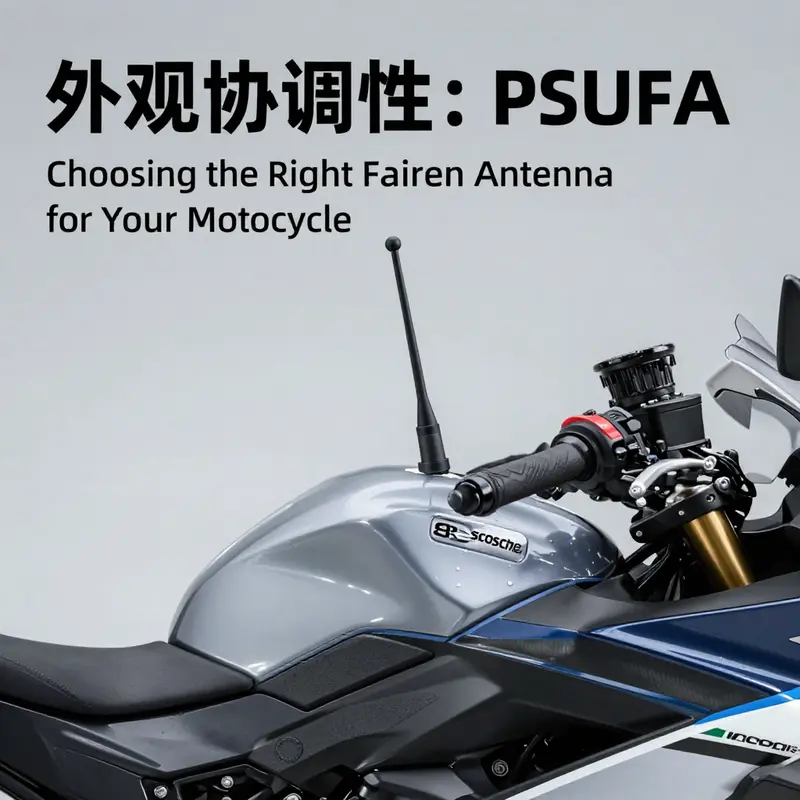
Inside the fairing lies more than just a shelter for electronics and riders. It is a living language of design, a canvas where aerodynamics, aesthetics, and function converge. In the quest for the best in fairing motorcycle antenna, the core challenge is not simply choosing a piece that can pick up AM and FM signals. It is finding a solution that preserves the sleek, continuous line of the fairing while delivering reliable reception across a range of environments—from dense urban canyons to open highways where signal strength can waver. This balance requires looking beyond traditional, standalone antennas and toward a philosophy of integration: how the antenna, its housing, its feed, and even its amplification system can live inside the fairing without compromising the shape or the airflow that keeps the machine stable at speed. In this sense, the discussion moves from a catalog of components to a broader narrative about how modern motorcycle design treats every functional element as part of a single visual and kinetic language.\n\nTo begin, it helps to acknowledge what riders typically want from an antenna in a fairing context. The first criterion is signal quality. AM and FM reception on a motorcycle can be fickle. The landscape—a rider leaning into a turn, a tunnel tunnel, the wind rushing past, a bus shelter wall, a row of trees—creates dynamic shadowing and multipath scenarios that challenge even a well-positioned external antenna. The second criterion is installation ease. A solution that can be dropped behind a fairing panel, without invasive modifications or specialized tools, has a decisive advantage. The third criterion is appearance: riders want the intake of sound to harmonize with their bike’s silhouette, not interrupt the clean lines or clash with its paint and texture. These criteria often pull in opposite directions. A robust, high-gain antenna may require a larger footprint or exposed elements that threaten aero coherence. A concealed antenna may improve aesthetics but risks compromised reception if not designed with care.\n\nThe most promising approach, as contemporary practice begins to show, is not a single, rigid template but a flexible strategy that treats the fairing as an integral part of the antenna system’s environment. A compact, amplified AM/FM module can be tucked into the interior behind a panel or under a dash, where it benefits from a sheltered position that minimizes moisture exposure while boosting signal reach. Inside a fairing, the radio signal can travel along a well-routed coax line that uses the fairing’s internal channels as a protective conduit. The built-in amplifier becomes a crucial ally, extending the reach of the antenna without requiring a larger external structure that would disrupt the bike’s lines. In practice, this approach makes sense for riders who value a clean appearance, but it does demand careful attention to RF design, shielding, and thermal management. Amplification must be matched to the impedance environment created by the fairing’s interior geometry to avoid introducing noise or oscillations that could degrade audio clarity.\n\nThe design language of modern motorcycles offers a powerful precedent for this kind of integration. Even when no explicit “antenna” is embedded in the fairing, designers craft a sense of unity by weaving function into the fabric of the fairing itself. Look at how air intake ducts, vented panels, and even mirrors are sculpted to form a coherent surface that communicates speed and precision. The effect is not merely aesthetic; it is a holistic approach to function and form. When parts are designed to flow together, even a small component like a radio antenna can disappear into the composition without appearing as an afterthought. This is the essence of “function with beauty” in contemporary bike design: the fairing becomes a living system where each element, from the curve of a panel to the placement of a vent, contributes to both performance and visual impact.\n\nFor riders contemplating the best approach to a fairing-based antenna, the question of placement is inseparable from the bike’s geometry and the rider’s typical environment. In a wind-tunnel tested, sport-oriented fairing, there is a premium on minimizing flow disruption and maintaining stability at high speeds. An internal antenna can be positioned toward regions where airflow is relatively smooth and where the fairing’s curvature helps shield the electronics from direct exposure to rain and road spray. Yet, this cannot be done in a vacuum. The fairing interior can act as a kind of micro-ground plane that interacts with the antenna element. If the antenna is positioned too close to metal ribs or other conducting surfaces, or if the mounting hardware leaks RF into the chassis, signal quality may suffer rather than improve. Consequently, careful RF layout, including proper shielding, coax routing, and an isolated mount for the antenna element, becomes essential. Designers may opt for a small, shielded module with a built-in amplifier that can be decoupled from heat sources and protected by a moisture-tight seal. The goal is to preserve a clean exterior profile while maintaining robust signal integrity inside.\n\nThe aesthetic implications of such integration are not incidental. When a fairing houses the wireless or broadcast reception system, the visual demand shifts from “how to mount an external rod” to “how to hide the electronics so the form remains uninterrupted.” This is not about erasing technological presence; it is about shaping it to be a natural part of the sculpture. A well-integrated system reads as a single creative decision: a panel line thoughtfully broken to accommodate a discreet seam, a connector hidden behind a trim piece, a cable tucked into a channel that echoes the fairing’s contour. The subtlety, in other words, is part of the statement. It signals that modern motorcycles prize a discipline where every element is designed to be elegant and purposeful, not merely functional. In this context, the term “best in fairing antenna” becomes less about the specific component and more about the marriage of RF performance with the bike’s design language. The rider experiences the advantage—clear radio, clean aesthetics—without perceiving the system as a compromise.\n\nFrom a practical standpoint, the choice between an internalized approach and more visible, external options hinges on riding habits, terrain, and climate. Riders who frequently travel in urban canyons or mountainous regions with erratic signal coverage may benefit from an amplified solution that is hidden in the fairing. The amplification helps overcome weak signals, enabling more consistent reception without the need for a larger external antenna that would disrupt the fairing’s silhouette. On the other hand, riders who prize absolute minimalism in panel lines and who rarely travel through areas with poor reception might opt for a more compact, passive configuration that relies on the fairing’s internal geometry and ground plane behavior to deliver adequate performance. In all cases, the installation philosophy should emphasize weather sealing, strain relief for cables, and accessibility for maintenance, since fairings are subject to temperature swings, vibration, and moisture.\n\nThe discourse around integrated fairing antennas also intersects with broader design trends that pursue “no visible hardware” and “design as function.” The best examples in high-performance bikes show how the architecture of the front end, the integration of cooling channels, and the sculpting of air inlets all contribute to a cohesive identity. In those designs, the fairing does not merely cap the frame; it becomes a system that communicates speed, precision, and control. An antenna tucked within that system inherits that sense of purpose. The rider experiences it as a seamless extension of the bike’s identity rather than a separate accessory. Even when the antenna’s performance depends on a small amplifier or a specific feed arrangement, the real gain is the preservation of a visual narrative that remains uninterrupted by stray greebles, protruding rods, or awkward attachments. The design intent is clear: any functional module that touches the rider’s sense of style should reinforce, not undermine, the bike’s kinetic elegance.\n\nTo translate these considerations into a practical frame of reference for decision-making, a few guiding principles emerge. First, prioritize RF integrity without sacrificing the fairing’s form. The ideal internal antenna arrangement uses materials and housings that minimize RF losses and shield against interference from other onboard systems. Second, favor modularity and serviceability. An internal system should be accessible through a modest panel or service hatch, allowing for upgrades, testing, or replacement without disassembling the entire fairing. Third, protect against the elements. Moisture ingress is more than a reliability concern; it can shift impedance and degrade signal quality. Four, maintain a clean aesthetic. The best designs succeed precisely because the antenna appears to be an inevitable part of the fairing’s geometry, not a foreign object added later. Finally, respect the rider’s need for a balanced experience. A strong FM signal is pleasing, but it should not come at the expense of wind noise, heat buildup, or the risk of panel warping due to misrouted cables.\n\nThis approach to the best in fairing antenna design aligns with a broader observation in modern motorcycle aesthetics: the aim is to craft a visual language where performance elements communicate purpose at a glance. The fairing functions as a storytelling device, conveying speed through its lines and implying efficiency through the careful placement of vents, radii, and intersections. An antenna, when thoughtfully integrated, becomes part of that language—an imperceptible—yet essential—note in a larger orchestral performance of shape and motion. In a sense, the fairing is a stage, and the antenna is one of the actors who, by taking a more subtle role, helps the entire production achieve coherence.\n\nAs a rider contemplates the practical steps toward implementing such an approach, it can be helpful to frame considerations in a mental checklist that respects both technical and stylistic demands. Start with the vehicle’s existing design vocabulary: where do panels curve most gracefully, and where do features like vents or mirrors create natural, low-profile spaces that can house electronics? Then assess the anticipated signal environment: does your riding pattern frequently lead you through areas with weak reception or strong multipath? If so, a compact, internally amplified solution could be worth prioritizing, provided the installation is designed to remain hidden and protected. Next, consider maintenance: can you access the antenna or its amplifier without removing the entire fairing? Is there a path for cabling that does not compromise the fairing’s structural integrity or introduce vibration-induced wear? Finally, judge the aesthetic impact: will the chosen arrangement preserve the fairing’s silhouette, or will it create a visible seam that reads as an afterthought? If the latter, rethink the position or switch to a more integrated approach with a panel that follows the fairing’s curves more naturally.\n\nThe discussion in this chapter, while anchored in the concept of an internal, amplified AM/FM antenna, also points toward a broader design philosophy that many riders already admire in high-performance machines. The ethos is clear: technology should serve the bike’s form, not draw attention to itself as a gadget. The most successful solutions become invisible sculptural decisions—parts that riders can appreciate for their contribution to overall aesthetics without necessarily naming them as technological inserts. In practice, this means that the “best in fairing motorcycle antenna” is less about a singular component and more about a disciplined, integrated approach to how signals are gathered and presented inside the bike’s most visible enclosure. It is about achieving a fusion where reception quality, ease of installation, and fidelity to the bike’s design language come together in a way that feels inevitable—the natural consequence of thoughtful engineering aligned with exquisite artistry.\n\nFor readers who want to explore how this philosophy can be reflected in real-world examples, there is a broader context within the fairing ecosystem that demonstrates how design language governs the integration of functional elements. Riders and builders who study contemporary fairing lines will notice that the most convincing solutions treat every panel as a potential host for a feature—airflow, cooling, lighting, or information systems—without forcing the eye to locate a single standout accessory. This is the essence of visual cohesion in motorcycles today: the integration foregoes obviousness and rewards the observer with a sense of seamlessness, a single, disciplined narrative that runs from the front of the bike to its tail.\n\nIf the reader seeks a concrete reference to a broader fairing ecosystem that reflects these ideas, the Yamaha fairings collection offers a lucid example of how designers allocate space, shape, and texture to achieve consistent, integrated aesthetics. You can explore the collection here: Yamaha fairings. This link provides a sense of how panels, vents, and mirrors can be arranged to form a cohesive visual system, which in turn informs how an interior antenna module might be incorporated with minimal disruption to the exterior silhouette.\n\nIn closing, the pursuit of the best in fairing antenna is a study in restraint and ingenuity. It invites engineers, designers, and riders to imagine the fairing not as a simple shell, but as a living, responsive architecture that houses essential technologies while maintaining the bike’s immediate, tactile appeal. The aim is a confluence where reception quality, installation practicality, and aesthetic integrity inform one another, creating a final result that feels both technically sound and visually satisfying. When done well, the antenna ceases to be an accessory and becomes a natural extension of a motorcycle’s most expressive feature—the fairing itself. The rider benefits from a reliable signal, a clean and cohesive look, and a sense that every technical decision has been made with an eye toward the bike’s broader design story.\n\nExternal resource for additional context on integration and aerodynamics in vehicle design: https://www.sae.org
Final thoughts
Choosing the right fairing antenna is crucial for motorcycle enthusiasts and business owners alike. The balance of exceptional signal quality, ease of installation, and aesthetic appeal can greatly enhance the biking experience. The Scosche PSUFA Universal Amplified AM/FM Antenna stands out as a top contender, offering numerous benefits that align perfectly with the needs of any motorcycle rider. As you consider upgrading or installing antennas for your motorcycles, remember the significance of these three aspects for optimal performance and customer satisfaction.