
In the realm of motorcycle accessories, BMW motorcycle fairing parts stand out as crucial components that not only enhance performance but also define the aesthetic of the bike. With global supply chains increasingly focusing on sourcing from established manufacturing hubs like China, understanding the nuances of these parts becomes paramount for business owners looking to tap into this market. The forthcoming chapters will navigate through the complexities of sourcing these parts globally, ensuring quality through certifications, and exploring the customization trends that are shaping the landscape. Business owners will gain insights into reliable sourcing, critical quality standards, and the evolution of styles catering to consumer preferences.
Riding the Edge: How BMW Motorcycle Fairing Parts Travel Through a Global Supply Chain
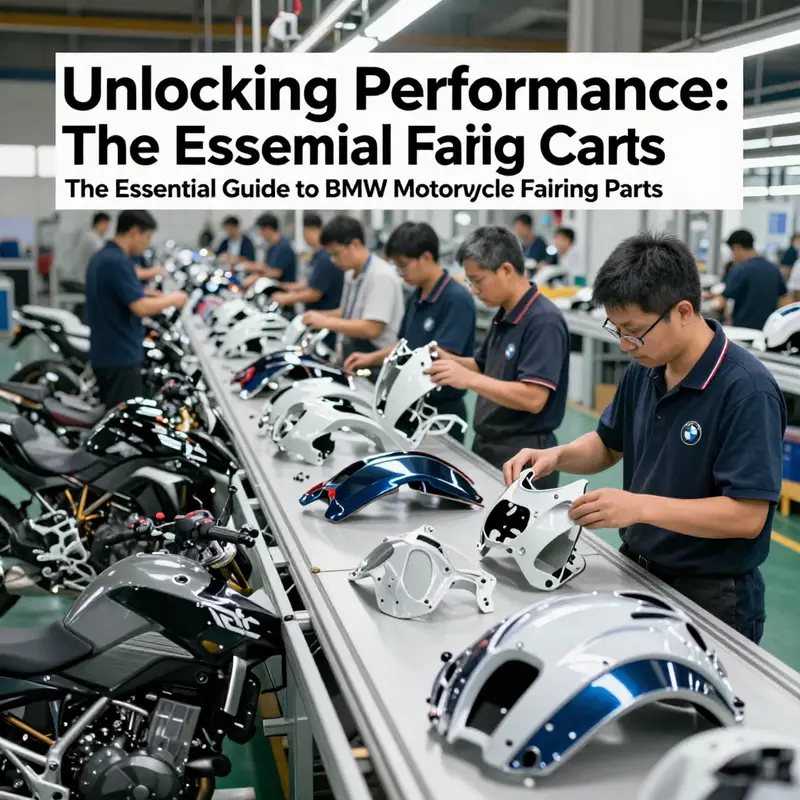
Aerodynamics, protection, and identity all ride on the same curved plane when a BMW motorcycle moves down the road. The fairing is more than a shell of plastic or composite; it is a carefully engineered interface between rider and machine, a component whose shape, material, and finish influence cooling, aerodynamics, vibration management, and even rider fatigue over long distances. In modern markets, the journey of a BMW motorcycle fairing part from concept to cockpit is as much about global logistics as it is about resin chemistry or paint formulation. The current landscape reveals a highly developed, specialized ecosystem in which China plays a dominant role, not because it is simply the cheapest option, but because it offers a unique blend of scale, technical capability, and process integration that can meet the exacting demands of performance motorcycles in Europe and North America. To understand how this ecosystem works, one must follow the trail from raw sheet, resin, and carbon fiber through tooling, molding, finishing, and verification, all the way to the parts that riders trust on the road or on the track.
Across the main manufacturing zones in China, the story of fairing parts unfolds with a geographic logic that mirrors the country’s industrial strengths. In the south, Guangdong Province stands out for high-volume production and the use of advanced materials. ABS plastics remain a staple due to their ductility, impact resistance, and cost efficiency, while carbon fiber composites are increasingly common for weight savings and stiffness in performance-oriented variants. The tooling and molding ecosystems in Guangdong are tightly coupled with paint and surface finishing operations, enabling a streamlined flow from mold release to color matching and clear coating. This vertical integration reduces touchpoints and improves consistency, which is essential when customers demand fit that mirrors original specifications and finishes that hold up under UV exposure and weathering. The capability to iterate rapidly—voice of the customer, design tweaks, and quick-turn prototypes—originates in part from the dense network of metal, polymer, and composite suppliers clustered in the Pearl River Delta region. For brands and buyers seeking OEM-grade reproduction or aftermarket enhancements, Guangdong’s scale translates into shorter lead times and more predictable production schedules, a critical advantage when demand ebbs and flows with seasons, new bike launches, or racing calendars.
Fujian Province contributes a different, yet equally important, dimension to the supply web. In places like Fuding and Fuzhou, manufacturers emphasize flexibility for smaller-to-medium order volumes. The regional profile makes it feasible for smaller brands or first-time buyers to source fairing sets, modules, or specific panels without incurring the heavy tooling costs that come with larger runs. This is where customization is most accessible: personalized shapes, alternative mounting schemes, and ergonomic tweaks that respond to rider feedback, riding posture, or competition rules. The Fujian clusters often run leaner manufacturing lines, enabling faster iterations on geometry, fit, and texture. Yet even in this more compact setting, the quality discipline remains stringent. Standard operating procedures, traceability, and testing protocols are built in, ensuring that even bespoke configurations meet torque specs for mounting points, chemical resistance for coatings, and dimensional tolerances that guarantee consistent assembly across batches.
In Zhejiang and Shanghai, the emphasis shifts toward technical sophistication, robust research-and-development commitments, and ISO-certified facilities that target European and North American markets. Here, the manufacturers tend to operate at a level where advanced materials, multi-component finishes, and precision painting meet the demands of international OEMs and premium aftermarket players. These centers often run centralized campuses or closely coordinated networks that manage the entire lifecycle of a fairing part—from initial design and rapid prototyping to tooling refinement, paint process development, and final inspection. The result is a highly capable supply chain that can deliver complex assemblies with tight tolerances and repeatable quality, while still offering the flexibility needed for model-specific adaptations. The ability to integrate advanced inspection technologies, such as 3D scanning for as-built verification and color management systems that guarantee color fidelity across batches, further strengthens the reliability of the supply chain. For buyers and engineers tasked with delivering consistent performance across multiple regions, this triad of regional strengths—volume and material capacity in the south, customization agility in the southeast, and high-precision, export-ready capability in the east—provides a balanced, resilient framework for sourcing.
The synergy across these regions is not incidental. It is built on the reality that toolmaking, molding, painting, and inspection often occur within integrated campuses or tightly synchronized networks. This arrangement reduces the lead times that typically plague longer, fragmented supply chains. Where a traditional, dispersed supplier base might incur delays as a result of handoffs between separate facilities, the integrated model accelerates the entire process. The result can translate into lead-time reductions of as much as a third, a significant advantage for brands and buyers who must align production schedules with market demand, seasonal launches, and end-user expectations. Yet the same integration that brings speed also imposes a need for discipline. A chain that rests on a few, highly capable production hubs must manage risk with vigilance: supplier diversification to avoid a single point of failure, robust quality control to prevent subtle variances from slipping into assemblies, and clear communication channels that ensure engineering intent is preserved from design rooms to the workshop floor.
From a buyer’s perspective, the market presents a spectrum of options, from OEM-grade reproductions that aim to match exact contours and tolerances to custom-designed fairings that push the limits of ergonomics, aerodynamics, and aesthetics. The decision often comes down to a balance of quality, reliability, responsiveness, and resilience. Those choices are not abstract. They affect fit when a rider installs a replacement panel, impact safety when mounting points align with factory locations, and influence the overall performance envelope of the motorcycle, particularly at higher speeds where airflow and shielding matter. The conversation around quality extends beyond the bare plastic or fiber. It encompasses surface engineering, adhesion between coatings and substrate, weathering resistance, and compatibility with other components such as screens, vents, and radiator shields. It also includes the documentation that backs the parts: detailed technical parameters, material specifications, sample test data, and a traceable quality story that reassures buyers, whether they are remanufacturing a fleet or equipping a boutique line of customized builds.
As the market evolves to meet demand for replacement parts and customized enhancements, the deployment of this knowledge becomes critical. Ergonomic upgrades—adjustable screen heights, improved grip textures, or lighter, more ergonomic mounting arrangements—are examples of how buyers seek to optimize rider comfort without compromising the fundamental protective role of the fairing. Modular mounting systems, another trend, allow owners to reconfigure accessory panels or upgrade segments without a complete replacement. These innovations require tight control over interfaces: the geometry of mounting holes, the compatibility of fasteners, and the precision of panel alignment as viewed from multiple rider positions. The integration of these features into a single fairing family calls for not only advanced materials and coatings but also a robust product development culture that can translate design intent into repeatable manufacturing outcomes. In practice, that means suppliers with strong R&D leadership, well-documented process capabilities, and a track record of delivering consistent results year after year.
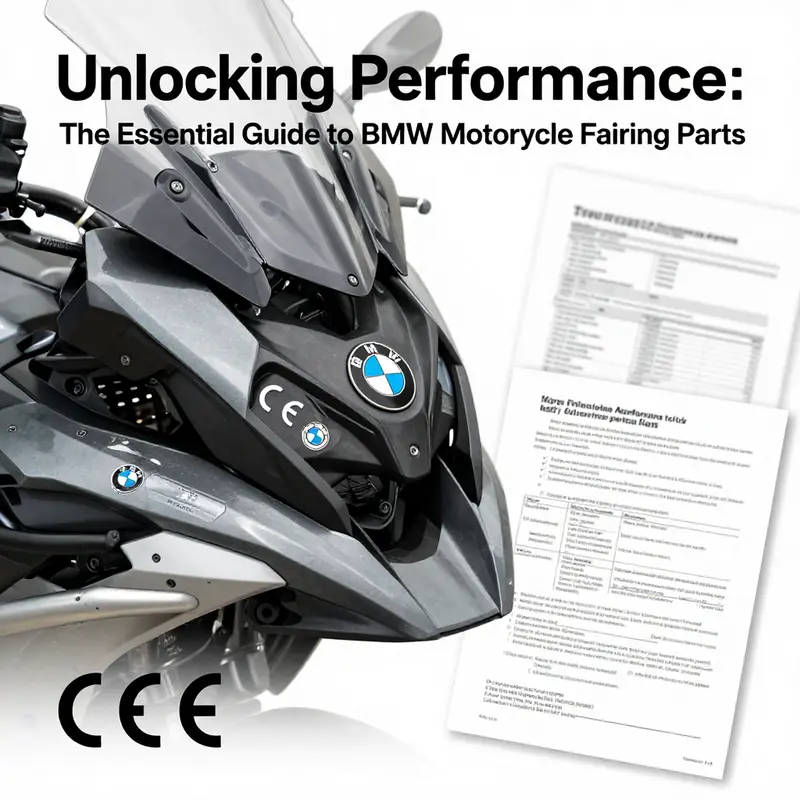
To navigate this landscape effectively, procurement and engineering teams increasingly adopt a data-driven approach. They begin by defining a clear specification for fit, finish, and function—precise measurements of mounting points, surface flatness, and edge radii, as well as the expected chemical compatibility with sealants and gaskets. Qualitative feedback from riders and technicians is codified into design refinements, while quantitative metrics—tolerances, yield rates, and defect rates—are tracked to distinguish supplier performance over time. Certifications become a critical signal, with CE, E-Mark, and other relevant safety and compliance marks serving as indicators of a supplier’s commitment to meeting rigorous international standards. More than ever, the journey from mold to finished part is captured in documentation and traceability, enabling buyers to confirm that each lot aligns with the original specification and that any deviations are identified, investigated, and corrected quickly.
In this ecosystem, credibility is built layer by layer. First comes the visible quality—smooth paint finishes, uniform gloss, consistent color matching, and a seamless fit with adjacent panels. But the invisible metrics are equally important: the resin systems and fiber layups in carbon fiber panels, the adhesive systems used for bonding, the long-term stability of coatings under UV exposure, and the mechanical properties of the mounting interfaces under vibration and load. A supplier who can demonstrate ISO-certified facilities, provide detailed test reports, and offer a transparent view of their production processes helps buyers reduce uncertainty and build a reliable supply chain. It is not enough to deliver a single successful run. The true test is a sustained ability to reproduce those results across many cycles, respecting variations that occur with different batches of raw materials, shifts in demand, or changes in logistics conditions. When buyers articulate these expectations and insist on documented evidence of consistency, the market rewards them with partners who combine speed with stability and who can weather the fluctuations that inevitably arise in global manufacturing.
While the detailed landscape may appear complex, the underlying imperative is straightforward: a BMW motorcycle fairing part must marry faithful form with durable function, and the path from concept to customer must be reliable, repeatable, and safe. In practice, this means seeking out suppliers who can speak plainly about their materials, their processes, and their quality controls. It means evaluating whether they can deliver exacting tolerances for mounting points and panel edges, whether their surface finishes resist fading and cracking, and whether their supply chains can withstand disruptions without cascading delays. It also means validating that they can support the commercial realities of the market—the need for both stock and bespoke options, the ability to scale up production during peak demand, and the capacity to provide timely after-sales support and technical documentation such as technical data sheets, testing results, and installation guidance. In many ways, the decision reduces to selecting a partner who embodies technical excellence, process discipline, and collaborative spirit, one who can translate engineering intent into a finished product that fits right the first time, over and over again.
To illustrate the broader landscape without anchoring too tightly to any single name, buyers and engineers often look to regions with established, certification-rich environments. The emphasis remains on a transparent production narrative: the visible track record of on-time delivery, the coherence between declared specifications and actual performance, and the ability to provide detailed progress data—from early prototypes to final, mass-produced components. The credibility of a supplier is reinforced by the capacity to produce model-specific or model-agnostic panels, to offer a range of materials from ABS to carbon fiber composites, and to align with standards that ensure rider safety and environmental responsibility. In this context, a key decision is how deeply to integrate with a supplier—whether to pursue a single, deeply capable partner for end-to-end production or to blend multiple suppliers to diversify risk, balance costs, and secure niche capabilities. Neither approach is universally superior; the optimal path depends on product strategy, volume commitments, and the willingness to manage a more complex supply network.
The market’s evolution toward more sophisticated, modular, and ergonomic fairing solutions also emphasizes the importance of after-sales support. Beyond the initial purchase, riders and installers rely on clear installation guides, accurate replacement part references, and prompt, respectful service when questions arise. This requires suppliers to maintain robust documentation practices, provide sample test reports, and sustain a spare-parts ecosystem that can respond to demand spikes and model-year updates. The outcome is a more resilient consumer experience, one that can convert a one-time buyer into a loyal customer who appreciates precision, consistency, and the assurance that the parts will perform as intended under real-world riding conditions. As the industry continues to refine these practices, the relationship between manufacturer, supplier, and end rider will increasingly resemble a continuous feedback loop—engineering insights informing production decisions, which in turn yield better performance and safety on the road.
With these considerations in mind, buyers should adopt a rigorous, data-informed supplier selection approach. They should request documented certifications, traceability data, and detailed process descriptions that reveal how a part is made, tested, and validated. They should examine the supplier’s capacity to produce model-specific components while maintaining the flexibility to accommodate small-volume, customized orders. They should assess lead times, the reliability of after-sales support, and the availability of samples for independent testing and fit verification. And they should verify supplier qualifications through formal channels, reviewing enterprise information and client feedback on reputable platforms to minimize procurement risk. In doing so, they build a sourcing pathway that not only meets current market demands but is sufficiently adaptable to address future shifts—whether those shifts involve new materials, new finishing techniques, or new ergonomic and modular concepts that riders will come to expect as standard in premium fairing systems.
To provide a concrete, cross-brand reference for broader context within the aftermarket ecosystem, readers can explore related fairing collections in established online catalogs that showcase how different brands segment their products and communicate fitment expectations. These cross-brand references can illuminate how the industry defines compatibility, how it documents critical parameters, and how retailers and manufacturers position products to meet diverse riding styles without sacrificing safety or performance. Such comparisons help frame the BMW case within a global market that values standardized interfaces, repeatable production, and transparent quality promises. The overarching lesson is that the best sourcing strategies hinge on a disciplined blend of technical scrutiny, supply chain resilience, and a clear alignment between design intent and manufacturing execution. When these elements converge, the result is a fairing system that not only protects and aerates but also enhances the rider’s experience—delivering confidence at speed and comfort over long miles alike.
For readers seeking a practical waypoint into related content that echoes the broader manufacturing and sourcing themes discussed here, a related collection from another major brand category offers a useful reference point. You can explore the Yamaha fairings collection to gain a sense of how similar parts are categorized, presented, and tested across different market segments. This cross-reference helps illuminate common industry standards and practices, reinforcing the idea that while models and brands differ, the core demands of fit, finish, and function bind the industry together. Yamaha fairings collection.
In sum, the BMW motorcycle fairing parts landscape is defined by a highly specialized, regionally distributed manufacturing web that balances scale with customization, speed with quality, and innovation with safety. The most effective sourcing approach recognizes that the best partners are those who can demonstrate end-to-end competence—from material selection and tooling through to finishing and inspection—while maintaining a transparent, data-driven dialogue that keeps the rider’s safety and satisfaction at the forefront. As demand for OEM-grade replacements and aftermarket enhancements continues to rise, the ability to navigate this ecosystem with confidence will hinge on governance, documentation, and the continuous alignment of engineering intent with manufacturing execution. The next chapter moves from supply chain architecture to the practical implications for procurement leaders, discussing concrete steps to evaluate suppliers, mitigate risk, and secure the consistency that riders expect in a world where fairing parts are a crucial interface between rider, machine, and the road ahead.
External resource: https://www.supplychaininsider.com/articles/s1000rr-fairing-supplier-guide-china-manufacturing-hubs/
null
null
Contours of Identity in Wind and Alloy: The Evolution and Personalization of BMW Motorcycle Fairing Parts
The fairing is more than a shell that dresses a motorcycle. It is a study in how riders connect with their machines, how performance is shaped by form, and how culture translates into every bolt, curve, and color. In this chapter, we follow a thread that runs through design studios, workshops, and riding communities: the way fairings are customized, how trends ripple from the street to the showroom, and how safety, aerodynamics, and aesthetics cohabit in a single component. The wind tunnel of innovation is now open wide, and the path from factory line to customized streetbike is no longer linear but braided with choice, technology, and personal meaning. While the core ambitions remain constant—protection, performance, and identity—the choices riders make about fairing parts reveal both the evolution of engineering and the evolving language of motorcycle culture.
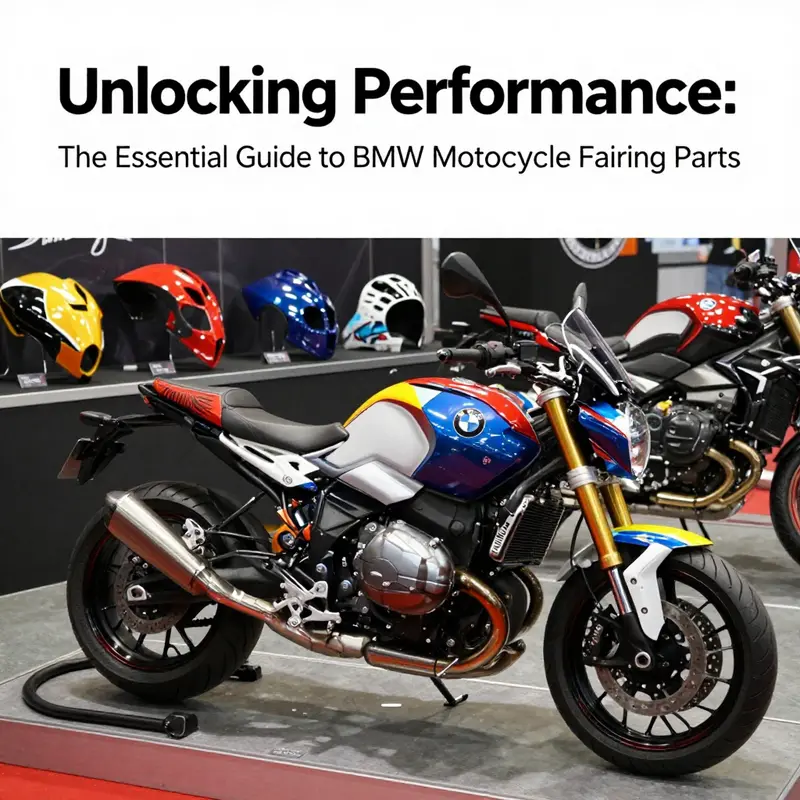
Customization has become a defining principle in the market for fairings. Riders no longer seek mere replacement pieces; they seek a statement that translates hours of riding into impressions of speed, control, and individuality. The allure of customization begins with color and graphics, but it quickly expands to surface texture, material behavior under stress, and even the way a fairing contributes to the bike’s overall balance. When a rider chooses a custom-painted panel, they are not simply selecting a new color; they are choosing a narrative. The color, the line, and the way light plays across the surface communicate a personality, a story of how that particular machine is ridden and imagined. In this sense, customization is not frivolous ornament. It is a deliberate engineering decision that can influence perception of speed and stability, even if the rider remains on a familiar stretch of road.
Within this broader movement, the fairing system has become a canvas for optimization. Designers and fabricators are increasingly focused on how a panel interfaces with the rest of the bike. This includes how the fairing channels air to reduce drag and manage vortex formation, how it shields the rider and internal components from debris, and how it integrates mounting points so that the original geometry remains faithful while accommodating aftermarket variations. The emphasis on fit is not cosmetic; it is foundational. A panel that looks right but leaves gaps or creates misalignment can undermine handling at high speeds, alter pressure distributions, and complicate maintenance. Therefore, the most credible customization programs operate at the intersection of aesthetics and precise engineering, delivering components that look as though they were born in the factory while offering the expressive freedom riders crave.
The popularity of fairing customization mirrors a broader trend in the bike world: the democratization of design tools and the globalization of supply chains. Modern riders are empowered to push their ideas from sketch to production with relative ease. Digital design workflows, rapid prototyping, and scalable manufacturing enable small specialist studios to produce limited runs of distinctive components. A rider can imagine a design, share it with a fabricator, and receive tested, dimensionally accurate parts that fit the bike’s original contours. This democratization is especially potent because it does not require ownership of a high-end lab. Even in more modest workshops, advancements in composite materials, surface finishing, and precision molding can yield outcomes that rival factory pieces in both form and function.
A key feature of contemporary fairing customization is the careful consideration of weight and stiffness. Lightweight materials—composites that blend carbon fiber with resin systems, or advanced thermoforms that combine strength with resilience—are now mainstream in aftermarket lines. The goal is to reduce weight without compromising protection or rigidity. When a panel is lighter, it does not just reduce a bike’s overall mass; it can improve throttle response, accelerate weight transfer, and refine braking feedback. In a sport-oriented context, even a few hundred grams per panel can influence high-speed stability and feedback at the bar. Yet, lighter does not automatically mean weaker. Modern composites and engineered plastics, when correctly layered and cured, deliver resistance to impact and fatigue that is well suited to the dynamic demands of aggressive riding. The result is a fairing system that feels taut, with precise feedback through the handlebars, and a rider who perceives both the wind and the machine as a single, harmonized system.
The material conversation extends beyond carbon fiber. Thermoformed plastics, fiber-reinforced polymers, and multi-material sandwiches now populate the aftermarket. Each material brings a distinctive character: carbon fibers convey a high-tech sheen and excellent stiffness-to-weight ratio, while reinforced plastics offer a balance of impact resistance and ease of molding. The choice is rarely about absolute performance alone; it is about how the material behaves in real-world riding: how it tolerates rock strikes on a back road, how it scratches and polishes with time, and how it responds to heat from prolonged sun exposure on a highway. This material diversity supports a broader palette of finishes and textures—matte, gloss, pearlescent, and graphic-laden surfaces—that riders can select to express a mood or a brand philosophy without sacrificing the clean lines of the original silhouette.
What makes modern customization possible is a synchronized ecosystem of design, testing, and fabrication. Digital modeling allows designers to simulate airflow and pressure distribution around a customized contour, ensuring that the fairing does not merely look right but behaves well at speed. Simulation data can inform choices about where to thicken a panel, where to introduce micro-gills for airflow, or where to add a vent to relieve heat buildup. This pre-visualization is not a substitute for physical testing, but it reduces risk and accelerates iteration, enabling studios to deliver sophisticated products without an excessive number of prototypes. When a rider receives a specimen for inspection, a detailed set of technical parameters accompanies it: material composition, laminate schedule, thickness tolerances, UV resistance ratings, and documented test results. A robust test package is a sign of reliability. It tells a buyer that the piece is designed with a clear understanding of how it will perform under real riding conditions, not just how it looks on a showroom wall.
Integral to the narrative of customization is the concept of compatibility across a spectrum of bikes within a family of models. Even when the aim is personal expression, the fairing must honor the underlying geometry that governs aerodynamics and handling. The modern after-market approach prioritizes seamless fitment that respects the bike’s line and mounting geometry. The best lines are designed to snap into place with the same tolerances used in the factory, ensuring predictable fitment during installation. For riders, this means less time wrestling with alignment screws and more time on the road or track. The result is a sense of continuity: a customized piece that feels as if it grew from the bike itself, preserving the visual language while adding a layer of personal storytelling.
As customization grows more sophisticated, the market witnesses a shift toward platform-based design ecosystems. Studios develop modular components that can be swapped or upgraded without discarding the entire fairing system. A rider who begins with a full fairing can later enhance airflow with a redesigned lower or add a graphic kit that introduces a new mood without altering the core structure. This modularity emphasizes sustainability as well as expression: parts designed for disassembly and recycling, with an eye toward longer service life and easier maintenance. It also invites a broader audience into the customization conversation—new riders who want to experiment without undertaking a full rebuild, and veteran enthusiasts who seek to refresh the look while keeping the bike’s fundamental geometry intact.
Within this landscape, there is value in cross-brand learning. The general principles of aerodynamics, fit, and finish traverse brands and models, offering a common language for designers and riders alike. A thoughtful exploration of a well-executed fairing from a different brand can illuminate best practices in shape optimization, edge detailing, and surface treatment. It is not about replication; it is about translation—taking proven ideas and adapting them to a distinct silhouette. For readers exploring customization, a useful starting point is to study how other brands address line continuity, corner radii, and the interaction between upper and lower panels. A practical illustration of this cross-pollination can be found through a broad catalog of fairings that emphasizes cohesive line work and a balanced visual hierarchy. In this sense, the culture of customization becomes a shared apprenticeship rather than a siloed specialty.
To ensure that customization does not come at the expense of safety or reliability, compliant manufacturing and rigorous evaluation still guide the process. Certification marks such as safety and road-use standards are not mere bureaucratic hurdles. They are signals that a component has been tested for impact resistance, heat exposure, and environmental durability. Buyers increasingly expect technical documentation: material lists, surface finishes, impact testing results, and warranty terms. A responsible supplier will provide samples and testing reports that attest to these properties. The careful documentation reduces risk for riders and helps shops and manufacturers maintain accountability across orders, especially when different production runs involve slightly different material batches or resin cures. In the end, the strongest custom pieces are those that honor both the rider’s expressive intent and the bike’s essential safety envelope.
The market also recognizes that the story of a fairing is tied to the rider’s broader journey. A well-chosen piece can complement luggage, lighting, and protection systems, creating a holistic experience of riding. For touring enthusiasts, a fairing that directs airflow efficiently and provides shielding from wind drift can yield measurable gains in comfort and range. For sport riders, the emphasis shifts toward razor-thin lines, sharper edges, and precise feedback through the handlebars as the machine slices through the air. In each case, the fairing becomes a partner in the ride, a crafted interface between rider intention and the environment. The chapter’s arc is thus not only about the surface or the color but about how the component enables a more confident, connected experience on the road or the track.
In the spirit of shared learning, riders and builders often look beyond their own regional markets to understand evolving preferences and constraints. Availability of certified components, access to skilled fabricators, and the velocity of customization cycles differ around the world. However, a common thread ties these diverse contexts together: the pursuit of a balance between beauty, speed, and safety. This balance is not static; it shifts with new materials, new manufacturing methods, and new expectations from riders who demand both personal expression and dependable protection from the elements, road debris, and occasional mishaps. The conversation around fairing parts has matured into a dialogue about how to honor that balance while embracing change. The result is a more expressive, more capable, and more responsible ecosystem for BMW motorcycle fairings or, more broadly, for the sport bike world at large.
For readers curious about cross-brand design methodologies and how they translate into practical choices, a broader exploration of a general fairing collection can provide a useful frame of reference. See the Honda fairings collection for a perspective on how line work, mounting geometry, and surface detailing are harmonized across a range of models. This reference point is not a recommendation to imitate; it is a study in how coherent design language translates into both aesthetics and fitment across different chassis geometries. Observing such patterns can inspire riders and builders to articulate their own design vocabularies while maintaining the fidelity of the bike’s silhouette and the integrity of its aerodynamics. The careful observer will notice that good design treats every edge and curve as a deliberate contribution to the whole, rather than a decorative addition.
In closing this reflection, the evolution of fairing parts reveals more than a trend toward customization. It signals a mature, creative collaboration among riders, designers, and manufacturers. It shows how a single panel can become a canvas for performance and personality without sacrificing safety or ride quality. It marks a shift from the notion of parts as interchangeable placeholders to the idea of fairings as integral extensions of the rider’s intention. And as technology continues to advance—through more accurate simulations, stronger yet lighter materials, and smarter, modular assembly—the future of fairing parts will likely embrace even more nuanced compromises between weight, rigidity, and artistic expression. The wind will remain the ultimate judge, but the judge will be informed by data, by test reports, and by the stories riders tell about how their machines feel when the throttle opens and the road stretches ahead.
External resource: a broader online marketplace that aggregates customization options and supplier information underscores the breadth of available choices while highlighting the importance of due diligence, documentation, and quality assurance in any customization project. https://www.alibaba.com/product-detail/Custom-Motorcycle-Fairings-for-BMW-S1000RR-M1000RR_1600438972777.html
Final thoughts
The exploration of BMW motorcycle fairing parts reveals a multifaceted market where global sourcing, quality assurance, and customization play critical roles. Business owners must strategically navigate these domains, ensuring that they select reliable suppliers while also catering to the growing consumer demand for personalized and high-quality products. As the market continues to evolve, staying informed and adaptive will be key to succeeding in this competitive landscape. Investing in quality fairing parts not only enhances the performance of motorcycles but also meets the aesthetic desires of riders, ultimately shaping brand loyalty and satisfaction.