
Motorcyclists are increasingly embracing the potential of fairings, not only to enhance the aesthetic appeal of their machines but also to improve performance through better aerodynamics. For business owners in the motorcycle industry, understanding the landscape of affordable motorcycle fairings opens up opportunities for increased sales and satisfied customers. This article will explore the current market of cheap motorcycle fairings, how they serve the racing community, the best places to source them, and a cost-benefit analysis to ensure that quality isn’t sacrificed for affordability.
Budget Armor on Two Wheels: A Cohesive Exploration of Cheap Motorcycle Fairings for Sale
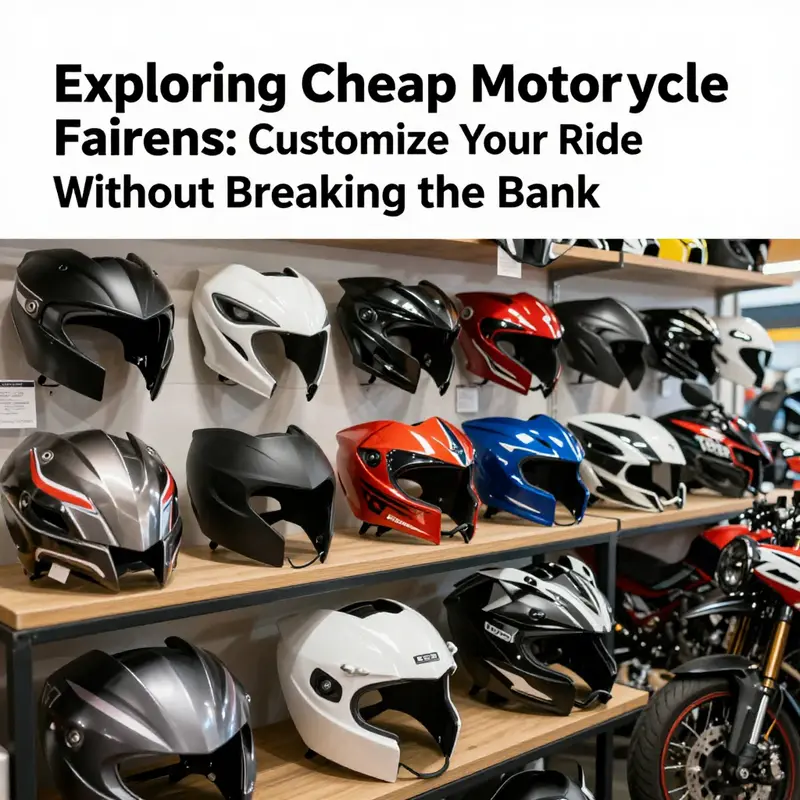
The road to personalization on a budget runs through the realm of affordable motorcycle fairings, where riders seek practical value without surrendering essential protection or a sense of personal style. In urban corridors and college campuses, where every dollar stretches further, cheap fairings have become a practical entry point for customization. These are not fashion accessories but lightweight shields that shape airflow, shield vital components from the weather, and lend a rider’s silhouette a distinct, street-ready presence. The market for these economy-oriented fairings has shown steady momentum, driven by riders who want to improve aerodynamics and weather resistance while keeping costs in check. Industry watchers point to a 6.3 percent compound annual growth rate projected from 2025 through 2030, a signal that budget-friendly options are not a stopgap but a growing segment of the aftermarket ecosystem. In this space, plastic and fiberglass-based solutions rule the roost, favored for their low manufacturing cost, ease of molding, and straightforward repair when chips or cracks occur. What makes a fairing affordable is seldom one attribute alone. It is a combination of materials, design simplicity, and the scale at which manufacturers can produce and distribute. Plastic fairings, especially injection-molded varieties, dominate the budget end of the market because they can be produced quickly and in large quantities. This mass-production model keeps unit costs down and allows distributors to offer complete or partial kits at prices that illuminate the difference between a race-tested piece and a street-friendly shell. Fiberglass, while a step up in stiffness and finish, remains a common choice for budget-conscious buyers who want a bit more rigidity without a premium price tag. The end result is a spectrum where even lower-cost options deliver reasonable aerodynamics and basic weather protection, while acknowledging that durability and long-term resistance to UV exposure may lag behind higher-end counterparts. The practical reality is that a perfect match for every model is not guaranteed; some pieces require trimming, re-drilling, or careful alignment to fit with existing fasteners and mounting points. Yet the payoff is measurable: improved wind deflection at moderate speeds, reduced rider fatigue, and a visual upgrade that can be swapped in and out without a heavy financial commitment. Across regions where purchasing power is a decisive factor, manufacturers and distributors have responded with a mix of injection-molded plastics and lighter composites that balance stiffness with pliability. Southeast Asia and Sub-Saharan Africa, in particular, have seen a surge in local production aimed at delivering low-cost, functional shells that meet minimum safety thresholds while remaining repair-friendly. The emphasis here is not on luxury or showroom gloss but on maintaining a level of weather protection and impact resistance that keeps the bike’s core components shielded during daily rides. In these contexts, the value proposition hinges on a combination of price, ease of installation, and the ability to source compatible mounting hardware locally. Riders who venture into the world of affordable fairings should not overlook safety benchmarks. The balance between cost and certification is delicate. While many budget options perform adequately in everyday use, not all comply with recognized standards for road use. For anyone planning high-speed duty or long-distance highway miles, verification of compliance with benchmarks such as ECE 22.05 or ISO 17408 is prudent. Going with a product that meets these standards enhances confidence in the fairing’s structural integrity, particularly in the event of a tip-in or light impact. It is also wise to consider UV resistance and color stability because some cheaper materials can fade or become brittle after extended sun exposure. The long view favors a purchase that can be maintained with modest repairs or refinishing rather than one that requires frequent replacement. The purchasing landscape for cheap fairings is as varied as the bikes they dress. Online marketplaces and regional platforms offer a broad spectrum of options, from complete aftermarket kits to individual panels and mounting pieces. Buyers can examine material composition—ABS plastic, polycarbonate blends, or glass-reinforced plastics—and review installation guides that accompany many listings. For DIY enthusiasts, the availability of detailed fitment notes and mounting diagrams can be a decisive factor, turning a potentially complex retrofit into a manageable weekend project. Yet the same breadth of choice carries a caveat: the temptation of very low prices often accompanies trade-offs in finish, fit, or longevity. A careful approach—checking photos for fitment realism, quoting, and reading consumer feedback—helps distinguish promising options from less reliable offerings. For riders curious about a broader catalog of options, there is value in exploring a curated collection that consolidates compatibility information and mounting guidance. A well-organized catalog can illuminate which pieces are designed to align with common mounting points and how much modification might be necessary for different chassis variants. A deliberate browsing approach helps riders form a mental map of the trade-offs between fit accuracy, finish quality, and the effort required to achieve a clean, professional look without expending a fortune. It is also worth noting that a robust community of hobbyists and technicians often shares practical tips on assembly, alignment, and refinishing, providing a support network that can make even budget components feel like a confident upgrade rather than a speculative purchase. For those who want to see what a broad catalog can offer, a quick, practical step is to explore a dedicated online collection that aggregates options across several models and generations. Within such a collection, a typical entry will present a description of the panel shapes, the materials used, the intended mounting approach, and any notes on trim fits or necessary modifications. This level of detail helps buyers compare apples to apples, even when shopping across different models and manufacturers. It also clarifies what constitutes a complete kit versus individual panels, a distinction that matters for buyers who already own some components and simply want to fill a gap or replace a damaged section. As the market continues to evolve, the interplay between price, fit, and safety will shape how riders approach upgrades. The trend toward budget-focused fairings is not simply about reducing cost; it is about democratizing access to aerodynamic and protective improvements that can extend the life of a bike’s bodywork and enhance the riding experience. The growing use of injection-molded plastics and simplified finishing processes means that a fairing can arrive with a credible level of surface quality and color consistency that satisfies casual enthusiasts and weekend warriors alike. Even so, the most informed shopping decisions come from balancing several factors: how well the piece fits the chosen bike, what the total installed cost will be, how easy it is to source replacement parts down the line, and whether the material and finish will withstand routine exposure to sun, rain, and road debris. The end result can be a bike that looks purposeful, rides more comfortably, and stays within a budget that makes the upgrade sustainable rather than speculative. For researchers and enthusiasts who track trends, the market story is instructive. It shows how affordability can coexist with functional value and how regional manufacturing dynamics influence availability and price. It also highlights the importance of safety and standards, reminding riders to verify that the products they buy meet baseline requirements for road use. As the catalog of options expands, the conversation among riders, retailers, and manufacturers will continue to refine what affordable fairings can reliably deliver. The upshot is clear: a budget-friendly fairing can be a meaningful enhancement when approached with a clear eye toward fit, safety, and total ownership costs. And because prices and inventories shift with market conditions, ongoing diligence remains essential for anyone who wants to keep a bike looking sharp and riding confidently without breaking the bank. External resources and industry analyses provide a broader lens for understanding these trends. For readers who want to situate this chapter within a larger market context, the MarketsandMarkets report on motorcycle fairing trends offers an in-depth look at type, application, and growth dynamics that shape the affordability segment. This external perspective complements the practical guidance offered here and helps frame the price-performance conversation that budget-minded riders navigate every season. External resource: https://www.marketsandmarkets.com/Market-Reports/motorcycle-fairing-market-1914.html
null
null
Smart Sourcing for Cheap Motorcycle Fairings: Balancing Cost, Fit, and Function
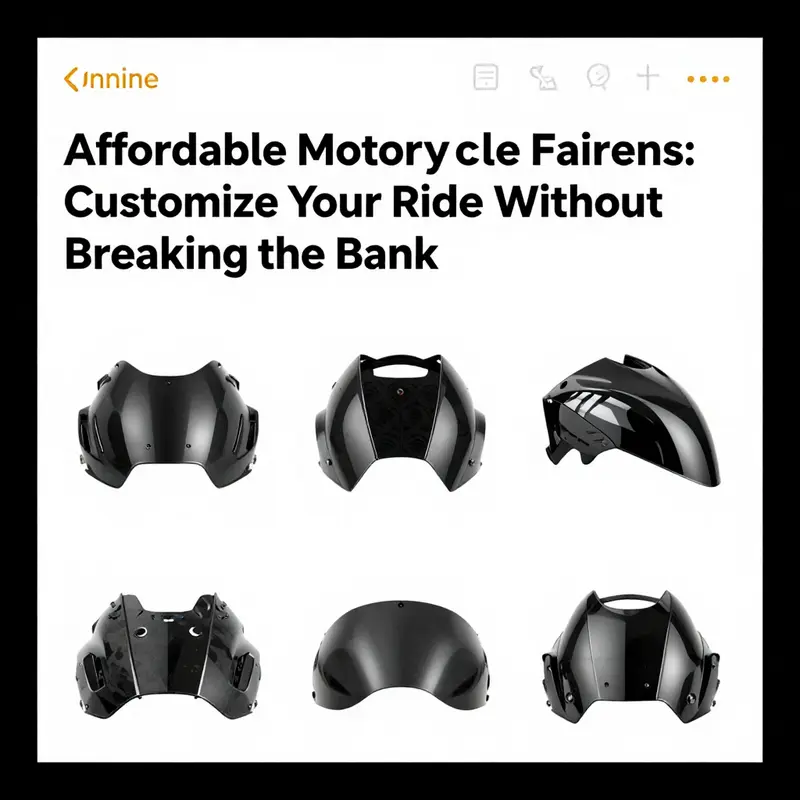
When riders set out to upgrade their machines with affordable fairings, the goal is rarely to chase the cheapest option alone. The challenge lies in balancing cost with fit, strength, and the overall look of the bike. A fairing is more than a cosmetic shell. It influences aerodynamics, protects vital components from the weather and road debris, and, perhaps most importantly, it reflects the rider’s personal sense of identity on two wheels. In the search for cheap motorcycle fairings, the terrain is varied: everything from complete fiberglass kits offered in the low hundreds to individual panels sold at bargain prices by suppliers that operate across continents. The result is a marketplace that can feel like a treasure hunt, where the value is not always obvious at first glance and where a small saving can come with a disproportionate trade-off in fit or durability if the buyer is not careful. This chapter treats the journey as a practical narrative about how to source affordable bodywork without compromising the essential functions that make a fairing worth the effort in the first place.
One of the first realities to acknowledge is the material and construction spectrum. The cheaper routes typically rely on fiberglass or polycarbonate components rather than the higher-cost composites or OEM-grade replicas. Fiberglass is sturdy and forgiving for the budget-conscious buyer, but it can require more meticulous prep work and finishing before it is race-ready or road-ready in a clean, polished way. ABS plastic, while common in many affordable kits, can flex under wind pressure or impact in a way that a higher-grade composite would not. The cheapest options may be sold as a complete kit, which sounds appealing in one breath, but the reality is that a full kit must align with a specific model year and a narrow set of mounting points. Even small mismatches in mounting tabs, rake angles, or headset clearance can turn a dream build into a before-datetime project, where hardware, alignment, and repainting become the dominant costs. In practice, buyers often find that the most reliable value comes from a balance: a full kit that is designed for a broad model family, paired with a straightforward, clean finish job, rather than a “universal” panel set that promises universal fit but ends up requiring cutting, trimming, or re-drilling.
The market’s price structure mirrors that reality. It is not unusual to see a complete fiberglass fairing set priced in the low to mid three figures before shipping for a specific model range from certain suppliers. That sounds like a lot of money, but the purchase can be cost-effective when compared with sourcing OEM panels or pristine used fairings in the aftermarket market. On the other end of the spectrum lie per-panel offerings from suppliers that source directly from manufacturing hubs. These options can begin around a fraction of the price per piece, particularly when the buyer is willing to purchase in multiples or accept a longer lead time and potential minimum order quantities. The trade-off is clear: you pay less per piece, but you must take care with planning, testing fitment, and possibly adding extra steps such as straightening mounting points, adjusting windscreen angles, or fabricating new brackets. For a rider who is comfortable with DIY work, the per-piece approach can be the gateway to a refreshed look at a price that fits a tighter budget. For a racer or a rider chasing a near-OEM appearance at minimal cost, a complete kit remains attractive—if the fitment risk is acceptably managed.
Before any order is placed, the essential question is model compatibility. The world of fairings is highly specialized, and a kit that claims to fit “a late-2000s sportbike” may not align with a mid-2010s version, even if the two bikes share a name. This is where the buyer’s due diligence pays off. A careful read of product descriptions, mounting diagrams, and any notes on the site about year-to-year changes can prevent the wrong purchase. It is equally important to consider the surface finish that will greet the painter’s brush or the vinyl wrap’s edges. Gel coat quality, the smoothness of the inner surface, and the presence of mounting tabs or braces all affect the final look after installation. Even a successfully mounted setup can look misaligned if the panels are not finished with consistent paint or wrap lines. The dollars saved on the shell can quickly vanish when a rushed paint job or poor finishing betrays the overall impression of the project. For someone who intends to repaint in a custom color, the roughness or tooth of the gel coat, the care needed to avoid print-through, and the ease of sanding are not minor considerations. In contrast, a rider who aims for a quick color-match could find value in a kit that arrives with a smoother base finish that requires less prep work.
The logistics of procurement add another layer of complexity. Global suppliers can offer significant savings, but they also introduce variables like longer lead times, international shipping costs, and import duties. A full kit sourced from a distant supplier may require careful tax and customs planning, while a per-piece purchase from a nearby warehouse can reduce that friction but come at the expense of selection breadth and price. The decision often hinges on how quickly the bike must be ready, whether the rider is pursuing a one-off aesthetic project, or if the objective is to assemble as much value as possible while preserving the ability to iterate in the future. The procurement strategy should also account for the possibility of returns or exchanges. In some cases, a seller may offer a generous return window, but international shipments can complicate returns if the product does not fit or fails to meet expectations. Buyers who anticipate the need for adjustments or resprays should factor in the additional time and cost required for bodywork and painting into their overall budget.
A practical path for anyone navigating these waters is to begin with a clear mental map of the bike’s current state and the intended result. If the objective is an improved aesthetic with a modest aerodynamic gain, a well-designed fiberglass kit that fits a broad family of models and offers precise mounting points, combined with careful prep and professional paintwork, can deliver a very favorable return on investment. If the objective prioritizes ultimate weight savings or pristine appearance, then stretching the budget a bit to secure a higher-end kit or a carefully curated used set for restoration may be the wiser course. The critical factor is a disciplined evaluation of each option’s promises against its real-world requirements. The buyer should ask: Does this kit include all mounting hardware, or will I need to source brackets separately? Are there notes about headlight and windscreen compatibility, and do these notes apply to the year of my bike? What is the finish on the inner surface, and will it require additional prep for chassis corrosion prevention when installed? Is there a known history of breakage in shipping, and does the seller offer any protective packaging or insurance?
Edging toward a realistic plan often means leaning into the practicalities of installation and finishing. A budget-minded rider can adopt a staged approach: acquire the shell first, then assess the necessity and scope of prep work, and finally decide whether to have the panels professionally painted or to take on a DIY paint job. The sequence minimizes the risk of investing in a set of panels that look great in photos but require extensive modification to fit or to hold paint. It also clarifies whether a given kit is truly negotiable within the rider’s constraints or if a more measured path—perhaps a targeted upgrade to a few key panels—would yield better results with fewer headaches. In many cases, a mixed strategy works best: purchasing a complete kit when the savings on the set scale convincingly against the expected finishing costs, while selectively replacing only certain parts that are more visible or more prone to impact damage with cheaper, repurposed or refurbished pieces.
As readers consider where to begin their search, a practical thread runs through the entire process: leverage established catalogs to confirm fit and to compare across a few model families. A broad act of due diligence includes studying the comprehensive product lines in reputable catalogs that cover a range of bike models. The goal is not merely to choose the cheapest item but to understand how the item will interact with the bike’s existing geometry, how the surface will respond to paint or wrap, and how the final assembly will perform in real-world conditions. In this light, the decision to explore a curated collection that focuses on a family of models, rather than a single-year release, can offer a more stable path to a satisfying result. The path to affordability thus becomes a careful blend of price awareness, compatibility checks, and realistic expectations about the amount of labor, time, and additional materials required to bring the project to completion.
For readers who want to explore concrete selection options within common model families, there are dedicated collections and repositories that categorize fairings by model and year range. A practical way to anchor your search is to explore a dedicated catalog that groups elements by compatible lines, ensuring you can compare like-for-like options without wading through countless irrelevant listings. If you are curious about nearby options and want to see how a given collection translates into the actual panels on a bike, you can browse a representative set of catalog pages that align with your preferred class of machine. For example, you can explore a robust assortment of fairings in a collection that focuses on a certain brand’s sportbike lineup. This approach helps you quickly gauge what a fairing set should cover in terms of side panels, front sections, and tail sections, providing a clearer sense of whether you are getting the right scope for your project. You can also compare the finish quality across different lines, which helps in making a more informed choice about whether to invest effort in prep work or to seek a more premium finish.
As the journey continues, one practical note anchors the decision-making: always verify what else is included in the price. Some listings advertise a full kit but ship without critical mounting hardware, screws, or brackets. Others may imply compatibility with a wide range of models yet require minor modifications that add up in time and materials. A prudent shopper will seek clarity on these questions before finalizing an order. The aim is to avoid a scenario where the savings on the shell are eroded by hidden costs in hardware, prep, or repainting. In the broader context of the cheap fairings market, the most enduring advice remains simple: know your bike, know your finish, and know the total cost of ownership from the moment you place the order to the moment you ride again with a fresh look and improved aerodynamics.
For readers seeking more structured avenues within the wider catalog landscape, a useful touchpoint is to examine a curated namespace that aggregates options by manufacturer or by family design. An internal link can guide you to a specific collection that is helpful for those who want to stay within a familiar ecosystem while exploring affordable alternatives. This connection can provide a quick pathway to compare design cues, fitment philosophies, and the range of finish options available within a trusted family of products. Such a pathway will help ensure that the final decision aligns with both the rider’s technical expectations and the aesthetic goals that drive a budget build. By maintaining this balance, the journey toward affordable fairings becomes not a gamble but a deliberate, informed choice that yields real value on the road.
In sum, the hunt for cheap motorcycle fairings is a careful choreography of price awareness, fitment validation, and finish planning. The world of affordable fairings rewards buyers who approach the purchase with a plan for how the panels will integrate with the bike’s existing geometry, how they will be prepped for paint or wrap, and how they will stand up to the realities of road use. While it is tempting to chase the lowest price, the most satisfying outcomes tend to come from purchases that marry reasonable cost with reliable fit and finish. As you move forward, keep your eyes on the congruence between the bike’s design language and the fairing’s lines, the practicality of installation, and the long-term prospects for durability. The result is not just a new look, but a practical upgrade that respects the budget and keeps the riding experience smooth, confident, and exciting.
To explore a broader buying universe and compare options beyond the local market, you can look at a global marketplace that aggregates fairing and body-part suppliers. For a broader sense of the sourcing landscape, consider visiting this external resource: https://www.alibaba.com/showroom/motorcycle-fairings.html. If you are curious about model-specific options and want to see curated examples within a familiar catalog, you can also browse one of the model-focused collections that groups compatible panels in a way that makes comparison practical and straightforward. For readers who want to anchor their search in a more specific, brand-aligned context, a dedicated internal resource such as a manufacturer-aligned collection can provide a reliable starting point: Honda fairings collection. This link offers a way to see how similar design language and mounting profiles are represented across multiple panels while staying anchored in a coherent lineup that simplifies compatibility checks without sacrificing the dream of an affordable, well-finished bike. In the end, the path to cheap fairings is less about chasing the absolute lowest price and more about aligning value, fit, and finish in a way that keeps the bike looking sharp and performing confidently on the road.
null
null
Final thoughts
The landscape of cheap motorcycle fairings for sale reveals an exciting market full of opportunities for business owners. By understanding the benefits, sourcing methods, and balancing cost with quality, motorcycle enthusiasts can customize their rides affordably. This market continues to grow, driven by demand for performance and aesthetics, meaning that businesses can thrive by offering well-researched, budget-friendly options to their customers. Ultimately, the right fairing can enhance both performance and visual appeal, ensuring a win-win situation for both sellers and riders.