
Cheetah Motorcycle Fairings have gained attention in the global market, particularly among business owners seeking cost-effective solutions without compromising on quality. Manufacturing from China, Cheetah focuses on providing robust motorcycle parts, aligning with the needs of wholesale clients. This article delves into an overview of the manufacturer and product offerings, digs into material compositions and technical specifications, evaluates their market position against competitors, shares supplier insights, and explores future trends beneficial for business growth. A comprehensive understanding of these aspects equips business owners with necessary knowledge for informed decision-making in their procurement of motorcycle fairings.
Cheetah Motorcycle Fairings: From China’s Factories to Global Roads—Materials, Manufacturing Hubs, and the Market Reality
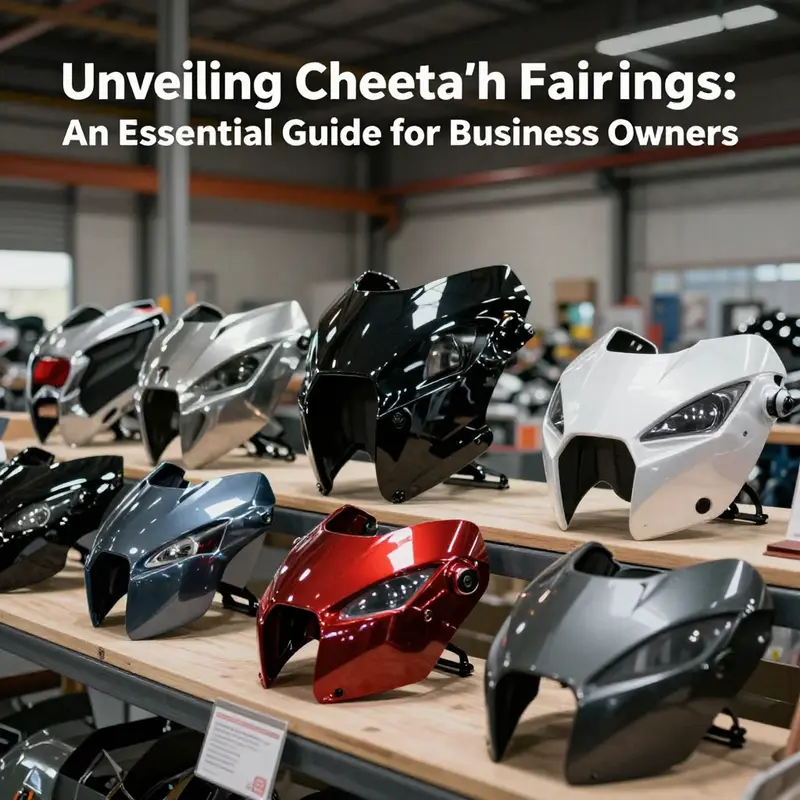
Fairings are more than cosmetic shells on a motorcycle. They are active contributors to aerodynamics, rider comfort, and even the perception of speed. When a brand like Cheetah positions its motorcycles for wholesale distribution from a Chinese production base, the fairings that arrive on buyers’ docks and, eventually, on riders’ bikes, embody a practical fusion of design intent and manufacturing economics. The public record often stops at the machine that carries the brand name, but the fairings themselves—these protective and sculptural layers—tell a quieter story about supply chains, part sourcing, and global markets. In the case of Cheetah, the available information highlights a focus on value and volume rather than a carefully documented, in-house, high-performance aero program. That disconnect between brand messaging and technical data is not unusual in wholesale-driven segments of the motorcycle industry. It points toward a broader truth: many manufacturers rely on widely available third-party tooling and materials, aligning with batch sizes that emphasize cost efficiency and interchangeability over bespoke engineering. The consequence for practitioners, builders, and enthusiasts is a need to read the parts as parts rather than as the final word on aerodynamic performance or material heritage. Yet even with limited official specifications, a careful look at the ecosystem of Cheetah fairings reveals how global manufacturing clusters shape what riders and distributors actually receive when these shells go from the factory floor into shipment boxes and onto showroom floors worldwide.
In practice, the fairings associated with Cheetah motorcycles tend to conform to a design approach that prioritizes practicality and mass-market viability. Among the most common configurations in the broader market category are what industry insiders call half fairings. These designs cover the upper front portion of the bike—from the handlebars to just behind the front wheel—and they typically feature a windswept windscreen plus a partial set of side panels. What this configuration delivers is a balanced package: riders gain wind protection and a cohesive front-end silhouette without the heavy, full-body shell that characterizes more race-focused models. The advantages are concrete. Half fairings simplify engine access for routine maintenance, a feature that matters in wholesale operations where service networks must be efficient and predictable. They also keep the overall weight lower than full fairings, which translates to marginal gains in handling and fuel efficiency in real-world riding. Finally, the cost profile tends to be friendlier for both manufacturers and buyers who are purchasing in larger quantities or looking for replacement options that won’t break the bank. In other words, for a wholesale producer in China producing for a global market, the half fairing becomes a sensible standard—one that supports scaling and distribution without sacrificing essential protection or visual appeal.
The manufacturing footprint behind Cheetah’s fairings, and indeed most of the fairings in this segment, is strongly rooted in China’s established industrial clusters. Guangdong Province, with dense hubs around Guangzhou and Foshan, stands out for its成熟的聚合物加工能力 and mature supply chains. In plain terms, this region is well equipped to produce a wide spectrum of plastic components, including thermoformed, injection-molded, and assembled pieces. The advantages are not merely technical; they extend to logistics. Guangdong’s proximity to major ports like Shenzhen and Guangzhou enables rapid shipping, which matters for distributors who need to keep inventory flowing and time-to-market short. Zhejiang Province, particularly Ruian, is renowned for precision mold-making and engineering execution. The ability to engineer consistent tolerances across large batches matters when you’re producing fairings that must align with a range of motorcycle frames and model variants. This precision feeds into both the aesthetics and the fit, reducing the risk of misalignment during installation or service work. Fujian Province, including areas like Fuding and Fuzhou, plays a complementary role in export logistics and turnkey packaging services. The region’s strengths include packaging solutions that comply with international standards and the orchestration of air and sea freight that helps overseas distributors meet delivery windows. Anhui Province, increasingly recognized for automated mass production, contributes with robotics-enabled manufacturing and lean processes that drive cost efficiency at scale. Taken together, these clusters form a network that supports everything from standard ABS-derived shells to more advanced composite modules, and they illustrate how a brand like Cheetah can source from multiple specialized suppliers rather than maintain a single in-house facility for every component.
This distributed model aligns with the broader industry pattern in which fairings sold to wholesale channels are the product of collaboration across tooling, materials, and surface-finishing specialists. The material choices in such setups typically span the spectrum from economical thermoplastics to more demanding composite systems. In many cases, ABS plastic is the workhorse for mass-produced fairings, offering a solid balance of impact resistance, rigidity, and cost. For customers seeking lighter weight or higher stiffness, suppliers may introduce materials such as polycarbonate blends or reinforced composites, sometimes incorporating fiberglass or carbon fiber in lighter, more performance-focused lines. UV-resistant coatings and robust surface finishes help ensure color retention and weather resistance, which is critical for parts that endure exposure to sun, rain, and road grime across different climates. The practical result is a modular storytelling of performance: the shell that appears on a showroom page or a distributor’s catalog is often a carefully engineered middle ground, designed to be compatible with multiple models, easy to assemble, and resilient under routine maintenance while still delivering the visual identity riders expect.
From the business perspective, B2B platforms play a central role in how Cheetah accesses fairing components and related trims. Platforms such as Alibaba and Global Sources offer verified listings of Chinese manufacturers and suppliers specializing in motorcycle fairings, including those intended for wholesale and aftermarket markets. These channels are not just cost levers; they’re discovery engines. They allow distributors to compare price bands, confirm material categories, evaluate lead times, and, crucially, assess compatibility with different model lines. For a buyer trying to understand whether a Cheetah fairing is an OEM-like piece or a standard replacement, such sources provide a practical barometer for what can be expected in terms of part-to-model fitment and serviceability. Importantly, the existence of standardized tooling and the ability to leverage the same molds or mold families across several models minimizes the need for bespoke tooling for every variant. That approach—standardization within controlled customization—helps wholesale producers keep costs predictable and ensures that the parts can be manufactured at scale without sacrificing the ability to align with individual market needs.
The material reality of these supply chains also shapes how riders and technicians approach maintenance and upgrades. Because the fairings in this segment are often designed to be replacement-friendly, service technicians can frequently disassemble and reassemble panels without specialized equipment. The mounting points are usually standardized to accommodate a range of frame geometries, a practical necessity when a single supplier ships to diverse markets. While this standardization supports efficiency, it also means buyers should seek model-specific fit information and, where possible, obtain a detailed specification sheet for the exact fairing variant. The absence of publicly disclosed technical parameters for an original equipment or brand-specific fairing does not necessarily indicate poor quality; instead, it signals the pragmatic reality of a market where value is created through modular design, interchangeable parts, and a logistics-led production strategy. For enthusiasts who want to push the envelope in terms of weight reduction or aerodynamics, the choice often narrows to more specialized suppliers who can provide carbon fiber composites or tuned surface finishes. These options exist, but they typically come at a higher price point and require more careful model alignment to maintain safe and reliable fitment.
In terms of performance and aesthetics, the fairings’ primary function remains protective, but their role in airflow management should not be underestimated. While a half fairing may not deliver the same aero gains as a full racing shell, it still disrupts the flow in a way that reduces wind pressure on the rider’s torso and contributes to a steadier ride at highway speeds. The windscreen, when sized and angled properly, minimizes buffeting and fatigue on longer trips, while the side panels help channel air around the rider’s legs and the engine bay. For riders who subject their bikes to daily commutes or long-distance touring, such practical benefits are as real as any horsepower or torque increase. The visual language of fairings also matters. A well-integrated front end can convey a sense of speed and precision that resonates with wholesale buyers looking to assemble a complete, market-ready package. The design ethos—clean lines, predictable panel gaps, and durable paint finishes—reflects the realities of mass production: a need to balance design intent with the realities of tooling costs, quality control, and the long ladder of approvals that stretch from factory to port to shop floor.
What does all this mean for someone evaluating a Cheetah motorcycle or its aftermarkets? The practical path is to approach the fairing as a component that lives within a larger production and supply chain ecosystem. Given that official, model-specific fairing specifications are often not publicly disclosed by brands that operate on wholesale networks, buyers should insist on obtaining material declarations, colorfastness data, and installation guidance from the supplier or distributor. Direct consultation with the manufacturer can clarify whether the fairing in question is sourced from a generic tooling family or tailored for a particular model or vehicle line. The strategic takeaway for distributors and workshop technicians is clear: align expectations with the reality of standardized tooling, regional manufacturing strengths, and the proven ability to scale orders across global markets. With the right checks in place, a Cheetah fairing can deliver a reliable blend of form, function, and value that mirrors the broader, industry-wide approach to modern motorcycle bodywork.
For those who want a concrete example of how this ecosystem translates into a tangible product lineage, the broader market offers a window into the kinds of parts that wind their way through these clusters. The availability of a variety of fairing configurations—ranging from economical, replacement-oriented shells to lighter-weight composites for more demanding applications—illustrates the spectrum of options that wholesalers can introduce to their networks. Internal references from industry catalogs and supplier guides emphasize that essential considerations include fitment accuracy, surface durability, and compatibility across model variants. The practical implication is that a wholesale buyer should treat the fairing not as an isolated piece but as part of a coordinated set of components that must align with the motorcycle’s frame geometry, electrical routing, and mounting hardware. In this light, the Cheetah fairing program, like many wholesale programs, is best understood as a curated bundle: a combination of standard tooling, regionally optimized manufacturing, and logistics-driven packaging that makes it possible to deliver consistent parts to a global customer base.
To explore related patterns in the market and to review examples that illuminate how similar parts are presented to buyers, you can peruse dedicated collections that demonstrate how other brands in the wholesale space structure their fairing lines. For instance, one can examine the wide range of Honda fairings to understand how standardized tooling supports multiple model families while preserving fit accuracy and aesthetic coherence. The connection to these wider collections helps illustrate how a brand such as Cheetah can operate within a global ecosystem where the same fundamental approach—standardized tooling, regional specialization, and scalable logistics—applies across multiple model lines. For readers seeking deeper context on these relationships, an accessible resource in the wholesale fairing space is available through the Honda fairings collections, which offer a representative view of how standardized tooling is deployed across different bikes. This example serves as a reference point rather than a direct comparison, highlighting the shared underpinnings of modern fairing technology and its distribution.
External resource: https://www.alibaba.com/trade/search?fsb=y&IndexArea=product_en&CatId=&SearchText=Cheetah+Motorcycle+Fairings
Internal reference: For a practical glimpse into model-wide fitment approaches in the wholesale fairing space, see the Honda fairings collections. https://www.summitfairings.com/collections/honda-fairings
Cheetah Motorcycle Fairings: Materials, Fitment, and the Pragmatics of a Global Wholesale Element

Fairings are the quiet workhorses of motorcycle design. They shape aerodynamics, protect vital components, and contribute to the machine’s visual language, yet they often operate behind the scenes. In the landscape of Cheetah motorcycles—a brand that positions itself primarily as a wholesale producer—the publicly available information about the specific fairings that adorn their bikes is surprisingly sparse. What emerges from industry practice, supplier ecosystems, and the few data points that do surface is a portrait of parts that are designed to balance cost, durability, and compatibility. The fairings attached to Cheetah motorcycles, like many in the mass-market, wholesale class, are typically crafted for broad applicability within a given model family rather than for elaborate, race-level customization. The result is a pragmatic blend of materials science and manufacturing efficiency, aimed at delivering a predictable fit and serviceable performance to a global customer base. In short, these fairings embody the economics and engineering pragmatism that define low-cost, high-value components in the contemporary motorcycle market.
From a materials standpoint, the most consistently cited composition for these fairings is ABS plastic. The emphasis on ABS plastic in wholesale fairing production is not incidental. Acrylonitrile butadiene styrene offers a favorable combination of light weight, ease of molding, and resistance to impact—an essential triad for off-road and street-use panels that must endure the rigors of debris, mud, and the occasional collision with brush or rock. The thermoplastic nature of ABS allows it to be formed in relatively complex geometries, which is a practical advantage when a single tooling set must produce multiple fairing parts across a family of bikes. This economy of scale matters in wholesale operations, where the goal is to maximize yield from standard tooling while preserving the appearance and basic protective function of the panel.
The case for ABS is reinforced by the way these parts are typically finished. ABS in its raw form is a robust substrate, but the surface that ends up on a bike is not merely a raw molded shell. It is commonly treated with surface finishes designed to enhance long-term appearance and durability. A painted finish paired with a clear topcoat is standard, providing a weather-resistant barrier that helps preserve color fidelity under sun exposure and temperature fluctuations. The protective and aesthetic roles are closely linked here: a durable surface finish helps resist scratches that can accumulate with off-road riding, while the color and gloss contribute to the bike’s overall visual coherence. The treatment process is not just about looks; it is about maintaining a stable exterior under a variety of environmental conditions, from heat and humidity to dusty winds that can accelerate wear if unprotected.
Even when ABS is the default material, the market context allows for subtle material variation. In some contexts, ABS can be blended or complemented with PC (polycarbonate) to achieve greater impact resistance or improved heat resistance without sacrificing processability. Fiberglass-reinforced plastics or even carbon fiber composites appear in higher-end, more performance-oriented lines, but in the wholesale, cost-conscious segment—where the majority of Cheetah’s fairings are likely positioned—the emphasis remains squarely on ABS and its practical variants. It is worth noting that the choice of ABS or ABS blends hinges on the intended use case. Off-road applications that encounter brush, rocks, and frequent mud splashes reward a slightly tougher, more impact-resilient panel, whereas street-oriented or touring fairings may prioritize best-in-class surface finish and weight considerations. In all cases, the material decision is guided by a calculus that weighs mass, resilience, tooling costs, and the ability to reproduce exacting color matches across large production runs.
Design and fitment are inseparable from materials. Front fairings, in particular, must address several functional requirements at once: they shield the rider from debris and the spray of mud; they protect critical components such as the front fork assembly and the wiring harness behind the headstock; and they contribute to the bike’s aerodynamic profile by shaping the flow of air around the rider and the engine bay. For a wholesale model line, these requirements are defined in broad terms so that a single fairing set can be produced to fit a range of nearly similar models without bespoke modifications. The result is a precise yet flexible fit that aims to align with OEM mounting points and bolt patterns. In this context, the front fairing’s geometry is carefully engineered to minimize the risk of misalignment during the assembly process or during field replacements. A well-matched kit reduces the likelihood of rattles, gaps, or misfit issues that can undermine both aesthetics and protection.
The durability and environmental resilience of ABS fairings hinge on both the base resin and the post-molding treatments. In the harsh outdoor environments where motorcycles often operate, UV exposure is a constant challenge. The literature and practice across global supply chains indicate that UV stabilizers are commonly added to ABS formulations to mitigate yellowing and surface cracking over time. The topcoat and clear finishes further bolster this resilience by providing a hardened layer that defends against sun, rain, and temperature cycling. The front fairing experiences the most exposure to the elements, making surface protection and color stability particularly important for maintaining market appeal across different regions. Beyond UV and weather, manufacturers consider impact resistance, especially for off-road riders who might encounter rocks, branches, or branches that could strike the lower edges of the fairing. The balance here is delicate: too hard a surface can become brittle and crack under impact, while too soft a surface may deform or wear quickly under abrasion.
In terms of aesthetics and surface quality, the finish is not merely cosmetic. The surface texture, paint code accuracy, and gloss retention all influence perceived quality and perceived value. A smooth, uniform surface not only looks better but also reduces buffeting and drag—subtle aerodynamic benefits that matter in a design space driven by competition-level performance criteria. Even when the end user is a wholesale buyer seeking cost efficiency, attention to these finishing details can translate into fewer returns, easier assembly on the line, and a more consistent product experience for dealers and end customers across diverse markets.
From a market and production perspective, the Chinese manufacturing clusters—especially those around Guangdong and Zhejiang—have developed sophisticated capabilities for plastics processing and mass production. The ability to inject and assemble large volumes of ABS components with consistent tolerances is a cornerstone of the region’s success in global plastics molding. The supply chain supports a full spectrum of finish options, from budget-friendly painted panels to more elaborate coatings and decals, enabling a wide range of product positioning within a single family. This ecosystem makes it feasible for a wholesale producer to offer fairings that align with many local regulations, climate conditions, and consumer expectations without resorting to bespoke tooling for each market. The upshot is a set of fairings that can be stocked, shipped, and installed with predictable results, which is particularly valuable when serving wholesalers and distributors worldwide.
For readers who want to see how cataloging and presentation handle fairings across brands—and to appreciate how a mass-market collection communicates fit, compatibility, and color options—the Honda fairings catalog offers a useful reference point. See it here: Honda fairings collection.
These realities do not replace careful due diligence by buyers, especially for those who purchase parts outside their home market. The wholesale path means that a fairing is designed for general fitment rather than device-specific optimization. Users should verify model compatibility and mounting details before purchase, confirm the thickness and reinforcement where needed, and be mindful of color codes that may not precisely match local paint standards. In some cases, a dealer or repair shop may offer color-matching services or suggest a repaint to harmonize with a bike’s original palette. The same general caution applies to replacement schedules and maintenance: even when a panel is designed to be serviceable, exposure to heat and sunlight will eventually require inspection for cracks, crazing, or edge wear that could compromise protection or aerodynamics.
The broader implication for the Cheetah line—if one looks at the fairings as a single strategic class rather than a collection of model-specific accessories—is clear. The emphasis on a cost-efficient, easily scalable approach aligns with a wholesale business model that prioritizes broad compatibility and predictable performance over bespoke or top-tier performance materials. ABS-based fairings provide a reliable baseline that can be trimmed and finished to accommodate many markets, while the underlying manufacturing processes enable rapid replenishment and consistent quality. This is not a misalignment with quality; rather, it is a deliberate alignment with value: the ability to offer durable, visually coherent, and functional panels at a price point that supports bulk sales and global distribution. For the consumer, this means a fairing that can protect, endure, and look acceptable across seasons and geographies, even when the bike is used in demanding off-road environments.
The next layer of understanding—how these parts interact with other aftermarket or OEM components, and how buyers interpret the trade-offs between cost, weight, and stiffness—will unfold as the article moves into the comparative landscape of materials and configurations across different brands and markets. The current synthesis shows a clear throughline: standard, injection-molded ABS-based fairings deliver practical value in a wholesale context, balancing ease of manufacture with functional performance. The result is a product that supports the mass-market appeal of Cheetah motorcycles while offering a dependable platform for customization and replacement without imposing prohibitive costs on riders who demand reliability and accessibility. External references and broader supplier catalogs reinforce the idea that the fairing is a fundamental, if understated, element of the motorcycle’s overall performance envelope and aesthetic vocabulary.
External reference: https://www.ktm.com/en/uk/motorcycles/offroad/85-cheetah/85-cheetah-2024/accessories/1326917
null
null
Chasing the Cheetah: Sourcing Fairings in China’s Motorcycle Supply Web
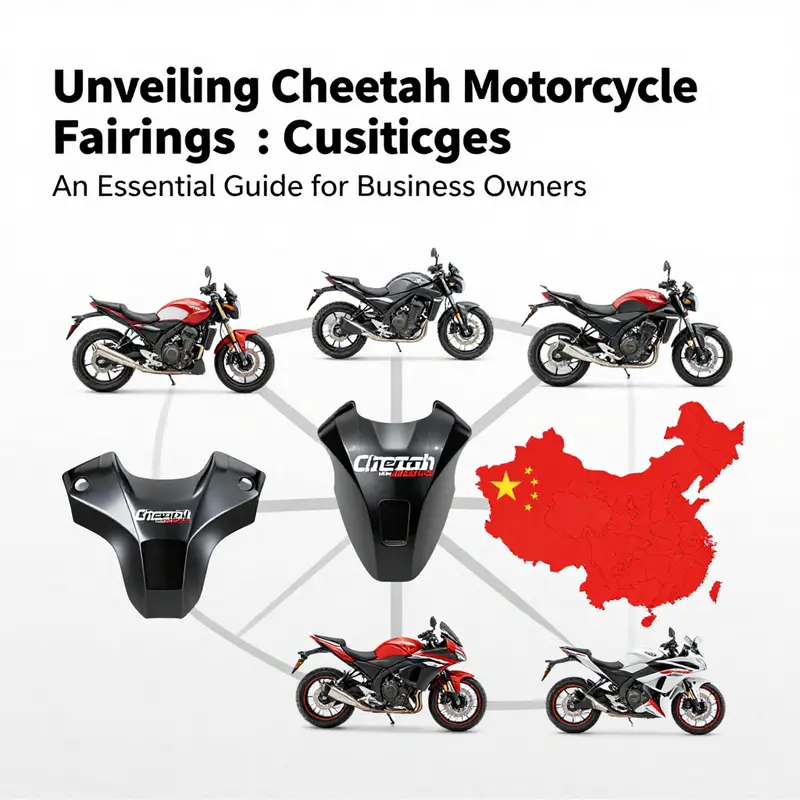
The fairing is more than a shell of molded plastic riding on the frame of a motorcycle; it is a statement about identity, weight, aerodynamics, and the way a rider negotiates the boundary between speed and control. When readers encounter a brand like Cheetah, a Chinese manufacturer that operates primarily on wholesale channels, the first question is rarely about the color of the paint or the curve of the LED headlight. It is about the provenance of the part that makes the bike look and feel the way it does. In the broader world of motorcycle fairings, the Chinese manufacturing ecosystem—especially in hubs like Guangdong, Zhejiang, and Fujian—has built a robust, scalable platform capable of meeting a spectrum of demands. Yet the publicly available data about Cheetah’s own fairings remains elusive in the sense of rigid, published technical parameters, material spec sheets, and performance tests. This absence is not unusual in a market that treats fairings as a component in a broader wholesale pipeline: the component is often sourced from third-party suppliers rather than produced in-house with a single, visible brand identity. The consequence is a landscape where a rider who wants a Cheetah‑style aesthetic or a fairing that fits a similar chassis must navigate a network of possibilities, with an eye not just for appearance, but for fit, material behavior, and lifecycle under real-world riding conditions.
What emerges from the industry’s texture is a layered reality. On one level, you have standard, off-the-shelf fairings—these are the bulk of the market and are designed to be compatible with multiple models through shared geometry. On another level, you find replacement and retrofit fairings that target specific bikes and model years. In practice, many manufacturers in the supply cluster produce parts that can be adapted to different brands through small adjustments in mounting points, inner bracing, or clip styles. In the distance, there are rarer cases where a booster of carbon fiber or composite materials is used to push performance and weight reduction beyond conventional ABS or polycarbonate offerings. The Chinese supply chain has developed the capacity to deliver across that spectrum, from low-cost, high-volume ABS or PC parts to carbon fiber-reinforced composites that demand precise layups and resin systems.
In such a framework, what can a buyer or a brand like Cheetah reasonably claim about its fairings? The most responsible reading, grounded in market realities and the absence of published, brand‑specific technical data, is to view these fairings as vehicle‑level accessories that align with the broader goals of cost efficiency and global reach. The available evidence suggests two common scenarios. First, the fairing set may come from third‑party suppliers who supply standardized, generic, or model‑specific components. These components are designed to meet basic exterior protection, aesthetics, and aerodynamics while staying within typical tolerance bands for fitment. Materials for these parts often begin with ABS or polycarbonate, chosen for impact resistance, processability, and cost. They can be finished with painting and clear coats compatible with common automotive-grade processes. Second, some fairings function as replacement parts for existing models, tailored to the exterior geometry of a specific bike but not marketed as high-end performance components. In both cases, the emphasis tends to be on value and compatibility rather than on race-grade performance testing data or bespoke design features.
This is not a verdict against quality; rather, it is a recognition of how a wholesale, globally oriented supply system operates. The Guangdong and Zhejiang regions, in particular, assemble a dense ecosystem of mold tooling, extrusion, thermoforming, vacuum forming, and even preparated composite capabilities. They can deliver parts that range from economical ABS shells with simple finish to more complex PC/ABS blends and lightweight, fiber-reinforced panels. For a buyer seeking a Cheetah‑style look, the path is less about finding a single “official” fairing alone and more about identifying a reliable partner that can supply consistent geometry, surface finish, and dimensional stability across batches. A critical question to pose early in conversations is whether the supplier can provide a material specification sheet that clarifies the base resin system, colorant and UV stabilizers, wall thickness distribution, and surface treatment. A second essential inquiry concerns fitment data: mounting hole locations, panel alignment with the headstock and tank, and compatibility with the bike’s subframe. These are not esoteric details; they are the practical markers that determine whether a fairing will function as intended on the road or on the showroom floor.
The absence of public, authoritative data on Cheetah’s own fairings should not be mistaken for silence about the broader market. In fact, the market’s transparency is often better in the wholesale corridor than in individual brand channels. Buyers who understand this dynamic typically move with a twofold strategy. First, they map the supply chain to identify factories or subcontractors that produce the actual shells rather than relying solely on a brand’s marketing materials. This mapping includes probing for capabilities such as carbon fiber prepregs or fiberglass composites, if the rider intends to pursue lighter weight or specific stiffness characteristics. It also includes assessing whether the factory can provide standardized finishes or if it can offer customization options that align with a desired look and branding without sacrificing integrity. Second, they insist on rigorous due diligence—requesting factory audits, sample panels, and ideally third‑party testing results that verify surface hardness, impact resistance, and color stability after accelerated aging. In China’s clustered environment, where supply chains are deeply interconnected, it is not unusual for a single fairing component to involve multiple suppliers: one for the base shell, another for the inner bracing, and a third for coatings, decals, and adhesives. This reality highlights why evaluating a supplier goes beyond product visuals and pricing; it requires an assessment of process controls, traceability, and communication reliability—traits that determine, in practice, whether a fairing set will meet performance expectations in the field.
For riders who want more than a visual replica, the issue becomes how to distinguish a “Cheetah‑style” aesthetic from a generic, off‑the‑shelf look. The Chinese market’s breadth provides a choice of textures and finishes that can emulate carbon fiber or expose a more straightforward plastic feel, depending on the customer’s appetite for cost or authenticity. Carbon fiber components, while premium in weight reduction and stiffness, demand a careful appraisal of resin systems, void content, and environmental resistance. In contrast, glass fiber composites or high‑grade ABS/PC blends offer predictable performance and easier repairability. The decision inference—whether to prioritize flexibility in customization, batch-size feasibility, or long‑term durability—drives how a buyer negotiates with suppliers and how they structure orders. What remains constant across all options is the need for reliable manufacturing processes and consistent quality controls. A fairing that deforms under sun exposure, or that delaminates after a few rides, undermines any brand’s credibility, regardless of price or aesthetic appeal.
Given this landscape, the practical approach for someone pursuing Cheetah‑style fairings—or any fairing that seeks to mimic that bold, purposeful silhouette—is to treat the sourcing journey as design and engineering work embedded in supply chain relationships. The first step is to articulate clear specifications: the intended use (street, track, or hybrid), weight targets, desired stiffness, and the degree of finish required. Then, establish a short list of potential suppliers with demonstrated capabilities in the chosen material system. In this process, it helps to look for factories that offer end‑to‑end support: CAD data or 3D scan data for fitment, material certificates, and a track record of exporting to other international customers. The alignment of lead times with production calendars and with export documentation is another critical axis. Buyers should also evaluate the supplier’s willingness to collaborate on prototyping, whether through rapid tooling or iterative samples. A strong partner will provide a staged path from sample panels to preproduction sets, with quantifiable success criteria at each stage. This staged approach reduces the risk that final production parts fail to match the bike’s geometry or the rider’s expectations.
Sourcing considerations must also address post‑sale realities. Practical questions include how parts will be finished, whether the supplier can accommodate custom paint schemes, and how easily the panels can be replaced if a fault is discovered. The need for consistent color matching across batches is a surprisingly common pain point in the field; it becomes particularly important when a brand or rider aims for a uniform, factory-like appearance across a fleet. A dependable supplier will provide color cards, paint system compatibility data, and a clear warranty framework that covers workmanship and fitment for a defined period. Beyond the technical and operational questions, there is a strategic dimension: working with suppliers that understand international logistics, export compliance, and documentation reduces friction in cross‑border transactions and speeds time‑to‑market for new designs inspired by a Cheetah‑like look.
For readers who want a practical bridge to specific suppliers and a sense of how to compare options, a curated route is to consult established product‑centric catalogs that focus on fairings, with an emphasis on fitments for common sport bikes. The catalogs often reflect a market’s reality: a wide range of panels designed to cover a broad spectrum of models, with varying degrees of precision in mounting points and surface finishes. When evaluating such catalogs, pay attention to the model coverage, the thickness distribution of the shells, and the packaging standards used to protect delicate edges during shipping. A well‑structured supplier will also publish or share test data that corroborates the claims of fit and finish, rather than relying on marketing imagery alone. This is a safeguard against misaligned expectations and the disappointment that can accompany an unfulfilled fit on arrival.
As a practical touchpoint for readers seeking more direct, model‑specific inspiration, consider exploring the broader ecosystem of model‑specific fairing parts from established retailers and manufacturers. While the aim here is not to promote any single brand, the underlying principle remains: a Cheetah‑style appearance can be achieved through disciplined supplier selection, careful material choice, and a validation sequence that respects both fit and durability. To provide a tangible anchor, you might examine how large distributors present their catalog entries, the way they describe mounting compatibility, and the level of technical detail offered in their product sheets. Those signals matter because they translate into a more predictable supply chain experience when a buyer commits to a particular design direction and begins the journey toward production.
For readers seeking a concrete starting point in this supplier landscape, a related resource offers a structured view of fairing suppliers and their cataloging approach, which can help in benchmarking material options and manufacturing standards. See the Honda fairings collection for an example of how a reputable catalog frames model coverage, compatibility notes, and finishing options, which you can use as a reference point when evaluating more cost‑sensitive providers. This kind of benchmarking is valuable when the goal is to achieve a cohesive look across a bike family without sacrificing reliability or serviceability. Honda fairings collection.
In the end, the journey toward a Cheetah‑style fairing is less about locating a single, definitive source and more about assembling a trusted supply chain that can deliver consistent geometry, material performance, and finishing quality. The Chinese motorcycle parts landscape supports that ambition, equipped with a breadth of manufacturing capabilities and a culture of collaboration that accelerates iteration while maintaining cost discipline. The prudent buyer will approach the process with clear specifications, a staged prototyping path, and a willingness to engage multiple suppliers in parallel to compare lead times, tolerances, and post‑production support. The result is not merely a panel on a bike; it is a carefully engineered environment in which form meets function, where appearance speaks to the rider’s ethos, and where reliability underpins every mile traveled. For those who want to extend this framework, delving into broader supplier evaluation literature can sharpen judgment and reduce the guesswork that often accompanies international sourcing. A comprehensive framework for evaluating top B2B manufacturers, for example, can provide structured criteria for capabilities, certifications, and reliability, helping buyers separate credible partners from those whose promises outpace performance. External resources can complement hands-on testing and factory visits, offering a broader context for decision making in a market where the fairing is both art and engineering.
In sum, the fairings that wear the Cheetah silhouette are products of a complex, capable ecosystem. They reflect a market that balances scale with customization, cost with quality, and speed with precision. As readers explore suppliers and compare options, the guiding light should be the balance of fit, finish, and function. When a supplier can demonstrate consistent panel geometry, proven material behavior, and dependable post‑production support, the path from concept to road‑ready fairing becomes tangible. That is the practical promise behind the widely referenced but less publicized truth of China’s motorcycle fairing supply chain: the right partner, aligned with clear specifications, can turn a bold design aspiration into a durable, road‑tested component that stands up to the realities of street and track alike.
Cheetah-Inspired Fairings in a Global Market: Trends, Materials, and Development Opportunities for Lightweight, Affordable Motorcycle Panels
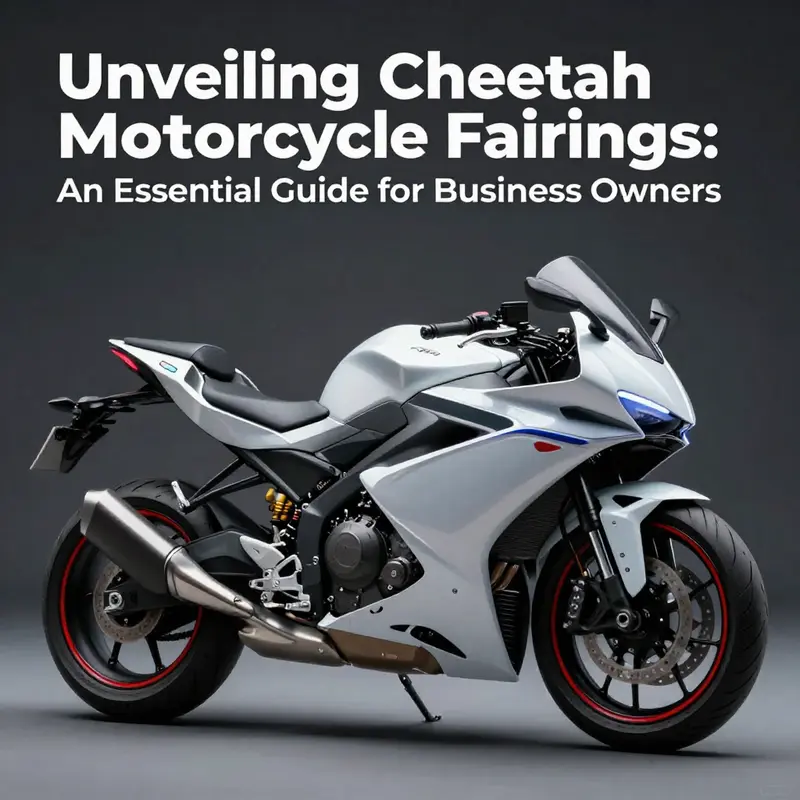
Across the spectrum of motorcycle design, the term fairing often sits at the intersection of form, function, and price. In markets where wholesale manufacturing and standardization prevail, the fairing is less about a single iconic product and more about a scalable envelope that can shield, streamline, and visually communicate the rider’s intention. When the cheetah image is invoked in this context, it functions as a symbolic cue rather than a brand tagline—a reminder that the ultimate goal is to harmonize speed with durability, cost consciousness with aerodynamic efficiency, and mass production with individual usability. The current landscape for cheetah-inspired fairings, if we are to call it that, rests on a tacit understanding: there is limited public data on an in-house, bespoke “original equipment” line from specific manufacturers. The reality, as industry observers often note, is that many such parts are sourced through third-party suppliers and adapted to fit a range of models through standardized tooling and widely available plastics. This arrangement—ubiquitous in high-volume production clusters—helps explain why the eye-catching exterior of a motorcycle can be both affordable and robust at the same time, even when the exact composition of the panels remains a matter of cross-reference rather than canonical specification.
The fabric of the market for fairings in 2026 is deeply influenced by three converging factors: material science, aerodynamics, and the evolving needs of a global wholesale ecosystem. Materials scientists continue to push toward blends and composites that deliver a balance of stiffness, impact resistance, and heat tolerance, all while keeping costs in check. Polycarbonate remains a cornerstone for its light weight and clarity of finish, while engineering-grade ABS plastic offers ruggedness and ease of molding for mass production. Fiberglass, glass-reinforced polyester, and even carbon-fiber-reinforced polymer variants find niches where weight savings or higher rigidity are demanded, but each option comes with its own manufacturing footprint and price pressure. For parts intended for broad distribution, these choices are rarely an aesthetic luxury; they are the hinge on which the consumer’s perception of value rests.
Design-wise, fairings are more than shells. They define the rider’s experience through a combination of curvature, surface texture, and the way air interacts with the bike at speed. In practice, this means a continuous dialogue between aerodynamic theory and real-world durability testing. Moderate thicknesses, laser-cut stiffeners, and carefully engineered radii help to avoid crack propagation under impact or during temperature cycling. The goal is a panel system that remains visually consistent across decades of use, even as models and powertrains evolve. The cheetah metaphor—speed, agility, and responsiveness—translates into a design vocabulary that seeks to reduce parasitic drag without compromising the panel’s protective role or its ability to be repaired or replaced by standard aftermarket components when needed. In many wholesale contexts, this translates to a modular approach: a core fairing core that can be attached to a family of frames with minimal adaptation, allowing dealers and distributors to stock a smaller range of parts while offering broad fitment.
From a manufacturing perspective, the regional ecosystem matters as much as the material choice. Chinese production clusters, particularly those centered in the Pearl River Delta and the Zhejiang coastline, have long proven their capacity to blend high-volume tooling with consistent quality. The logic of the market supports a tiered supply strategy: entry-level panels produced from ABS or PC/ABS blends for economical builds, mid-range options using reinforced materials for improved impact resistance, and high-end lines where fiberglass or composite laminates justify premium pricing for weight savings and stiffness. In this framework, the panels commonly used on mainline, wholesale-oriented motorcycles are more likely to be standardized components rather than bespoke, performance-first race parts. This distinction matters for buyers who seek predictability of fitment, straightforward replacement, and predictable long-term availability—especially when purchasing in bulk for global distribution.
Yet even within the realm of standardization, there is room for strategic differentiation. A fairing’s silhouette can become a brand language, even when the material and the hardware share common roots with those of other manufacturers. Consider how a single family of panels can be tuned with different surface textures, paint-ready finishes, or integrated mounting hardware to create a perception of variety without multiplying production complexity. In practice, this means a company can offer a set of base shapes that appeal to a broad audience, while enabling small adjustments in curvature, gap tolerances, and reinforcement patterns to accommodate a range of models. The potential benefit is clear: distributors can meet diverse customer requirements without needing to maintain dozens of entirely unique tooling sets. For end users, this translates into faster repair cycles, easier color customization, and greater confidence that replacement parts will be available when needed—a critical factor in wholesale business models that serve a worldwide customer base.
A key lever in shaping the future of fairings lies in material innovation. Lightweight, high-strength polymers and advanced composites are not new, but their adoption is accelerating because of how they intersect with sustainability, safety, and performance norms. Polycarbonate, with its excellent impact resistance and clarity, continues to attract developers who want to preserve the rider’s field of vision and protect the instrument cluster from debris. ABS remains an economical option, especially where tooling costs and production speed are paramount. Blends such as PC/ABS fuse the best properties of both materials, delivering improved mechanical performance while remaining mass-producible. In higher-performance applications, glass-fiber-reinforced composites offer a meaningful reduction in weight and a measurable boost in stiffness. The trade-off is cost and manufacturing complexity, which means these materials are often reserved for premium or limited-edition lines or for vehicles that demand extended endurance in demanding environments. For the broader wholesale market, the challenge is to identify blends that offer practical improvements in impact resistance, UV stability, and surface durability without inflating the unit cost beyond what dealers can justify to buyers seeking affordability.
Aerodynamics also occupies a central role in the fairing’s evolution. While a raw reduction in drag is desirable at high speeds, the practical requirement in wholesale markets is more nuanced: fairings must be efficient across a range of speeds, road conditions, and rider postures, while still being robust enough to survive everyday handling and occasional drops. Advanced CFD analyses and wind-tunnel testing continue to inform how subtle changes in leading-edge curvature, chin geometry, and underpanel channels affect the overall aerodynamic behavior. What emerges from this convergence is not a single perfect shape but a toolbox of design choices that can be mixed and matched to achieve a target coefficient of drag across a family of motorcycles. In a market where speed and economy coexist, the most successful fairings will offer predictable aerodynamics across the mid-range speeds that define typical commuting and touring scenarios, rather than chasing the extreme performance metrics of racing panels.
The modern consumer and the modern supply chain push toward modularity and interoperability. A modular fairing system can fit multiple models with a minimal number of adapters, reducing inventory complexity for distributors and increasing availability for repair shops and aftermarket retailers. Digital tools—from parametric design files to 3D scanning for model-specific fitment—are reshaping how panels are specified, ordered, and delivered. This is not a purely technical shift; it has economic and strategic implications. When a distributor can introduce a new panel in days rather than weeks, the marketplace responds with faster adaptation to consumer preferences, whether that means a fresh colorway, a revised silhouette to mimic a trending style, or a quick swap for a new engine configuration. In turn, such agility supports the wholesale model’s core value proposition: high-volume supply paired with reasonable customization that keeps parts accessible and affordable.
An element of the conversation that deserves emphasis is the ongoing influence of established reference frameworks in design and fitment. Designers and buyers alike often study reference platforms to understand common mounting points, compatibility ranges, and the expectations of service networks. In this context, it is useful to consider how widely available references influence decision-making. For instance, the Honda fairings collection, a well-known benchmark for fit and finish, provides a model of how standardized shapes can support broad compatibility while offering room for model-specific tweaks. The tangible takeaway for a brand operating in a wholesale market is that reference points anchored in widely available, proven designs can reduce risk while enabling efficient adaptation—a critical balance in a sector that prizes both reliability and speed to market. To explore similar references, readers may examine the broader catalog of common fairing geometries and their fitment considerations, such as those available through established distributors of generic panels. Honda fairings collection is one such anchor point in the online landscape, illustrating how a robust, modular approach can coexist with model-specific detail.
Looking ahead, the cheetah-inspired fairing strategy will likely incorporate features that address contemporary rider demands for customization and sustainability. Lightweight panels that resist cracking and deformation will be paired with finishes designed to withstand UV exposure and road grime, maintaining gloss and color integrity over longer service lives. Finishes may carry subtle texturing to reduce glare and to improve grip during installation and removal, while preserving an aesthetically clean surface that can be easily painted or wrapped to suit regional tastes. The environmental footprint of production will increasingly dictate material choices, with manufacturers seeking recyclable or reusable components and reduced waste through optimized tool life and smarter production planning. In practice, this means a future in which a single tooling line can produce a range of fairings for multiple models, with minimal retooling and rapid changeovers—one more reason wholesalers will favor who can promise steady supply, predictable quality, and cost stability even as input costs fluctuate.
The chapter’s arc, then, unfolds as a narrative of convergence: speed-influenced shape, durable yet affordable materials, modular design that supports a global distribution network, and a strategic use of reference platforms to guide fitment and customization. As global demand for affordable, lightweight, and reliable fairings grows, the opportunity for development lies less in inventing completely new materials and more in refining the orchestration of existing resources. A future-ready fairing program will blend optimized material selections with aerodynamic efficiency, while embedding modularity and digital workflow capabilities that shorten time-to-market and streamline aftersales support. In this sense, the cheetah metaphor becomes a practical blueprint: a body designed to cut through air, yet built with modular, repair-friendly components that sustain performance and value over time. The end result is not merely a panel that covers a bike but a robust, adaptable system that can travel the world with the same efficiency, resilience, and grace that the cheetah embodies in nature.
For readers seeking broader context on supplier landscapes and the practical realities of sourcing and evaluating fairing components, a comprehensive resource can be found in the Motorcycle Fairing Supplier Guide. This external perspective complements the wholesale-focused discussion by offering additional frameworks for assessing materials, manufacturing standards, and supplier capabilities. As the market continues to evolve, blending material science insights with real-world fitment data will remain essential for turning the cheetah-inspired vision into a tangible, scalable product line that serves riders worldwide.
Final thoughts
In summary, Cheetah Motorcycle Fairings present an attractive option for business owners looking to source reliable motorcycle components. With their cost-effective offerings, a diverse range of materials, and a clear market positioning strategy, they are well-placed within the competitive landscape. By understanding the supplier insights and keeping an eye on future trends, businesses can make informed decisions that leverage Cheetah’s strengths. Engaging directly with manufacturers or specialized suppliers can provide further customization and quality assurance for specific business needs.