
Dolphin motorcycle fairings represent a pivotal innovation in the realm of motorcycle customization, merging aesthetic appeal with aerodynamic excellence. To business owners in the industry, understanding the origin, development, and impact of these fairings can reveal lucrative opportunities for differentiation and market engagement. In the first chapter, we will delve into the fascinating history and evolution of the Dolphin fairing, tracing its roots back to 1948 and exploring its journey to contemporary design. The second chapter will outline the significant aerodynamics and performance benefits these fairings provide, giving insights into how improved airflow enhances rider experience. Finally, we will examine the cultural influence surrounding Dolphin fairings, particularly within the cafe racer community, unveiling the passion and commitment of enthusiasts who cherish this iconic design. Together, these chapters will provide a comprehensive view of Dolphin motorcycle fairings and their importance in the motorcycle customization market.
From Snout to Skyline: The Origin and Evolution of the Dolphin Motorcycle Fairing
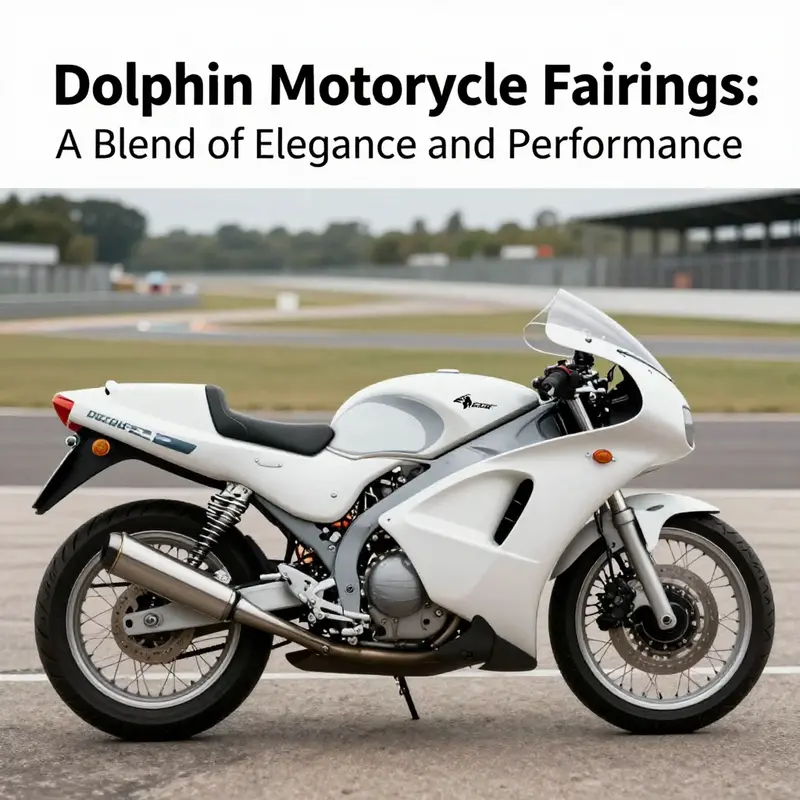
The dolphin motorcycle fairing rises from a history etched into the wind, a design that began as a practical answer to the craft of moving air around a fast machine and grew into a cultural symbol that still speaks to riders who value both speed and style. Its lineage traces back to a late 1940s moment when aerodynamics was less a field of study and more a cautious experiment in keeping a rider off a bike’s shoulder and in sync with the air rushing toward the fairing. The result is a silhouette that looks, in profile, as if a dolphin had momentarily aligned with a road racer, a beak-like snout curving upward to part the wind. This image, simple and striking, carried with it a promise: better airflow, steadier handling, and a look that could tell a story of speed before the engine ever roared into life. The dolphin form, sometimes whispered about as a pighead fairing in casual talk, has always carried a hint of the audacious, the way a rider might embrace the wind as a partner in motion rather than a force to be endured.
The origin rests with a key moment in design thinking, when ingenuity fused with necessity. In 1948, a design concept aimed at streamlining airflow around the motorcycle’s body took shape in a way that would leave a lasting impression on how frames and fairings could speak to performance. The front mudguard and windshield were not merely protective features; they were sculptural elements, shaping a profile that would become instantly recognizable in the hot days of the café racer era and in the careful restorations of vintage-inspired builds. The dolphin fairing’s defining feature—the way the snout curls forward and the windshield rises in a smooth, continuous line—was never just about aesthetics. It was a response to the physics of wind and the human craving for a clean saddle of air where the rider’s posture and the bike’s velocity could align in a single, elegant equation. As the design acquired its nickname, the dolphin’s likeness became more than a visual cue. It became a mnemonic for lightness, precision, and speed, all rendered in fiberglass and resin, then refined by the ongoing dialogue between rider, road, and wind.
In the decades that followed, the 1950s and 1960s gave the dolphin fairing its hardest test and its most visible stage. The café racer scene—an ethos of minimalism, speed, and personal engineering—embraced the dolphin as a signature touch. Riders and builders liked the sense of forward aggression it conveyed, the way the fairing’s lines seemed to snatch a little more momentum from the air as the bike leaned into a corner. The fairing became a canvas for expression, a way to reduce drag without sacrificing soul. The nickname pighead arose in certain circles as a rough but affectionate shorthand for the upfront, beaklike contour that dominated the front end of so many race-inspired machines. This era did not merely popularize a shape; it crystallized a design language that would echo across generations: form following function in a way that also told a maker’s story about how they approached speed and reliability.
Design professionals and hobbyists alike learned early that a fairing is more than skin. It is a carefully engineered interface between rider and road, a piece of the bike that must manage not only lift and drag but also the rider’s body position, line of sight, and comfort over miles of tarmac. The dolphin form embodies a practical elegance: a projection that cuts through air while guiding it along a path that reduces turbulence in the rider’s upper torso and shoulders. In the earliest builds, the materials were often simple and accessible, with fiber and resin doing most of the heavy lifting. Builders tested the fairing’s angles, the height of the windshield, and the curve of the nose against the rider’s stance, chasing a balance between wind protection and visibility. Over time, the manufacture of these pieces evolved. The craft moved from handmade pieces shaped in garages or small workshops to more standardized production runs that could be adapted to different frame sizes and engine configurations. The shape itself did not change so much as its methods; the dolphin’s geometry remained, but its manufacturing techniques grew more sophisticated, enabling tighter tolerances, lighter structures, and finishes that were capable of withstanding the strains of race discipline.
The 1960s legacy is inseparable from the café racer’s cultural footprint. The dolphin’s silhouette became a hallmark of the attempting-to-slay-the-wind with style, a symbol that performance could be apparel as well as function. In that decade, riders did not simply install a fairing; they curated a statement. The lines of the dolphin—its forward-thrust snout and the rising windscreen—also communicated a rider’s willingness to push beyond the given limits of street riding into controlled, high-speed edge work. The aesthetics were not an escape from the bike’s inherent power; they were a method to harness and reveal it. The color and finish of the fairing sometimes spoke to the era’s mood, with glossy buffs and color contrasts that highlighted the fairing’s curvature and the rider’s stance. This gradual blending of engineering and artistry ensured that the dolphin shape would survive the test of fashion and function, retaining relevance as new materials and new kinds of racing emerged.
Today the dolphin fairing persists as a reminder of heritage, even as the broader market has shifted toward full, integrated fairings designed around advanced aerodynamics and modular assembly. Modern performance motorcycles commonly rely on molded composites and precise computational airflow analyses to optimize top speed and stability. Yet the dolphin’s essence remains appealing for modern builders who pursue a retro aesthetic without surrendering a noticeable gain in airflow or rider protection. The design’s ability to sit comfortably on a cafe racer, a scrambler, or a sport bike—while still aligning with a rider’s upright posture or tucked silhouette—speaks to a versatility that is rare. It is not simply about nostalgia; it is about the ongoing conversation between a motorcycle’s body geometry and the environment it travels through. In contemporary builds, the dolphin form can be seen as a respectful homage that nods to the past while accommodating the present’s demands for reliability, serviceability, and performance. When a modern kit uses the dolphin’s profile, it is often less about chasing a single look and more about preserving an ethos: that a piece of plastic can be a partner in speed, not a barrier to it.
The craft of producing dolphin fairings has evolved in parallel with the broader fairing ecosystem. Advances in glass fiber layup, resin chemistry, and lightweight composites have allowed makers to realize the dolphin’s sharp, aerodynamic edge without imposing extra weight on the chassis. The fairness of air becomes a tangible factor in a bike’s handling characteristics at speed, and the dolphin form offers a degree of frontal efficiency that, even in today’s highly optimized flows, still matters. The fairing’s front end acts as a guided pathway for air, diverting it away and reducing the buffeting that can unsettle a rider’s upper body at high velocity. At mid and rear sections, the dolphin’s lines archive a continuous transition from nose to cockpit that minimizes seams and discontinuities, which in turn helps to stabilize pressure distribution along the bike’s profile. The result is a more confident ride, where the rider can lean into a turn with a sense that the air is tamed rather than battling against the upright posture.
Beyond the physics, the dolphin fairing wears a narrative of craft and care. Builders often speak of the fairing as a project that demands patience and precision, a tribute to the time when speed and style were earned through hands-on tinkering. The midcentury influence survives in the decision to keep the fairing light and streamlined, to preserve the rider’s sense of connection to the machine, and to celebrate the beauty of a well-chosen silhouette that feels like it belongs on the road rather than in a wind tunnel. In contemporary cycling culture, the dolphin continues to resonate because it offers a bridge between two kinds of expertise: the technical, measured approach to aerodynamics and the hands-on, almost artisanal practice of shaping a bike’s face. The dolphin is more than a form; it is a language that describes how air and rider come together, how speed can be pursued with restraint, and how the rider can look forward with a confident gaze that matches the machine’s forward mood.
Within the broader ecosystem of fairings, builders often explore fitment across brands and models, seeking configurations that honor the dolphin’s proportions while aligning with the geometry of a particular frame. For readers who want to explore a spectrum of fitment options and to see how this shape migrates across different bikes, a practical point of reference lies in the broader fairings marketplace. For example, the Honda fairings collection offers an illustrative range of shapes and sizes that reveal how a dolphin-inspired outline can adapt to various engine layouts and rider ergonomics. This kind of cross-brand exploration reflects the dolphin fairing’s adaptability: the same principles of aerodynamics and silhouette can be tuned to different chassis widths, rake angles, and seating positions, producing a family of fairings that share a common heritage while serving distinct performance goals. Honda fairings collection is one such pointer, inviting builders to study how a dolphin-inspired profile translates into real-world fitment across a familiar platform and beyond. The point is not to replicate a single look but to understand how the same design DNA can be adapted, refined, and balanced with fuel storage, rider comfort, and the bike’s intended use.
The current relevance of the dolphin fairing, then, lies in its capacity to carry heritage forward while remaining compatible with the modern rider’s demands. It is prized not merely for its retro charm but for its practical values: a disciplined approach to reducing interference with airflow, a measured method of shielding the rider from wind fatigue, and a design vocabulary that can harmonize with a bike’s mechanical and aesthetic attributes. The dolphin’s aesthetic remains a powerful shorthand for speed and grace, a reminder that the fusion of form and function can be achieved without sacrificing identity. The rider who chooses a dolphin-inspired form is choosing a design that respects the wind’s agency and acknowledges the craft of shaping metal and composite into something that looks effortless and behaves predictably when the throttle opens wide. In a culture where customization is as much about storytelling as it is about performance, the dolphin fairing serves as a compact narrative: a history lesson rendered in a single, elegant contour that invites the rider to partner with air rather than to fight it.
For readers seeking a deeper understanding of the broader historical arc around fairings, the Dolphin’s story sits alongside other lineage streams that shaped modern motorcycle aerodynamics. It demonstrates how an apparently small design choice can influence the feel of a bike at speed, how a silhouette can outlive fashion, and how a maker’s skillful execution of a simple line can become a lasting contribution to a machine’s character. The dolphin fairing’s evolution shows that speed is not an accident of power alone but a discipline of geometry, material science, and human imagination working together across decades. In this sense, the dolphin becomes a bridge—between the postwar enthusiasm for mechanical innovation and the contemporary appetite for thoughtfully engineered retro aesthetics that honor the past while still serving riders who demand performance, reliability, and a story they can wear on their bike as they ride.
External reading and further exploration can offer a window into the broader context of fairing types and their historical development. For a broader look at fairing types and history, see this external resource: https://www.motorcycleindustry.org/motorcycle-fairings-and-types-of-bike-fairings
Beneath the Wake: Aerodynamics, Performance, and the Rider’s Experience Through Dolphin-Style Fairings
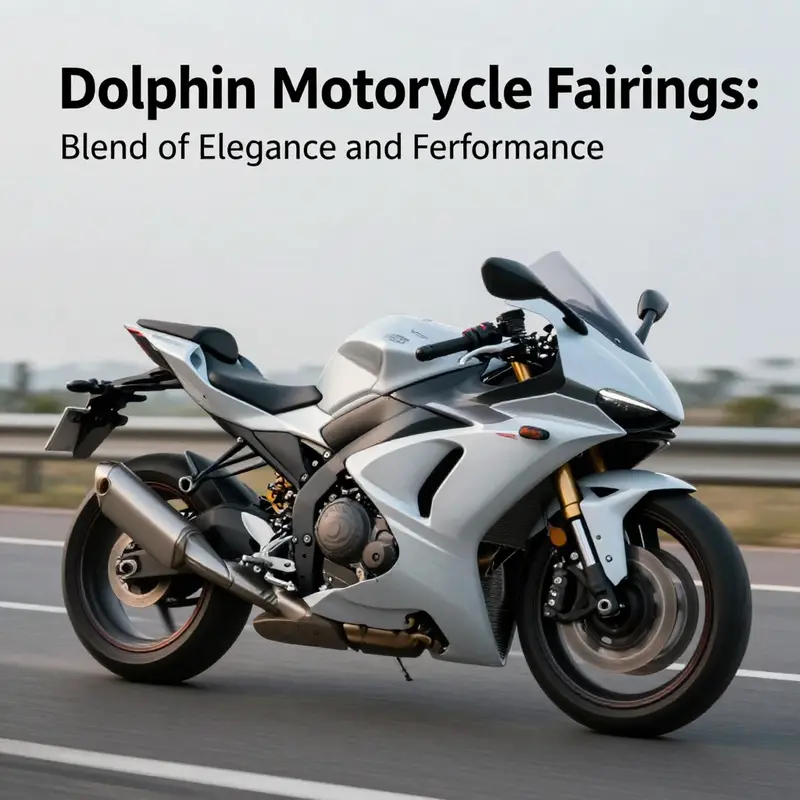
Dolphin-style motorcycle fairings, conceived as a streamlined response to the demands of speed, stability, and rider comfort, invite a closer look at how form can guide flow. They are not simply cosmetic appendages, but carefully sculpted bodies that meet the physics of air as it rushing past a machine at speed. The dolphin-inspired contour—so named for its curving, forward-pinning snout-like profile—points to a design philosophy that treats air as an ally rather than a hostile element. The chapter that follows considers how this shape translates into measurable gains in aerodynamics and ride quality, while acknowledging the practical realities of fit, material choices, and the broader culture of motorcycle customization. Although there is a long-standing conversation around fairings in racing and cafe racer communities, the dolphin-inspired approach remains a compelling case study in how a single silhouette can influence drag, stability, and the rider’s sense of propulsion.\n\nTo understand the potential of such fairings, one must first appreciate the basics of air moving around a motorcycle. When a bike slices into the wind, the air must navigate the silhouette, accelerate around curves, and rejoin itself downstream. Any disruption creates turbulence, a source of drag and energy loss. A well-designed fairing acts as a hydrodynamic shield, smoothing the path of the air so that it remains attached to the surface longer and exits with minimal wake. In this sense, the dolphin-inspired form is less about exotic aesthetics and more about a practical arrangement of curves, radii, and recesses that guide the boundary layer—where the air kisses the bike—into a stable, predictable flow. The result is a lower drag coefficient, which ideally translates into higher potential top speeds and more efficient cruising at highway conditions. But the benefits do not end at reducing resistance. A streamlined silhouette also shapes the pressure field around the rider, helping to keep the front wheel planted and the bike tracking true through gusts and lane changes. The relationship between rider and machine becomes more intimate, because less wind pressure on the torso, arms, and shoulders means a more controlled, less fatigued ride over long distances. These aspects—drag reduction, high-speed stability, and rider comfort—form the core of why a dolphin-inspired fairing design remains relevant in modern performance riding.\n\nThe aerodynamic story behind dolphin-style fairings begins with a careful balance between minimizing drag and maintaining adequate cooling and engine access. A fairing cannot be so aggressive in shaping air that it starves the engine of cooling air, nor can it so aggressively streamline the surface that it complicates maintenance or impedes rider visibility and control. In practice, engineers and builders pursue a configuration that smooths the flow while preserving essential avenues for ventilation, radiators or oil coolers, and access to critical components. The dolphin contour tends to emphasize a forward-leaning intake area and a continuous, flowing vent path along the sides that encourages laminar or lightly turbulent flow rather than broad separation. These features help maintain a favorable pressure gradient from the front to the middle of the bike, reducing the tendency of the flow to detach behind the headstock or beneath the fairing’s lower lip. When flow remains attached, the fairing can do a better job of guiding air smoothly around the rider’s body and along the machine’s engines and radiators, which is particularly important for sustained high-speed operation and for keeping wing-like lift forces in check at the front end.\n\nA central concept here is lift and drag. Drag arises from the friction and pressure differences the air experiences as it travels along the bike’s surface. Lift, which is more often discussed in the context of wings, also matters for motorcycles because pressure differentials can affect the contact patch and the bike’s stance on the road at speed. A dolphin-style fairing seeks to moderate both phenomena. By shaping the nose and the side profiles to minimize abrupt changes in direction, the design reduces flow separation. Separation creates voids in the airflow where air swirls back toward the bike, generating both drag and erratic pressure fluctuations that can unsettle the bike at the limit of grip. In a well-tuned dolphin-inspired shell, the flow remains attached longer, the wake behind the machine is narrower, and pressure recovers more gradually as the air lifts off the tail. While these outcomes depend on precise geometry and the scale at which the bike is tested, the principle remains consistent: a smoother, more cohesive flow yields less resistance and a calmer pressure environment around the rider.\n\nThe rider’s experience is often the most tangible measure of improvement. A fairing that minimizes wind blast can dramatically lessen shoulder and neck strain during long rides or high-speed stretches. This isn’t simply about keeping the rider comfortable; it’s about sustaining the rider’s ability to focus on line choice, throttle modulation, and feedback from the front tire. Wind blast translates into muscular fatigue, reduced reaction time, and, over many miles, a need to shift position just to regain comfort. A dolphin-style fairing, by providing a more consistent airflow envelope, minimizes those peaks of wind pressure and reduces the need for the rider to hunch or tense up to shield the upper body. In many ways, the fairing acts as a mediator between rider and machine, translating raw speed into a more controlled, less fatiguing experience. The comfort gains are not merely about luxury; they are performance advantages that allow a rider to sustain precision through more laps, more turns, and more hours in the saddle.\n\nProtection to critical components is another layer of value that dolphin-inspired fairings can offer without sacrificing performance. A well-fitted shell acts like a shield against road debris, stones, and spray that would otherwise find their way to the engine, radiator, and electrical components. While fairings do not replace a robust chassis or careful maintenance, they do reduce the cumulative exposure of sensitive parts to environmental hazards. This protective function contributes to lower maintenance costs and less downtime, which matters in racing contexts, where every pit-stop can affect an entire race’s outcome. At the same time, the fairing’s outer surface must avoid creating unnecessary weight or compromising serviceability. The balance here is delicate: the most protective shell will still be a nuisance if it is too heavy or too difficult to access. Dolphin-inspired designs attempt to thread this needle by integrating panels that can be removed with reasonable effort, and by using materials that offer stiffness and impact resistance without adding unnecessary mass. The result is a philosophy of protective aerodynamics that acknowledges the bike’s exposure to the elements while respecting the practical realities of track and street life.\n\nEngine cooling remains a critical constraint in any fairing design. It might seem counterintuitive that a more streamlined body could facilitate smarter cooling, but this is precisely where the dolphin silhouette earns its keep. Modern fairings often incorporate strategically placed air intakes and vent channels that feed cooling air to radiators and engine bays without creating drag penalties. The sheltered, flowing channels associated with the dolphin-inspired form help maintain calm air movement around the engine bay while drawing in air from the front. The trick is to couple the aero shaping with intelligent ductwork and exit paths that preserve cooling efficiency at various speeds and ambient temperatures. This integrated approach—where aerodynamic smoothness and thermal management converge—helps prevent overheating during aggressive riding while avoiding the temptation to over-simplify the fairing for the sake of air alone. In practice, the best dolphin-style shells are those that treat cooling as a design variable, not an afterthought, ensuring that the bike remains reliable regardless of whether it is on a windy highway or a closed race course.\n\nIntertwined with engineering considerations is the question of materials and manufacturing. A dolphin-inspired fairing is not a single piece of adornment; it is a system of panels, reinforcements, and attachments that must endure vibration, impact, and weathering. The materials chosen influence weight, durability, and finish quality, all of which feed back into aerodynamic performance. Lighter composites can improve acceleration and handling, but they must still resist heat-induced expansion and UV degradation. The smoothness of the surface has to be preserved across the life of the fairing, because micro-scratches, warping, or a rough surface disrupt the intended airflow and can erode performance gains. Moreover, the mounting points between the fairing and the frame must be precise. Any misalignment creates gaps that disturb the flow, defeat the smooth contour, and reintroduce the very drag the fairing seeks to minimize. In this sense, the dolphin-inspired approach is a union of form and function: the curve does not exist in isolation but as part of a broader system that includes mounting strategies, surface finish, and long-term durability. When executed with care, the resulting assembly supports the visual charm of retro influence while delivering measurable aerodynamic and ergonomic benefits that are relevant whether the rider is chasing a personal best on a mountain road or seeking steadier stability on a long, fast highway stretch.\n\nThat practical grounding does not erase the heritage that informs these designs. The fairing’s lineage can be traced to racing and cafe racer culture, where the aesthetics of speed and the romance of classic engineering converge with contemporary demands for efficiency. A dolphin-inspired shape nods to a moment in motorcycle design when riders sought to merge the elegance of an old-school silhouette with the performance discipline of modern engineering. The retro appeal lies not simply in a nostalgic look but in a disciplined attempt to optimize airflow in a package that still feels familiar to old-school riders. This blend of nostalgia and performance has contributed to the popularity of such fairings among vintage enthusiasts who appreciate the revival of classic lines with modern engineering practices. It is a reminder that beauty and function do not have to be mutually exclusive; rather, they can be mutually reinforcing when the design process is grounded in aerodynamic insight, careful prototyping, and a respect for the rider’s experience.\n\nAs with any design choice in a performance context, there are caveats. Dolphin-style fairings are not magic bullets. Their effectiveness depends on the entire vehicle architecture: wheelbase, weight distribution, suspension geometry, tire selection, and the rider’s posture. A fairing can amplify the efficiency of a well-tuned chassis, but if the bike is imbalanced, or if rider posture is inconsistent, the aerodynamic gains may be offset by handling penalties in gusty wind conditions or during abrupt maneuvers. Equally important is the careful validation of the fairing’s fit across a range of model variants and rider sizes. A design that looks optimal in isolation may require adjustments in real-world usage to maintain both the intended airflow behavior and the practical ergonomics that shape rider control. The modern practice of wind tunnel testing and computational fluid dynamics has become a standard part of this process, offering precise feedback about how a given contour interacts with a bike’s geometry. Even when the goal is to achieve a sympathetic, retro-inspired line, the science remains central: continuity of flow, avoidance of flow separation, and consistent wake management are the ongoing benchmarks for any dolphin-inspired concept.\n\nThe broader takeaway for riders, builders, and collectors is that dolphin-style fairings symbolize a philosophy as much as an object. They embody the idea that aesthetics and performance are not opposing forces but complementary. When a design team commits to a dolphin-inspired shape, they are choosing a path that treats air as an integral element of riding performance, not a mere backdrop for a glossy finish. The resulting experience—quiet, steady, and precise—has tangible implications for speed, efficiency, and endurance. It invites riders to imagine a world where the surface of the bike communicates with the environment in a fluent dialogue, where the lines of the bodywork suggest both velocity and resilience. In that sense, the dolphin-inspired fairing becomes more than a shell; it is a partner in the rider’s pursuit of flow, balance, and confidence at speed.\n\nFor readers seeking concrete routes into this design space, a practical reference point can be found in modern fairing kits that emphasize adherence to a curated silhouette while preserving the capabilities described above. If you are curious about how contemporary fairings reconcile retro aesthetics with contemporary aerodynamics, consider exploring a real-world example of a modern fairing kit designed for a well-known speed-oriented platform: Kawasaki Ninja ZX-14R fairings (2012-2021). This collection demonstrates how a classic profile can be updated to meet today’s performance expectations without abandoning the visual language that makes dolphin-inspired forms appealing to enthusiasts.\n\nAs you widen the lens, it becomes clear that the promise of dolphin-style fairings rests not on a single claim but on an integrated set of outcomes. Lower drag, improved high-speed stability, reduced rider fatigue, enhanced protection for vital components, and smarter engine cooling are not independent benefits; they reinforce each other in a virtuous loop that elevates both performance and experience. The result is a design approach that respects the past while embracing the present, offering a path forward for riders who value both form and function. In the motorcycling tradition of turning wind into performance, the dolphin-inspired fairing stands as an elegant reminder that the silhouette of speed can be refined without sacrificing the soul of riding. It is a narrative that continues to unfold as materials advance, manufacturing techniques improve, and riders seek ever more nuanced interactions with the air around them. The next era may bring even more sophisticated contours and adaptive textures, but the core idea will endure: a fairing that behaves like a partner in motion, shaping air just as a dolphin carves through waves—the wake itself becoming a measure of control and confidence on the road or the track.\n\nExternal resource for further reading on the aerodynamics principle that underpins these discussions can be found here: https://en.wikipedia.org/wiki/Aerodynamics. This page offers a broad exploration of how air interacts with objects in motion, from basic drag concepts to more advanced boundary-layer behavior, which helps illuminate why a dolphin-inspired fairing can produce meaningful gains in performance and rider comfort when implemented with care and respect for the vehicle’s broader mechanical system.
Dolphin Dreams on the Road: Culture, Craft, and Community of Dolphin Fairing Designs
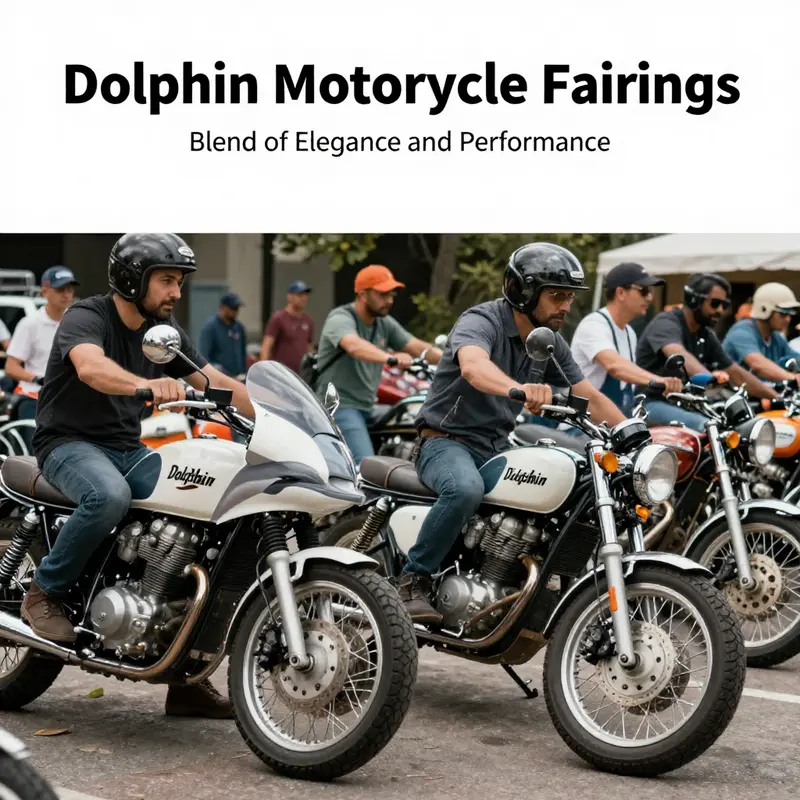
The dolphin fairing is more than a curved shell pinned to a motorcycle; it is a cultural artifact that captures the imagination of riders who want both speed and storytelling. Across the silhouettes of cafes and race paddocks, the dolphin profile—smooth, elongated, and expressive—has become a shared language. This chapter looks at how a design born from technical aims and a particular aesthetic has grown into a living culture. It traces how the shape moves through time, carrying with it the values of craftsmanship, memory, and collective identity. The fairing’s arc acts like a bridge between the romance of vintage engineering and the precision of contemporary performance tuning. In this way, the dolphin design becomes a canvas on which riders paint not only their machines but also their personal narratives.
To understand the cultural pull, it helps to begin with the origins. The dolphin silhouette owes much to the cafe racer and bobber movements of the 1950s and 1960s, when riders sought to strip bikes to essentials and to shape the machine as a personal expression. The fairing, when integrated into those early builds, served a dual purpose: to streamline air around the rider and to create a visual cue that signaled speed and rebellion. As decades passed, the shape did not fade; it adapted. Modern retro and neo-retro currents revived the aesthetics, aligning the dolphin profile with contemporary needs for improved aerodynamics and fuel efficiency, while preserving the memory of the era that first popularized the look.
What makes the dolphin fairing endure is its ability to be a social object as well as a technical device. Riders treat it as a form of wearable art—an extension of their personality that travels with the bike and is shared with the riding community. The contour resembles the dolphin’s snout, a symbol many attach to grace, agility, and the ocean’s open horizon. The form invites customization in bold color schemes, intricate pinstriping, and original graphics that reflect a rider’s mood, home region, or favorite design influences. In a culture that prizes individuality, the fairing becomes a dialect through which riders communicate without words: a way to say, “I belong to a lineage that values both heritage and invention.”
Online forums and image boards have amplified this sense of belonging. Platforms such as Pinterest, Reddit’s r/Motorcycles, and dedicated Cafe Racer forums have evolved into vibrant stages where owners present their builds, discuss the physics of airflow, exchange paint and finishing tips, and celebrate the long story of dolphin-inspired engineering. The shared images create a visual archive that newcomers can study, remix, and respond to with enthusiasm. When a rider posts a photo of a freshly mounted dolphin fairing, responses arrive not as mere kudos but as a chorus of curiosity: questions about fitment, suggestions about color harmonies, notes about wind protection, and stories about how similar shapes on older machines influenced this new build. In this ecosystem, the dolphin design becomes a social practice rather than a solitary pursuit.
Visual culture matters here as much as mechanical performance. The dolphin’s elegant line acts as a magnet for the eye; it invites comparison, critique, and collaboration. A painter might sketch a feasible color palette on a napkin and then translate it into a full-scale finish. A fabricator might sketch a patchwork mosaic that pays homage to a particular region or club tradition. The community’s vibrancy rests on a shared language of form and function that keeps evolving as new builders bring fresh ideas to old silhouettes. Even the way a fairing is mounted—whether it follows the original lines or is subtly sculpted to fit a nonconforming frame—becomes part of the conversation. The community treats the fairing not as a fixed product but as a moving project, endlessly reinterpreted by each rider who chooses to adopt or adapt the dolphin’s shape.
The cultural reach of the dolphin design extends beyond aesthetics into practical and symbolic layers. A dolphin-shaped fairing is credited by some riders with aerodynamic benefits that improve stability at speed, a point often supported by data and wind tunnel simulations. More importantly, the shape carries a promise of performance without sacrificing personality. In a world where a bike’s appearance can be as influential as its horsepower, the dolphin profile promises a balance: speed and efficiency on one side, artistry and identity on the other. Riders who align with this balance express a philosophy of riding that respects both science and storytelling. They want to feel the wind as a partner rather than an adversary, and the dolphin silhouette is a way to invite that partnership in.
A crucial aspect of the dolphin fairing’s cultural life is its role as a communal rite of passage. Veteran builders pass down knowledge through storytelling, manuals, and hands-on mentoring. They teach apprentices how to align the curves with the rider’s posture, how to select finishes that endure sun and gravel, and how to test fitment without compromising aesthetics. The process is almost ceremonial: there is a sketched plan, a series of fit checks, a test ride, and then a refinement that reflects feedback from the ride itself. In these exchanges, the fairing becomes a symbol of shared craft instead of a solitary purchase. The lesson is not merely how to mount a piece of plastic or composite; it is how to read a bike as a living organism that evolves in dialogue with its rider and with the road.
The social life of the dolphin fairing also intersects with broader shifts in motorcycle culture. The modern retro and neo-retro movements have created a space where classic lines meet contemporary technology. In shops and studios around the world, designers are blending vintage technique with modern composites, testing new finishes, and reimagining the dolphin line for electric and hybrid powertrains. This cross-pollination sustains a sense of dynamism, ensuring that the dolphin form remains relevant as bikes become more capable and more diverse in their propulsion systems. In this sense, the dolphin is not a static emblem of the past; it is a living motif capable of absorbing new influences while preserving a clear lineage.
The cultural narrative around dolphin fairings extends into the practical spaces where people gather to learn and share. Local meetups, ride-outs, and show-and-tell sessions provide informal classrooms where riders discuss fitment, weight distribution, and how different fairings influence seat height and rider comfort. A rider who loves a dolphin profile can discover a network of supportive peers who will help with the build, critique the paint scheme, and celebrate the final result. These exchanges reinforce a sense of belonging that transcends language, geography, and riding discipline. People come away with more than a better-looking bike; they gain a sense of identity that aligns with a long tradition of craft, risk-taking, and communal pride.
In this ecosystem, a single dolphin fairing can ripple through a rider’s life. It often leads to a deeper dive into related crafts—tank embossing, seat upholstery, exhaust routing, and even custom instrumentation housing. The rider becomes a curator of taste and technique, collecting stories, photographs, and tips as part of a broader project that maps personal growth onto a machine. The dolphin’s curves thus symbolize a kind of life trajectory: the arc of curiosity, the discipline of practice, and the joy of shared discovery. The result is a culture that feels both intimate and expansive—an invitation to participate in a global, yet intimately local, craft community.
For readers seeking a starting point for visual exploration, platforms like Pinterest offer a curated glimpse into the many ways riders interpret the dolphin silhouette. The communities on these platforms curate boards that blend archival images with contemporary interpretations, creating a living gallery of ideas. This is not merely about copying a look; it is about understanding how a design language travels and mutates in different hands. It becomes a way to study proportion, color, and texture across divergent bike archetypes. Even when a builder works within the strict lines of a vintage frame, the dolphin form remains a flexible framework, inviting personal storytelling while honoring a shared heritage. If you want to glimpse how the shape travels across eras and styles, you can explore the visual conversations people have about the dolphin form on this Pinterest collection: Yamaha fairings collection.
The broader cultural significance also includes a conversation about form as protection and form as identity. Universal dolphin-type front fenders have become accessible entry points for riders who want to introduce the aesthetic to a broad range of builds. These components function as modern first steps into a more expansive customization practice. They provide a tangible sense of belonging without demanding a complete rebuild, allowing hobbyists to experiment with color, texture, and silhouette. This practical accessibility helps sustain the culture by welcoming new riders into a tradition that might otherwise feel unattainable. In this way, the dolphin fairing supports a democratization of style—it’s less about owning the newest, most exclusive piece and more about joining a community that values both skill development and shared storytelling.
The social memory attached to the dolphin fairing is also carried by the stories riders tell. A build may begin with a practical request—replacing a worn front end, improving airflow, or achieving a cleaner line around a headlight—and it may end as a rite of passage that is passed down to a younger builder. The historical thread remains visible in the way the shape is celebrated in paint schemes that echo the era of early cafe racer clubs. Yet the memory is never nostalgic to the point of immobility; it feeds new experimentation, including digital rendering, 3D-printed components, and modular approaches to fairing design. The dolphin, then, becomes a dynamic archive where past and future converse through hands-on work and shared discourse.
Among the many threads connecting this culture is the sense that dolphin fairings embody a philosophy of balance. The rider seeks a synergy between aerodynamics and aesthetics, between performance and personality. The silhouette is a reminder that speed is not simply a number but a narrative—the story of wind sliding past the rider, the memory of a wind tunnel session, the tactile pleasure of a perfectly finished edge. The art of finishing, paint quality, and the careful choice of hardware reinforce a discipline: you must know when to push the line and when to let it breathe. In this light, the dolphin fairing becomes a classroom and a showpiece at once, a reminder that speed and style are not mutually exclusive.
In closing, the cultural impact of dolphin fairings rests on how widely they travel through communities, how they invite hands-on learning, and how they catalyze the blending of retro charm with modern engineering. They become a shared language for riders who value heritage as much as possibility. The community’s warmth and curiosity keep the design alive, ensuring that the dolphin’s arc will continue to guide riders toward better aerodynamics and more expressive builds for decades to come. For anyone who wants to trace this living culture, the conversation is ongoing, the builds keep evolving, and the road remains a blank canvas waiting for the next rider to inscribe a new story with the dolphin’s silhouette as the signature.
External resource for further inspiration: https://www.pinterest.com/pin/347281813497131757/
Final thoughts
In summary, Dolphin motorcycle fairings signify a remarkable intersection of style and functionality in the motorcycle customization sector. Their rich history and ongoing evolution demonstrate an enduring appeal to riders who value performance as much as aesthetics. Moreover, the cultural significance within dedicated communities, particularly among cafe racers, reveals how these fairings foster a strong sense of identity and shared passion. For business owners, embracing this heritage can enhance product offerings and connect with a loyal customer base, making Dolphin motorcycle fairings a pivotal component of any successful motorcycle business strategy.