
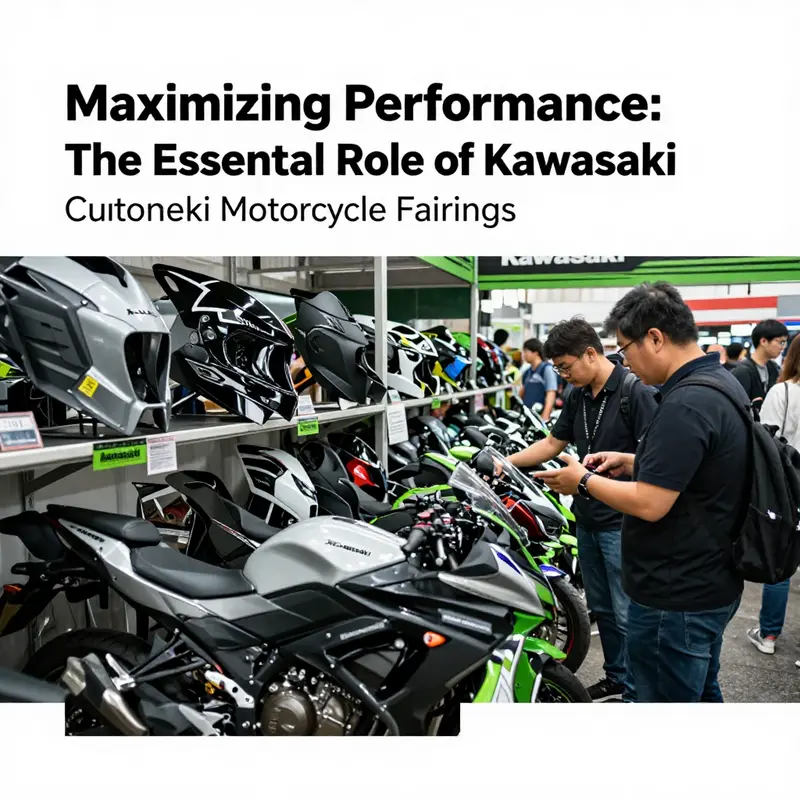
Kawasaki motorcycle fairings are pivotal components that merge aesthetics with performance. They not only enhance the visual appeal of the bike but also significantly contribute to aerodynamic stability and rider comfort. This article delves into the multifaceted role of fairings, emphasizing their materials, various types, rider safety significance, and prevailing market trends. From understanding how fairings affect speed and efficiency to discerning the different types available and their ideal applications, each chapter will provide crucial insights for business owners in the motorcycle industry.
Winds of Speed: Aerodynamics and Kawasaki Fairings
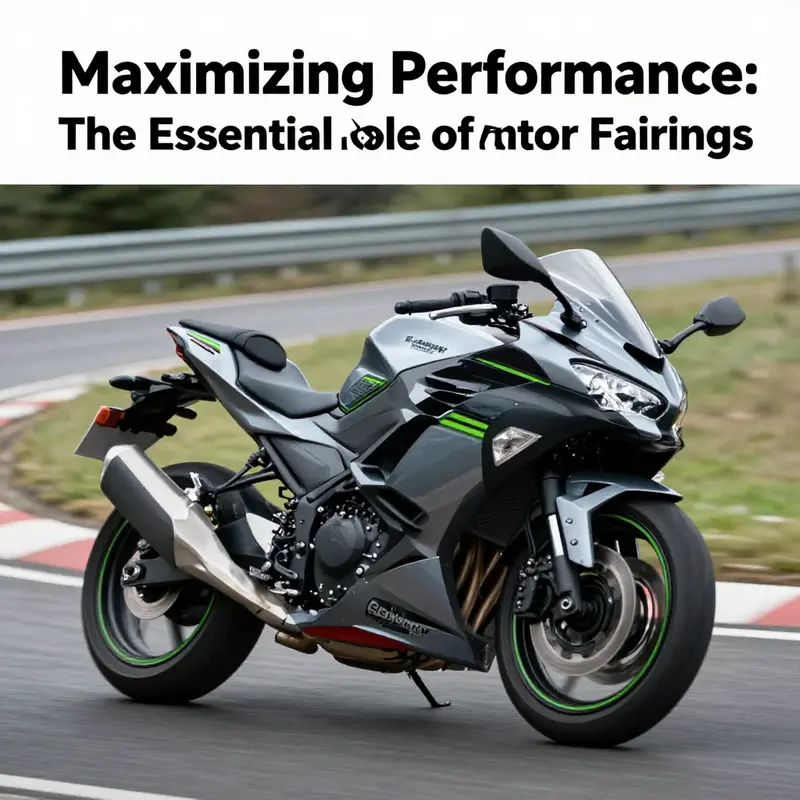
The fairing is more than a glossy shell; on Kawasaki machines it forms an integrated aerodynamics system that guides air, reduces drag, and shapes rider comfort. Full fairings create a protective envelope that shields the engine and helps keep a stable wind profile at speed, improving top end potential and fuel efficiency, while also protecting wiring and cooling components. But they add weight and complexity, which is why riders often choose half or quarter fairings for track days, sport touring, or urban riding. The half fairing balances upper engine protection with accessible maintenance and quieter cockpit, while the quarter fairing prioritizes lightness and agility. Material choices reinforce these trade offs: injection molded ABS provides cost effective, predictable fit; carbon fiber variants offer weight savings and stiffness at the premium end. In practice, the right combination depends on riding goals, geometry, and anticipated conditions. Kawasaki journals and catalog pages illustrate how different shells route air toward radiators and underbody channels, how side panels shape underbody flow, and how mounting systems preserve alignment after maintenance. For readers seeking a practical overview, dedicated Kawasaki fairing collections and model fitment notes reveal the spectrum of options across sport bikes and touring machines. External references and factory diagrams show how fairing geometry interacts with frame, rider position, and cooling ducts to balance aerodynamic gains with serviceability. This chapter frames fairings as a living interface between wind, machine, and rider rather than a mere cosmetic add on, inviting readers to consider how a chosen shell aligns with riding style and the bike’s baseline geometry.
The Fabric of Speed: Material Make-up, Costs, and Performance of Kawasaki Fairings
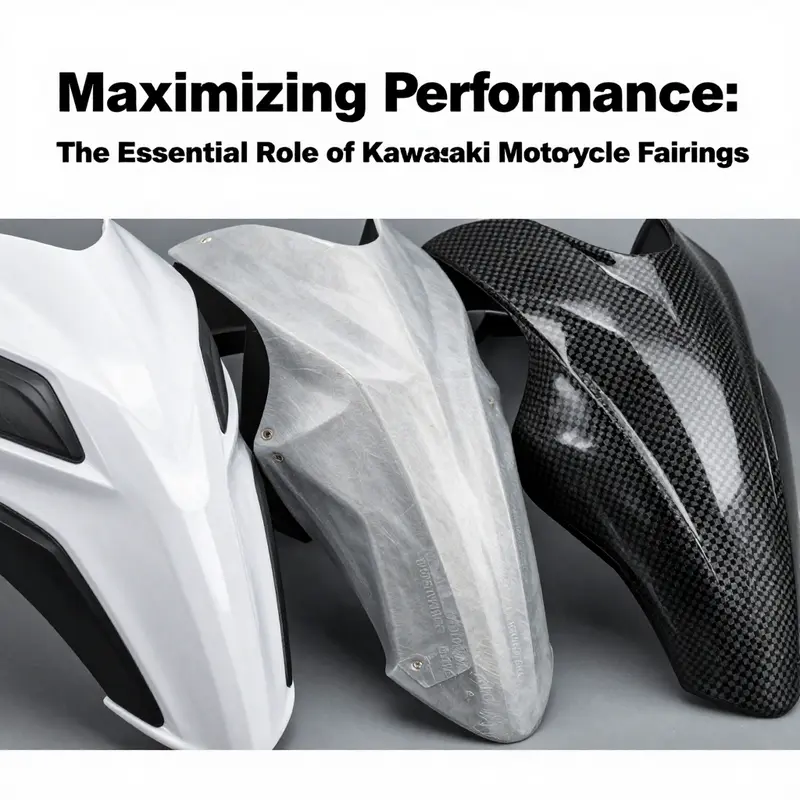
The fairing is more than a decorative shell on a Kawasaki motorcycle. It is the interface between wind, weight, heat, and rider endurance. The material makeup of these fairings determines how clean the air slips past the bike, how long a rider can stay on the throttle without fatigue, and how reliably the panels hold together after a minor tumble or long road vibration. In the factory, the arc of choice tends toward practical balance: a material that handles impact, keeps costs predictable, and fits cleanly onto the mounting points designed for the bike frame. Among the most common options, ABS plastic stands out for its combination of flexibility, toughness, and affordability. ABS, or a thermoplastic polymer blend, has become a workhorse for mass produced fairings because it resists shattering when struck by road debris and returns to its original shape after stress. For riders who use their Kawasaki for street and occasional track days, this material provides a predictable, serviceable baseline. It also translates into paintable surfaces that accept a multi layer finish without becoming brittle under sun, rain, or road salt.
In practice, ABS fairings on a model like the Ninja ZX 6R or similar sportbikes are often finished with a relatively thick paint process. You will commonly see three to five clear coat layers, each adding depth and UV protection while enhancing weather resistance. This layering helps preserve color fidelity over the years and creates a glossy finish that can hide subtle stress lines that develop with aggressive riding. The combination of a robust base polymer and a carefully engineered coating sequence gives factory ABS fairings a durability profile that matches the bike’s intended use. The result is a practical, cost conscious option suitable for riders who value reliability and ease of maintenance as much as appearance.
Yet performance and weight are central to the discussion of fairing materials. Carbon fiber, when used for Kawasaki fairings, marks a pivot toward premium performance. Carbon fiber offers an exceptional strength to weight ratio, which means panels can be significantly lighter than their ABS counterparts. In track focused builds or high end street bikes, carbon fiber fairings can reduce overall weight and an attached mass moment of inertia, translating to crisper handling, quicker throttle response, and subtle but meaningful gains in fuel efficiency at sustained high speeds. The weight savings can be especially noticeable in full fairing configurations that cover the front and sides, where the airframe carries a portion of the rider’s wind burden. However, those advantages come with a price. Carbon fiber requires more specialized manufacturing, often involving prepregs or advanced resin infusion techniques, and the raw material cost remains substantially higher than ABS. The result is a premium upgrade reserved for riders who are chasing race level performance or who simply want the closest possible approach to a featherweight silhouette.
The choice between ABS and carbon fiber, then, is a dialogue about trade offs. ABS embodies a practical, value oriented path: solid impact resistance, reasonable repair costs, and straightforward production that aligns with most riders’ budgets. Carbon fiber speaks to a different ambition: lighter weight, improved acceleration and handling, and a willingness to invest in craftsmanship and materials. It is not a universal upgrade; for most daily riders, the incremental performance may not justify the premium. This calculus becomes more nuanced when you consider other materials as well, such as fiberglass or composite blends, which sometimes sit between ABS and carbon fiber in price and stiffness. Fiberglass can offer a lighter option than solid ABS with respectable rigidity, but it does not reach the stiffness and fatigue resistance of carbon fiber. Each material has a distinct performance profile that adapts to how the fairing is used—whether on a city commute, long distance touring, or a weekend track session—so the rider’s goals inevitably steer the material choice.
Beyond raw material, the structural demands placed on the fairing influence its final composition. A full fairing, designed to envelope the engine and frame for aerodynamic efficiency, benefits from materials that resist fatigue when exposed to wind pressure and vibration. Carbon fiber’s rigidity and lightness can help preserve aero stability at high speeds, but only if the mounting system and internal bracing are engineered to exploit those attributes. A half fairing, which leaves the lower sides exposed while still covering the head area and instruments, might favor ABS for its ductile impact resistance and easier integration with stock mounting points. Quarter fairings, being leaner in scope, can offer an aesthetic upgrade without demanding a wholesale commitment to weight savings. In all cases, the material choice interacts with the bike’s geometry and the rider’s expectations about balance, wind protection, and the ability to perform quick, corrective movements under throttle or in cornering.
The repair and maintenance implications of material choice are not trivial. ABS is typically easier to repair in the field or shop. It responds well to common techniques like plastic welding, heat shaping, and standard body filler, enabling riders to restore a fairing after a minor mishap without specialized tooling. Carbon fiber, by contrast, can require more advanced repair methods and skills. Repairs may involve resin infusion or patching with compatible composites, and color matching can be more challenging given the variability of the weave and the resin system. These realities feed into the cost calculus: while carbon fiber panels bring performance advantages, they also demand higher service costs and more deliberate maintenance planning. For riders who spend long days in the saddle or who operate their machines in demanding climates, these considerations become part of the overall ownership experience.
The decision matrix for material selection is not only about weight and price. It also encompasses durability, heat management, and even aesthetic concerns. The surface finish achieved on ABS and carbon fiber fairings can differ in how it interacts with light and how resilient it is to the sun’s rays. A glossy finish on carbon fiber, especially with a clear coat, can accentuate the weave and convey a high end look that some riders prize as part of the bike’s personality. ABS surfaces can be printed or painted to reproduce complex graphics with reproducible color accuracy, offering broad customization opportunities for riders who value personal branding or decal work. Because Kawasaki fairings are commonly supplied through factory channels and supported by aftermarket ecosystems, a rider can expect a robust ecosystem of fitment options, replacement panels, and refinishing services, which helps to mitigate some of the cost concerns associated with premium materials.
For riders weighing the choice between performance and practicality, the answer often lies in the intended use and budget. If daily riding and a long term ownership experience matter most, ABS provides dependable resilience with manageable maintenance. If the objective is track ready performance and a spiritual alignment with a lighter, more responsive ride feel, carbon fiber becomes an attractive, though pricier, path. The market response to these material options reflects a broader engineering philosophy: to offer a spectrum that begins with accessible, durable stock configurations and extends to high performance, weight conscious upgrades. As you explore the possibilities, a practical next step is to examine the broader ecosystem for compatible panels and assemblies: Kawasaki fairings collection to understand how different shapes and finishes align with your model and riding goals.
In pursuing a deeper understanding of material choices, many riders also consult official and reputable reference sources that illuminate composition and standards. For deeper technical specifications across models, consult the official Kawasaki parts catalog. External resources provide context for manufacturing processes, material properties, and upgrade options, helping riders map their preferences to real world performance. External technical references can be found at kawasakiparts.com/fairings, where detailed specifications and compatibility notes are documented for contemporary Kawasaki fairings. This integration of material science, engineering design, and rider intent makes the topic of fairing composition not just a tale about shells, but a narrative about how a bike’s temperament is sculpted from the inside out, shaping what the rider experiences as speed, control, and confidence on every mile of road.
Sheaths of Speed: How Kawasaki Fairings Shape Aerodynamics, Protection, and Style
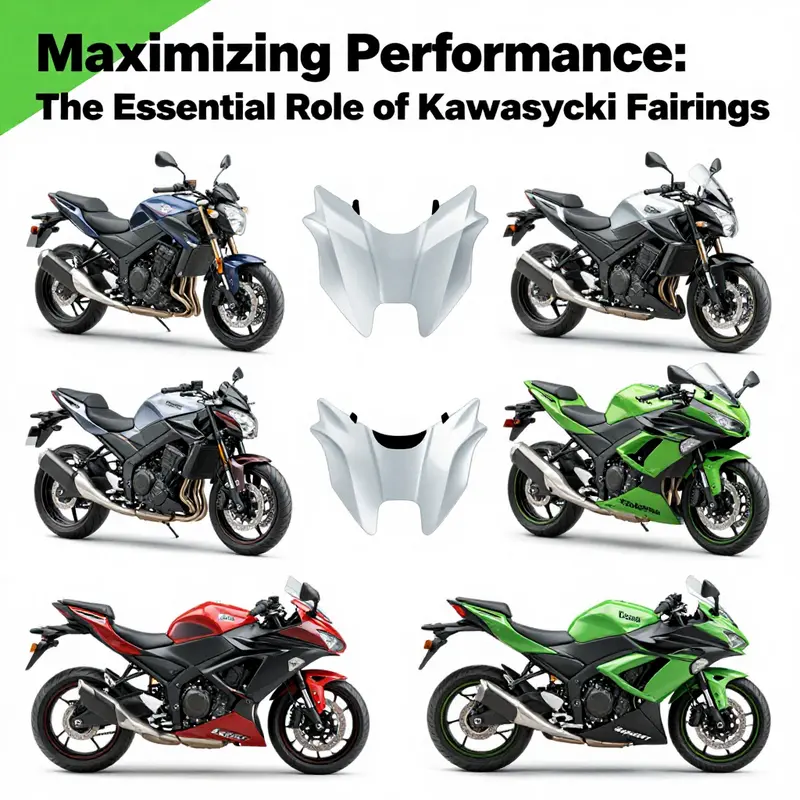
A motorcycle’s fairing is more than a decorative shell; it is an engineered interface between rider, machine, and the road. When you look at Kawasaki’s fairing designs, you are seeing a careful synthesis of form and function, where every curve and opening serves a purpose beyond mere aesthetics. The primary job is to manage air — to sculpt a smooth path for the bike that reduces drag, steadies the ride at high speeds, and shields the rider from the punishing gusts and spray that can fatigue even a seasoned pilot. Yet this shell also acts as a barrier against weather, debris, and the occasional encounter with the unpredictable rhythm of road life. The result is a system that must perform reliably across miles and seasons, while still preserving the rider’s sense of control and comfort. In this light, fairings become a study in balance: the best design is one that disappears at speed, yet remains a constant partner in protection and perception of the machine’s character.
Material choice remains central to achieving that balance. Injection-molded ABS plastic offers precision fitment aligned with stock mounting points, a key consideration for riders who want reliability and straightforward service. It resists impact well enough to handle everyday road hazards, and its resilience helps preserve the integrity of internal wiring and the bike’s delicate channels. For riders who crave a sharper edge in performance without surrendering structural toughness, fiberglass provides a middle ground. It can be shaped to create cleaner lines and tighter tolerances, often at a more manageable cost than high-end composites. The lightest and most performance-oriented option is carbon fiber, especially in its dry variants, which can trim weight by a significant margin. A lighter shell reduces inertia, aids turn-in feel, and improves the bike’s overall efficiency by shaving a portion of the aerodynamic drag. But carbon fiber demands greater craftsmanship, more careful mounting, and a willingness to invest in quality fabrication. In practice, a rider’s choice of material becomes a reflection of priorities: daily commuting needs a durable, cost-conscious ABS setup; sport-oriented riding invites lighter, stiffer panels; and a track-focused program may justify carbon fiber’s advantages despite the higher price and maintenance considerations.
Beyond materials, the architecture of the fairing itself matters as much as the material. Full fairings enclose the engine and frame in a continuous skin, crafting an almost seamless aerodynamic envelope. This design excels at wind management, delivering the maximum possible forward thrust efficiency and the strongest shield against wind fatigue on long rides. The full shell also tends to deliver the most cohesive appearance, presenting an OEM-like silhouette that many riders value for its authenticity and its ability to maintain a clean, integrated look with the bike’s chassis. Yet the benefits come with trade-offs: the added weight and the complexity of installation, alignment, and potential damage in a crash can be considerable. For riders who prize ultimate comfort and a showroom finish, the full fairing’s advantages can outweigh the costs, particularly when paired with protective film and meticulous maintenance.
Half fairings offer a different proposition. They deliver essential wind protection while leaving the lower portions of the bike exposed, which means easier access to mechanical components and simpler maintenance. The reduced mass contributes to nimble handling, which is a meaningful advantage on twisty roads or in urban traffic where quick responses matter. The aesthetic is distinctly sport-touring and modern-café in character, a look that several riders find appealing for daily use and weekend adventures alike. The half fairing’s coverage is enough to mitigate a fair amount of wind blast, while still allowing the rider a more direct connection to the bike’s chassis and its feedback. This balance of protection, weight, and accessibility makes it a favored choice for riders who want a confident ride without the full commitment of a complete shell.
Lower fairings, mounted beneath the engine and along the lower chassis, play a more nuanced role. While they do not dominate the rider’s wind experience, they contribute to the bike’s visual aggression and provide crucial protection to the lower components from road debris and spray. Lower fairings can be integrated into stock builds or used to enhance a custom appearance, aligning the bike’s lines with a more aggressive, performance-oriented stance. Their influence on aerodynamics is incremental but meaningful, particularly when combined with other fairing elements to form a cohesive airflow strategy. In many builds, the lower sections are a thoughtful addition that helps maintain a unified silhouette without imposing the weight or maintenance burden of a full shell.
Quarter fairings sit at the opposite end of the spectrum. Minimal in size and impact, they emphasize style and personality over broad aerodynamic gains. Their look can evoke retro or café-racer aesthetics that resonate with riders who value character and a slim, agile profile. In practice, quarter fairings offer modest wind protection, but their real value lies in the visual statement they make and the way they complement a lightweight, optimized rider position. A fairing’s visible surface is also a canvas for color, texture, and branding, which is why this category remains popular in custom and boutique builds where individuality matters as much as performance.
The story of Kawasaki fairings is not only about shell and shape but about how those choices integrate with the rider’s needs and the bike’s broader ecosystem. A well-chosen fairing aligns with the rider’s posture, suspension geometry, and aerodynamics to reduce drag without creating turbulence that can degrade stability. It cooperates with riders’ gear and riding styles, shaping a riding experience that is perceptibly smoother in the headwind and more composed through corners and straights alike. The engineering logic extends to the mounting points, fasteners, and seals that keep the shell aligned and weather-tight through miles of exposure to rain, sun, and road grime. The result is more than a passive cover; the fairing becomes a controllable parameter in the rider’s performance envelope.
For riders who are drawn to OEM authenticity and the assurance of precise fitment, available options in the Kawasaki fairings landscape often resemble a curated ecosystem rather than a simple catalog. The factory-inspired approach emphasizes seamless alignment with the bike’s frame, instruments, and fairing-to-fairing junctions, ensuring that gaps remain uniform and that airflow remains uninterrupted along the intended path. The practical realities of maintenance also come into play here: the more integrated the fairing system, the more important it is to preserve access to fasteners, clips, and mounting points that make routine service feasible without dismantling large portions of the shell. A thoughtful design acknowledges these needs and prioritizes serviceability alongside performance.
For riders who want an entry point that keeps the focus on fit and functionality, exploring options within a dedicated fairing collection can be a prudent step. The Kawasaki fairings collection provides a focal point for evaluating shapes, finishes, and mounting schemes that fit a broad spectrum of bike configurations while preserving the look and feel that define the brand’s design language. As you consider upgrades or replacements, remember that compatibility is not merely about matching a bolt pattern; it is about maintaining the airflow coherence, the line flow along the bike’s silhouette, and the protection profile that defines rider comfort. A fairing is an investment in consistency of experience as much as in protection or speed. When done well, the transition between stock and aftermarket pieces remains visually continuous and mechanically reliable.
If you are curious about how a specific aesthetic or dimensional approach might integrate with your machine, a practical step is to study how the fairing’s geometry interacts with your riding posture and the bike’s established geometry. The shape of the front cowl, the sweep of the side panels, and the contour of the lower skirts all contribute to a coherent aerodynamic strategy. In the end, the best choice reflects a rider’s intent: whether the goal is absolute top speed, long-range comfort, urban practicality, or a blend of all three. The fairing becomes less a cosmetic layer and more a functional partner in achieving the ride you imagine. For those who want a starting point rooted in proven alignment with stock mounting points and a factory-grade appearance, the available Kawasaki fairings options offer a reliable path toward that objective, and a link to the broader ecosystem can be found here: Kawasaki fairings collection.
In the broader arc of motorcycle customization and performance tuning, fairings occupy a central role. They are the first line of contact with the air, a visible marker of a rider’s intent, and a reminder that speed is as much about how a machine moves through a medium as it is about raw power. The choices—full, half, lower, or quarter—each tell a story about what the rider values: maximum protection and streamlined efficiency, accessible design and nimble handling, rugged protection of vulnerable components, or a distinctive, vintage-inspired aesthetic. The interplay of materials, engineering, and artistry embodies the careful craft behind modern motorcycling. And as the chapter moves forward to explore how these design decisions translate into real-world performance, the connection between rider, bike, and fairing remains clear: the shell that surrounds the machine is not merely a cover; it is a deliberate instrument in the pursuit of controlled speed, enduring comfort, and personal expression on the road.
null
null
null
null
Final thoughts
In conclusion, Kawasaki motorcycle fairings play a vital role in enhancing the performance, safety, and comfort of riding experiences. Their material composition significantly impacts the bike’s efficiency, while the choice of fairing type influences aerodynamics and aesthetics. As market dynamics evolve, staying abreast of trends and customer preferences allows business owners to cater effectively to their clientele. Investing in high-quality fairings not only elevates the motorcycle’s appeal but also enhances the riding experience, ensuring satisfaction and loyalty among customers. Prioritizing product quality, stunning designs, and effective marketing will set businesses apart in a competitive landscape.