
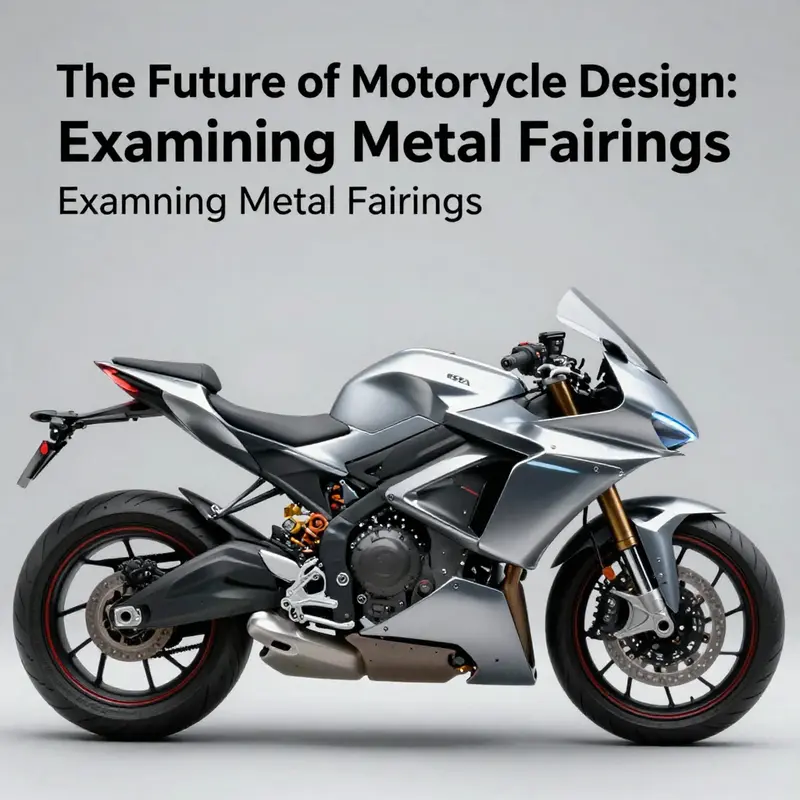
Motorcycle design has traditionally favored lightweight and high-impact absorption materials, primarily resulting in plastics and composites being the norm for fairings. However, the exploration of metal motorcycle fairings offers a unique perspective, highlighting both possibilities and challenges in design and performance. This analysis delves into the role of metal components within motorcycle architecture, evaluates the material properties that limit their widespread usage, conducts a cost comparison with contemporary alternatives, and assesses critical safety implications. Additionally, emerging trends and innovations may reshape the landscape of motorcycle fairings in the future. Understanding this multifaceted topic is pivotal for business owners aiming to stay ahead in the motorcycle manufacturing sector.
Rethinking Metal Fairings: Why Plastics Win in Modern Motorcycle Aerodynamics
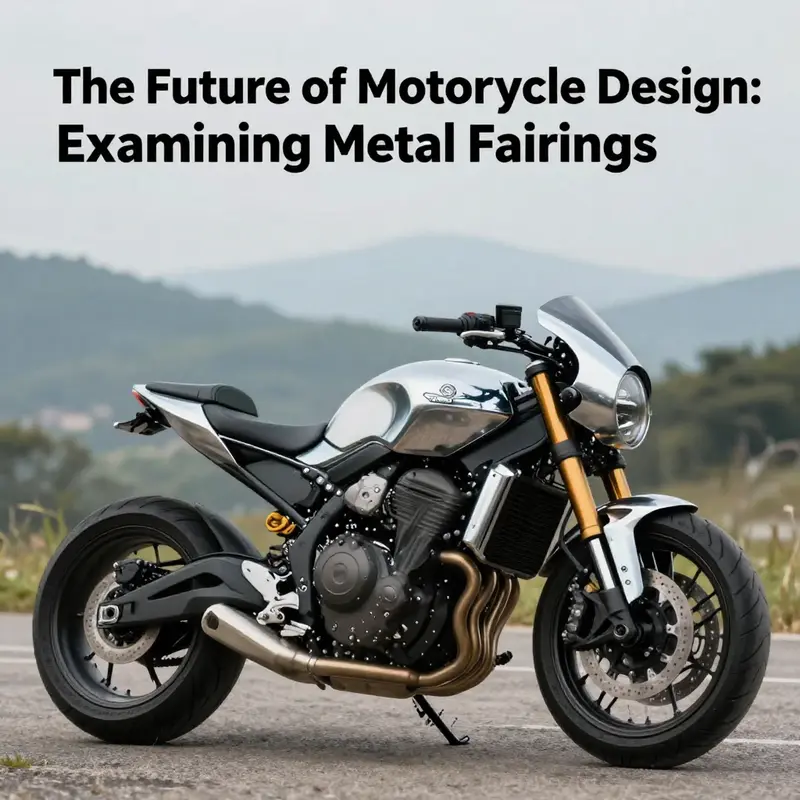
When designers talk about a motorcycle’s silhouette slicing through the air, the fairing that encloses rider and engine has a decisive aerodynamic role. The old idea of metal fairings persists in some workshops, but modern production bikes rely on plastics and composites for real-world performance. Lightweight panels can be shaped with precision, while metal would add weight, complicate tooling, and limit design freedom. The result is a fairing language that favors engineered plastics and fiber-reinforced materials over solid metal skins.
To understand why, start with function: fairings channel air, protect internals, and anchor to a frame with tight tolerances. The material must translate a curved design into a manufacturable part that endures vibration, wind pressure, and occasional impacts. Plastics such as ABS and polycarbonate offer easy molding into complex shapes, energy absorption, and rigid areas where needed. They enable rapid, cost-efficient production, helping keep prices accessible for riders while preserving aerodynamic fidelity.
Weight is a constant in performance. A metal panel, even at thin gauges, adds more mass than a similarly shaped plastic. This extra weight affects steering weight, vibration, and handling balance. Lighter plastic panels can be very thin yet stiff, delivering crisper throttle response, sharper braking, and better fuel economy. Even small weight reductions can improve ride quality across conditions.
Impact energy management also favors plastics. A plastic fairing can deform and dissipate energy to reduce peak forces transmitted to the rider and core components, whereas a rigid metal shell tends to transfer shock more directly. The use of multi-directional reinforcements in composites further tailors energy absorption for injuries and component protection.
From a manufacturing and cost perspective, plastics win. Large curved metal surfaces demand expensive tooling and precise forming, while injection-molded or thermoformed plastics enable high-volume production with consistent tolerances and finishes. Repairs on plastic panels are often quicker and cheaper, and plastics resist corrosion more reliably in many environments. Metal remains useful for frames, exhausts, or decorative accents, but the fairing body itself is typically plastically engineered for performance, durability, and cost.
Weight, Wind, and the Edge: Why Metal Fairings Remain a Niche
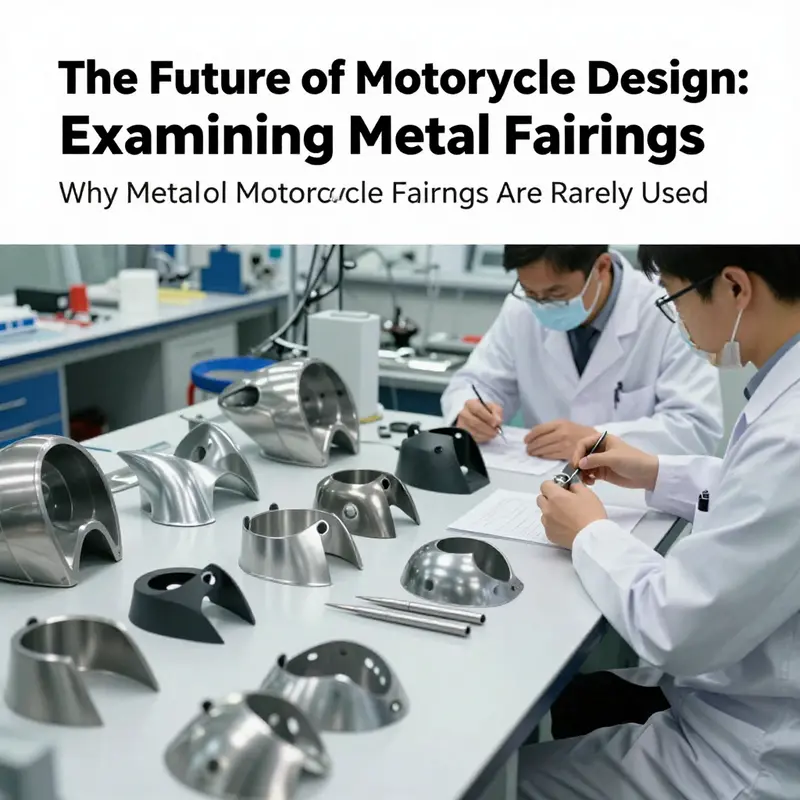
Metal motorcycle fairings occupy a curious niche in modern design. They bring a rugged, industrial aesthetic and a history of durability, but the demands of aerodynamics and rider safety have shifted emphasis toward lighter materials. Weight is the central constraint: a fairing must reduce drag without adding unnecessary inertia, and metal, relative to composites and engineered plastics, often carries more mass for the same stiffness. The practical result is that metal skins tend to be used sparingly, often as accents or in non-critical panels rather than as full primary load-bearing skins.
Manufacturing and lifecycle costs also steer design away from metal. Shaping a metal surface to perfectly follow a complex rider-forward contour is labor-intensive and has tight tolerances that can introduce seams and rough interfaces with the frame. In contrast, composites enable single-skin geometries, layup-tuned stiffness, and streamlined production that scales with high-volume manufacturing. The difference becomes economically meaningful when every gram matters and when rapid iteration is needed during development.
Safety and energy management further tilt the balance. In a crash, a properly designed composite can absorb impact energy and distribute it more favorably to protect the rider, whereas a rigid metal shell can transmit peak loads more directly. This is not a blanket statement about metal’s strength, but a reflection of design goals: maximize energy dissipation and controlled deformation while minimizing added mass. Metals still shine where heat resistance, corrosion resistance, or structural function are required, such as engine components, fasteners, or internal frameworks that must endure harsh conditions.
Ultimately, metal fairings remain a niche—useful in certain retro, stylistic, or specialized applications, but not the default choice for mainstream performance motorcycles. The modern fairing ecosystem leans toward carbon fiber, fiberglass, and advanced polymers that blend aerodynamics, weight reduction, and energy management. When metal appears, it is often as a detail or a component that serves a broader structural or thermal role rather than as the primary aerodynamic shell.
Cost Analysis of Metal Motorcycle Fairings vs. Composite Alternatives
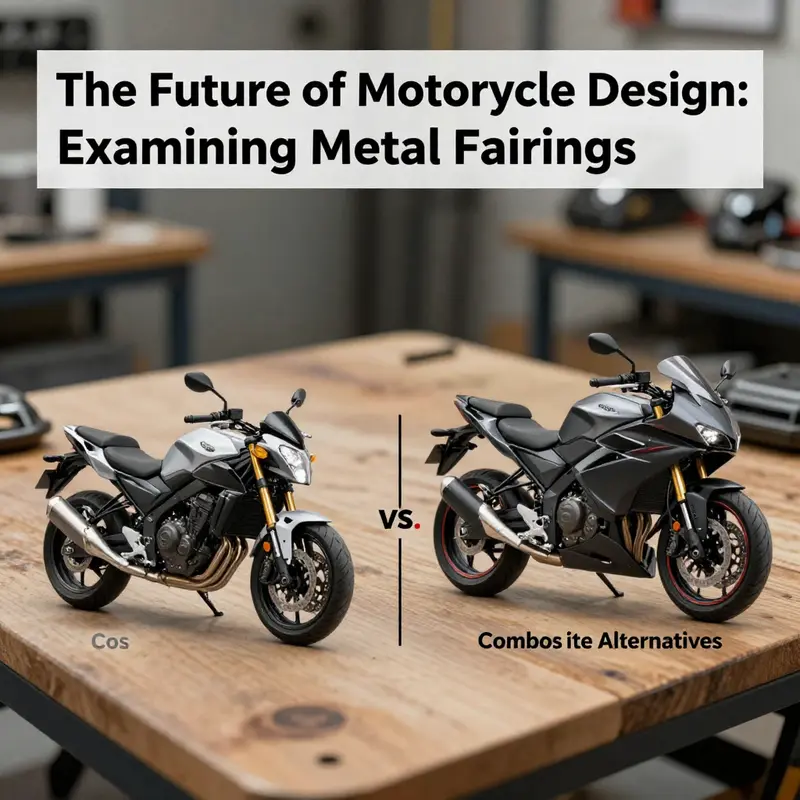
Cost is a driver that quietly shapes what can be practical on a motorcycle, and in the realm of fairings it often governs whether a design survives in the marketplace at all. The available research confirms a gap: there is no straightforward, widely published cost comparison between metal fairings and the plastics or composites that dominate today. What exists are price bands for the common materials used in fairing bodies and a succinct accounting of the material properties that influence those prices. From that starting point we can build a reasoned picture of why metal fairings, despite occasional artistic or bespoke appearances, remain a rarity in mass production and in the aftermarket. It is not simply a matter of raw material price; it is a cascade of costs that starts with formability and ends with maintenance and resale value. When the numbers are laid out for the familiar options, the contrast with any metal alternative becomes stark enough to explain the market reality even without a dedicated metal fairing price tag in the catalog.\n\nThe pricing landscape for fairings, as reported, places entry level plastic solutions at relatively affordable levels. ABS half fairings commonly begin around a modest sum, with full OEM setups frequently surpassing the several hundred dollar range and sometimes nudging toward a thousand or more depending on fitment and sponsorship of color schemes or manufacturer liquidity. Carbon fiber kits, prized for their stiffness-to-weight ratio and aesthetic appeal, commonly sit in a broader mid to upper tier, ranging from a few hundred dollars to over a thousand. Aftermarket plastic or composite kits fall somewhere in between, often cited from two hundred dollars up to six hundred for full or near full replacements. These figures illuminate a core point: for most riders, the decision calculus hinges on a balance of upfront cost, expected durability, and the availability of fitment for a given model.\n\nIf one asks why metal does not follow this price ladder, the answer lies in a chain of linked cost drivers that begin long before the first price tag is printed. Metal, whether steel or aluminum, brings a heavier mass to the fairing shell. The weight penalty is not merely a matter of more metal; it propagates into the motorcycle’s entire ecosystem—frame design, engine bay protection, and the mechanical linkages that must adapt to the added inertia and potential changes in center of gravity. Heavier components can degrade handling, alter balance, and demand reinforcement in areas previously considered non structural or lightly loaded. This cascade does not just affect performance; it reframes the cost model for the entire powertrain and chassis. A heavier fairing requires a stronger, more robust mounting system, sturdier fasteners, and potentially more sophisticated sealing strategies to preserve aerodynamics and weather resistance. All of these requirements add to the engineering hours and tooling costs, further widening the gap between metal and the faster production flow that plastics and composites enjoy.\n\nBeyond the weight concern sits the challenge of impact absorption. A fundamental property of fairings is to tolerate minor impacts and deformations without transferring peak loads into the rider or sensitive components. Metals do not deform in the same forgiving way as plastics or composites; they resist dulling impact energy and can transmit higher forces to the structure beneath. In real-world terms, this translates to higher risk of secondary damage in a crash, a factor that feeds into insurance considerations and the cost of repairs or replacement parts. If a fairing is damaged seriously enough to warrant replacement, metal shells would likely demand more specialized repair processes or full replacement with metal panels, both of which command higher labor rates and longer lead times than typical plastic or composite repairs.\n\nThe manufacturing footprint for metal fairings is another cost hinge. Metal forming often requires a combination of stamping, hydroforming, or custom bending, followed by secondary operations such as welding, machining, and precision finishing. Each of these steps carries tooling, setup, and batch-size implications that plastics, especially injection molded ABS, sidestep through high-volume efficiencies. The tooling liftoff for metal work is expensive, and the economics rely on large production runs to amortize the capital expenditure. Plastic processes, by contrast, thrive on rapid, repeatable cycles and economies of scale. The cost advantage is not solely material; it is deeply rooted in the production system and supply chain design that supports the ride at a mass market price point.\n\nCost must also be weighed in the context of corrosion and maintenance. Untreated metal is vulnerable to rust and tarnish in humid environments, and maintaining a pristine finish across a motorcycle’s life can require protective coatings, sealants, and periodic refinishing. The lifetime cost of maintenance thus tilts toward higher recurring expense for metal compared to plastics, which are inherently more resistant to surface corrosion and require less periodic upkeep to maintain their appearance and integrity. Even when metal is treated with protective coatings or anodized finishes, the ongoing maintenance cycle adds to the total cost of ownership, especially if frequent cleaning, touch-ups, or repainting is involved to sustain gloss and color fidelity.\n\nAll these factors—weight penalties, impact transmission risk, tooling and production complexity, corrosion management, and maintenance—converge to make metal fairings a more expensive proposition at almost every stage of life, from initial manufacture to long-term use. This is not an indictment of metal as a material in motorcycles; it is a practical assessment of where fairing bodies belong within the broader design, performance, and cost framework. The existing pricing bands for ABS, polycarbonate, fiberglass, and carbon fiber reflect a market calibrated toward achieving a favorable performance-to-weight ratio, with a focus on mass production and rapid aftermarket turnover. Metal, while valuable in other components such as frames, exhausts, or decorative trims, does not align with those foundational economics when used as a primary fairing body.\n\nThat reality does not erase the occasional exceptions. There are instances of metal usage as decorative accents, brackets, or as part of artful installations on certain high-end, highly customized machines. In those contexts, the value proposition shifts from mass-market practicality to bespoke aesthetics, limited runs, and a willingness to pay a premium for an individual statement. In such cases, the cost picture resembles bespoke metal fabrication more than consumer-grade paneling, with pricing hinging on design complexity, material choice, and the degree of finish required. For the average rider seeking reliable protection, predictable repair costs, and a favorable cost of ownership, metal fairings remain a niche curiosity rather than a viable primary option.\n\nFrom the perspective of a broader article on metal motorcycle fairings, the absence of metal price data is itself telling. It signals a market reality in which metal fairings do not compete on the same dimensions as plastics and composites. The numbers that are available for alternative materials present a clear baseline: the community prioritizes affordability, manufacturability, and predictable maintenance cycles. A deeper exploration of this topic would require a dedicated cost-benefit study that factors raw material prices, tooling amortization, labor rates, and long-term lifecycle costs under real operating conditions. Until such data becomes common, the practical takeaway remains straightforward. Metal fairings, while technically possible and visually striking, do not offer the most economical or performance-efficient path for primary fairing bodies in mainstream motorcycle design today.\n\nFor readers who want to explore the broader market options and the kinds of fairings that populate the current catalog, a convenient route is to browse model-specific collections that reflect the common aftermarket configurations and OEM packages available. In particular, the Honda fairings collection offers a representative cross-section of standard market choices, which can be examined to compare fitment, finish options, and price points across a range of motorcycle models. You can explore this collection here: https://www.summitfairings.com/collections/honda-fairings. Such a resource helps anchor the discussion in concrete products and model compatibility as a practical reference against which any metal alternative would need to prove its value proposition.\n\nFor readers seeking a broader perspective on how different materials behave in vehicle body applications, an external resource on vehicle body materials and their mechanical properties provides useful context. It discusses how plastics, composites, and metals contribute to energy absorption, stiffness, and mass budgets in modern vehicle design, offering a framework for understanding why the cost-performance balance tends toward certain material categories in fairing construction. External resource: https://www.sciencedirect.com/topics/engineering/vehicle-body\n\nIn sum, the cost narrative surrounding metal motorcycle fairings is heavily constrained by the realities of manufacture and use. The price points available for plastics and composites set the baseline that metal fairings struggle to beat when evaluated across weight, safety, maintenance, and lifecycle costs. While metal can be appropriate for specific roles within a motorcycle’s architecture, its role as a primary fairing body remains marginal in the current market, reinforcing the view that truly effective, safety-conscious, and economically viable fairings are overwhelmingly engineered from engineering plastics and reinforced composites. The discussion, therefore, centers as much on the economics of production as on the properties that govern performance, and it is in this intersection that the case for composites and plastics becomes clear and compelling for the average rider seeking sensible balance and long-term value.
Rigid Armor Under Scrutiny: Safety Implications of Metal Motorcycle Fairings
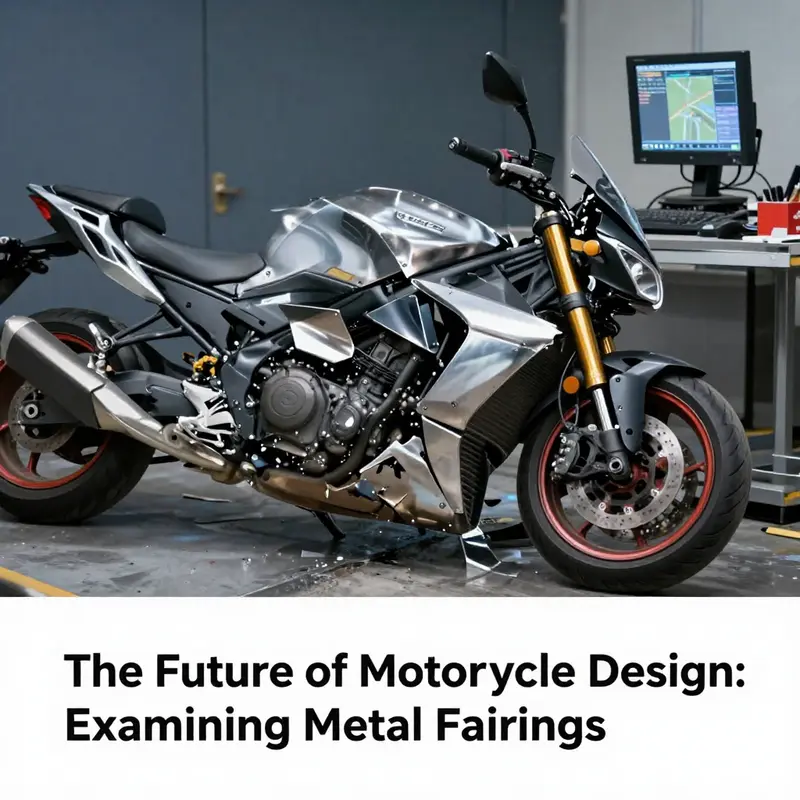
Metal motorcycle fairings occupy a rarefied position in the pantheon of motorcycle design. They evoke a sense of sturdiness and artisanal craft, yet they sit at odds with the common goals of modern fairing engineering: light weight, efficient energy absorption, and streamlined aerodynamics. The chapter that follows surveys how metal variants perform in the crucible of real-world safety, where every gram of weight, every deformation under collision, and every minute change in energy dissipation can ripple through handling, braking, and rider protection. The conversation is not merely about material science; it is a narrative about risk, trade-offs, and the conditions under which a heavy, rigid shell might contribute to safety in some scenarios while compromising it in others. In the broader arc of this article on metal motorcycle fairings, metal is not presented as a universal solution. Instead, it is positioned as a contrasting option whose properties reveal the complex calculus behind modern fairing design and safety strategy, especially when other materials—engineering plastics and composites—have become the default for good reasons.
Impact resistance forms a central pillar of this discussion. Metal fairings—typically aluminum or steel—are more rigid by nature than their plastic counterparts. Rigidity can be a double-edged sword in a crash. On one hand, a metal shell can maintain its shape and structural integrity, reducing the likelihood of sharp fragments becoming dangerous projectiles that could harm the rider or bystanders. The ability to resist abrasion and puncture from road debris also lends a durability that is highly valued in long-distance touring where exposure to gravel, grit, and random hardware is non-negligible. Yet this same rigidity translates into less energy dissipation during impact. When a fairing deforms, it absorbs some fraction of the crash energy, relieving stress from the engine mounts, frame, and rider. A rigid metal shell offers less of that passive energy absorption, transferring a larger portion of the impact to the engine bay, frame junctions, and, ultimately, the rider’s body via abrupt decelerations or jarring loads. In practice, this means a metal fairing may enhance containment of debris but simultaneously elevate the risk of a harsher crash load path. The rider could experience higher peak forces transmitted through the cockpit and the contact points, which are precisely the elements safety systems seek to minimize. The nuanced implication is that metal can contribute to structural stability and debris management in certain angles and speeds, while it can intensify the shock transmitted to critical systems when a collision occurs straight-on or at unfavorable oblique trajectories.
Weight is the other primary axis along which metal fairings are judged. The mass of metal is simply higher than that of plastics or composites used in contemporary fairings. Even modest gains in shell thickness to improve rigidity or add abrasion resistance can push weight upward, with ripple effects across the motorcycle’s dynamics. Heavier fairings demand more energy to accelerate and decelerate, influencing acceleration performance, cornering response, and braking performance. In high-speed scenarios, a heavier shell can increase the gyroscopic load and unsprung mass, subtly shifting the motorcycle’s response to steering input and suspension modulation. The brake system must work harder to manage this added inertia, particularly when the rider is maneuvering through tight, rapidly changing conditions. The safety implications thus hinge on context: in a scenario where the rider benefits from maximum protection against debris and environmental hazards, extra mass might be tolerable or even desirable. Conversely, in a sport or urban riding context where agility and quick lane changes are paramount, weight penalties can translate into slower evasive actions and longer stopping distances. The balance is delicate, and it underscores why metal remains a niche choice rather than a mainstream solution for fairing bodies.
Abrasion and puncture resistance add another layer to the safety calculus. Metal shells do tend to fend off road hazards with a stubborn resilience. When gravel, rust flakes, or sharp fragments meet the shell, metal’s hardness can resist gouges that would quickly degrade a plastic skin. In this regard, metal fairings offer a durable outer skin for environments where debris density is high and repairs are costly or undesirable. The protective advantage is particularly relevant for riders who repeatedly ride on rough surfaces, poorly maintained roads, or high-speed cross-country routes where the likelihood of encountering hidden debris increases. Yet this protective advantage comes with a caveat: a metal surface that resists puncture more effectively can still allow impact energy to transfer in ways that stress underlying components, especially if the mounting points or the frame are not robustly designed to absorb and distribute those loads. The safe coexistence of a metal shell with a contemporary chassis requires careful integration of mounting architecture, energy-absorbing substructures, and consideration of how the fairing interacts with the rest of the bike’s safety system, including crash-structure strategies that protect vital components.
Weather resistance is another differentiator. Metals, when properly treated, can resist prolonged exposure to UV light, temperature extremes, and environmental moisture. Corrosion resistance is the practical concern that drivers and engineers must address with coatings, sealants, and maintenance protocols. Untreated metal in a humid or salty environment is prone to rust, which not only degrades appearance but can also compromise structural interfaces over time. With fairings, where seams and attachment points join with hardware and other panels, corrosion can create micromovements that influence aero performance or lead to fatigue failures. The maintenance burden becomes part of the safety equation: regular inspection for coating integrity, rust, and fastener wear becomes essential to ensure that the helmet-like protection the fairing is intended to provide remains reliable. This durability advantage in environmental conditions can be a practical benefit for touring riders who face long trips and varied climates, where a stable, weather-resistant shell is more relevant than in controlled track settings. However, the long-term cost and effort required to maintain a steel or aluminum shell—along with the possibility of coating failures and galvanic corrosion where different metals meet—must be weighed against the more forgiving maintenance profile of modern plastics and composites.
From a repair and maintenance perspective, metal fairings are more demanding. The fabrication and repair processes tend to be labor-intensive, with higher costs and longer downtime when damage occurs. Precise alignment and panel fitting become critical to preserve aero efficiency and visual aesthetics. Welds, fasteners, and structural reinforcements may be necessary after impacts, adding to the repair timeline and expense. These factors have practical safety implications: in environments where downtime is substantial or repair expertise is less accessible, the rider may be tempted to ride with damaged panels, potentially altering the bike’s aerodynamics and protection characteristics. In contrast, plastics and composites reward quick, relatively inexpensive repairs and panel replacements, enabling rapid restoration of protective geometry and aero performance. The trade-off is that plastics and composites may exhibit more pronounced fatigue under repeated impact, leading to frayed edges or delamination if not properly inspected.
Reality checks about practicality reinforce the idea that metal fairings are rarely chosen for the core body. The combination of weight penalties, energy transfer dynamics, higher fabrication and repair costs, and corrosion risk makes metal bodies a marginal option outside of niche applications. When designers and riders speak of the “safety equation” in fairing selection, metal often sits as a debated outlier rather than the default. Yet, even as the mainstream leans toward engineered plastics and composites, metal remains part of the dialogue. It offers a reference point for understanding how material properties shape safety outcomes. In some custom or retro contexts, metal fairings might provide a unique aesthetic and a robust shield against particular hazards, but these gains must be traded against the overall performance envelope of the motorcycle. In practice, safety design now relies on an integrated approach: the fairing is part of a larger system including the frame, the energy-absorbing foam strategies beneath exterior skins, and the rider’s protective gear. The intersections between these elements define the true protective capacity of a motorcycle in a crash scenario.
In this light, the broader lesson is clear. The selection of a fairing material is not merely a matter of appearance or a single performance metric. It is an alignment of multiple safety-related objectives: shielding against debris, controlling energy transfer, minimizing added mass, resisting environmental attack, and sustaining aero efficiency. Metal, by its nature, emphasizes certain priorities—durability, debris containment, and weather resilience—while compromising others—energy dissipation and weight efficiency. The result is a design space that remains open to exploration, but always bounded by the practical realities of crash dynamics, maintenance economics, and rider safety in diverse riding contexts. This nuanced perspective helps explain why engineering plastics and composites have become the dominant platforms for fairing bodies, while metal retains a ceremonial or specialized role in the broader ecosystem of motorcycle design. For readers seeking a deeper technical grounding on the comparative engineering and material properties of motorcycle fairings, see the established study linked in the external reference at the end of this discussion.
To connect this discussion with real-world design resources, consider exploring a general fairing collection that illustrates the breadth of options available for modern motorcycles. For example, the Honda fairings collection offers a window into how various panels are configured and how their shapes interact with aerodynamics and rider protection. This reference serves as a reminder that the form of a fairing is inseparable from its function in safety and performance: Honda fairings collection.
For readers seeking a deeper dive into the engineering and material properties that underpin fairing design, including metal variants, a foundational resource is available here: https://www.sciencedirect.com/science/article/pii/S235248472100098X. This external resource complements the practical considerations discussed here by offering a rigorous analysis of how materials respond under impact, how energy is distributed during crashes, and how environmental factors influence long-term durability. In sum, metal fairings challenge designers to balance weight, rigidity, and energy management against repairability, cost, and rider safety, all within the broader tapestry of materials science and automotive engineering. The safety case for metal, therefore, rests on context, design integration, and a clear understanding of what riders expect from a protective shell in the conditions they actually ride through.
null
null
Final thoughts
The exploration into metal motorcycle fairings reveals a complex interplay between potential applications and existing challenges. While the benefits of lightweight materials and high-impact absorption make plastics and composites the preferred choice for fairing construction, examining metal reveals intriguing aspects that may benefit niche designs. For business owners in the motorcycle industry, understanding these dynamics is essential for product innovation and differentiation in a crowded market. As technology evolves, so too do the possibilities for metal fairings, potentially redefining their role in motorcycle design and performance.