
The integration of radio technology into motorcycle fairing is reshaping the riding experience, enhancing both functionality and aesthetics. This evolution not only emphasizes the trend toward aerodynamic design but also elevates the entertainment and navigation capabilities for riders. Business owners in the motorcycle industry should understand how this trend is shaping consumer preferences, ultimately influencing purchasing decisions. Following this introduction, the first chapter delves into the technological advancements driving the integration of fairings and radio systems. The second chapter examines the supply chain dynamics and key manufacturing regions contributing to the evolution of these integrated products. Finally, the article will explore future trends that will further enhance the user experience, ensuring that your business stays ahead of the curve.
When Fairing Meets Radio: Designing Connected Motorcycle Front Ends
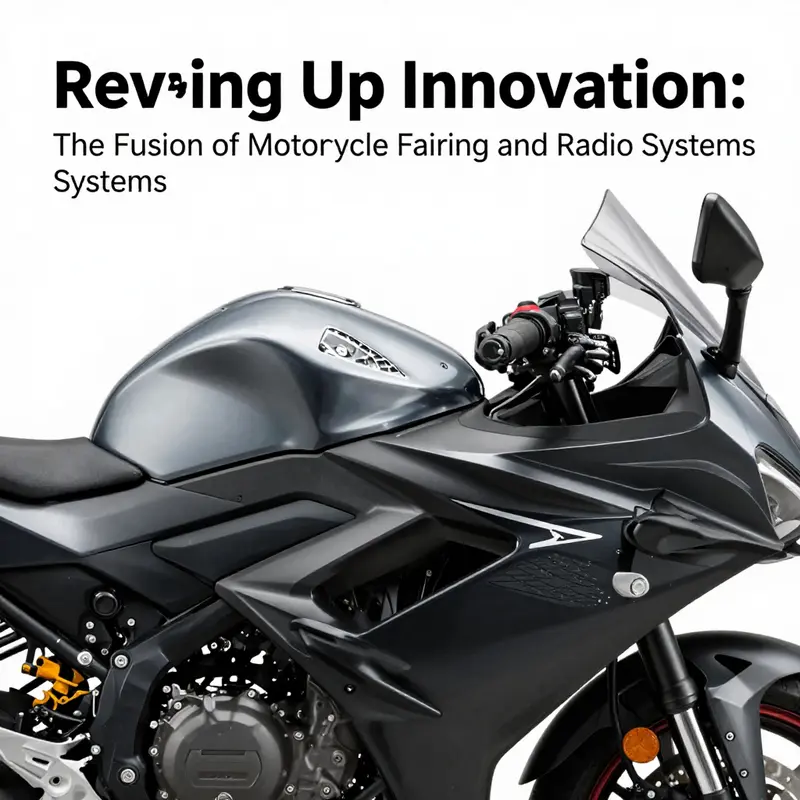
Motorcycle fairings have evolved from purely aerodynamic shells into intentional platforms for electronics. The modern fairing is expected to do more than cut wind; it must shelter sensitive hardware, enable wireless links, and deliver sensory feedback to the rider without disrupting lines or balance. That shift has propelled a new design discipline where aerodynamics, materials science, electromagnetic engineering, and human factors converge. This chapter traces how radio and wireless technologies are being folded into fairings, what designers must solve to make that marriage reliable and safe, and which practical trade-offs determine whether an integrated radio system improves the ride.
At the heart of integrated systems is the goal of unobtrusive connectivity. Riders want access to navigation cues, audio, traffic alerts, and security functions without extra mounts or exposed antennas. To meet that need, designers place radios, receivers, and short-range transceivers inside or behind fairing surfaces. That choice preserves the motorcycle’s silhouette while offering better protection from weather and impacts. But enclosing radios within composite or polymer panels creates a complex technical environment. Radio waves interact with carbon fibers, metal fasteners, and internal cavities. Water ingress can detune antennas, and vibration can loosen connectors over time. Successful integration therefore begins with material selection and structural layout that respect electromagnetic behavior as much as impact resistance.
Polymer composites and engineered plastics dominate fairing bodies because they balance weight, stiffness, and finish. For integrated radio modules, these materials offer two advantages: predictable dielectric properties and the ability to be formed with antenna-friendly geometries. Low-loss plastics allow signals to pass with minimal attenuation. Where metallic panels are unavoidable—near clamps, frames, or reinforcement plates—designers create isolated antenna windows or route antennas to extend beyond conductive areas. In some designs, thin nonconductive skins are laid over antenna housings to create a flush appearance while preserving radio performance. Such solutions demand tight process controls during molding and painting to avoid introducing conductive contaminants that would affect radio sensitivity.
Environmental resilience is another core requirement. Motorcycles operate in rain, dust, and broad temperature ranges, often vibrating for hours at highway speeds. Integrated radio assemblies must therefore meet robust ingress protection standards and maintain calibration after mechanical shocks. Achieving a serviceable and sealed assembly calls for careful placement of gaskets, potting compounds, and ventilation paths that do not compromise RF performance. Designers commonly target IP ratings that ensure short-term immersion resistance and dust exclusion, while selecting corrosion-resistant contacts and conformal coatings for circuit boards. These measures keep receivers and low-power transmitters functioning where roadside units or mobile phones might fail.
Beyond physical protection lies the need for electromagnetic compatibility. A motorcycle hosts a variety of high-energy sources: alternators, ignition coils, LED lighting drivers, and accessory chargers. Integrated radio modules operate at microvolt-level signal thresholds compared to the high currents near the engine and charging system. Without proper shielding and filtering, noise can degrade reception or produce intermittent audio artifacts. Solutions combine ferrite filtering, power-rail decoupling, and chassis grounding strategies. Designers often designate a clean power bus for sensitive electronics, with transient suppression and regulated outputs to isolate them from ignition spikes. Meanwhile, RF shielding is implemented in a way that preserves antenna patterns—fully enclosing a radio in a metal can improves EMI rejection but can prevent signals from coupling to the outside world. The compromise is selective shielding with tuned apertures or specialized materials that attenuate interference while allowing the necessary frequencies to escape.
Safety and user awareness are central to integrated radio use. Wireless modules can deliver audio navigation, streamed music, or audible alerts, but the rider’s attention must remain primarily on the road. Designers therefore favor solutions that augment rather than replace visual cues. Haptic feedback integrated into handlebars or the seat and discrete LED clusters within the fairing can transmit critical warnings without forcing the rider to glance down. Where audio is present, it is delivered through helmet speakers designed to preserve situational hearing. Low-latency audio routing becomes essential for timely hazard warnings and intercom exchanges; engineers reduce buffering and prioritize voice and alert channels over media streaming to ensure responsiveness under load.
Radio functionality also expands beyond entertainment. Short-range radar and vehicle-to-vehicle messaging are increasingly folded into fairing systems to provide proximity alerts and lane-change assistance. These sensors communicate with inboard displays or handlebar indicators using wireless or wired links, creating a distributed sensory network across the bike. When implemented correctly, these systems enhance spatial awareness by presenting layered inputs—visual signals in peripheral view, short audio cues, and tactile vibrations—so the rider processes information without losing focus. The integration challenge is to present these cues coherently and avoid alarm fatigue; too many overlapping warnings diminish trust in the system.
Security features tied to low-frequency radio authentication are also appearing in fairing-centered electronics. Keyless ignition and remotely authorizing accessories reduce the need for exposed locks and add convenience. However, low-frequency radio systems operate close to sensitive medical equipment and create potential interference vectors. Careful frequency selection, power limiting, and compliance verification are therefore required. Manufacturers must balance convenience features with electromagnetic safety standards and rigorous testing to prove that signals do not impact other devices or exceed regulatory emission limits.
Manufacturing scale and supply chain considerations shape what is practical to integrate. Regions with mature injection molding, automated finishing, and electronics assembly provide a cost and lead-time advantage. Consolidated manufacturing clusters can incorporate radio modules earlier in the assembly line, improving consistency and reducing retrofitting costs. For custom or aftermarket fairings, the challenge is producing panels that accept plug-and-play radio components without bespoke wiring harnesses. To address this, designers standardize mounting interfaces, electrical connectors, and antenna footprints so modules can be installed across multiple models with minimal modification. This modular approach helps suppliers amortize tooling costs and helps aftermarket vendors offer integrated solutions for popular platforms, including sport and touring models.
User connectivity expectations are evolving rapidly. Riders increasingly expect seamless pairing with mobile devices for navigation, streaming, and remote diagnostics. Wireless protocols such as short-range hands-free links and longer-range data services must coexist on the same motorcycle. This puts pressure on antenna design to support multiple frequency bands—cellular, GPS, Wi‑Fi, and short-range audio links—without mutual interference. Compact multiband antennas and smart switching networks are therefore common in modern fairings. These systems prioritize critical services like navigation and hazard alerts, while gracefully degrading bandwidth-intensive services like streaming when signal conditions deteriorate.
Maintenance and serviceability remain practical constraints. Integrating radios into fairings should not make routine cosmetic repairs prohibitively complex. Designers maintain accessibility by separating the radio assembly into a removable module with a defined mechanical interface. That module can be serviced or upgraded independently of the fairing skin. Quick-release fasteners and standardized electrical connectors reduce repair times and lower long-term ownership costs. Importantly, such modularity allows technology upgrades without replacing the entire fairing, extending vehicle service life and reducing waste.
Regulatory compliance shapes both technical choices and labeling. Integrated radios must adhere to national emission rules, frequency allocations, and vehicle safety standards. That means certifying assemblies for electromagnetic emissions and immunity, and meeting vehicle safety codes that cover electronic system placement and fail-safe behavior. Certification processes can be lengthy, so upfront testing in development helps avoid costly redesigns. Where local rules differ, designers create region-specific variants or restrict certain features based on market requirements. Clear documentation and labeling inform technicians and end users about operational constraints, such as limitations on wireless transmission during certain maintenance operations.
Human-centered design is critical. The fairing is the rider’s forward interface to the motorcycle. Integrating radio functions must enhance that interface without clutter. Ergonomics studies guide the placement of indicators, speaker outlets, and manual controls so they are within intuitive reach or peripheral view. Visual indicators embedded within the fairing glass or trim convey status without drawing focus. Controls that demand fine motor input are kept to the handlebar, while the fairing supplies ambient cues. The result is a cohesive experience where navigation prompts and safety warnings follow predictable sensory patterns, minimizing cognitive load.
Consideration of lifecycle and sustainability increasingly influences material and electronic choices. Designers prefer materials that withstand environmental stress while offering recyclability at end of life. Modular radio assemblies contribute to sustainability by enabling component reuse and targeted upgrades. Battery management for integrated modules also factors into environmental performance; low-power designs and efficient sleep states reduce parasitic drain on the motorcycle’s electrical system and extend battery life. Where integrated radios draw from the main vehicle battery, power budgeting ensures essential safety systems remain prioritized.
Integration also creates opportunities for richer ecosystems. When fairings host radios and sensors, they become aggregation points for telemetry—ride logs, performance metrics, and maintenance alerts. This data, shared with user consent, can feed remote diagnostics and over-the-air software updates. Secure update mechanisms and authenticated telemetry protect the system from tampering while enabling continuous improvement. These capabilities are especially valuable for fleet operators and long-distance riders who benefit from proactive maintenance alerts and optimized routing.
Finally, aesthetic coherence matters. The fairing remains an expression of the motorcycle’s character. Integrating radio hardware without compromising shape or finish is essential. Designers use sculpted antenna housings, hidden speaker ports, and color-matched trim to maintain visual harmony. Where possible, functional elements double as design cues—a grille that masks speaker openings, or a trim insert that serves as an antenna window. These dual-purpose details help the motorcycle appear clean and intentional rather than hardware-laden.
One practical example of how integration plays out across the market is the way aftermarket suppliers adapt popular sport models. Many aftermarket collections now include fairings that accommodate integrated electronics while preserving fitment for the underlying frame. For riders seeking to upgrade a common platform, a tailored fairing that accepts modern radio modules can simplify retrofitting and improve reliability. For a representative source on aftermarket fitments for specific sport models, see the Honda CBR600 F4i fairings collection.
As radio technologies and rider expectations evolve, so will the integration strategies. Future fairings will likely use smarter antenna arrays, machine-assisted sensor fusion, and even adaptive materials that change electromagnetic properties with riding conditions. These advances will push designers to be more interdisciplinary, combining aerodynamic optimization with RF engineering and human factors in early concept phases. The result will be fairings that not only shape airflow but also shape information flow—delivering context-aware feedback, secure vehicle access, and connected services while preserving the essential simplicity of motorcycle operation.
For designers and engineers, the message is clear: integrate with intent. When fairings host radios and sensors, every decision—from polymer choice to connector type—has consequences for performance, safety, and user experience. Careful trade-offs, robust testing, and modular architectures yield systems that enhance riding without creating new risks. For regulatory reference and technical guidance on safety requirements that bear on vehicle-mounted electronics, consult the national motor vehicle safety technical requirements available through the official documentation.
External reference: https://www.gov.cn/zhengce/zhengceku/2025-09/01/content_6432133.htm
How Supply Chains Shape Fairings with Built‑In Radio: Manufacturing Hubs, Logistics and Sourcing Strategies
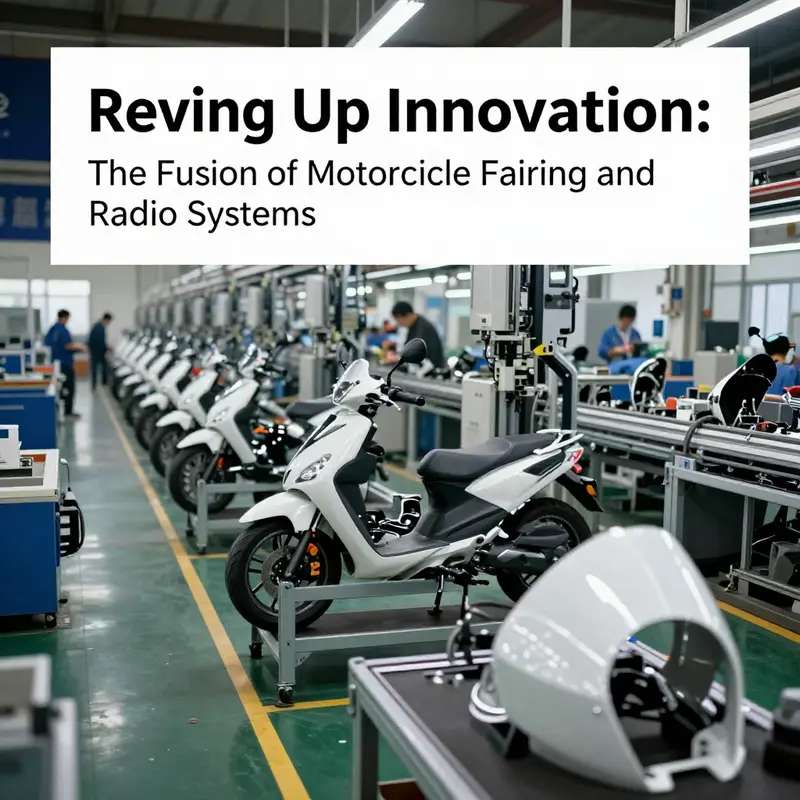
Integrated manufacturing and logistics define modern motorcycle fairings that include radio modules. The fusion of aerodynamic bodywork and embedded electronics creates a supply chain with unusual demands. This market sits at the intersection of high‑precision plastics work, electronic module assembly, wireless component supply, and global distribution. Each stage must meet tight tolerances, durability standards, and time windows. The result is a distinct ecosystem where geography, capability, and supplier relationships matter more than basic unit price.
In practice, the most visible concentration of capabilities occurs in southern China. Guangdong Province hosts clusters of mold makers, injection‑molding plants, automated painting lines, and electronics assemblers within a few dozen kilometers. This density shortens feedback loops. A tooling change, tolerance adjustment, or antenna reorientation can move from prototype to pilot run in a matter of days. That speed reduces engineering churn and lowers the cost of iterations. For integrated fairings, where plastic skin geometry affects antenna placement and vibration damping alters electronic performance, that rapid co‑engineering is essential.
This cluster effect extends beyond simple proximity. It creates a collaborative environment where plastic fabricators, surface finishing shops, and electronic integrators work on the same schedules. Suppliers offer value added services such as in‑house UV stabilization testing, vibration qualification rigs, and IP67 waterproofing validation. These capabilities remove friction for buyers who want a single source for an assembled fairing with radio, rather than coordinating multiple vendors across continents. When a supplier can deliver painted shells with pre‑installed antennas and sealed control modules, the buyer avoids costly alignment and warranty headaches later.
Logistics complements manufacturing density. Major export ports near Guangzhou and Shenzhen, together with bonded warehousing, let manufacturers ship under DDP terms efficiently. Bonded warehouses allow staging of finished goods, customs preclearance, and consolidation of orders. This matters because many buyers operate just‑in‑time inventory. A fairing fitted with a radio module, shipped late or with missing firmware, can stop an assembly line on the buyer side. High on‑time delivery rates are therefore not a luxury. Top suppliers in the region report on‑time figures above 95 percent and average initial response times under two hours. Those metrics sustain tight assembly schedules for OEMs and aftermarket distributors alike.
Sourcing such integrated components is more than price negotiation. Buyers evaluate performance metrics such as reorder rates, failure incidence, and field return patterns. A reorder rate above 15 percent for a particular design signals consistent market acceptance and low defect incidence. Conversely, a high return rate may suggest issues with waterproofing, connector fatigue, or wireless interference. Because the radio and fairing share mechanical and electrical interfaces, small manufacturing variations can cascade into reliability problems. That makes historical performance metrics more valuable than low unit costs. Smart sourcing teams weigh lifetime cost, not initial price.
Material selection drives both manufacturing and supply chain choices. Fairings demand polymers with high impact resistance, UV stability, and paint adhesion. Suppliers frequently use reinforced thermoplastics or polymer blends that withstand stone chips and prolonged sun exposure. Electronic housings and faceplates require dielectrics compatible with antenna patterns. When a supplier lacks experience with these materials, radio placement may suffer. Experienced clusters, however, maintain testing capabilities for salt spray, thermal cycling, and mechanical shock. Vendors that combine material testing with electronics tuning are therefore more attractive partners.
Quality assurance is integral and multi‑layered. Suppliers typically implement first‑article inspections, in‑line SPC, and final functional checks. For integrated units, functional checks include radio transmission power, reception sensitivity, and Bluetooth pairing reliability. Environmental testing — such as ingress protection testing and vibration under operating temperature — is standard for premium offerings. Buyers often require batch traceability. Serializing modules and maintaining trace logs for firmware versions helps trace field issues back to a production lot. This traceability shortens diagnostic cycles and mitigates large-scale recalls.
Another practical element is firmware and software management. Radios and smart interfaces rely on firmware that must be maintained across production runs. A supplier who can manage firmware images, support secure updates, and coordinate OTA distribution reduces complexity for the buyer. It also raises the bar for supplier selection. Contract terms will often include stipulations on software version control, update testing, and the handling of security vulnerabilities. These non‑commodity tasks demand organizational maturity and technical depth from the integrator.
Cost structure in this market is a hybrid of traditional bodywork economics and electronics margins. Mold tooling and painting lines represent heavy upfront capital. Electronics assemblies add component costs and the complexity of supply risk. The economics favor regions with both tooling expertise and efficient component sourcing. Guangdong’s mix of mature mold shops and proximity to PCB assemblers compresses lead times. This allows suppliers to offer lower landed costs while maintaining quality. Buyers seeking OEM‑grade fairings with radios benefit from sourcing in such clusters because they gain access to efficient capital amortization across multiple product lines.
Risk management remains a constant. Concentration in a single region brings geopolitical, environmental, and operational risks. Diversification strategies include qualifying secondary suppliers in adjacent provinces or countries, dual‑sourcing critical electronic parts, and maintaining buffer stock for components with long lead times. Some buyers negotiate contractual clauses for production continuity and disaster recovery. Others invest in supplier development to spread capability across multiple facilities. Effective risk strategies balance the efficiency gains of clusters with contingency alternatives.
Sustainability and compliance increasingly shape supplier selection. Materials must meet regulatory requirements for restricted substances. Electronic modules require RoHS compliance and may face additional regulatory scrutiny depending on wireless frequencies. Larger buyers conduct supplier audits to ensure traceability and labor compliance. Suppliers that publish environmental test data and maintain certified processes stand out. This trend ties into branding as much as compliance; integrated solutions marketed to premium segments must align with corporate sustainability narratives.
The aftermarket and OEM channels place different demands on supply chains. OEM programs prioritize process control, long‑term forecasting, and serial number traceability. Aftermarket buyers favor flexibility, shorter runs, and a broader model catalog. Suppliers serve both channels by offering modular designs that adapt to multiple motorcycle models. That modular approach reduces tooling cost per variant, and it lets assemblers mix and match radio modules across different fairing shells. For companies supplying aftermarket fairings to owners of popular sport models, catalog breadth is a competitive advantage. A supplier able to produce compatible shells for a wide range of bikes increases its order volume and makes logistics more predictable.
Collaborative design agreements further tighten supplier relationships. When buyers engage suppliers early in the design process, they gain access to engineering resources for antenna tuning, EMC mitigation, and vibration control. Joint development agreements often include shared CAD repositories, co‑located test plans, and regular design sprints. This collaboration reduces rework and accelerates time to market. The most successful partnerships treat suppliers as extensions of the engineering team rather than mere vendors.
Customization options influence supply chain choices. Buyers may request branded faceplates, custom paint schemes, or alternative control layouts. Each customization adds a supply chain touch point, from color matching to personalized firmware. Suppliers who maintain flexible printing and painting systems, plus programmable assembly jigs, can fulfill these requests with minimal lead time increases. That flexibility is particularly valuable for smaller OEMs and specialty aftermarket brands that compete on unique styling and user interface differentiation.
Pricing transparency and contract structure also matter. Long‑term contracts with volume commitments unlock better tooling amortization and lower per‑unit prices. However, they require accurate demand forecasting. Some buyers prefer framework agreements with rolling forecasts and release orders. These arrangements share risk and preserve agility. Payment terms, warranty clauses, and acceptance criteria are negotiated to align incentives. Suppliers that offer clear KPIs — for on‑time delivery, defect rate, and response time — provide buyers with confidence to commit to larger volumes.
Looking ahead, connectivity expectations and production techniques will evolve. Buyers will demand lower latency pairing, improved coexistence with other wireless systems, and more robust environmental resistance. Suppliers preparing for these demands invest in radio design expertise, EMC labs, and higher‑grade materials. On the manufacturing side, automation in painting, co‑injection molding, and inline testing will reduce variance and boost throughput. Supply chains that combine these investments with strong logistics capabilities will dominate the market.
For buyers who prioritize speed, quality, and integrated capability, sourcing from maturity centers in Guangdong remains compelling. The region’s combination of advanced molding, sophisticated finishing, and close electronic assembly partners compresses development cycles. Its proximity to major ports and bonded warehousing eases international distribution. When selecting partners, buyers should evaluate reorder history, testing capabilities, and defect metrics rather than narrow price alone. Suppliers that demonstrate robust firmware management, environmental testing, and serial traceability deliver the best balance of reliability and cost.
When a buyer needs compatibility with legacy models and broad aftermarket appeal, suppliers that offer modular fairing families gain an edge. These suppliers can produce shells compatible with multiple motorcycle series while standardizing electronic modules. That approach reduces complexity and keeps inventory levels manageable. For a hands‑on example of aftermarket shell compatibility, consider the catalog of Honda CBR600 F4i fairings that illustrates how shell variants map to multiple model years and fitments. Such catalog strategies reveal why clustered suppliers can support both OEM and aftermarket channels efficiently.
To manage long‑term risk, buyers should adopt a multi‑layered supplier strategy. Qualify primary integrators for speed and scale. Identify regional backups for critical electronics. Implement pilot runs for any change in materials or firmware. Track in‑field returns with serialized data. Negotiate flexible contracts that allow for seasonal demand and design iteration. Finally, build a technical partnership to enable co‑development. The suppliers that survive and prosper will be those that combine deep materials expertise with electronics integration, tight logistics, and transparent quality metrics.
External resource: For additional technical specifications and integrated radio and gauge faceplate trim product lines, refer to Motorcycle Fairing Trim. (https://www.motorcyclefairingtrim.com/)
Connected Skins: The Next Wave of Integrated Radio Systems in Motorcycle Fairings
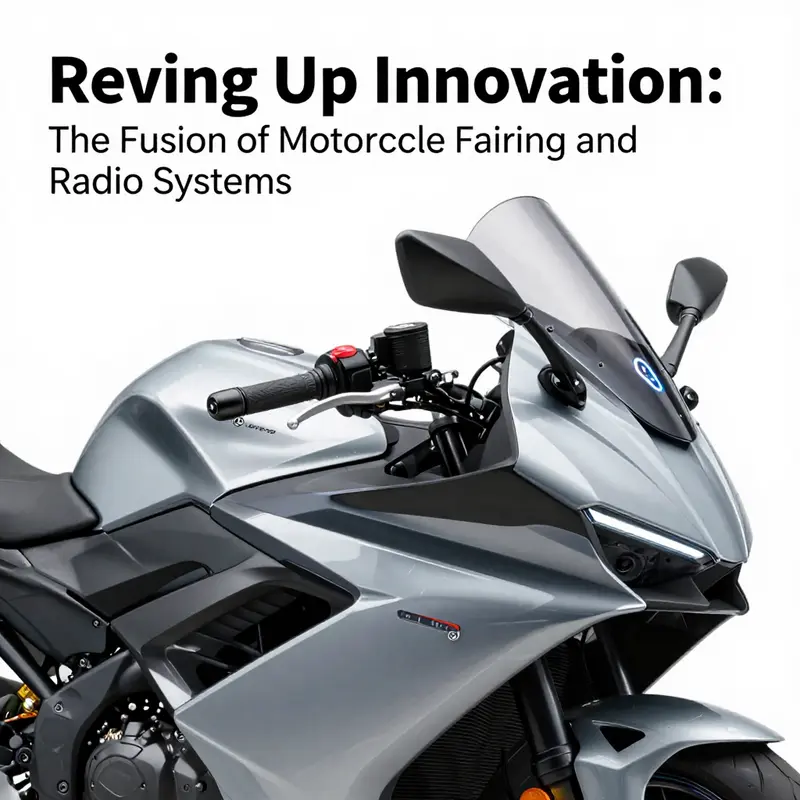
The motorcycle fairing has long been the rider’s first impression, a shield against wind and noise that also frames the cockpit. Today it is evolving into a platform that blends air management, acoustics, electronics, and human factors. Integrated radio and connectivity are moving from optional features to core design decisions that improve awareness, convenience, and safety without sacrificing form or performance. The fairing becomes a modular, upgradeable hub for sensors, audio, navigation prompts, and voice interfaces, all tuned to the rider’s needs and protected from weather and vibration by thoughtful materials and packaging. A combination of lightweight composites, shielding, heat dissipation, and carefully routed channels enables radios, microphones, and speakers to live inside the shell without compromising aerodynamics or durability. Modularity supports staged upgrades, reducing waste and preserving OEM aesthetics while expanding capabilities over time. The rider’s experience is centered on acoustic design that keeps voice clear and wind noise low, while the interface remains intuitive and hands-free, supporting safety even on busy highways. Connectivity weaves V2V, device sync, and AI-assisted voice control into a coherent system that can deliver directions, alerts, and diagnostics through the fairing’s audio channel, with privacy and security embedded by design. The trend toward connected fairings extends beyond individual rides: clusters of suppliers and manufacturers are converging on scalable, near-term production that makes high-quality, radio-ready fairings affordable across models. In sum, the fairing of the future is not just a shell but a smart, adaptive interface that helps riders listen, navigate, and stay connected with minimal distraction. It invites ongoing experimentation through modular upgrades, standards-based integration, and thoughtful user experience design.
Final thoughts
The integration of radio systems within motorcycle fairings represents a significant advancement in rider experience, combining aesthetic design with practical functionality. As market trends continue to evolve toward personalization and digital connectivity, businesses must adapt to meet consumer expectations. Understanding the supply chain and innovation trends will enable motorcycle industry leaders to capitalize on this shift, ultimately enhancing product offerings and customer satisfaction.