
Motorcycle enthusiasts crave a ride that resonates with both freedom and sound, and as technology advances, the integration of speakers into motorcycle fairings has emerged as a game-changer. This innovative design not only enhances audio performance but also maintains the aesthetic appeal of the motorcycle. This article dives deep into three significant aspects shaping this trend: the design and functionality of motorcycle fairings with speakers, an analysis of their performance in real-world scenarios, and the latest market trends and innovations. By exploring these facets, business owners can gain valuable insights to meet the growing demands of audio-enthusiast riders and capitalize on this emerging market segment.
Sound in the Shell: The Integrated Symphony of Aerodynamics, Durability, and Audio in Modern Motorcycle Fairings
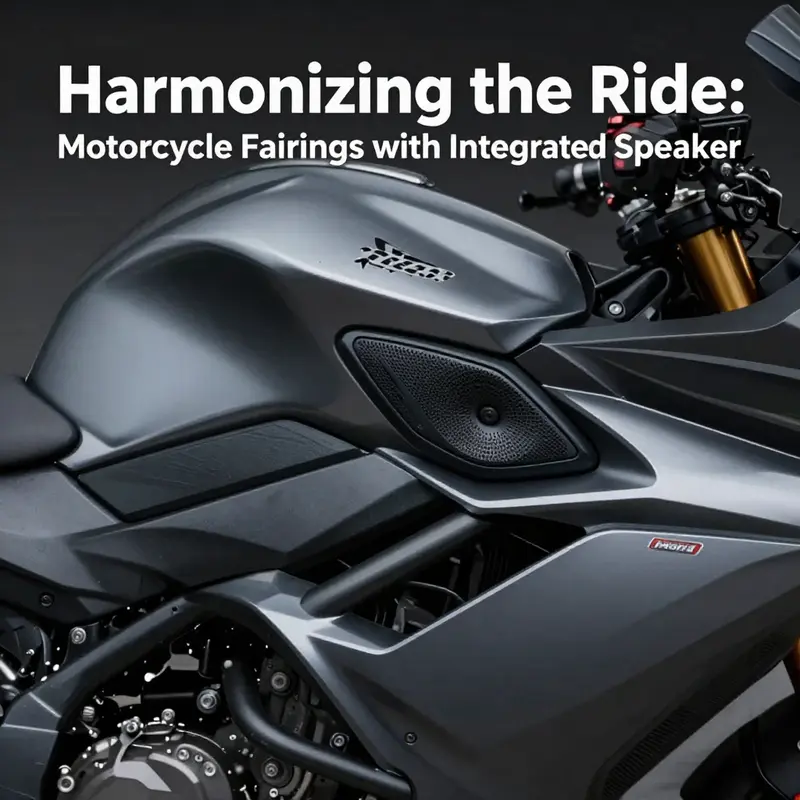
The evolution of the motorcycle fairing has reached a point where the shell that guards the rider from wind and weather also becomes a carefully engineered arena for sound. In contemporary designs, the fairing is not merely a protective barrier; it is a precision platform where acoustics, aerodynamics, and structural integrity converge. The result is a rider experience that feels more immersive, more cohesive, and more purposeful. The movement from standalone audio components to integrated systems embedded within the fairing reflects a broader design philosophy: sound should travel as a natural extension of the rider’s environment, not as a separate add-on that fights against wind and vibration. This transformation depends on three intertwined factors: the geometry of the fairing, the enclosure behavior of the speaker system, and the intelligent management of signal and power. Each factor strengthens the others, and the best implementations read as seamless from a distance, even as they reveal their sophistication up close. In this light, the fairing becomes a living, breathing acoustic chamber that moves in harmony with the bike and rider, rather than a rigid shell that carries sound around the outside of the motorcycle.
At the core of integrated fairing audio is a shift in spatial reasoning. Rather than mounting speakers as protruding elements on the exterior, designers craft dedicated internal spaces within the fairing structure. These spaces are deliberately shaped by walls that act in concert—the internal wall and the external wall work as a paired enclosure that seals a portion of the cavity. This sealed enclosure controls air pressure dynamics and minimizes distortion caused by external air flow, which becomes a critical advantage at speed. Sealing the driver against wind currents is not a trivial matter; it is a fundamental step in preserving clarity, warmth, and intelligibility of high and midrange content when wind turbulence would otherwise smear the audio image. In practice, this means that the speaker port is not simply a hole in a panel but a carefully tuned aperture that maintains the throttle of sound without inviting the ambience of wind to contaminate the signal.
The fairing’s geometry itself carries acoustic intent. An upper fairing region often features an aerodynamic profile—an airfoil-like contour on the inboard side—that channels air efficiently while adding rigidity to the speaker housing. The edge of the outboard portion angles downward on each side to manage wind separation and minimize the gusts and buffeting that can threaten speaker performance. These aerodynamic refinements do more than reduce drag or lift; they create a more predictable acoustic environment. By shaping the flow around the speaker enclosure, the system reduces turbulent noise that would otherwise couple into the cabinet, a phenomenon that can manifest as flutter, buzz, or a perceived muffling of high frequencies. In effect, form directly informs function: the careful sculpting of the fairing is an invisible part of the sound system, a contributor to clarity that riders feel more than they analyze.
Inside the enclosure, attention to materials and mass is equally essential. Sound-deadening materials and vibration-damping pads are positioned around mounting points to decouple the driver from the structure. Road shocks, engine harmonics, and frame flex all have the potential to radiate into the speaker chassis and contaminate the signal with distortion. Damping layers, when correctly applied, absorb a portion of that energy before it reaches the cone, allowing the speaker to breathe and respond with fidelity. The seal itself matters: an air-tight or near air-tight cavity prevents booming air from turning into a poor man’s low-pass filter. The result is tighter low-end response, less wind-bleed in the upper register, and a more cohesive midrange that remains intelligible as speeds climb and the wind noise climbs with them. The engineering intention is not to create a studio-like environment in the saddlebag of a bike but to craft a listening space that remains consistent across a broad range of weather and road conditions.
Sound quality in this context benefits greatly from amplification and signal shaping that respects the realities of riding. Digital signal processing (DSP) modules tuned for motorcycles allow for precise control of frequency response, equalization, and phase alignment. By channeling the signal through a DSP, the system can compensate for the fixed geometry of the enclosure, the acoustic reflections inside the fairing, and the varying acoustic paths toward the rider’s ears. Phase coherence across multiple drivers becomes a practical goal rather than a theoretical ideal. The DSP can also help tailor the output to rider posture—whether seated upright, leaned into a curve, or standing in a spirited ride—so that the perceived sound stage remains centered around the listener’s head. In other words, the electronic brain becomes the sculptor of space, shaping the acoustic image in real time to suit the riding context and the rider’s preferences.
Connectivity has grown in importance as well. Modern integrated audio systems frequently offer Bluetooth or other wireless interfaces that enable streaming from a phone or dedicated device, navigation prompts, and ride-specific communications. The goal is to deliver audio cues and music with clarity while reducing the need for the rider to divert attention from the road. A well-designed system delivers prompts with crisp diction, while music becomes a consistent companion rather than a distraction. The cycle of input and output is therefore not merely about louder sound but about more reliable aural legibility at speed. The fairing’s audio architecture must, in this sense, co-operate with safety and ergonomics. Riders should be able to adjust volume, balance, and EQ without bending toward a screen or fiddling with exposed controls while navigating a windy highway. The fairing, acting as the housing for the speakers and the control interface for the DSP, becomes a tactile and visual signpost for how integrated systems can be used safely and with confidence.
From a practical standpoint, the integration process involves deliberate choices about the number of drivers, their sizes, and their placements. A two-way or three-way configuration can deliver a more balanced spectrum, with the woofer delivering the bass and the midrange and a tweeter handling the upper registers. The speakers themselves are chosen for weather resistance and durability, with enclosures designed to withstand rain, dust, and the impact of road debris. Yet the design must avoid creating a maintenance burden. Access to serviceable components, ease of replacement, and the ability to reseal after intervention are as important as the initial performance. The user experience is enhanced when replacements or upgrades can be accomplished without disassembling major portions of the fairing or compromising the enclosure’s integrity. In this sense, the integration is as much about longevity and reliability as it is about immediate sonic benefits.
One surprising dimension of this design philosophy is the way it reframes the rider’s relationship with the environment. High-speed travel brings wind, engine rumble, and tire noise to the forefront of perception. A well-integrated system does not simply blast louder audio into this cacophony; it orchestrates a more intelligible soundscape that sits above the ambient noise floor. The rider perceives a clearer image of the musical content or spoken cues because the sound is emitted from a location that is physically close to the ears and acoustically optimized by the enclosure and the surrounding fairing. This perspective is transformative: the same road that challenges the clarity of an ordinary speaker set becomes the stage for a refined audio experience. The fairing’s acoustic design, therefore, becomes part of the rider’s sense of immersion, not merely a convenience feature.
Another factor worth exploring is the degree to which these systems support customization without introducing complexity. A critical advantage of integrated solutions is the potential for plug-and-play upgrades that preserve the factory-like aesthetic. The goal is to preserve the seamless lines, the clean transitions between panels, and the understated hardware that makes the bike feel polished rather than aftermarket modified. When a speaker system can be installed with minimal alteration to the fairing’s structure and with instruments that look as if they belong to the vehicle from day one, the rider experiences a more convincing sense of ownership. The visual stealth of the system matters as much as the audible impact. The fairing should still appear as a protective shell with refined contours and a disciplined material palette. The audio components should be perceived as an extension of that shell, not as a clumsy addendum hung on the outside. In practice, this means maintaining coherent color schemes, discreet grilles, and aluminum badges or branding elements that harmonize with the overall design language. The best installations feel obvious in their engineering prowess yet invisible in their aesthetic presentation.
In terms of performance benchmarks, these integrated systems aim to improve sound pressure levels at highway speeds while maintaining clarity and reducing distortion. Compared with conventional, externally mounted speakers, integrated units benefit from a more favorable impedance environment and a tailored acoustic impedance match with the fairing cavity. This alignment helps preserve dynamic range when the rider demands faster pacing or a louder listening experience. The improvement is not limited to volume; the perception of a broader, more coherent audio image is a frequent outcome. High-frequency detail remains discernible, even when the wind is singing through the frame, and midrange presence carries vocal clarity through long days on the road. Bass, often the hardest to preserve in a moving vehicle with a fixed enclosure, gains from the enclosure’s resonance control and from the DSP’s ability to shape the response so it remains tight and controlled rather than flabby or boomy. The rider experiences a sound signature that feels true to the source material, with fewer artifacts introduced by road texture or engine rumble.
The research into this design space also highlights the value of practical considerations like weatherproofing and corrosion resistance. The fairing, by its nature, is exposed to spray, rain, and spray from tires. The enclosure must keep moisture out while not compromising acoustic output. Modern approaches use weatherproof enclosures and seals that do not degrade over time or with fluctuating temperatures. Materials matter, too; composites and polymers chosen for their damping properties, in combination with protective coatings, resist the wear that comes with daily riding. The integration strategy thus balances several competing demands: acoustic performance, aerodynamic efficiency, durability, and maintainability. It is a multidisciplinary effort that draws on sound engineering principles, materials science, and a deep understanding of rider priorities.
From an ecosystem perspective, integrated fairing audio also interacts with the broader vehicle electronics and control ecosystem. The DSP system requires power management that respects the bike’s electrical system, especially on models where electrical demand is already high from lighting, sensors, and infotainment. Heat dissipation becomes another design constraint. The amplifiers and processing units must operate within a temperature window that preserves reliability under long days on the road and under extreme weather conditions. The wiring harnesses are routed with careful attention to vibration resilience and water ingress, and connectors are chosen for ease of service and long-term stability. The human interface—the control knobs, the soft-touch buttons, or the touchscreen integration—must be legible and intuitive in the presence of glare and rain. In many setups, the user can dial in personal preferences, selecting different sound profiles for city streets, cruising on the highway, or long-range rides through varied terrain.
What ultimately distinguishes a well-executed integrated fairing audio system is not a single standout feature but the compound effect of its components working in synergy. The sound doesn’t merely come from a pair of drivers placed inside a fairing shell; it emerges from a carefully engineered ecosystem: a cavity that is tuned for space, materials that dampen unwanted vibrations, an enclosure that seals out wind while allowing controlled resonance, a DSP that sculptes tone and phase, a power strategy that keeps performance stable, and a rider interface that makes adjustments feel natural and immediate. When these elements align, the result is an audible experience that feels integrated, deliberate, and attuned to the bike’s character. The rider is left with the impression that the sound was always meant to be there, a natural extension of the ride rather than an afterthought layered on top. This is the essence of a mature approach to motorcycle audio: sound that respects speed, weather, and rider intention, housed in a fairing that looks as if it grew there from the beginning.
For readers who are curious about real-world practice, consider the ways in which aftermarket and factory-oriented approaches converge. In many cases, riders seek upgrades that preserve the factory appearance while boosting performance. The best options deliver increased sound pressure level with reduced distortion, improved dispersion toward the rider’s ears, and robust sealing against the elements. They also respect the bike’s balance, weight distribution, and bike-handling characteristics, ensuring that adding audio does not negatively affect ride quality or resale value. The dialogue between design and function is ongoing: as riders demand higher fidelity and more controllable sound, engineers respond with better enclosure design, smarter DSP, and more resilient materials. The fairing thus remains a living system, capable of adaptation as technology and riding styles evolve. In this sense, integrated fairing audio represents not merely a technical feature but a philosophy of how to think about the bike as a total device—an aerodynamic sculpture that also carries a carefully tuned acoustic signature.
For those who want to explore the idea further in a practical, installable sense, a convenient way to envision the path forward is to imagine choosing a fairing that can accommodate a built-in audio platform without visible modification. It is possible to select a kit designed to align with the fairing’s contours, to maintain the machine’s original silhouette, and to provide an upgraded listening experience that remains coherent with the bike’s other systems. The design goal is to reach a state where the integration feels inevitable, as if the rider’s experience had always included a sonic dimension. This is the essence of a successful integration—audio that enhances physiology of listening without drawing attention to itself as a separate module. The final impression is of a bike that has been tuned not only for speed and efficiency but also for sensory harmony, where the driver’s ear perceives the music or the traffic cues as naturally part of the journey rather than as an ornament appended to the machine.
To connect across the broader landscape of motorcycling, it is helpful to acknowledge that the fairing is part of a continuum of rider-centered innovations. The integrated speaker approach sits alongside advances in comfort, lighting, and rider-assistance technologies that aim to preserve focus and safety. The fairing becomes the hub of a compact, resilient, multi-sensory system that supports long rides, reduces fatigue, and even offers practical navigational cues when paired with compatible devices. The aesthetic dimension remains important, too. When the speakers are embedded with a quiet elegance, the overall bike design communicates a sense of precision and care, inviting riders to perceive the listening experience as part of the machine’s character rather than an afterthought. The cumulative effect is one of cohesion: a motorcycle that speaks not only through the engine or the exhaust but through a curated acoustic atmosphere that matches the speed, lines, and purpose of the ride.
In this chapter the thread of design and function has been pulled taut across the arch of modern fairings. The integration of speakers within the fairing structure represents more than a technical feat; it is a statement about how riders want to engage with their machines. It is a confirmation that a well-made fairing can be a real, audible companion—an ally in the cockpit that speaks with clarity in a way that respects the rider, the machine, and the road. The conversation between the wind and the wave of sound is not a trade between strength and beauty but a synthesis of both. As engineers continue to refine enclosure geometry, damping strategies, and DSP-aware control interfaces, the vision of a motorcycle that delivers immersive sound without compromising aerodynamics or durability becomes ever more practical. In the end, the fairing that houses speakers is a testament to how far motorcycle design has moved toward an integrated future, where form and function are inseparable and where the sound of the ride becomes a defining feature rather than a footnote.
For readers inclined to investigate practical examples or to envision how their own bike might incorporate such solutions, the concept can start with a simple hypothesis: can the fairing do more than shield wind and hold instruments? If the answer is yes, then the path is toward an integrated system that respects space, sound, and safety while offering a tangible upgrade in enjoyment. The road to this future is paved with precision: the right enclosure, the right damping strategy, the right DSP profile, and the right rider interface. Together, these pieces form a coherent design language that speaks to riders who value clarity at speed, reliability in diverse weather, and aesthetics that do not scream for attention but reward it with every mile traveled. In the final reckoning, the fairing is the cradle of a listening experience that grows more meaningful as the bike moves forward, carrying the rider along a journey where sound, structure, and speed are in perfect conversation.
Internal link for further exploration: Honda fairings collection
External resource:
External resource: Honda Gold Wing Audio Upgrade — https://www.motorcycle.com/news/honda-gold-wing-audio-upgrade-2025/
Listening to the Wind: A Comprehensive Performance Analysis of Integrated Speaker Fairings
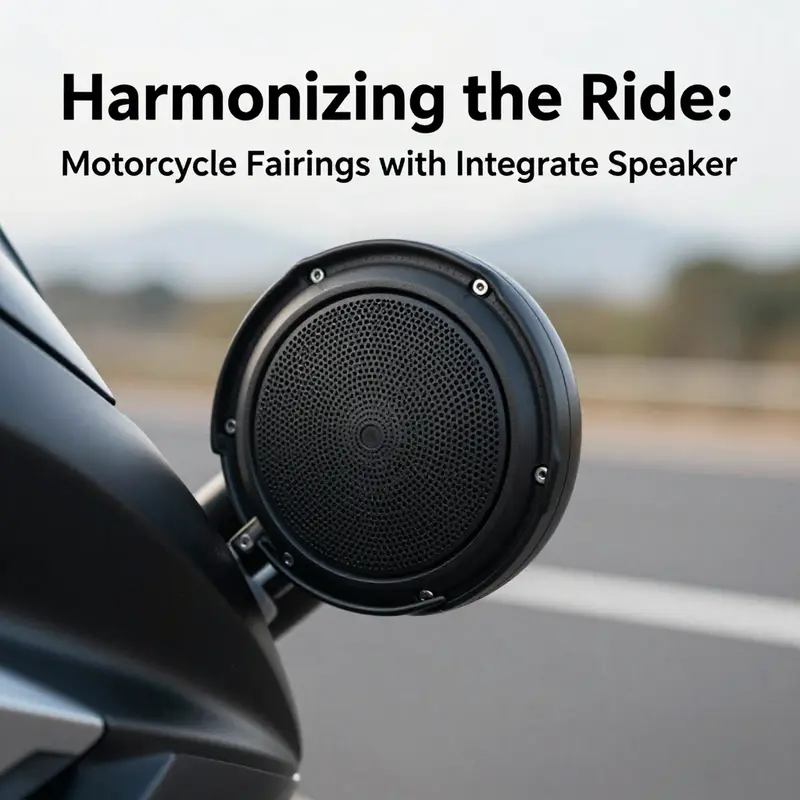
The fairing that frames a motorcycle’s front end has long been a stage for wind, heat, and noise. In recent designs, though, the fairing becomes more than a wind shield; it is a carefully engineered housing for high-performance audio. The aim is not merely to bolt speakers into a hollow cavity but to integrate sound in a way that preserves, or even enhances, both acoustics and aerodynamics at speed. The result is a system that speaks to the rider with clarity while keeping the machine humming with efficiency. To understand this, one must look at how the enclosure is conceived, how the air moves around it, and how electrical systems harmonize with mechanical structures. The synthesis of sound and wind management is where the modern integrated speaker fairing earns its keep.
At the heart of these designs is a deliberately sealed cavity within the fairing. An internal wall and an external wall work together to form a sealed space that stabilizes air pressure around the speaker elements. This sealing is not a cosmetic feature but a functional necessity. Wind, particularly at highway velocities, can create pressure fluctuations that distort, or even muff, audio output. By controlling the air inside the enclosure, designers reduce the likelihood of port chuffing, flutters, and other distortions that rise from abrupt changes in air density and flow. The upper portion of the fairing is often shaped with an aerodynamic priority—an airfoil in the inboard section—that guides the air smoothly over and past the housing. This is not purely about reducing drag; the smoother the surrounding airflow, the less the installed speaker must fight gusts and turbulences that would otherwise echo inside the cavity and degrade clarity.
The edge of the outboard fairing, sloping downward on either side, serves a dual purpose. It helps channel air away from the speaker opening while protecting the grill and drivers from direct exposure to wind and debris. This design choice reflects a wider principle in integrated audio systems: aesthetics and performance are inseparable. A clean, low-profile installation reduces drag and wind-induced noise that could crowd the high-frequency content driven by the tweeter. When you tighten down the entire assembly with a robust internal wall, the result is not a mere speaker mounted in a fairing; it is a purpose-built acoustic chamber that behaves predictably under a wide range of speeds and riding conditions.
From the acoustic perspective, the two-way configuration that frequently defines these installations demonstrates how small design choices ripple through the listening experience. A typical arrangement places a 5.25-inch woofer alongside a 1-inch tweeter mounted on a protective grill. The woofer handles the midrange and bass regions, delivering body and depth to music, navigation prompts, and spoken prompts, while the tweeter handles higher frequencies with the air- and wind-noise-thinned precision needed to cut through at highway speed. The two-way approach allows each driver to work within its optimal band, reducing the amount of excursion that the other driver must undertake and thereby lowering the total distortion produced by the system. In many cases the system is designed as a direct replacement for factory units, meaning the exchange is straightforward and does not necessitate alterations to the fairing structure. The design intentionally aligns with the existing mounting points and, crucially, to the fairing’s internal geometry to preserve the structural integrity that riders expect for long-distance riding.
The electrical architecture of these assemblies typically includes a compact amplifier integrated within the fairing or closely tied to the power source of the motorcycle. A two-ohm impedance for the speaker pair makes for a low-impedance load that can drive louder output with fewer changes in electrical characteristics across the frequency range. The amplification is designed to deliver clean, robust output across the audible spectrum, with particular emphasis on the upper end of the spectrum where wind noise can otherwise smear high-frequency details. The objective is not simply to push more watts but to deliver more perceived clarity at a given listening level, so the rider can hear over traffic, weather, and road surfaces without turning the volume into an audible hazard for others nearby. The result is a system that can deliver high SPL (sound pressure level) without the typical onset of distortion that accompanies aggressive listening at speed. It is the practical balance of power, efficiency, and fidelity that defines these installations.
Aerodynamics and acoustics are, in this context, mutually reinforcing disciplines. The fairing’s form guides air around the speaker assembly rather than forcing it through a rigid, intrusive opening. This approach minimizes turbulent wake that could otherwise manifest as whooshing or fluttering at the specific frequencies where the woofer and tweeter operate. The integrated approach also ensures that the speaker housing contributes to the overall stiffness of the front end, improving vibration management. When the fairing itself absorbs and channels vibrational energy, the drivers are less prone to coupling with the chassis in ways that degrade sound. The “low-profile” appearance is not a mere stylistic trait but an acoustic strategy: the more the voice coil sees a stable, controlled environment, the less the system bleeds energy into the surrounding air in ways that produce feedback and distortion.
Practical performance for riders hinges on durability as much as fidelity. A fairing that hosts audio must withstand rain, dust, road salt, and the constant shake of accelerations and decelerations. Vibration testing is a standard step in validating a design, ensuring the drivers, mounting hardware, and electrical connectors remain reliable under real-world conditions. Materials selection matters, too. The enclosure must damp resonances that might color sound or create rattles that would draw attention away from the listening experience. Weather sealing around the grill and the edge treatments around the speaker cavity help prevent moisture ingress that could degrade performance or promote corrosion over time. A robust build also contributes to rider safety and comfort: a rattling or loose grill can become a distraction at critical moments when attention should be on the road.
From a usability standpoint, the installation logic of these systems tends to emphasize a seamless, factory-like integration. The interconnection with the motorcycle’s power and audio workflow is designed to be straightforward. The goal is to provide a simple upgrade path that preserves the look and feel of the original bike while adding substantial audio capability. In touring scenarios, this approach is especially valuable. A rider can upgrade to a system that offers higher listening levels and broader frequency response without sacrificing space for luggage, fairing protection, or control access. The compatibility with existing luggage systems and handlebar accessories is a notable design consideration. When the audio is embedded within the fairing, it frees up space that would otherwise be consumed by separate speaker housings mounted on brackets or under the dash, contributing to a more coherent silhouette that appeals to riders seeking both form and function.
An important part of the performance story is the warranty and the credible assurance it provides riders who demand reliability on long trips. A two-year limited warranty is a common, meaningful expression of confidence in the durability of integrated sound solutions. It signals that the maker expects the assembly to endure the sorts of environmental and operational stresses typical of highway cruising, including sustained exposure to sun, rain, and temp fluctuations, as well as the constant vibration of a moving motorcycle. This warranty coverage matters not only as a contractual protection but also as a qualitative signal of quality. For riders who depend on a dependable audio experience to accompany long days in the saddle, such assurances reduce worry and contribute to overall ride satisfaction. The value here extends beyond raw SPL or frequency response; it encompasses peace of mind that the installation will perform consistently under demanding conditions.
The performance advantages of fairing-integrated speakers extend into the riding experience as a whole. When the audio system is neatly embedded, the surrounding aesthetics benefit as well. A clean, uninterrupted fairing surface with grilles that blend into the styling cues of the bike creates a unified look that many riders find essential. The fairing becomes a single, coherent platform—not a collection of separate components that must be forced to work together after assembly. This design elegance reduces maintenance complexity as well. Fewer protruding elements mean fewer places for wind-driven debris to strike and fewer seams to seal, which translates into fewer potential failure points over the life of the bike.
The practical outcomes of this integrated approach are measurable in real-world riding. Riders report that the high-frequency content—crystal highs from the tweeter—remains intelligible at cruising speeds where wind noise typically muddies the top end of the spectrum. The midrange, carried by the woofer, feels more present and balanced, giving voices, instruments, and navigation prompts a stronger sense of place in the soundstage. The overall impression is not merely louder audio but clearer audio—cleaner syllables in a navigation instruction, crisper dialogue in Bluetooth calls, and more precise transients in music and audio prompts. High-frequency response is critical for separating hiss and sibilance from important cues, and the improved clarity contributed by a well-sealed, well-tuned enclosure helps ensure that the rider does not have to increase volume to hear the content at speed.
From an aerodynamic viewpoint, the integration even contributes to a quieter cabin by reducing the need for the rider to push the audio range into levels that persuade wind noise to step in as a secondary amplifier. In other words, the system tolerates a lower listening volume while still delivering the content with sufficient presence. That translates to more comfortable long rides and a reduced cognitive load as the rider receives information and entertainment at a steady, manageable level. In touring configurations, that steadiness matters. When the rider is negotiating long stretches of highway, distinct, legible audio prompts, weather updates, and music cues help maintain focus without demanding excessive attention away from the road. The integration thus supports rider comfort, safety, and enjoyment in a way that disc-mounted or externally mounted speakers often cannot.
To the reader who is considering upgrades or seeking a deeper understanding of how these components behave, the takeaway is that the performance is a function of deliberate systems thinking. The chassis, the fairing, the speaker drivers, the grill, and the internal baffles all participate in a coordinated way. The enclosure shape, the sealing strategy, and the grill’s acoustic transparency all influence the final frequency response. The boundary conditions created by the fairing influence the driver’s movement and how the air around the grill responds to the driver’s motion. In short, the audio system is not just the sum of its drivers; it is a tuned ecosystem where mechanical, aerodynamic, and acoustic properties are aligned to produce a dependable, high-fidelity listening experience at a wide range of speeds and weather conditions.
Riders who value this integrated approach often pursue a broader context of fairing design. The Yamaha fairings collection, for instance, showcases how different styling cues can coexist with functional engineering to deliver both aesthetic appeal and practical performance. This example helps illustrate how the fairing can support a built-in audio system without compromising the overall design language of the bike. It is a reminder that fairing design is not a one-size-fits-all proposition but a canvas on which audio performance and wind management can be harmonized with the bike’s intended use and rider preferences. For riders curious about how these design philosophies translate into real-world form, the Yamaha fairings collection offers a helpful reference point in exploring contemporary integrated fairing aesthetics and engineering approaches.
The integrated speaker approach is also a reminder that the future of motorcycle audio may hinge on adaptive, context-aware technologies. The current generation of integrated systems benefits from predictable acoustic design and rugged construction, but the next frontier could bring rotation-sensitive equalization, active wind noise compensation, and sound field shaping that adapts to speed, wind direction, and rider position. Digital signal processing (DSP) can already tailor crossover behavior and dynamic range in response to changing conditions. As components become more compact and more robust, the possibility of fine-grained control over how the system responds to the bike’s velocity and attitude becomes increasingly plausible. The objective is a listening experience that remains coherent and articulate across the spectrum of riding scenarios—from a slow urban crawl to a high-speed highway sprint—without requiring the rider to constantly adjust the volume or the EQ. This is not speculative fiction. It is a practical trajectory grounded in the current successes of sealed enclosures, aerodynamic shaping, and direct-replacement installations that preserve the fairing’s aesthetics while delivering a higher quality of sound.
In sum, the performance of motorcycle fairings with integrated speakers emerges from a disciplined interplay between acoustic engineering and aerodynamic strategy. The sealed internal cavity, the carefully contoured external geometry, and the choice of a two-way driver arrangement all converge to produce clearer highs, more robust mids, and deeper bass—all while maintaining a low profile and protecting the speakers from the elements. The warranty and durability expectations are part of that performance story, signaling that riders can count on reliability in the range of the long tours they undertake. When the system works as intended, it is not simply background music on the move; it is a deliberate extension of the motorcycle’s ride quality, contributing to comfort, safety, and enjoyment on every mile.
For readers who want to connect these performance insights to practical takeaways, a key consideration is installation and upgrade strategy. If you are upgrading a touring motorcycle with a fairing that already emphasizes aerodynamics and weather protection, choose an integrated system designed to fit the existing mounting geometry and electrical harnesses. Look for a direct-replacement option that minimizes modification. A system with a built-in amplifier and a two-way speaker pair can deliver meaningful gains in perceived loudness and clarity, with the added benefit of reduced distortion at highway speeds. This approach keeps the bike’s overall silhouette clean and cohesive, a factor many riders value almost as much as the audible performance itself. Integrating such a system into a touring motorcycle also means considering how the improved audio interacts with navigation prompts, ride briefing announcements, and phone calls. A well-tuned, high-fidelity system will help these functions stay intelligible and unobtrusive, supporting rather than overwhelming the rider’s situational awareness.
Exploring the broader ecosystem of fairing design, with attention to how audio components interplay with structural integrity and aerodynamics, helps explain why integrated solutions matter. The design philosophy behind these systems emphasizes that the best sound in a moving bike is achieved not by forcing more volume but by engineering the environment to support clear, natural sound at the speed the rider travels. The combination of a sealed enclosure, an aerodynamically aligned fairing shape, and a robust, weather-resistant build gives riders a coherent, durable, and enjoyable listening experience. It is a holistic approach that respects the rider’s need for clarity at speed, the machine’s performance envelope, and the visual language of the motorcycle itself.
External resource: https://www.h-d.com/warranty
Sound at Speed: Market Trends and Innovations Driving Integrated Speaker Fairings
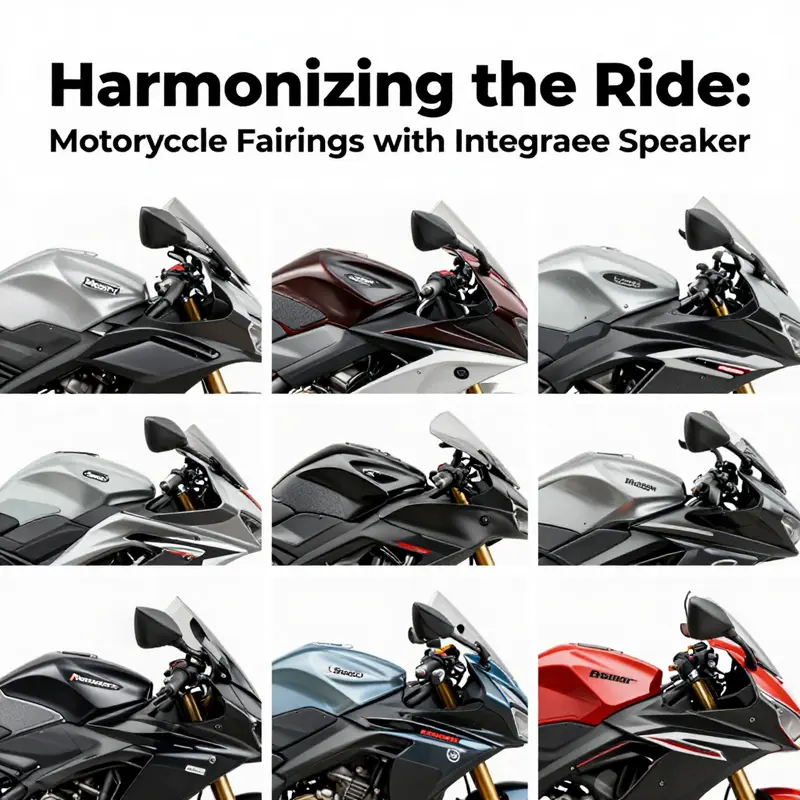
The marriage of sound and speed has moved from aftermarket add-ons to a purposeful engineering philosophy in modern motorcycle design. As wind becomes a constant, and riders increasingly expect connectivity that matches the sophistication of their bikes, the fairing—long the sheltering shell for aerodynamics and instrumentation—has begun to host something previously confined to the helmet or the cockpit: high-quality, wind-resistant audio. The rise of integrated speaker fairings marks a shift not only in how riders listen to music or hear navigation but in how manufacturers conceive of the bike as a single, coherent system. It is a shift that blends acoustics, aerodynamics, materials science, and human-machine interaction into a single, market-facing proposition. The result is a product category that promises both cleaner aesthetics and a more immersive riding experience, with the promise of safer, more enjoyable long stretches and a more connected urban ride alike. In this context, the market trends and innovations around fairings with built-in audio are not mere novelty; they reflect a broader trajectory toward smarter, more personalized, and more capable riding machines.
The core idea behind integrated speaker fairings is as elegant as it is practical. Modern fairings are designed with internal cavities that serve as dedicated speaker enclosures. These enclosures are not slapped onto the exterior; they are folded into the fairing’s geometry with an internal wall and an external wall that work together to seal the cavity. A sealed or semi-sealed enclosure controls air pressure, dampens resonances, and reduces distortion caused by wind-induced pressure fluctuations. The result is a listening experience that remains intelligible at highway speeds where wind noise and engine vibrations would otherwise drown out the audio. This architectural choice also preserves the fairing’s clean lines and structural integrity, avoiding the need for bulky, aftermarket add-ons that can compromise aerodynamics or weather sealing. The design language of these systems is one of integration rather than augmentation—a true performance improvement that remains visually discreet yet acoustically potent.
Beyond the enclosure, the acoustic performance hinges on careful tuning. The upper portion of the fairing often features an aerodynamic form, sometimes described in design circles as an airfoil in the inboard section. This shape isn’t decorative; it minimizes drag and stabilizes flow around the speaker housing, reducing turbulent noise that would otherwise color the sound. An edge that slopes downward on the outboard side adds another layer of wind shielding while contributing to the structural endurance of the speaker mounting. When you couple this with precision-damped speaker mounts and acoustically treated panels, the rider experiences a sound field that feels direct yet balanced—clear highs, natural mids, and punchy bass without the usual wind-affected harshness. In practice, this means riders can enjoy higher fidelity at speeds that would have made speakers suffer in the past, and the experience remains consistent whether the bike is cruising on a boulevard or carving through a canyon pass.
A key driver of adoption is the integration of modern connectivity. Bluetooth has become a standard feature, enabling hands-free calls, streaming music, and navigation prompts through the fairing’s speakers. This is not merely convenience; it reshapes rider behavior by reducing the need to reach for a phone while maintaining focus on the road. In a design sense, the challenge is to provide reliable wireless links and robust audio processing inside the fairing’s compact environment. Shielding from EMI, managing antenna placement, and ensuring stable pairing in variable wind and vibration conditions are essential decisions that influence the design language and the end-user experience. When implemented well, Bluetooth-integrated fairings blur the line between motorcycle and infotainment system, delivering a seamless user experience where voice prompts can guide a rider as effectively as a traditional dashboard cue.
The materials story behind these systems matters just as much as the electronics. Lightweight, high-strength composites such as carbon fiber and advanced glass- or aramid-reinforced resins allow engineers to embed electronic components without compromising aerodynamics or adding noticeable weight. This is not simply about reducing mass; it’s about preserving stiffness and damping characteristics at critical attachment points, so vibrations from the engine or the road do not translate into speaker rattles or enclosure flex. The same materials science that supports featherweight performance also supports weather resistance. Today’s fairing materials are engineered for water ingress protection and UV stability, ensuring that the audio system can endure rain, dust, and sun without degradation of sound quality or reliability. In effect, the audio system becomes a durable, integral extension of the fairing, rather than a fragile add-on bolted onto a wet surface.
The market itself is shifting toward deeper customization and smarter interactions. Riders increasingly demand options that tailor not just the look but the soundscape and the interface. This includes choices about speaker count, channel configuration, and tuning profiles tuned for different riding conditions—open highway, urban commuting, or twisty backroads. A growing trend is to couple the audio system with other smart features, such as ambient data displays positioned near the speaker modules or voice-activated controls that operate through the fairing’s audio channel. The idea is to create a centralized human-machine interface that respects rider safety while expanding capability. In practice, riders may want to adjust playback with simple, hands-free commands, switch navigation-related prompts, or switch between a day and night audio profile, all without compromising attention to the road. Smart features are not gimmicks here; they are functional extensions of the riding experience that align with broader digitalization trends across transportation.
From the manufacturer’s perspective, the convergence of audio, aerodynamics, and materials science drives a compelling business case. The global motorcycle fairing market is projected to grow at a steady pace, supported by strong research and development investments aimed at enhancing performance and user experience. This growth is not solely about more units sold; it is about smarter units. Companies are pursuing design-to-production workflows that blend acoustic simulation with wind-tunnel testing, ensuring that the final product behaves as both a high-performance shell and a high-fidelity speaker system. The result is a more predictable and scalable product line, one that can be adapted for a range of models and rider preferences without reengineering each iteration from scratch. In this sense, the integrated audio fairing becomes a platform—an ecosystem around which related features, such as navigation overlays or voice-controlled ride data, can be layered.
Rider expectations also drive the market toward safer, more engaging experiences. Audio is no longer a mere option; it is a potential contributor to situational awareness. When navigation cues and traffic alerts arrive through the fairing’s speakers, riders can keep their eyes higher and hands clean, which can improve reaction times and reduce fatigue during long journeys. Yet the integration must be done with care. The audio system should not obscure critical engine or road sounds, and the volume control must be intuitive and responsive to changing wind conditions. Acoustic engineers often implement adaptive equalization and wind-noise compensation to maintain intelligibility at varying speeds and ambient noise levels. The result is a balanced, intelligible sound field that supports rider awareness rather than compromising it. In this way, the fairing’s audio system becomes a safety-enhancing feature as much as a comfort one.
The design dialogue around these fairings also reflects a broader movement toward modularity and standardization. While each brand and model presents unique packaging challenges, there is a growing emphasis on modular subassemblies, common mounting interfaces, and scalable electronics that can be adapted across several platforms. This approach reduces development cycles and enables faster iteration on acoustics, enclosure geometry, and control software. It also fosters a more vibrant aftermarket ecosystem, where riders can pursue personal taste in aesthetics, speaker quantity, and color coordination without sacrificing the integrity of the underlying system. The outcome is a more inclusive market that invites customization and experimentation while preserving the reliability and performance demanded by riders who push their machines to the limits.
The next wave of innovation looks to how integrated audio interacts with broader vehicle technology. Embedded displays near speaker units can provide glanceable information about route progress, weather, or rider health metrics, while voice-enabled routines can simplify routine tasks like setting a destination or calling a friend. This convergence of audio, display, and control signals a shift toward truly connected motorcycles, where the fairing becomes a node in a larger, intelligent transport system. For riders who value both performance and personalization, this convergence offers meaningful upgrades to daily commuting and weekend adventures alike. Alongside this, the industry is exploring how to maintain audio quality as fairings become sleeker and lighter, ensuring that the aesthetic and acoustic goals reinforce each other rather than compete.
As the market grows and technology evolves, it is worth noting that the value proposition for integrated speaker fairings extends beyond mere sound. These systems can play a role in brand identity and differentiation in a crowded marketplace. A fairing that delivers crisp audio, a clean interface, and reliable connectivity becomes part of the rider’s daily narrative, shaping impressions of the bike as a cohesive, purpose-built machine rather than a collection of aftermarket add-ons. In this sense, the fairing with speakers is not a luxury feature but a statement about how modern motorcycles blend engineering excellence with human-centered design. It is this fusion—where acoustics, aerodynamics, materials, and human factors align—that has the potential to redefine what riders expect from a premium riding experience.
For readers who want to explore practical examples of how these concepts translate into real products without getting lost in marketing language, a closer look at how fairing collections approach fit and finish can be enlightening. The best starting point is to consider how a single fairing line can accommodate a range of audio configurations while maintaining weather sealing and aerodynamic efficiency. A key signal of maturity in this space is the ability to offer multiple sound profiles and control pathways without introducing complexity that would deter riders from adopting the system. In other words, the product must feel intuitive as soon as it’s installed and powered up. When done well, the rider perceives the integration as an invisible enhancement—the wind remains the dominant sensory input, but the voice of the audio system is clean, precise, and fully compatible with the bike’s operating rhythms.
Riding rituals begin to shift as well. The integration of audio with fairings invites a new rhythm to the riding day: a pre-ride cue to check connectivity, a playlist that anchors the mood of the journey, a navigation prompt that pings with the certainty of a well-timed turn, and perhaps a calm audio background during long highway stints. This isn’t about replacing the ride’s natural sensory depth; it’s about enriching it in a way that respects rider safety, comfort, and convenience. The shift toward integrated audio fairings is, at heart, a narrative about listening more closely to the road while listening more clearly to the world around us—a balance between immersion and awareness that mirrors the evolving values of riders who want more from their machine than speed alone.
For readers who want to explore the broader ecosystem of fairings and related components without losing sight of the audio dimension, a practical entry point is to examine how different fairing lines address fit and finish. Readers who are curious about specific fitment options and model compatibilities can consult a curated selection of fairing collections, which often highlight the range of fitment for various models and generations. This can illustrate how audio integration is engineered to align with existing sensor arrays, mounting points, and navigation provisions, ensuring a cohesive, factory-like appearance rather than a patchwork upgrade. It also sheds light on how the aftermarket and OEM worlds converge to deliver solutions that are both aesthetically consistent and technically sound.
From a research and development perspective, the trajectory is toward deeper integration—where audio modules, sensors, and display elements share power, grounds, and communication buses to reduce complexity and improve reliability. Standardized interfaces could streamline production and facilitate smoother maintenance in the field. This would be especially valuable for fleets and rental operations, where uniform performance and predictable serviceability are crucial. The industry’s momentum around these goals reflects a broader trend: buyers want high quality, durable audio that matches the performance of their bike, delivered through a system that feels native to the motorcycle rather than bolted on as an afterthought. This alignment of expectations and capabilities is what sustains growth and fuels ongoing innovation.
If you are curious about where this trend sits in the broader landscape of motorcycle customization, consider how the market’s growth catalysts interact with consumer preferences and technological constraints. The 9.2% CAGR projected from 2025 to 2031 signals more than a rising demand for audio. It signals a willingness to invest in smarter, cleaner, and more integrated riding experiences. It also signals that riders are ready to embrace engineering that respects the wind, the bike’s aerodynamics, and the rider’s sensory priorities. In short, integrated speaker fairings are not a fleeting fashion; they are a substantive response to how riders live with their bikes in a world where connectivity, entertainment, and navigation are as important as horsepower and torque.
For readers who want to dig deeper into market data and strategic outlooks, an external resource offers a broader lens on how fairings are evolving and how audio integration fits within overall market dynamics. External resource: https://www.grandviewresearch.com/industry-analysis/motorcycle-fairing-market
If the exploration inspires you to see how this design philosophy translates into a showroom-worthy aesthetic, you can browse collections that showcase a range of fairing options (including those designed to accommodate audio) and imagine how a thoughtfully integrated system could align with your bike’s lines and your riding goals. In the meantime, consider how your own riding patterns could benefit from a system that respects your hearing as well as your speed—one that keeps dialogue with the road open and clear while offering a soundtrack that complements the wind rather than competes with it. And if you want a practical tour of fitment options that illustrate the concept in action, a quick glance at fairing collections can provide a tangible sense of how different models approach enclosure design, aerodynamics, and weather protection while delivering the kind of audio performance that today’s riders expect. For readers who want to see how this looks in a real-world context, you might explore options that align with your preferred bike category and model year, then evaluate how the audio system integrates with the overall bike geometry, rider posture, and cockpit accessibility. The future is not just about more powerful speakers; it is about smarter, more integrated experiences that respect the rider’s sense of immersion, control, and safety.
Final thoughts
The integration of speakers into motorcycle fairings marks a notable evolution in motorcycle design and rider experience. As sound quality and aesthetic appeal become paramount, business owners in the motorcycle sector must adapt to these changes to meet customer demands. Investing in innovative fairing designs that improve audio performance without compromising style is essential for capturing market interest. By leveraging the insights gained from sound performance analysis and keeping abreast of market innovations, businesses can stay ahead in this competitive landscape. Embracing this trend not only satisfies riders’ desires for enhanced audio experiences but also opens new opportunities for growth and differentiation in the marketplace.